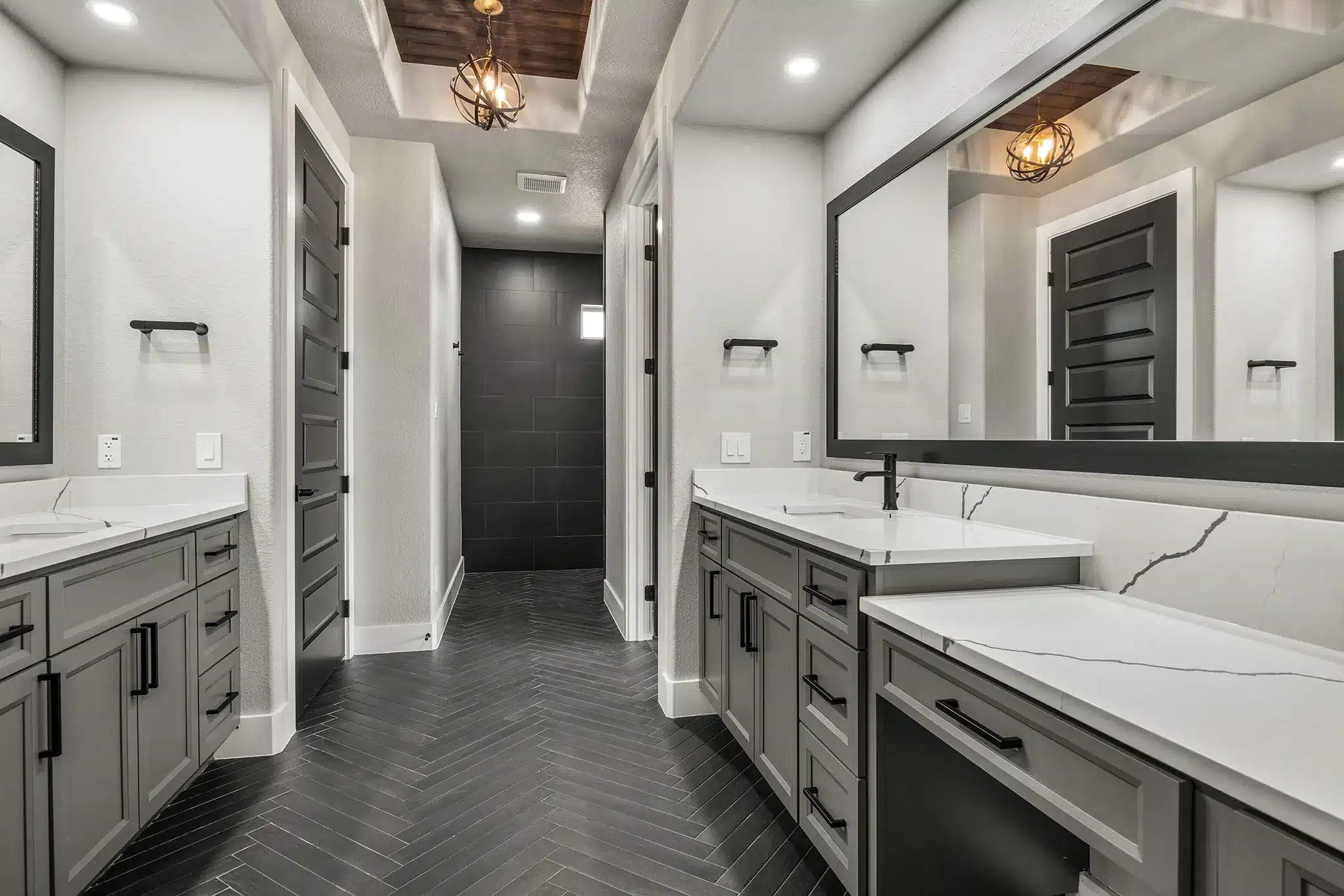

Master bathroom remodels are where costs start to separate from the rest of the home.
A guest bathroom might be a straightforward update. A powder room might be cosmetic. But a master bathroom sits in a different category entirely – larger footprint, more features, more trades, and significantly higher expectations.
In Dallas-Fort Worth, that difference shows up clearly in pricing. While smaller bathrooms can be remodeled for under $20,000, master bathrooms routinely start around $25,000 and climb well past $60,000 depending on the scope. At the high end, fully custom primary suites with premium materials and layout changes can exceed $80,000 or more.
The reason is simple. Master bathrooms are not just functional spaces – they combine plumbing, electrical, waterproofing, tile work, cabinetry, and finish design into one of the most labor-intensive areas of the home. Even small decisions, like upgrading to a walk-in shower or adding a second vanity, can move the budget significantly.
Another factor unique to DFW is market pressure. Labor demand remains high, material costs fluctuate, and larger home sizes mean more square footage to renovate. That pushes master bathroom remodel pricing in North Texas slightly above national averages in many cases, especially for mid-range and high-end projects.
A master bathroom remodel is not just a “bigger bathroom project.” It is a multi-trade construction job packed into a single room.
This guide breaks down exactly what it costs to remodel a master bathroom in DFW in 2026. You’ll see real price ranges, cost drivers, feature-by-feature breakdowns, and realistic project scenarios so you can estimate your budget with confidence.
If you want a broader view of all bathroom types, pricing tiers, and city-by-city differences across North Texas, see the full breakdown here:
DFW Bathroom Remodeling Cost Guide
Average Master Bathroom Remodel Cost in DFW (2026)
Master bathroom remodel costs in Dallas-Fort Worth follow a wide but predictable range. In 2026, most projects land between $25,000 and $80,000+, depending on the size of the space, the number of features included, and the level of customization.
At first glance, that range can feel extreme. But once you break down what actually goes into a master bathroom, the pricing becomes much more logical. These projects combine plumbing, electrical, waterproofing, tile work, cabinetry, and finish installation into a single space, making them one of the most labor-intensive remodels in any home.
According to national remodeling benchmarks like the Cost vs Value Report, bathroom remodel costs have steadily increased due to labor demand and material pricing. In fast-growing markets like North Texas, those pressures are even more noticeable.
Typical Master Bathroom Remodel Cost in DFW
The table below shows how most master bathroom remodels in DFW break down by investment level:
| Remodel Level | Typical Cost (DFW) | What’s Included |
|---|---|---|
| Standard Remodel | $25,000 – $35,000 | Single or basic double vanity, prefabricated or simple tile shower, stock fixtures, minimal layout changes |
| Mid-Range Remodel | $35,000 – $55,000 | Larger walk-in shower, double vanity, quartz countertops, upgraded tile, improved lighting |
| High-End Remodel | $55,000 – $75,000 | Custom tile shower, frameless glass, freestanding tub, premium fixtures, partial layout changes |
| Luxury Remodel | $75,000 – $90,000+ | Full redesign, custom cabinetry, slab surfaces, heated floors, high-end materials throughout |
At the standard level, most homeowners are replacing outdated finishes with clean, modern materials while keeping the layout intact. This is typically the lowest-cost way to significantly improve the space.
At the mid-range level, the bathroom starts to feel more custom. Showers get larger, vanities become double sinks, and materials shift from builder-grade to more durable and visually appealing options.
At the high-end and luxury levels, the project becomes far more design-driven. These remodels often include layout changes, premium materials, and custom fabrication. The difference is not just visual – it’s structural, logistical, and labor-intensive.
A master bathroom remodel is not priced like a “bigger guest bathroom.” It behaves more like a compact custom construction project inside your home.
Why Master Bathrooms Cost More Than Other Bathrooms
Master bathrooms consistently cost more than guest bathrooms or powder rooms, and the reason goes beyond square footage.
The biggest driver is feature density. A master bathroom typically includes:
- Two sinks instead of one
- A large walk-in shower instead of a tub/shower combo
- A freestanding tub in many cases
- Larger vanities and more cabinetry
- More lighting, mirrors, and electrical work
Each added feature increases both material costs and labor coordination, which compounds quickly.
Another major factor is installation complexity. Bathrooms require precise sequencing between trades. Plumbing must be completed before tile. Tile must be installed before glass. Electrical and lighting must align with cabinetry and mirrors. Because everything is tightly connected, even small upgrades increase labor time.
Data from the HomeAdvisor bathroom cost guide shows that bathrooms are among the most labor-heavy remodels in residential construction, often allocating a larger percentage of the budget to skilled trades compared to other interior projects.
What Drives the Price Range
The difference between a $30K remodel and an $80K remodel usually comes down to a handful of variables:
Size of the Bathroom
Larger bathrooms require more tile, more flooring, larger vanities, and more labor hours. But more importantly, larger bathrooms tend to include more features, which increases cost even faster than square footage alone.
Number of Features
A bathroom with a single vanity and basic shower will cost dramatically less than one with a double vanity, freestanding tub, and custom shower system.
Material Quality
Material selection can swing costs significantly. For example:
- Tile can range from $2 per sq ft to $20+ per sq ft
- Vanities can range from a few hundred dollars to several thousand
- Fixtures vary widely depending on brand and finish
Labor Intensity
Custom tile showers, waterproofing systems, and detailed installations require more time and skilled labor. This is one of the biggest cost multipliers in master bathrooms.
Layout Changes
Moving plumbing fixtures like toilets, tubs, or showers requires opening walls or floors and rerouting pipes, which adds both labor and material costs.
Important: Moving plumbing is one of the fastest ways to increase the cost of a master bathroom remodel because it affects multiple trades at once.
Quick Takeaway
Most homeowners in Dallas-Fort Worth spend $30,000 to $55,000 for a mid-range master bathroom remodel that includes a walk-in shower, double vanity, new flooring, and modern fixtures.
This range represents the balance point where the bathroom feels fully upgraded, functional, and aligned with current design trends – without entering full luxury territory.
Understanding this baseline is critical before diving into specific cost drivers. In the next section, we’ll break down how bathroom size directly impacts pricing, and why larger master suites can escalate costs faster than most homeowners expect.

Master Bathroom Remodel Cost by Size (DFW Breakdown)
One of the fastest ways to estimate a master bathroom remodel budget is by looking at size. While features ultimately drive the final price, square footage sets the baseline for how much material, labor, and coordination will be required.
In DFW, most master bathrooms fall into three general size categories, and each one comes with a distinct pricing range.
Typical Master Bathroom Sizes in DFW
- Compact master bathroom: 80–100 sq ft
- Standard master bathroom: 100–150 sq ft
- Large master suite: 150–250+ sq ft
These ranges align with what’s commonly seen in North Texas homes, where newer builds and suburban properties tend to have larger primary bathrooms than older homes.
Cost by Size Table (DFW 2026)
| Bathroom Size Category | Square Footage | Typical Cost Range | What’s Typical |
|---|---|---|---|
| Compact Master | 80–100 sq ft | $25,000 – $40,000 | Single or small double vanity, standard shower, minimal extras |
| Standard Master | 100–150 sq ft | $35,000 – $60,000 | Double vanity, larger walk-in shower, upgraded finishes |
| Large Master Suite | 150–250+ sq ft | $50,000 – $90,000+ | Separate tub + shower, custom layout, premium materials |
These ranges assume a full remodel, not just cosmetic updates. Keeping the layout the same can push costs toward the lower end, while adding features or moving plumbing will push them higher.
According to remodeling cost benchmarks like the bathroom remodel pricing guide, larger bathrooms consistently trend toward higher total costs not just because of materials, but because they introduce more complexity into the project.
Why Size Increases Cost (More Than You Expect)
Most homeowners assume cost scales linearly with square footage. In reality, master bathroom pricing behaves differently.
A bathroom that is 50% larger is often not just 50% more expensive – it can be significantly more, because larger spaces tend to include more features automatically.
More Surface Area = More Material + Labor
Larger bathrooms require:
- More floor tile or flooring
- More wall tile in showers
- Larger countertops
- More paint and finishing work
Even small increases in square footage can add thousands in material and installation costs.
Larger Bathrooms Add Features by Default
As bathrooms get bigger, they rarely stay simple. Instead, they evolve into full primary suites that include:
- Double vanities instead of single
- Oversized walk-in showers
- Freestanding tubs
- Additional lighting and mirrors
Each added feature increases cost independently, which is why size and features are tightly linked.
More Trades, More Coordination
Larger bathrooms often require more coordination between trades. A bigger shower means more waterproofing. A double vanity means more plumbing and electrical work. A tub addition means additional installation steps.
This complexity increases labor hours and project duration.
Data from the National Association of Home Builders shows that labor coordination is one of the biggest cost drivers in remodeling projects, especially in high-complexity spaces like bathrooms.
Cost Per Square Foot for Master Bathrooms
Another way to estimate cost is by using price per square foot. While not perfectly precise, it provides a useful planning benchmark.
| Remodel Level | Cost per Sq Ft (DFW) |
|---|---|
| Budget Remodel | $150 – $250 |
| Mid-Range Remodel | $250 – $400 |
| High-End Remodel | $400 – $650+ |
For example:
- 100 sq ft master bathroom × $300/sq ft = ~$30,000
- 150 sq ft master bathroom × $350/sq ft = ~$52,500
This method works best for early-stage budgeting, before selecting specific materials or features.
Real-World Insight
Size sets the baseline, but features determine the final number.
Two bathrooms with the same square footage can differ by $20,000+ depending on whether one includes a freestanding tub, custom tile shower, and premium finishes while the other keeps a simpler layout.
Quick Takeaway
- 80–100 sq ft: $25K – $40K
- 100–150 sq ft: $35K – $60K
- 150+ sq ft: $50K – $90K+
Most DFW homeowners fall into the 100–150 sq ft range, where projects typically land between $40K and $55K depending on finish level.
Understanding how size impacts cost gives you a strong starting point. But size alone doesn’t tell the full story. In the next section, we’ll break down how specific features like showers, vanities, and tubs drive the biggest cost differences inside a master bathroom remodel.

Master Bathroom Remodel Cost by Features (What Actually Drives the Price)
While size sets the baseline, features are what actually determine the final cost of a master bathroom remodel. Two bathrooms with identical square footage can differ by tens of thousands of dollars depending on what’s installed inside them.
In DFW, most of the budget is concentrated in a few key components. Understanding these is the fastest way to control cost without sacrificing the overall result.
The Core Features That Define a Master Bathroom
Most master bathroom remodels are built around four major elements:
- Double vanity
- Walk-in shower
- Freestanding tub (optional but common)
- Shower glass enclosure
Each of these has its own cost range and labor complexity, and together they make up a large percentage of the total project cost.
Feature Cost Breakdown (DFW 2026)
| Feature | Typical Cost Range | What Affects Price |
|---|---|---|
| Double Vanity | $1,500 – $6,000 | Size, material, custom vs prefab |
| Walk-In Tile Shower | $6,000 – $15,000 | Tile type, waterproofing, size |
| Freestanding Tub | $2,000 – $8,000 | Tub quality, plumbing complexity |
| Frameless Glass Enclosure | $1,500 – $4,000 | Glass thickness, custom sizing |
| Plumbing Fixtures (Full Set) | $500 – $3,000 | Brand, finish, features |
These ranges align with real-world pricing patterns in DFW and are consistent with national benchmarks from sources like the bathroom remodel cost guide, though local labor demand often pushes pricing slightly higher.
Double Vanity Cost
A double vanity is one of the most common upgrades in a master bathroom. It improves functionality and is often expected in mid-range and higher-end homes.
Costs vary based on whether you choose:
- Stock vanity (lower cost, faster install)
- Semi-custom (more flexibility in size and finish)
- Fully custom cabinetry (highest cost, best fit)
Beyond the vanity itself, you’re also paying for:
- Two sinks instead of one
- Additional plumbing connections
- Larger countertops
- More lighting and mirrors
This is why even a “simple” upgrade to a double vanity can add several thousand dollars to the project.
Walk-In Tile Shower Cost
The walk-in shower is usually the most expensive single component of a master bathroom remodel.
A typical cost range in DFW is $6,000 to $15,000, but it can go higher depending on materials and design.
What drives the cost:
- Waterproofing system (critical, not optional)
- Tile installation labor (one of the most labor-intensive trades)
- Shower size and layout
- Niches, benches, and custom features
Bathrooms require precise waterproofing to prevent long-term damage. Industry standards emphasize proper waterproofing systems as a critical step in shower construction, which is why cutting corners here often leads to expensive repairs later.
The shower is where most of the labor lives. Bigger shower = exponentially more work, not just more tile.
Freestanding Tub Cost
Freestanding tubs are not always necessary, but they are one of the most recognizable “upgrade signals” in a master bathroom.
Typical costs range from $2,000 to $8,000, including installation.
Cost factors include:
- Tub material and brand
- Plumbing adjustments
- Floor reinforcement (in some cases)
- Placement within the layout
In many DFW remodels, homeowners are choosing between:
- Keeping a tub for resale appeal
- Removing it to expand the shower
This decision alone can significantly impact both cost and layout.
Frameless Glass Shower Enclosure
Frameless glass is a standard feature in mid-range to high-end remodels because it makes the space feel larger and more modern.
Typical cost: $1,500 to $4,000
Why it’s expensive:
- Custom fabrication required
- Precision installation
- Heavy material (thicker glass = higher cost)
Unlike prefabricated options, frameless glass is measured and built specifically for your shower, which adds both time and cost.
Plumbing Fixtures and Finishes
Fixtures may seem minor compared to tile or cabinetry, but they still add up quickly.
Typical total cost: $500 to $3,000+
This includes:
- Faucets
- Shower head and controls
- Tub filler
- Accessories (towel bars, hardware)
The range is wide because fixture pricing varies heavily by brand and finish. For example, upgrading from standard chrome fixtures to premium brushed brass or matte black can increase costs significantly.
Why Features Drive Cost More Than Size
The key insight most homeowners miss is this:
Features multiply cost, while size mainly scales it.
A 100 sq ft bathroom with:
- A single vanity
- Basic shower
- No tub
…might cost $30K.
The same 100 sq ft bathroom with:
- Double vanity
- Custom tile shower
- Frameless glass
- Freestanding tub
…can easily reach $60K+.
The difference isn’t space. It’s what’s inside the space.
Real-World Pattern in DFW
Based on current remodeling trends, many homeowners in North Texas are prioritizing:
- Larger walk-in showers
- Double vanities
- Cleaner, more modern finishes
This aligns with broader remodeling trends focused on function and resale value rather than over-customization, as seen in current Texas remodeling behavior.
Quick Takeaway
- Shower = biggest cost driver
- Vanity = second biggest impact (especially double sinks)
- Tub = optional but expensive upgrade
- Glass + fixtures = smaller individually, but add up fast
If you’re trying to control your remodel budget, start by deciding:
- Shower size and complexity
- Whether you need a tub
- Vanity type (stock vs custom)
Everything else builds around those decisions.
Next, we’ll break down how changing the layout vs keeping it the same can dramatically impact your total remodel cost.
Layout Changes vs Keeping the Same Layout (Cost Impact)
One of the biggest decisions in a master bathroom remodel is whether to keep the existing layout or completely reconfigure the space.
This single choice can swing your budget by $5,000 to $25,000+, depending on how much plumbing, electrical, and structural work is involved.
Most homeowners focus on finishes first – tile, vanities, fixtures. But in reality, layout decisions often have a bigger financial impact than materials.
Keeping the Same Layout (Lower Cost, Faster Project)
When you keep the layout the same, all major plumbing fixtures stay in place:
- Toilet stays where it is
- Shower stays where it is
- Tub (if present) stays where it is
- Vanity remains along the same wall
This approach minimizes construction complexity and keeps costs under control.
Typical Cost Characteristics
| Factor | Impact |
|---|---|
| Plumbing work | Minimal |
| Electrical changes | Minor updates only |
| Demolition scope | Limited |
| Timeline | Shorter (3–5 weeks typical) |
| Cost impact | Baseline pricing |
Because plumbing lines don’t need to be moved, contractors can focus on installation rather than reconstruction, which significantly reduces labor hours.
According to remodeling cost data from the bathroom remodel guide, avoiding plumbing relocation is one of the most effective ways to keep renovation costs predictable.
Keeping the layout is the simplest way to achieve a “full transformation” without triggering major construction costs.
Changing the Layout (Higher Cost, Higher Flexibility)
A layout change means moving one or more major components:
- Relocating the shower
- Moving or resizing the vanity
- Repositioning the toilet
- Adding or removing a tub
This opens up design possibilities, but it also introduces significant cost.
Typical Cost Additions
| Change Type | Typical Added Cost |
|---|---|
| Moving plumbing lines | +$1,500 – $5,000 |
| Electrical reconfiguration | +$500 – $3,000 |
| Structural framing changes | +$2,000 – $10,000 |
| Permits and inspections | +$500 – $2,000 |
These costs stack quickly because multiple trades become involved at once.
Why Layout Changes Get Expensive
Plumbing Relocation Is Labor-Heavy
Moving plumbing is not just about rerouting pipes. It often requires:
- Opening walls or floors
- Adjusting drain slopes
- Coordinating with slab or subfloor conditions
This is why even a small shift in fixture location can add thousands to the budget.
Important: Moving plumbing fixtures is one of the fastest ways to increase remodel cost because it affects multiple trades simultaneously.
Structural Implications
In some remodels, layout changes involve removing or modifying walls. If those walls are load-bearing, the project becomes significantly more complex.
As outlined in structural remodeling guidance, altering load paths without proper engineering can lead to long-term structural issues, which is why these changes require careful planning and often professional input.
Even when walls are not load-bearing, framing adjustments, reinforcement, and inspections add time and cost.
Permits and Inspections
Layout changes are far more likely to require permits and inspections. While this adds cost upfront, it also ensures:
- Work meets code requirements
- Plumbing and electrical systems are installed correctly
- The remodel is legally compliant
Guidelines from building code authorities like the International Residential Code emphasize proper permitting and inspection for structural and plumbing modifications.
Cost Comparison: Same Layout vs Layout Change
| Remodel Approach | Typical Total Cost | Risk Level | Timeline |
|---|---|---|---|
| Keep Layout | $25K – $50K | Low | Faster |
| Modify Layout | $40K – $80K+ | Medium-High | Longer |
This doesn’t mean layout changes are bad – they just need to be intentional.
When a Layout Change Makes Sense
Layout changes are usually worth it when:
- The current bathroom feels cramped or poorly designed
- You want to replace a tub with a larger shower
- Storage or vanity space is insufficient
- You’re doing a high-end or long-term remodel
In these cases, the added cost can deliver significant functional and resale value improvements.
When to Keep the Layout
Keeping the layout is often the better choice when:
- The current layout already works well
- You’re trying to stay within a defined budget
- You want to maximize ROI
- The home will be sold in the near future
In many DFW remodels, homeowners achieve a dramatic visual upgrade without moving a single pipe, simply by upgrading materials and finishes.
Quick Takeaway
- Keeping layout = lower cost, faster timeline, fewer risks
- Changing layout = higher cost, more flexibility, better long-term customization
The most cost-efficient remodels upgrade everything you can see without moving what you can’t.
In the next section, we’ll break down high-end upgrades – where homeowners choose to spend when they want their master bathroom to feel truly custom.
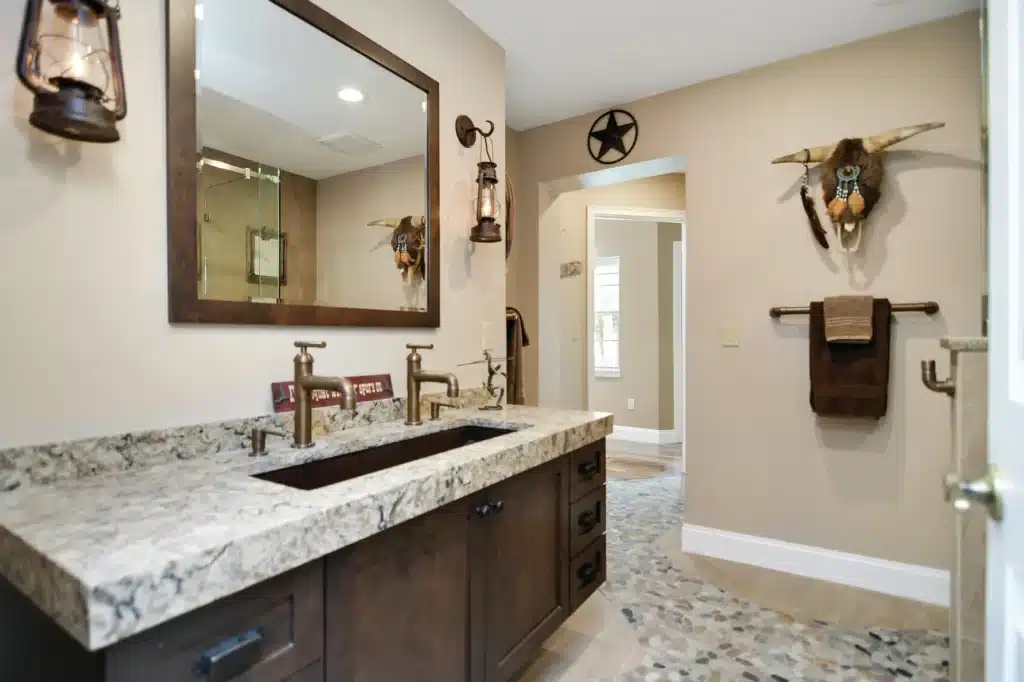
High-End Upgrades That Drive Luxury Master Bathroom Costs
Once the layout and core features are set, the next layer that separates a standard remodel from a high-end or luxury master bathroom is upgrades.
These are the decisions that don’t just improve function – they change how the space feels. In DFW, these upgrades are also where budgets can accelerate quickly, often adding $5,000 to $30,000+ depending on selection.
At the same time, 2026 remodeling trends show that homeowners are becoming more intentional. Upgrades are no longer just about luxury – they’re about comfort, durability, and resale value, as reflected in current Texas remodeling behavior.
Most Common High-End Upgrades in DFW
The upgrades below are the ones that consistently appear in high-end and luxury master bathroom remodels across North Texas.
Upgrade Cost Breakdown (DFW 2026)
| Upgrade | Typical Cost Range | What Drives Cost |
|---|---|---|
| Heated Floors | $1,200 – $4,000 | System type, square footage |
| Smart Mirrors & Lighting | $500 – $3,000 | Features, size, installation |
| Custom Tile Work | $5,000 – $20,000+ | Tile type, layout, labor |
| Frameless Glass (Premium) | $2,500 – $6,000 | Thickness, size, coatings |
| Custom Vanities & Storage | $3,000 – $15,000+ | Materials, design complexity |
| Slab Shower Walls (No Grout) | $8,000 – $25,000+ | Material + install difficulty |
These upgrades are often layered on top of a standard remodel, which is why luxury bathrooms scale so quickly in price.
Heated Floors
Heated flooring is one of the most noticeable comfort upgrades, especially in tile-heavy bathrooms.
Typical cost: $1,200 to $4,000
What you’re paying for:
- Electric heating system installation
- Thermostat controls
- Additional labor during flooring installation
While it doesn’t change the visual appearance dramatically, it significantly improves the day-to-day experience.
Heated floors are a “hidden luxury” – you don’t see them, but you feel them every day.
Smart Mirrors and Integrated Lighting
Smart mirrors have become increasingly popular in higher-end remodels. These can include:
- Built-in LED lighting
- Anti-fog systems
- Touch controls
- Bluetooth or smart home integration
Typical cost: $500 to $3,000
These upgrades align with the broader shift toward smart home integration in remodeling, where convenience and modern feel matter as much as aesthetics.
Custom Tile Work
Tile is where design and labor collide.
Custom tile installations can include:
- Large-format tile
- Herringbone or patterned layouts
- Floor-to-ceiling shower tile
- Built-in niches and benches
Typical cost: $5,000 to $20,000+
The biggest cost driver here is labor, not just material. Intricate layouts take significantly longer to install and require highly skilled trades.
According to building standards and trade guidance, tile installation in wet areas requires precise waterproofing and sequencing, which is why high-end tile work is one of the most labor-intensive parts of a bathroom remodel.
Premium Frameless Glass Systems
Standard frameless glass is common, but premium systems take it further:
- Thicker glass panels
- Specialty coatings (anti-spot, anti-fog)
- Custom configurations (cornerless, oversized panels)
Typical cost: $2,500 to $6,000
These upgrades are primarily aesthetic, but they play a major role in how open and modern the bathroom feels.
Custom Vanities and Storage
Custom cabinetry is one of the biggest visual upgrades in a master bathroom.
Typical cost: $3,000 to $15,000+
What drives the range:
- Material quality (MDF vs hardwood)
- Drawer systems and hardware
- Built-in organizers
- Size and configuration
Custom vanities allow homeowners to maximize storage while matching the exact style of the space.
Slab Shower Walls (Luxury Upgrade)
One of the fastest-growing high-end trends is replacing tile with large slab surfaces in showers.
Typical cost: $8,000 to $25,000+
Benefits:
- Minimal grout lines
- Easier maintenance
- Seamless, modern appearance
These installations require specialized handling and installation, which increases both material and labor costs.
Why High-End Upgrades Add Cost So Quickly
There are two main reasons:
1. Labor Complexity Increases
Many high-end upgrades are more difficult to install:
- Slab materials require precise handling
- Custom tile layouts take longer
- Smart systems require coordination with electrical work
2. Materials Scale Exponentially
Material pricing isn’t linear. For example:
- Tile: $3/sq ft vs $20+/sq ft
- Vanities: $1,000 vs $10,000+
- Glass: standard vs custom fabrication
This creates a compounding effect where multiple upgrades quickly push the project into luxury pricing.
2026 Remodeling Insight (DFW)
In today’s market, homeowners are being more strategic about upgrades.
The goal is no longer “make it look expensive.” The goal is “make it feel updated, comfortable, and broadly appealing.”
This shift is driven by:
- Higher interest rates (less moving, more remodeling)
- Greater focus on resale value
- Preference for durable, low-maintenance materials
These trends are consistent with current Texas remodeling patterns, where homeowners prioritize function, longevity, and ROI over purely aesthetic upgrades.
Quick Takeaway
- Heated floors and smart features = comfort upgrades
- Tile and slab work = biggest labor-driven cost increases
- Custom vanities = major visual + functional upgrade
- Glass and finishes = smaller individually, but compound quickly
If you’re planning a remodel, the smartest approach is to choose 1–2 high-impact upgrades rather than trying to upgrade everything at once.
Next, we’ll break down where your money actually goes with a full labor vs materials cost breakdown, so you can see exactly how a master bathroom remodel budget is allocated.

Master Bathroom Remodel Cost Breakdown (Labor vs Materials)
When homeowners plan a remodel, most assume the majority of the budget goes toward visible materials like tile, vanities, and fixtures.
In reality, labor is usually the largest portion of a master bathroom remodel in DFW.
This is because bathrooms pack multiple specialized trades into a small space, all working in a strict sequence. Every step depends on the one before it, which increases both time and coordination.
Typical Cost Split in DFW
Across most master bathroom remodels in North Texas, the budget typically breaks down as follows:
| Category | Percentage of Total Budget |
|---|---|
| Labor | 40% – 60% |
| Materials | 35% – 50% |
| Design, permits, overhead | 5% – 10% |
This aligns with broader remodeling cost patterns observed in national data sources like the Cost vs Value Report, where labor consistently represents the largest share of renovation budgets.
The biggest misconception in remodeling is that materials drive cost. In bathrooms, labor usually does.
Example Budget Breakdown ($50,000 Remodel)
To make this more concrete, here’s how a typical mid-to-high-end master bathroom remodel budget might be allocated:
| Category | Estimated Cost |
|---|---|
| Labor | $22,000 – $28,000 |
| Materials | $17,000 – $23,000 |
| Permits, design, overhead | $3,000 – $5,000 |
Even though materials are the most visible part of the project, skilled labor accounts for the largest share of the investment.
Why Labor Costs Are So High in Bathrooms
Bathrooms require a level of precision and sequencing that most other rooms do not.
Multiple Trades in a Small Space
A typical master bathroom remodel involves:
- Plumbers
- Electricians
- Tile installers
- Carpenters
- Painters
- Glass installers
Each trade works at a different stage of the project, and delays or mistakes in one phase can affect everything that follows.
Strict Installation Sequence
The order of work matters:
- Demolition
- Plumbing and electrical rough-in
- Framing adjustments
- Waterproofing
- Tile installation
- Fixture installation
- Finishing work
Industry guidance from organizations like the National Association of Home Builders emphasizes that improper sequencing – especially in waterproofing and tile installation – can lead to long-term damage, which is why skilled labor is critical.
Bathrooms are one of the few spaces where mistakes are expensive, delayed, and often hidden until it’s too late.
High Precision Requirements
Unlike other rooms:
- Showers must be fully waterproof
- Tile must be perfectly aligned
- Plumbing must be leak-free
- Electrical must meet strict code requirements
This level of precision increases labor time and requires experienced trades, which drives up cost.
Labor Cost by Trade (DFW 2026)
Below are typical hourly rates for remodeling trades in the Dallas-Fort Worth area:
| Trade | Typical Hourly Rate |
|---|---|
| Plumber | $90 – $150 |
| Electrician | $85 – $140 |
| Tile Installer | $60 – $120 |
| Carpenter | $60 – $110 |
| Painter | $40 – $80 |
In addition to these trades, most homeowners work with a general contractor who coordinates the entire project.
General contractors typically charge 15% to 25% of the total project cost for project management, scheduling, and oversight.
Material Cost Breakdown
Material costs vary widely depending on quality, but the categories remain consistent across most remodels.
| Material Category | Budget Range | Mid-Range | Luxury |
|---|---|---|---|
| Tile (per sq ft) | $2 | $6 | $20+ |
| Vanity | $300 | $1,200 | $5,000+ |
| Faucets/Fixtures | $80 | $250 | $900+ |
| Toilet | $150 | $400 | $1,200+ |
| Shower Glass | $500 | $1,800 | $4,000+ |
| Bathtub | $300 | $1,200 | $6,000+ |
Material pricing varies based on brand, durability, and design. For example, choosing large-format tile or premium stone can significantly increase both material and installation costs.
According to remodeling cost data from the bathroom remodel guide, material selection is one of the biggest variables in final project pricing, even when labor remains constant.
Hidden Costs Homeowners Often Miss
Beyond labor and materials, there are smaller categories that still impact the total budget:
- Permits and inspections
- Demolition and disposal
- Unexpected repairs (plumbing, framing, subfloor)
- Design services or consultations
These costs typically fall into the 5% to 10% range, but can increase if issues are discovered during construction.
Real-World Insight
The most expensive part of a bathroom remodel is not what you see – it’s the skilled work required to make everything function correctly behind the walls.
This is why two remodels with identical materials can still differ significantly in cost depending on:
- Contractor quality
- Installation complexity
- Project management efficiency
Quick Takeaway
- Labor = largest portion of the budget (40% – 60%)
- Materials = highly variable based on quality
- Bathrooms cost more because they require multiple trades and precise sequencing
If you want to control your budget:
- Simplify tile work
- Avoid unnecessary layout changes
- Choose mid-range materials with good durability
Next, we’ll walk through real example remodel budgets ($30K, $50K, $75K) so you can see exactly what different price points look like in practice.

Real Master Bathroom Remodel Examples ($30K, $50K, $75K)
Understanding price ranges is useful, but seeing how real budgets translate into actual remodels is what makes the numbers click.
Below are three realistic master bathroom remodel scenarios in DFW based on common project types. Each example shows what you can expect at different investment levels, including what’s included, what’s upgraded, and where the money goes.
These reflect real-world cost patterns seen in North Texas and align with national remodeling benchmarks like the Cost vs Value Report, where bathroom remodel scope directly correlates with both cost and resale impact.
$30,000 Remodel (Mid-Range, Layout Kept)
This is the most common “entry point” for a full master bathroom remodel in DFW.
Best for:
Homeowners who want a complete refresh without changing the layout or adding major features.
What’s Included
- Standard walk-in shower (tile or prefab system)
- Single or basic double vanity
- Quartz or laminate countertop
- New flooring (tile or LVP)
- Updated plumbing fixtures
- Basic lighting and mirror upgrades
Budget Breakdown
| Category | Estimated Cost |
|---|---|
| Labor | $13,000 – $16,000 |
| Materials | $11,000 – $13,000 |
| Overhead/permits | $2,000 – $3,000 |
What It Looks Like
- Clean, modern, functional
- No major layout changes
- Minimal customization
- Focus on value and durability
This level delivers the biggest “before vs after” visual impact per dollar.
$50,000 Remodel (High-End, Feature Upgrades)
This is where the bathroom starts to feel noticeably more custom.
Best for:
Homeowners planning to stay long-term or wanting a strong balance of design and function.
What’s Included
- Large walk-in tile shower with custom tile
- Frameless glass enclosure
- Double vanity with upgraded cabinetry
- Quartz or granite countertops
- Higher-end fixtures and finishes
- Improved lighting design
Budget Breakdown
| Category | Estimated Cost |
|---|---|
| Labor | $22,000 – $28,000 |
| Materials | $18,000 – $24,000 |
| Overhead/permits | $3,000 – $5,000 |
What It Looks Like
- Spacious, upgraded feel
- Strong visual cohesion
- Higher-quality materials throughout
- More attention to detail in finishes
According to remodeling cost data from the bathroom remodel guide, this price range is where most homeowners see the best balance between cost and long-term value.
This is the “sweet spot” where the bathroom feels fully upgraded without entering luxury pricing.
$75,000 Remodel (Luxury, Full Redesign)
At this level, the bathroom becomes a fully customized primary suite.
Best for:
Homeowners who want a high-end, long-term investment with maximum comfort and design flexibility.
What’s Included
- Custom walk-in shower (large format tile or slab walls)
- Freestanding soaking tub
- Premium frameless glass system
- Custom vanity and built-in storage
- High-end fixtures and finishes
- Possible layout changes (shower expansion, tub relocation)
- Heated floors or smart features
Budget Breakdown
| Category | Estimated Cost |
|---|---|
| Labor | $32,000 – $40,000 |
| Materials | $28,000 – $35,000 |
| Overhead/permits | $5,000 – $8,000 |
What It Looks Like
- Spa-like environment
- Fully customized layout and finishes
- Premium materials with minimal compromises
- Designed for long-term use and comfort
High-end remodels like this often align with broader homeowner trends toward improving existing homes instead of moving, especially in markets where upgrading in place is more cost-effective than buying new.
At this level, you’re not just remodeling a bathroom – you’re redesigning the entire experience of the space.
Side-by-Side Comparison
| Feature / Level | $30K Remodel | $50K Remodel | $75K Remodel |
|---|---|---|---|
| Layout Changes | No | Rare | Possible |
| Shower Type | Basic | Custom Tile | Luxury / Slab |
| Vanity | Basic | Upgraded | Custom |
| Tub | Usually no | Optional | Yes |
| Glass | Basic | Frameless | Premium |
| Materials | Mid-range | High-end | Luxury |
| Overall Feel | Clean | Upgraded | Spa-like |
What These Examples Show
- The jump from $30K → $50K is mostly feature upgrades and material quality
- The jump from $50K → $75K is mostly customization, layout changes, and luxury finishes
- Labor increases significantly at higher tiers due to complexity
Most cost increases are not linear – they compound as more features and customization are added.
Quick Takeaway
- $30K: Full refresh, strong value, minimal customization
- $50K: High-end feel, best balance of cost and quality
- $75K+: Fully custom, luxury experience
If you’re trying to decide where to land, start by asking:
- Do I need layout changes?
- Do I want a tub or larger shower?
- How important are premium materials vs cost control?
Those three decisions alone will determine which tier your project falls into.
Next, we’ll break down the timeline for a master bathroom remodel, so you know how long each phase actually takes from planning to completion.
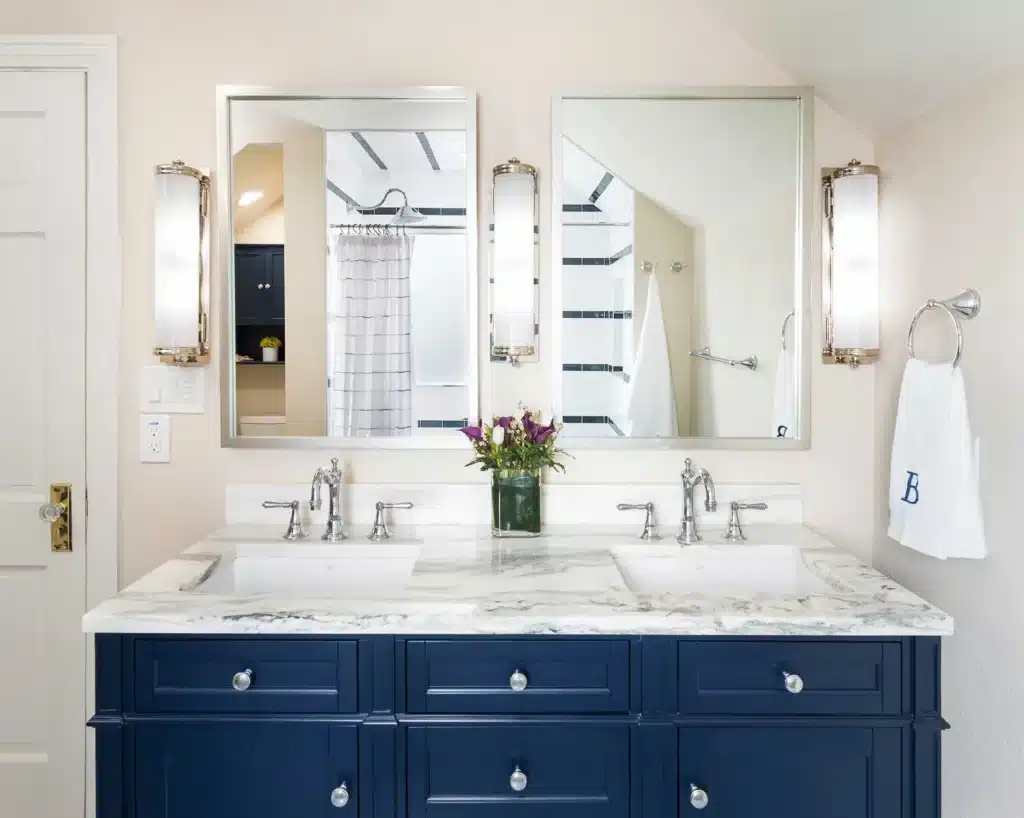
Master Bathroom Remodel Timeline (DFW 2026)
One of the most underestimated parts of a master bathroom remodel is time.
Most homeowners focus on cost, but timeline has a direct impact on:
- Project stress
- Temporary living adjustments
- Labor coordination
- Final cost (delays = more money)
In DFW, a typical master bathroom remodel takes 4 to 10+ weeks of construction, plus 2 to 6 weeks of planning before work even begins.
Full Timeline Overview
| Phase | Typical Duration |
|---|---|
| Planning & Design | 2 – 6 weeks |
| Permits & Scheduling | 1 – 3 weeks |
| Construction | 4 – 10+ weeks |
| Total Project Timeline | 6 – 14+ weeks |
These ranges vary based on project complexity, contractor availability, and material lead times. Larger or custom remodels tend to fall on the higher end.
According to remodeling timelines reported by industry sources like the bathroom remodel guide, bathrooms are among the most schedule-sensitive projects due to trade sequencing and inspection requirements.
A bathroom remodel doesn’t move faster just because the room is small. It moves slower because everything has to happen in the right order.
Phase 1: Planning and Design
Before construction begins, there is a critical planning phase.
Typical duration: 2 – 6 weeks
This phase includes:
- Defining scope (layout vs same layout)
- Selecting materials (tile, vanity, fixtures)
- Getting contractor bids
- Finalizing design decisions
Delays in this phase often come from indecision or changing selections mid-process.
The more decisions you make upfront, the faster construction will go.
Phase 2: Permits and Scheduling
Not all remodels require permits, but many do – especially if you are:
- Moving plumbing
- Changing electrical systems
- Modifying walls or structure
Typical duration: 1 – 3 weeks
Permits introduce:
- Approval timelines
- Inspection requirements
- Scheduling coordination
Guidelines from building authorities like the International Code Council emphasize proper permitting for plumbing and structural changes to ensure safety and compliance.
In busy DFW markets, scheduling subcontractors can also add time before construction begins.
Phase 3: Construction Timeline Breakdown
Once construction starts, the project moves through a fixed sequence of steps.
Step-by-Step Construction Timeline
| Stage | Typical Duration |
|---|---|
| Demolition | 2 – 5 days |
| Plumbing & Electrical Rough-In | 2 – 5 days |
| Framing Adjustments | 1 – 3 days |
| Waterproofing | 1 – 2 days |
| Tile Installation | 5 – 10+ days |
| Fixture Installation | 2 – 4 days |
| Final Touches & Punch List | 2 – 5 days |
The longest phase is usually tile installation, especially for custom showers. This is one of the most labor-intensive parts of the entire remodel.
According to construction best practices from the National Association of Home Builders, proper waterproofing and tile installation cannot be rushed without risking long-term issues.
Tile work is where timelines stretch. The more custom the design, the longer it takes.
What Causes Delays in Bathroom Remodels
Even well-planned projects can run into delays. The most common causes include:
Material Lead Times
- Custom vanities
- Glass enclosures
- Specialty tile
If materials are not ordered early, the project can pause mid-construction.
Inspection Delays
If permits are required, inspections must be scheduled and passed before moving to the next phase.
Change Orders
Changing decisions mid-project (different tile, new layout, added features) can:
- Add cost
- Reset timelines
- Require rework
Hidden Issues
Bathrooms often reveal unexpected problems during demolition:
- Plumbing issues
- Subfloor damage
- Framing problems
As noted in structural remodeling guidance, hidden conditions are one of the most common sources of delays and cost overruns in remodels.
Timeline by Project Type
| Remodel Type | Typical Construction Time |
|---|---|
| Cosmetic Update | 2 – 4 weeks |
| Standard Remodel | 4 – 6 weeks |
| High-End Remodel | 6 – 8 weeks |
| Luxury Remodel | 8 – 10+ weeks |
Projects that include layout changes or custom features tend to fall on the higher end of these ranges.
Real-World Insight
The timeline of a bathroom remodel is driven less by square footage and more by complexity and sequencing.
A small bathroom with custom tile and layout changes can take longer than a larger bathroom with a simple design.
How to Keep Your Project on Schedule
The most effective ways to avoid delays:
- Finalize all material selections before construction
- Order long-lead items early
- Avoid mid-project changes
- Work with a contractor who manages scheduling tightly
These steps reduce downtime between phases and keep trades moving efficiently.
Quick Takeaway
- Planning: 2 – 6 weeks
- Construction: 4 – 10+ weeks
- Total timeline: 6 – 14+ weeks
Most delays come from decisions, materials, or coordination, not the actual construction work itself.
Next, we’ll break down ROI and resale impact in DFW, so you can understand how much of your remodel investment you can expect to recover.

ROI and Resale Impact of a Master Bathroom Remodel in DFW
A master bathroom remodel is not just about comfort or aesthetics. It is also one of the most strategic upgrades you can make if resale value is part of the equation.
That said, bathroom remodel ROI is not linear. Spending more does not always mean you get more back.
In DFW, most homeowners can expect to recoup 50% to 70% of their remodel cost, depending on the scope, quality, and how well the upgrades match the local market.
Average ROI by Remodel Level
| Remodel Type | Typical Cost | Estimated ROI | Value Added |
|---|---|---|---|
| Mid-Range Remodel | $25K – $50K | 60% – 70% | $15K – $35K |
| High-End Remodel | $50K – $75K | 50% – 60% | $25K – $45K |
| Luxury Remodel | $75K+ | 40% – 55% | $30K – $50K |
These ranges align with national remodeling data from the Cost vs Value Report, which consistently shows diminishing returns as projects move into higher price tiers.
The goal is not to maximize spending. It is to maximize perceived value relative to your market.
Why Bathrooms Matter So Much in Resale
Bathrooms are one of the most scrutinized spaces by buyers.
Unlike kitchens, which can sometimes be updated gradually, bathrooms are:
- Expensive to remodel
- Disruptive to live through
- Technically complex
Because of this, buyers place a premium on homes with updated bathrooms.
According to housing data and buyer preference studies, updated bathrooms are consistently ranked among the most important features influencing purchase decisions.
A dated bathroom doesn’t just reduce value. It can reduce buyer interest entirely.
What Buyers in DFW Actually Value
Not all upgrades are equal when it comes to resale.
High-Impact Features
These features tend to deliver the strongest ROI:
- Walk-in showers (especially with frameless glass)
- Double vanities
- Modern tile and finishes
- Bright, well-designed lighting
These upgrades improve both function and visual appeal, which directly impacts buyer perception.
Lower ROI Features
Some upgrades add cost but don’t always translate to higher resale value:
- Ultra-luxury fixtures
- Highly personalized design choices
- Over-customization beyond neighborhood standards
The closer your remodel aligns with what buyers expect in your price range, the higher your ROI.
ROI by Feature Type
| Feature | ROI Impact |
|---|---|
| Walk-in shower | High |
| Double vanity | High |
| Updated tile | High |
| Freestanding tub | Medium |
| Heated floors | Medium |
| Smart mirrors/features | Low-Medium |
| Luxury fixtures | Low |
This doesn’t mean you shouldn’t include these features – just that some are more about personal enjoyment than resale value.
The “Over-Improvement” Risk
One of the biggest mistakes homeowners make is over-improving relative to their neighborhood.
For example:
- Spending $80K+ on a bathroom in a home where buyers expect mid-range finishes
- Adding luxury features that exceed the home’s overall value
According to housing market trends reported by sources like the U.S. Census Bureau, improvements that exceed neighborhood norms rarely return full value.
Buyers compare your home to nearby listings. Not to your construction cost.
DFW-Specific Considerations
The Dallas-Fort Worth market has a few unique factors:
Strong Demand for Updated Homes
DFW buyers often prefer move-in-ready homes, especially in competitive suburbs like Plano, Frisco, and Flower Mound.
This increases the value of updated bathrooms compared to markets where buyers expect to renovate after purchase.
Larger Homes = Higher Expectations
Because many DFW homes are larger:
- Buyers expect double vanities in master bathrooms
- Walk-in showers are often preferred over tubs
- Storage and layout matter more
Failing to meet these expectations can reduce perceived value.
Remodel vs Resale Strategy
There are two different ways to approach ROI:
1. Remodel for Resale
Goal: Maximize return
- Stay within mid-range budget
- Focus on universally appealing features
- Avoid over-customization
- Match neighborhood standards
2. Remodel for Long-Term Living
Goal: Maximize personal value
- Prioritize comfort and functionality
- Include luxury features if desired
- ROI matters less because enjoyment compounds over time
The longer you stay in the home, the less ROI matters and the more personal value takes over.
Real-World Example
A homeowner spends $50,000 on a master bathroom remodel:
- Estimated resale return: $30,000 to $35,000
- Net “cost”: $15,000 to $20,000
If they live in the home for 5 to 10 years, that cost is effectively spread over time, making the remodel far more justifiable.
Quick Takeaway
- Most master bathroom remodels return 50% to 70% of their cost
- Mid-range remodels typically deliver the best ROI
- Over-customization reduces resale value
- Matching neighborhood expectations is critical
The best remodels are not the most expensive ones. They are the ones that feel right for the home and the market.
In the final section, we’ll link you to the full bathroom remodel cost guide for DFW, where you can explore pricing across all bathroom types and remodel scopes.

See the Full Bathroom Remodel Cost Guide (DFW 2026)
If you’re planning a master bathroom remodel, you’ve already seen how quickly costs can vary based on size, features, and layout decisions.
But master bathrooms are just one piece of the bigger picture.
To fully understand pricing, it helps to zoom out and compare:
- Small bathrooms vs master bathrooms
- Cosmetic updates vs full gut remodels
- Material and labor differences across all project types
That’s exactly what the full guide covers.
What You’ll Find in the Full Guide
The Bathroom Remodel Cost Guide (DFW 2026) breaks down everything across all bathroom types and budgets, including:
- Average remodel costs across DFW
- Cost by bathroom size (powder, guest, master)
- Labor vs materials breakdown across different scopes
- Material pricing (tile, vanities, fixtures, countertops)
- Real-world project examples across multiple budgets
- City-level cost differences (Plano, Frisco, Dallas, and more)
It gives you the broader context needed to understand whether your master bathroom estimate is:
- Competitive
- Overpriced
- Missing key elements
According to remodeling cost data aggregated in national resources like the bathroom remodel guide, having a full cost baseline across multiple project types is one of the most effective ways to avoid overpaying or under-scoping a renovation.
The more context you have, the easier it is to spot unrealistic quotes.
How to Use the Full Guide
If you’re early in the process:
- Use it to set realistic expectations
- Compare different remodel approaches
- Understand what drives cost
If you already have quotes:
- Cross-check contractor pricing
- Identify missing scope items
- Validate labor vs material breakdowns
If you’re deciding between projects:
- Compare bathroom remodel ROI vs other upgrades
- Evaluate where your budget will have the biggest impact
Guidance from housing and remodeling research organizations like the National Association of Home Builders consistently shows that informed homeowners make better renovation decisions and experience fewer cost overruns.
When the Master Bathroom Isn’t the Only Project
Many homeowners in DFW are not just remodeling one bathroom. They are:
- Updating multiple bathrooms at once
- Remodeling kitchens alongside bathrooms
- Renovating entire homes
In those cases, understanding how bathroom costs fit into the total renovation budget becomes even more important.
A master bathroom remodel rarely exists in isolation. It’s usually part of a larger plan.
Quick Cost Context Across Bathroom Types
| Bathroom Type | Typical Cost Range (DFW) |
|---|---|
| Powder Bathroom | $8K – $20K |
| Guest Bathroom | $15K – $35K |
| Master Bathroom | $25K – $80K+ |
Seeing all three side by side helps you understand where your project fits and whether your expectations align with market reality.
Why This Matters Before You Start
The biggest risks in remodeling are:
- Underestimating cost
- Overestimating scope
- Making decisions without full context
The full guide helps eliminate those risks by giving you a complete, data-backed view of bathroom remodeling in DFW.
Final Takeaway
- Master bathroom remodels are high-impact but complex
- Costs vary widely based on layout, features, and materials
- The best decisions come from understanding the full market, not just one project type
Before you commit to a remodel, make sure you’re seeing the entire picture – not just one piece of it.
For a complete breakdown of costs, examples, and planning insights, explore the full guide here: