$10K vs $25K vs $50K Bathroom Remodel Breakdown
Bathroom remodel costs in Dallas-Fort Worth can swing dramatically depending on how deep the project goes. A $10,000 refresh, a $25,000 remodel, and a $50,000 renovation each represent fundamentally different levels of construction, labor, and material quality.
At a high level, the jump in price comes from three core drivers: scope of work, labor intensity, and material selection. As soon as a project moves beyond surface-level updates into tile work, waterproofing, and plumbing upgrades, costs accelerate quickly due to the number of skilled trades involved. Industry data from the HomeAdvisor bathroom remodel cost guide consistently shows labor making up the largest portion of remodeling budgets, especially in smaller, more complex spaces like bathrooms.
What a $10K Bathroom Remodel Looks Like
A $10,000 remodel in DFW typically falls into the cosmetic refresh category. This level focuses on improving appearance while leaving the structure, layout, and major systems untouched.
Common characteristics:
- Existing tub or shower stays in place
- Plumbing and electrical locations remain unchanged
- Minimal or no demolition
- Short timeline, often under 1 week
Typical upgrades at this level:
- New vanity (stock or budget prefab)
- Updated faucet and shower fixtures
- New lighting and mirror
- Fresh paint or minor wall repair
- Basic flooring replacement (LVP or entry-level tile)
This tier works because it avoids the most expensive parts of remodeling: tile installation, waterproofing systems, and plumbing modifications. Once those elements enter the scope, budgets move beyond this range quickly.
What a $25K Bathroom Remodel Includes
At around $25,000, the project shifts into a true renovation. This is where most DFW homeowners land when they want a bathroom that feels fully updated and modern.
Common characteristics:
- Partial demolition and rebuild
- Replacement of major components
- Same general layout, with possible minor adjustments
- Multiple trades involved (plumbing, tile, electrical)
Typical upgrades at this level:
- Tile shower or tub surround
- New vanity with stone countertop (quartz or granite)
- Porcelain tile flooring
- Updated plumbing fixtures (mid-range quality)
- New toilet, lighting, and ventilation upgrades
This tier introduces labor-heavy installations, especially tile work. According to industry benchmarks like the Remodeling Magazine Cost vs Value Report, mid-range remodels tend to balance cost and resale appeal effectively because they improve both function and aesthetics without pushing into highly customized territory.
What a $50K Bathroom Remodel Delivers
At $50,000 and above, the remodel becomes a full-scale transformation, often found in primary or master bathrooms. This level allows for structural changes, premium materials, and a more customized design.
Common characteristics:
- Full demolition down to studs in some cases
- Layout changes or plumbing relocation
- High-end materials and finishes
- Longer timelines, often 3–6+ weeks
Typical upgrades at this level:
- Custom walk-in tile shower with frameless glass
- Freestanding soaking tub
- Custom or semi-custom cabinetry
- Premium tile or slab shower walls
- Designer fixtures and hardware
- Optional upgrades like heated flooring or niche lighting
This tier reflects the reality that bathrooms are small but highly complex construction environments. Every added feature compounds labor requirements. Structural considerations, load paths, and proper installation sequencing become more critical as complexity increases, especially when walls, plumbing, or framing are altered .
Side-by-Side Cost Breakdown
| Remodel Tier | Typical Cost (DFW) | Scope of Work | Labor Intensity | Timeline |
|---|---|---|---|---|
| Budget | $8K–$12K | Cosmetic refresh | Low | 3–7 days |
| Mid-range | $15K–$30K | Partial remodel | Moderate | 2–4 weeks |
| High-end | $35K–$60K+ | Full renovation | High | 4–8+ weeks |
Why Costs Increase So Fast Between Tiers
The difference between these tiers is less about square footage and more about what gets touched during construction.
- Surface updates stay relatively affordable because they avoid demolition
- Tile and waterproofing systems require precision and skilled labor
- Plumbing changes require opening walls or floors and rerouting systems
- Custom work introduces fabrication, design coordination, and longer timelines
Each step deeper into the remodel adds layers of complexity. That is why two bathrooms of the same size in DFW can vary by tens of thousands of dollars depending on scope alone.
Key takeaway: A $10K remodel changes how a bathroom looks, a $25K remodel changes how it functions, and a $50K remodel reshapes the entire space from structure to finish.

What You Get at Each Level (Side-by-Side Comparison)
At a glance, a $10K, $25K, and $50K bathroom remodel may all result in a “new” bathroom. The difference shows up in what gets replaced, how it’s built, and how long it lasts. As projects move up in budget, they shift from surface updates to full system upgrades involving plumbing, waterproofing, and structural coordination.
Bathrooms are one of the most labor-intensive areas of a home. According to the National Association of Home Builders, remodeling costs are heavily influenced by the number of specialized trades required, which is why even small scope increases can significantly raise total project cost.
Core Feature Comparison by Budget Tier
| Feature | $10K Remodel | $25K Remodel | $50K Remodel |
|---|---|---|---|
| Layout changes | None | Rare | Common |
| Demolition | Minimal | Partial | Full or near full |
| Shower / Tub | Existing unit reused | Tile surround or upgraded unit | Custom walk-in shower + optional tub |
| Vanity | Stock prefab | Semi-custom with stone top | Custom cabinetry |
| Countertops | Laminate or basic stone | Quartz or granite | Premium quartz, marble, or slab |
| Flooring | LVP or entry tile | Porcelain tile | Large-format tile or heated floors |
| Fixtures | Builder-grade | Mid-range branded | Designer fixtures |
| Lighting | Basic replacements | Layered lighting upgrades | Integrated and accent lighting |
| Waterproofing | Minimal / existing | Modern systems in wet areas | Full waterproofing system |
| Glass | Shower curtain or framed | Basic glass enclosure | Frameless custom glass |
Scope Differences That Drive Value
The biggest difference between tiers comes from how much of the bathroom is actually rebuilt.
At the $10K level, the project works within existing conditions. Fixtures are swapped, surfaces are refreshed, and the space gets a visual upgrade without disturbing what sits behind the walls.
At $25K, the remodel begins to address performance. Tile showers, updated flooring systems, and improved ventilation all require more precise installation methods. Organizations like the Tile Council of North America emphasize that proper tile installation involves multiple layers, including substrate preparation, waterproof membranes, and grout systems, all of which increase labor time and cost.
At $50K, the remodel becomes comprehensive. Plumbing systems may shift, layouts open up, and materials move into premium categories. These projects often involve coordination between designers, contractors, and multiple trades working in sequence.
Labor and Trade Involvement by Tier
| Trade | $10K Remodel | $25K Remodel | $50K Remodel |
|---|---|---|---|
| Plumber | Minor fixture swaps | Fixture installs + adjustments | Full plumbing changes |
| Electrician | Light fixture swaps | Wiring updates + fan installs | Full lighting + layout changes |
| Tile installer | Rare | Shower + floor tile | Full custom tile work |
| Carpenter | Minimal | Vanity + framing adjustments | Structural + custom builds |
| Glass installer | None or minimal | Standard enclosure | Custom frameless glass |
As more trades enter the project, coordination becomes more complex. This is one reason why remodeling timelines expand as budgets increase.
What Changes in the User Experience
Beyond construction details, each tier delivers a different daily experience.
- A $10K remodel improves how the bathroom looks and feels immediately
- A $25K remodel improves both comfort and usability, especially with better layouts and materials
- A $50K remodel introduces features associated with luxury living, such as spacious showers, high-end finishes, and tailored storage
Insight: The jump from mid-range to luxury often reflects customization rather than necessity, where design choices begin to prioritize comfort, aesthetics, and long-term enjoyment.
How Buyers Perceive Each Tier
Buyer perception plays a major role in how these remodels translate into home value. Data from the Remodeling Magazine Cost vs Value Report shows that mid-range remodels tend to deliver strong resale appeal because they align with what most buyers expect in an updated home.
- Budget remodels signal “clean and maintained”
- Mid-range remodels signal “move-in ready”
- Luxury remodels signal “premium living experience”
Each tier serves a different purpose, and understanding what is actually included at each level helps set realistic expectations before planning a project.

Visual and Material Differences (Tile, Fixtures, Finishes)
The most immediate difference between a cheap and luxury bathroom remodel shows up in materials and visual cohesion. Even when two bathrooms share a similar layout, the choice of tile, fixtures, and finishes determines how modern, durable, and high-end the space feels.
As budgets increase, materials shift from functional to refined, and from standardized sizing to custom fabrication. This affects everything from how light reflects in the room to how easily surfaces can be maintained over time.
Tile Differences Across Budget Levels
Tile is one of the most defining visual elements in a bathroom. It also represents one of the largest cost swings due to material price and installation complexity.
| Tile Element | $10K Remodel | $25K Remodel | $50K Remodel |
|---|---|---|---|
| Material type | Ceramic | Porcelain | Natural stone or large-format porcelain |
| Tile size | Small to medium (4×4, 12×12) | Medium to large (12×24) | Large-format or slab panels |
| Shower walls | Prefab surround or minimal tile | Full tile surround | Floor-to-ceiling custom tile or slab |
| Grout lines | Thick, visible | Moderate | Minimal, tight spacing |
| Installation complexity | Low | Moderate | High |
At lower budgets, ceramic tile is common due to affordability. Mid-range remodels typically upgrade to porcelain, which is denser and more water-resistant. Higher-end remodels often use large-format tiles or slab surfaces, reducing grout lines and creating a cleaner, more continuous appearance.
According to the Tile Council of North America, larger tile formats require flatter substrates and more precise installation methods, which increases labor cost while improving durability and visual consistency.
Fixture and Hardware Differences
Fixtures serve both functional and aesthetic roles. As budgets increase, they shift from basic utility to design-driven elements that anchor the overall style of the bathroom.
| Fixture Type | $10K Remodel | $25K Remodel | $50K Remodel |
|---|---|---|---|
| Faucet finish | Chrome | Brushed nickel / matte black | Brass, brushed gold, designer finishes |
| Shower system | Standard valve + head | Multi-function showerhead | Rainfall + body sprays |
| Sink | Integrated or basic drop-in | Undermount | Vessel or custom integrated |
| Hardware | Basic knobs | Coordinated hardware | Designer hardware sets |
Lower-cost fixtures focus on reliability and availability. Mid-range fixtures introduce better finishes and smoother operation. High-end fixtures emphasize precision engineering, finish durability, and cohesive design language across the entire space.
The U.S. Environmental Protection Agency WaterSense program also highlights that higher-quality fixtures often incorporate water-efficient designs without sacrificing performance, which can improve long-term utility costs.
Finish and Surface Differences
Beyond tile and fixtures, finishes tie the entire bathroom together. This includes vanities, countertops, wall treatments, and lighting.
| Finish Category | $10K Remodel | $25K Remodel | $50K Remodel |
|---|---|---|---|
| Vanity | Stock prefab | Semi-custom | Custom-built |
| Countertop | Laminate or entry quartz | Quartz or granite | Premium quartz, marble, or stone |
| Walls | Paint | Paint + tile accents | Full-height tile or specialty finishes |
| Mirrors | Basic framed | Larger or upgraded | Custom mirrors with lighting |
| Lighting | Single-source | Layered lighting | Integrated ambient + accent lighting |
At higher budgets, materials begin to work together as a system. Colors, textures, and finishes are selected to create a consistent visual experience rather than a collection of individual upgrades.
Insight: As remodel budgets increase, the number of seams, transitions, and visual interruptions tends to decrease, creating a smoother and more cohesive environment.
Texture, Light, and Perceived Quality
Material selection also changes how a bathroom interacts with light and space.
- Budget bathrooms tend to have more visual breaks, smaller tiles, and mixed finishes
- Mid-range bathrooms begin to feel coordinated, with consistent tones and cleaner lines
- Luxury bathrooms emphasize continuity, with fewer grout lines, reflective surfaces, and intentional lighting design
This shift affects how large and refined a bathroom feels, even if the square footage remains the same.
Research from the National Kitchen & Bath Association shows that homeowners increasingly prioritize cohesive design and material consistency because it directly influences perceived home value and buyer appeal.
The Real Difference You Notice Daily
The distinction between tiers becomes most obvious through daily use.
- Surfaces at lower budgets may show wear faster and require more maintenance
- Mid-range materials balance durability with appearance
- High-end materials maintain their look longer and offer a more refined tactile experience
These differences are subtle at first glance, yet they shape how the bathroom feels every time it is used.

Durability and Lifespan Differences
One of the most overlooked differences between a cheap and luxury bathroom remodel is how long the materials and systems actually last. While two bathrooms may look similar when completed, their performance over 5, 10, or 20 years can vary significantly depending on installation quality and material selection.
Bathrooms operate in a high-moisture environment, which means durability depends heavily on water resistance, structural integrity, and installation precision. Organizations like the National Association of Home Builders consistently emphasize that lifespan is tied as much to construction methods as it is to the materials themselves.
Expected Lifespan by Remodel Tier
| Component | $10K Remodel | $25K Remodel | $50K Remodel |
|---|---|---|---|
| Flooring | 5–10 years | 10–20 years | 20+ years |
| Shower system | 5–10 years | 15–20 years | 20–30+ years |
| Vanity | 5–10 years | 10–15 years | 20+ years |
| Fixtures | 5–8 years | 10–15 years | 15–25 years |
| Waterproofing | Limited / existing | Modern system | Full integrated system |
These ranges reflect typical performance under normal use. Actual lifespan depends on maintenance, installation quality, and environmental conditions such as humidity and ventilation.
Why Lower-Cost Remodels Wear Out Faster
At the budget level, durability is limited by both materials and scope. Cosmetic remodels often leave underlying systems untouched, which can introduce long-term risks.
Common durability limitations:
- Existing waterproofing systems remain in place
- Lower-density materials (like basic ceramic tile or laminate) wear faster
- Fixtures may have shorter manufacturer lifespans
- Installation is quicker, with fewer layers of protection
The U.S. Environmental Protection Agency notes that moisture control is critical in bathrooms, and insufficient waterproofing or ventilation can lead to mold growth, material degradation, and costly repairs over time.
Mid-Range Remodels: Balanced Longevity
At the $25K level, durability improves significantly because the remodel includes new systems rather than surface updates.
Key durability upgrades:
- Proper waterproofing membranes behind tile
- Higher-quality porcelain tile with lower water absorption
- Improved ventilation systems to control humidity
- Better-built vanities and fixtures
These upgrades extend lifespan while keeping costs within a practical range. This is one reason mid-range remodels are often considered the most efficient in terms of long-term performance.
Luxury Remodels: Built for Long-Term Performance
High-end remodels focus heavily on longevity, often incorporating materials and methods designed to perform for decades.
Durability advantages at this level:
- Full waterproofing systems integrated throughout wet areas
- Premium materials such as natural stone or high-grade porcelain
- Custom cabinetry built with higher-quality wood and finishes
- Advanced installation techniques that reduce stress points and failure risk
According to the Tile Council of North America, proper installation systems, including membranes and substrate preparation, are essential for preventing cracking, water intrusion, and long-term failure in tiled environments.
Insight: In bathroom remodeling, durability is driven by what sits beneath the surface, where waterproofing layers and structural preparation determine how well the visible materials hold up over time.
Maintenance Differences Over Time
Durability also affects how much effort is required to maintain the bathroom.
| Maintenance Factor | $10K Remodel | $25K Remodel | $50K Remodel |
|---|---|---|---|
| Cleaning frequency | Higher | Moderate | Lower |
| Grout maintenance | Frequent | Occasional | Minimal |
| Repairs | More likely | Occasional | Less frequent |
| Replacement cycle | Shorter | Moderate | Long-term |
Higher-end materials often require less frequent maintenance due to improved resistance to staining, moisture, and wear. Larger tile formats and slab surfaces also reduce grout lines, which are typically the most maintenance-intensive areas.
The Cost of Shorter Lifespan
Lower upfront costs can lead to higher long-term expenses if materials need to be replaced sooner or if underlying issues develop.
- Replacing worn flooring or fixtures adds incremental costs over time
- Fixing water damage from inadequate waterproofing can require partial demolition
- Repeated updates may exceed the cost of a higher-quality initial remodel
The Federal Housing Administration highlights that well-maintained and properly constructed bathrooms contribute to overall home condition, which can influence property value and appraisal outcomes.
How to Think About Durability When Budgeting
Durability should be viewed as part of the total investment, not just the upfront cost.
- Short-term remodels prioritize immediate improvement
- Mid-range remodels balance cost and longevity
- High-end remodels aim for long-term performance and minimal replacement
Understanding these differences helps align your remodel budget with how long you plan to stay in the home and how much ongoing maintenance you want to manage.

Where to Save vs Where to Splurge
A successful bathroom remodel comes down to allocating money where it has the greatest impact on performance, longevity, and daily experience. Some elements deliver strong visual improvement at a low cost, while others determine whether the bathroom holds up over time.
The key is understanding which parts of a bathroom are labor-driven systems and which are easily replaceable finishes. According to guidance from the U.S. Department of Housing and Urban Development, investing in structural integrity and moisture control plays a major role in long-term home performance.
Where You Can Save Without Sacrificing Quality
Certain upgrades provide strong visual improvement without requiring heavy construction or specialized labor.
| Category | Why It’s Safe to Save | Typical Options |
|---|---|---|
| Paint | Low cost, high visual impact | Neutral interior paint |
| Hardware | Easy to replace later | Knobs, pulls, towel bars |
| Mirrors | Minimal installation complexity | Framed or frameless mirrors |
| Lighting fixtures | Wide price range, simple swaps | Vanity lights, sconces |
| Toilet | Standardized performance across tiers | Mid-range models |
These elements are modular and replaceable, meaning they can be upgraded later without major demolition. Choosing mid-range options here allows more budget to be allocated toward critical systems.
Where You Should Splurge for Long-Term Value
Other parts of a bathroom directly affect durability, safety, and long-term maintenance. Cutting corners in these areas can lead to expensive repairs.
| Category | Why It Matters | Impact |
|---|---|---|
| Waterproofing systems | Prevents water intrusion | Protects structure and finishes |
| Tile installation | Labor-intensive and permanent | Affects durability and appearance |
| Plumbing work | Hidden behind walls | Difficult and expensive to redo |
| Shower construction | High moisture exposure | Critical for long-term performance |
| Ventilation | Controls humidity and mold risk | Extends material lifespan |
The Environmental Protection Agency highlights that moisture control is essential in preventing mold growth and structural damage, which reinforces the importance of investing in proper waterproofing and ventilation systems.
Labor vs Material: Where the Real Value Lives
Many homeowners assume that visible materials drive most of the cost. In reality, labor-intensive work often determines how well a remodel performs over time.
- Tile installation requires precise substrate preparation, leveling, and sealing
- Waterproofing involves layered systems designed to keep moisture out of framing
- Plumbing requires proper routing, sealing, and code compliance
These are areas where installation quality outweighs material cost. The National Kitchen & Bath Association notes that professional installation and planning are among the most critical factors in a successful remodel.
Insight: The parts of a bathroom you rarely see during daily use often have the greatest influence on how the space performs years later.
Strategic Budget Allocation Example
To understand how this plays out, consider how a $25,000 remodel might be allocated for maximum impact:
| Category | Suggested Investment | Strategy |
|---|---|---|
| Waterproofing + tile labor | High | Prioritize durability |
| Plumbing updates | High | Ensure long-term reliability |
| Vanity + countertop | Medium | Balance quality and cost |
| Fixtures | Medium | Choose durable mid-range |
| Paint, mirrors, hardware | Low | Save and upgrade later |
This approach ensures that the core systems are built to last, while surface-level items remain flexible for future updates.
Common Budget Mistakes to Avoid
- Overspending on decorative items while underfunding structural work
- Choosing low-cost tile installation that leads to cracking or water issues
- Skipping ventilation upgrades in high-moisture bathrooms
- Investing heavily in luxury fixtures without upgrading underlying systems
Each of these decisions can reduce the lifespan of the remodel or increase long-term maintenance costs.
How to Think About Splurging Strategically
Splurging works best when it enhances either daily comfort or long-term durability.
- Spend more on features used every day, like showers and flooring
- Invest in materials that resist moisture, wear, and staining
- Upgrade systems that are difficult to access after installation
By contrast, items that are easy to replace or update can remain more budget-friendly without compromising the overall quality of the remodel.
Understanding where to save and where to invest allows homeowners to stretch their budget further while building a bathroom that performs well over time.
ROI Comparison Across Bathroom Remodel Tiers
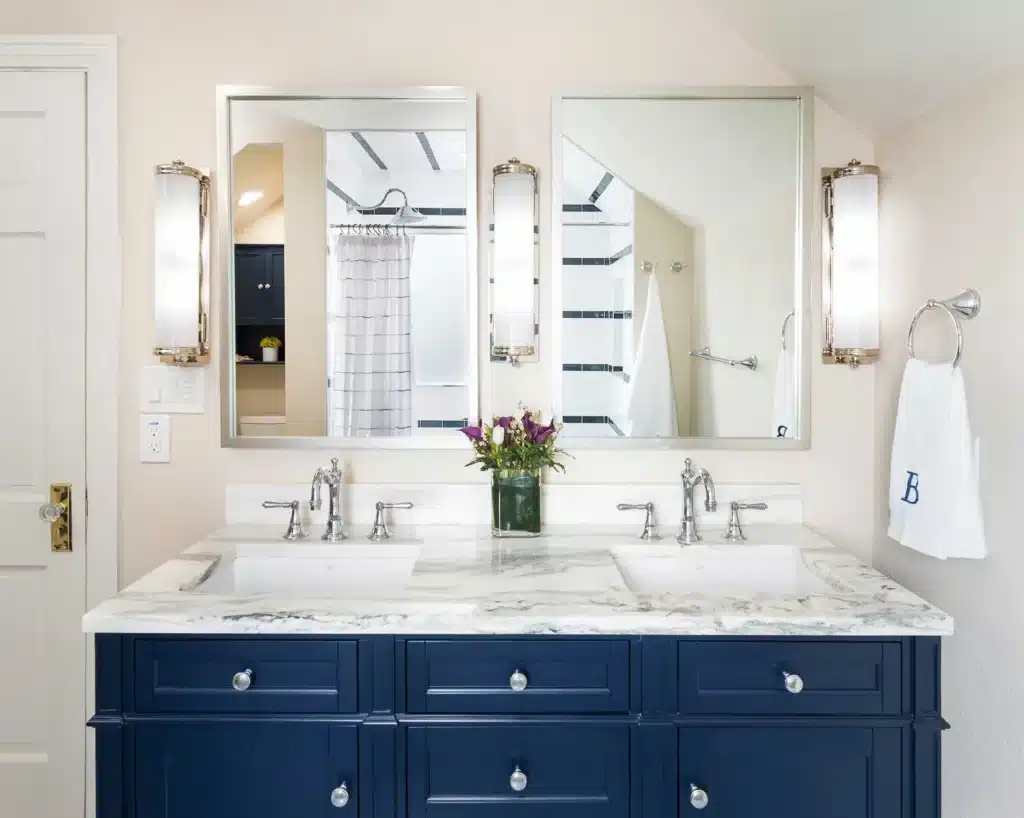
Return on investment varies widely depending on how much is spent and how closely the remodel aligns with buyer expectations in the DFW market. While bathroom upgrades consistently rank among the most valuable home improvements, the relationship between cost and return becomes less efficient at higher price points.
According to the Remodeling Magazine Cost vs Value Report, mid-range bathroom remodels tend to recover a higher percentage of their cost compared to luxury renovations, largely because they match what most buyers expect in a move-in-ready home.
ROI by Budget Tier
| Remodel Tier | Typical Cost | Average ROI | Buyer Perception |
|---|---|---|---|
| Budget ($10K) | $8K–$12K | 60%–70% | Clean, updated, functional |
| Mid-range ($25K) | $15K–$30K | 65%–75% | Modern, move-in ready |
| Luxury ($50K+) | $35K–$60K+ | 50%–65% | High-end, premium |
These ranges reflect national trends that closely mirror the DFW market, where buyer expectations are strongly tied to condition and perceived modernity.
Why Mid-Range Remodels Often Perform Best
Mid-range remodels tend to hit the “sweet spot” because they deliver visible upgrades that most buyers recognize immediately.
Key drivers of higher ROI:
- Updated tile showers and flooring
- Modern vanities with stone countertops
- Neutral, widely appealing finishes
- Improved lighting and functionality
Data from the National Association of Realtors Remodeling Impact Report shows that buyers consistently rate bathroom updates as one of the most desirable home improvements, especially when the design feels current and practical.
These upgrades improve both first impressions and usability, which directly influence purchase decisions.
Why Luxury Remodels See Diminishing Returns
As budgets increase, ROI tends to decrease as a percentage of cost. This happens because high-end features often exceed what the average buyer expects or is willing to pay extra for.
Examples of luxury features with lower ROI impact:
- Heated flooring systems
- Custom cabinetry beyond standard layouts
- High-end designer fixtures
- Freestanding tubs in smaller spaces
While these features enhance comfort and lifestyle, they are often viewed as personal upgrades rather than essential value drivers.
Insight: ROI tends to peak when a remodel aligns with what the majority of buyers expect, where additional upgrades begin to reflect personal preference more than market demand.
Budget Remodel ROI: Fast Impact, Limited Upside
Lower-cost remodels can deliver strong returns when they address visible issues such as outdated fixtures, worn surfaces, or poor lighting.
Typical ROI drivers at this level:
- Fresh paint and updated finishes
- Replacing old vanities or fixtures
- Improving overall cleanliness and presentation
These upgrades can significantly improve how a home is perceived during showings, especially when compared to outdated competing listings.
The Role of Market Conditions in DFW
Local market dynamics also influence ROI. In fast-growing areas like Dallas-Fort Worth, where housing demand remains strong, updated bathrooms can help homes sell faster and closer to asking price.
According to housing data from the U.S. Census Bureau, population growth and housing demand continue to shape buyer expectations, pushing homeowners to prioritize updates that make properties feel current and well-maintained.
In competitive neighborhoods, a well-executed mid-range remodel can create a noticeable advantage over similar homes with outdated interiors.
ROI vs Lifestyle Value
Financial return is only part of the equation. Many homeowners remodel bathrooms for daily comfort, convenience, and personal enjoyment.
- Budget remodels prioritize quick improvements
- Mid-range remodels balance value and usability
- Luxury remodels emphasize experience and long-term enjoyment
The right choice depends on how long you plan to stay in the home and how much you value the day-to-day experience of the space.
How to Maximize ROI Regardless of Budget
To get the strongest return from any remodel tier:
- Choose neutral, widely appealing finishes
- Focus on functionality and layout efficiency
- Avoid over-customization that limits buyer appeal
- Ensure high-quality installation, especially in wet areas
These principles align with recommendations from the National Association of Home Builders, which emphasizes durability, efficiency, and broad market appeal as key drivers of remodeling value.
Understanding how ROI changes across budget tiers allows homeowners to make more informed decisions about where to invest and what to expect when it comes time to sell.

Who Each Budget Tier Is Best For
Choosing between a $10K, $25K, or $50K bathroom remodel depends less on the space itself and more on your goals, timeline, and how you plan to use the home. Each tier serves a different type of homeowner, and aligning your budget with your situation leads to better outcomes both financially and functionally.
Housing data from the U.S. Census Bureau shows that homeowners are increasingly staying in their homes longer, which has shifted remodeling decisions toward balancing resale value with long-term livability.
Best Fit for a $10K Bathroom Remodel
This tier works well for homeowners who need a fast, cost-controlled upgrade without major construction.
Ideal for:
- Rental property owners preparing a unit for tenants
- Homeowners planning to sell within 1–2 years
- Bathrooms that are functional but visually outdated
- Secondary bathrooms with lower daily use
Typical priorities:
- Improve appearance quickly
- Fix visible wear and tear
- Stay within a strict budget
| Scenario | Why It Fits |
|---|---|
| Rental turnover | Fast updates increase rentability |
| Pre-sale refresh | Improves listing photos and buyer perception |
| Guest bathroom update | Lower usage reduces need for premium materials |
This tier focuses on perception and presentation, helping the bathroom feel clean and updated without extensive investment.
Best Fit for a $25K Bathroom Remodel
The mid-range tier is the most common choice for homeowners who want a balanced upgrade that improves both function and value.
Ideal for:
- Primary homeowners planning to stay 5–10 years
- Families upgrading daily-use bathrooms
- Homes that need modernization to match market expectations
- Buyers who recently purchased an older home
Typical priorities:
- Improve usability and storage
- Upgrade to durable materials
- Create a cohesive, modern design
| Scenario | Why It Fits |
|---|---|
| Family home upgrade | Better functionality for daily routines |
| Recently purchased home | Aligns finishes with current standards |
| Value-focused remodel | Strong balance of cost and ROI |
According to the National Association of Realtors Remodeling Impact Report, homeowners often report high satisfaction with bathroom upgrades that improve comfort and usability, which is why this tier tends to deliver strong overall value.
Best Fit for a $50K+ Bathroom Remodel
High-end remodels are best suited for homeowners prioritizing long-term comfort, customization, and design quality.
Ideal for:
- Long-term homeowners planning to stay 10+ years
- High-value homes where finishes need to match property level
- Primary bathrooms used daily
- Homeowners seeking a more personalized or luxury experience
Typical priorities:
- Custom layout and features
- Premium materials and finishes
- Enhanced comfort and convenience
| Scenario | Why It Fits |
|---|---|
| Forever home | Long-term use justifies higher investment |
| Luxury property | Maintains consistency with home value |
| Lifestyle upgrade | Focus on comfort and daily experience |
The National Kitchen & Bath Association notes that homeowners at this level often prioritize features that enhance daily routines, such as larger showers, improved lighting, and better storage solutions.
Matching Budget to Timeline
How long you plan to stay in the home plays a major role in determining the right investment level.
| Time Horizon | Recommended Tier | Reasoning |
|---|---|---|
| 0–3 years | $10K–$25K | Focus on resale and quick improvements |
| 3–10 years | $25K | Balance durability and cost |
| 10+ years | $25K–$50K+ | Prioritize long-term comfort and quality |
Homeowners staying longer tend to benefit more from higher-quality materials and systems, since the value is experienced daily rather than realized only at resale.
Lifestyle vs Investment Decision
Each tier reflects a different balance between financial return and personal use.
- Lower budgets emphasize efficiency and short-term impact
- Mid-range budgets balance usability, durability, and resale value
- Higher budgets focus on experience, customization, and long-term satisfaction
Insight: The right remodel tier aligns with how you live in the space, where daily habits and future plans shape the smartest investment decision.
Choosing the Right Tier
To determine the best fit, consider three questions:
- How long will you stay in the home?
- How often will this bathroom be used?
- Are you optimizing for resale value or daily experience?
Answering these clarifies whether a bathroom should be treated as a functional update, a value-driven upgrade, or a long-term investment in comfort.

See the Full Bathroom Remodel Cost Guide (DFW 2026)
Understanding the difference between a $10K, $25K, and $50K bathroom remodel gives you a clear framework for decision-making. The next step is translating that framework into a precise, personalized budget based on your bathroom size, layout, and material preferences.
Bathroom remodeling costs vary widely even within the same price tier. Factors such as square footage, plumbing complexity, and material selection can shift a project by thousands of dollars. National data from the HomeAdvisor bathroom remodel cost guide shows that cost ranges are broad because no two bathrooms involve the exact same scope of work.
What a Full Cost Guide Helps You Understand
A comprehensive cost breakdown allows you to move beyond general ranges and plan with clarity.
| Cost Factor | Why It Matters | Impact on Budget |
|---|---|---|
| Bathroom size | More materials and labor required | Direct cost increase |
| Remodel type | Cosmetic vs full renovation | Major cost swing |
| Material selection | Budget vs premium finishes | Wide price variation |
| Labor scope | Number of trades involved | Largest cost driver |
| Layout changes | Plumbing and structural adjustments | High cost increase |
The National Association of Home Builders highlights that labor and project complexity are the most significant drivers of remodeling costs, especially in smaller, detail-heavy spaces like bathrooms.
How to Use a Cost Guide Effectively
A detailed cost guide becomes most valuable when you use it to map your project step by step.
- Estimate cost based on bathroom size
- Adjust for remodel scope (cosmetic, partial, full)
- Factor in material preferences
- Account for labor-intensive upgrades like tile and plumbing
This process helps turn a rough budget into a realistic financial plan, reducing the risk of unexpected costs during construction.
Common Questions a Cost Guide Answers
| Question | Why It’s Important |
|---|---|
| How much does a remodel cost per square foot? | Helps with early budgeting |
| What drives the biggest price increases? | Prevents scope creep |
| How much is labor vs materials? | Clarifies where money goes |
| What upgrades are worth the cost? | Improves ROI decisions |
According to the U.S. Department of Housing and Urban Development, proper planning and budgeting are key factors in avoiding cost overruns and ensuring successful home improvement projects.
When to Dive Deeper
You should review a full cost breakdown when:
- You are actively planning a remodel
- You need accurate estimates for financing or budgeting
- You are comparing contractor bids
- You want to prioritize upgrades based on cost and value
Insight: The more detailed your understanding of costs before construction begins, the more control you have over the final outcome of the project.
Turning a Budget Into a Plan
A high-level comparison helps you choose a direction. A detailed cost guide helps you execute it.
- It clarifies what your budget realistically allows
- It highlights tradeoffs between materials and scope
- It reduces uncertainty during contractor conversations
By combining both perspectives, you move from guessing what a remodel might cost to knowing exactly how to plan it.