Whole House Remodel Cost (2026 National Guide)
Planning a whole house remodel is one of the biggest financial decisions a homeowner makes. The stakes are high: costs spiral unexpectedly, timelines slip, and the emotional weight of living through construction can strain families. Yet without a clear understanding of what houses like yours actually cost to remodel in 2026, you’re flying blind into estimates and contractor conversations.
This guide provides the data, breakdowns, and decision frameworks you need to set a realistic budget, understand where costs concentrate, and avoid the most common pricing surprises. We’ve pulled 2026 national averages from the National Association of Home Builders (NAHB), Houzz research, the Remodeling magazine Cost vs Value Report, and real-world project data to give you pricing that reflects the current market, not outdated benchmarks.

Average Whole House Remodel Cost in 2026
National Average Price Range
The average whole house remodel in the United States in 2026 ranges from $150,000 to $450,000 for a typical single-family home. This wide band reflects genuine variation: location, home size, scope, and material quality all matter enormously. A modest cosmetic refresh in an affordable market costs far less than a high-end structural overhaul in a coastal city.
According to NAHB’s Remodeling Market Index, the median cost for a major home remodel is approximately $85 per square foot, meaning a 2,500-square-foot home averages $212,500 for a comprehensive renovation. This serves as a useful anchor point for comparing your own project.
Pricing Tiers: Where Your Project Likely Falls
| Remodel Tier | Total Cost Range | Cost/Sq Ft | Scope | Timeline |
|---|---|---|---|---|
| Cosmetic (Surface-Level) | $30,000–$75,000 | $15–$30/sq ft | Paint, flooring, fixtures, appliances | 6–10 weeks |
| Standard (Most Projects) | $100,000–$250,000 | $40–$100/sq ft | New kitchen, bathrooms, HVAC, plumbing | 12–20 weeks |
| Structural (Major Systems) | $200,000–$400,000 | $80–$160/sq ft | Electrical overhaul, foundation work, full interior redesign | 20–32 weeks |
| High-End/Luxury | $350,000–$700,000+ | $140–$280+/sq ft | Bespoke cabinetry, premium finishes, smart home, architectural changes | 24–40+ weeks |
Most homeowners undertaking a whole house project fall into the Standard or Structural tier. These projects address aging mechanical systems, outdated kitchens and baths, and layout inefficiencies all at once, delivering both livability and value.
Key Planning Metric: Expect 12 to 20 weeks for a standard whole house remodel. Regional labor availability, permit complexity, and discovery of hidden damage add 2 to 8 weeks. Set expectations with your family accordingly.
What “Whole House” Actually Means
The term varies widely. A whole house remodel may mean one of three things:
- All main living spaces: Kitchen, primary bathroom, main living areas, flooring throughout.
- Full structural systems: Electrical, plumbing, HVAC, and mechanical overhaul affecting the entire home.
- Complete interior and exterior: Every room, all systems, exterior siding, roof, landscaping.
Clarify scope with your contractor upfront. Ambiguity here is where cost estimates diverge wildly.

Cost per Square Foot for a Whole House Remodel
How to Use Cost-per-Square-Foot Data
Cost per square foot is a rough comparison tool, not a precise predictor. A 1,500-square-foot historic bungalow with plaster walls, outdated electrical, and a cramped kitchen may cost $120 per square foot to fully remodel. A 1,500-square-foot newer ranch with modern bones and open layout might run $60 per square foot. The newer home has fewer surprises; the historic home has hidden rot, asbestos, or structural quirks.
The calculation: Total project cost divided by home square footage. For example, a $225,000 project in a 2,500-square-foot home = $90 per square foot.
2026 Cost-per-Square-Foot Benchmarks by Project Scope
- Light cosmetic refresh: $15–$35/sq ft (new paint, flooring, kitchen appliances, fixture upgrades)
- Standard kitchen and bath refresh: $50–$90/sq ft (new cabinetry, tile, plumbing, HVAC zones)
- Whole house structural: $85–$150/sq ft (all systems updated, new walls possible, full electrical/plumbing overhaul)
- High-end with custom work: $140–$250+/sq ft (bespoke finishes, architectural changes, luxury appliances)
For a deeper dive into per-square-foot methodology and how it applies to your home’s age and condition, see how per-square-foot remodeling costs work in 2026. Houzz Research surveys tens of thousands of homeowners annually and confirms these regional cost spreads in their US Houzz and Home study.
Location Premium: Region Matters
Labor costs vary sharply by region. A project that costs $100/sq ft in rural Texas or the Midwest may cost $150/sq ft in suburban Boston, $180/sq ft in the San Francisco Bay Area, and $140/sq ft in Denver. Material costs also drift: premium finishes and appliances cost more in wealthy coastal markets, where demand supports higher pricing.
For homeowners in Texas, including DFW and Central Texas markets, remodeling costs typically sit at the national median or slightly below, making these regions favorable for major renovation work.

What Drives Whole House Remodel Cost the Most
The True Cost Drivers: A Ranked List
Not all decisions carry equal weight. Some choices double your budget; others save 10 percent. Here’s what actually moves the needle:
- Kitchen and primary bathroom upgrades: These two rooms account for 40 to 60 percent of a whole house remodel budget. A mid-range kitchen (custom cabinetry, granite or quartz countertops, new appliances, tile backsplash) runs $50,000 to $90,000 alone.
- Structural surprises: Foundation issues, outdated electrical systems that need full replacement, plumbing that’s deteriorated beyond cosmetic repair, or mold/rot discovered during demo can add $15,000 to $100,000 unexpectedly.
- HVAC and mechanical systems: A modern whole-home HVAC system costs $8,000 to $15,000 installed. Upgrading all mechanical systems (electrical panel, plumbing main lines, gas, water heater) easily reaches $20,000 to $35,000.
- Square footage and scope: Simply put, remodeling a 3,000-square-foot home costs more than remodeling a 1,500-square-foot home. Doubling the scope doesn’t double the cost per square foot (economies of scale help), but it does add significant total expense.
- Material and finish quality: The jump from standard to premium is steep. Mid-range cabinets cost $150–$300 per linear foot installed; custom cabinetry costs $400–$800+. Laminate countertops run $40–$60 per square foot; quartz or granite runs $60–$150 per square foot.
- Labor rates and contractor experience: A reputable contractor with 15+ years of experience charges more per hour than a newer builder, but you’re paying for reliability, warranty, and schedule predictability. Cheap estimates often signal hidden problems later. The National Association of the Remodeling Industry maintains a directory of certified remodelers if you’re vetting contractors by credential.
Insight: Homeowners chronically underestimate what kitchen and bathroom work actually costs. If you’ve budgeted $50,000 for these two rooms, you’re at the low end of mid-range quality. Budget $60,000 to $120,000 for both rooms if you want finishes that won’t feel dated by 2032.

Cost Breakdown by Room
Kitchen Remodeling Costs
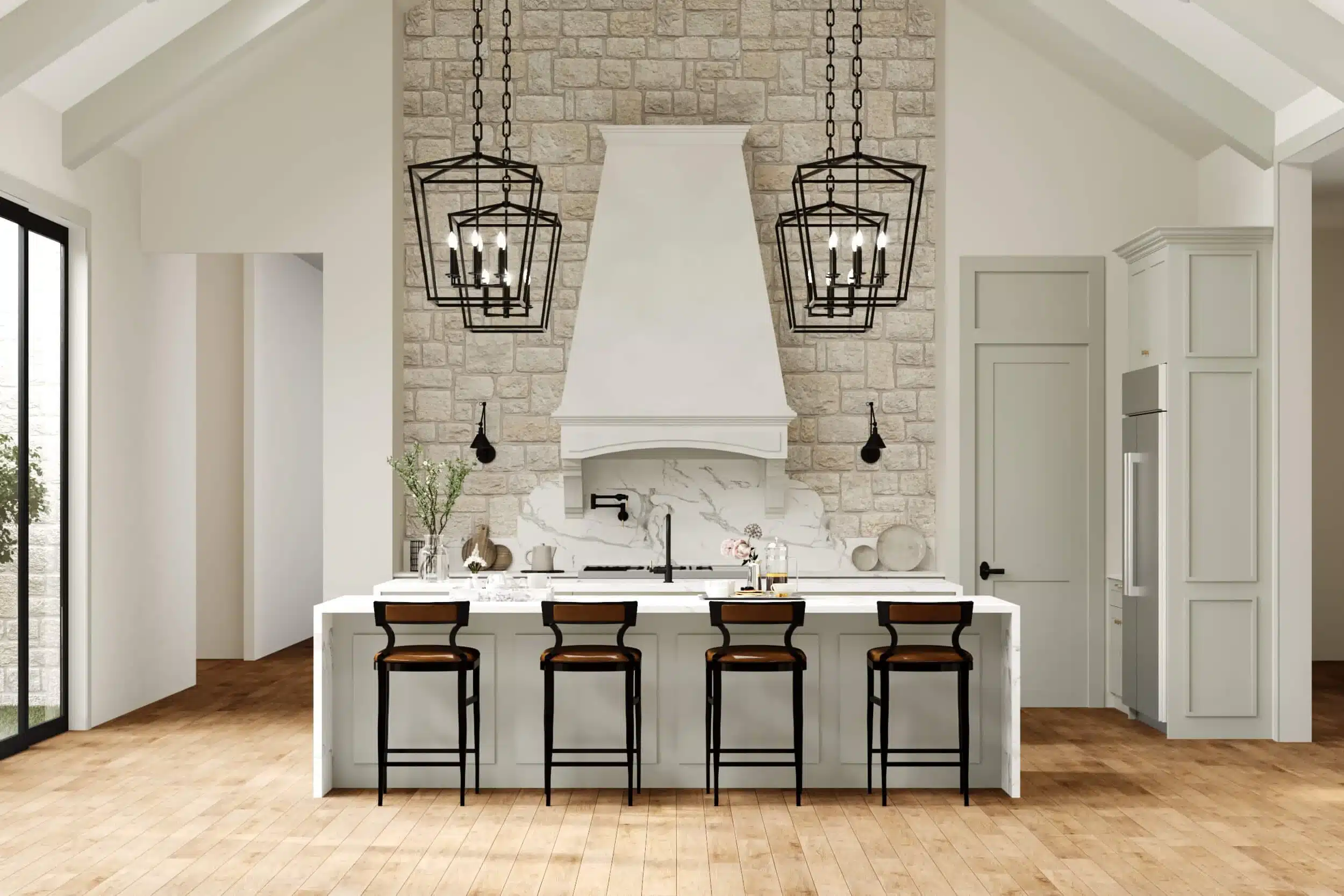
A kitchen remodel is the single largest cost in most whole house projects. For a modest 12-foot-by-12-foot kitchen:
- Custom cabinetry: $25,000–$45,000
- Countertops (quartz or granite): $6,000–$12,000
- Appliances (mid to high-end): $4,000–$8,000
- Backsplash and tile: $2,500–$4,500
- Plumbing and electrical: $4,000–$7,000
- Labor (installation, permits): $8,000–$15,000
- Total mid-range kitchen: $50,000–$90,000
Luxury kitchens with custom millwork, high-end appliances (Wolf, Sub-Zero, Miele), and designer finishes exceed $120,000 easily. Consumer Reports offers independent appliance testing data that helps homeowners evaluate whether premium appliances justify their cost premium.
Bathroom Remodeling Costs
Primary and secondary bathrooms typically run lower per square foot than kitchens but aggregate significantly. For a 70-square-foot primary bathroom:
- Vanity and fixtures: $3,500–$8,000
- Tile and flooring: $4,000–$8,000
- Plumbing (relocated if needed): $3,000–$6,000
- Ventilation and electrical: $1,500–$3,000
- Labor and permits: $4,000–$7,000
- Total mid-range primary bath: $16,000–$32,000
Secondary bathrooms (powder rooms, guest baths) cost $8,000 to $18,000 each. A whole house remodel typically includes primary and secondary bathroom upgrades, which aggregate to $25,000 to $50,000 across both.
Living Areas, Bedrooms, and Secondary Spaces
Flooring, painting, lighting, and fixture updates throughout living rooms, bedrooms, and hallways constitute the remaining 20 to 30 percent of a whole house budget:
- Flooring (hardwood, engineered, or high-end laminate): $8–$15 per square foot installed. A 1,500-square-foot main floor runs $12,000 to $22,500.
- Painting: $2,500–$5,000 for interior paint throughout (2,500 to 3,000 square feet). Includes prep, primer, finish coat, trim.
- Lighting and electrical: $3,000–$7,000 to upgrade circuits, add ceiling fans, install recessed lighting, and add outlets.
- Doors, trim, and hardware: $4,000–$10,000 for new interior doors, door frames, baseboards, crown molding.
Combined Room-by-Room Example: 2,000-Sq-Ft Home
| Room/System | Budget | Notes |
|---|---|---|
| Kitchen | $65,000 | Custom cabs, granite, mid-tier appliances |
| Primary Bath | $24,000 | Tile shower, new vanity, fixtures |
| Secondary Bath | $12,000 | Updated fixtures, tile floor |
| Flooring Throughout | $18,000 | Hardwood main floor, tile in wet areas |
| Paint & Trim | $7,500 | Interior paint, new baseboards, doors |
| HVAC/Mechanical | $22,000 | Full system replacement, electrical panel |
| Lighting & Electrical | $5,000 | Upgraded circuits, ceiling fans, outlets |
| Permits & Contingency | $15,000 | 8% contingency + permit fees |
| TOTAL | $168,500 | ~$84/sq ft for standard whole house |
Cosmetic vs Structural vs Gut Remodel: Cost Tiers
Cosmetic Remodel: Surface-Level Refresh
A cosmetic remodel updates finishes and fixtures without touching structural systems, plumbing, electrical, or mechanical.
Scope:
– Paint, new hardware, light fixtures, faucets
– Replace kitchen appliances (same footprint)
– Refinish or replace flooring
– New light switches and outlets (existing wiring)
– Minor trim and caulking
Cost: $30,000–$75,000 for a 2,000-square-foot home ($15–$37/sq ft)
Timeline: 6–10 weeks
Best for: Homes with solid bones, modern electrical and plumbing, no water damage or foundation concerns. Typically builds-era 2000 and newer or well-maintained older homes.
Limitation: You’re deferring major system upgrades. If your electrical panel is at capacity or plumbing is failing, cosmetic work masks problems rather than solving them.
Standard Remodel: Mechanical and Finish Overhaul
A standard whole house remodel replaces mechanical systems (HVAC, updated electrical, plumbing in key areas), finishes, and fixtures. Layout stays largely the same.
Scope:
– Full HVAC replacement, electrical panel upgrade
– Kitchen with new cabinetry and appliances
– Primary and secondary bathroom updates
– Flooring throughout
– Paint, new trim, new doors
– Updated plumbing fixtures and water heater
Cost: $100,000–$250,000 for a 2,000-square-foot home ($50–$125/sq ft)
Timeline: 12–20 weeks
Best for: Most homes 15 to 40 years old. Addresses aging systems, outdated finishes, and safety concerns (old electrical, deteriorating plumbing) in one project.
Upside: You’re solving the major pain points in one coordinated effort, which is far more efficient than piecemeal repairs.
Structural/Gut Remodel: Studs-Out Overhaul
A gut remodel opens walls, relocates plumbing and electrical, may reconfigure layout, and replaces everything from framing to finishes. Walls come down; systems run new.
Scope:
– Structural assessment and potential modifications
– Full electrical and plumbing rerouting
– New HVAC design (potential ductwork relocation)
– Complete interior demolition and rebuild
– Kitchen and bathroom complete reimagination
– Possible roof or foundation work uncovered during demo
– Flooring, finishes, and fixtures throughout
Cost: $200,000–$400,000+ for a 2,000-square-foot home ($100–$200+/sq ft)
Timeline: 20–32 weeks (significant risk of extension)
Best for: Homes with structural issues, severe layout problems, homes over 50 years old with deteriorated systems, or homeowners willing to invest heavily for a custom interior.
Risk: This is where budget overruns are most common. Hidden structural issues (termite damage, foundation settlement, asbestos, lead paint) discovered during demo drive costs up dramatically. For homes built before 1978, the EPA’s Renovation Repair and Painting Program requires contractors to follow lead-safe work practices, adding cost and timeline. A 10 to 15 percent contingency is often insufficient.
Comparison Table: Cosmetic, Standard, and Structural
| Factor | Cosmetic | Standard | Structural |
|---|---|---|---|
| Total Cost (2,000 sq ft) | $30k–$75k | $100k–$250k | $200k–$400k+ |
| Cost/Sq Ft | $15–$37 | $50–$125 | $100–$200+ |
| HVAC Updated | No | Yes | Yes, full redesign |
| Electrical Upgraded | Minimal | Yes, panel & circuits | Yes, complete reroute |
| Plumbing Replaced | Fixtures only | Key areas | Complete system |
| Walls Moved | No | Minimal | Possible |
| Timeline | 6–10 weeks | 12–20 weeks | 20–32+ weeks |
| Best for Home Age | 2000+ | 15–40 years | 50+ years or structural issues |
| Contingency Risk | Low | Moderate | High |

Hidden Costs Most Homeowners Miss
The Contingency Fund
Every contractor builds a 10 to 20 percent contingency into a bid to cover unknowns. You should too. On a $200,000 project, contingency is $20,000 to $40,000. This isn’t padding; it’s realism. Contractors find rot under flooring, asbestos insulation, outdated electrical that can’t handle modern loads, or cast-iron plumbing that crumbles mid-demo. If you budget zero contingency, you’re one discovery away from debt or project pause.
Permits and Inspections
Building permits, electrical permits, plumbing permits, and structural inspections can aggregate to $2,000 to $8,000 depending on scope and location. Some jurisdictions charge per-permit; others charge a percentage of project value. A structural remodel may require engineering reports ($1,500 to $3,000) and multiple inspections. Factor these in upfront rather than discovering mid-project that you owe an extra $5,000 to the city.
Temporary Housing and Logistics
If your remodel displaces the kitchen, bathrooms, or makes bedrooms inaccessible, living in your home during construction becomes difficult or impossible. Hotels, short-term rentals, or staying with family incur costs: $100 to $300 per night for modest hotel lodging, plus meals out (construction dust makes home cooking unpleasant). A three-month remodel requiring one month away from home adds $3,000 to $9,000 to true project cost.
Disposal and Demolition
Trash removal, recycling fees, and hazardous material disposal (asbestos, lead paint, old appliances) add $2,000 to $6,000. This is rarely foreseeable before demo begins. If your home was built before 1980 and contains asbestos insulation or lead paint, disposal costs rise sharply ($3,000 to $10,000+).
Design and Engineering
If the project requires architectural drawings, structural engineering, or design services, add $3,000 to $8,000. Some contractors include basic design; others charge separately. High-end design services cost $100 to $250 per hour and may run 40 to 100 hours for a whole house project ($4,000 to $25,000). Architectural Digest’s renovation coverage documents how high-end projects approach design-build budgets and where premium services add the most value.
Material Escalations and Delivery
Material costs fluctuate. A kitchen cabinet order placed in January may cost 8 percent more by April if lumber prices spike. Appliances ordered in January might extend to April delivery if supply tightens. This adds unpredictability: a $65,000 kitchen estimate may become $70,000 by the time materials arrive. Build a 3 to 5 percent material escalation buffer if the project spans more than 16 weeks.
Financing Costs
If you finance the remodel, interest and fees add 5 to 12 percent to your total cost. A $200,000 home equity loan at 7.5 percent over 15 years costs approximately $55,000 in interest alone. This is real money and should factor into your decision to proceed.
Practical Rule: Take your contractor’s estimate, add 15 to 20 percent for contingency and hidden costs, and that’s your true budget. Many homeowners discover this the hard way mid-project when the contractor needs authorization to proceed past a discovery.

Timeline Impact: Living Through It vs Moving Out
The Hidden Cost of Schedule Stress
A whole house remodel doesn’t pause just because you need dinner, a shower, or a place to sleep. Construction dust enters every corner. Power tools run 6 am to 4 pm (or later). Contractors track mud through your living spaces. If you’re living through it, your quality of life degrades significantly for 12 to 32 weeks.
Many families underestimate this emotional and logistical toll. The financial cost of moving out (hotels, rentals) is often less than the mental health cost of living in a construction zone for six months.
Staying in Your Home During Remodel
Cost implications:
– You save $3,000 to $15,000 on temporary housing (best case: 0 to 4 weeks away; worst case: 8 to 16 weeks)
– You incur costs for contractor accommodation (plastic sheeting, plywood barriers, dust control system rental: $1,000 to $3,000)
– Daily meals and logistics become chaotic; expect to eat out more often (adds $200 to $400 per month)
– Family stress increases, potentially affecting work productivity and relationships
Timeline reality: A standard whole house remodel rarely allows full occupancy during construction. Your kitchen is gone for 8 to 12 weeks; bathrooms are inaccessible for 4 to 10 weeks. You’re living in a dust-filled home at best.
Best practice: Identify a 2 to 4 week window where you can tolerate in-home disruption. Beyond that, plan to relocate temporarily. The peace of mind is worth the cost.
Moving Out and Temporary Housing
Cost implications:
– Short-term rental (3-bedroom, moderate area): $100 to $200 per night ($3,000 to $6,000 per month)
– Hotel chain (mid-range): $90 to $150 per night ($2,700 to $4,500 per month)
– Family or friend’s spare room: $0 to $1,000 per month (appreciated meals and gesture gifts)
Timeline advantage: Without a primary residence to protect from dust and disruption, contractors work faster and cleaner. They can seal off work zones more effectively. Fewer schedule interruptions for your comfort = faster completion and lower actual labor costs. This Old House has published extensive guidance on managing remodel schedules and the logistical tradeoffs of staying versus relocating during major projects.
Financial calculation: Moving out for a 4-week kitchen demo and bath remodeling might cost $4,000 to $8,000. If that accelerates the project by 2 weeks and avoids discovery disputes (you see the work in progress; expectations misalign), you’ve likely saved $5,000 to $15,000 in hidden costs and schedule risk.
For a detailed phase-by-phase timeline and what to expect week by week, read our home renovation timeline guide.

Financing a Whole House Remodel: Options and Tradeoffs
Home Equity Line of Credit (HELOC)
A HELOC allows you to borrow against your home’s equity, repaying flexibly as you spend.
- Typical rate: Prime + 0% to 2.5% (currently 8.5% to 11% range in 2026)
- Typical term: 10-year draw period (interest-only), then 20-year repayment
- For a $200,000 remodel: ~$1,400 to $1,800 per month during repayment (20-year payoff at 9%)
- Upside: Flexible access, lower rates than personal loans, interest may be tax-deductible
- Downside: Variable rate risk; if rates rise, payments rise. If housing market softens, you could owe more than your home is worth.
- Best for: Homeowners with solid credit (680+), significant equity, and stable income who can handle rate risk.
Cash-Out Refinance
Refinance your primary mortgage to a higher loan amount and pocket the difference.
- Typical rate: Current mortgage rate + 0.25% to 0.5% (currently 6.5% to 7.5% range for 2026 cash-out refi)
- Typical term: 15 to 30 years
- For a $200,000 remodel added to a $300,000 mortgage: New mortgage $500,000 at 7% over 30 years = $3,326 per month (vs. existing $2,000, an $1,326 monthly increase)
- Upside: Fixed rate locks in cost predictability; no separate debt structure
- Downside: Extends payoff timeline; adds significantly to monthly payment; costs thousands in closing costs
- Best for: Homeowners with strong equity, who plan to stay in the home long-term, and who want rate certainty.
Home Equity Loan (Fixed-Rate)
A second mortgage with a fixed interest rate and fixed payment schedule.
- Typical rate: 8% to 11% (2026 range, higher than HELOC)
- Typical term: 5 to 20 years
- For a $200,000 loan at 9% over 15 years: $1,520 per month
- Upside: Fixed payment = budget certainty; simpler structure than HELOC
- Downside: Higher rates than HELOC; you’re taking on a second debt stream; if you sell, you must pay both mortgages
- Best for: Homeowners who want predictability and prefer fixed payments to variable-rate risk.
Personal Loan or Credit Card
Personal loans and credit cards are the most expensive financing options but carry no collateral requirement.
- Personal loan rate: 10% to 18% (2026, depends on credit)
- Credit card APR: 18% to 25% for typical homeowners
- For a $200,000 personal loan at 14% over 10 years: $2,857 per month
- Upside: No collateral; no mortgage complications; quick approval
- Downside: Far more expensive than home-secured borrowing; monthly payment is hefty
- Best for: Smaller remodels ($15,000 to $50,000), homeowners with strong credit and no home equity, or as a bridge to secure conventional financing
Cash Payment
If you have the savings, pay cash and avoid all financing costs and interest.
- Upside: No debt; no interest; full cost control; contractors often offer discounts for cash payment (2 to 5%). When bundling energy-efficiency upgrades into a whole house remodel, ENERGY STAR home improvements may qualify for federal tax credits, reducing the effective cash outlay.
- Downside: Drains liquidity; leaves you exposed to other emergencies; forgoes potential investment returns if that cash could have earned 6% to 8% elsewhere
- Best for: Wealthy homeowners or those with large liquid reserves beyond emergency fund
Financing Comparison and Recommendation Framework
| Financing Method | Rate (2026) | Monthly Cost ($200k) | Total Cost (20 yr) | Best for |
|---|---|---|---|---|
| HELOC | 8.5%–11% | $1,400–$1,800 | $336k–$432k | Flexible access, strong credit, equity |
| Cash-Out Refi | 6.5%–7.5% | $1,326+ | $477k+ | Long-term holder, rate certainty |
| Home Equity Loan | 8%–11% | $1,520–$1,900 | $364k–$456k | Fixed payment preference, moderate equity |
| Personal Loan | 10%–18% | $2,000–$3,500 | $480k–$840k | Small remodel, no equity |
| Cash | 0% | $0 | $200k | Wealthy, high liquidity |
For a comprehensive breakdown of financing options, terms, and which fits your situation, see our guide to financing a home remodel in 2026.

Whole House Remodel ROI: What You Actually Recoup
The Hard Truth: You Won’t Break Even
Remodeling is not an investment; it’s consumption. According to Realtor.com’s home improvement guidance, most whole house remodels return 50 to 70 percent of dollars spent at resale, a figure consistent across multiple years of cost vs. value tracking.
- Average cost: $204,000
- Average resale value increase: $127,000
- Net loss: $77,000 (that’s the cost of enjoying the improved home)
You remodel because you love the home you’re improving or because the current condition is making it uninhabitable. Remodeling to “get your money back” is a losing strategy.
ROI by Project Type: Where You Recover Most
Some projects recoup a higher percentage of costs:
- Kitchen remodel: Recovers 50 to 65 percent. A $65,000 kitchen may add $32,000 to $42,000 in resale value. High-visibility, high-use space.
- Bathroom remodels: Recover 50 to 70 percent. A $24,000 primary bath may add $12,000 to $17,000 in value. Updated bathrooms signal maintenance and appeal broadly.
- HVAC replacement: Recovers 50 to 80 percent. A $15,000 system may add $7,500 to $12,000 in value. Buyers care about age and efficiency.
- Flooring: Recovers 70 to 90 percent for hardwood; 40 to 60 percent for lesser materials. Hardwood ages well; laminate dates quickly.
- Roof replacement: Recovers 75 to 85 percent. Buyers weigh remaining lifespan heavily.
- Cosmetic updates (paint, fixtures): Recover 50 to 100 percent. Low-cost, high-perception value.
When ROI Doesn’t Matter: Lifestyle and Livability
You’re remodeling because your current kitchen doesn’t function for a family of five. Because mold in the bathroom is a health hazard. Because the 1970s electrical system can’t handle modern loads. Because you love the neighborhood and want to stay 20 more years. These are valid reasons to remodel even if you won’t “make the money back.”
Frame remodeling as the cost of living well in a home you love, not as an investment. Once you accept that framing, the ROI concern dissolves.
Resale Timing: Market and Timeline Matter
You’ll see the resale lift only if you sell. A remodel completed in a seller’s market (high demand, low inventory) shows stronger ROI than one completed right before a downturn. Zillow’s homeowner guides document how local market conditions affect whether renovation value translates to actual sales price. If you remodel and then live in the home 10 more years, the value lift has already been absorbed into your daily quality of life; the resale gain is a bonus.
For detailed ROI data by project type, expected value uplift, and payback timelines, see our home remodel ROI guide.

Whole House vs Targeted Remodel: When Each Makes Sense
The Whole House Argument: When to Bundle
A whole house remodel bundles kitchen, bathrooms, flooring, mechanical systems, paint, and trim into one project. It’s efficient because contractors don’t remobilize, square footage of work is large (better unit economics), and disruption is concentrated.
Cost per square foot is lower when you’re remodeling 2,500 square feet than when you’re remodeling 300 square feet (kitchen). Contractors can negotiate material discounts for volume, schedule labor continuously, and amortize overhead across the entire job. NAHB’s Eye on Housing remodeling coverage has tracked this bundling efficiency and documents how whole house projects deliver better per-square-foot economics than piecemeal work.
When whole house makes sense:
– Home is 30+ years old and multiple systems are failing or obsolete
– You’re planning to stay 15+ more years (you’ll use the improved home)
– Home condition is limiting resale appeal (outdated finishes across all spaces hurt buyer perception)
– You can phase the project (kitchen first, baths second, other spaces third) to manage cash flow and disruption
– Major structural or mechanical upgrades are imminent anyway (roof, electrical panel, HVAC)
Realistic example: Your home needs a new roof ($15,000), electrical panel upgrade ($8,000), HVAC replacement ($12,000), kitchen ($65,000), and primary bath ($24,000). That’s $124,000 of necessary work. Bundling a whole house remodel around these non-negotiable upgrades makes sense; the additional cosmetic work (paint, flooring, trim) adds perhaps another $30,000 to $40,000. Total $155,000 to $165,000 for a comprehensive update. Doing these separately over 5 years incurs 3x the contractor mobilization costs and schedule complexity.
The Targeted Argument: When to Isolate
Targeted remodeling focuses on the kitchen, primary bathroom, or key visible spaces. Mechanical systems, flooring, and secondary spaces get modest refreshes or skip upgrades entirely.
Cost is immediately lower because scope is defined and smaller. A $65,000 kitchen project finishes in 8 weeks. A $200,000 whole house project finishes in 20 weeks.
When targeted makes sense:
– Home is newer (2000+) with solid bones and mechanical systems (roof, electrical, HVAC are fine for 10+ years)
– You plan to stay 5 to 10 more years (long enough to enjoy improvements, but not long-term hold)
– Budget constraints force choices (you have $80,000; you do kitchen and one bath, skip the rest)
– Specific spaces are functionally broken (kitchen is too small; primary bath is single-sink/shower) while others are adequate
– You’re testing the market before a major renovation (do kitchen now, evaluate if you’re happy, then commit to bigger project)
Realistic example: Your 2005 home has an adequate-condition roof (15 years in, good for another 8 to 10), functional electrical, and a modern HVAC system. But the kitchen is tight and outdated, and the primary bath is builder-grade. You budget $80,000. Kitchen ($65,000) plus primary bath ($24,000) exceeds your budget, so you do kitchen and half the primary bath remodel (vanity and fixtures, skip shower tile demo) for a blended $80,000. You live well in your home for another decade. Secondary bath and other cosmetic work can wait or be deferred to a future owner.
Decision Framework: Whole House vs Targeted
| Factor | Favors Whole House | Favors Targeted |
|---|---|---|
| Home Age | 30+ years | 2000+ (good bones) |
| Systems Status | Multiple near-end-of-life | Mostly sound, 8+ years remaining |
| Timeline Horizon | Stay 15+ years | Stay 5–10 years |
| Budget Available | $150,000+ available | $80,000–$120,000 available |
| Specific Pain Point | Multiple (kitchen, bath, HVAC all fail) | One or two (kitchen is tight, primary bath is dated) |
| Contractor Efficiency | Benefits from bundled scope | Efficiency matters less; scope is smaller |
| Resale Positioning | Home needs overall lift to compete | Key spaces drive buyer perception |

How to Get an Accurate Whole House Remodel Estimate
Pre-Estimate Preparation: Set Yourself Up
Before you invite contractors to bid, clarify your own project definition. Family Handyman remodel guidance includes solid frameworks for how homeowners can document scope before the first contractor walkthrough.
-
Define scope precisely. Is this cosmetic, standard, or structural? What rooms are included? Are you touching the roof or foundation? Write a one-page scope summary.
-
Identify deal-breakers. Do you want the exact kitchen layout preserved, or are you open to reconfiguration? New electrical panel required or is current adequate? These shape estimates dramatically.
-
Gather reference images and examples. Collect finishes, colors, and styles you like. Contractors can estimate “what you’re asking for” only if you show them.
-
Document home details: Year built, square footage, current layout, any known structural issues, pet allergies or accessibility needs. This context helps contractors avoid low-ball estimates later.
-
Set a preliminary budget range. You don’t need exact numbers yet, but “I’m thinking $150,000 to $250,000 range” tells contractors whether they’re in the ballpark.
Selecting Contractors to Bid
Invite 3 to 5 contractors to bid. This provides comparison data without the analysis paralysis of 10 bids. Look for:
- Established history in your area: 10+ years in business, locally licensed and insured
- Specialization in whole house remodels (not just kitchen or bath specialists)
- Good local references: Ask for 3 prior whole house clients you can call
- Transparent communication: Do they explain their process clearly? Do they ask detailed questions?
- Professional, detailed estimates: A good estimate is 10 to 20 pages; vague estimates are red flags
Evaluating Estimates and Red Flags
You’ll receive 3 to 5 proposals. They likely vary by $30,000 to $80,000. Here’s how to read them:
Does the estimate include:
– Detailed line-item breakdown (not just “kitchen: $65,000” but “cabinets $35,000; countertops $8,000; backsplash $2,500”)?
– Contingency percentage (typically 10 to 20%)?
– Permits and inspection fees?
– Warranty (what work is warranted for how long)?
– Project schedule with milestone dates?
– Insurance and bonding details?
Red flags in estimates:
– Vague descriptions (“kitchen work: $60,000”) without detail
– Zero contingency or contingency below 10%
– Missing permit and fee lines
– Significantly lower than other bids (often signals missing scope)
– No timeline or warranty mentioned
– Contractor avoids questions about scope or changes
When estimates diverge widely (say, $140k vs $200k for same home):
– Call each contractor and ask where the gap sits (kitchen? finishes? mechanical systems?)
– You may discover one bid excludes structural work or uses builder-grade finishes while another assumes premium selections
– The gaps aren’t random; they usually reflect different interpretations of your scope or different material quality assumptions
The Estimate Interview: Verifying Understanding
Once you’ve narrowed to 2 to 3 finalists, schedule a detailed walkthrough with each. This is where you validate they understand your vision and address ambiguities:
- Walk through the home together; have them describe their approach to each space
- Ask how they’d handle a specific discovery (e.g., “If we find asbestos under the flooring, how would you handle it and what would it cost?”)
- Discuss their subcontractor network: Who does electrical? Plumbing? Do they hire day-labor or long-term subs? (Consistency matters)
- Clarify change order process: How do you request modifications mid-project? What’s the approval process? How fast do they turn change orders around?
- Ask about their contingency philosophy: Will they spend it on quality improvements or save it for owner refunds?
Real dialogue uncovers mismatches. If they describe their approach and you hear something that doesn’t align with your vision, that’s a sign you’re not aligned. Better to know now than mid-project.
The Contract: Locking in Scope and Price
Once you’ve selected your contractor, the contract is where you codify scope, timeline, and price:
- Scope must be detailed: Reference attached drawings and specifications. “Kitchen remodel per attached drawings” is better than “kitchen remodel.”
- Price is fixed: Unless you approve a change order, the price doesn’t change. Contingency is for unknowns; it’s not a license to inflate bills.
- Timeline with milestones: Start date, expected completion, and phase dates (demo complete by X, drywall complete by Y, final walkthrough by Z). This holds everyone accountable.
- Warranty and guarantee: Typical warranties are 1 year labor, 10 years on structural work. Ensure this is specified.
- Payment terms: Most contractors work on a draw schedule (25% upfront, 25% at phase one complete, 25% at phase two, 25% final). Never pay 100 percent upfront; it removes their incentive to complete.
A solid contract is 5 to 10 pages, detailed, and signed by both parties. If a contractor resists documenting scope and price in writing, that’s a major warning sign.
Getting a Realistic Timeline Estimate
Whole house remodel timelines vary, but these benchmarks help you evaluate what’s realistic:
- Small cosmetic project (single bath, paint): 4 to 8 weeks
- Kitchen and one bath: 10 to 14 weeks
- Standard whole house (kitchen, primary bath, secondary bath, flooring, paint): 12 to 20 weeks
- Structural whole house (above plus HVAC, electrical panel, plumbing main line): 18 to 32 weeks
- Complete gut with potential layout changes: 20 to 40+ weeks
Add 20 to 30 percent if the home is pre-1980 (higher discovery risk) or in an area with permit backlogs.
The timeline you’re given assumes:
– Permits approved on schedule (sometimes not; some towns have 8-week permit review)
– No major structural surprises (a foundation crack or termite damage extends timeline by 2 to 8 weeks)
– Materials arrive on schedule (supply chain disruptions can delay 2 to 4 weeks)
– Weather is cooperative (only relevant for exterior work)
– You make timely decisions on selections (delays in choosing tile or appliance finishes hold up work)
Any estimate that promises a whole house remodel in 8 weeks is unrealistic unless the scope is genuinely cosmetic. Credible contractors account for contingency in their timeline (they’ll say “10 to 14 weeks” not “exactly 12 weeks”).
Final Checklist Before Signing
Before you sign the contract and write the first check:
- [ ] Scope is documented clearly (attached drawings or detailed written description)
- [ ] Price is fixed (no “plus cost of discoveries” vagueness)
- [ ] Timeline has start and completion dates (not “approximately 16 weeks”)
- [ ] Payment schedule is specified (draw schedule, not lump sums)
- [ ] Warranty and guarantee are in writing (1 year labor minimum)
- [ ] Contingency percentage is stated (10 to 20%)
- [ ] Contractor insurance and bonding are verified (call the insurance company; verify bonding directly)
- [ ] Change order process is clear (how you request, how they estimate, how you approve)
- [ ] You’ve spoken to 2 to 3 prior clients (references, not just contractor’s claims)
- [ ] You feel confident in the contractor’s professionalism and communication
Once all these are confirmed, you’re ready to start. Clarity upfront prevents surprises mid-project.
A whole house remodel is one of the largest single expenditures most homeowners make, alongside a home purchase itself. Getting the budget right, understanding your financing options, and selecting a contractor with clear eyes about scope and timeline saves stress, money, and regret.
Use this guide to set realistic expectations, validate contractor estimates, and understand what “whole house remodel cost” actually means in your market and home context. When you’re ready to move forward, see our comprehensive remodeling cost guide for deeper dives into specific projects, or contact Fin Home Custom Contracting to discuss your remodeling vision and get a detailed scope and estimate for your DFW or Possum Kingdom Lake area home.