How Much Does a Bathroom Remodel Cost in Wise County? (2026 Guide)
Bathroom remodeling costs in Wise County usually start with a surprisingly simple question: are you updating what is already there, or are you changing the room itself? In 2026, a small cosmetic refresh may land around $8,000 to $15,000, a midrange hall bath or primary bath renovation often falls around $18,000 to $35,000, and a larger custom project with layout changes, premium tile, new plumbing runs, and upgraded fixtures can move into the $40,000 to $65,000+ range.
Those numbers are broad on purpose. Bathroom pricing is driven less by the room’s label and more by the amount of demolition, plumbing work, tile labor, waterproofing, and finish quality involved. National cost guides from sources like HomeAdvisor show how quickly bathroom work climbs from low five figures into the tens of thousands once the project becomes a full gut remodel, and Wise County projects tend to follow that same pattern with local adjustments for access, home age, and trade availability.
| Project Scope | Typical 2026 Range | What It Usually Includes |
|---|---|---|
| Cosmetic refresh | $8,000–$15,000 | Paint, vanity swap, toilet, light fixture updates, minor trim work, limited tile repairs |
| Midrange remodel | $18,000–$35,000 | New tub or shower, new vanity, flooring, tile surround, fixtures, lighting, some plumbing updates |
| High-end / custom remodel | $40,000–$65,000+ | Layout changes, upgraded plumbing, custom tile, frameless glass, premium finishes, extensive labor |
| Luxury primary bath | $65,000–$90,000+ | Large-format tile, premium cabinetry, heated floors, custom shower system, major configuration changes |
For homeowners comparing county-level pricing, the best way to think about a bathroom remodel in Wise County is not “What is the average?” but “Which scope tier fits my house, my timeline, and my finish level?” If you want a broader market benchmark, this guide sits alongside our DFW pricing overview in the how-much-does-a-bathroom-remodel-cost-in-dfw-2026-price-guide/ article, while this page focuses on Wise County conditions specifically. If you are ready to compare your own bath against a real local scope, the fastest next step is usually to review your goals with a wise-county-bathroom-remodeler/-style consultation.
Why Building in Wise County Is Different
Wise County is not a one-size-fits-all remodeling market. It includes older town-center homes, semi-rural properties, and newer exurban neighborhoods, so a bathroom project can range from a straightforward fixture swap to a more complex tear-out that exposes aging plumbing, uneven subfloors, or outdated framing details.
That mix matters because older homes often hide more unknowns behind the walls. Once demolition starts, contractors may find cast-iron drain issues, prior patchwork repairs, or moisture damage that was invisible during the estimate. Rural and semi-rural addresses can also add logistical friction: longer delivery routes, fewer same-day subcontractor visits, and more coordination around inspections and material drop-offs.
Another local difference is that plumbing-heavy bathroom work benefits from careful sequencing. If you are moving a toilet, shower drain, or supply lines, you are no longer just buying tile and fixtures; you are buying schedule coordination, licensed-trade labor, and inspection readiness. The Texas State Board of Plumbing Examiners provides a useful reference point for why plumbing compliance matters whenever fixture locations change.
In short, Wise County projects are often less about “Can the bathroom be remodeled?” and more about “How much hidden work is going to appear once we open it up?” That is why contingency planning is especially important here.

Typical Project Cost Ranges
The fastest way to understand bathroom remodeling cost is to break the work into common project tiers. In Wise County, the room size matters, but scope matters more.
Cosmetic refresh: $8,000 to $15,000
A refresh is the lightest form of remodeling. It usually keeps the existing layout and avoids major plumbing changes. Typical items might include:
- repainting walls and ceilings
- replacing the vanity and countertop
- installing a new toilet
- updating a faucet and shower trim
- changing light fixtures and mirrors
- making limited drywall or trim repairs
- refreshing caulk, grout, and small tile areas
A project at this level can be attractive if the room functions well but looks dated. It is often the best fit for a secondary bath that does not need a complete transformation.
Midrange remodel: $18,000 to $35,000
This is where many Wise County homeowners land. A midrange remodel usually includes a new shower or tub, updated flooring, a new vanity, better lighting, and more substantial tile work. The layout typically stays similar, but more trades are involved.
Typical cost items here include:
- demolition and haul-away
- new shower surround or tub installation
- tile flooring
- waterproofing in wet zones
- upgraded lighting and ventilation
- new toilet and vanity
- plumbing adjustments that stay close to the existing layout
For many homes, this is the point where the bathroom starts to feel fully modern without turning into a luxury custom build.
High-end or custom remodel: $40,000 to $65,000+
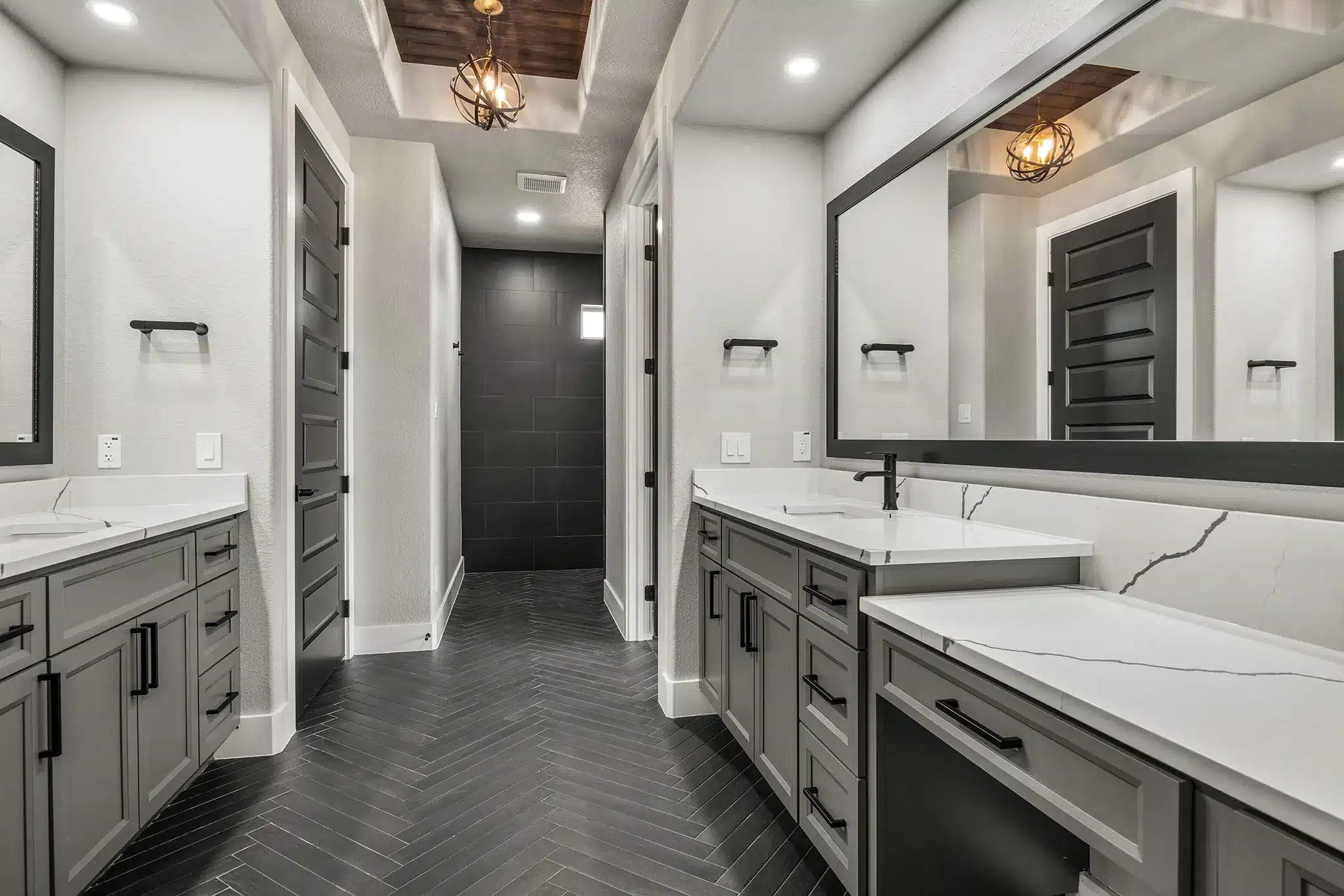
Once the project includes layout changes, custom tile, upgraded plumbing, or premium fixtures, the numbers move quickly. The cost of materials rises, but labor often rises even faster because of the time required for tile layout, waterproofing, multiple inspection points, and specialty finishes.
You may be in this tier if you want:
- a larger walk-in shower
- frameless glass
- a freestanding tub
- custom cabinetry
- heated flooring
- designer tile
- relocated plumbing or electrical fixtures
- more substantial framing or subfloor work
A high-end bath is less about replacing finishes and more about rebuilding the room into a much more polished space.
Luxury primary bath: $65,000 to $90,000+
At the top end, a bathroom remodel becomes a custom construction project. That might include expanded square footage, premium stone or porcelain, spa-style shower systems, separate wet and dry zones, and substantial mechanical or layout changes.
These budgets are not unusual when homeowners want a true primary-suite upgrade. They are also more likely when hidden conditions are discovered after demolition.
If you are comparing Wise County costs against nearby areas, it can help to see how the same project tier behaves elsewhere. For example, our county-specific guides for Denton County and Kaufman County show similar scope-based pricing, but local labor access and home stock can shift the final price in subtle ways.

Cost Per Square Foot and What It Includes
Bathroom remodels are often discussed in square-foot terms, but that metric can be misleading if you use it alone. A small bathroom may cost more per square foot than a larger one because fixed labor items do not scale down very far.
As a rough planning tool, Wise County homeowners can use the following 2026 ranges:
- Cosmetic refresh: about $150 to $300 per square foot
- Midrange remodel: about $250 to $500 per square foot
- High-end/custom remodel: about $500 to $900+ per square foot
These ranges are not official quotes; they are budgeting shorthand. A 50-square-foot guest bath at $300 per square foot is still a $15,000 project, while a 120-square-foot primary bath at $500 per square foot is already at $60,000.
What the square-foot number actually covers
A square-foot estimate usually folds in several categories:
- demolition
- framing and patching
- plumbing adjustments
- electrical work
- waterproofing
- tile labor and grout
- cabinets or vanity install
- toilet, sink, tub, and shower fixture installation
- paint and trim
- finish carpentry
- cleanup and disposal
The most important thing to remember is that square-foot pricing is only useful when the project scope is clear. Two bathrooms with the same size can differ by tens of thousands of dollars if one keeps the layout and the other moves the shower, toilet, or tub.
If you want a fuller explanation of how remodel pricing works across the region, the broader how-much-does-a-bathroom-remodel-cost-in-dfw-2026-price-guide/ guide is a good companion reference. For Wise County specifically, the most accurate estimate will always come from the room’s actual condition, not just its dimensions.

Main Factors That Change Total Price
Bathroom remodel pricing in Wise County is shaped by a handful of major variables. Once you understand them, bid differences make a lot more sense.
1. Home age and hidden conditions
Older homes often cost more to renovate because they reveal issues after demolition. Common surprises include:
- rotted subfloor sections
- outdated plumbing connections
- moisture-damaged framing
- uneven walls or floors
- old electrical components that need updating
Even a modest hidden repair can add several hundred to several thousand dollars. In older Wise County homes, a contingency reserve is usually not optional.
2. Whether the layout changes
Changing the bathroom footprint is one of the biggest cost multipliers. Moving a shower, toilet, or vanity often means new drain and supply lines, patching, flooring changes, and more inspection coordination.
A layout kept mostly intact is typically much cheaper than a full reconfiguration. That is why a “same layout, new finishes” project might stay in the mid-teens or low $20,000s, while a reworked primary bath can jump well above $40,000.
3. Finish level
Fixtures and finishes swing totals faster than many homeowners expect.
Examples of price-sensitive choices include:
- basic vs. designer tile
- stock vanity vs. custom cabinetry
- acrylic shower insert vs. fully tiled shower
- standard toilet vs. premium skirted toilet
- builder-grade light fixtures vs. layered lighting
- chrome hardware vs. specialty finishes
The room can look dramatically different with just a few upgraded materials, but every upgrade adds labor and materials cost.
4. Plumbing and electrical scope
A bathroom remodel becomes more expensive when the project touches mechanical systems. The Texas plumbing licensing and code environment makes it important to use qualified trades when drains, vents, and supply lines move. Every line that gets rerouted adds labor, materials, and scheduling steps.
Similarly, any electrical changes such as new recessed lights, vanity lights, added outlets, or vent fan upgrades require proper planning and coordination. These are small line items individually, but together they can add meaningful cost.
5. Access and scheduling conditions
Wise County’s rural and semi-rural areas can make job logistics less efficient than denser urban neighborhoods. If a project is far from supply houses, or if subcontractors must schedule around longer drive times, labor can become less flexible. Delivery delays, fewer inspection slots, and weather-related access issues can all affect timeline and indirect cost.
6. Permits and inspection needs
Bathroom remodels do not always require the same permitting scope, but the more you change plumbing or electrical systems, the more likely you are to encounter plan review or inspection requirements. County-level processes can influence timing, and timing can influence labor cost if the crew has to wait between phases.
The practical takeaway is simple: the more your project touches the structure and systems of the home, the higher the budget should go.
Labor, Materials, and Trade-Level Costs
A bathroom remodel budget usually breaks down into labor, materials, and trade-specific work. In many Wise County projects, labor is the bigger share of the budget than homeowners initially expect.
Labor costs
Labor often accounts for a large percentage of the project because bathroom work is detailed and sequential. In 2026, common labor rates for remodeling trades in the Wise County area often land around $65 to $125 per hour for general carpentry and finish work, $85 to $150 per hour for licensed plumbing labor, and $75 to $140 per hour for electrical work, depending on scope and crew size. Tile installation is often priced by the job or by the square foot, but labor alone can still run $12 to $30 per square foot for standard tile and $25 to $50+ per square foot for intricate shower or pattern work.
Common labor categories include:
- demolition and debris removal
- framing or carpentry corrections
- plumbing rough-in and trim-out
- electrical rough-in and final fixture installation
- drywall patching and finishing
- tile setting and grout work
- painting and caulking
- glass installation coordination
- final cleanup and punch-list work
If the room is small but intricate, labor cost can be high relative to the square footage.
Material costs
Materials vary widely, and that is where many bids diverge. The same bathroom can have a radically different price depending on selections.
Common material drivers include:
- porcelain, ceramic, or natural stone tile
- vanity style and countertop material
- shower system and valve quality
- toilet style and efficiency level
- waterproofing membranes and backer board
- trim and paint products
- mirrors, hardware, and accessories
- lighting, fans, and electrical trim
A simple material package may be perfectly functional, but a higher-end selection set can add thousands before labor is even counted.
Trade-level cost examples
Some of the most common line items in a bathroom remodel include:
- tile work: one of the biggest labor-intensive cost centers
- plumbing fixtures: sinks, faucets, valves, shower trim, and toilets
- waterproofing: especially important in showers and tub surrounds
- trim and finish carpentry: details that make the room feel complete
- glass enclosure installation: often an added cost in custom showers
Because bathroom labor is specialized, you are not just paying for construction time; you are paying for skill and sequencing. That is why one contractor may appear cheaper up front but end up more expensive if the project drags out or requires rework.
If your project is part of a larger update to the home, it may also be worth comparing costs with other categories, like the broader home remodeling market or a nearby kitchen remodeling project. That can help you decide where to spend first if multiple spaces need attention.

Permit, Design, and Planning Costs
The visible bathroom finishes are only part of the budget. The “soft costs” of planning, design, and permits can add real dollars to the project.
Permits and inspections
In Wise County, permit requirements depend on scope and location, and county or local processes may apply where plumbing, electrical, or structural changes are involved. If your remodel moves fixtures or changes systems, expect some amount of inspection coordination. The county development services site is the right place to verify current requirements, and your contractor should help manage the sequence.
A bathroom permit and inspection process may add:
- application or permit fees of roughly $75 to $300 for smaller jobs
- plan review fees of about $100 to $500 when drawings or system changes are required
- inspection-related costs or reinspection fees that can add $50 to $150+ per visit if corrections are needed
- schedule delays that may indirectly cost a day or two of labor
These costs are usually not the largest line item, but they can influence the project schedule and labor efficiency.
Design and selection planning
Not every bathroom needs a formal design package, but even modest projects benefit from planning before demolition starts. Design-related costs may include:
- measurements and site evaluation
- floor plan or layout sketches
- material selection time
- fixture specification
- finish scheduling
- vendor lead-time coordination
If you hire a designer or request more detailed planning help, a modest bathroom concept package might cost $500 to $2,000, while more involved design support for a custom primary bath can reach $2,500 to $6,000+. If the project includes a custom shower, specialty tile, or cabinetry, planning can save money by preventing expensive changes midstream.
Why planning matters more in bathroom work
Bathrooms have a lot of dependencies in a small space. If the vanity arrives late, the countertop installation gets delayed. If tile is backordered, finish work stalls. If a plumbing rough-in is not approved, the next trade cannot proceed. Good planning reduces those domino effects.
When homeowners try to rush a bathroom project, they often pay more in delays than they would have spent on better preparation. That is especially true in a market where subcontractor availability and material logistics are already somewhat constrained.

Timeline and Process Expectations
Most bathroom remodels are not one-week projects. Even a relatively straightforward bathroom can take several weeks once you factor in ordering, demolition, rough-ins, inspections, tile setting, drying time, and final punch-list work.
Typical timeline ranges
- Cosmetic refresh: about 1 to 3 weeks
- Midrange remodel: about 3 to 6 weeks
- High-end/custom remodel: about 6 to 10+ weeks
These timelines assume normal material availability and smooth scheduling. If custom tile, specialty glass, or nonstandard fixtures are involved, the calendar can stretch further.
Common project phases
- Preconstruction and selections
- measure the room
- confirm scope
- choose tile, fixtures, vanity, and lighting
- order long-lead items
- Demolition
- remove old finishes
- expose framing, plumbing, and subfloor
- identify hidden issues
- Rough-in work
- plumbing changes
- electrical changes
- framing repairs
- inspection scheduling where needed
- Waterproofing and wall prep
- backer board installation
- membranes
- shower pan or tub area prep
- Finish installation
- tile
- cabinetry
- fixtures
- glass
- paint and trim
- Punch list and final closeout
- caulking
- final adjustments
- cleanup
- inspection completion if required
Why timelines stretch in Wise County
Rural and semi-rural projects may face longer waits for materials and trade coordination than homes in denser parts of DFW. If a plumber, tile setter, and inspector all need to line up in sequence, even a small delay can push the finish date. That is why homeowners should expect some uncertainty and avoid overbooking the room during construction.
If you are comparing a Wise County schedule with nearby markets, the project flow is similar, but local logistics can differ. For a comparison of how similar work is priced in a neighboring county, see the Denton County guide. The differences are often not dramatic, but they are enough to matter when you are planning move-in dates or guest use.

How to Budget the Project Realistically
A realistic bathroom budget should include more than the contractor’s base price. Homeowners who budget well usually have fewer surprises and fewer compromises mid-project.
Start with the target scope
First, decide what kind of remodel you actually want:
- refresh the finishes
- replace the tub or shower
- improve function with better storage
- rework the layout
- create a spa-style primary bath
That decision matters because the budget can change by tens of thousands of dollars depending on whether the room is being updated or redesigned.
Use a contingency reserve
For older homes in Wise County, a practical contingency is often 10% to 20% of the total budget. That reserve can absorb hidden damage, subfloor repairs, plumbing surprises, or minor electrical corrections. If the home is newer and the layout stays intact, the reserve can be closer to the lower end of that range.
Examples:
- $15,000 budget → set aside $1,500 to $3,000
- $25,000 budget → set aside $2,500 to $5,000
- $40,000 budget → set aside $4,000 to $8,000
Separate “must-haves” from “nice-to-haves”
This is one of the simplest ways to control cost. Identify the items that must happen for the room to function, then list the upgrades that can be cut if needed.
Must-haves might include:
- new waterproof shower system
- code-compliant plumbing
- adequate ventilation
- durable flooring
- functional lighting
Nice-to-haves might include:
- heated floors
- high-end accent tile
- premium mirrors
- custom built-ins
- upgraded hardware finishes
Be careful with allowances
Allowance numbers can look fine in a proposal but still be too low for your taste. If the tile allowance assumes a budget material and you choose a designer option, the price difference may be large. The same is true for vanities, counters, fixtures, and glass.
Think about financing before work starts
If the remodel needs financing, decide that early. Some homeowners use savings, some use home equity, and some combine funding sources. What matters most is that the payment plan fits the scope you are choosing, not the scope you wish you could afford later.
The biggest budget mistake is starting with a minimum number and then adding “just a few upgrades” after the project is underway. That is how a reasonable bath turns into an unexpectedly expensive one.

When to Choose a Bathroom Remodeling Project in Wise County
A bathroom remodel makes the most sense when the room is either functionally dated or financially inefficient to keep patching. In Wise County, there are a few common decision points.
Choose a remodel if the room has recurring problems
If you are dealing with any of the following, a remodel may be the better investment:
- chronic leaks
- failing grout or cracked tile
- poor ventilation
- old plumbing fixtures
- inadequate storage
- mold-prone shower conditions
- a layout that no longer works for the household
At that point, repeated small repairs can become more expensive than doing the job correctly once.
Choose a remodel if the home’s value supports it
Bathrooms are one of the most visible rooms in a home, and buyers notice them quickly. If your home is otherwise in solid condition, an updated bathroom can improve daily use and marketability. This is especially relevant in growing residential areas where buyers expect cleaner, more current finishes.
Choose a lighter update if the structure is already good
If the room functions well and the house is otherwise in good condition, a cosmetic refresh may be enough. That can be the right call when you want a cleaner, more modern look without opening walls or changing plumbing.
Choose a full remodel if you are already making system changes
If the project already requires plumbing, electrical, or subfloor work, it can make sense to complete the room fully instead of piecemeal. Once the walls are open, the marginal cost of better finishes or a smarter layout may be lower than waiting and redoing work later.
For homeowners who are still deciding between a bathroom update and other home improvements, it may help to compare the project against the broader home building and remodeling landscape. In some cases, a full home update strategy makes more sense than tackling one room at a time.

Final Thoughts on Bathroom Remodeling in Wise County
Bathroom remodeling in Wise County is best approached as a scope decision, not a square-foot math problem. A simple refresh may stay in the low five figures, while a full custom bath can quickly move into the $40,000 to $65,000+ range once you add layout changes, plumbing work, and premium finishes. Older homes, rural access, and hidden conditions can push the final number higher than a surface-level estimate suggests.
The most reliable way to control cost is to define the project clearly before demolition begins, budget a contingency of 10% to 20%, and make sure plumbing, tile, and waterproofing are planned in the correct sequence. That is especially important in Wise County, where older homes and semi-rural logistics can make delays more expensive than expected.
If you are thinking about updating a bathroom in Wise County, start with the room’s condition, your design goals, and the scope tier that actually fits your budget. Then compare that plan against a local contractor who can inspect the space, identify hidden risks, and help you price the project realistically. A well-planned bathroom remodel should feel like an upgrade, not a surprise.
For service details specific to Fin Home, review our Wise County Bathroom Remodeling page.