Bathroom remodeling costs in Denton County can swing widely in 2026 because the county includes newer suburban homes, older established neighborhoods, and a mix of city permitting environments. A straightforward guest-bath refresh may stay in the low five figures, while a full primary-bath remodel with new tile, upgraded fixtures, and plumbing changes can move into the upper five figures or more.
Here is the quickest way to think about it: the bathroom’s size matters, but the hidden complexity matters more. If the layout stays the same and you keep plumbing where it is, your budget is easier to control. If you move a shower, replace a tub with a walk-in shower, upgrade ventilation, or discover old subfloor damage, the price rises fast.
| Project type | Typical 2026 price range | What it usually includes |
|---|---|---|
| Cosmetic refresh | $8,000–$18,000 | Paint, vanity swap, basic lighting, fixtures, minor surface updates |
| Midrange remodel | $18,000–$40,000 | New tile, new vanity, upgraded plumbing fixtures, better lighting, improved ventilation |
| Full gut remodel | $40,000–$75,000+ | Demolition to studs, waterproofing, layout refinements, custom finishes, new tub or shower system |
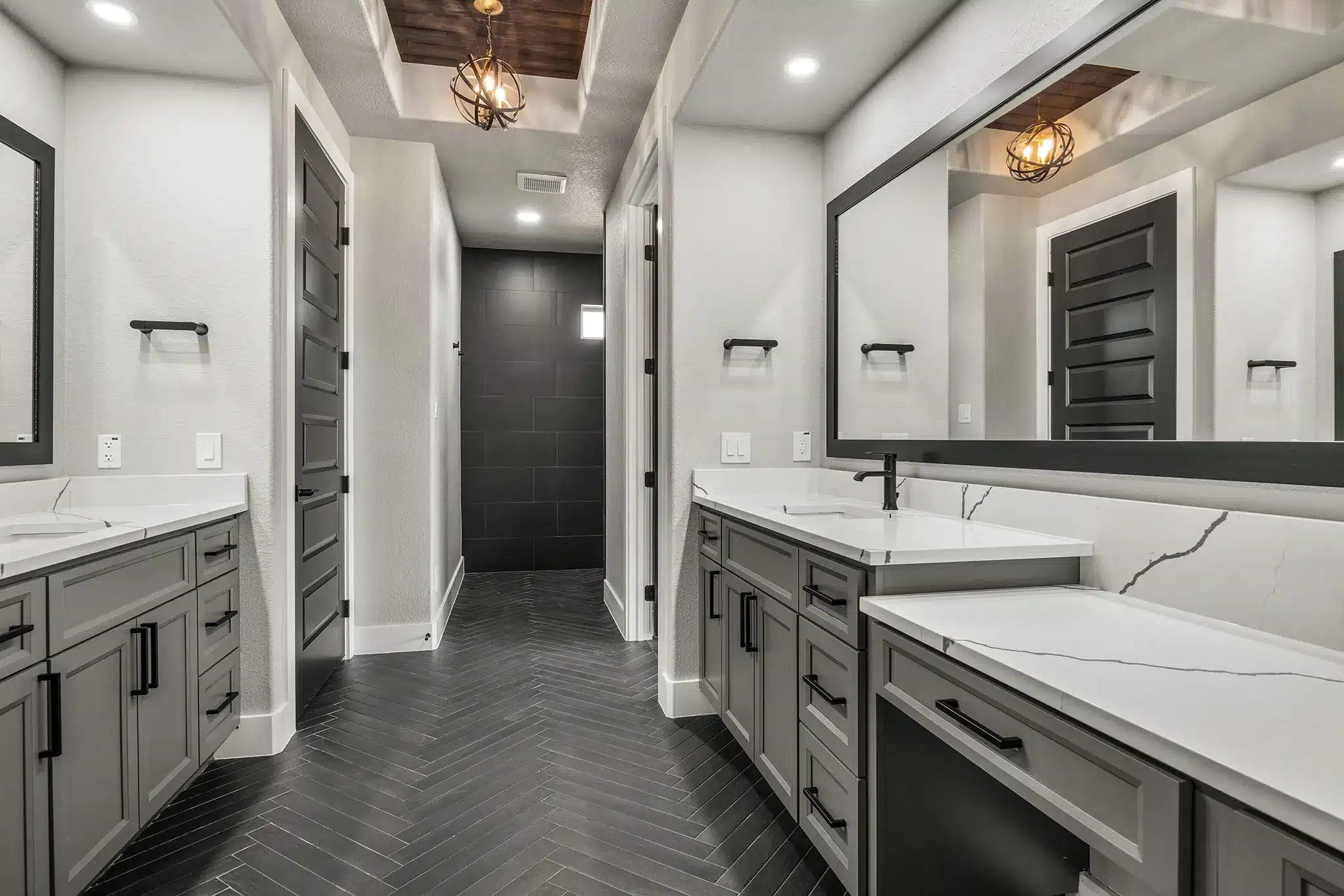
| High-end primary bath | $75,000–$120,000+ | Luxury tile, custom cabinetry, premium plumbing fixtures, major layout changes, specialty details |
A useful benchmark is that a midrange bathroom remodel often sits in the five-figure range, and the total can rise materially when plumbing, electrical, tile, and finish selections move beyond standard allowances Homewyse bathroom remodel cost benchmark. If you are comparing a bathroom remodel to other home projects, it can help to look at adjacent work such as bathroom remodel pricing in Collin County or bathroom remodel pricing in Wise County, since the same general cost logic applies across North Texas.
For a broader framing of remodeling budgets in the region, the county-level price picture also fits into the larger DFW context covered in our DFW bathroom remodel cost guide.

Why Building in Denton County Is Different
Denton County bathroom remodel pricing is affected by more than the bath itself. Newer homes often have tighter expectations around finish quality, while older homes can hide repair work behind walls and under floors. That means two bathrooms with the same square footage can have very different budgets.
A few local issues matter especially here:
- Permits and inspection steps can vary by city, so soft costs and schedule assumptions should not be treated as one countywide number Denton County development and jurisdiction context City of Denton building safety example.
- Many homes are occupied during construction, which can add labor time for dust protection, demo staging, and temporary bathroom planning.
- Texas heat and humidity make waterproofing, ventilation, and mold-resistant materials especially important in showers and tub surrounds Texas contractor and code context.
- In fast-growing suburbs, homeowners may want higher-end finishes that align with newer builds and recent renovations, which pushes average project budgets upward.
In practical terms, the county is not “cheap” or “expensive” by itself. The condition of the home, the level of finish, and the amount of concealed work drive the outcome.
If you want a local contractor perspective on scope and pricing, start with our Denton County bathroom remodeling service page.

Typical Project Cost Ranges
Most bathroom remodeling projects fall into one of three buckets: cosmetic, midrange, or full renovation. The best way to budget is to match the project type to what actually changes in the room.
1. Cosmetic updates: $8,000–$18,000
This is the lightest budget category. It usually includes updates that improve appearance without changing the room structure.
Common scope items:
- New paint
- Vanity replacement
- New sink and faucet
- Lighting update
- Mirror and accessory replacement
- Basic flooring repair or replacement
- Minor trim and caulk updates
This type of project works best when the bathroom is functionally sound and the layout already works. If the shower, tub, and plumbing location stay the same, the budget is much easier to control.
2. Midrange remodels: $18,000–$40,000
This is the most common category for homeowners who want a noticeable transformation without going into luxury territory.
Common scope items:
- New vanity and countertop
- New flooring
- New shower tile or tub surround
- Better plumbing fixtures
- New toilet
- Updated lighting and exhaust fan
- Improved waterproofing details
- Some drywall repair or patching
Midrange remodels are where design choices start to matter a lot. Tile selections, shower glass, fixture finish, and vanity quality can change the budget by several thousand dollars. This is also where moving a plumbing fixture, even slightly, can increase labor and inspection coordination.
3. Full gut remodels: $40,000–$75,000+
A full gut means the bathroom is stripped down to the studs or near-studs before rebuilding it. This is the right category when the room has major wear, a poor layout, or water damage.
Common scope items:
- Full demolition
- Subfloor or framing repairs
- New insulation where needed
- Shower waterproofing system
- New tile throughout
- New plumbing fixtures
- New vanity or custom cabinetry
- Electrical updates
- New vent fan and lighting
- Higher-end finishes and trim
If you are replacing a tub with a walk-in shower, reworking plumbing, or creating a more accessible layout, expect the project to land closer to this range than to a simple refresh. A tub-to-shower conversion can be one of the biggest cost jumps in a bathroom renovation because it adds both trade labor and finish complexity.
Cost Per Square Foot and What It Includes
Bathroom remodels are often discussed in square-foot terms, but that metric is only useful if you understand what it is actually measuring. A small bathroom can cost more per square foot than a larger one because the fixed costs do not shrink much just because the room is smaller.
In Denton County, a rough 2026 planning range might look like this:
- Cosmetic remodels: about $180–$350 per square foot
- Midrange remodels: about $350–$650 per square foot
- High-end remodels: about $650–$1,200+ per square foot
Those numbers should be treated as planning tools, not quotes. Bathrooms are heavily fixture-driven, so a 60-square-foot hall bath and a 120-square-foot primary bath can have very different per-foot pricing.
What the square-foot price usually includes:
- Labor for demo and installation
- Tile setting and waterproofing
- Fixture installation
- Drywall or backer board work
- Basic carpentry and trim
- Flooring installation
- Painting and finish work
What it may not fully include:
- Major plumbing relocations
- Electrical panel upgrades
- Structural repairs
- Mold or rot remediation
- Permit fees
- Design fees
- Premium fixtures or specialty tile
If you are comparing local bathroom remodel pricing to broader home improvement budgets, it can help to study neighboring project types like whole-home remodeling in Denton County or even kitchen remodeling in Denton County. Those projects follow the same general principle: once you start changing systems, not just surfaces, the budget rises quickly.

Main Factors That Change Total Price
The biggest bathroom remodel cost drivers in Denton County are not always obvious at first glance. The room’s current condition, the amount of layout change, and the type of finishes all play major roles.
Layout changes and plumbing moves
Moving plumbing is one of the most expensive decisions in a bathroom remodel because it affects multiple trades. If the shower, toilet, or vanity changes location, you may need:
- New drain and supply lines
- Subfloor cuts and patching
- Wall repair
- More inspection coordination
- Extra labor for sequencing
Even a modest layout adjustment can add several thousand dollars. A full redesign with new fixture locations can add much more.
Age of the home
Older homes in Denton County often need more concealed repairs. Once the walls open up, contractors may find:
- Outdated plumbing
- Aging shutoff valves
- Rot in the subfloor
- Moisture damage
- Improper prior repairs
- Electrical issues around older lighting
This is why two bathrooms with the same visible finishes can end up with very different totals.
Finish level
Finish quality can move the budget by a large margin. For example:
- Builder-grade vanity vs. custom cabinetry
- Stock tile vs. large-format or specialty tile
- Standard fixtures vs. premium fixtures
- Acrylic shower system vs. fully tiled custom shower
- Basic mirror and lighting vs. layered designer lighting
A homeowner can easily add $3,000 to $15,000 or more just by upgrading the visible materials.
Ventilation and moisture management
In North Texas, ventilation matters. Better exhaust fans, properly detailed shower waterproofing, and mold-resistant materials are not just nice extras. They help protect the remodel and can reduce future maintenance issues. In humid conditions, this becomes especially important for tub-to-shower conversions and primary baths that get daily use.
Permit and inspection complexity
Some projects require more permitting and inspection than others, and those requirements can vary by city. A simple like-for-like fixture update may be less involved than a full renovation that changes electrical or plumbing. Planning for a flexible schedule is smart because the county itself does not dictate every permit step the same way each municipality does county-level jurisdiction context city permitting example.

Labor, Materials, and Trade-Level Costs
A realistic bathroom remodeling budget should separate labor from materials. That is the easiest way to understand why one project can cost $25,000 while another nearly identical-looking project costs $55,000.
Labor costs
Labor typically covers:
- Demolition
- Carpentry
- Plumbing
- Electrical
- Drywall and texture
- Tile installation
- Painting
- Final trim and fixture install
- Cleanup and punch list work
Bathroom labor is intensive because the trades have to work in a small space with tight sequencing. One delay in rough plumbing can hold up waterproofing, and one delay in waterproofing can hold up tile.
In occupied homes, labor can also increase because crews need more protection, more cleanup time, and more care in staging.
Material costs
Materials often include:
- Tile
- Thinset and grout
- Waterproofing membranes or systems
- Vanity and countertop
- Toilet
- Tub or shower base
- Shower valve and trim
- Sinks and faucets
- Exhaust fan
- Lighting
- Drywall, backer board, and insulation
- Paint, primer, caulk, and trim
A homeowner choosing standard-grade materials may spend a few thousand dollars on fixtures and finishes, while premium materials can multiply that total quickly. Tile alone can range from budget-friendly options to high-end selections that cost many times more per square foot.
Trade-level allowances
As a planning rule, it is wise to treat plumbing, electrical, and tile as separate allowance lines rather than one lump sum. A small change in any of those categories can affect the whole budget.
Examples:
- Upgraded plumbing fixtures can add hundreds or thousands of dollars.
- An upgraded exhaust fan and lighting package can add several hundred to a few thousand dollars.
- A more complex tile pattern or full-height tile shower can add labor hours quickly.
- Hidden subfloor repairs can create an unplanned trade cost that was never visible before demolition.
The main point is that a bathroom remodel is not just a materials purchase. It is a coordinated trade project, and that coordination has real cost.

Permit, Design, and Planning Costs
Soft costs are easy to forget until the budget is already underway. In Denton County, these costs can vary by city and by project scope, so they should be built into the plan early rather than added later.
Permits and inspections
Permit requirements depend on the jurisdiction and the work being done. Some projects need only limited review, while others require plumbing, electrical, or building-related permits and inspections. Because Denton County includes multiple municipalities, the right approach is to verify the specific city’s requirements rather than assume one countywide fee or process county planning context local building safety example.
A realistic planning allowance for permits and inspection-related soft costs might be $250–$600 for a basic cosmetic update, $600–$1,500 for a midrange remodel, and $1,500–$3,500+ for a full renovation involving plumbing, electrical, or layout changes. If a project requires multiple inspections or re-inspections, those administrative and scheduling costs can climb further.
Design and selections
Design costs may be informal or formal depending on the project. They can include:
- Layout planning
- Tile and fixture selection
- Material ordering
- Finish coordination
- Space planning for showers, tubs, and vanities
Even if you are not paying for a separate designer, you are still “spending” time and budget on decisions. Faster decisions usually keep the project moving. Delays in selecting tile, countertops, or fixtures can extend the schedule and potentially affect labor sequencing. For planning purposes, many homeowners reserve 3% to 8% of the total project budget for design help, selection support, or order coordination.
Preconstruction planning
Before demo starts, the project should have:
- A defined scope
- A fixture list
- A finish schedule
- An allowance for hidden conditions
- A realistic timeline
- A contingency reserve
That preparation helps avoid change orders. It also makes it easier to compare bids because every contractor is pricing the same scope.
If you are mapping a remodel alongside other planned home upgrades, it may be helpful to review broader county budgets like the DFW bathroom price guide and local adjacent projects such as home building in Denton County to understand how preconstruction decisions affect the total cost picture.
Timeline and Process Expectations
Most bathroom remodels take several weeks from demo to final punch list, and larger or more complex projects can take longer. The exact schedule depends on scope, permitting, material lead times, and whether hidden repairs appear after demolition.
A typical sequence looks like this:
- Planning and selections: 1–3 weeks
Finalize fixtures, tile, vanity, and layout details.
- Permitting and scheduling: 1–4 weeks or more
This step varies by city and project scope.
- Demolition: 1–3 days
Faster for small projects, longer if the bathroom is heavily built out.
- Rough plumbing and electrical: 2–5 days
Longer if fixture locations change.
- Inspections, if required: 1–7 days depending on jurisdiction and scheduling.
- Waterproofing and backer board: 1–3 days
This is a crucial phase for showers and wet areas.
- Tile installation: 3–10 days
Complex patterns, large showers, or full-height tile can extend this.
- Paint, trim, and fixture set: 2–5 days
Final assembly and finish work happen here.
- Punch list and cleanup: 1–3 days
Small corrections, touch-ups, and final adjustments.
A simple cosmetic update may finish in 1–2 weeks once work begins. A full gut remodel can run 4–8 weeks or longer, especially if materials are delayed or concealed damage is uncovered.
Occupied homes can also extend the timeline because crews may need to protect adjacent spaces and keep the home livable while work proceeds.

How to Budget the Project Realistically
The best bathroom remodeling budgets are built with cushion, not optimism. In Denton County, where older homes and newer high-expectation finishes can both drive complexity, a realistic budget should assume some uncertainty.
Use a contingency
A contingency of 10% to 20% is a smart planning range, especially in older homes where the demo stage may reveal rot, outdated plumbing, or damaged framing home remodel contingency benchmark. For a $30,000 project, that means keeping $3,000 to $6,000 available. For a $60,000 project, it means $6,000 to $12,000.
Separate “must-have” from “nice-to-have”
Before construction starts, decide which items are essential:
- Waterproof shower system
- Ventilation upgrade
- New toilet
- New vanity
- Flooring replacement
- Lighting improvements
Then list the upgrades that can be cut if needed:
- Heated floors
- Custom glass
- Premium tile patterns
- Designer mirrors
- Specialty hardware
This makes it easier to protect the core budget if unexpected repairs appear.
Don’t underbudget fixtures
Many budgets fail because the homeowner assumes fixtures will be inexpensive. In reality, the toilet, shower system, faucet set, vanity, countertop, mirror, lighting, and fan can add up quickly. Even “simple” selections can total several thousand dollars.
Consider project sequencing
If you are planning more than one remodel, sequencing can affect budget efficiency. A homeowner sometimes pairs a bathroom remodel with broader updates in a phase approach instead of taking on every project at once. If you are thinking about multiple rooms, compare the bathroom budget with the larger whole-home context through home remodeling in Denton County or with another major room like kitchen remodeling in Denton County.
Financing and cash flow
Some homeowners pay in cash, while others use home equity, savings, or project financing. Regardless of the source, the important thing is to keep a buffer so the project does not stall when an unexpected repair or upgrade appears.

When to Choose a Bathroom Remodeling Project in Denton County
A bathroom remodel makes the most sense when the room is either functionally outdated, visually tired, or structurally compromised. In Denton County, that decision often comes down to the age of the home and the level of use the bathroom sees.
Choose a remodel now if:
- The shower leaks or shows signs of water damage.
- The layout is awkward or inefficient.
- The bathroom feels too small for daily use.
- Fixtures and finishes are visibly worn.
- Ventilation is weak and moisture is a recurring issue.
- You are planning to sell and want stronger buyer appeal.
- The room no longer matches the rest of the home.
You might delay a full remodel if:
- The room still functions well and only needs minor cosmetic updates.
- You are saving for a bigger renovation later.
- A simple fixture refresh would solve the immediate problem.
- You need to prioritize a more urgent repair elsewhere in the house.
For homeowners comparing nearby markets, it can also help to review how bathroom budgets are trending in surrounding counties like Collin County and Wise County. The same remodeling logic applies, but local home age, permitting, and finish expectations can shift the numbers.
If you are ready to discuss scope and build quality, a conversation with a local contractor through our Denton County bathroom remodeling service page can help turn rough budget ranges into a specific plan.

Final Thoughts on Bathroom Remodeling in Denton County
A bathroom remodel in Denton County can be one of the most worthwhile home investments you make, but only if the budget matches the actual scope. The biggest cost mistake is assuming that surface-level changes and full-system changes cost the same. They do not. Once you touch plumbing, waterproofing, tile, ventilation, or hidden structure, the price moves into a different category.
The good news is that the budgeting process is manageable when you break it into pieces:
- Know your project type.
- Understand the local permitting and inspection environment.
- Budget for labor, materials, and soft costs separately.
- Keep a contingency for hidden conditions.
- Choose finishes with intention instead of emotion.
If your bathroom needs a modest refresh, a midrange remodel, or a full transformation, the right plan can keep the project aligned with your goals and your home’s value. And if you want a clearer picture of how your specific bathroom fits into the larger regional market, start with the DFW bathroom remodel cost guide and then narrow it down to Denton County.