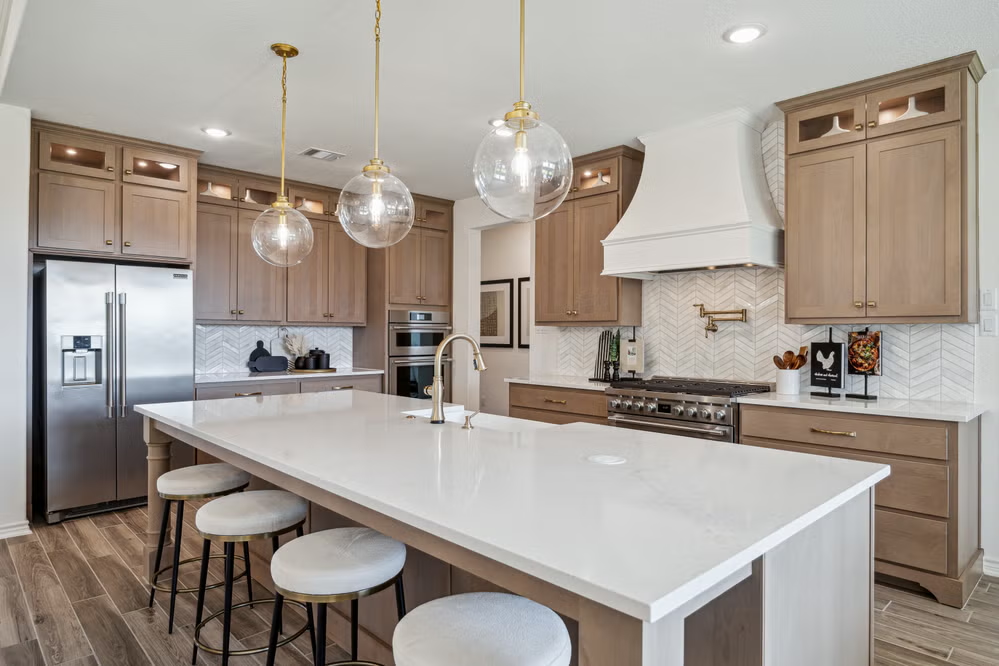
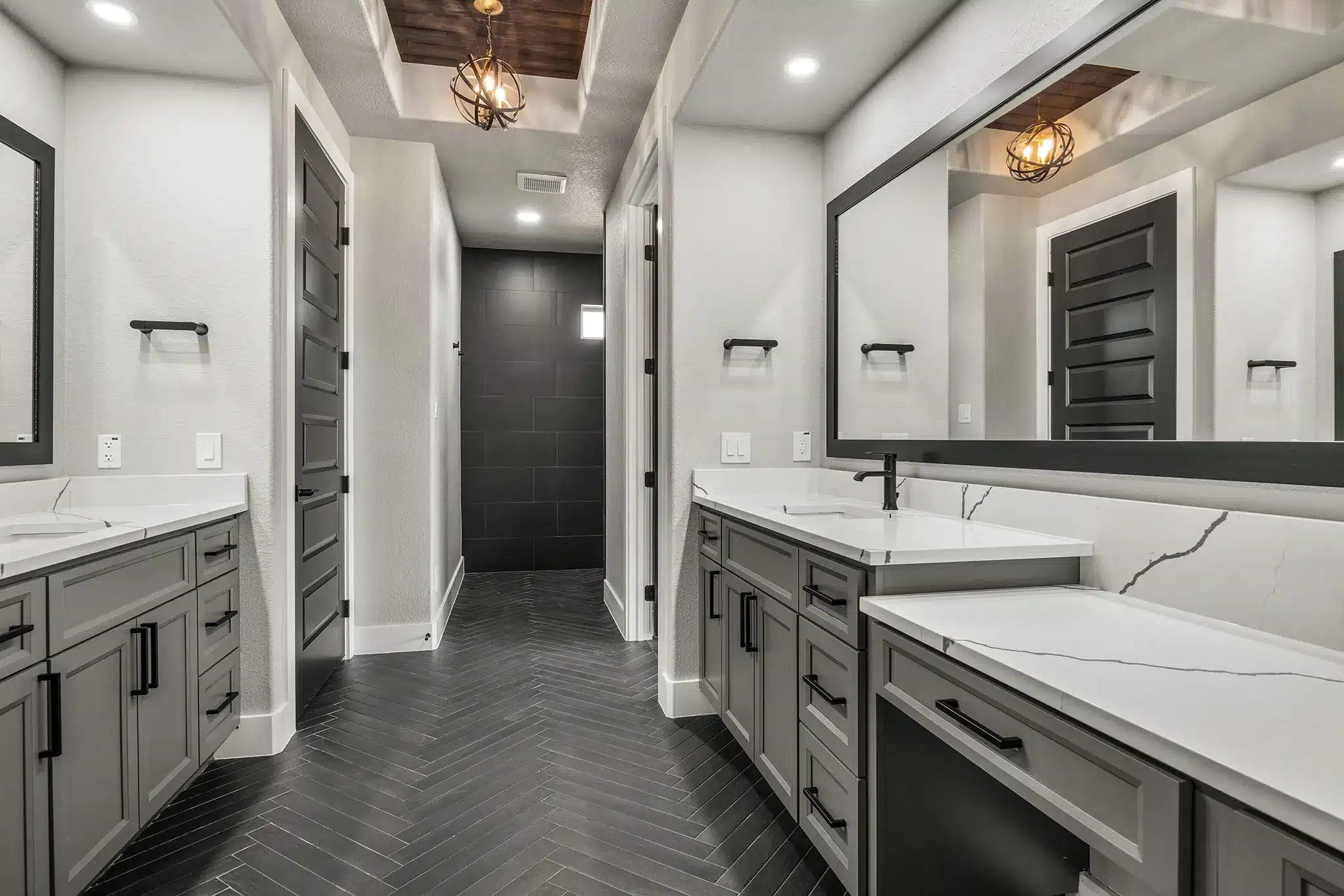
How Much Does a Kitchen Remodel Cost in Wise County? (2026 Guide)
If you are planning a kitchen remodel in Wise County, a realistic 2026 budget usually starts around $15,000 to $30,000 for a modest refresh and can climb to $35,000 to $75,000 for a midrange remodel. A major custom project with layout changes, high-end cabinetry, upgraded appliances, and structural or utility work can reach $80,000+.
Those numbers are not quotes; they are planning ranges that help you decide what type of project fits your home, your timeline, and your budget. In an outer Dallas–Fort Worth county like Wise, the final price often depends on how much your existing kitchen can be reused, how far the job site is from trade crews, and whether older home conditions create hidden work.
| Project type | Typical Wise County budget range | What usually fits in the scope |
|---|---|---|
| Budget refresh | $15,000–$30,000 | Paint, basic flooring, counters, fixtures, lighting updates, limited cabinet changes |
| Midrange remodel | $35,000–$75,000 | New cabinets, better countertops, appliance updates, some layout adjustments, moderate electrical/plumbing changes |
| Major custom remodel | $80,000+ | Full gut, premium finishes, wall removal, custom cabinets, extensive trade work, possible structural changes |
If you want a broader metro benchmark first, compare this county guide with our DFW kitchen remodel cost guide and the Wise County kitchen remodeling service page for service details. For homeowners comparing nearby markets, the same service often prices differently in Denton County and Kaufman County because labor access, home stock, and project complexity can vary.

Why Building in Wise County Is Different
Wise County kitchen remodels are not priced exactly like projects in the core of Dallas or Fort Worth. The county’s exurban setup means crews may travel farther, specialty trades may have less immediate availability, and scheduling can take longer than in denser markets. That does not automatically make a remodel more expensive, but it can affect mobilization costs and lead times.
A second difference is the housing stock. Many Wise County kitchens are in existing single-family homes where the original layout was designed around older electrical, plumbing, and ventilation standards. Once you open walls or start moving appliances, you may uncover outdated wiring, undersized circuits, older supply lines, or framing that needs correction. Those issues can turn a simple cosmetic update into a more involved remodel.
Local site conditions matter too. In some parts of the county, a home may be outside a municipal utility area or have site access and utility coordination considerations that do not come up in a suburban infill remodel. Even when the kitchen work is entirely inside the house, coordination around septic, water, or access can influence the project schedule and trade sequencing. For any electrical changes, permit and licensing expectations should be checked against the relevant authority, including Texas electrical licensing guidance and the local jurisdiction through Wise County government.
The short version: Wise County remodels often need a little more flexibility in planning, especially if the house is older or the layout is changing.
Typical Project Cost Ranges
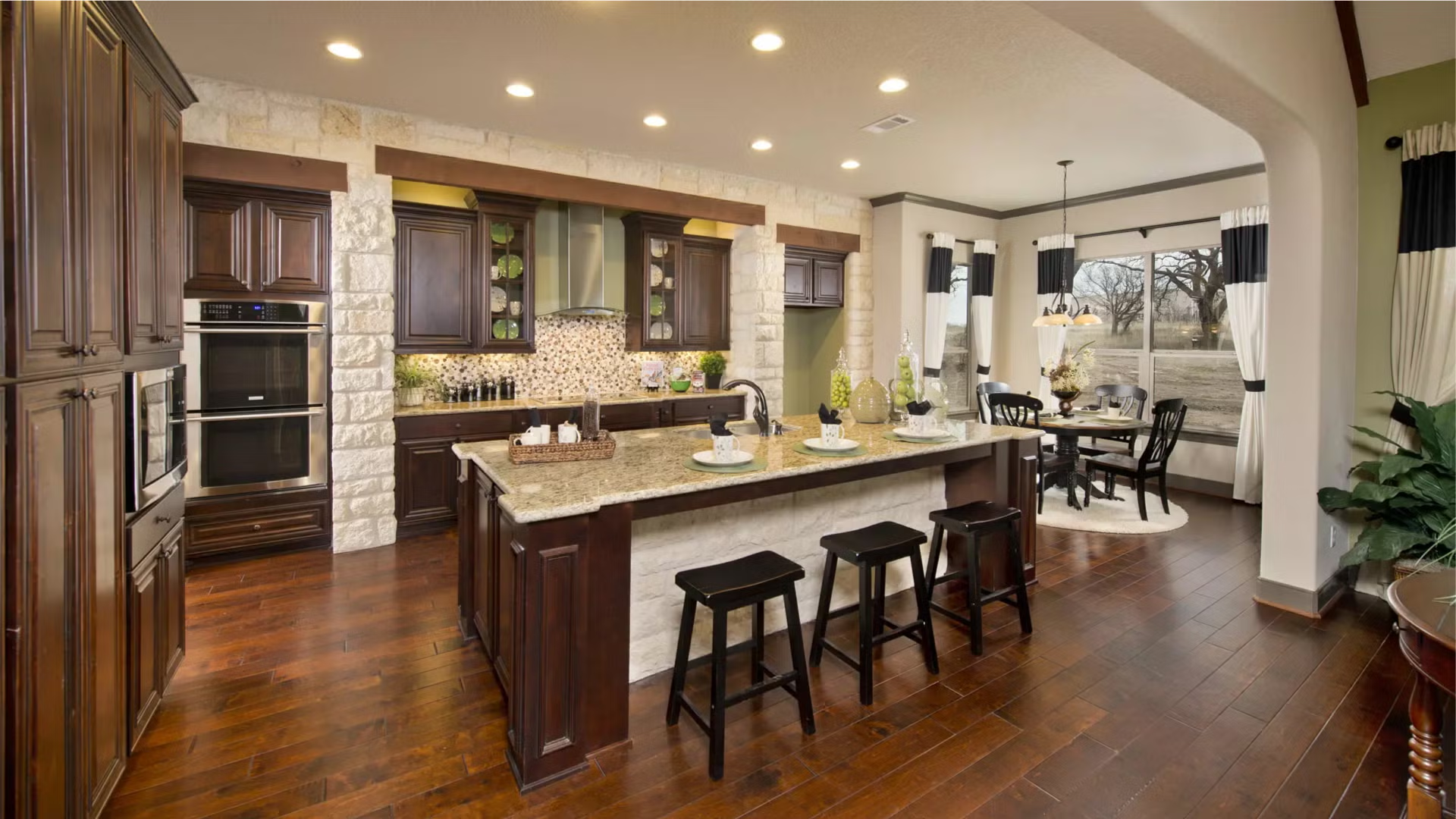
A good way to estimate cost is to match the scope to a project tier. In Wise County, the three most common tiers look like this:
1. Budget refresh: $15,000 to $30,000
This range is usually for a kitchen that keeps the same basic footprint and uses much of the existing structure. It may include:
- repainting cabinets instead of replacing them
- new laminate or midrange quartz counters
- updated sink and faucet
- new lighting
- backsplash replacement
- basic flooring replacement
- modest appliance swaps
A budget refresh makes sense when the kitchen works functionally but feels dated. You are paying to improve appearance and usability without changing the room’s bones.
2. Midrange remodel: $35,000 to $75,000
This is the most common “true remodel” range for many homeowners. It often includes:
- new semi-custom or higher-end stock cabinets
- quartz or similar countertop material
- improved lighting plan
- upgraded sink, fixtures, and backsplash
- appliance replacement
- some electrical or plumbing updates
- minor wall or opening changes
- better storage and layout improvements
This range is where homeowners start to see major daily-use improvements. It also tends to be the range that produces the best balance between function, appearance, and budget for many houses.
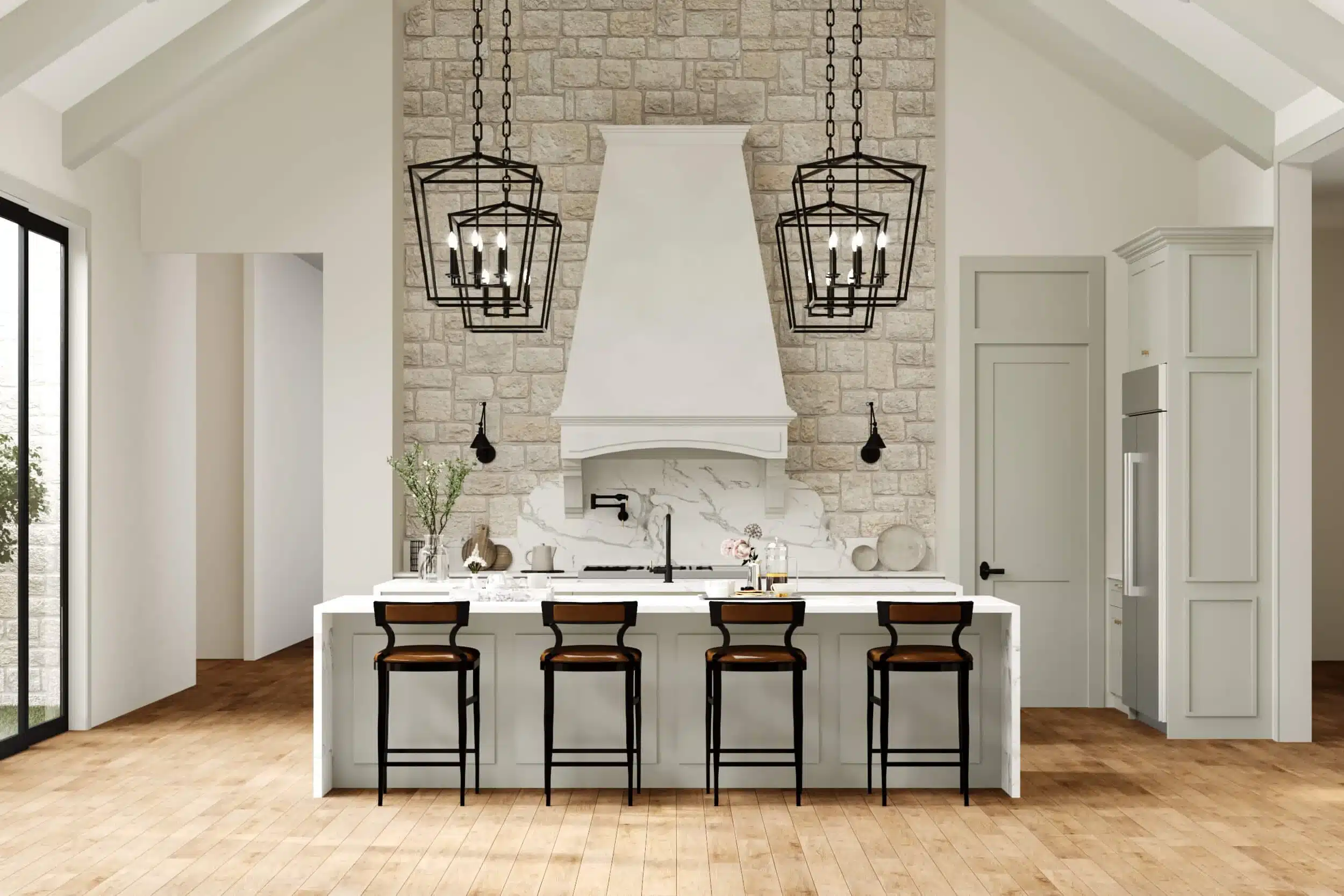
3. Major custom remodel: $80,000+
At this level, the project often becomes a full kitchen transformation rather than a simple finish update. Costs rise when you add:
- custom cabinetry
- premium stone countertops
- large-format tile or specialty backsplash work
- professional-grade appliances
- island builds with utilities
- wall removal
- beam work or structural adjustments
- new flooring through connected spaces
- significant electrical and plumbing relocation
A custom project can climb well beyond $100,000 in a hurry if the kitchen footprint changes or the homeowner chooses premium finishes across every category. For pricing context, the Remodeling Magazine Cost vs. Value report remains a useful benchmark for understanding how kitchen remodel costs trend by project scope.

Cost Per Square Foot and What It Includes
Cost per square foot is helpful, but only if you understand what it is measuring. In Wise County, kitchen remodels can fall anywhere from roughly $150 to $500+ per square foot depending on whether you are doing a light refresh or a full custom rebuild.
Here is how that usually breaks down:
- Lower end, about $150 to $250 per square foot: limited updates, reused layout, partial cabinet work, and modest finishes
- Midrange, about $250 to $400 per square foot: new cabinets, better counters, updated fixtures, and selected layout changes
- Upper end, about $400 to $500+ per square foot: custom cabinetry, premium finishes, heavy utility work, and structural changes
Square-foot pricing is most useful when comparing projects of similar complexity. It is less useful if one kitchen keeps the same plumbing and cabinet layout while another moves a sink, expands an opening, and adds an island. Two kitchens with the same square footage can have very different prices.
That is why a remodel estimate should always clarify what is included. For example, one contractor’s per-square-foot number may include demolition, cabinet installation, countertops, and basic trim, while another may leave out appliances, electrical corrections, design fees, or flooring transitions. If the estimate is built around a clear scope, the square-foot number is more meaningful.
A 200-square-foot kitchen, for instance, might land around:
- $30,000 to $50,000 for a lighter remodel
- $50,000 to $80,000 for a solid midrange build
- $80,000 to $120,000+ for a custom kitchen with major upgrades
The more the project changes the existing layout, the less reliable a simple square-foot average becomes. That is one reason many homeowners start with a range and then narrow it after design decisions are made. For related remodeling comparisons in the same region, see Wise County home remodeling costs and Wise County bathroom remodel costs.

Main Factors That Change Total Price
Several variables can move a kitchen remodel from the low end of the range to the high end very quickly. In Wise County, the biggest ones are usually the following.
Layout changes
Keeping the sink, range, and refrigerator in roughly the same place is usually the most affordable path. Moving those items adds plumbing, electrical, and sometimes venting work. A sink relocation alone can add several thousand dollars once labor, materials, and inspection coordination are included. If walls come out or openings expand, structural costs can rise even more.
Age and condition of the home
Older homes often hide problems behind the walls. In Wise County, that may mean outdated wiring, mixed plumbing materials, uneven subfloors, or framing that does not match current expectations. Fixing those items can add $2,000 to $10,000+ depending on the discovery. In the worst cases, hidden damage can alter the entire plan.
Finish level
Cabinet and countertop choice can swing the total far more than many homeowners expect. Stock cabinets and standard quartz tops are very different from custom inset cabinets and premium stone surfaces. The same is true for flooring, plumbing fixtures, hardware, and lighting. If you upgrade every visible surface, the budget moves upward fast.
Appliance package
A standard appliance set may fit within a modest remodel budget, while professional or panel-ready appliances can add $5,000 to $20,000+. Built-in refrigeration, double ovens, oversized ranges, and specialty vent hoods can drive both material and install costs.
Permits and code-related work
If the remodel touches electrical circuits, lighting, wall removal, or plumbing relocation, permit and inspection needs may apply depending on the jurisdiction. Electrical work should be handled by properly licensed professionals, and guidance from Texas electrical licensing can help frame that expectation. Layout changes can also trigger design concerns around clearances, ventilation, and fixture placement that are addressed in the International Code Council kitchen guidance.
Site access and trade availability
In a county where crews may travel farther between projects, scheduling can affect cost. If a contractor needs to mobilize multiple times for cabinet delivery, countertop templating, electrical rough-in, and final install, that coordination can add time and overhead. It is not always a line-item charge, but it affects the final proposal.

Labor, Materials, and Trade-Level Costs
Labor and materials usually split the total in a way that surprises homeowners. On a typical Wise County kitchen remodel, cabinetry and countertops often consume the largest share of the budget, while labor and trade work determine how much hidden complexity the job can absorb.
A practical breakdown for a midrange remodel might look like this:
- Cabinets: 25% to 35% of total cost
- Countertops: 10% to 15%
- Labor for demo, installation, carpentry, trim, and coordination: 20% to 30%
- Electrical, plumbing, and mechanical trades: 10% to 20%
- Flooring, backsplash, paint, fixtures, and finishing: 10% to 20%
- Appliances and specialty items: varies widely, often 10% to 20%
Cabinetry
Cabinets are often the first big cost driver. Stock cabinets are the most affordable and can work well in clean, straightforward layouts. Semi-custom cabinets increase sizing flexibility and finish options. Custom cabinets are the most expensive because they are built to exact dimensions and can include specialized storage, unique door styles, and integrated features.
Countertops
Laminate is the least expensive common option, while quartz and natural stone move into higher price territory. A modest kitchen may spend $3,000 to $6,000 on countertops, while a larger or higher-end kitchen can spend $8,000 to $15,000+.
Electrical
Electrical costs rise when you add dedicated appliance circuits, under-cabinet lighting, new recessed lighting, or panel work. Even a fairly modest upgrade can add $1,500 to $5,000. More involved rewiring or panel-related work can push higher. Electrical licensing and safety expectations are important here, which is why TDLR electrical licensing is a relevant reference.
Plumbing
If the sink, dishwasher, or refrigerator water line stays where it is, plumbing costs are easier to manage. Move any of those items, and the labor price grows quickly. Plumbing work often lands between $1,000 and $6,000+ depending on how much relocation is needed.
Flooring and trim
If the kitchen floor is being replaced, costs depend on material choice and whether it ties into adjacent rooms. Vinyl plank, tile, engineered wood, and hardwood all price differently. Flooring and trim together may add $2,000 to $8,000+ in a typical remodel.
If you want to compare how these cost categories shift across nearby counties, look at the Denton County kitchen remodel guide and the Kaufman County kitchen remodel guide.

Permit, Design, and Planning Costs
Soft costs are easy to overlook because they are not as visible as cabinets or tile, but they matter a lot in the final budget.
Design and layout planning
A simple refresh may need very little formal design work, but a kitchen with layout changes should be planned carefully before demolition starts. Design or drafting fees can range from a few hundred dollars to several thousand dollars, depending on whether you need basic layout help or detailed cabinet and electrical planning.
Permits and inspections
Permit costs vary by jurisdiction and scope. In some cases, a smaller cosmetic update may require little or no permitting, while electrical, plumbing, structural, or mechanical changes can trigger review and inspection. Because Wise County includes both municipal and unincorporated areas, you should confirm requirements with the local authority rather than assume one county-wide rule applies. Official county contacts and jurisdictional information can be checked through Wise County government.
Preconstruction measurements and ordering
Cabinet measurements, countertop templating, appliance selection, and finish approvals all affect schedule and cost. If materials are ordered too late or chosen before final dimensions are confirmed, delays can create extra labor or storage charges. For custom projects, planning time is often just as important as construction time.
Allowances
Many estimates include allowances for items like lighting, tile, fixtures, or appliances. That can make a proposal easier to compare, but it only works if the allowance is realistic. A $2,000 appliance allowance will not cover a high-end built-in package. Always ask what happens if your selections exceed the allowance.

Timeline and Process Expectations
Most kitchen remodeling schedules in Wise County fall into one of three patterns.
Refresh projects: 2 to 4 weeks
A light refresh with limited cabinet work and standard material availability can sometimes be completed in 2 to 4 weeks once work begins. That assumes the layout stays largely the same and materials are ready when needed. Even small projects can stretch if product delivery is delayed.
Midrange remodels: 4 to 8 weeks
A typical midrange kitchen remodel often takes 4 to 8 weeks of construction time, not including design and ordering. If electrical or plumbing changes are part of the plan, expect the timeline to expand. Any custom cabinet lead times can also push the start date out before work even begins.
Full gut or custom remodels: 6 to 12 weeks or longer
A major remodel with layout changes, wall work, specialty finishes, or multiple trade dependencies commonly takes 6 to 12 weeks or longer. Once you include design, material ordering, permit review, and inspections, the total project calendar can be considerably longer than the actual time the kitchen is under active construction.
What usually causes delays?
- late cabinet delivery
- countertop fabrication timing
- hidden electrical or plumbing issues
- backordered fixtures or appliances
- inspection scheduling
- structural revisions after demolition
The best schedule protection is to finalize key selections early. In Wise County, that matters even more if your home is outside a dense service area and the contractor or trades need extra travel coordination.

How to Budget the Project Realistically
A realistic budget is more than the base construction number. It includes contingency, allowances, and a plan for decisions that may come up after demolition.
Build in contingency
For older homes, plan a 10% to 20% contingency. That is especially important if walls may be opened, the floor may need leveling, or old wiring and plumbing might need correction. A $40,000 remodel should therefore have about $4,000 to $8,000 reserved for surprises.
Separate must-haves from nice-to-haves
Start with the work that fixes function first:
- structural or safety repairs
- electrical and plumbing corrections
- cabinets and counters
- appliances and fixtures
- cosmetic upgrades
If the budget gets tight, it is easier to defer a decorative upgrade than to remove the money needed for safety or code-related items.
Be careful with allowances
An allowance can make the estimate look lower than it really is. If you know you want quartz, upgraded lighting, and a premium faucet, make sure the allowances reflect those actual choices. Otherwise, the budget will grow after the contract is signed.
Use phased planning if needed
Some Wise County homeowners do better by splitting the project into phases. For example:
- phase 1: electrical, plumbing, and layout corrections
- phase 2: cabinets and counters
- phase 3: flooring, backsplash, and paint
This approach can help manage cash flow, but it must be planned carefully so later phases do not create rework.
Think about financing before demolition
If you plan to finance the remodel, get the financing in place before ordering materials. That reduces pressure if a change order appears. It also prevents delays if a deposit or material purchase comes due early in the schedule. For homeowners comparing a remodel to a full rebuild or major home investment, it can also help to compare the scope with new home building costs in Wise County.

When to Choose a Kitchen Remodeling Project in Wise County
A kitchen remodel makes the most sense when the room is functional enough to improve rather than replace. If the layout is serviceable and the major systems are intact, a remodel can deliver a strong return in day-to-day convenience and home value.
You may want to remodel now if:
- the cabinets are worn but the footprint still works
- the kitchen is dark, cramped, or poorly organized
- appliances are outdated or inefficient
- the home needs a more open feel for gathering and daily use
- you are planning to stay in the home for several years
You may want to scale the project back if:
- the home already needs major structural repair
- hidden issues are likely to dominate the budget
- the kitchen layout works well and only finishes feel dated
- the project would force you to overextend on financing
If the kitchen is part of a broader renovation plan, it can be smart to coordinate it with other interior work. In some cases, a wider home improvement plan makes better financial sense than tackling the kitchen alone. That is especially true if you are also considering other rooms or systems in the house, similar to what homeowners often evaluate in a full remodel through Wise County home remodeling planning.
The local market also matters. In Wise County, a kitchen remodel can be especially worthwhile if your home is one of the more dated properties in a neighborhood where buyers value updated kitchens. At the same time, overbuilding far beyond the surrounding home values can be risky. A well-balanced kitchen is usually better than the most expensive kitchen on the block.
Final Thoughts on Kitchen Remodeling in Wise County
For most Wise County homeowners, the right kitchen remodel budget comes down to scope. A straightforward refresh may stay near $15,000 to $30,000, a solid midrange remodel often lands around $35,000 to $75,000, and a major custom job can move beyond $80,000 once layout changes and premium finishes are added.
The biggest cost swings usually come from cabinets, countertops, electrical and plumbing changes, and hidden conditions inside older homes. That is why a good estimate should always include contingency, material allowances, and enough planning time to catch problems before demolition starts.
If you are still deciding how far to go, start with the kitchen’s current layout, the condition of the home’s systems, and the level of finish you actually want to live with every day. Then compare that target against a realistic local budget.
If you want help narrowing the numbers for your own house, the next step is a detailed scope review with a kitchen remodeling team that works in Wise County.
For broader DFW pricing context, see the full DFW cost guide.
For service details specific to Fin Home, review our Wise County Kitchen Remodeling page.