Introduction: Why Material Choice Drives Kitchen Remodel Cost
Kitchen remodel pricing in Dallas-Fort Worth feels unpredictable until you isolate the variable that actually controls most of the budget: materials. Layout, labor, and appliances all matter, but the selections you make for cabinets, countertops, and flooring quietly determine whether your project lands at $30,000 or pushes past $80,000.
Across Texas, most full kitchen remodels fall between roughly $25,000 and $65,000, with high-end projects exceeding $100,000 depending on scope and finishes . Those ranges can feel broad because two kitchens of the same size can differ dramatically in cost based purely on material decisions.
According to industry research from the National Kitchen & Bath Association, cabinetry alone often consumes the largest share of a remodel budget, with surfaces like countertops and flooring following closely behind. That aligns with broader cost studies such as the Remodeling Magazine Cost vs Value Report, which consistently show that finish selections drive the majority of project variance, especially in kitchens where nearly every surface is material-heavy.
The fastest way to change the price of a kitchen remodel is to change what it’s made of.
To understand why, it helps to look at how material decisions scale across a typical kitchen.
How Materials Scale Across a Kitchen
Most kitchens in DFW include:
- 20–30 linear feet of cabinetry
- 40–60 square feet of countertops
- 100–250 square feet of flooring
- 20–40 square feet of backsplash
Each of these categories has a wide pricing spectrum. Small shifts in cost per unit multiply quickly across the entire space.
| Material Category | Budget Option | Mid-Range Option | High-End Option | Cost Impact |
|---|---|---|---|---|
| Cabinets | Stock | Semi-custom | Custom | +$20K–$40K swing |
| Countertops | Laminate | Quartz | Marble | +$3K–$10K swing |
| Flooring | LVP | Tile | Hardwood | +$2K–$8K swing |
| Backsplash | Basic tile | Designer tile | Slab stone | +$1K–$5K swing |
Even when labor and layout remain identical, these material upgrades alone can double the total project cost.
Why DFW Kitchens Amplify Material Costs
Material choice carries even more weight in North Texas for a few reasons:
First, kitchens tend to be larger than the national average, which increases total material quantities. Second, the region’s remodeling trends prioritize durability and resale value, pushing homeowners toward higher-end finishes that can handle heat, humidity, and heavy daily use. Insights from the U.S. Census Bureau housing data also show continued population growth in the Dallas-Fort Worth metroplex, which has increased demand for updated, move-in-ready homes, further reinforcing the importance of visible material upgrades.
This creates a consistent pattern: homeowners are not just remodeling for function, they are selecting materials that signal quality, longevity, and market appeal.
How to Use This Guide
This breakdown isolates each major material category so you can see exactly where your money goes:
- Cabinets – the structural and visual backbone of the kitchen
- Countertops – the highest-impact surface upgrade
- Flooring – the largest continuous surface area
- Backsplash – the smallest element with outsized design influence
Instead of looking at a single total price, this approach lets you control the outcome. You can adjust one category at a time and immediately understand how it affects the full budget.
By the end, you should be able to answer a much more useful question than “How much does a kitchen remodel cost?”:
Which material decisions are actually driving my cost, and where should I spend or save?

Cabinet Cost (Stock vs Custom)
Cabinets anchor the entire kitchen. They define the layout, determine storage efficiency, and set the visual tone the moment you walk into the space. They also represent the single largest material expense in most remodels, which is why even small changes in cabinet type can shift a project by tens of thousands of dollars.
Industry data from the National Kitchen & Bath Association consistently shows cabinetry taking up the largest share of kitchen budgets, often around one-third or more. Cost studies from HomeAdvisor reinforce this, noting that cabinetry combines manufacturing, materials, and installation labor, making it one of the most complex and expensive components of a remodel.
Cabinets are where structure, storage, and aesthetics collide – which is exactly why they dominate the budget.
Cabinet Cost Breakdown (DFW Typical Ranges)
Cabinet pricing is usually calculated per linear foot, which accounts for both base and upper cabinets along a wall. Most kitchens in DFW fall between 20 and 30 linear feet.
| Cabinet Type | Cost Per Linear Foot | Typical Kitchen Cost | Customization Level |
|---|---|---|---|
| Stock | $150 – $350 | $4,000 – $8,000 | Limited |
| Semi-Custom | $350 – $650 | $10,000 – $18,000 | Moderate |
| Custom | $700 – $1,200+ | $25,000 – $50,000+ | Full |
These ranges include materials and basic installation. Premium finishes, hardware upgrades, and complex layouts can increase costs beyond these estimates.
Stock Cabinets
Stock cabinets are mass-produced in standard sizes and finishes. They are widely available through big-box retailers and suppliers, making them the fastest and most affordable option.
What drives the lower cost:
- Pre-manufactured dimensions
- Limited finish and style options
- Simplified installation
Stock cabinets work well for straightforward layouts where standard sizes fit cleanly. In kitchens with irregular dimensions, filler panels are often required, which can affect the final look.
Best use cases include rental properties, budget-conscious remodels, or quick updates where speed matters as much as cost.
Semi-Custom Cabinets
Semi-custom cabinets are the most common choice in DFW kitchen remodels because they allow flexibility without the cost of fully custom work.
They are manufactured with adjustable sizing and offer a wider range of finishes, door styles, and storage features.
What you gain at this level:
- Expanded size options for better fit
- Upgrades like pull-out drawers and soft-close hinges
- Higher-quality materials such as plywood boxes
This tier is where most homeowners find the strongest balance between cost and outcome. According to the National Association of Home Builders, mid-range remodeling projects tend to cluster around selections that balance durability, customization, and resale appeal, which aligns closely with semi-custom cabinetry.
Custom Cabinets
Custom cabinets are built specifically for the kitchen, often by local cabinet makers or specialty manufacturers. Every dimension, finish, and feature is tailored to the space.
What defines custom cabinetry:
- Exact-fit construction for any layout
- Premium materials like hardwood and high-grade plywood
- Fully personalized storage solutions
Custom cabinets allow designers to maximize every inch of space, especially in large kitchens or homes with unique layouts. They also open the door to features like integrated appliances, hidden storage, and architectural detailing.
This level is common in high-end remodels where the kitchen is treated as a centerpiece of the home rather than a purely functional space.
Hidden Cabinet Costs That Add Up
Cabinet pricing rarely stops at the base cost. Several additions can significantly increase the final number.
| Feature | Typical Cost |
|---|---|
| Installation labor | $2,000 – $8,000 |
| Soft-close hinges | $300 – $800 |
| Pull-out shelves | $200 – $800 |
| Crown molding | $500 – $2,000 |
| Under-cabinet lighting | $300 – $1,500 |
Labor plays a major role because cabinets must be precisely leveled, aligned, and secured. Even minor installation errors can affect countertops, appliances, and overall layout, which is why skilled carpentry is essential.
Material Quality and Construction Differences
Cabinet pricing is also heavily influenced by what they are made of.
| Material | Typical Use | Cost Impact |
|---|---|---|
| MDF (engineered wood) | Budget painted cabinets | Lower cost |
| Plywood | Mid-range cabinet boxes | Moderate cost |
| Solid hardwood | Custom cabinetry | Highest cost |
Higher-quality materials improve durability, especially in kitchens where humidity, heat, and frequent use put stress on surfaces. The U.S. Forest Service notes that hardwoods generally offer greater resistance to wear and structural movement compared to lower-density materials, which contributes to their higher price point in cabinetry.
Why Cabinet Choice Changes the Entire Budget
Cabinets influence more than their own line item. They affect how the rest of the kitchen is designed and priced.
A shift from stock to custom cabinetry can:
- Increase labor complexity
- Require higher-end countertops to match the aesthetic
- Expand layout possibilities, which can trigger additional costs
This ripple effect is why cabinet selection often determines the direction of the entire remodel.
One decision can move a kitchen from entry-level to high-end before any other material is even selected.

Countertops (Quartz, Granite, Marble)
Countertops sit at eye level, take daily wear, and immediately signal the quality of a kitchen. After cabinetry, they are typically the second-largest material expense, and their price can swing widely depending on the stone or surface you choose.
Industry data from HomeAdvisor shows that countertop costs vary significantly by material, fabrication, and installation complexity, while geological resources from the U.S. Geological Survey highlight the differences between natural stone and engineered surfaces that directly impact durability and pricing.
Countertops are one of the few elements that affect both how a kitchen looks and how it performs every single day.
Countertop Cost Comparison (DFW Installed Prices)
Most kitchens include 40 to 60 square feet of countertop space, including islands and perimeter surfaces.
| Material | Cost Per Sq Ft Installed | Typical Kitchen Cost | Durability | Maintenance |
|---|---|---|---|---|
| Laminate | $30 – $60 | $1,500 – $3,000 | Low | Low |
| Butcher Block | $60 – $100 | $2,000 – $4,500 | Medium | High |
| Quartz | $70 – $140 | $3,500 – $7,000 | High | Low |
| Granite | $80 – $160 | $4,000 – $8,000 | High | Medium |
| Marble | $120 – $250 | $6,000 – $12,000 | Medium | High |
These prices include fabrication, edge finishing, and installation. Larger kitchens or waterfall islands can increase total cost due to additional material and labor.
Quartz Countertops
Quartz has become the dominant countertop choice in DFW kitchens, largely because of its durability and consistency. It is engineered by combining natural quartz crystals with resins, creating a non-porous surface.
Why homeowners choose quartz:
- Resistant to stains and moisture
- Does not require sealing
- Uniform patterns and colors
The Environmental Protection Agency notes that non-porous surfaces are easier to clean and maintain, which contributes to quartz’s popularity in high-use areas like kitchens.
Quartz fits well in mid-range and high-end remodels where homeowners want a balance of performance and appearance without ongoing maintenance requirements.
Granite Countertops
Granite remains one of the most recognized natural stone options. Each slab is unique, formed through natural geological processes over millions of years, which gives it distinctive patterns and variation.
Key characteristics:
- High heat resistance
- Strong durability
- Natural variation in color and veining
Because granite is porous, it requires periodic sealing to maintain performance. The U.S. Geological Survey explains that natural stone materials like granite vary in composition and density, which directly affects their maintenance needs and longevity.
Granite is often selected for homeowners who value natural materials and want a one-of-a-kind surface.
Marble Countertops
Marble is widely associated with luxury kitchens due to its soft veining and bright, elegant appearance. It is a metamorphic stone that is softer than granite, which affects both durability and maintenance.
What defines marble:
- Distinctive veining patterns
- Smooth, cool surface ideal for baking
- Higher susceptibility to scratching and staining
Marble requires more frequent sealing and careful use, especially in active kitchens. It is often used selectively, such as on islands or baking stations, where its aesthetic impact is maximized while limiting exposure to heavy wear.
Additional Countertop Costs That Add Up
Beyond the base material, fabrication and design choices can significantly increase total cost.
| Feature | Typical Cost |
|---|---|
| Edge profiles | $10 – $40 per linear foot |
| Sink cutouts | $200 – $500 |
| Cooktop cutouts | $150 – $400 |
| Waterfall edges | $1,000 – $3,000 |
| Full-height slab backsplash | $2,000 – $6,000 |
Custom fabrication requires specialized equipment and skilled labor. Stone slabs must be cut, polished, transported, and installed with precision, which is why countertop installation is typically handled by dedicated fabrication teams rather than general contractors.
Thickness, Slab Size, and Layout Impact
Countertops are commonly available in two thicknesses:
| Thickness | Description | Cost Impact |
|---|---|---|
| 2 cm | Thinner, lighter | Lower cost |
| 3 cm | Standard, more durable | Higher cost |
Larger islands often require additional slabs, which increases both material and labor costs. Seam placement, edge detailing, and overhang support can also affect pricing depending on the kitchen layout.
Why Countertop Choice Changes Perceived Value
Countertops influence how the entire kitchen is perceived. A basic surface paired with high-end cabinets creates a different impression than a premium stone surface paired with mid-range cabinetry.
This is where material selection becomes strategic. According to remodeling studies from Remodeling Magazine, visible upgrades like countertops play a major role in how buyers evaluate kitchens, especially when comparing similar homes.
A single upgrade from laminate to quartz can add several thousand dollars, while also shifting how the entire space feels.

Flooring (Tile, Hardwood, LVP)
Flooring covers more surface area than any other material in the kitchen, which makes it one of the most quietly influential cost drivers in a remodel. Even small differences in price per square foot multiply quickly across the entire space, especially in open-concept homes where kitchen flooring extends into living areas.
According to cost data from HomeAdvisor, flooring installation costs vary widely depending on material type, subfloor condition, and labor complexity. Guidance from the National Wood Flooring Association also highlights how material selection affects durability, maintenance, and long-term performance, which directly ties into total lifecycle cost.
Flooring is everywhere at once – which is why its cost scales faster than most homeowners expect.
Flooring Cost Comparison (DFW Installed Prices)
Most kitchens range from 100 to 250 square feet, though open layouts can extend well beyond that.
| Flooring Type | Cost Per Sq Ft Installed | Typical Kitchen Cost | Durability | Maintenance |
|---|---|---|---|---|
| Tile | $8 – $20 | $1,200 – $5,000 | Very High | Low |
| Hardwood | $12 – $25 | $2,000 – $6,500 | High | Medium |
| LVP (Luxury Vinyl Plank) | $5 – $12 | $800 – $3,000 | High | Low |
These estimates include both material and installation. Costs increase with layout complexity, demolition, and subfloor preparation.
Tile Flooring
Tile is one of the most common flooring choices in Texas kitchens due to its durability and resistance to moisture. Porcelain and ceramic tiles are especially popular because they hold up well under heavy use and temperature changes.
Why tile is widely used:
- Highly resistant to water and spills
- Extremely durable under foot traffic
- Works well in hot climates
The Tile Council of North America notes that porcelain tile has a very low water absorption rate, which makes it suitable for kitchens and other high-moisture areas.
Tile works especially well in homes where longevity and low maintenance are priorities. Larger-format tiles and neutral tones are increasingly common in DFW remodels because they create a clean, continuous look.
Hardwood Flooring
Hardwood flooring offers a premium appearance and is often used in kitchens that connect directly to living spaces. It creates visual continuity across the home, which is one of the main reasons homeowners choose it despite higher cost and maintenance.
Key characteristics:
- Natural wood appearance
- Adds perceived home value
- Can be refinished over time
The National Wood Flooring Association emphasizes that hardwood can last for decades when properly maintained, though it requires protection from moisture and spills.
Hardwood is most common in higher-end remodels where design continuity is a priority. Engineered hardwood is often used instead of solid wood in kitchens to improve stability in changing humidity conditions.
Luxury Vinyl Plank (LVP)
Luxury vinyl plank has grown rapidly in popularity because it offers the look of wood or stone at a lower cost and with easier maintenance.
Why LVP is gaining traction:
- Water-resistant or fully waterproof options
- Lower cost than hardwood
- Softer underfoot than tile
The Environmental Protection Agency highlights that modern vinyl flooring products have improved significantly in terms of emissions and indoor air quality standards, making them more suitable for residential use.
LVP is commonly used in mid-range remodels and rental properties because it balances cost, durability, and ease of installation. It is also forgiving on subfloors, which can reduce preparation costs.
Installation Cost Factors
Flooring costs depend on more than the material itself. Installation complexity can significantly affect the final price.
| Installation Factor | Cost Impact |
|---|---|
| Demolition of old flooring | +$2 – $5 per sq ft |
| Subfloor leveling or repair | +$3 – $10 per sq ft |
| Complex patterns (herringbone, diagonal) | +20% – 50% labor |
| Transitions between rooms | +$200 – $800 |
Subfloor condition is one of the most overlooked variables. Uneven or damaged subfloors require preparation before new flooring can be installed, which adds both time and labor cost.
Tile vs Hardwood vs LVP: How to Choose
Each flooring type serves a different priority:
- Tile focuses on durability and moisture resistance
- Hardwood emphasizes aesthetics and long-term value
- LVP balances cost, comfort, and practicality
One material may look similar to another at first glance, but performance over time is where the differences show up most clearly.
Why Flooring Choice Affects the Entire Remodel
Flooring interacts with nearly every other element in the kitchen. Cabinet color, countertop selection, and lighting all depend on how the floor reflects light and anchors the space.
A change in flooring material can:
- Alter the perceived size of the kitchen
- Influence cabinet and countertop choices
- Affect resale appeal in competitive markets
Because it spans the entire room, flooring has a disproportionate impact on both cost and visual cohesion.
Backsplash Cost Breakdown
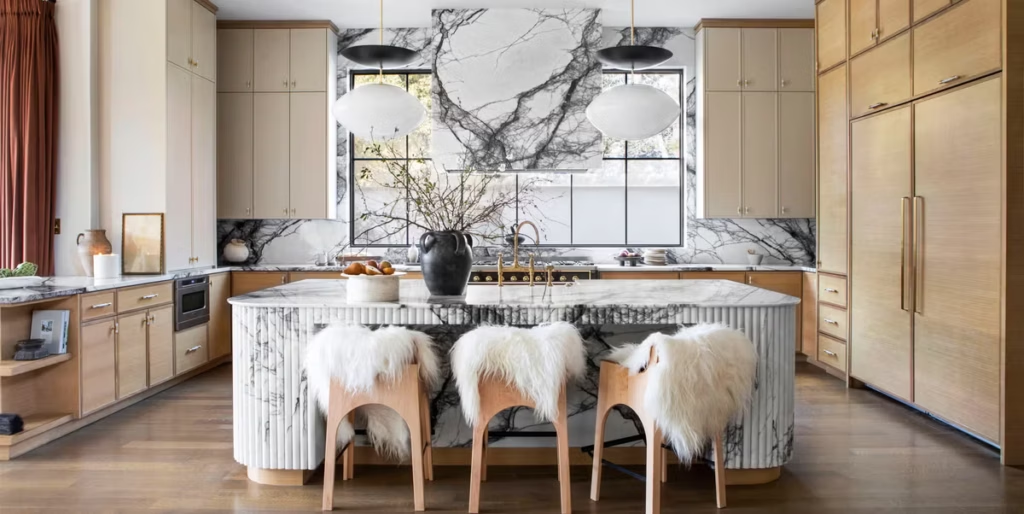
Backsplashes occupy a relatively small portion of the kitchen, yet they carry an outsized influence on both design and labor cost. Because they sit at eye level between countertops and cabinets, they function as a focal point, which is why material choice and installation complexity matter more here than raw square footage might suggest.
According to cost data from HomeAdvisor, backsplash installation typically ranges widely depending on material type and pattern complexity. Technical guidance from the Tile Council of North America also emphasizes that installation methods, surface preparation, and grout selection all influence durability and long-term performance.
The backsplash is where small square footage meets high attention to detail.
Backsplash Cost Breakdown (DFW Installed Prices)
Most kitchens include 20 to 40 square feet of backsplash area, though larger kitchens or full-height designs can exceed that.
| Material Type | Cost Per Sq Ft Installed | Typical Kitchen Cost | Difficulty Level |
|---|---|---|---|
| Ceramic Tile | $15 – $30 | $500 – $1,500 | Low |
| Porcelain Tile | $20 – $40 | $800 – $2,000 | Medium |
| Glass Tile | $25 – $50 | $1,000 – $2,500 | Medium-High |
| Natural Stone | $30 – $70 | $1,500 – $4,000 | High |
| Slab Backsplash (Quartz/Stone) | $60 – $150+ | $2,500 – $6,000+ | Very High |
These ranges include both materials and professional installation. Costs increase significantly with intricate patterns, premium materials, or full-height applications.
Ceramic and Porcelain Tile
Ceramic and porcelain tiles are the most common backsplash materials due to their affordability and versatility.
Why they are widely used:
- Broad range of colors and styles
- Durable and easy to clean
- Lower material and labor cost
The Tile Council of North America notes that porcelain tile offers greater density and lower water absorption than standard ceramic tile, which improves durability in high-use areas like kitchens.
Subway tile remains one of the most popular choices because it provides a clean, timeless look while keeping installation straightforward.
Glass Tile
Glass tile adds reflectivity and visual depth, which can make smaller kitchens feel brighter and more open.
Key characteristics:
- Reflects light, enhancing brightness
- Available in glossy and textured finishes
- Requires more precise installation
Glass tile installation is more labor-intensive because imperfections in adhesive or grout are more visible through the surface. This increases labor cost even when the material itself is moderately priced.
Natural Stone Backsplash
Natural stone backsplashes, such as marble or travertine, introduce texture and variation that cannot be replicated by manufactured materials.
What drives cost:
- Material sourcing and cutting
- Sealing requirements
- More complex installation
The U.S. Geological Survey explains that natural stone materials vary in porosity and composition, which affects both installation methods and long-term maintenance.
Stone backsplashes are common in higher-end kitchens where homeowners want a cohesive look with natural stone countertops.
Slab Backsplashes (Full-Height Stone)
Slab backsplashes use a single piece of quartz, granite, or marble that extends from the countertop to the upper cabinets or ceiling.
Why they are considered premium:
- Seamless appearance
- Minimal grout lines
- Requires specialized fabrication and installation
These installations often involve the same fabrication process as countertops, including cutting, polishing, and transport of heavy slabs. This significantly increases both material and labor costs.
Installation Cost Drivers
Backsplash pricing depends heavily on how the material is installed, not just what is installed.
| Installation Factor | Cost Impact |
|---|---|
| Basic straight lay (subway pattern) | Standard cost |
| Herringbone or mosaic patterns | +20% – 50% labor |
| Small-format tiles | Higher labor due to grout lines |
| Full-height backsplash | +$1,000 – $3,000 |
| Surface prep and wall repair | +$200 – $800 |
Intricate patterns require more cuts, more alignment, and more time, which increases labor significantly. Even with the same material, installation complexity can double the final cost.
Design Trends Driving Backsplash Costs
Recent kitchen design trends in Texas are pushing backsplash costs higher due to increased customization.
Common trends include:
- Full-height backsplashes that extend to upper cabinets or ceilings
- Matching backsplash and countertop materials for a seamless look
- Textured or patterned tile layouts that require skilled installation
These choices increase both material usage and labor time, especially when precision alignment is required across large surfaces.
Why Backsplash Has Disproportionate Impact
Backsplashes influence how the entire kitchen is perceived because they sit directly in the visual field between cabinets and countertops. A simple tile can keep the design understated, while a bold pattern or slab surface can define the entire space.
Because of this, backsplash decisions often affect adjacent choices such as cabinet color, countertop selection, and lighting.
A relatively small area ends up shaping the overall identity of the kitchen, which is why its cost impact extends beyond its size.
Labor vs Materials Percentage
When homeowners think about kitchen remodel costs, they usually picture cabinets, countertops, and finishes. What’s less visible is how much of the budget is driven by labor, coordination, and installation.
Across the U.S., kitchen remodel budgets typically split between materials and labor, with materials taking the larger share. Data from the National Kitchen & Bath Association and cost studies from HomeAdvisor show that materials often account for the majority of spending, while labor makes up a substantial secondary portion.
A kitchen remodel is a coordination problem disguised as a materials purchase.
Typical Kitchen Remodel Budget Split
In DFW, most kitchen remodels fall into a predictable distribution:
| Category | Percentage of Total Budget |
|---|---|
| Materials (cabinets, countertops, flooring, etc.) | 60% – 70% |
| Labor (installation + trades) | 30% – 40% |
This balance shifts depending on project scope. High-end materials push the material percentage higher, while complex layouts increase labor share.
Where the Money Actually Goes
Breaking the budget down further shows how costs distribute across major categories.
| Category | Typical % of Budget |
|---|---|
| Cabinets | 30% – 40% |
| Labor & contractor fees | 20% – 30% |
| Countertops | 10% – 15% |
| Appliances | 10% – 15% |
| Flooring | 5% – 10% |
| Electrical & lighting | 3% – 7% |
| Plumbing | 3% – 5% |
This distribution aligns with findings from the Remodeling Magazine Cost vs Value Report, which consistently shows kitchens as one of the most labor-intensive remodels due to the number of trades involved.
Why Labor Costs Add Up Quickly
A kitchen remodel requires multiple specialized trades working in sequence. Each phase depends on the previous one being completed correctly.
Typical trades involved:
- Demolition crew
- Carpenter / cabinet installer
- Electrician
- Plumber
- Tile installer
- Countertop fabricator
- Painter / finisher
The National Association of Home Builders notes that skilled labor shortages and rising demand in construction have steadily increased labor costs across major metro areas like Dallas-Fort Worth.
Each trade brings its own cost structure, scheduling constraints, and coordination requirements, which is why labor is such a significant portion of the budget.
General Contractor Costs
Most kitchen remodels involve a general contractor who manages the entire project.
Typical contractor responsibilities:
- Scheduling trades
- Ordering materials
- Managing permits and inspections
- Overseeing quality and timelines
General contractors typically charge 10% to 20% of the total project cost, depending on complexity and scope.
This fee is built into the labor portion of the budget and reflects the coordination required to keep the project moving efficiently.
What Increases Labor Costs
Certain decisions increase labor costs more than others.
| Factor | Cost Impact |
|---|---|
| Moving plumbing (sink, dishwasher) | High |
| Relocating electrical (outlets, lighting) | High |
| Removing walls or structural changes | Very high |
| Custom tile patterns | Moderate to high |
| Tight or complex layouts | Moderate |
Guidelines from the U.S. Department of Housing and Urban Development emphasize that structural changes and system relocations significantly increase both labor time and project complexity.
Layout changes are one of the biggest cost drivers because they trigger multiple trades at once.
Materials vs Labor: How to Control Your Budget
Material choices are visible and easy to adjust. Labor is less flexible because it is tied to the work required to execute the design.
This creates a clear dynamic:
- Materials scale with quality and preference
- Labor scales with complexity and changes
Keeping the existing kitchen layout is one of the most effective ways to control labor costs, because it avoids plumbing and electrical relocation.
Why This Split Matters
Understanding this breakdown changes how you approach budgeting.
If you overspend on materials, you can still adjust selections. If labor costs increase due to layout changes or complexity, those costs are much harder to reduce once the project begins.
The structure of your kitchen determines labor. The finishes you choose determine materials. Together, they define the final price.
Full Cost Table (DFW Kitchen Remodel by Material)
Once you break a kitchen remodel into individual material categories, the total cost becomes much easier to understand. Instead of a single number, you can see how each decision contributes to the final budget and where the biggest swings happen.
Data from the Remodeling Magazine Cost vs Value Report and cost benchmarks from HomeAdvisor show that kitchen remodels vary widely based on finish level, with material selections driving most of that variation.
A kitchen remodel is a sum of decisions, and each category carries its own price range.
Full Kitchen Remodel Cost Breakdown (DFW 2026)
The table below shows realistic cost ranges for a standard DFW kitchen (20–30 linear feet of cabinets, 40–60 sq ft of countertops, and 100–200 sq ft of flooring).
| Category | Low-End | Mid-Range | High-End |
|---|---|---|---|
| Cabinets | $4,000 – $8,000 | $10,000 – $18,000 | $25,000 – $50,000+ |
| Countertops | $1,500 – $3,000 | $4,000 – $7,000 | $8,000 – $15,000+ |
| Flooring | $800 – $2,000 | $2,000 – $4,500 | $5,000 – $10,000+ |
| Backsplash | $500 – $1,200 | $1,200 – $2,500 | $3,000 – $8,000+ |
| Appliances | $2,000 – $5,000 | $5,000 – $10,000 | $12,000 – $25,000+ |
| Lighting & Electrical | $1,000 – $3,000 | $3,000 – $6,000 | $6,000 – $12,000+ |
| Plumbing | $800 – $2,500 | $2,500 – $5,000 | $5,000 – $10,000+ |
| Labor & Contractor | $8,000 – $15,000 | $15,000 – $30,000 | $30,000 – $60,000+ |
Total Project Cost Ranges
| Remodel Level | Total Cost (DFW) |
|---|---|
| Budget Kitchen | $20,000 – $35,000 |
| Mid-Range Kitchen | $40,000 – $70,000 |
| High-End Kitchen | $80,000 – $150,000+ |
These ranges reflect real-world projects where layout, labor, and materials are all aligned with the chosen finish level.
Example Budget Scenarios
To make this more concrete, here’s how different material choices shape total cost.
Budget Kitchen (~$30K)
- Stock cabinets
- Laminate or entry-level quartz countertops
- LVP flooring
- Basic tile backsplash
- Standard appliances
Mid-Range Kitchen (~$55K)
- Semi-custom cabinets
- Quartz countertops
- Tile or engineered hardwood flooring
- Upgraded backsplash design
- Mid-tier appliance package
High-End Kitchen ($100K+)
- Custom cabinetry
- Premium quartz, granite, or marble countertops
- Hardwood flooring throughout
- Full-height slab backsplash
- Luxury appliances and lighting
The National Kitchen & Bath Association notes that mid-range remodels tend to cluster around selections that balance durability, functionality, and resale appeal, which is why most homeowners land in this category.
Where Cost Variability Comes From
Even within the same kitchen size, total cost can vary dramatically. The biggest drivers include:
- Cabinet tier (stock vs custom)
- Countertop material and slab size
- Flooring type and installation complexity
- Appliance package
- Layout changes affecting labor
The U.S. Census Bureau highlights continued growth in the Dallas-Fort Worth region, which has increased demand for remodeling and pushed both labor and material pricing upward in recent years.
The Key Insight
What this table reveals is simple:
A kitchen remodel does not have a single “price.” It has a range defined by material choices.
Upgrading just one category, like cabinets or countertops, can shift the entire project into a different pricing tier.
Understanding that relationship is what allows you to control the budget instead of reacting to it.
See the Full Kitchen Remodel Cost Guide (DFW 2026)
Understanding kitchen remodel costs by material gives you control over individual decisions. It shows how cabinets, countertops, flooring, and finishes shape the budget. At a certain point, though, material pricing alone stops answering the bigger question: what will the entire project actually cost from start to finish?
That’s where a full cost guide becomes useful. It connects material choices with layout, labor, timelines, and real-world project conditions.
According to the Remodeling Magazine Cost vs Value Report, kitchen remodel pricing varies widely depending on scope, with factors like structural changes, contractor coordination, and regional labor demand playing a major role beyond just materials. Data from the National Association of Home Builders also highlights how project complexity and trade coordination influence final costs in residential construction.
Material costs define the direction of your budget. Project scope defines the outcome.
When a Material Breakdown Isn’t Enough
Material pricing helps you estimate categories. It does not fully account for the conditions that drive real project costs.
Situations where a full guide becomes essential:
- Changing the kitchen layout
- Moving plumbing or electrical systems
- Removing walls or altering structure
- Upgrading ventilation or appliances
- Coordinating multiple trades over several weeks
These factors introduce variables that extend beyond material selection and into planning, sequencing, and execution.
What a Full Kitchen Cost Guide Covers
A comprehensive kitchen remodel guide expands beyond materials and includes:
| Category | What It Explains |
|---|---|
| Total project cost | Realistic full-budget ranges in DFW |
| Labor breakdown | Trade costs and contractor fees |
| Timeline | Planning vs construction phases |
| Hidden costs | Permits, demolition, repairs |
| Scope differences | Cosmetic vs full renovation |
Guidance from the U.S. Department of Housing and Urban Development emphasizes that remodeling projects often uncover additional work once construction begins, which is why understanding full scope is critical before starting.
Why Full Context Changes Budget Expectations
Many homeowners start with material pricing and assume that selecting mid-range finishes will produce a predictable total cost. Once the project begins, additional factors such as labor coordination, structural adjustments, and installation complexity shift the final number.
This is where expectations change. A kitchen that appears straightforward on paper can involve multiple trades, scheduling dependencies, and hidden conditions inside walls and floors.
How to Use Both Together
The most effective way to plan a kitchen remodel is to combine both perspectives:
- Use material breakdowns to control spending within each category
- Use a full cost guide to understand total investment and risk
Together, they provide a complete picture of what you are actually committing to.
Final Perspective
Kitchen remodel costs are built in layers. Materials form the visible layer. Labor, structure, and coordination form everything beneath it.
When you understand both, you move from guessing your budget to actively controlling it.