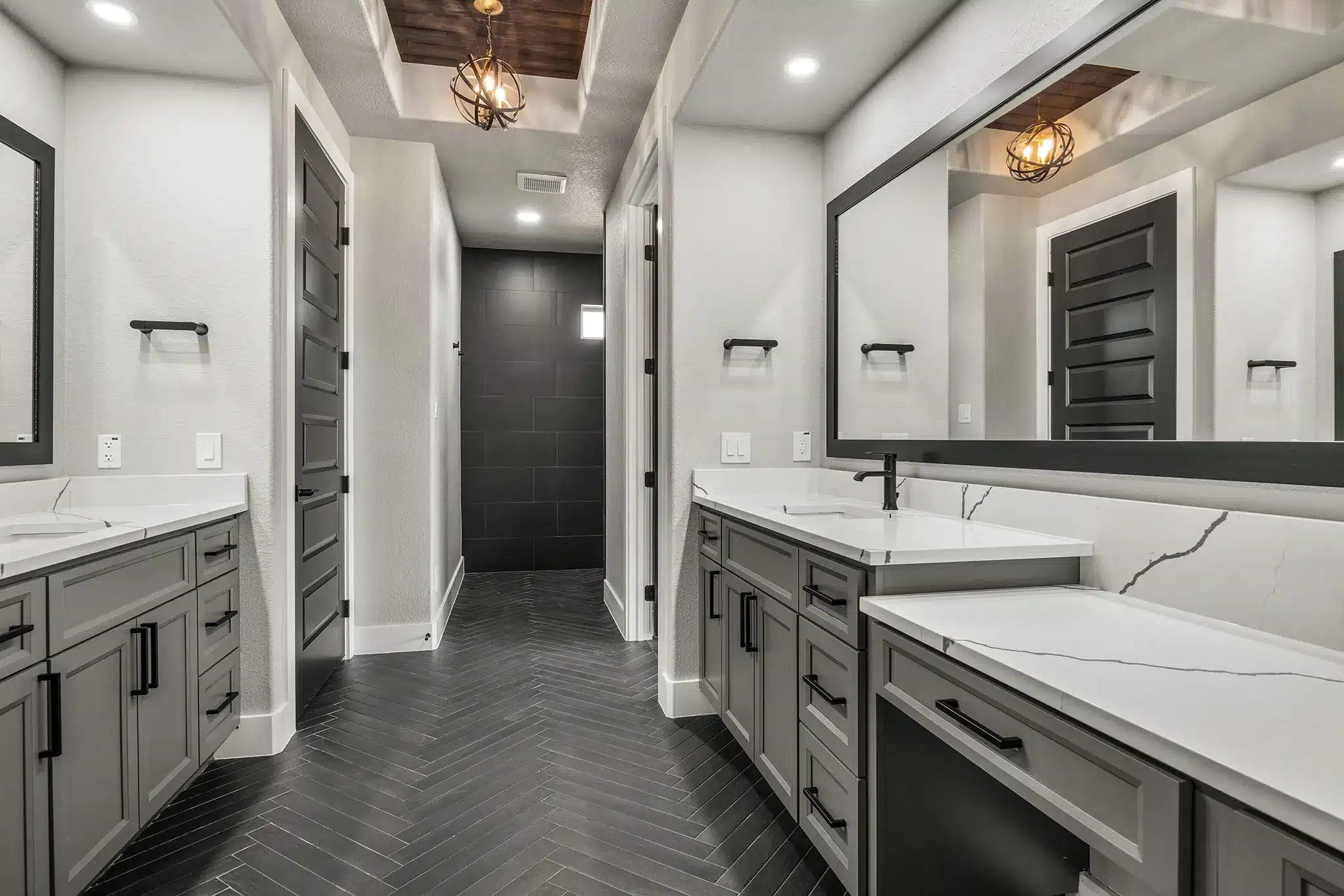
A kitchen remodel in Flower Mound can cost a little—or a lot—depending on how far you take the project. For a basic refresh, you may be working in the low five figures. For a midrange remodel with new cabinets, countertops, lighting, and some layout changes, the budget often moves into the tens of thousands. Full custom kitchens with structural work, premium finishes, and complete reconfiguration can climb much higher.
The right way to think about it is not “What does a kitchen cost?” but “What level of transformation do I need?” In Flower Mound, that question matters because pricing tends to follow broader Dallas–Fort Worth labor and subcontractor rates, while permitting and inspection requirements can add both time and soft costs. If you want a more regional baseline first, this guide sits alongside our broader DFW kitchen remodel cost guide.

What Does Kitchen Remodeling Cost in Flower Mound?
Most Flower Mound kitchen remodels fall into one of three pricing tiers:
| Project scope | Typical budget range | What is usually included |
|---|---|---|
| Cosmetic refresh | $15,000–$35,000 | Paint, hardware, lighting updates, modest backsplash work, sink/faucet swap, limited carpentry |
| Midrange remodel | $35,000–$85,000 | New cabinets or refacing, quartz or stone countertops, backsplash, flooring, lighting, appliance updates, some plumbing or electrical changes |
| Full custom remodel | $85,000–$175,000+ | Layout changes, premium cabinets, custom storage, structural adjustments, high-end finishes, major trade work, design coordination |
These ranges reflect the reality that kitchens are built from multiple expensive systems, not one line item. Cabinets, countertops, flooring, plumbing, electrical, and finish carpentry all affect the final total. National Kitchen & Bath Association planning guidance also emphasizes that scope drives budget more than a single square-foot number, which is why the range above is more useful than a one-size-fits-all estimate NKBA kitchen budgeting guidance.
For many homeowners, the best starting point is a budget target rather than an exact wish list. If you know whether you want a refresh, a midrange update, or a full transformation, a contractor can give you a much more accurate estimate. You can also compare your goals with our related Flower Mound kitchen remodeling services if you are ready to talk through scope and finishes.

Why Building in Flower Mound Is Different
Flower Mound kitchen projects are usually part of larger suburban single-family homes, which changes the design conversation. Open-plan kitchens often connect directly to living and dining spaces, so island size, sightlines, traffic flow, and storage placement matter more than they do in older, compartmentalized layouts.
The local process also matters. When a remodel includes plumbing, electrical, or structural changes, it may require coordinated permits and inspections through the town. That does not mean every project becomes complicated, but it does mean schedule and budget planning should account for review time, trade sequencing, and possible corrections. Town permitting and inspection resources are available through the local government site Flower Mound building and permit information.
Another difference is that Flower Mound remodels are priced in the DFW labor market. That means electrician, plumber, tile installer, and finish carpenter rates are usually closer to metro pricing than to small-town North Texas pricing. In practice, that affects everything from appliance hookups to cabinet installation. If you want to see how that metro pricing pattern compares in nearby communities, our guides for Coppell and Weatherford are useful reference points.

Typical Project Cost Ranges
A helpful way to budget a kitchen remodel is by project scope.
1) Cosmetic refresh: $15,000–$35,000
This is the lightest type of remodel. It usually keeps the existing layout and avoids major plumbing or electrical changes. Common work includes:
- repainting walls and trim
- replacing hardware
- installing a new faucet or sink
- changing light fixtures
- adding or updating backsplash tile
- minor carpentry or trim repairs
This range is best when the kitchen functions well but looks dated. It can make a big visual difference without turning the room upside down.
2) Midrange remodel: $35,000–$85,000
This is the most common “serious update” category. It often includes:
- new cabinets or cabinet refacing
- quartz, granite, or solid-surface countertops
- new backsplash
- updated flooring
- improved lighting
- appliance replacement
- limited plumbing and electrical revisions
In many Flower Mound homes, this level of work is where the kitchen begins to better support the rest of the house. You may not be changing the walls, but you are changing how the room works day to day.
3) Full custom remodel: $85,000–$175,000+
This is where the budget grows quickly because the project usually includes more than finish materials. Full custom remodels often involve:
- layout redesign
- wall removal or reframing
- larger islands
- custom cabinetry and built-ins
- premium stone surfaces
- upgraded lighting design
- appliance packages
- possible HVAC, plumbing, or electrical relocation
This tier is appropriate when the kitchen is the weak point in an otherwise strong home, or when you want a truly tailored space with high design and storage value.
The important thing is that the step from midrange to full custom is often not “a nicer countertop.” It is usually a combination of layout complexity, trade labor, and finish level that pushes the total upward.
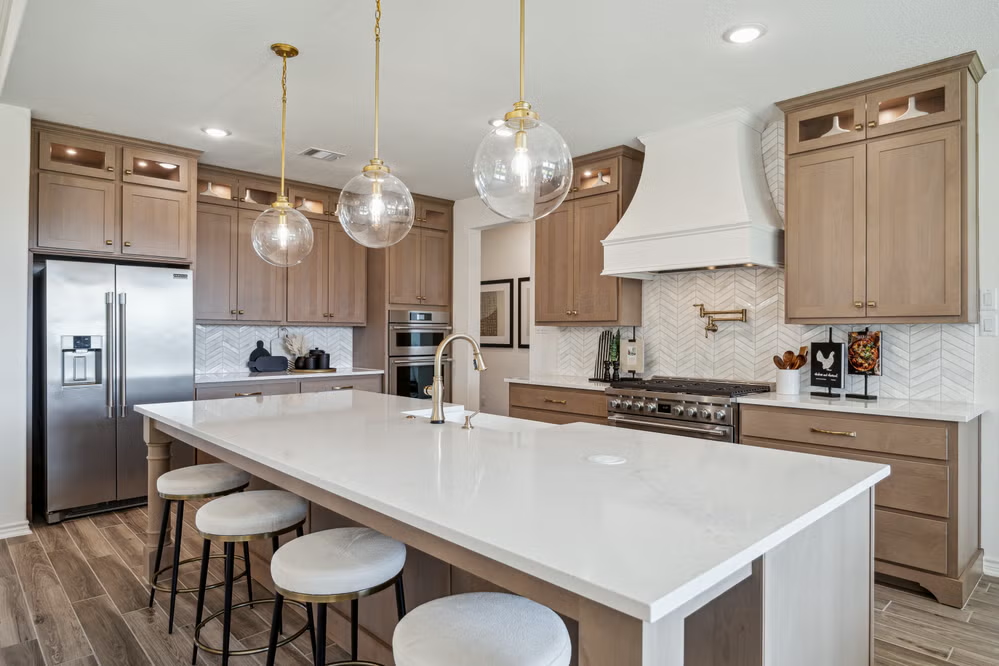
Cost Per Square Foot and What It Includes
Square-foot pricing can be useful for quick comparisons, but it should never be the only way to evaluate a kitchen remodel. Still, for rough planning, many Flower Mound homeowners think in terms like these:
- Cosmetic refresh: about $100–$250 per square foot
- Midrange remodel: about $250–$450 per square foot
- Full custom remodel: about $450–$700+ per square foot
Those numbers are only a framework. Two kitchens with the same square footage can cost very differently if one needs structural work, plumbing relocation, or high-end custom cabinetry. A 180-square-foot kitchen with stock cabinets and standard finishes may cost far less than a 180-square-foot kitchen with custom storage, slab backsplash, and a new island.
What square-foot estimates usually include:
- demolition
- materials
- labor
- basic trade coordination
- some finish work
What they often do not capture well:
- hidden damage behind walls
- permit delays
- appliance upgrades
- design fees
- premium hardware and accessories
- change orders
That is why a square-foot number should be treated as a quick screening tool, not a final budget. It helps you compare projects, but it does not replace a detailed scope.

Main Factors That Change Total Price
Several variables can move a Flower Mound kitchen remodel up or down by tens of thousands of dollars.
Layout changes
Changing the footprint is one of the biggest cost drivers. Removing a wall, shifting a sink, moving a range, or adding an island can require framing changes, electrical work, plumbing work, and possibly HVAC adjustments. The more the layout changes, the more coordination the project requires. In practical terms, a simple cabinet swap may stay in the $20,000 to $40,000 band, while a kitchen that moves plumbing and opens a wall can add $8,000 to $20,000 or more just in trade work and framing.
Age and condition of the home
Older homes may have outdated wiring, undersized circuits, or plumbing that is not ideal for a modern kitchen. Even when a home is not “old” in the historic sense, hidden issues can appear once cabinets come out. That is one reason a contingency is so important. If repairs uncover damaged subflooring, old shutoff valves, or wiring that needs upgrading, a project can easily add $2,500 to $10,000 before any cosmetic finishes change.
Cabinet choice
Cabinets are one of the largest cost categories in nearly every kitchen remodel. Stock cabinets cost less, semi-custom cabinets cost more, and fully custom cabinetry can become one of the most expensive parts of the job. Door style, finish, drawer systems, pull-outs, and storage accessories all matter. A small kitchen might spend $6,000 to $12,000 on stock cabinets, while a larger custom package can run $20,000 to $45,000+ before installation.
Countertop material
Laminate, quartz, granite, marble, and other stone options have very different price points. Larger islands, thicker edges, waterfall details, and full-height backsplash stone all raise the total. For many kitchens, countertops may land around $3,000 to $8,000 for standard quartz or granite, but premium slab selections and oversized islands can push that higher quickly.
Finish level
This is often the silent budget driver. Two kitchens can use the same layout and still cost dramatically different amounts if one uses builder-grade fixtures and the other uses custom lighting, designer hardware, and premium tile. Hardware might only be a few hundred dollars in one case and well over $1,500 in another, while lighting packages can range from $800 to $5,000+ depending on fixture count and quality.
Permitting and complexity
When electrical, plumbing, or structural changes are involved, the project may need more review and inspection steps. That can affect both schedule and soft costs. It can also create an opportunity for trade coordination delays if one subcontractor must finish before the next begins. In a project with wall removal or appliance relocation, permits, engineering, and inspection-related adjustments can add $500 to several thousand dollars depending on scope.
Scope creep
This is the easiest way for a project to run over budget. Homeowners often start with “just the cabinets and counters,” then add flooring, then lighting, then appliance upgrades, then a larger island. None of those choices are wrong, but each one changes the total. Adding flooring at $4 to $12 per square foot, for example, may seem modest at first, but over 180 square feet that is another $720 to $2,160 before labor and prep.
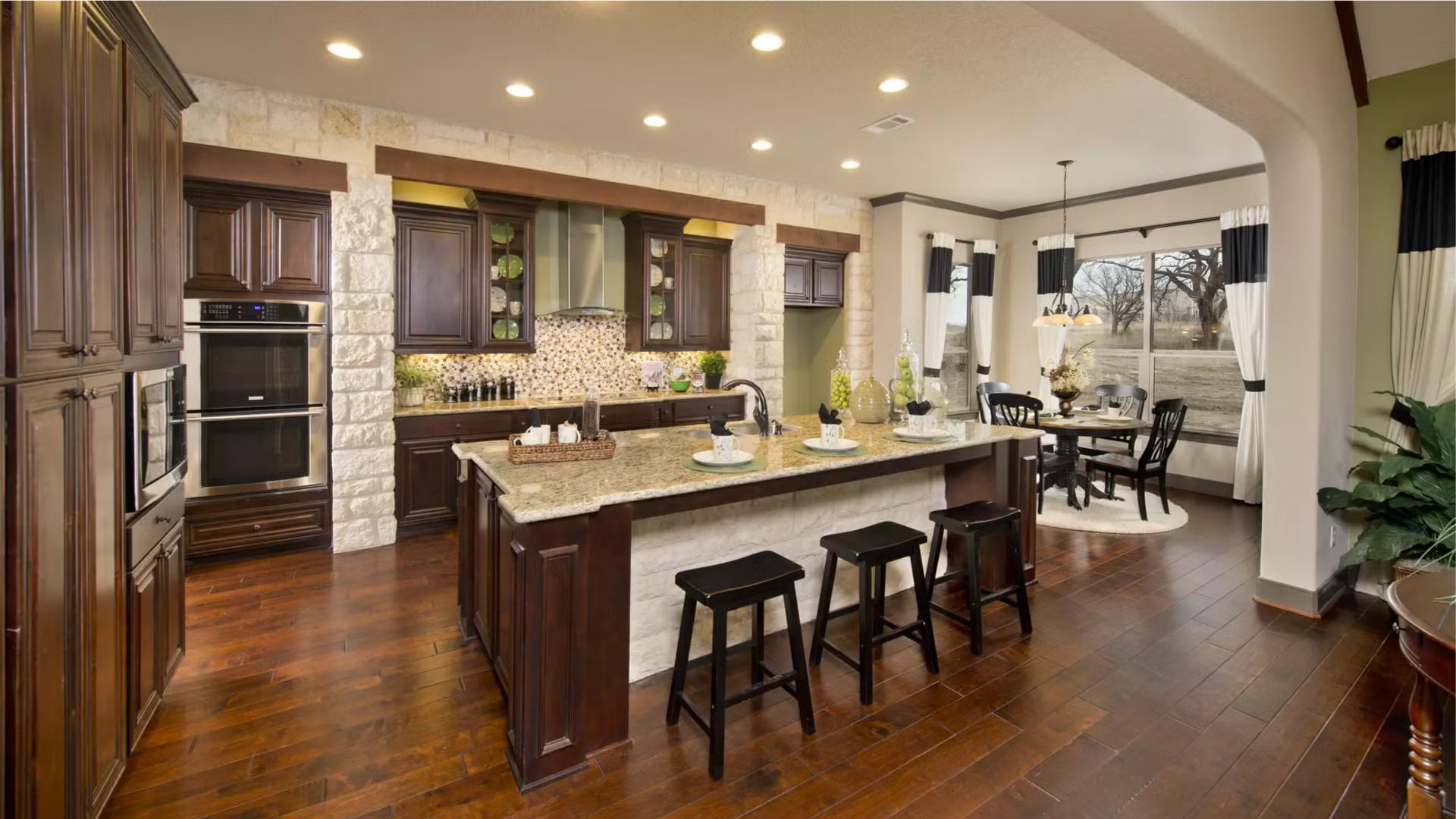
Labor, Materials, and Trade-Level Costs
Kitchen remodeling costs are not just material purchases. A large share of the budget goes to labor, coordination, and skilled trades.
Common labor categories
In a Flower Mound kitchen remodel, the budget often includes:
- demolition labor
- cabinet installation
- electrical rough-in and trim-out
- plumbing disconnect and reconnect
- drywall repair
- tile installation
- flooring installation
- painting and finish carpentry
For wage context, local and metro labor pricing tends to track broader occupational rates rather than a simple flat household-service fee, which is why kitchen remodel labor often grows quickly in a metro like DFW BLS wage data and labor context.
Trade-level allowances to expect
A realistic project budget often includes line items or allowances like:
- cabinet installation: several thousand dollars, more if the layout is complex; a straightforward install may run $2,500 to $6,000, while a larger custom layout can be $7,000 to $12,000+
- electrical updates: often a major variable if new circuits, outlets, under-cabinet lighting, or appliance changes are involved; simple lighting and outlet work might be $1,500 to $4,000, while a more involved rewire can hit $5,000 to $12,000
- plumbing changes: especially if sink, dishwasher, or gas appliance locations move; minor plumbing work may be $800 to $2,500, while rerouting lines can cost $3,000 to $8,000+
- tile work: backsplash and floor tile can add materially depending on pattern and cut complexity; a backsplash might be $1,200 to $4,000, while larger floor or feature-wall tile work can go beyond that
- finish carpentry: trim, panels, custom details, and island cladding can push the price up; modest carpentry details may be $500 to $2,000, while custom panels and built-ins can reach $3,000 to $7,500+
Material allowance ranges
Materials can vary as much as labor. For example:
- cabinet packages may range from moderate five figures to well above that for custom work
- countertops may range from a few thousand dollars to a much larger amount for premium stone and large island coverage
- tile, fixtures, and hardware can look modest individually but add up fast when multiplied across an entire kitchen
Because of that, it is smart to set separate allowances for cabinets, tops, appliances, lighting, and flooring instead of combining everything into one general “finish” bucket. That makes overruns easier to spot before they become change orders.

Permit, Design, and Planning Costs
Soft costs are easy to underestimate because they do not show up as a visible kitchen surface, but they still affect the project total.
Design and planning
Depending on the scope, planning may include:
- measurement and layout development
- cabinet design
- finish selection
- appliance coordination
- electrical and lighting planning
- 3D renderings or drawings
Design fees can be modest for a simple refresh, or more substantial for a full custom remodel that requires detailed selections and layout revisions. The more the project changes the room, the more valuable detailed design becomes.
Permits and inspections
If your remodel includes plumbing, electrical, structural, or appliance-related changes, expect permit and inspection steps. Town review requirements can add cost through application fees, scheduling time, and any corrections that must be made during the project Flower Mound permit and inspection information.
Appliance and trade coordination
When a kitchen plan includes a new range, hood, built-in microwave, or relocated sink, the kitchen has to be designed around those items. Appliance specifications can affect cabinet ordering, electrical planning, venting, and delivery timing. Appliance installation also falls into a regulated-trade environment for some work, which is why licensed coordination matters Texas trade and appliance guidance.
Typical planning allowance
For budgeting, it is wise to treat planning and soft costs as part of the real project total rather than an afterthought. A common practical approach is to reserve enough room in the budget so that 10% to 15% can cover hidden conditions, minor redesign, or upgrade decisions without derailing the whole project. That is a planning guideline, not a guarantee, but it gives homeowners breathing room.

Timeline and Process Expectations
A kitchen remodel is usually a sequence of phases, not one continuous event.
Typical phases
- Initial planning and estimates: 1 to 3 weeks
- Design and selections: 2 to 6 weeks
- Permitting and ordering: 2 to 8 weeks, sometimes longer for custom cabinets or special-order materials
- Demolition: 2 to 5 days
- Rough-in work: 1 to 3 weeks
- Drywall, tile, and finishes: 1 to 3 weeks
- Cabinet and countertop installation: 1 to 3 weeks depending on lead times and fabrication
- Punch list and final inspection: several days to 2 weeks
Common timeline ranges by scope
- Cosmetic refresh: about 2 to 5 weeks
- Midrange remodel: about 6 to 10 weeks
- Full custom remodel: about 10 to 16+ weeks
These ranges can stretch if the project involves a structural change, delayed material delivery, permit review time, or unexpected conditions behind walls. Schedule risk is not just about the visible work; it is also about how well the trades are sequenced.
A Flower Mound kitchen remodel can move faster when selections are finalized early and cabinets, countertops, tile, and appliances are ordered on time. It can slow down quickly when decisions change after demolition. That is why the planning phase matters so much.
If you are comparing project timing across different Texas markets, our nearby guides for Weatherford kitchen remodeling and Coppell kitchen remodeling provide another useful lens.
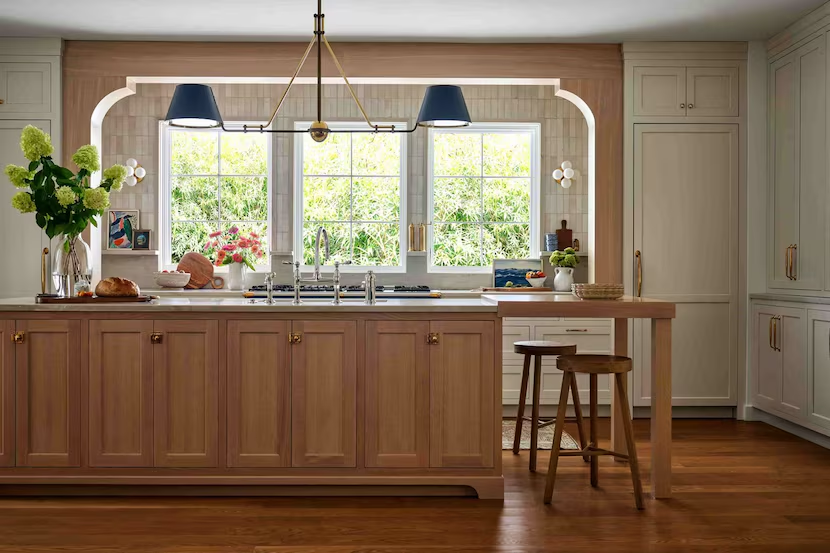
How to Budget the Project Realistically
A realistic budget is built in layers.
Start with the scope
Decide whether you want a refresh, midrange remodel, or full custom kitchen. This one decision will do more to shape the budget than almost anything else.
Use allowances instead of vague estimates
Good budgets break costs into categories:
- cabinets
- countertops
- tile
- flooring
- plumbing
- electrical
- lighting
- paint and trim
- appliances
- design and permit costs
That makes it easier to compare bids. It also reduces surprises when one contractor includes something another contractor left out.
Build in contingency
A contingency of 10% to 15% is a practical target for most projects. On a $60,000 kitchen remodel, that means keeping roughly $6,000 to $9,000 available for hidden issues, small upgrades, or unavoidable changes.
Avoid overspending on one category
It is easy to get excited about one feature, like a huge island or premium stone, and then run short on other essentials. The best kitchens feel cohesive because the budget is balanced across function and finish.
Think about financing and sequencing
Some homeowners choose to complete the project in stages, especially if they want to avoid taking everything on at once. Others prefer one all-in remodel so the home is disrupted only once. Either approach can work, but the financing plan should match the timing of payments, ordering deposits, and construction milestones.
Get one final reality check
Before signing a contract, make sure the quote addresses:
- what is included
- what is excluded
- who handles permits
- who orders materials
- how change orders are handled
- what happens if hidden conditions are found
That last point is especially important in a remodel where walls, flooring, and cabinets are being removed.

When to Choose a Kitchen Remodeling Project in Flower Mound
A kitchen remodel makes the most sense when the room is limiting how you live in the home.
Choose remodeling if:
- the layout does not support how your family uses the space
- you need more storage or prep room
- the kitchen feels disconnected from the rest of the house
- the finishes are worn out or dated
- the house is otherwise strong, but the kitchen is holding back resale appeal
- you want to improve function before investing in other parts of the home
In Flower Mound, this decision often comes down to whether the kitchen still fits the open-plan style of the house. If the room feels cramped, poorly lit, or visually separated from the living area, a remodel can make the entire home feel more current. If you are still comparing the kitchen against broader home improvements, it may help to look at our related guide on whole-home remodeling in Flower Mound.
For some homeowners, a kitchen remodel is also part of a larger upgrade plan that includes bathrooms or other living spaces. If that is your situation, our guide on bathroom remodeling in Flower Mound can help you think about sequencing and budget priorities.
You may also want to compare a kitchen project against a larger home investment, especially if you are deciding between renovating and rebuilding. Our guide on building a house in Flower Mound is useful if you are weighing major reconstruction or replacement versus remodeling.

Final Thoughts on Kitchen Remodeling in Flower Mound
A kitchen remodel in Flower Mound is usually a DFW-market project with local permitting, trade coordination, and suburban design priorities that shape the final price. For a modest refresh, you may be able to stay in a relatively controlled budget. For a midrange remodel, the numbers often rise because cabinets, counters, flooring, and trade work all stack together. For a full custom kitchen, layout changes and premium finishes can move the total substantially higher.
The smartest way to approach the project is to define scope clearly, set realistic allowances, and leave room for contingencies. That is especially important in a kitchen, where one change often creates three others. If you want help turning a rough idea into a practical budget and construction plan, our team can help you evaluate the right scope for your home through our Flower Mound kitchen remodeling page.
If you are ready to compare options, the best next step is a detailed estimate based on your actual layout, finish goals, and timeline. That is the surest way to turn a general price range into a plan you can trust.
For broader DFW pricing context, see the full DFW cost guide.