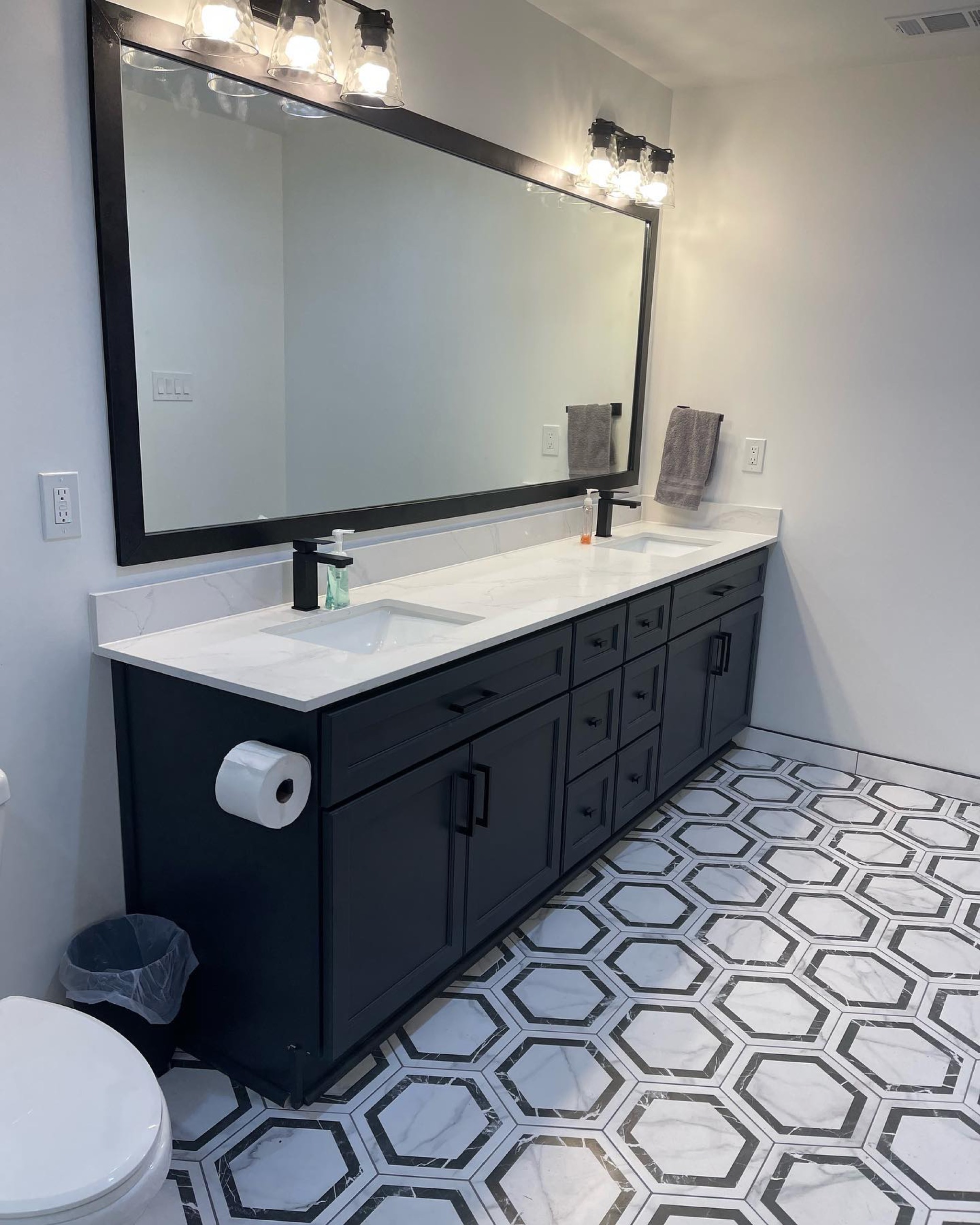

A bathroom remodel in Flower Mound usually lands between $18k and $50k, and the spread is not random — it tracks two specific decisions: whether the wet area gets rebuilt, and whether the room’s plumbing locations stay put. A $28k Wellington project and a $48k Bridlewood project can look identical on a finishes list. The cost gap lives behind the tile.
This guide is the cost-side companion to our Flower Mound bathroom remodeling page. The money page summarizes tiers; this one explains where the dollars actually go, what Flower Mound homes specifically tend to need, and the line items homeowners most often under-budget when they’re comparing estimates.
The numbers here come from our work — 19 Flower Mound projects since 2020, $492k+ in tracked Houzz revenue, and a portfolio of 150+ bathroom remodels across DFW. Several of those local jobs included one or more bathrooms inside larger whole-home reorganizations, which means we’ve costed bathrooms both as standalone projects and as components of bigger budgets. The patterns below are drawn from both.
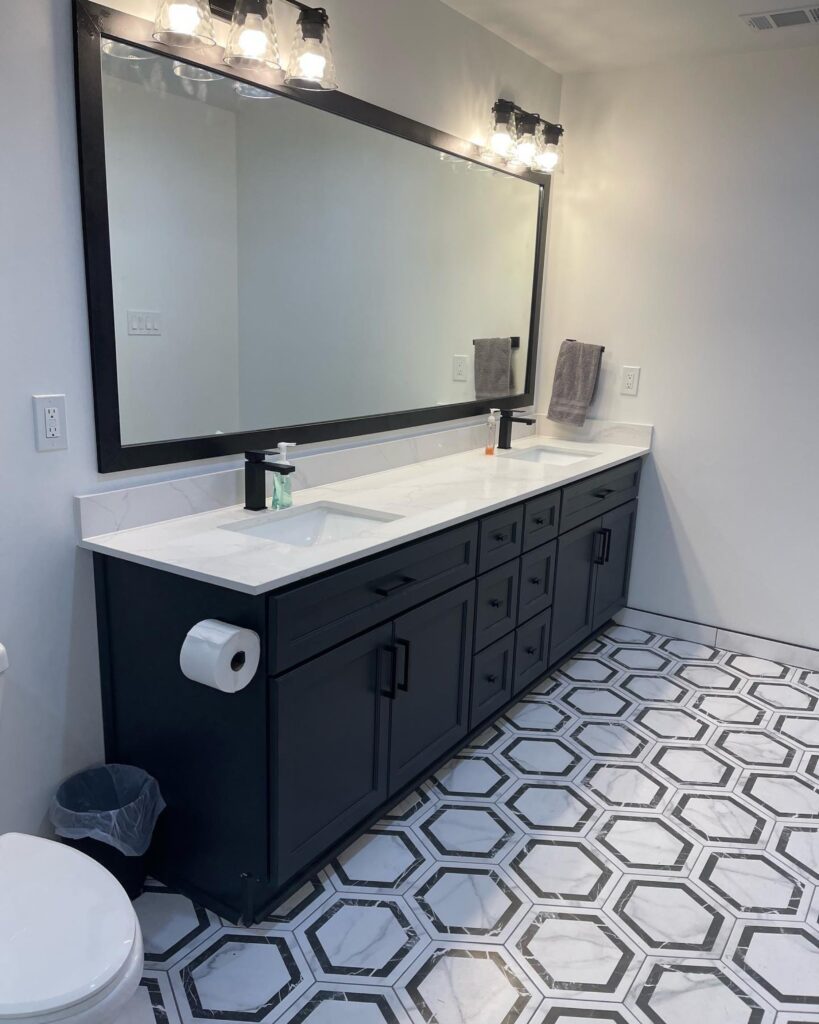
What a Flower Mound Bathroom Remodel Really Costs
Most Flower Mound bathroom budgets fall into one of three working ranges, and each range maps to a different kind of construction decision — not just a different finish level.
$18k–$28k buys a refresh, not a rebuild. At this band, the tub, toilet, and vanity stay in their original locations. Plumbing rough-in is not opened. The vanity is stock or low-tier semi-custom, the counter is laminate or entry-level quartz, the shower gets a new surround rather than a full tile build, and the flooring and lighting are replaced. This is the right range for a hall bath or guest bath that works fine but looks dated. It is not the right range for a primary suite with a failing shower pan. A recent $25k mid-scope project we completed on Walden Ct is a good illustration — meaningful work, but the scope was disciplined and the layout stayed put.
$32k–$50k is the working middle for Flower Mound, and it’s where most of our projects in this city land. At this scope, the tile shower or tub surround is built from scratch with proper waterproofing, the vanity is semi-custom with soft-close and drawer storage, the counter is quartz or granite, the fixtures are mid-tier (Delta- or Moen-branded lines rather than generic), the floor is replaced, and a permit covers the plumbing and electrical changes. Glass is upgraded — usually frameless or semi-frameless on the shower. The footprint stays the same.
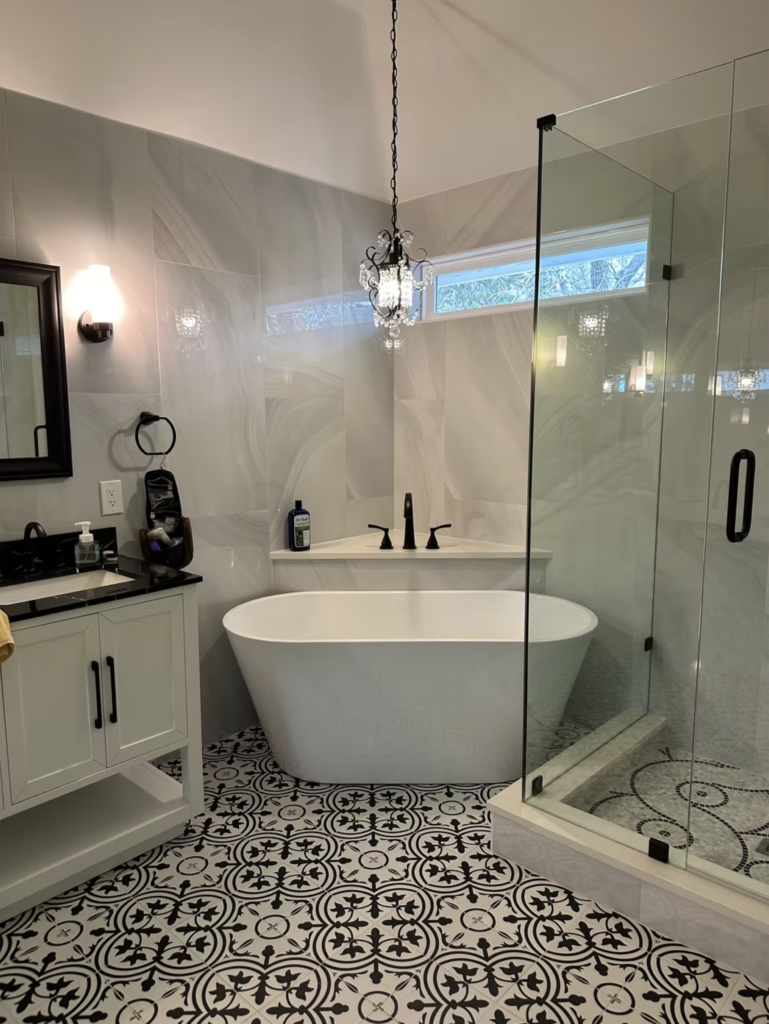
$55k–$90k+ is what happens when the layout moves. Removing a deck-mounted tub to enlarge the shower, relocating a shower valve, expanding the vanity wall, adding a freestanding tub with new supply and drain lines, or bringing in custom cabinetry all push budgets here. The materials are premium — large-format porcelain or natural stone, custom glass, luxury fixtures, custom lighting. Layout work and structural changes are part of the scope.
What the tier ranges don’t show is how steep the jumps are inside each band. A $40k bathroom and a $50k bathroom in Flower Mound are usually distinguished by one or two specific upgrades — not a proportional bump on every line.
The Tub-to-Shower Conversion: The Single Biggest Cost Lever
In Flower Mound primary suites built in the 1990s and 2000s, the most common scope expansion is removing the oversized deck-mounted garden tub and converting that footprint into a larger walk-in shower. This single decision routinely adds $8k–$15k to a bathroom that would otherwise be a finish-level refresh.
The reason it costs that much is that almost nothing in the existing wet area can be reused. The tub deck framing comes out. The drain has to move. A new shower pan has to be built with proper slope. Waterproofing — usually a sheet or liquid membrane behind the backer board — goes in before any tile. The shower valve typically needs to be relocated and reset at the correct depth for the new trim kit. Glass cannot be ordered until tile is installed, because it has to be measured to the finished surface. None of that work shows up on the finishes list a homeowner sees first, but all of it is on the invoice.
The trade-off question is worth thinking about before the estimate. Keeping the tub and reglazing or replacing it within the existing deck might save $7k–$10k against a full conversion. The decision usually comes down to whether anyone in the household actually uses that tub. In most of the Flower Mound primary suites we’ve remodeled, the answer has been no — which is why the conversion is so common here.
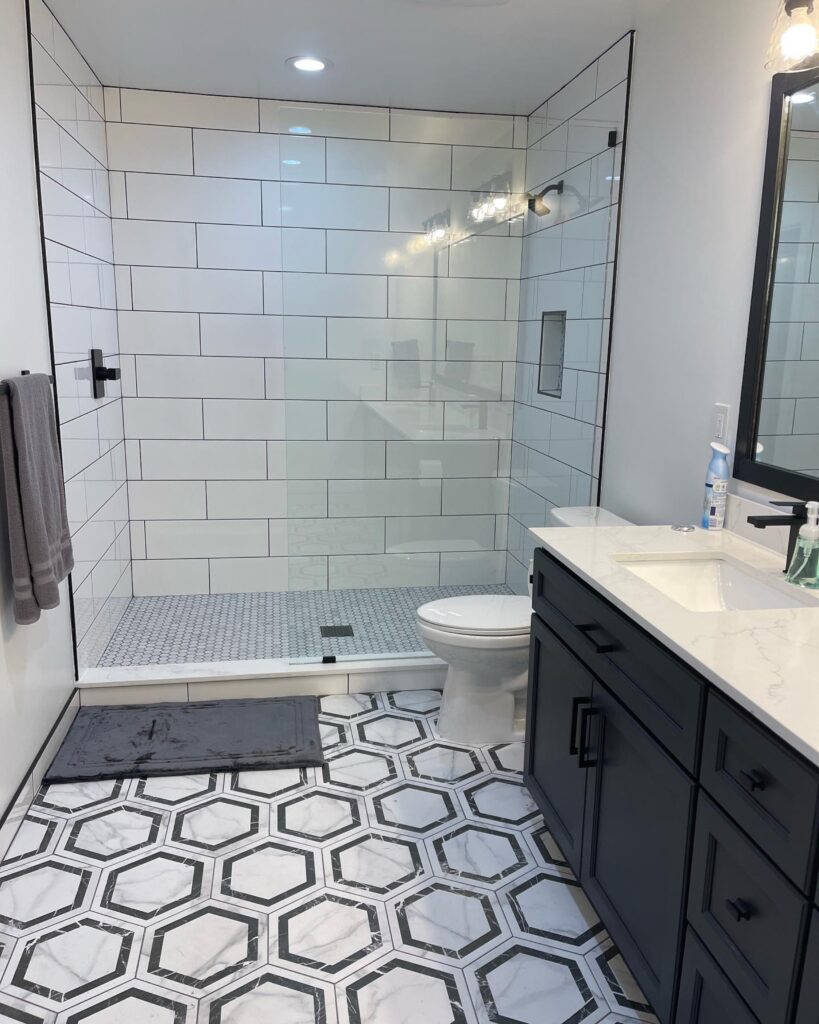
Where Flower Mound Bathrooms Quietly Go Over Budget
Three line items account for most of the cost overruns we’ve seen on Flower Mound bathroom projects, and none of them are in the room when the homeowner is picking tile.
Subfloor and wall damage discovered after demo. Bathrooms in 1990s-era homes around Bridlewood, Wellington, and the Cross Timbers area often have some moisture damage hidden behind the tub apron, around the toilet flange, or under the vanity. We have opened walls in this city and found rotted studs, compromised subfloor at the tub front, and old wax-ring failures that quietly damaged the framing below. Repairs typically add $1,500–$5,000 depending on extent. It is not a contractor problem and it is not a homeowner problem — it is a 25-to-30-year-old bath catching up with itself. A serious estimate should include a contingency line for this. If it doesn’t, ask why.
Shower glass. Frameless glass is one of the largest single material line items in a mid-range bath, and it is the one most often underestimated. A heavy frameless enclosure with custom measurements, hardware, and tempered safety glass typically runs $1,800–$4,500 installed, depending on size and configuration. A larger walk-in or curbless setup can climb past $5,000. The glass cannot be ordered until tile is finished, so this cost lands late in the project — which is exactly when budgets feel tightest.
Ventilation done correctly. Many Flower Mound bath fans are undersized for the room they serve and vent into attic space rather than to the exterior. A proper upgrade — correctly sized fan, insulated duct, exterior termination, and a humidity-sensing switch — usually adds $400–$900 over a basic fan swap. Skipping this is the most common reason new paint and grout fail within two years in a remodeled bath.
Primary vs. Secondary: Two Different Cost Conversations
A Flower Mound primary bath and a Flower Mound hall bath are not on the same budget curve, even when their square footage is similar.
The primary suite carries finish-level expectations because the rest of the master suite usually does. A larger walk-in shower, double vanity with proper drawer storage, separate water closet, freestanding or alcove tub, and stone surfaces are the working baseline at the mid-range tier. Glass, lighting, and storage usually push the number toward the upper end of $32k–$50k. The project lives or dies on whether the wet area is rebuilt correctly.
A secondary bath — hall bath, kids’ bath, guest bath — usually prices around durability rather than luxury. The scope is full tile in the tub-shower combo or shower-only, a semi-custom vanity with quartz, mid-tier fixtures, new flooring, and updated ventilation. Most secondary baths in Flower Mound land in the $22k–$32k range when the layout doesn’t change. The cost driver here is finish selection: porcelain that mimics stone, slip-resistant floor tile, easy-clean wall tile, and durable cabinet construction. Spending an extra $3k on a guest bath that hosts pool traffic and visiting family is usually a better investment than the same $3k spent moving cabinet hardware to a different brass.
How to Read a Bathroom Estimate Without Getting Surprised
The hardest part of comparing bathroom contractor quotes in Flower Mound is that two estimates with similar totals can include very different work. A few specific things to look for before signing anything:
A defensible estimate names the tile spec — size, type, and source — rather than a dollar allowance. “$8/sf tile allowance” is a deferred decision, not a price. A homeowner who walks into a tile showroom and selects a 24×48 porcelain at $14/sf will see the budget shift fast. Either nail the tile selection before the contract or build the contingency in.
The waterproofing system should be named. Schluter, Wedi, Laticrete Hydroban, and traditional liner-and-mud-bed builds are all valid choices at different price points, but the estimate should say which one. A bid that doesn’t specify is a bid that may default to the cheapest method.
Glass should be itemized separately — not buried in a shower line. Frameless versus semi-frameless versus framed is a $1,500–$3,000 swing, and it should appear as its own line. If it doesn’t, the contractor may be planning to come back with a change order after tile is set.
Permit cost, inspection coordination, and dump fees should be in the estimate. Flower Mound permits for plumbing and electrical work go through Flower Mound Building Inspections at 2121 Cross Timbers Rd, and the permit fee plus coordination time is a real line on every project that touches rough-in. A bid without it has either overlooked it or moved it to a change order.
Phasing Two or Three Bathrooms
Many Flower Mound homes have three or more bathrooms, and homeowners often ask whether to do them together or in sequence. The cost math goes both ways.
Done together, two bathrooms remodeled in the same project will usually save 10–15% on the combined total compared to doing them six months apart. The savings come from shared mobilization, one permit-and-inspection cycle, one round of demo and dust, and bulk tile and material ordering. The trade-off is that the household loses two bathrooms at once.
Done in phases, the budget is easier to absorb and the family keeps a working bathroom throughout. The cost penalty is real but usually acceptable: a fresh mobilization, a new permit, and the lost economies on materials. For homeowners with a primary, hall, and guest bath, a common pattern is to do the primary as a standalone project and combine the hall and guest baths into a second phase. We’ve planned both approaches for clients in this city; the right answer usually depends on whether the budget is flexible or capped.
A Note on Flower Mound Project Costs
The bathroom budgets in this guide are drawn from real work — including the bathrooms inside larger whole-home projects on Sun Meadow Dr and in other Flower Mound neighborhoods, where a single $135k–$178k remodel often included two or three bathrooms as part of the broader scope. The Flower Mound homeowners we’ve worked with — including Julie Moulas and Margie Lackey in nearby Double Oak — went into their projects with itemized estimates that matched the final invoice. That is not luck. It is what happens when the wet-area scope, the tile and glass selections, and the contingency for older-home conditions are all priced honestly before demo starts.
For a broader view across the metro, the DFW Bathroom Remodeling Cost Guide puts Flower Mound numbers in context with the rest of the region.