Average Cost to Remodel a Kitchen in 2026
National Average Cost Range
In 2026, the cost to remodel a kitchen continues to reflect a mix of material inflation, labor shortages, and increasing demand for higher-end finishes. Based on aggregated data from sources like the Remodeling Cost vs. Value Report and the National Association of Home Builders, most homeowners can expect the following ranges:
| Remodel Type | Average Cost (2026) |
|---|---|
| Minor Remodel | $15,000 – $35,000 |
| Mid-Range Remodel | $35,000 – $75,000 |
| Major Remodel | $75,000 – $150,000+ |
A typical full kitchen remodel lands around $45,000 to $80,000, depending on finishes, layout changes, and appliance selection. Higher-end projects with custom cabinetry, luxury appliances, and structural modifications can easily exceed six figures. For a material-level breakdown of cabinet costs, see our kitchen cabinet cost guide.
Insight: According to the U.S. Census Bureau’s housing data, spending on home improvements has steadily increased year-over-year, with kitchens consistently ranking as the most expensive and most upgraded space in the home. Bathrooms rank as the second most expensive room to remodel — see our 2026 bathroom remodel cost guide for that breakdown.
Typical Cost by Kitchen Size
Kitchen size plays a direct role in overall cost, primarily due to increased material quantities and labor hours. Larger kitchens require more cabinetry, flooring, countertop surface, and often more complex lighting and plumbing systems.
| Kitchen Size | Average Remodel Cost |
|---|---|
| Small (70–100 sq ft) | $15,000 – $40,000 |
| Medium (100–200 sq ft) | $40,000 – $80,000 |
| Large (200+ sq ft) | $80,000 – $150,000+ |
Even within the same size range, costs can vary significantly depending on scope. A small kitchen with high-end finishes may exceed the cost of a larger kitchen with budget materials.
Cost Trends Compared to Previous Years
Kitchen remodeling costs in 2026 reflect a continuation of trends that began in the early 2020s. Material prices remain elevated compared to pre-2020 levels, and labor costs have increased due to skilled trade shortages. Data from the Bureau of Labor Statistics shows sustained wage growth in construction trades, which directly impacts remodeling pricing.
Several key trends shaping 2026 pricing include:
- Cabinet costs rising faster than other components, driven by material and manufacturing expenses
- Increased demand for durable, low-maintenance materials like quartz countertops
- Higher appliance costs, especially for energy-efficient and smart home models
Quote: “Kitchen remodel costs have increased significantly over the past five years due to both supply chain pressures and rising labor demand,” according to analysis from the Joint Center for Housing Studies of Harvard University.
Overall, homeowners entering a kitchen remodel in 2026 should expect pricing to remain elevated, with cost variability largely driven by design choices, scope, and local market conditions.

Cost Per Square Foot to Remodel a Kitchen
Average Cost Per Square Foot in 2026
Kitchen remodeling costs in 2026 are often evaluated on a per-square-foot basis, which helps standardize pricing across different home sizes and project scopes. Nationally, most kitchen remodels fall within the following range:
| Remodel Type | Cost Per Square Foot |
|---|---|
| Basic / Cosmetic | $100 – $250 |
| Mid-Range Remodel | $250 – $450 |
| High-End Remodel | $450 – $800+ |
For a typical kitchen, the average cost per square foot lands between $250 and $500, depending on material choices and labor complexity. These numbers align with broader residential construction cost benchmarks published by organizations like the National Association of Home Builders and cost modeling insights from the RSMeans construction database.
Insight: Cost per square foot increases as finishes become more premium and as layouts become more complex, especially when plumbing, electrical, or structural elements are relocated.
Cost Differences by Project Scope
The scope of work has a direct and measurable impact on cost per square foot. Even within the same kitchen size, pricing can vary significantly depending on how much of the space is being altered.
Cosmetic Updates
Cosmetic kitchen updates focus on surface-level improvements without major layout changes. These projects typically include painting cabinets, replacing hardware, upgrading lighting, and installing new countertops or backsplash. For a side-by-side look at refacing versus full cabinet replacement, see our replace vs reface kitchen cabinets guide.
| Scope Element | Typical Cost Range |
|---|---|
| Cabinet repainting | $3,000 – $10,000 |
| Countertop replacement | $2,000 – $8,000 |
| Lighting upgrades | $500 – $3,000 |
Cosmetic remodels usually fall between $100 and $250 per square foot, making them the most cost-efficient option for homeowners seeking visual improvements.
Partial Remodels
Partial remodels involve replacing key components while keeping the general layout intact. This often includes new cabinets, updated appliances, flooring replacement, and upgraded plumbing fixtures.
| Scope Element | Typical Cost Range |
|---|---|
| Cabinet replacement | $10,000 – $30,000 |
| Flooring installation | $3,000 – $12,000 |
| Appliance upgrades | $5,000 – $20,000 |
These projects typically range from $250 to $450 per square foot, reflecting the increased labor and material requirements. According to the U.S. Department of Energy, many homeowners use this level of remodel to incorporate energy-efficient appliances, which can also influence upfront costs.
Full Gut Renovations
A full kitchen gut renovation involves stripping the space down to the studs and rebuilding it entirely. This scope often includes layout changes, structural modifications, new plumbing and electrical systems, and high-end finishes.
| Scope Element | Typical Cost Range |
|---|---|
| Demolition | $2,000 – $8,000 |
| Structural changes | $5,000 – $25,000+ |
| Full system upgrades | $10,000 – $40,000 |
Full remodels generally fall between $450 and $800+ per square foot, especially when custom cabinetry, premium materials, and smart home integrations are included. Data from the Bureau of Labor Statistics continues to show rising construction labor costs, which heavily influence projects at this level.
Quote: “Labor typically accounts for 20% to 35% of total remodeling costs, depending on project complexity,” based on industry estimates referenced by the Home Improvement Research Institute.
Understanding cost per square foot provides a clear framework for budgeting, though actual project costs will always depend on design decisions, contractor pricing, and regional market conditions.
What Affects Kitchen Remodeling Cost the Most
Kitchen Size and Layout Complexity
Kitchen size is one of the most direct cost drivers in any remodel. Larger kitchens require more materials across every category—cabinetry, countertops, flooring, and lighting—which increases both material and labor costs. Beyond size, layout complexity plays an equally important role. For a side-by-side comparison of countertop materials, see our kitchen countertop cost guide.
Open-concept kitchens, island additions, and reconfigured work triangles often require relocating plumbing lines, electrical wiring, and sometimes load-bearing walls. Adding an island in particular drives a meaningful share of layout-related spending, with full ranges covered in our 2026 kitchen island cost guide. According to the U.S. Department of Housing and Urban Development, structural modifications and system relocations significantly increase renovation costs due to permitting, engineering, and labor requirements.
Insight: A simple layout refresh can stay within mid-range pricing, while major layout changes often push projects into high-end cost tiers due to added trades and inspections.
Material Quality and Finishes
Material selection is one of the fastest ways to shift a kitchen remodel budget up or down. Cabinets, countertops, flooring, and fixtures are available across a wide pricing spectrum, and even small upgrades compound quickly across an entire space.
For example, engineered materials like quartz have become increasingly popular due to durability and low maintenance, as noted by the National Kitchen & Bath Association. Premium finishes such as custom cabinetry, natural stone countertops, and designer fixtures can multiply costs compared to standard options.
| Material Category | Budget Option | Mid-Range Option | High-End Option |
|---|---|---|---|
| Cabinets | Stock | Semi-custom | Fully custom |
| Countertops | Laminate | Quartz / Granite | Marble / Exotic stone |
| Flooring | Vinyl / Laminate | Tile / Engineered | Hardwood / Natural stone |
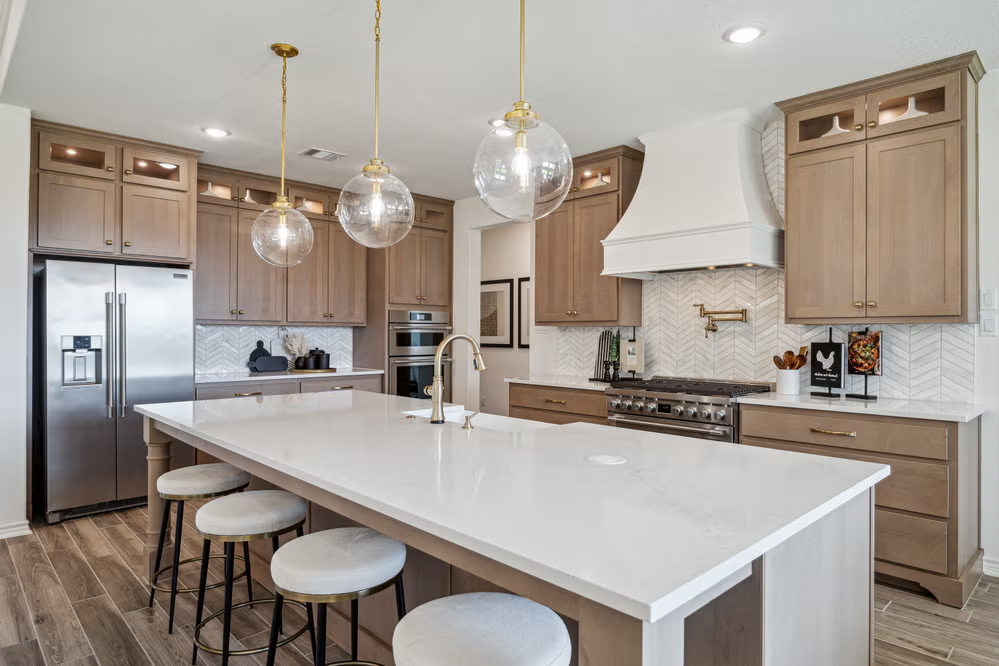
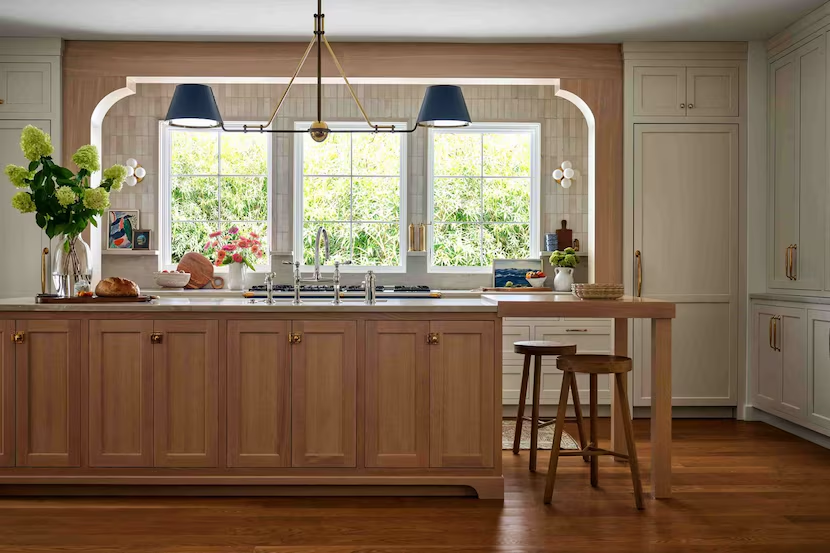
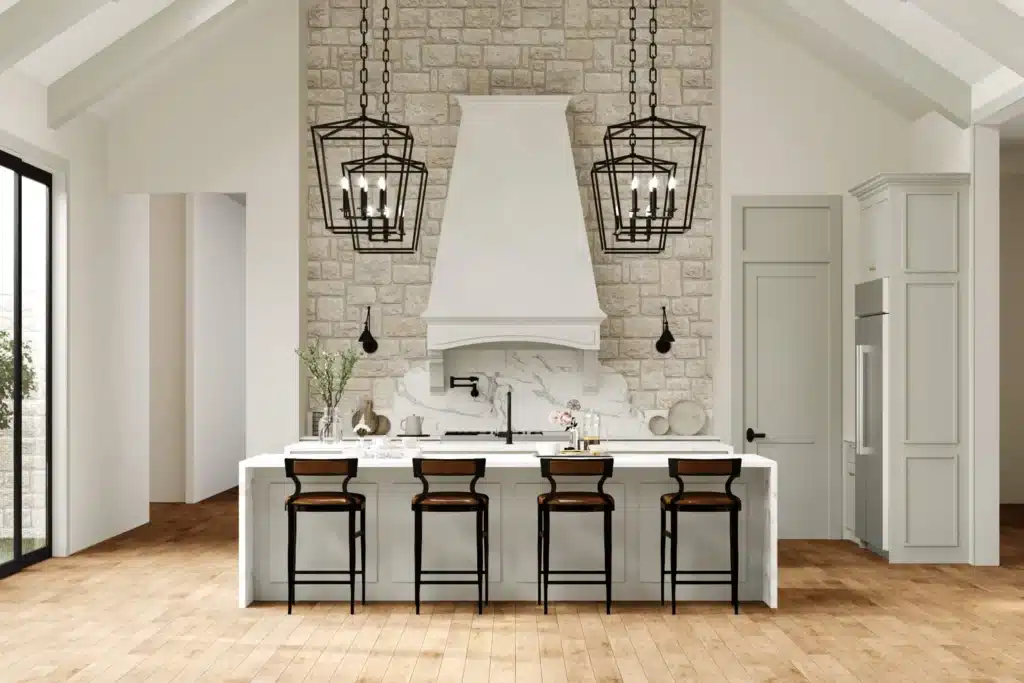
“For visual inspiration on how to combine these materials — including warm wood tones, two-tone cabinetry, and waterfall islands — see this guide to 2026 kitchen remodeling ideas from Custom Kitchens by Lopez.”
Labor and Regional Pricing Differences
Labor typically represents a substantial portion of total remodeling cost, and pricing varies significantly by region. Urban areas and high-demand markets tend to have higher contractor rates due to increased demand and cost of living.
Data from the Bureau of Labor Statistics shows consistent wage growth in construction trades, which directly impacts remodeling pricing in 2026. Skilled labor shortages across the U.S. have also contributed to longer project timelines and higher overall costs.
Quote: “Construction labor costs have risen steadily over the past several years due to demand outpacing supply,” according to labor market analysis published by the Associated General Contractors of America.
Structural Changes and Permits
Structural changes introduce another layer of cost that many homeowners underestimate. Removing walls, expanding the kitchen footprint, or adding windows often requires engineering plans, inspections, and permits.
Permit costs vary by location, though local governments generally require permits for electrical, plumbing, and structural work. The International Code Council outlines building code standards that influence what work requires approval and inspection, which can add both time and expense to a project.
| Structural Element | Typical Cost Impact |
|---|---|
| Wall removal | $2,000 – $10,000+ |
| Plumbing relocation | $1,500 – $5,000 |
| Electrical upgrades | $2,000 – $8,000 |
| Permit fees | $500 – $3,000 |
Insight: Projects that involve structural or system changes often require multiple inspections, which can extend timelines and introduce additional holding costs such as temporary housing or storage.
Understanding these core cost drivers provides a clearer picture of why kitchen remodeling estimates can vary so widely, even for homes with similar sizes and layouts.

Cost Breakdown by Major Project Component
Cabinets
Cabinetry is typically the largest single expense in a kitchen remodel, often accounting for 25% to 35% of the total project cost. This includes materials, hardware, and installation labor.
Stock cabinets offer the most affordable entry point, while semi-custom and fully custom cabinetry increase costs due to design flexibility and craftsmanship. According to the National Kitchen & Bath Association, cabinetry consistently ranks as the top spending category in kitchen renovations. For a complete pricing breakdown by cabinet type, stock vs. semi-custom vs. fully custom, see our detailed 2026 cost of kitchen cabinets guide.
| Cabinet Type | Average Cost Installed |
|---|---|
| Stock | $5,000 – $15,000 |
| Semi-Custom | $15,000 – $30,000 |
| Custom | $30,000 – $60,000+ |
Insight: Custom cabinets significantly increase costs due to labor-intensive construction and tailored sizing, especially in kitchens with unique layouts.
Countertops
Countertops are another major cost component, with pricing driven primarily by material selection and total surface area. Popular materials like quartz and granite dominate mid-range remodels, while natural stone options such as marble push costs higher.
Data from the U.S. Geological Survey highlights the increasing demand for natural stone materials, which has contributed to price variability in recent years. For a side-by-side comparison of quartz, granite, and marble countertop pricing, see our 2026 countertop material cost guide.
| Material Type | Cost Per Square Foot Installed |
|---|---|
| Laminate | $20 – $50 |
| Quartz | $70 – $150 |
| Granite | $60 – $120 |
| Marble | $100 – $250+ |
Appliances
Appliance costs vary widely depending on brand, features, and energy efficiency. Basic appliance packages can remain relatively affordable, while high-end or smart appliances can significantly increase total project cost.
The U.S. Department of Energy emphasizes that energy-efficient appliances often come with higher upfront costs but can reduce long-term utility expenses. Appliance lead times can also stretch a kitchen remodel by several weeks; see how this affects scheduling in our phase-by-phase kitchen remodel timeline.
| Appliance Tier | Total Package Cost |
|---|---|
| Budget | $2,000 – $5,000 |
| Mid-Range | $5,000 – $15,000 |
| High-End | $15,000 – $40,000+ |
Quote: “Energy-efficient appliances can lower household energy consumption by 10% to 50%, depending on the product,” according to the ENERGY STAR program.
Flooring
Kitchen flooring must balance durability, water resistance, and aesthetics. Costs depend on material type, installation complexity, and subfloor condition.
| Flooring Type | Cost Per Square Foot Installed |
|---|---|
| Vinyl / LVP | $5 – $12 |
| Ceramic / Porcelain | $10 – $25 |
| Hardwood | $12 – $30 |
| Natural Stone | $20 – $50+ |
Flooring costs can increase if subfloor repairs or leveling are required, which is common in older homes.
Plumbing and Electrical
Upgrading plumbing and electrical systems is often necessary in kitchen remodels, particularly when adding new appliances or reconfiguring layouts.
The International Association of Plumbing and Mechanical Officials outlines standards that influence installation requirements and costs, especially for modern kitchens with advanced fixtures.
| System Upgrade | Typical Cost Range |
|---|---|
| Plumbing upgrades | $1,500 – $5,000 |
| Electrical upgrades | $2,000 – $8,000 |
| Lighting installation | $1,000 – $4,000 |
Insight: Costs increase when systems are relocated or when older homes require code-compliant upgrades.
Labor Costs
Labor is a major portion of any kitchen remodel, typically accounting for 20% to 35% of total project cost, depending on project complexity and location.
The Bureau of Labor Statistics reports ongoing wage growth in construction trades, which continues to influence remodeling pricing nationwide.
Typical Percentage Breakdown Table
| Component | % of Total Cost |
|---|---|
| Cabinets | 25% – 35% |
| Labor | 20% – 35% |
| Appliances | 10% – 20% |
| Countertops | 10% – 15% |
| Flooring | 5% – 10% |
| Plumbing/Electrical | 5% – 15% |
Quote: “Labor availability remains one of the biggest constraints in residential construction,” according to industry analysis from the Associated General Contractors of America.
Understanding how each component contributes to total cost helps homeowners prioritize spending and make informed decisions when planning a kitchen remodel in 2026.
Cabinet, Countertop, and Appliance Costs
Cabinet Pricing by Type
Cabinets often define both the visual style and the total budget of a kitchen remodel. Pricing varies based on construction method, materials, and customization level. According to the National Kitchen & Bath Association, cabinetry remains the single largest investment in most kitchen renovations.
Stock Cabinets
Stock cabinets are pre-manufactured in standard sizes and finishes, making them the most affordable option. They are widely available and can be installed quickly.
| Feature | Details |
|---|---|
| Cost Range | $100 – $300 per linear foot |
| Total Installed | $5,000 – $15,000 |
| Customization | Limited |
Stock cabinets work well for straightforward layouts where standard sizing fits the space efficiently.
Semi-Custom Cabinets
Semi-custom cabinets offer more flexibility in sizing, finishes, and storage features. Homeowners can choose from a wider range of styles while maintaining moderate costs.
| Feature | Details |
|---|---|
| Cost Range | $150 – $650 per linear foot |
| Total Installed | $15,000 – $30,000 |
| Customization | Moderate |
These cabinets strike a balance between affordability and design flexibility, making them one of the most popular choices in 2026.
Custom Cabinets
Custom cabinets are built specifically for the kitchen, allowing complete control over layout, materials, and finishes. This level of craftsmanship significantly increases both material and labor costs.
| Feature | Details |
|---|---|
| Cost Range | $500 – $1,500+ per linear foot |
| Total Installed | $30,000 – $60,000+ |
| Customization | Full |
Insight: Custom cabinetry is often used in kitchens with unique layouts or premium design goals, where standard sizing cannot fully optimize the space.
Countertop Material Costs
Countertops vary widely in cost depending on material, durability, and maintenance requirements. Engineered and natural stone surfaces continue to dominate the market due to their performance and aesthetics. The U.S. Geological Survey tracks demand for natural stone, which has remained strong in residential construction.
Quartz
Quartz is an engineered material known for durability and low maintenance. It resists stains and does not require sealing.
| Metric | Value |
|---|---|
| Cost Per Sq Ft | $70 – $150 installed |
| Maintenance | Low |
| Durability | High |
Granite
Granite remains a popular natural stone option, offering unique patterns and strong heat resistance.
| Metric | Value |
|---|---|
| Cost Per Sq Ft | $60 – $120 installed |
| Maintenance | Moderate |
| Durability | High |
Marble
Marble is valued for its appearance, though it requires more maintenance and care compared to other materials.
| Metric | Value |
|---|---|
| Cost Per Sq Ft | $100 – $250+ installed |
| Maintenance | High |
| Durability | Moderate |
Quote: “Natural stone surfaces require periodic sealing and maintenance to preserve performance and appearance,” according to guidance from the Natural Stone Institute.
Appliance Cost Ranges
Appliances represent a significant portion of kitchen remodeling costs, especially as homeowners prioritize energy efficiency and smart technology. The U.S. Department of Energy notes that modern appliances are designed to reduce energy consumption while improving performance.
Budget Appliances
Budget appliances focus on basic functionality and affordability.
| Appliance Type | Typical Cost Range |
|---|---|
| Refrigerator | $500 – $1,500 |
| Oven/Range | $500 – $1,200 |
| Dishwasher | $300 – $800 |
Total package costs typically range from $2,000 to $5,000.
Mid-Range Appliances
Mid-range appliances offer improved durability, design, and features such as convection cooking and enhanced efficiency.
| Appliance Type | Typical Cost Range |
|---|---|
| Refrigerator | $1,500 – $4,000 |
| Oven/Range | $1,000 – $3,000 |
| Dishwasher | $600 – $1,500 |
Total package costs generally fall between $5,000 and $15,000.
Luxury Appliances
Luxury appliances include premium brands, integrated designs, and advanced features such as smart controls and professional-grade performance.
| Appliance Type | Typical Cost Range |
|---|---|
| Refrigerator | $5,000 – $15,000+ |
| Oven/Range | $3,000 – $10,000+ |
| Dishwasher | $1,500 – $3,500 |
Total package costs often exceed $15,000 to $40,000+.
Insight: High-end appliance packages often require additional electrical or ventilation upgrades, which can further increase total project costs.
Understanding these three core categories—cabinets, countertops, and appliances—provides a clear view of where the majority of a kitchen remodeling budget is allocated in 2026.

Low-End vs Mid-Range vs High-End Kitchen Remodel Costs
Low-End Kitchen Remodel
A low-end kitchen remodel focuses on essential upgrades while keeping costs controlled. These projects typically involve cosmetic improvements such as repainting cabinets, replacing hardware, upgrading lighting, and installing budget-friendly countertops or appliances.
| Category | Typical Cost Range |
|---|---|
| Total Project Cost | $15,000 – $35,000 |
| Cost Per Sq Ft | $100 – $250 |
| Project Scope | Cosmetic updates, minimal layout changes |
Materials at this level often include laminate countertops, stock cabinets, and basic appliances. According to the U.S. Department of Energy, homeowners frequently use this type of remodel to incorporate more efficient appliances while keeping upfront costs manageable.
Insight: Low-end remodels deliver strong visual improvements and functionality upgrades with relatively limited investment, making them a common choice for rental properties or shorter-term homeowners.
Mid-Range Kitchen Remodel
Mid-range remodels represent the most common investment level for homeowners in 2026. These projects typically include cabinet replacement, upgraded countertops, new flooring, and modern appliances while maintaining the existing layout.
| Category | Typical Cost Range |
|---|---|
| Total Project Cost | $35,000 – $75,000 |
| Cost Per Sq Ft | $250 – $450 |
| Project Scope | Component upgrades, moderate customization |
Materials often include semi-custom cabinetry, quartz or granite countertops, and mid-tier appliances. Data from the Remodeling Cost vs. Value Report shows that mid-range kitchen remodels consistently provide some of the strongest returns on investment compared to other home improvement projects.
Quote: “Midrange kitchen remodels tend to recover a significant portion of their cost at resale,” according to industry analysis from the National Association of Realtors.
High-End Kitchen Remodel
High-end kitchen remodels involve complete transformations with premium materials, custom design, and structural modifications. These projects often include layout reconfiguration, luxury appliances, custom cabinetry, and high-end finishes throughout.
| Category | Typical Cost Range |
|---|---|
| Total Project Cost | $75,000 – $150,000+ |
| Cost Per Sq Ft | $450 – $800+ |
| Project Scope | Full renovation, structural changes |
Features at this level may include custom cabinets, professional-grade appliances, natural stone countertops, and integrated smart home systems. Reports from the National Kitchen & Bath Association highlight continued growth in demand for high-end kitchen features, particularly in larger homes and upscale markets.
Insight: High-end remodels often involve multiple specialized trades, extended timelines, and detailed design planning, which contribute significantly to overall cost.
Cost Comparison Table
| Feature / Level | Low-End | Mid-Range | High-End |
|---|---|---|---|
| Total Cost | $15K – $35K | $35K – $75K | $75K – $150K+ |
| Cabinets | Stock | Semi-custom | Custom |
| Countertops | Laminate | Quartz / Granite | Marble / Premium |
| Appliances | Basic | Mid-range | Luxury / Smart |
| Layout Changes | Minimal | Limited | Extensive |
| ROI Potential | Moderate | Strong | Varies |
Quote: “Upscale kitchen remodels tend to have lower percentage returns compared to midrange projects due to higher upfront costs,” based on findings from the Joint Center for Housing Studies of Harvard University.
Understanding the differences between these tiers helps homeowners align their budget with their goals, whether focused on affordability, resale value, or long-term customization. If a kitchen remodel is part of a broader whole-home project, see our whole-home remodel pricing breakdown for context on multi-room budgeting.

Hidden Costs Most Homeowners Miss
Permit and Inspection Fees
Permits are required for most kitchen remodels involving electrical, plumbing, or structural changes. These costs vary by location and project scope, though they typically range from a few hundred to several thousand dollars.
Local building departments enforce safety and code compliance, and standards outlined by the International Code Council influence what work requires permits and inspections. Skipping permits can lead to fines, project delays, and complications when selling the home.
| Permit Type | Typical Cost Range |
|---|---|
| Electrical Permit | $100 – $500 |
| Plumbing Permit | $100 – $500 |
| Structural Permit | $500 – $2,000+ |
| Total Permits | $500 – $3,000+ |
Insight: Multiple inspections throughout the project can extend timelines, especially if corrections are required before approval.
Design and Planning Costs
Professional design services are often overlooked in initial budgets. Working with a kitchen designer, architect, or design-build firm can add upfront costs, though it often improves layout efficiency and material selection.
According to the American Institute of Architects, design fees typically range from 5% to 15% of total project cost, depending on project complexity and level of customization.
| Service Type | Typical Cost Range |
|---|---|
| Basic Design Plan | $1,000 – $5,000 |
| Full Design Service | $5,000 – $15,000+ |
Quote: “Early planning and design coordination can reduce costly changes during construction,” based on guidance from the National Institute of Building Sciences.
Unexpected Structural Repairs
Hidden issues often surface once demolition begins. These can include water damage, outdated wiring, plumbing problems, or structural deficiencies that must be addressed before continuing the remodel.
The U.S. Environmental Protection Agency notes that older homes may also contain hazardous materials such as lead-based paint or asbestos, which require specialized removal.
| Issue Type | Typical Cost Range |
|---|---|
| Water damage repair | $1,000 – $5,000 |
| Electrical rewiring | $2,000 – $10,000 |
| Plumbing repairs | $1,500 – $6,000 |
| Hazard remediation | $2,000 – $15,000+ |
Insight: Older homes tend to carry higher risk for unexpected repairs, especially if previous renovations were done without permits.
Temporary Living Expenses
Kitchen remodels can disrupt daily life, particularly during full renovations. Many homeowners underestimate the cost of eating out, ordering takeout, or setting up temporary cooking spaces.
According to the U.S. Bureau of Labor Statistics, the average household already spends thousands annually on food away from home, and these costs can increase significantly during a remodel.
| Expense Type | Typical Monthly Cost |
|---|---|
| Dining out / takeout | $500 – $1,500 |
| Temporary kitchen | $200 – $1,000 |
| Short-term housing | $1,500 – $5,000+ |
Quote: “Food away from home represents a growing share of household spending,” based on consumer expenditure data from the Bureau of Labor Statistics.
Waste Removal and Cleanup
Demolition produces significant debris, including old cabinets, countertops, drywall, and flooring. Disposal costs depend on the size of the project and local landfill or recycling fees.
The Environmental Protection Agency encourages recycling and proper disposal of construction materials, which can influence overall project costs.
| Service Type | Typical Cost Range |
|---|---|
| Dumpster rental | $300 – $800 |
| Hauling services | $200 – $1,000 |
| Cleanup labor | $200 – $1,500 |
Insight: Larger remodels often require multiple waste removal cycles, especially during full gut renovations.
Accounting for these hidden costs provides a more realistic project budget and helps prevent financial surprises during a kitchen remodel in 2026.
How to Keep Kitchen Remodeling Costs Under Control
Setting a Realistic Budget
A clear, well-defined budget is the foundation of a controlled kitchen remodel. Most experts recommend allocating funds across major categories—materials, labor, and contingency—before any work begins.
A contingency reserve is especially important. The Consumer Financial Protection Bureau advises homeowners to plan for unexpected expenses during major projects, often recommending an additional 10% to 20% buffer.
| Budget Category | Recommended Allocation |
|---|---|
| Cabinets & Materials | 40% – 50% |
| Labor | 20% – 35% |
| Appliances | 10% – 20% |
| Contingency | 10% – 20% |
Insight: Projects without a contingency plan are far more likely to exceed initial budgets once construction begins.
Prioritizing High-Impact Upgrades
Focusing on upgrades that deliver the most functional and visual impact helps maximize value without unnecessary spending. Elements like cabinetry, countertops, and layout improvements tend to influence both usability and resale value. For homeowners weighing whether to fully replace cabinets or simply reface them, our cost to replace vs. reface kitchen cabinets guide breaks down both paths.
The National Association of Realtors highlights that kitchens play a major role in buyer decision-making, making targeted upgrades more effective than spreading the budget across low-impact features.
| High-Impact Upgrade | Value Contribution |
|---|---|
| Cabinet replacement | High |
| Countertop upgrade | High |
| Layout optimization | High |
| Decorative features | Moderate |
Quote: “Kitchen upgrades remain one of the most influential factors in homebuyer preferences,” according to research published by the National Association of Realtors.
Choosing Cost-Effective Materials
Material selection has a direct impact on total project cost. Choosing durable, widely available materials can reduce expenses while still delivering strong performance and aesthetics.
For example, engineered materials like quartz often provide durability and consistency at a lower long-term maintenance cost. The National Institute of Standards and Technology emphasizes selecting materials based on lifecycle performance, which includes durability, maintenance, and replacement frequency.
| Material Category | Budget-Friendly Option | Premium Option |
|---|---|---|
| Countertops | Laminate / Butcher block | Quartz / Marble |
| Flooring | Vinyl plank | Hardwood / Stone |
| Cabinets | Stock | Custom |
Insight: Mid-range materials often provide the best balance between upfront cost and long-term durability.
Avoiding Scope Creep
Scope creep occurs when additional features or changes are added during construction, increasing both cost and timeline. Even small adjustments can create ripple effects that impact labor, materials, and scheduling.
The Project Management Institute identifies scope control as one of the most critical factors in managing project budgets effectively.
| Common Scope Changes | Cost Impact |
|---|---|
| Adding new features | Moderate to High |
| Changing materials | Moderate |
| Layout modifications | High |
Quote: “Uncontrolled changes during a project are one of the leading causes of budget overruns,” according to guidance from the Project Management Institute.
Working with the Right Contractor
Selecting an experienced contractor can significantly influence both cost control and project efficiency. Skilled professionals provide accurate estimates, manage timelines effectively, and help avoid costly mistakes.
The Federal Trade Commission recommends verifying licenses, checking references, and obtaining detailed written contracts before starting any home improvement project.
| Contractor Factor | Why It Matters |
|---|---|
| Experience | Accurate planning and execution |
| Communication | Fewer misunderstandings |
| Detailed contracts | Clear cost expectations |
| Licensing & insurance | Risk protection |
Insight: A well-qualified contractor helps prevent rework, delays, and budget overruns, which are among the most expensive issues in any remodeling project.
By focusing on budgeting, prioritization, material selection, and disciplined project management, homeowners can maintain control over kitchen remodeling costs while still achieving a high-quality result.

Is 2026 a Good Time to Remodel Your Kitchen?
Material and Labor Cost Trends
Kitchen remodeling costs in 2026 are shaped by continued pressure on both materials and labor. While supply chain disruptions from earlier years have stabilized, pricing remains elevated compared to historical averages. Construction material costs, tracked by the U.S. Bureau of Labor Statistics Producer Price Index, show that key inputs like lumber, metals, and manufactured components have experienced sustained price increases over time.
Labor costs have followed a similar trajectory. Skilled trades remain in high demand, and workforce shortages continue to influence contractor pricing and project timelines. The Associated Builders and Contractors reports that the construction industry still faces a significant labor gap, which contributes to higher wages and increased project costs.
| Cost Factor | 2026 Trend Direction |
|---|---|
| Material Costs | Stable to Moderately Rising |
| Labor Costs | Rising |
| Project Timelines | Extended in many markets |
Insight: Even as material volatility decreases, labor remains one of the strongest upward cost pressures in residential remodeling.
Housing Market Influence
The housing market plays a major role in determining whether a kitchen remodel makes financial sense. In periods of limited housing inventory, many homeowners choose to renovate rather than move, increasing demand for remodeling services.
According to the National Association of Realtors, constrained housing supply in many U.S. markets has encouraged homeowners to invest in upgrading existing properties. This trend supports steady demand for kitchen remodels, even as interest rates fluctuate.
| Market Condition | Impact on Remodeling |
|---|---|
| Low housing inventory | Increased remodeling demand |
| Rising home values | Higher renovation budgets |
| Higher interest rates | Fewer home purchases, more renovations |
Quote: “Homeowners are increasingly choosing to improve their current homes rather than move,” based on housing trend analysis from the National Association of Realtors.
Return on Investment Considerations
Kitchen remodels are consistently among the most valuable home improvement projects in terms of resale impact. Mid-range remodels tend to provide the strongest return relative to cost, while high-end remodels deliver more lifestyle value.
The Remodeling Cost vs. Value Report shows that kitchen remodels typically recoup a significant portion of their cost at resale, though returns vary by project scope and local market conditions.
| Remodel Type | Average ROI Range |
|---|---|
| Minor Remodel | 70% – 85% |
| Mid-Range | 55% – 75% |
| High-End | 40% – 60% |
Insight: ROI tends to decrease as project cost increases, though higher-end remodels can still enhance overall property appeal and marketability.
Timing Your Remodel Strategically
Timing can influence both cost and project efficiency. Seasonal demand, contractor availability, and material lead times all affect scheduling and pricing.
The U.S. Census Bureau reports seasonal fluctuations in residential construction activity, with peak demand often occurring in spring and summer. Planning a remodel during slower periods can sometimes improve contractor availability and scheduling flexibility.
| Timing Factor | Potential Benefit |
|---|---|
| Off-season projects | Better availability |
| Early planning | Lower risk of delays |
| Flexible timeline | Greater cost control |
Quote: “Construction activity tends to follow seasonal patterns, with higher volumes during warmer months,” based on data from the U.S. Census Bureau.
Overall, 2026 presents a strong environment for kitchen remodeling, particularly for homeowners focused on improving functionality, comfort, and long-term property value.

FAQ About Kitchen Remodeling Costs
How much does a 10×10 kitchen remodel cost in 2026?
A 10×10 kitchen (100 square feet) is often used as a standard benchmark in the remodeling industry. In 2026, costs typically range from $25,000 to $75,000, depending on materials, labor, and project scope.
| Remodel Level | Estimated Cost |
|---|---|
| Basic | $25,000 – $40,000 |
| Mid-Range | $40,000 – $60,000 |
| High-End | $60,000 – $75,000+ |
This estimate aligns with cost-per-square-foot data from organizations like the National Association of Home Builders, which tracks residential construction and remodeling trends across the U.S.
Insight: Smaller kitchens can still carry high per-square-foot costs due to fixed expenses like appliances, plumbing, and labor.
What is the most expensive part of a kitchen remodel?
Cabinetry is typically the most expensive component, often accounting for 25% to 35% of total project cost. This includes materials, hardware, and installation.
The National Kitchen & Bath Association consistently identifies cabinets as the largest investment category in kitchen renovations, followed by labor and appliances.
| Cost Component | Share of Total Budget |
|---|---|
| Cabinets | 25% – 35% |
| Labor | 20% – 35% |
| Appliances | 10% – 20% |
Quote: “Cabinetry remains the dominant cost driver in kitchen remodels due to both material and labor requirements,” based on industry insights from the NKBA.
How long does a kitchen remodel take?
The timeline for a kitchen remodel depends on project complexity, contractor availability, and permitting requirements. Most projects fall within the following ranges:
| Project Type | Typical Timeline |
|---|---|
| Cosmetic updates | 2 – 6 weeks |
| Partial remodel | 6 – 12 weeks |
| Full renovation | 3 – 6 months |
Permitting and inspections can extend timelines, particularly for structural or system changes. The U.S. Department of Housing and Urban Development notes that regulatory approvals and inspections are key factors influencing construction timelines.
Insight: Delays often occur during material procurement and inspection phases rather than during active construction.
Can I remodel a kitchen for under $20,000?
Remodeling a kitchen for under $20,000 is possible with a limited scope focused on cosmetic improvements. This may include repainting cabinets, replacing hardware, updating lighting, and installing budget-friendly countertops.
| Budget Strategy | Typical Cost |
|---|---|
| Cabinet refinishing | $3,000 – $10,000 |
| Basic countertop swap | $2,000 – $5,000 |
| Lighting upgrades | $500 – $2,000 |
The Consumer Financial Protection Bureau recommends prioritizing essential upgrades when working within a strict budget to avoid overspending.
Insight: Lower budgets require careful prioritization to achieve meaningful improvements without exceeding financial limits.
Do kitchen remodels increase home value?
Kitchen remodels are widely considered one of the most valuable home improvements in terms of resale impact. While returns vary, many projects recover a significant portion of their cost. If you’re weighing a major kitchen remodel against new construction, our national new construction cost benchmarks break down baseline pricing for comparison.
According to the Remodeling Cost vs. Value Report, kitchen remodels can recoup 40% to 80% of their cost, depending on scope and market conditions.
| Remodel Type | Typical ROI |
|---|---|
| Minor Remodel | 70% – 85% |
| Mid-Range | 55% – 75% |
| High-End | 40% – 60% |
Quote: “Kitchen upgrades continue to rank among the most impactful projects for improving home resale value,” according to analysis from the Joint Center for Housing Studies of Harvard University.
Understanding these common questions helps homeowners set realistic expectations for cost, timeline, and value when planning a kitchen remodel in 2026.
Kitchen Remodeling Costs in Dallas–Fort Worth (DFW)
Average Kitchen Remodel Cost in DFW
Kitchen remodeling costs in the Dallas–Fort Worth area generally track slightly below national averages for labor, while material costs remain similar due to national supply chains. In 2026, most homeowners in DFW can expect the following ranges:
| Remodel Type | Average Cost (DFW) |
|---|---|
| Minor Remodel | $18,000 – $40,000 |
| Mid-Range Remodel | $40,000 – $80,000 |
| Major Remodel | $80,000 – $140,000+ |
A typical full kitchen remodel in DFW falls between $45,000 and $85,000, depending on layout changes, material quality, and contractor pricing. Data from the Texas Real Estate Research Center shows continued population growth and housing demand in North Texas, which supports steady remodeling activity across the region.
Insight: Strong population growth in DFW has kept demand for contractors high, which stabilizes pricing even when material costs fluctuate.
Cost Per Square Foot in DFW
On a per-square-foot basis, kitchen remodeling costs in DFW are slightly more competitive than in coastal markets, though high-end projects still reach national benchmarks.
| Remodel Level | Cost Per Sq Ft (DFW) |
|---|---|
| Basic | $120 – $275 |
| Mid-Range | $275 – $475 |
| High-End | $475 – $750+ |
Labor costs in Texas tend to be lower than in states like California or New York, according to wage data from the Bureau of Labor Statistics, though skilled trades remain in high demand.
What Drives Costs in DFW
Several local factors influence kitchen remodeling pricing across Dallas–Fort Worth:
- Rapid population growth increases demand for remodeling services
- Suburban expansion leads to larger kitchens and higher material usage
- Varied housing stock ranging from older homes needing upgrades to new builds requiring customization
The U.S. Census Bureau continues to rank the Dallas–Fort Worth metro area among the fastest-growing regions in the country, which contributes to sustained demand for home improvement services.
| Local Factor | Impact on Cost |
|---|---|
| Population growth | Higher demand |
| Home size | Larger project budgets |
| Contractor availability | Moderate to high pricing pressure |
Quote: “Metro areas experiencing rapid population growth often see sustained demand for residential construction and remodeling,” based on housing data from the U.S. Census Bureau.
ROI and Resale Value in DFW
Kitchen remodels in DFW tend to perform well from a resale perspective, particularly in competitive suburban markets where updated interiors influence buyer decisions.
The National Association of Realtors notes that kitchen upgrades remain one of the most desirable features for buyers, especially in growing metro areas like Dallas–Fort Worth.
| Remodel Type | Estimated ROI (DFW) |
|---|---|
| Minor Remodel | 70% – 85% |
| Mid-Range | 60% – 75% |
| High-End | 45% – 65% |
Insight: In high-growth markets like DFW, updated kitchens can improve both resale value and time on market, especially in mid-range and move-up homes.
Timing a Kitchen Remodel in DFW
Seasonality can also influence remodeling timelines and pricing in North Texas. Demand typically peaks during spring and summer, when homeowners prefer to complete projects before fall and holiday seasons.
Construction activity data from the U.S. Census Bureau shows consistent seasonal patterns across residential projects, including remodeling.
| Timing Window | Market Condition |
|---|---|
| Spring/Summer | High demand |
| Fall/Winter | More contractor availability |
Insight: Scheduling a remodel during slower seasons in DFW can sometimes improve contractor availability and reduce scheduling delays.
For homeowners in Dallas–Fort Worth, kitchen remodeling in 2026 offers a strong combination of competitive labor costs, high resale potential, and continued market growth, making it a strategic investment when planned carefully.
If you’re interested in learning more about DFW kitchen remodeling costs, check out our 2026 DFW Kitchen Remodeling Cost Guide.