How Much Does a Kitchen Remodel Cost in Denton County? (2026 Guide)
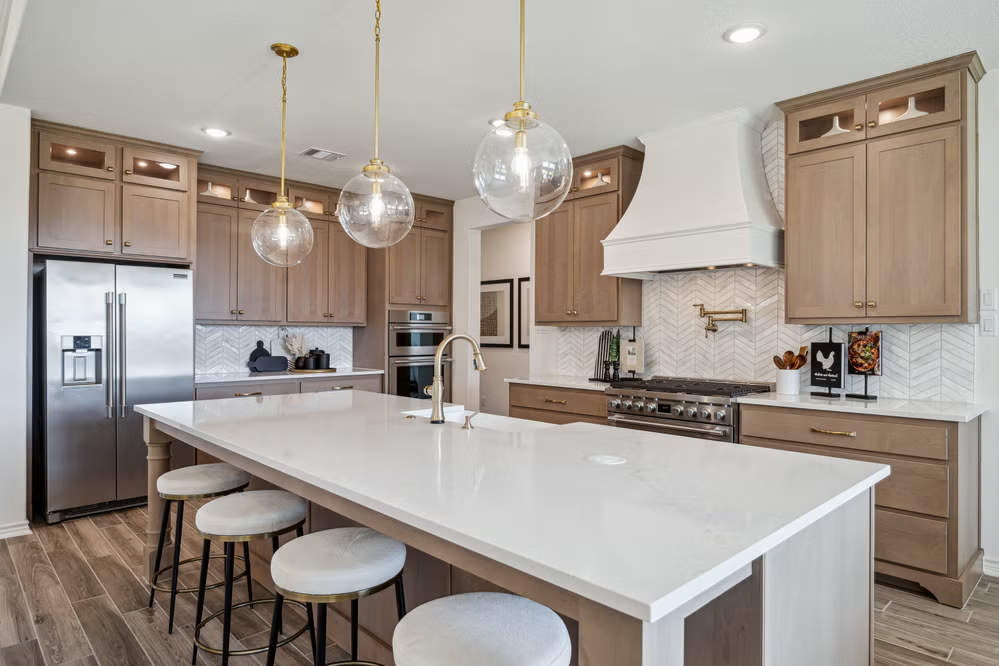
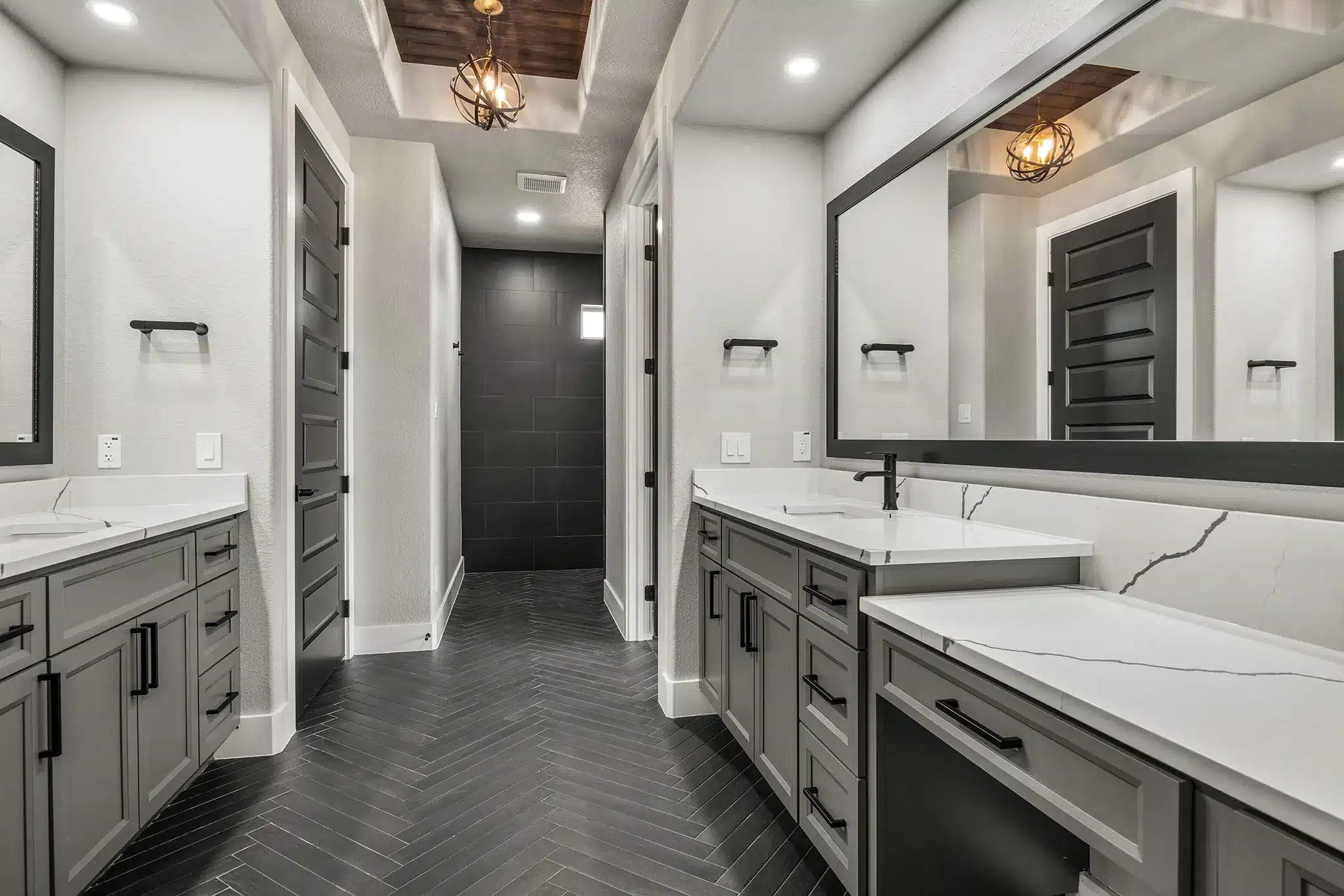
A kitchen remodel in Denton County can cost as little as the low five figures for a cosmetic refresh or climb well into six figures for a fully custom renovation with layout changes, premium finishes, and upgraded mechanical systems. For most homeowners, the realistic budgeting question is not just “What does a kitchen remodel cost?” but “What level of remodel matches this home, this neighborhood, and this long-term plan?”
In 2026, a smart Denton County kitchen budget usually starts with scope. If you keep the existing layout and replace only visible finishes, the project can stay relatively controlled. If you open walls, move plumbing, upgrade electrical service, or rework the kitchen into a more open-concept space, the cost rises fast. That is true across the county, but it is especially important here because Denton County includes both newer suburban homes and older properties that may hide needed updates behind the walls.
For a broader pricing framework, you can also compare this guide with the broader DFW kitchen remodel cost guide and, if you are ready to talk through scope, a local Denton County kitchen remodeling team can help you separate wish-list items from true budget drivers.
| Remodel type | Typical Denton County budget range | Common scope |
|---|---|---|
| Cosmetic refresh | $18,000–$35,000 | Paint, hardware, backsplash, sink/faucet, light updates, minor surface replacement |
| Midrange full remodel | $40,000–$85,000 | New cabinets, counters, flooring, appliances, moderate layout adjustments, improved lighting |
| High-end custom remodel | $90,000–$175,000+ | Layout changes, custom cabinetry, luxury surfaces, premium appliances, plumbing/electrical upgrades |
| Luxury or structural remodel | $175,000–$250,000+ | Major reconfiguration, high-end finishes, structural work, integrated systems, custom details |
These ranges are not one-size-fits-all quotes. They are planning numbers meant to help you set expectations before design decisions, permit review, and material selections start shaping the final price.
Why Building in Denton County Is Different
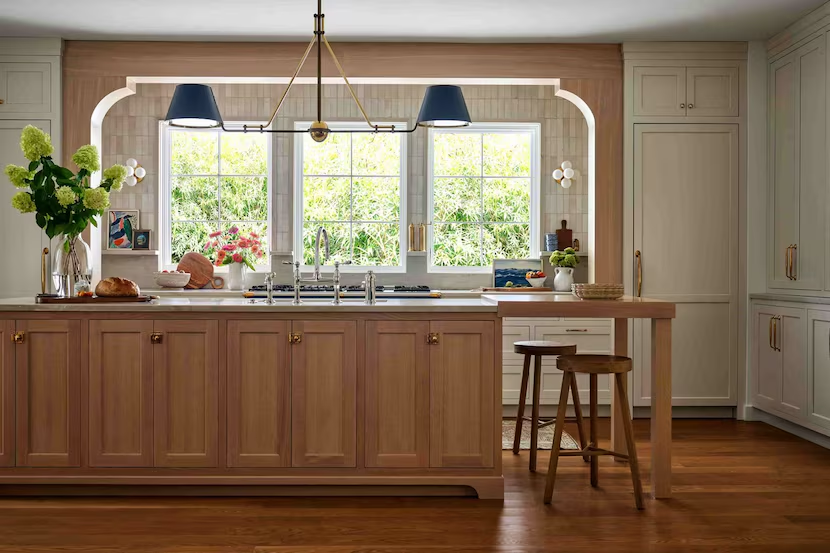
Denton County is not a single uniform housing market. Some neighborhoods are made up of newer homes with more standard kitchen layouts, while others include older houses where a remodel can uncover dated wiring, undersized plumbing, poor ventilation, or floor-plan limitations that make a “simple update” less simple.
That mix matters because the same surface-level kitchen goals can produce very different budgets. A homeowner in a newer subdivision may be able to focus on cabinet replacement, counters, and appliance upgrades. A homeowner in an older home may need to budget for electrical circuits, plumbing reroutes, subfloor repairs, or venting corrections before any finishes go in.
Local permitting also affects the project. Requirements can vary by jurisdiction within Denton County, and projects that touch electrical, plumbing, mechanical, or structural work often create more inspection touchpoints than a cosmetic refresh. That does not mean every remodel is complicated; it means the schedule and budget should account for the possibility that the hidden work matters as much as the visible upgrade. For county and municipality examples, see Denton County Development Services and City of Denton Building Inspections.
Finally, Denton County homeowners often want kitchens that match the higher-function, open, and connected living style common in fast-growing North Texas neighborhoods. That pushes many projects beyond a basic refresh and toward a more complete remodel, which is why realistic budgeting should start with scope rather than a simple square-foot guess.

Typical Project Cost Ranges
The easiest way to think about kitchen remodel pricing is by scope tier.
A cosmetic remodel is usually the least expensive because it keeps the existing footprint. You are not moving major utilities or reworking the room. Instead, you are refreshing the visible parts of the kitchen. In Denton County, this is often the right choice when the cabinets are in decent shape, the layout works, and you mainly want the room to look cleaner, brighter, and more current.
A midrange remodel is the most common full-project category. This is where homeowners usually replace cabinets, counters, flooring, sink and faucet, lighting, and appliances. Some projects in this band also change the island size, improve storage, or shift one or two walls if the structure allows it. Once the kitchen becomes a true construction zone, the budget begins to reflect labor, trade coordination, and materials in a more serious way.
A high-end or custom remodel can move quickly into six figures because premium cabinets, stone surfaces, upgraded appliances, designer fixtures, and custom details all raise the base cost. If you add layout changes, utility moves, or structural work, the cost grows further.
A practical way to think about the bands:
- Cosmetic refresh: about $18,000 to $35,000
- Midrange remodel: about $40,000 to $85,000
- High-end remodel: about $90,000 to $175,000+
- Luxury / structural project: about $175,000 to $250,000+
These numbers are consistent with the industry’s common framing that remodels are best categorized as cosmetic, midrange, or high-end rather than forced into one average price. If you are comparing across nearby counties, the scope bands may look similar, but the exact mix of labor, material availability, and permit complexity can shift final pricing. For comparison, see kitchen remodel costs in Collin County and kitchen remodel costs in Wise County.

Cost Per Square Foot and What It Includes
Cost per square foot can be helpful, but only if you understand what it does and does not tell you. In kitchen remodeling, the price per square foot is not just about the room size; it also reflects the level of customization, the amount of labor, and whether you are changing the layout.
As a rough planning tool in Denton County, many kitchen remodels fall into these broad bands:
- Cosmetic work: about $150 to $300 per square foot
- Midrange remodels: about $250 to $450 per square foot
- High-end projects: about $450 to $800+ per square foot
A 150-square-foot kitchen may therefore cost:
- around $22,500 to $45,000 for a cosmetic refresh,
- around $37,500 to $67,500 for a midrange remodel,
- or $67,500 to $120,000+ for a high-end renovation.
That range changes quickly if the project includes island expansion, wall removal, relocation of appliances, or new plumbing and electrical runs. Once the kitchen footprint is not the only issue, square-foot pricing becomes less reliable on its own.
What the square-foot number often includes:
- cabinets and installation
- counters and backsplash
- flooring
- standard labor for carpentry and finish work
- appliance install allowances
- lighting and fixture updates
- some project management and coordination
What it may not fully include:
- permit fees
- design fees
- structural engineering
- hidden repairs
- utility relocation
- specialty appliance costs
- premium finishes outside the allowance
If you are comparing bids, be careful about low per-square-foot numbers that exclude major trades. A project that looks cheaper up front can become more expensive if plumbing, electrical, or HVAC work is added later. That is especially important in an area like Denton County, where older homes and layout changes often reveal work that cannot be skipped.

Main Factors That Change Total Price
Several factors have a larger effect on final kitchen cost than most homeowners expect.
1. Layout changes
If you keep the existing kitchen footprint, you are generally paying for finishes, fixtures, and labor inside the current plan. If you move walls, relocate the sink, shift the range, or open the kitchen to another room, costs rise because the job now involves more than surface replacement.
Layout changes often require:
- rerouting plumbing
- extending electrical circuits
- updating lighting
- moving HVAC vents or returns
- structural work or framing adjustments
Those changes can add thousands of dollars quickly, especially if the project needs engineering or multiple inspection steps. In practice, layout changes are one of the biggest reasons a kitchen remodel moves from “midrange” to “high-end.”
2. Home age and hidden conditions
Older homes in Denton County are more likely to need concealed repairs. Common surprises include:
- out-of-date wiring
- undersized electrical capacity
- deteriorated plumbing
- water-damaged subfloors
- poor insulation in exterior walls
- ventilation problems
These issues can be expensive because they are discovered after demolition begins. A homeowner may budget for cabinets and countertops, then find out the room needs a full electrical correction before the new finishes can go in.
3. Finish level
The difference between builder-grade, midrange, and premium finishes is not just cosmetic. Cabinets, countertops, fixtures, and appliances can move the budget dramatically.
For example:
- stock or semi-custom cabinets may keep costs more controlled
- custom cabinetry can add tens of thousands
- quartz or natural stone counters cost more than laminate
- premium appliances can add $10,000 to $30,000+
- specialty lighting and hardware can add several thousand more
4. Permitting and inspections
Not every kitchen remodel requires the same permit path, but once you touch mechanical, electrical, plumbing, or structural elements, the project becomes more involved. Timing can vary by jurisdiction, and permit review or inspection scheduling can add days or weeks to the schedule. That extra time can become a cost factor if trades need to return or materials must be stored longer.
5. Open-concept goals
Many Denton County homeowners want kitchens that connect to the dining or living area. That can mean removing walls, widening openings, matching flooring across spaces, or designing a larger island. Those choices improve function and resale appeal, but they often increase the project cost more than homeowners expect.
For a kitchen project, the biggest budget trap is assuming that a visual refresh and a functional reconfiguration cost the same. They do not.

Labor, Materials, and Trade-Level Costs
Kitchen remodeling costs are usually a combination of materials, labor, and trade coordination. In Denton County, labor tends to become a bigger share of the budget when the project is not just cosmetic.
A rough way to think about a midrange kitchen budget is this:
- materials: roughly 40% to 55%
- labor and trade coordination: roughly 30% to 45%
- project overhead, design, and contingency: roughly 10% to 20%
Those percentages vary based on finish level and the amount of utility work involved.
Labor costs
Cabinet installation, carpentry, tile work, drywall repair, painting, countertop templating, and finish trim all require skilled labor. When the project includes licensed electrical, plumbing, or HVAC work, trade labor becomes even more important. Texas licensing and trade compliance also matter when regulated work is involved, which is why contractor coordination is not just a scheduling issue but a cost-control issue as well. See Texas Department of Licensing and Regulation for broader trade context.
In a typical Denton County remodel:
- demolition and haul-off can run from $2,000 to $6,000
- cabinet installation can range from $4,000 to $12,000+
- tile and backsplash labor may add $1,500 to $6,000
- plumbing rough-in and fixture work may add $2,500 to $8,000+
- electrical work can add $2,000 to $10,000+
Materials
Material costs are highly dependent on selection:
- cabinets: $8,000 to $40,000+
- countertops: $3,000 to $15,000+
- flooring: $3,000 to $12,000+
- appliances: $5,000 to $30,000+
- backsplash: $1,000 to $5,000+
- sink, faucet, hardware, and fixtures: $1,000 to $4,000+
A project can stay closer to the lower end if selections are durable but not luxury-grade. Once a homeowner wants custom cabinets, high-end stone, commercial-style appliances, or designer fixtures, the budget changes fast.
Trade sequencing
Another hidden cost is sequencing. A kitchen remodel is one of the most coordinated projects in the home because different trades depend on each other. Electrical rough-in must be done before drywall close-up. Plumbing must happen before cabinets or counters in many cases. Countertops often cannot be installed until cabinets are precisely set and leveled. Delays anywhere in that chain can add labor charges, storage cost, or schedule inefficiency.
Permit, Design, and Planning Costs
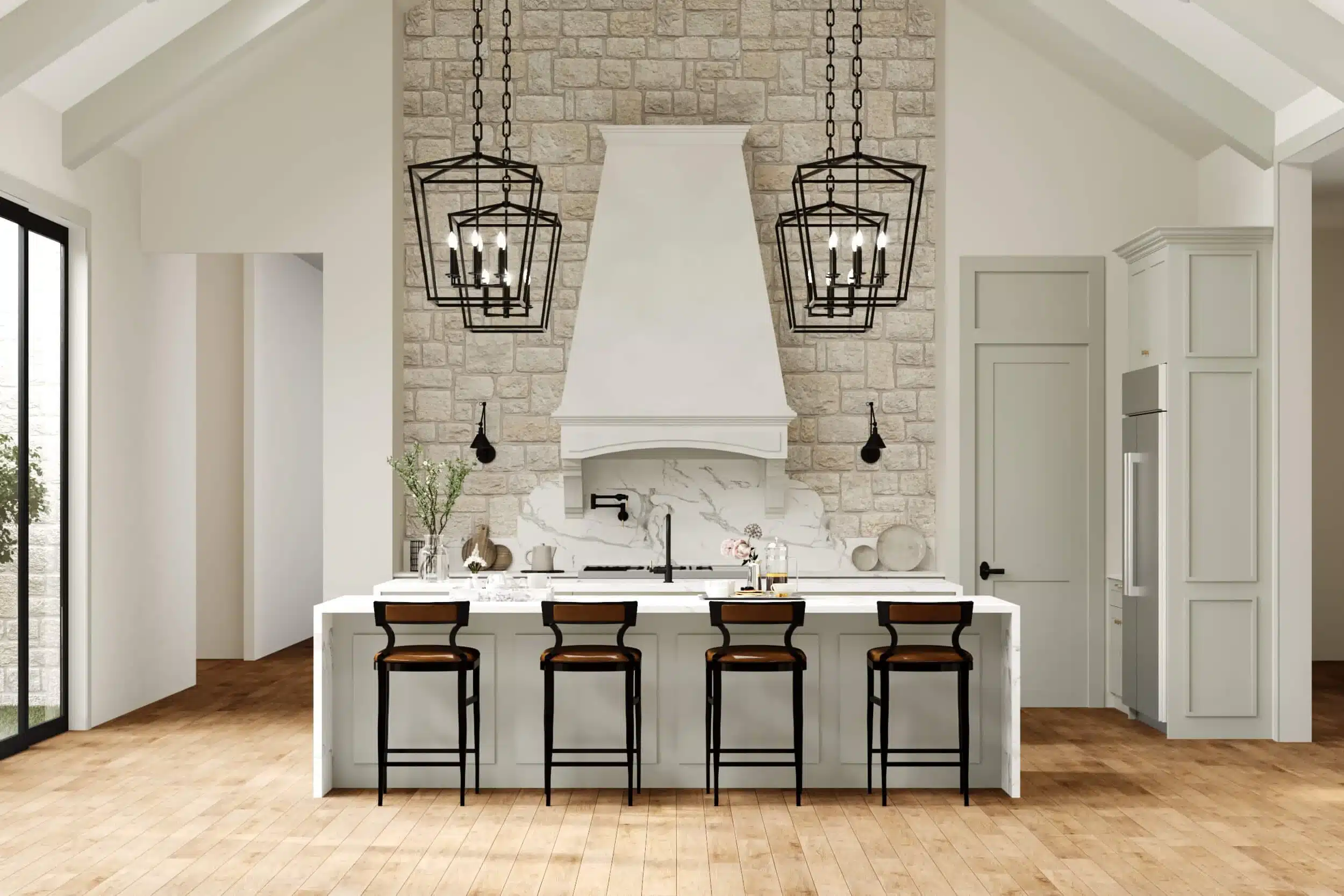
Soft costs matter because a remodel is not just materials and labor. Before construction starts, there is usually design work, selections, budgeting, and permit planning.
Design and layout planning
If the kitchen is staying in the same footprint with straightforward finish changes, design costs may be modest. If the project includes a new layout, custom cabinetry, or structural changes, planning costs can rise because measurements, drawings, and sometimes engineering become necessary.
Typical planning-related costs may include:
- initial design consultation: $0 to $500+
- detailed design or drafting: $1,000 to $5,000+
- cabinet design services: sometimes included, sometimes extra
- structural or engineering review: $500 to $3,000+
Permit and inspection costs
Permit fees vary by municipality and by scope. That variation matters in Denton County because requirements can differ from one city to another, and projects affecting plumbing, electrical, mechanical, or structural systems are more likely to trigger review. County and city sources can help homeowners understand why two similar projects may not move through the same process at the same speed, including county-level resources and city inspection resources.
A reasonable planning allowance for permit-related costs in a full remodel is often a few hundred dollars to several thousand dollars, depending on complexity and jurisdiction. The fee itself is only part of the story. The larger financial impact can come from waiting on approvals, re-inspection visits, or trade scheduling changes.
Preconstruction budgeting
It is wise to treat planning as an investment rather than an afterthought. A project that is thoroughly measured, drawn, and selected before demolition usually stays more predictable. A project that starts with incomplete selections often creates change orders later, and change orders are where many kitchen budgets break down.
If you already know the remodel will include a layout change, permit review, and multiple trades, the right question is not “Can I avoid planning costs?” but “Can I spend a little more upfront to reduce risk later?” In most cases, yes.
Timeline and Process Expectations
A kitchen remodel in Denton County can move quickly for a cosmetic refresh, but a full remodel with permit review, trade coordination, and material lead times usually takes longer than homeowners expect.
Typical timeline ranges
- Cosmetic refresh: about 2 to 6 weeks
- Midrange remodel: about 6 to 12 weeks
- High-end remodel: about 10 to 20+ weeks
- Major layout or structural remodel: 4 to 6 months or more
These ranges can expand if cabinets are delayed, custom materials arrive late, or inspection scheduling slows the project. North Texas supply and subcontractor availability can also affect sequence and lead times, especially during busy construction periods.
Typical phases
- Discovery and budgeting: 1 to 3 weeks
Scope setting, rough pricing, and initial feasibility review.
- Design and selections: 2 to 8 weeks
Cabinets, counters, fixtures, flooring, appliances, and layout decisions.
- Permitting and approvals: days to weeks
Especially relevant when electrical, plumbing, mechanical, or structural work is included.
- Demolition and rough construction: 1 to 3 weeks
Tear-out, framing changes, utility rough-ins, inspections.
- Cabinet installation and finishes: 2 to 6 weeks
Drywall, flooring, tile, counters, trim, paint, fixtures, and final details.
- Punch list and closeout: 1 to 2 weeks
Final corrections, testing, cleanup, and owner walkthrough.
Schedule risk factors
The biggest schedule risks are usually not cosmetic work. They are:
- permit timing
- hidden conditions behind walls
- cabinet or countertop lead times
- change orders
- trade coordination delays
If a kitchen is the main hub of the home, even a short delay can feel disruptive. That is why realistic planning is as important as the final design itself.

How to Budget the Project Realistically
The most reliable budget is one that anticipates uncertainty instead of reacting to it.
Start with a scope-first budget
Before selecting finishes, define:
- Are you changing the layout?
- Are you moving plumbing or electrical?
- Are you replacing cabinets or just resurfacing them?
- Are you keeping appliances in the same place?
- Are you opening walls?
- Are you planning for premium materials?
The answer to those questions determines whether your project belongs in the cosmetic, midrange, or high-end category.
Add contingency
A practical contingency allowance is 10% to 20% of the project budget, especially in older homes or in projects where demolition might reveal hidden problems. If you are spending $60,000, that means planning for an additional $6,000 to $12,000 reserve. If the project is $120,000, the contingency reserve should be $12,000 to $24,000.
That contingency is not wasted money. It protects the project from being derailed by:
- concealed plumbing leaks
- electrical corrections
- subfloor repairs
- framing adjustments
- material substitutions
- inspection-related changes
Set allowances carefully
If your contractor gives you an allowance for cabinets, counters, appliances, or tile, make sure it reflects the quality level you actually want. A low allowance can make a bid look attractive, but then the final total rises when you select real-world products.
Consider project sequencing
Some homeowners choose to phase work:
- do the kitchen now, then repaint adjacent spaces later
- upgrade appliances later if needed
- keep the layout to reduce early cost
- move only the most important utilities
Other homeowners choose a full remodel at once because partial upgrades can be less efficient. There is no universal answer, but phasing should be a deliberate strategy rather than a compromise made after the budget is already stretched.
Use the long-term value lens
For resale-minded homeowners, kitchen remodel decisions should balance enjoyment and market fit. A kitchen that is too modest for the rest of the home may not add much perceived value. A kitchen that is overbuilt for the neighborhood may not recoup fully either. Industry resale framing, such as the Cost vs. Value perspective, is useful here because it reminds homeowners that the best project is not always the most expensive one.
For broader home budgeting context, some homeowners also compare the kitchen project with other upgrades through whole-home remodeling costs in Denton County or plan around future exterior work by reviewing home building costs in Denton County.

When to Choose a Kitchen Remodeling Project in Denton County
A kitchen remodel makes the most sense when the space is no longer meeting your daily needs or when its condition is pulling down the rest of the home.
You should strongly consider remodeling if:
- the kitchen layout wastes space
- cabinets are failing or storage is inadequate
- the room feels disconnected from the rest of the house
- finishes are dated enough to affect resale
- plumbing, electrical, or ventilation issues need correction
- appliance placement makes the room inefficient
- you are planning to stay in the home long enough to enjoy the upgrade
In Denton County, the timing often comes down to whether your house is catching up to your lifestyle or whether you are trying to make the home match the standard of nearby properties. That is especially true in fast-growing neighborhoods where buyers expect modern kitchens, better function, and stronger finish quality.
A remodel can be less attractive if:
- the home is likely to be sold immediately and the current kitchen is already acceptable
- the budget is too tight to handle hidden repairs
- the layout is functional and only cosmetic updates are needed
- the project would require moving too many systems for too little gain
If you are unsure whether to remodel now or later, compare the expected cost against both daily-use value and resale value. In many cases, the best choice is the one that fixes the real problem without over-improving the home beyond the market. If you want help thinking through that decision locally, a Denton County kitchen remodeling consultation is often the fastest way to clarify scope.

Final Thoughts on Kitchen Remodeling in Denton County
Kitchen remodel costs in Denton County vary widely because the county includes many different home types, ages, and layout conditions. A simple refresh might stay in the lower tens of thousands, while a fully custom renovation with structural or utility changes can reach well into six figures. The biggest cost drivers are usually layout changes, hidden conditions, finish level, and the amount of trade work required.
If you want a budget that actually holds up, start with scope, add a contingency, and assume permit and inspection timing may affect the schedule whenever the work goes beyond cosmetic updates. That is the most practical way to avoid surprises and keep the project aligned with your goals.
For homeowners comparing broader market pricing, the best next step is to review the wider DFW kitchen remodel cost guide and then narrow the plan to a Denton County-specific scope. From there, a local contractor can help you decide whether a refresh, a midrange remodel, or a full custom renovation makes the most sense for your home.