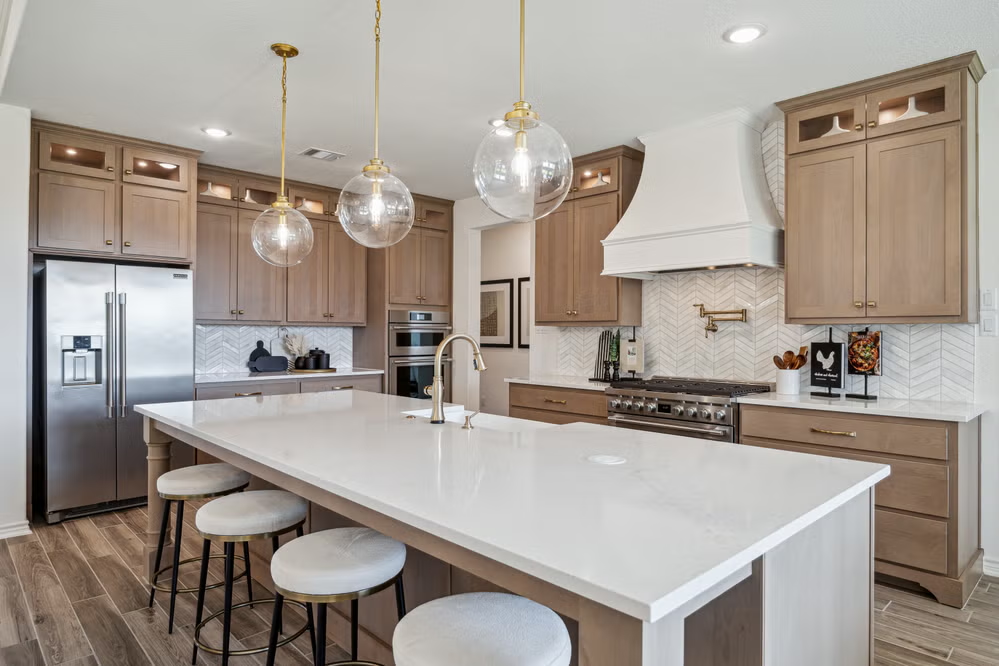
How Much Does a Kitchen Remodel Cost in Collin County? (2026 Guide)
If you are planning a kitchen update in Collin County, the first question is usually the same: what will it actually cost? The honest answer is that kitchen remodel pricing here spans a wide range because homes in the county include everything from older suburban properties with dated layouts to newer, higher-value homes that call for custom cabinetry, premium counters, and open-concept changes.
For 2026, a kitchen remodel in Collin County can run from roughly $25,000 to $40,000 for a basic refresh, $45,000 to $85,000 for a typical midrange remodel, and $90,000 to $180,000+ for a major custom renovation with structural changes, luxury finishes, and upgraded appliances. Those ranges are intentionally broad because a cosmetic update and a full gut remodel are very different projects. For a broader regional pricing comparison, see our DFW kitchen remodel cost guide.
| Project scope | Typical price range | What it usually includes |
|---|---|---|
| Cosmetic refresh | $25,000–$40,000 | Paint, new hardware, lighting, sink/faucet, limited countertop replacement, minor repairs |
| Midrange remodel | $45,000–$85,000 | Semi-custom cabinets, new counters, flooring, appliance updates, backsplash, moderate layout changes |
| Major/custom remodel | $90,000–$180,000+ | Full demolition, custom cabinetry, structural work, utility relocation, premium finishes, high-end appliances |
A lot of homeowners compare kitchen pricing by looking only at cabinets or countertops, but those items rarely tell the full story. In Collin County, the total often rises because the project may also involve plumbing reroutes, electrical upgrades, drywall repair, ventilation changes, and city inspections. If your kitchen is part of an open-concept update, the budget can move quickly once wall removal or beam installation enters the scope.

Why Building in Collin County Is Different
Collin County is not a one-price-fits-all market. Some neighborhoods have older homes that need layout corrections, new wiring, and updated plumbing, while others are in newer master-planned communities where homeowners expect custom finishes and a polished, high-end result. That mix changes both the scope and the budget.
The county also includes multiple cities, and permit and inspection requirements can vary from one jurisdiction to another. That matters when the remodel touches electrical, plumbing, gas, mechanical, or structural systems. A kitchen remodel that is straightforward on paper can still take longer if the local city requires separate reviews or inspections at different stages. In practical terms, that means the same design can cost more in one part of the county than another once labor time and schedule risk are included.
Home values also influence budget expectations. In higher-value neighborhoods, it is common to see homeowners choose upgraded appliances, custom cabinets, and better stone selections because those finishes fit the home and the market. You can use Collin County appraisal context to understand why remodel budgets often scale with neighborhood value and resale expectations.

Typical Project Cost Ranges
The cleanest way to think about kitchen remodeling costs is by scope. Most projects fall into one of three buckets, and each bucket comes with a very different cost structure.
1. Cosmetic refresh: $25,000–$40,000
This is the lightest kind of remodel. The layout stays mostly the same, and the work focuses on visible updates rather than major construction. Common items include:
- Painting cabinets or replacing a limited number of doors and drawer fronts
- New sink and faucet
- New hardware
- Updated lighting
- Minor drywall repair
- New backsplash
- Partial countertop replacement
- Small plumbing or electrical adjustments
This type of project is popular when the kitchen is functional but dated. It can make a big visual difference without the cost and disruption of moving walls or relocating utilities.
2. Midrange remodel: $45,000–$85,000
This is the most common scope for many Collin County homes. It usually includes new cabinets, new counters, a backsplash, flooring, updated appliances, and some level of layout adjustment. A midrange remodel often lands here because homeowners want a real transformation, but they are not building a luxury showpiece.
Typical midrange work can include:
- Semi-custom cabinetry
- Quartz or similar countertop materials
- Tile backsplash
- Sink and plumbing fixture replacement
- Flooring replacement
- Lighting redesign
- Appliance upgrades
- Limited wall changes or widened openings
If a project includes shifting a sink, moving a range, or opening the kitchen to an adjacent living area, costs can rise quickly even if the finishes are not ultra-luxury.
3. Major or custom remodel: $90,000–$180,000+
This level of project usually means a full gut renovation. In Collin County, these jobs are common in higher-value homes where the kitchen is being reimagined rather than simply updated. Major projects may include:
- Structural wall removal
- New beams or framing
- Custom cabinetry
- High-end stone countertops
- Premium appliance packages
- Relocated plumbing and electrical
- Built-in storage solutions
- Designer lighting
- New flooring throughout connected spaces
- Extensive trim and finish work
Because these jobs often touch multiple trades, the price can climb well above the base range. Once structural engineering, code compliance, and premium finishes are added, a kitchen can easily become one of the most expensive rooms in the house to remodel.

Cost Per Square Foot and What It Includes
Square-foot pricing can be useful for early planning, but it should never be treated as a final bid. In Collin County, kitchen remodels often fall somewhere around $150 to $350 per square foot for standard to midrange work, and $350 to $600+ per square foot for high-end projects with structural changes and luxury selections.
That range depends heavily on what is included in the square-foot calculation. A small kitchen with a high-end finish package can cost more per square foot than a larger kitchen with simpler materials. Also, square-foot pricing becomes less reliable when the remodel includes the following:
- Moving plumbing lines
- Adding or relocating electrical circuits
- Removing load-bearing walls
- Upgrading ventilation
- Reworking soffits or ceiling details
- Installing custom millwork
A 180-square-foot kitchen with basic updates might land near the lower part of the range, while a 220-square-foot kitchen with custom cabinets and new utility routing may land much higher. So if one estimate seems dramatically lower than another, check what the contractor included in the scope.
For homeowners comparing remodel categories across the county, it can also help to compare kitchen pricing with broader home upgrade patterns in Collin County home remodeling costs or with adjacent room projects like bathroom remodeling in Collin County.

Main Factors That Change Total Price
Several variables can change a kitchen remodel by tens of thousands of dollars. In Collin County, the biggest cost drivers are usually layout, home age, finish level, and the amount of utility work required.
Layout changes and open-concept conversions
Open-plan kitchen changes are common in the county, especially in homes where the original kitchen feels enclosed or undersized. Taking out a wall can add framing, engineering, drywall, flooring patching, trim, and paint work. If the wall carries load, the price goes up again because beam sizing and structural support enter the scope.
Utility relocation
Moving a sink, stove, dishwasher, refrigerator line, or gas connection is not a small change. Electrical and plumbing reroutes require time, inspection coordination, and sometimes permits. Even a modest relocation can add several thousand dollars, while a full utility rework can add much more.
Home age and existing conditions
Older homes may hide outdated wiring, prior patchwork repairs, uneven floors, or plumbing that does not match current expectations. Those surprises can add labor and material costs after demolition starts. Newer homes may have fewer hidden defects, but they can still be expensive if the homeowner wants a more premium finish package than the original builder grade kitchen.
Finish level
Finish level is one of the clearest budget multipliers. Stock cabinets and basic surfaces can keep a project near the lower range, while custom cabinetry, book-matched stone, upgraded fixtures, specialty tile, and designer lighting can push the total much higher. In higher-value Collin County neighborhoods, these upgrades are common because they align with the home’s overall quality.
Permitting and inspection complexity
City-by-city permit and inspection timing can affect both schedule and cost. A project that requires multiple inspections may need extra coordination, which can increase labor time. You should not assume that a kitchen remodel in one city within Collin County will follow the exact same approval path as a similar job elsewhere in the county. For code-related guidance on kitchen safety, structure, ventilation, and utilities, see the International Code Council residential code overview.

Labor, Materials, and Trade-Level Costs
A good kitchen budget separates labor from materials and treats trade work as its own category. That makes the estimate much easier to understand and much less likely to hide overruns.
Common labor buckets
- Demo and disposal: often $2,000 to $6,000
- Carpentry and framing: often $4,000 to $15,000
- Cabinet installation: often $4,000 to $12,000
- Drywall, tape, texture, and paint: often $3,000 to $10,000
- Tile backsplash labor: often $1,500 to $5,000
- Flooring installation: often $3,000 to $10,000
- Electrical work: often $2,500 to $12,000
- Plumbing work: often $2,000 to $10,000
These numbers move based on project complexity. For example, a simple replacement of sink and fixtures costs much less than relocating a sink across the room or adding dedicated circuits for new appliances.
Common material buckets
- Stock or semi-custom cabinets: roughly $8,000 to $35,000+
- Custom cabinets: often $25,000 to $60,000+
- Countertops: often $4,000 to $15,000+
- Backsplash tile: often $1,500 to $6,000
- Flooring: often $4,000 to $12,000
- Fixtures and hardware: often $1,000 to $5,000
- Appliance package: often $5,000 to $25,000+
The appliance allowance matters a lot. A basic package can be relatively modest, while panel-ready or high-end appliance sets can dramatically change the project total.
Why trade-level work deserves special attention
Electrical, plumbing, countertop fabrication, and cabinet installation should not be lumped into one vague “construction” number. Each has its own labor intensity, specialty tools, and scheduling needs. If your project requires specialty trades, verify the professionals involved and their qualifications through Texas contractor search resources when appropriate.

Permit, Design, and Planning Costs
The cost of a kitchen remodel starts before demo begins. Planning, design, measurements, selections, engineering, and permitting all add to the total, especially if the kitchen layout is changing.
Design and planning
A straightforward selection process may be relatively modest, but a custom kitchen often needs more detailed planning. Homeowners may need:
- Field measurements
- Cabinet drawings
- Material selection meetings
- Finish schedules
- Layout revisions
- Structural review for wall removal
- Appliance and fixture coordination
Depending on project size, design and planning can represent 3% to 10% of the total project cost, and sometimes more for highly customized work.
Permit and inspection costs
Permit costs vary by city and by project scope. A kitchen with only cosmetic updates may need little or no permitting, while a kitchen involving electrical, plumbing, gas, or structural changes typically requires more formal review. In some cities, inspections happen at multiple stages, which can affect timeline and labor scheduling. A local example of how permit and inspection requirements are handled can be seen through Plano permits and inspections.
For budgeting purposes, it is wise to assume that a layout-changing kitchen will need several weeks of preconstruction planning before demo starts. That planning window helps avoid delays once cabinets are ordered and trades are scheduled.
Engineering and structural review
If a wall is being removed, engineering may be needed to determine load transfer, beam size, and framing details. That cost is small compared to a failed or incomplete structural plan, but it should still be part of the estimate. In many projects, the engineering fee is minor relative to the rest of the budget, but it can prevent expensive change orders later.

Timeline and Process Expectations
Kitchen remodels are not just a money decision; they are also a time decision. In Collin County, the process often takes longer than homeowners expect because trades, materials, and local approvals all have to line up.
Typical timeline by scope
- Cosmetic refresh: about 2 to 5 weeks
- Midrange remodel: about 6 to 10 weeks
- Major/custom remodel: about 10 to 16+ weeks
Those are construction ranges, not start-to-finish ranges. If permit review, design changes, and material lead times are included, the full project can take longer.
Preconstruction phase
Before demo, many homeowners should expect 2 to 6 weeks of design, estimating, selections, and permit prep. That phase may be longer when the kitchen has structural changes or when cabinets and specialty materials need to be ordered far in advance.
Construction phase
Once the job starts, the sequence typically includes:
- Demo
- Framing and rough-in work
- Electrical and plumbing rough-in
- Inspections
- Drywall and paint
- Cabinet installation
- Countertop templating and fabrication
- Countertop installation
- Backsplash and finish work
- Final punch list
Countertop fabrication alone can add a waiting period after templating, and any delay in cabinet delivery can push the entire schedule.
Schedule risks
Fast-growing suburbs in Collin County can face longer lead times for cabinets, countertops, and specialty trades. That matters because schedule delays can create temporary living costs, eating-out costs, and inconvenience if the kitchen is out of service longer than expected. If your remodel opens the wall to adjacent living space, the disruption can affect the whole main floor rather than just the kitchen.
For nearby county comparisons and to understand how schedule and scope can differ by location, see kitchen remodeling costs in Parker County and kitchen remodeling costs in Denton County.

How to Budget the Project Realistically
A realistic budget is more than the contractor’s first number. It should include allowances, contingency, and a plan for how to handle upgrades without blowing up the total.
Start with a base estimate, then add contingency
For kitchen remodeling in Collin County, a 10% to 20% contingency is a smart starting point. That reserve helps cover hidden damage, material substitutions, and minor scope changes. On a $60,000 remodel, that means setting aside $6,000 to $12,000 beyond the base budget.
Build separate allowances
Instead of one lump sum, assign allowances for:
- Cabinets
- Countertops
- Appliances
- Lighting
- Plumbing fixtures
- Tile
- Flooring
This approach makes it easier to see where upgrades will affect the budget. If the cabinet allowance is set too low, a homeowner can unknowingly exceed the budget before installation even starts.
Plan for temporary living costs
If your kitchen will be unusable for several weeks, you may spend more on takeout, portable cooking equipment, or temporary storage. These costs are easy to overlook, but they are real. In larger projects, homeowners may also need to move furniture or protect adjacent rooms.
Sequence upgrades carefully
If your full wish list does not fit into the current budget, sequence the project intelligently. For example, you may choose to complete structural work, cabinets, and counters now, then add upgraded lighting or a built-in pantry later. The right sequence can preserve cash without reducing the overall quality of the renovation.
Finance with total project cost in mind
If you are financing a remodel, use the full project estimate rather than the lowest advertised figure. That means including design, permits, contingency, and finish upgrades. It is safer to plan around a complete budget than to be surprised halfway through construction.
You can also review the broader regional context in our DFW kitchen remodel cost guide and compare the service approach on our Collin County kitchen remodeling page if you want to think through scope before requesting bids.

When to Choose a Kitchen Remodeling Project in Collin County
A kitchen remodel makes the most sense when the room no longer fits the way you live. In Collin County, that often means one of three situations: the kitchen is dated, the layout is awkward, or the home’s value supports a more significant upgrade.
Choose a remodel if:
- The layout is closed off and you want better flow
- Cabinets are worn, undersized, or poorly organized
- Counter space is limited
- The kitchen no longer matches the rest of the home
- Appliances are aging and inefficient
- You want to support resale value in a competitive neighborhood
- You need the kitchen to function as part of a larger open-plan living space
If the house is in a neighborhood with higher property values or a newer build profile, the kitchen often becomes the room that most affects day-to-day satisfaction and resale perception. In those cases, spending more on durable finishes and better storage can make sense.
If you are weighing a kitchen remodel against a broader whole-home update, compare it with home building costs in Collin County or with a larger interior renovation using home remodeling costs in Collin County. A kitchen project is often the best first step when the rest of the house still works well and the kitchen is the main problem area.

Final Thoughts on Kitchen Remodeling in Collin County
Kitchen remodeling in Collin County is best approached as a scope-and-strategy decision, not just a finish-selection decision. A modest refresh, a midrange update, and a full custom renovation all live in very different price bands, and the county’s mix of older homes, newer developments, and city-specific permit processes makes that difference even more pronounced.
If you are planning a remodel in 2026, start with the layout, then the utility work, then the finishes. That order keeps your budget grounded in reality and helps you avoid the most common cost overruns. With the right plan, a kitchen remodel can improve function, boost home value, and make the whole house feel better every day.
If you want help turning a rough idea into a workable budget, the next step is to talk through your scope, your timeline, and your finish goals with a local kitchen remodeling team.
For service details specific to Fin Home, review our Collin County Kitchen Remodeling page.