How Much Does a Bathroom Remodel Cost in Ellis County? (2026 Guide)
A bathroom remodel in Ellis County can cost far less than a luxury whole-home project, but the final number still depends heavily on scope, layout changes, and finish level. In 2026, most homeowners should expect a broad range from about $12,000 to $45,000+ for a typical bathroom renovation, with smaller cosmetic updates sometimes coming in lower and full custom reconfigurations climbing well above that.
The biggest price jump usually comes from plumbing moves, shower rebuilds, upgraded tile work, and the amount of hidden repair work uncovered after demolition. If you are comparing a hall bath refresh to a full primary-suite transformation, the gap can be significant. For a broader DFW pricing framework, see our regional bathroom cost guide.
| Project scope | Typical 2026 cost range | What is usually included |
|---|---|---|
| Cosmetic refresh | $8,000–$15,000 | New vanity, toilet, lighting, paint, mirror, minor tile or flooring updates |
| Midrange remodel | $18,000–$35,000 | Tub/shower replacement, new tile, updated fixtures, flooring, vanity, paint, moderate plumbing/electrical updates |
| Full custom renovation | $35,000–$65,000+ | Layout changes, premium tile, custom cabinetry, upgraded lighting, waterproofing, glass enclosure, higher-end fixtures |
These ranges are useful because they reflect how bathroom remodeling usually behaves in real life: a project can stay relatively controlled when the layout remains the same, but costs rise fast when shower footprints change, walls open up, or the room needs new plumbing and electrical work. If you are ready to compare a local estimate to your own scope, you can also start with our Ellis County bathroom remodeling page.

Why Building in Ellis County Is Different
Ellis County projects often blend suburban and semi-rural conditions, and that changes the cost math. In a denser neighborhood, crews can usually stage material deliveries, remove debris, and coordinate inspections more efficiently. In Ellis County, longer drive times, more spread-out job sites, and less predictable access can add soft cost pressure even when the bathroom itself is a standard size.
Another key difference is that local permitting and inspections may depend on the city, utility district, or jurisdiction involved. That means bathroom remodel pricing should account for plan review, inspection timing, and any trade coordination needed before demolition starts. Projects that move a shower, relocate a toilet, or shift electrical outlets are more likely to require inspection sequencing, which can add days or even weeks to the process.
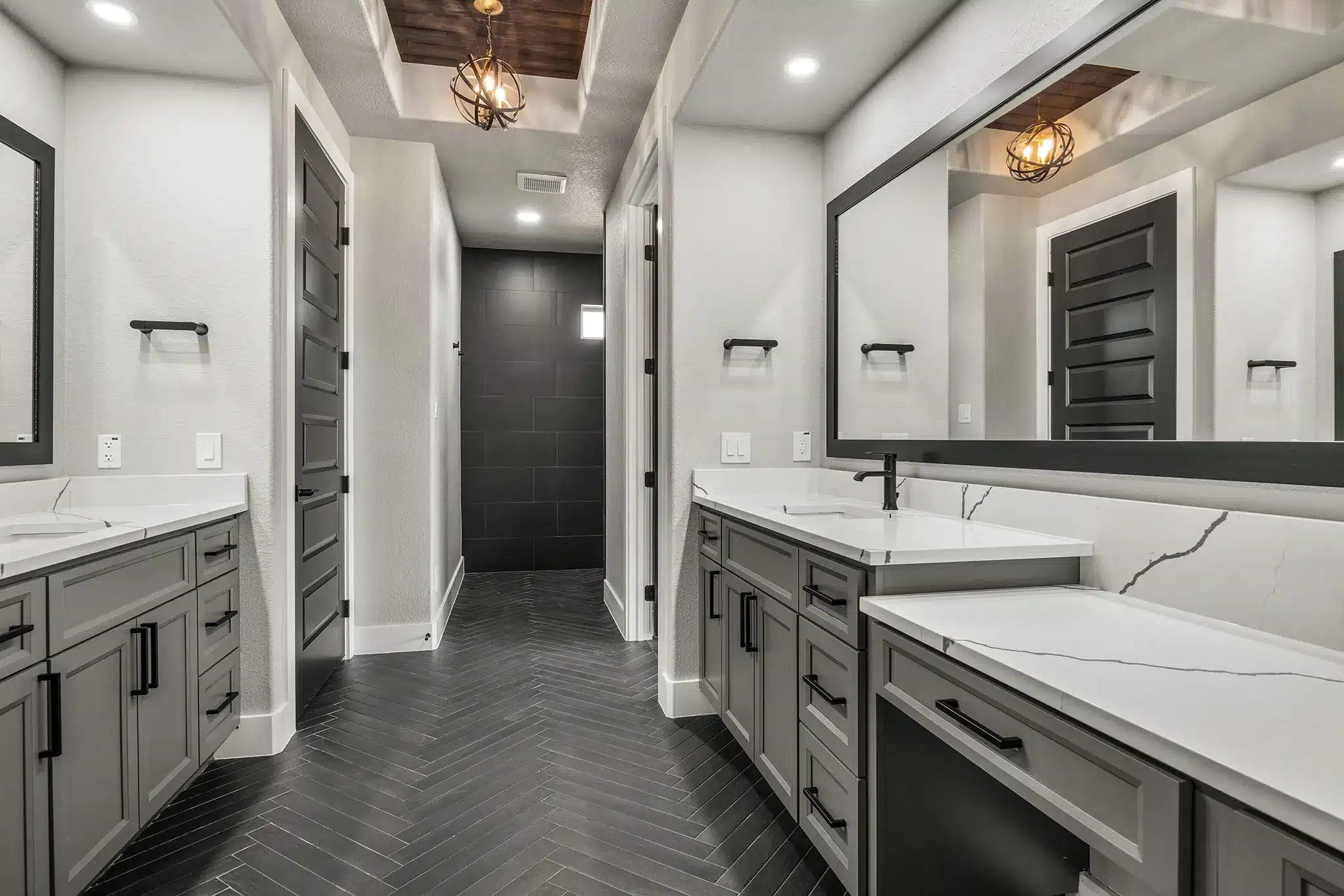
Ellis County homeowners also tend to favor durable, low-maintenance finishes. That usually means practical design choices like porcelain tile, quartz-topped vanities, moisture-resistant paint, and reliable plumbing fixtures rather than fragile decorative materials. Those selections may cost more up front, but they often make sense for family homes and resale-focused projects in this market.
For local code and contractor-related context, homeowners can check Ellis County resources, Texas licensing and guidance, and the residential code overview before starting work.

Typical Project Cost Ranges
Bathroom remodeling costs usually fall into one of three buckets: small refresh, midrange remodel, and high-end renovation. The difference is not just materials; it is also the amount of demolition, trade labor, waterproofing, and inspection coordination involved.
1. Small cosmetic refresh: $8,000 to $15,000
This is the most budget-friendly route. It often keeps the same layout and focuses on visible improvements rather than structural changes. A cosmetic refresh may include:
- New vanity and countertop
- New toilet and sink fixtures
- Updated lighting and mirror
- Fresh paint
- New flooring if the existing subfloor is in good shape
- Minor plumbing or electrical touch-ups
Homeowners usually choose this scope when the bathroom is functional but dated. Because the plumbing and wet-area footprint stay mostly unchanged, the project can stay relatively contained. This is also the best range for a quick resale update when the existing tub or shower does not need a full rebuild.
2. Midrange remodel: $18,000 to $35,000
A midrange remodel is where many Ellis County projects land. This scope typically includes more than a surface refresh but does not require a fully custom design. Common items include:
- Tub-to-shower replacement or new shower surround
- New tile around the tub or shower
- Replacement vanity and countertop
- Upgraded plumbing fixtures
- New flooring
- Moisture-resistant drywall or backing material
- Minor electrical upgrades, such as new lights or a fan
This range often applies when the room is still in the same general layout but the homeowner wants a meaningful visual and functional upgrade. Midrange projects can move higher in price if the tile coverage expands, the vanity becomes custom, or the existing plumbing needs repair once walls are open.
3. Full custom renovation: $35,000 to $65,000+
A full custom renovation is the most expensive category because it may include layout changes, luxury finishes, and more involved trade work. Projects in this range often feature:
- Relocated plumbing
- Rebuilt shower with custom waterproofing
- Frameless glass enclosure
- Premium tile throughout the wet area
- Custom cabinetry or built-ins
- Upgraded lighting and ventilation
- Heated floors or special electrical features
- High-end fixtures and accessories
This is also the range where hidden conditions can have a major impact. If an older home has subfloor damage, outdated plumbing, or electrical issues behind the walls, the final total can rise quickly. In a county with many older homes and semi-rural parcels, that contingency is worth taking seriously.

Cost Per Square Foot and What It Includes
Square-foot pricing can help homeowners compare bathroom remodel proposals, but it should be used as a rough planning tool rather than a fixed rule. Bathrooms are small, so unit costs are naturally higher than in larger rooms. A 50-square-foot hall bath and a 120-square-foot primary bath do not scale perfectly because the same core trades still need to show up, coordinate, and finish the space.
For Ellis County bathroom remodeling, a practical planning range is often about $250 to $550 per square foot, with simpler refreshes at the lower end and custom wet-room builds at the higher end. The number is not just about tile quality. It reflects:
- Demolition and disposal
- Framing repairs
- Plumbing rough-in and finish work
- Electrical changes
- Waterproofing
- Tile setting
- Cabinets and counters
- Fixtures and trim
- Paint and final cleanup
A smaller bathroom often has a higher per-square-foot cost because the fixed labor items take up a bigger percentage of the budget. For example, if a 45-square-foot hall bath costs $16,000, that equates to more than $350 per square foot. A 90-square-foot primary bath at $30,000 works out to around $333 per square foot. The larger room may have more total cost, but the average unit cost can look slightly lower because the work is spread over more area.
Square-foot pricing also rises when the remodel includes:
- A new shower pan or curbless shower
- Large-format tile
- Extra niches or benches
- Custom vanity sizing
- Better ventilation and lighting
- Layout changes that require inspection steps
If a contractor gives you a square-foot number, ask what is included and what is excluded. Some estimates bundle labor and materials; others separate allowances for tile, fixtures, and cabinetry. A low per-square-foot figure can be misleading if it excludes the items that usually push bathrooms over budget.

Main Factors That Change Total Price
Bathroom remodel pricing in Ellis County is sensitive to a handful of core variables. Two bathrooms with the same square footage can land thousands of dollars apart depending on how much of the room stays in place.
Layout and plumbing changes
Moving plumbing is one of the biggest multipliers in the budget. Relocating a toilet, shifting a shower drain, or moving supply lines requires more labor, more wall repair, and often more inspection coordination. Even small plumbing changes can add $1,500 to $5,000+ depending on access and complexity. Full layout changes can add much more.
If the shower footprint changes, the room may also need:
- New subfloor work
- New waterproofing
- New framing
- Reconfigured lighting or fan placement
Age of the home
Older homes in Ellis County can hide surprises. Once demolition starts, contractors may find plumbing corrosion, water damage, undersized ventilation, or a subfloor that is no longer stable. That is why older properties often need a contingency budget of 10% to 20% rather than a minimal reserve.
Finish level
Materials do not just change appearance; they change installation labor too. Basic ceramic tile is usually more affordable than large-format porcelain or intricate tile layouts. Stock vanities are generally cheaper than custom cabinetry. Standard chrome fixtures cost less than designer finishes in matte black, brass, or mixed-metal combinations.
A common budget spread looks like this:
- Basic fixture package: $1,500 to $3,500
- Midrange fixture package: $3,500 to $7,500
- Premium fixture package: $7,500 to $15,000+
Electrical and ventilation updates
Bathrooms are unforgiving environments, so lighting, fan performance, and GFCI protection matter. If a remodel requires new circuits, upgraded switches, can lighting, or a better exhaust fan, the budget can increase by $500 to $3,000+ depending on scope.
Waterproofing and tile complexity
Waterproofing is one place where cutting corners can backfire. A simple tub surround is far less expensive than a fully tiled shower with bench seating, multiple niches, and a custom shower pan. Once the tile layout becomes detailed, labor rises quickly. In many projects, the shower area alone becomes one of the most expensive parts of the bathroom.
Permit and inspection requirements
Because some Ellis County jobs require permit coordination, the final cost may include plan review, inspections, and related administrative work. The amount is usually not the largest line item, but it still affects schedule and overall project management.

Labor, Materials, and Trade-Level Costs
Most bathroom remodeling budgets divide into three major buckets: labor, materials, and soft costs. Knowing how each bucket works makes it easier to compare bids and identify where money is going.
Labor
Labor usually absorbs a large share of the total cost because bathroom work is highly specialized. A single remodel can involve:
- Demolition crew
- Carpenter or framer
- Plumber
- Electrician
- Tile setter
- Drywall installer
- Painter
- Finish carpenter
- Project manager or supervisor
For a midrange bathroom remodel, labor can easily account for 35% to 55% of the total budget. If the project includes a lot of custom tile work or difficult plumbing access, labor can move even higher.
Materials
Materials can range from affordable to very expensive depending on selection. Common material allowances include:
- Vanity: $600 to $3,500+
- Countertop: $400 to $2,500+
- Toilet: $200 to $1,000+
- Faucet and shower trim: $300 to $2,500+
- Tile: $4 to $25+ per square foot
- Shower glass: $900 to $3,500+
- Flooring: $3 to $15+ per square foot
- Lighting and fan: $300 to $1,800+
Higher-end materials do not just cost more to buy. They can also require more precise installation. Large tile needs careful substrate prep. Frameless glass requires exact measurements. Custom vanities may need longer lead times, which can delay the project.
Trade-level costs
Bathroom remodeling often exposes the trade-level work that homeowners do not see. Plumbing rough-in, waterproofing, and electrical work are all critical. When those trades are combined with finish carpentry and tile setting, the project becomes much more than a cosmetic update.
A reasonable trade-level planning view might look like this:
- Plumbing: $1,500 to $8,000+
- Electrical: $800 to $4,000+
- Tile labor: $2,500 to $10,000+
- Drywall and paint: $1,000 to $4,000+
- Waterproofing materials and labor: $1,000 to $4,500+
Those ranges are wide because the room’s complexity matters so much. A hall bath with a simple tub swap is not the same as a primary bath with a fully tiled shower and multiple plumbing fixtures.
For homeowners comparing local scope and finish levels across counties, it can help to review Johnson County and Palo Pinto County bathroom remodel pricing as additional benchmarks.

Permit, Design, and Planning Costs
A bathroom remodel is not only a construction project; it is also a planning project. Soft costs may not be the most visible part of the budget, but they matter a great deal once the room is taken apart.
Design and measurement
Design and planning costs vary by scope. Some projects only need basic measurements and a clear selections list. Others need detailed drawings, plumbing layout revisions, or fixture planning before work begins. Planning fees may range from a few hundred dollars for straightforward updates to $1,500 to $5,000+ for more detailed design support.
Permits and inspections
Not every bathroom update triggers the same level of permit work, and requirements can vary by city or utility district. If the remodel includes electrical changes, plumbing changes, structural adjustments, or a shower footprint change, you should expect some level of permit and inspection coordination. In many projects, these costs are modest compared with construction, but they still belong in the budget and timeline.
Ordering and lead times
Bathrooms are especially sensitive to supply timing. A vanity, custom glass, specialty tile, or a specific fixture finish can delay the schedule if it is not ordered early. Planning around lead times helps prevent idle labor and rushed substitutions. Even a seemingly small delay in a shower door or faucet can hold up final completion.
Preconstruction allowances
A good remodel budget should also include:
- Demo and haul-off
- Temporary protection
- Field measurements after demolition
- Post-demo repairs
- Minor design changes discovered during construction
These items are easy to overlook, but they often show up in real projects. That is why experienced homeowners and contractors both keep a planning reserve.

Timeline and Process Expectations
Bathroom remodels often look simple on paper and complicated in practice. The room is small, but it involves multiple trades in a tight sequence. A typical Ellis County bathroom remodel can take 3 to 8 weeks, and larger custom projects may take longer.
Typical project phases
1. Design and selections: 1 to 3 weeks
This stage includes measuring the room, confirming the layout, choosing fixtures, and ordering materials. If the homeowner is still deciding between tile patterns or vanity options, this phase can stretch.
2. Permitting and preconstruction: 1 to 3 weeks
If permits or inspection coordination are needed, the schedule can lengthen before demolition begins. For some scopes, this phase is brief; for more complex changes, it becomes a meaningful part of the timeline.
3. Demolition: 1 to 3 days
Demolition goes quickly, but it reveals the truth about the room. Once walls and floors are open, hidden water damage or old plumbing issues may appear.
4. Rough-in work: 2 to 7 days
Plumbing, electrical, framing, and subfloor repairs happen here. If anything needs to move, this is where the timeline can shift.
5. Waterproofing and tile: 1 to 3 weeks
Tile installation is often the longest visible phase. The more detailed the shower, the longer this stage takes.
6. Finish installation and punch list: 3 to 7 days
Fixtures, glass, trim, mirrors, paint touch-ups, and final adjustments happen near the end.
Common schedule risks
Bathroom schedules slip for predictable reasons:
- Tile or vanity delays
- Hidden plumbing damage
- Subfloor repair
- Inspection timing
- Change orders after demo
- Contractor availability in a busy season
Ellis County’s more spread-out job sites can make scheduling less flexible than in a dense metro area, so it helps to build in extra time. If your bathroom is the only full bath in the home, the project should be planned especially carefully so the household remains functional during construction.

How to Budget the Project Realistically
The best bathroom budget is not the cheapest one; it is the one that survives real construction conditions. Homeowners usually save money by planning carefully instead of trimming the wrong line items.
Use a contingency fund
A 10% to 20% contingency is a smart baseline for most bathroom remodels. For example:
- $15,000 project = $1,500 to $3,000 contingency
- $25,000 project = $2,500 to $5,000 contingency
- $40,000 project = $4,000 to $8,000 contingency
Older homes, hidden water damage, and layout changes justify leaning toward the higher end of that range.
Separate allowances from fixed prices
Not every estimate is equally transparent. Ask whether tile, cabinets, fixtures, and glass are included as actual selections or as allowances. An allowance is fine, but it should be realistic. A vanity allowance of $500 may be too low for a midrange remodel, while a shower glass allowance may need to be higher for a custom enclosure.
Prioritize the parts that matter most
If you are trying to balance cost and value, focus on:
- Waterproofing
- Plumbing reliability
- Ventilation
- Durable tile and flooring
- A comfortable vanity and storage plan
Those items tend to matter more than decorative extras. In many Ellis County homes, durable finishes and easy maintenance provide better long-term value than flashy features that are hard to care for.
Plan around household use
If the bathroom is heavily used, temporary inconvenience may be worth spending a bit more to finish the project cleanly the first time. If it is a guest bath or secondary hall bath, a simpler scope may provide the best return. You can also compare your bathroom plan with other projects like whole-home remodeling or kitchen remodeling to decide where your renovation dollars will have the most impact.
Consider financing and sequencing
Some homeowners phase their improvements, especially if multiple rooms need work. For example, they may address plumbing and waterproofing first, then add premium finishes later if the budget allows. Others choose to finance the full project so the bathroom can be completed in one pass without repeated disruption.
If you are comparing local contractors, a conversation with an Ellis County bathroom remodeling specialist can help you identify which selections belong in the main contract and which items should remain as allowances.

When to Choose a Bathroom Remodeling Project in Ellis County
A bathroom remodel makes the most sense when the room has reached one of three points: it is outdated, it is failing functionally, or it no longer matches the home’s value level.
Choose a remodel if:
- The shower or tub is leaking or difficult to maintain
- The layout feels cramped or inefficient
- The vanity and storage are no longer adequate
- Mold, moisture, or ventilation issues keep returning
- You are preparing the home for sale and need a stronger presentation
- The finishes are far below the rest of the property
Ellis County homeowners often benefit from choosing materials that are both attractive and durable. That means finishes that stand up to family use, minimize maintenance, and support resale. A bathroom remodel can also make sense if the home has good structure but the wet area is dated or poorly planned. In that case, the remodel improves daily use without requiring a major whole-house project.
A remodel may be less urgent if the room is functional, the finishes are still in good shape, and the current layout works well. In that case, a smaller refresh might be enough. If you are unsure whether to remodel now or wait, a broader home planning conversation can help you compare the bathroom against other priorities such as a kitchen upgrade or major exterior work.

Final Thoughts on Bathroom Remodeling in Ellis County
Bathroom remodel costs in Ellis County are driven less by square footage alone and more by the decisions made inside that footprint. A simple refresh may stay in the low five figures, but once you start moving plumbing, rebuilding showers, upgrading tile, and solving hidden issues behind the walls, the total can move quickly into midrange or custom territory.
The safest way to plan is to begin with a clear scope, realistic allowances, and a contingency fund that accounts for what older homes often hide. If your project includes a shower redesign, new plumbing locations, or permit-sensitive work, build in extra time and budget from the start. That approach makes the remodel less stressful and usually leads to a better finished result.
If you are ready to talk through a bathroom renovation in Ellis County, start with a detailed scope and compare it against current local pricing. A well-planned project can deliver a more comfortable, durable, and valuable bathroom for years to come.
For broader DFW pricing context, see the full DFW cost guide.