How Much Does a Bathroom Remodel Cost in Johnson County? (2026 Guide)
Bathroom remodeling in Johnson County is usually a mid-range home improvement project, but the final price can swing a lot based on the bathroom size, whether you are moving plumbing, and how custom you want the finished space to feel. In 2026, many Johnson County homeowners should expect a bathroom remodel to land somewhere between $8,000 and $30,000+. Smaller cosmetic updates often stay near the low end, while full gut renovations with upgraded tile, new fixtures, and layout changes can climb well above that range consumer cost guide.
A quick way to think about the market is this: Johnson County pricing is generally closer to suburban DFW norms than rural Texas pricing. Labor availability, code compliance, and material delivery all tend to follow the broader Metroplex market, which means a “simple” remodel may still cost more than homeowners expect if the work involves licensed trades, inspection steps, or hidden repair issues.

What Does Bathroom Remodeling Cost in Johnson County?
Here is a practical pricing snapshot for common project types in Johnson County.
| Project type | Typical price range | What usually includes it |
|---|---|---|
| Small hall bath refresh | $8,000 to $15,000 | Paint, fixture swaps, vanity replacement, basic tile, and minor trim updates |
| Midrange full bathroom remodel | $15,000 to $30,000 | New vanity, toilet, lighting, updated tile, shower/tub replacement, and some plumbing adjustments |
| High-end primary bath remodel | $30,000+ | Custom cabinetry, premium stone, frameless glass, heated floors, upgraded lighting, and possible layout changes |
| Layout-changing remodel | $25,000 to $45,000+ | Demolition plus plumbing, electrical, ventilation, and framing modifications |
| Luxury custom suite | $45,000 to $75,000+ | Large-format tile, bespoke finishes, design-build coordination, and premium fixture packages |
These ranges match what many homeowners see in the broader bathroom remodeling market, where cosmetic updates can stay in the low five figures while full gut remodels often move into the mid-five figures consumer cost guide. The biggest reason prices rise is usually scope, not just product selection. A simple vanity and flooring replacement is a different project from a shower expansion, tub relocation, or whole-room redesign.
For homeowners comparing a bathroom project to a broader home budget, it can help to review the full DFW bathroom cost guide and then narrow down the Johnson County version of the same cost drivers. If you are still deciding whether the project is bathroom-only or part of a larger home update, a broader home remodeling budget guide for Johnson County can also help frame the total investment.

Why Building in Johnson County Is Different
Johnson County sits in the southern DFW exurban market, so bathroom remodeling costs tend to track suburban Metroplex pricing more than rural Texas pricing. That matters because labor rates, trade availability, and material logistics all influence what you pay. Contractors often need to coordinate around busy commuter-belt schedules, and product delivery into the Metroplex market is usually efficient but not always cheap.
There is also a mix of newer subdivisions and older homes across the county. Newer houses can be easier to remodel because the layout is more standardized and the finishes are easier to match. Older bathrooms, on the other hand, often bring hidden risk: water damage behind tile, dated venting, undersized plumbing runs, or a layout that no longer fits current expectations.
Local permitting and inspection requirements also become more important once the job goes beyond surface-level updates. If the remodel includes plumbing, electrical, or structural changes, you are no longer paying only for finishes. You are paying for code compliance, licensed trades, and the time it takes to coordinate the work properly code reference licensed plumbing guidance. For county-level context and governance, Johnson County’s official website is a useful reference point for the broader service area county website.

Typical Project Cost Ranges
The best way to budget a bathroom remodel is to define the scope first, then map that scope to a price band. In Johnson County, these are the most common project tiers.
Cosmetic refresh: $8,000 to $15,000
A cosmetic refresh is usually the lightest version of a bathroom remodel. It may include:
- New paint
- A replacement vanity
- Updated sink and faucet
- New mirror and lighting
- Minor flooring or tile work
- Toilet replacement
- Minor trim and caulk repairs
This is the kind of project that can often avoid major plumbing relocation. That keeps labor lower and reduces the chance of hidden repair costs. If the layout stays the same and the existing shower, tub, and toilet locations remain in place, this tier can be a smart way to modernize a dated bathroom without stretching the budget.
Midrange full remodel: $15,000 to $30,000
This is the most common range for homeowners who want a bathroom that feels fully updated rather than simply refreshed. It often includes:
- Demo down to the studs or subfloor in key areas
- New shower or tub surround
- New tile floor and shower walls
- New vanity and countertop
- New toilet and sink fixtures
- Better lighting
- Moderate plumbing and electrical updates
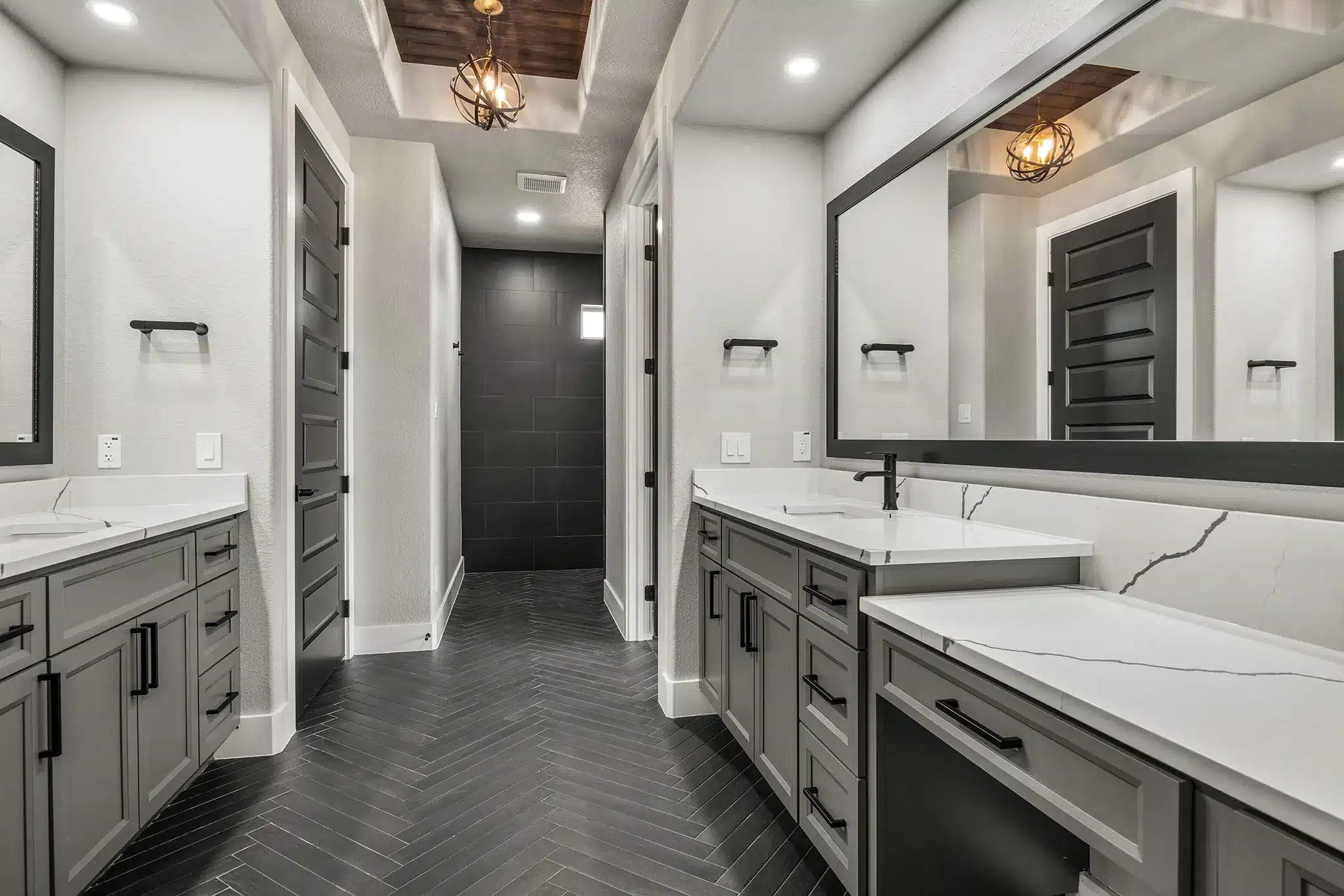
This level of remodel is where finish quality starts to matter a lot. A basic tile package and stock vanity keep costs closer to the lower half of the range. Larger tile formats, upgraded hardware, and custom details can push the total upward quickly.
High-end primary bath remodel: $30,000 and up
Primary bathroom remodels usually cost more because they tend to be larger, more customized, and more finish-heavy. A high-end project may include:
- Custom cabinetry
- Premium stone or solid-surface countertops
- Frameless glass shower enclosures
- Heated floors
- Designer tile patterns
- Relocated plumbing fixtures
- High-end lighting and ventilation
- Expanded shower space or freestanding tub installation
If the design changes the room’s layout, the cost can rise fast. Bathroom projects that involve moving plumbing or electrical work take more labor and more coordination, which is why they typically sit in the higher tiers licensed plumbing guidance.
For neighboring-market comparison, see bathroom remodeling costs in Ellis County and bathroom remodeling costs in Rockwall County. Those guides help show how location, labor market, and home age can influence pricing even within the same broader region.

Cost Per Square Foot and What It Includes
Some homeowners like to estimate remodeling cost by square foot. That can be useful, but only if you understand what is actually included in the number.
For bathroom remodeling in Johnson County, a rough planning range is often about $200 to $500+ per square foot, depending on scope and finish level. A small bathroom that costs $12,000 may look expensive on a per-square-foot basis because fixed costs like demolition, plumbing coordination, and labor do not shrink much just because the room is small. A larger luxury primary bath can also land at the high end because custom finishes and specialty trades add substantial cost.
What drives per-square-foot pricing
Per-square-foot pricing usually reflects a mix of:
- Demolition and debris removal
- Framing adjustments
- Plumbing labor
- Electrical labor
- Waterproofing
- Tile installation
- Cabinetry and countertops
- Fixtures and hardware
- Paint and finish carpentry
It does not always capture design complexity well. For example, two bathrooms with the same square footage can have very different budgets if one has a standard tub-shower combo and the other has a large curbless shower, niche lighting, and custom glass. The more the project depends on specialty labor, the less useful square-foot pricing becomes as a standalone metric.
If you want to compare bathroom pricing to a larger home project, it can help to review the DFW bathroom pricing guide again and look at how room size interacts with labor and finish choices. A bathroom’s smaller footprint does not mean it is a low-complexity project.

Main Factors That Change Total Price
Every bathroom remodel has a cost range, but specific conditions can move the final number by thousands of dollars. In Johnson County, the biggest variables are usually the room’s age, layout, and finish level.
1. Layout changes
Changing the floor plan is one of the fastest ways to raise cost. Moving a toilet, tub, shower, or vanity often means altering plumbing lines and potentially electrical or framing components too. That adds labor time, inspection complexity, and more chances for a surprise behind the walls licensed plumbing guidance.
2. Age and condition of the home
Older bathrooms can hide water damage, rot, outdated venting, or nonstandard rough-in conditions. If demo reveals damaged subflooring or mold-prone materials, you may need repair work before new finishes can go in. That can add anywhere from a few hundred dollars to several thousand.
3. Finish level
Your materials matter a lot. A stock vanity and ceramic tile are much cheaper than a custom cabinet package and natural stone. Likewise, standard chrome fixtures cost less than designer finishes, thermostatic shower controls, or upgraded glass systems.
4. Waterproofing and tile complexity
Large showers, niches, accent bands, herringbone patterns, and full-height tile all require more labor. A simple bathtub surround is usually less expensive than a tiled shower with multiple wall planes and a bench.
5. Permitting and code compliance
Once a remodel crosses into mechanical or layout changes, permitting may be necessary depending on the municipality and scope. That does not always mean the project becomes expensive by itself, but it does mean more planning and more schedule discipline. Code requirements around ventilation, fixture clearances, and plumbing layout can affect the design before the work even starts code reference.
6. Access and scheduling
If the bathroom is upstairs, tightly framed, or difficult to access, labor can take longer. The same is true if the homeowner wants the work completed on an aggressive schedule or if product lead times are slow.
In practical terms, the biggest cost jumps usually come from:
- moving plumbing: often several thousand dollars more
- upgrading to premium finishes: often $3,000 to $10,000+ more
- adding custom tile work: often $2,000 to $8,000 more
- fixing hidden damage: highly variable, but frequently $1,000 to $6,000+ on older bathrooms

Labor, Materials, and Trade-Level Costs
A bathroom remodel budget is really a bundle of separate trades and material categories. When homeowners only focus on the visible finishes, they often underestimate the labor behind the scenes.
Labor costs
Labor is usually the biggest portion of a remodel budget. In a Johnson County project, labor may include:
- Demo and haul-off
- Carpenter or framing work
- Licensed plumbing
- Electrical work
- Tile installation
- Drywall and paint
- Finish trim and cabinetry installation
- Final punch list
Licensed plumbing should be treated as a real budget line, not a minor add-on. Texas regulates plumbing work, so budgets should include proper professional labor rather than assuming all water-related changes are easy or inexpensive licensed plumbing guidance. Even a seemingly simple sink relocation or shower valve replacement can add meaningful cost once labor, materials, and inspection timing are included.
Material allowances
Material pricing can vary dramatically by product tier. Here are realistic planning allowances:
- Vanity: $400 to $2,500+
- Countertop: $300 to $3,500+
- Toilet: $250 to $900+
- Faucet and trim kits: $150 to $1,200+
- Tile: $4 to $20+ per square foot, depending on type
- Shower glass: $800 to $3,000+
- Lighting: $150 to $1,500+
- Vent fan: $150 to $600+
- Flooring: $5 to $15+ per square foot installed, depending on material
Those numbers are only allowances, but they help show how fast a project grows once homeowners move beyond builder-grade selections.
Why the trade mix matters
A bathroom is small, but it touches many trades in a compact area. Plumbing, electrical, waterproofing, tile, paint, and finish carpentry all need to fit together in the correct order. That coordination increases the value of skilled labor and reduces the margin for mistakes. In other words, a bathroom is not just a mini kitchen; it is a high-detail wet area that has to be built carefully.
If you are comparing what a specialty contractor can handle versus a broader remodeling scope, the Johnson County bathroom remodeling page is the right place to start. If you want a broader home update rather than a bathroom-only project, the Johnson County remodeling service page can help you think through the larger sequence of work.

Permit, Design, and Planning Costs
Homeowners often think only about construction costs, but the early planning stage can have a real budget impact too. This is especially true when the bathroom remodel changes plumbing, electrical, or layout details.
Design and planning
Design costs may include:
- Field measurements
- Layout drawings
- Finish selections
- Fixture planning
- Tile and material coordination
- Trade coordination
For a straightforward remodel, design and planning may be modest. For a custom primary bath, they can become a meaningful part of the budget. A practical allowance is often 3% to 8% of the total project cost, depending on how custom the job is.
Permitting and inspections
Not every cosmetic update requires a permit, but many remodels that change plumbing, electrical, or structural elements do need some level of review and inspection. The exact process depends on the municipality and project scope. Code-driven items like ventilation, fixture spacing, and safe plumbing installation can influence both design and timing code reference licensed plumbing guidance.
A useful planning allowance for permits, inspection-related administration, and small compliance items is often $300 to $1,500+. That range is not huge compared with the full remodel, but it can affect the start date and the order in which work proceeds.
Preconstruction soft costs
Soft costs can also include:
- Product sourcing
- Ordering and storage
- Design revisions
- Measurement visits
- Material coordination
- Temporary protection if the home is occupied
These are easy to overlook, but they are part of the real total. They matter most when the homeowner wants custom selections, has a tight timeline, or is remodeling the only full bathroom in the house.

Timeline and Process Expectations
A bathroom remodel is usually not a one-week job. Even smaller projects need sequencing, and larger remodels can take several weeks from start to finish.
Typical timeline
A common bathroom remodel timeline in Johnson County looks like this:
- Planning and selections: 1 to 3 weeks
- Ordering materials: 1 to 6 weeks, depending on lead times
- Demo and prep: 1 to 3 days
- Framing, plumbing, and electrical rough-in: 2 to 5 days
- Inspections, if required: 1 to 5+ days, depending on scheduling
- Drywall, waterproofing, and tile: 1 to 2 weeks
- Vanity, fixtures, and finish installation: 2 to 5 days
- Punch list and cleanup: 1 to 3 days
Altogether, a typical remodel often takes 3 to 8 weeks, and custom or complex jobs can take longer. The schedule risk gets higher when inspections are involved or when tile, fixtures, or glass are backordered consumer cost guide.
What can slow the job down
The most common delays are:
- Hidden water damage discovered after demo
- Out-of-square framing in older homes
- Backordered tile or specialty fixtures
- Inspection timing
- Change orders after work starts
- Scope creep from “while we’re here” decisions
If the bathroom is part of a larger sequence of home upgrades, it can also make sense to compare timing with other remodels. For example, some homeowners plan a bath remodel alongside a kitchen update or a broader home renovation. If that is your situation, this kitchen remodeling guide for Johnson County and this house-building cost guide for Johnson County can help you see where bathroom work fits into the larger project timeline.

How to Budget the Project Realistically
The best bathroom budgets are built with room for surprises. That does not mean overspending; it means planning with enough cushion to avoid stress once demo begins.
Use a contingency
Plan a contingency of 10% to 20% for hidden conditions, especially in older bathrooms. That extra money can cover:
- Water damage behind the shower
- Subfloor replacement
- Minor framing repair
- Updated venting
- Electrical corrections
- Additional trim or drywall work
If the bathroom is in an older Johnson County home, this contingency is not optional in practical terms. It is one of the main ways homeowners avoid budget failure after demolition starts.
Separate “must-haves” from upgrades
A smart budget distinguishes between essentials and wish-list items. For example:
Must-haves
- Safe plumbing
- Functional shower or tub
- Reliable ventilation
- Waterproof surfaces
- Durable flooring
Upgrades
- Heated floors
- Designer lighting
- Custom cabinets
- Premium stone
- Frameless glass
- Specialty tile patterns
This distinction helps you protect the core scope if prices rise during the project.
Plan allowances before selections
A bathroom remodel gets expensive when the homeowner shops after the contract is already signed without clear allowances. It is better to set realistic targets early:
- Vanity allowance: $1,000
- Tile allowance: $8 to $12 per square foot installed
- Fixture allowance: $500 to $1,500
- Glass allowance: $1,500 to $3,000
You can always go higher later, but having a baseline makes it much easier to keep the project on track.
Finance the right way
If you are financing a remodel, borrow against a full budget rather than the lowest possible estimate. That usually means including:
- construction cost
- design and permit costs
- contingency
- temporary housing or inconvenience costs if relevant
That approach keeps you from running short halfway through the job and having to cut quality to finish.

When to Choose a Bathroom Remodeling Project in Johnson County
A bathroom remodel is a strong choice when the current space has started to hold back the home’s comfort, function, or resale appeal. In Johnson County, that often happens when a bathroom feels outdated relative to the rest of the house, or when the layout no longer works for a growing household.
Here are good reasons to move forward:
- The bathroom has visible wear, outdated finishes, or recurring maintenance problems
- The shower or tub no longer fits the way the family uses the room
- The home has a dated primary bath that is hurting overall value perception
- Water damage, leaks, or ventilation problems need correction
- You want to modernize the bathroom before listing the home
- The project can be done without turning the house upside down
A remodel is especially worth considering if your home has an older bathroom with hidden condition risks. In that case, the project is not just cosmetic; it becomes a chance to correct problems before they get worse. That is also why comparing neighboring markets can be useful. If you are weighing project scope across county lines, Ellis County bathroom remodeling costs and Rockwall County bathroom remodeling costs offer helpful perspective on how similar projects can still price differently.
If your project is broader than one bathroom, it may make sense to look at the whole-house picture first. Some homeowners are better served by phased remodeling instead of doing everything at once. In those situations, a plan that combines bathroom work with other rooms can be easier to finance and schedule, especially if you start with the room that has the highest daily impact.
Final Thoughts on Bathroom Remodeling in Johnson County
A bathroom remodel in Johnson County is usually a meaningful investment, but it can also be one of the most worthwhile upgrades you make to the home. Most projects in 2026 will fall somewhere between $8,000 and $30,000+, with the final number driven by size, finish level, plumbing changes, and hidden conditions discovered during demolition. For custom primary suites or layout-changing projects, the total can rise well above that range.
The biggest budgeting mistake is treating a bathroom like a simple finish swap. In reality, it is a compact room with plumbing, electrical, waterproofing, ventilation, and finish work all stacked together. That is why good planning matters so much, especially in a market like Johnson County where pricing tends to follow suburban DFW labor and material norms.
If you are ready to talk through a bathroom remodel in Johnson County, the best next step is to review the project scope, set realistic allowances, and get a clear estimate that reflects your actual goals. A well-planned remodel can improve daily function, modernize the home, and create a space that feels far more valuable than the cost of the work itself.