How Much Does It Cost to Build a House in Possum Kingdom Lake?
Building at Possum Kingdom Lake usually costs more than a simple suburban lot build because the site itself often demands more attention. Access, slope, utility distance, drainage, and parcel-specific conditions can all affect the final budget before the house design is even finalized. That is why a lake-area custom home should be planned as a site-driven project first and a house plan second.
If you are trying to estimate your budget, the smartest starting point is to separate the cost of the structure from the cost of making the site ready for that structure. A home with a beautiful view can still become expensive if the parcel needs more grading, driveway work, utility extension, or foundation adjustment.
This guide explains the likely cost ranges, the main budget drivers, the local issues that matter most around the lake, and the planning steps that make custom building easier to control. For a broader regional baseline, compare this guide to our DFW home building cost guide as you work through your options and keep a clear comparison point in mind.

Why Building in Possum Kingdom Lake Is Different
Possum Kingdom Lake is not a standard subdivision market. The site context is often more important here because lots can vary significantly in slope, access, tree cover, shoreline sensitivity, and service availability. That means two homes of the same size may have very different budgets depending on where they sit and what it takes to prepare the site.
A second difference is access. Materials and crews may need a little more planning to reach the lot, especially if the parcel is tucked back, slopes down, or sits in a more remote setting. A third difference is drainage. Lake-area builds often need extra attention to water movement so the home, yard, and foundation all work with the terrain rather than against it.
The practical takeaway is simple: at Possum Kingdom Lake, the lot is not just the address. It is one of the biggest cost variables in the entire project. If you understand the land early, you can usually make better decisions about house placement, foundation strategy, and budget allocation.

Typical Cost to Build a House at Possum Kingdom Lake
A reasonable planning range for a custom home at Possum Kingdom Lake depends on the size of the house, the finish level, and the amount of sitework required. A fairly clean lot can keep costs more predictable, while a more remote or slope-sensitive parcel can push the total higher.
| Home type | Approx. size | Typical build range | Notes |
|---|---|---|---|
| Entry custom home | 1,800-2,200 sq. ft. | $270,000-$430,000+ | Simpler layout, modest finishes, easier lot conditions |
| Mid-range custom home | 2,200-3,000 sq. ft. | $430,000-$780,000+ | Better finishes, more detail, moderate site complexity |
| High-end custom home | 3,000+ sq. ft. | $780,000-$1,600,000+ | Premium finishes, custom design, more complex site work |
Those are broad planning ranges, not fixed prices. At Possum Kingdom Lake, the land can swing the total far more than many buyers expect. A home that looks affordable in concept can become much more expensive if the parcel requires major clearing, a long driveway, drainage work, retaining solutions, or long utility runs.
The right question is not only what the house costs. It is what the entire build will cost once the site is ready, the structure is designed, and the project has a realistic path to completion.
If you want a DFW-wide benchmark, the Possum Kingdom Lake custom home builder page is the best place to connect that baseline to a lake-area project and start refining your budget.
What Drives the Price Most
The biggest cost drivers at Possum Kingdom Lake usually involve site preparation, utility access, driveway and grading needs, foundation planning, and the level of finish inside the home. Because the land can be more variable here, the sitework portion deserves extra attention.
1) Site preparation
Site preparation can include clearing brush, removing trees, shaping the pad, and making the parcel ready for construction equipment. If the lot is uneven or heavily vegetated, those tasks can become a substantial line item. The more work the land needs before framing can begin, the more the project cost rises before the home itself is built.
2) Utility planning
Utility access is often one of the most important questions on a lake-area build. If service is nearby and easy to connect, the project is simpler. If utility work has to be extended or coordinated over a longer distance, the budget should reflect that.
3) Access and driveway work
Driveways matter more than most people think. If the parcel is set back, steep, or hard to reach, the access solution can become part of the cost structure. Good access is important for construction, long-term use, and emergency service.
4) Drainage and slope
Lake-area lots often require more careful drainage planning. Water needs to move away from the foundation, and the home needs to be placed so it works with the terrain. Slope and runoff can influence foundation height, driveway design, and yard grading.
5) Foundation strategy
A foundation that works on a flat suburban lot may not be the right solution on a more complex lake parcel. Foundation design has to respond to the site, and that can affect cost. If the house is sitting on a slope or near a drainage challenge, the foundation plan should be treated as a core budget item.
6) Finish level
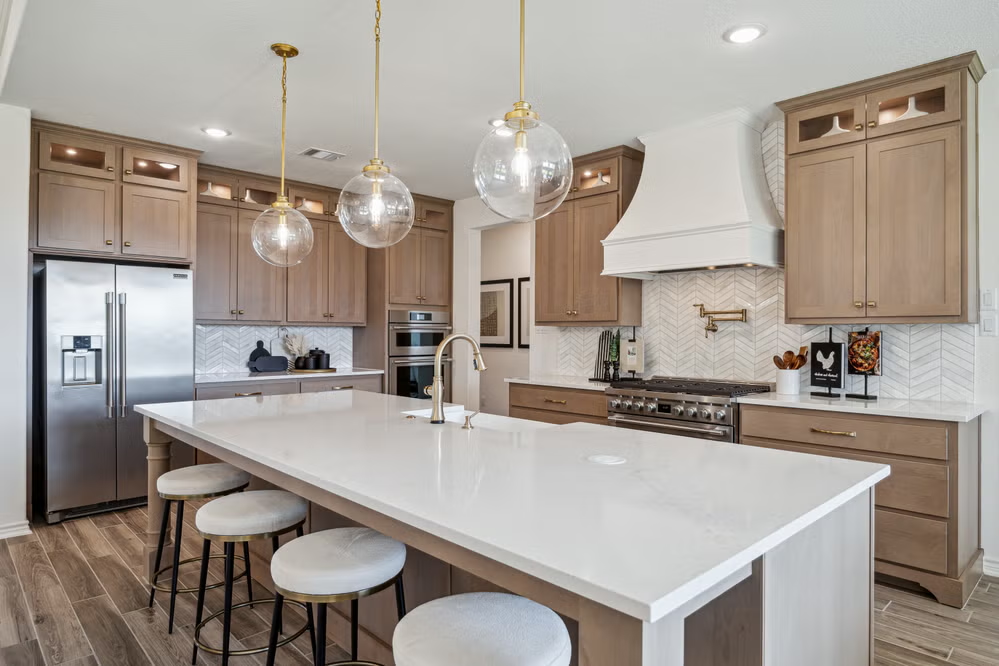
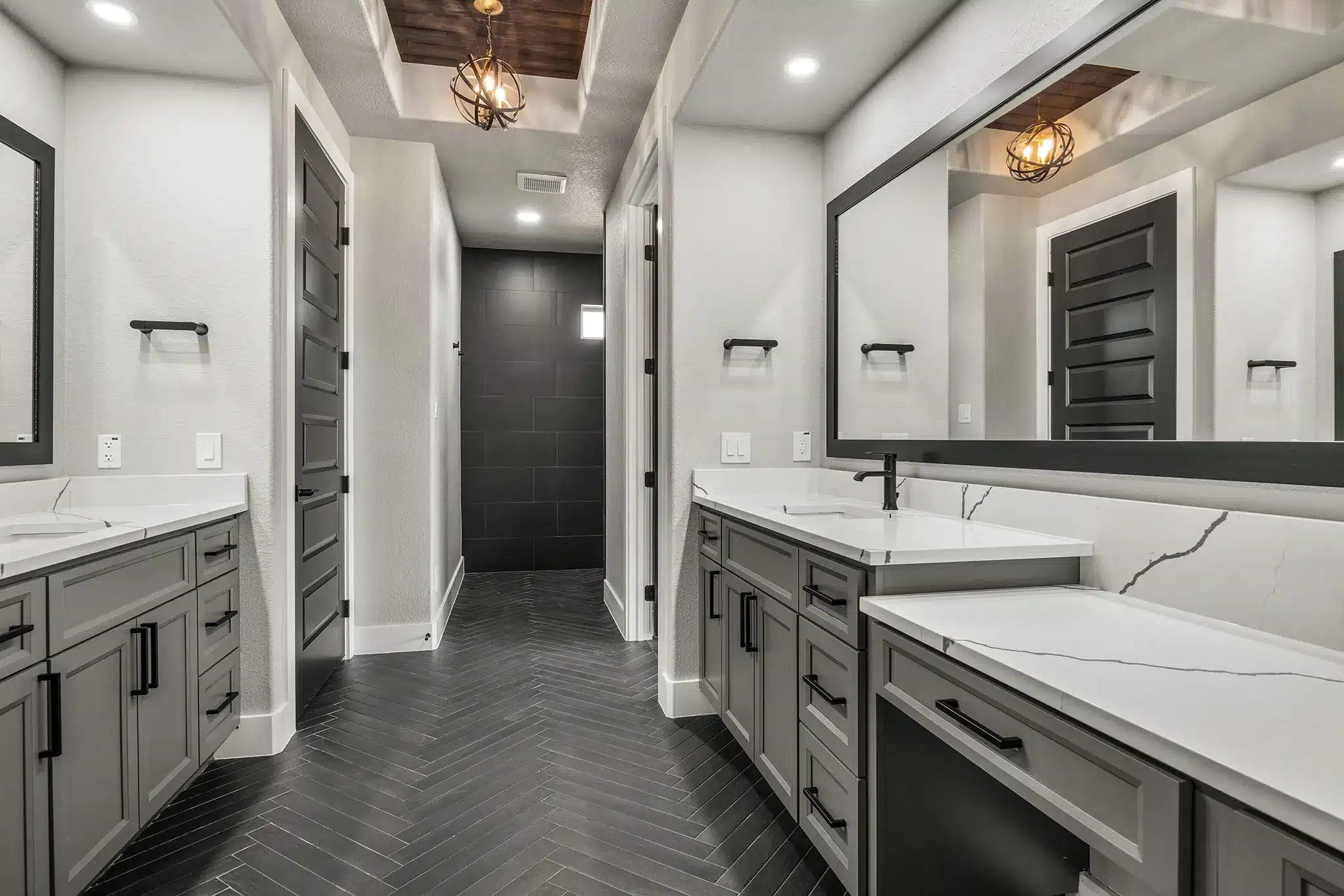
Inside the home, cabinet quality, flooring, tile, countertops, fixtures, and appliances all shape the total. A modest finish package and a premium finish package can produce very different numbers, even when the floor plan is the same.
7) Coordination and change management
Custom projects become more expensive when decisions change late. A lake-area build already has enough site complexity without adding constant changes to the scope. Clear decisions early are one of the best ways to keep the project manageable.
The main takeaway is that at Possum Kingdom Lake, the site can drive cost as much as the house design does. That is why a careful early budget review matters so much.
A Budget Breakdown You Can Actually Use
A good budget should show where the money goes. That makes it easier to compare homes, lots, and design choices.
| Cost category | Common share of total | What it covers |
|---|---|---|
| Site prep and grading | 5% – 18% | Clearing, pad prep, slope work, drainage shaping |
| Utilities and site connections | 5% – 20% | Electric, water, septic, well, trenching, tie-ins |
| Driveway and access | 3% – 10% | Access roads, culverts, entry improvements |
| Foundation | 8% – 15% | Slab, footings, engineering, site support |
| Framing and shell | 15% – 25% | Lumber, framing labor, roofing, exterior envelope |
| Mechanical systems | 10% – 18% | HVAC, plumbing, electrical, ventilation |
| Interior finishes | 20% – 35% | Cabinets, floors, tile, paint, trim, fixtures |
| General conditions and overhead | 8% – 15% | Supervision, insurance, coordination, admin |
The reason these percentages matter is that they make tradeoffs more visible. If the lot needs more sitework, you may need to moderate finish selections or simplify the home shape to keep the overall project in balance. If the site is relatively clean, you can put more budget into the interior or exterior finish package.
A useful rule of thumb is to price the lot, the house, and the access together. If you separate them too aggressively, the estimate can look better than it really is.
When we plan projects like this, we try to see the entire cost map before the build starts. That is much more reliable than reacting to problems after the site has already been mobilized.

Lake-Specific Site Conditions and Planning Factors
Possum Kingdom Lake brings a very specific set of site concerns. Even when the house design is simple, the parcel itself may require thoughtful planning.
Slope and elevation changes
Slope can be one of the biggest design influences on a lake-area lot. If the home sits above or below the road in a noticeable way, the foundation, driveway, and grading plan all need to reflect that. Elevation changes can make the project more interesting, but they can also add cost.
Drainage and water management
Water movement is critical. The site should be planned so runoff moves away from the house and does not create problems around the foundation, driveway, or yard. Good drainage planning may not be visible in the finished home, but it can protect the investment for years.
Tree cover and clearing
Some lake-area parcels have significant tree cover or brush that needs to be managed before construction can start. Clearing is not just cosmetic. It affects access, staging, grading, and the location of the building pad.
Utility extensions
If a lot is more remote or less developed, utilities may take more work to reach the home. That can affect both cost and timing. The farther the project is from a simple utility tie-in, the more careful the budget should be.
Lot layout and home placement
The best home placement is not always the most obvious one from the road. The builder may need to balance views, slope, access, drainage, and utility routes. The right position can improve the home’s long-term performance and reduce unnecessary site complications.
These factors make lake-area building more demanding than a typical infill project, but they also create opportunities. If the site is handled well, the finished home can feel more integrated with its surroundings and more functional from day one.

How the Timeline Affects Total Cost
Time is money in custom construction, and that becomes even more true when the site is complex. A longer timeline can increase financing costs, temporary site overhead, and the risk of material or labor changes. At Possum Kingdom Lake, where the lot may require extra preparation, good sequencing matters.
A normal custom home timeline usually includes these stages:
- Preconstruction and budgeting
- site review
- budget alignment
- access and utility checks
- early layout and placement study
- Design development
- plan refinement
- finish selection
- foundation and structural planning
- exterior and roof design
- Site preparation
- clearing and grading
- driveway planning
- utility routing
- pad preparation
- Foundation and shell
- foundation placement
- framing
- roofing
- window and envelope work
- Systems and interior work
- plumbing, electrical, HVAC
- insulation and drywall
- cabinets, tile, flooring, trim, paint
- fixtures and appliances
- Completion and closeout
- inspections
- punch list work
- final adjustments
- owner walkthrough
The cleanest way to protect the budget is to make sure the early phases are accurate. If the site plan is wrong, everything that follows becomes harder to control. If the site plan is right, the rest of the project has a much better chance of staying on track.

Ways to Save Money Without Hurting the Build
Saving money on a custom build is mostly about clarity and efficiency. It is not about stripping the home down until it no longer fits the site or the homeowner’s needs.
Choose a simpler footprint
A compact, efficient footprint is usually cheaper to build than a more complicated one. Straightforward geometry can save time and reduce waste. If the lot offers a great view, you can still design intelligently without overcomplicating the structure.
Keep the roofline reasonable
Complex rooflines increase framing and roofing costs. A simpler roof can still look attractive and perform well. The key is to let the design have a reason for each added layer of complexity.
Match the finish level to the whole project
A consistent finish package often delivers better value than a few extravagant upgrades scattered across the home. That is especially true when the site already requires extra investment.
Put more effort into site planning early
It may feel like a cost to spend time on site planning, but it often saves money later. If the access route, pad location, and drainage plan are right the first time, you can avoid expensive corrections.
Decide early and avoid late changes
Late changes are one of the fastest ways to inflate a budget. If you know what you want before the crew is mobilized, you give the builder a much better chance to hold the line on costs.
Build for the parcel, not against it
The land should guide the home design. If the lot naturally wants a certain orientation or elevation, work with it. The project usually becomes more efficient when the design respects the site.

Comparing Possum Kingdom Lake to Nearby Markets
Possum Kingdom Lake is not the same as a suburban DFW lot, and that difference matters when you compare costs. Suburban builds can often rely on more predictable access and utility patterns. Lake-area builds may have more sitework and more coordination before the home is ready to rise.
That does not automatically make lake-area construction more expensive in every situation. It means the budget may shift more heavily toward access, grading, and utility preparation if the lot needs it. A good site can still produce a very efficient project, but the assumptions need to be realistic.
The best comparison is one that holds assumptions constant:
- same square footage
- same finish level
- same foundation type
- same utility assumptions
- same sitework expectations
Without that consistency, you are comparing different projects, not different prices.
For broader regional context and nearby county comparison, our Palo Pinto County home building cost guide and our Broken Bow home building cost guide can help you understand how site context changes the budget picture.

What a Smart Possum Kingdom Lake Build Process Looks Like
The best custom build process starts with the site, not the floor plan. That is especially true around a lake where elevation, access, and drainage can shape the entire project.
Start with a site visit
Before you finalize the design, evaluate the parcel carefully. Look at the slope, access route, available utility points, and where the house would naturally sit.
Verify the utility picture early
Water, power, and waste handling should be understood early. If any of those need more work than expected, you want to know before the final budget is locked in.
Align the design with the site
A home should support the land, not fight it. If the lot suggests a different layout or orientation, it is worth considering that early.
Price the site and house together
The most accurate estimates treat site preparation and the house structure as one coordinated budget. That prevents the kind of surprise where the home price looks reasonable but the project total does not.
Leave room for contingency
Lake-area lots can reveal issues as the work progresses. A contingency gives you room to absorb those surprises without stalling the build.
Keep the selection process disciplined
When finishes are chosen thoughtfully and early, the budget becomes much easier to manage. That is true on any project, but it is especially important when the site is already complex.
Frequently Asked Cost Questions
Is it cheaper to build on a lake lot?
Not necessarily. A lake lot can offer beautiful value and strong long-term appeal, but the site may also require more grading, access work, and utility planning. The total cost depends on the parcel.
What type of home is most efficient at Possum Kingdom Lake?
Usually a home with a straightforward footprint, an efficient roofline, and a finish package that matches the site. Simpler homes tend to be easier to build when the parcel already has site complexity.
Do I need to budget for driveway work?
Very possibly. If the lot is set back, steep, or difficult to access, driveway work can be part of the build budget. It should be considered early.
Why do similar homes cost so differently here?
Because the land is part of the cost. Slope, drainage, utilities, clearing, and access can all change the total even if the house itself is similar.
How early should I start planning?
As early as possible. The more time you have for site review and design coordination, the easier it is to keep the project under control.

Building the Right Home at Possum Kingdom Lake
A strong Possum Kingdom Lake build starts with the land. If the parcel is difficult to access, steep, heavily wooded, or far from utilities, those realities should be reflected in the budget before construction begins. If the site is cleaner and simpler, that should be reflected too. The point is to price the actual project, not the dream version of it.
The homeowners who do best in lake-area construction are usually the ones who ask better questions up front. They want to know what the site needs, how the home will sit on it, and what the total path to completion really looks like. That kind of planning keeps the project grounded and makes the final home more satisfying.
If you are ready to start that process, the Possum Kingdom Lake custom home builder page is the place to begin.
When the home, the site, and the budget all point in the same direction, the build becomes much easier to manage from the start.

Site Evaluation Checklist Before You Buy Land
Before you commit to a parcel near the lake, it helps to walk the site with a checklist in mind. A lot can look simple from the road and still need meaningful work once you begin measuring elevations, checking utility availability, and planning where the house should actually sit. That is why a property should be treated as a construction decision, not only a real estate decision.
Use a simple site checklist:
- Is the parcel accessible for construction vehicles and material deliveries?
- Will the driveway need to be extended, widened, or reworked?
- Are there slope or drainage issues that will affect the foundation or yard?
- Is utility service already nearby, or will it need to be extended?
- Is the lot shape actually compatible with the size of the home you want?
- Are there trees, brush, or terrain features that need to be addressed before building?
- Will the site require more planning for staging, grading, or cleanup than a typical suburban lot?
Why this checklist matters
The checklist matters because budget surprises almost always come from assumptions. A parcel that seems inexpensive can become far more expensive if access is poor or utility work is more involved than expected. A strong site review reduces the chance of that kind of surprise.
How to use it before buying
The checklist works best during early walk-throughs and early conversations with the builder. If you can identify the site constraints before you commit to the land, you can make more accurate decisions about the lot, the home, and the budget at the same time.
Comparing Home Size and Layout Strategy
Square footage matters, but the way the square footage is arranged matters too. A compact, efficient home may be easier to build than a larger but more fragmented design. In lake-area construction, that efficiency can make a major difference.
Smaller homes
Smaller homes can be cost-efficient, but they still carry fixed project costs. Sitework, utilities, and coordination do not shrink to zero just because the home is smaller. That means smaller homes can still be relatively expensive per square foot even when the total cost is lower.
Mid-size homes
A mid-size home often offers the best balance of livability and cost control. It can provide enough space for daily use, guests, storage, and flexible rooms without becoming too complex to budget. Many owners find this the most practical range when they want a custom home that feels complete.
Larger homes
Larger homes add room count, systems, and finish complexity. They often require more roof area, more structural coordination, and more detailed interior planning. If the site is also challenging, the budget can rise quickly.
Why layout efficiency matters
A well-planned home can sometimes deliver more value than a bigger home with a less efficient layout. That is especially true at Possum Kingdom Lake, where the land already asks for extra attention. Good layout choices help keep the project grounded in cost reality.

Foundation and Structural Planning
The foundation connects the home to the land, and on a lake-area lot that connection matters a great deal. A good foundation strategy responds to slope, drainage, and site conditions rather than assuming the lot behaves like a flat suburban parcel.
Why foundation planning is so important
Foundation work is one of the biggest structural choices in the project. It affects performance, cost, and long-term durability. If the site needs grading changes or if the home is being placed on a lot with elevation differences, the foundation must be coordinated with that reality.
Why site and structure have to work together
The foundation should not be treated as a stand-alone item. It should be designed with the drainage pattern, driveway placement, and home orientation in mind. When those pieces work together, the home is better supported and the project is less likely to need costly corrections later.
Questions worth asking early
Before finalizing the design, ask how the foundation fits the site. Is the home being placed to support the natural grade? Are there any slope or drainage concerns that affect the foundation budget? Would the structure be easier to build if the layout were adjusted? Those questions can save time and money later.

Utility Planning in More Detail
Utilities are often the hidden part of a project budget, especially on a lake-area lot. They may not be the most visible line items, but they can make a huge difference in the final number.
Electric service
Electric service should be understood early. If the site is easy to connect, the project is simpler. If the service point is farther away or the routing is more complex, the budget should account for that work.
Water supply
Water access can shape both construction and long-term use. If a parcel has direct access, that is helpful. If the property needs more work to establish water service, that can affect cost and timing.
Waste handling
If sewer service is not available or practical, septic planning may be required. Septic is not just a utility issue. It also affects where the home can sit on the lot and how the site should be arranged.
Why utility clarity matters early
The earlier you understand the utility picture, the easier it is to avoid redesigns and delays. Utility uncertainty tends to ripple through the rest of the project, so early clarity is one of the best ways to protect the budget.
A More Detailed View of Permitting and Compliance
Not every home at Possum Kingdom Lake will need major compliance work, but larger or more complex projects should still pay attention to construction-related requirements. The Texas Commission on Environmental Quality explains that larger construction disturbances must follow stormwater permit steps and prepare the required planning documents.
Why homeowners should care
Even if your specific home does not cross the larger disturbance threshold, the guidance is still useful because it shows how larger site activity is handled in Texas. If the project is larger or more involved than average, the compliance burden can affect both cost and timing.
What to do with that information
Use it as a reminder to ask early whether your site or scope suggests additional environmental or construction coordination. The answer may be simple, but it is better to know before the project is locked in.
How Financing and Carrying Costs Affect the Real Budget
The build price is only one piece of the budget. The owner may also have loan costs, lot costs, or overlapping housing costs while construction is underway. Those costs matter because they are part of the true economic picture.
The cost of time
If the project takes longer than expected, the carry cost can rise. That can happen even when the physical construction stays close to budget. A longer timeline means more exposure to financing and housing overlap.
Why this belongs in the estimate
A realistic budget should account for the complete path from land to move-in. If you leave out carry cost, you may underestimate the real project expense.
How to reduce pressure
The most reliable way to reduce carrying cost is to make the project more predictable. That starts with site clarity, good planning, and disciplined decisions before construction begins.
Material Choices and Value Decisions
Material selection matters because it affects both the initial budget and the long-term experience of living in the home. A good material strategy should match the site, the climate, and the home’s intended use.
Exterior materials
Exterior choices affect appearance and maintenance. A durable package is often worth the investment because it supports the home over time and can reduce maintenance concerns.
Interior surfaces
Interior surfaces like cabinets, countertops, flooring, and trim can swing the budget significantly. It helps to choose materials that feel consistent with the rest of the project instead of overspending in only one area.
Mechanical equipment
Systems like HVAC, plumbing, and electrical matter even if they are not visible. Good systems help the home perform well and are often a better use of money than a few dramatic but superficial upgrades.
How to think about value
The best value choice is not always the cheapest one. It is the selection that supports the home, the site, and the way the house will be used over time.
Why Preconstruction Planning Saves Money
Preconstruction is where many of the biggest cost decisions get made. The better the planning, the fewer surprises you face once the build starts.
What preconstruction should answer
By the end of preconstruction, you should know what the lot needs, what the home includes, what the finish level is, what the biggest unknowns are, and what the path to completion looks like.
Why this matters near the lake
Because the site can be more complex here, preconstruction helps avoid expensive field changes. It makes sure the home, the lot, and the infrastructure are all being considered together.
What happens without it
Skipping preconstruction can make the project feel cheaper at the start but more expensive later. Vague assumptions and late changes usually cost more than a careful early review.
A Smarter Way to Evaluate Bids
If you compare bids by total price alone, you can miss important differences in scope. That is especially true on a site with more moving parts.
Ask for scope clarity
Make sure each bid covers the same assumptions for sitework, utilities, foundation, finishes, and coordination.
Watch for allowance gaps
Very low allowances can make a proposal look better than it really is. Always check what is included and what is still open.
Look at the site assumptions
The proposal should reflect the actual lot conditions. If one builder assumes a simple site and another assumes a more complex one, the numbers will not be directly comparable.
Focus on predictability
The best proposal is often the one that gives you the clearest path to completion, not just the lowest number on paper.
Where Homeowners Can Save and Where They Should Not
Some savings are smart, and some are risky. The difference is important.
Good places to save
- simplifying the footprint
- reducing roof complexity
- choosing a balanced finish package
- planning the site carefully before construction begins
- avoiding unnecessary changes after the design is set
Places not to save too aggressively
- drainage planning
- foundation strategy
- utility coordination
- moisture protection
- core mechanical systems
Why this matters
A home that is cheaper to build but more expensive to correct later is not truly a savings. Good cost control protects performance first.
Final Home-Building Questions to Ask Before You Start
Before you move from planning to construction, ask yourself:
- Does this lot fit the kind of home I want?
- Have I accounted for access, site prep, and utilities?
- Is my finish level realistic for my budget?
- Do I understand the biggest unknowns in the project?
- Have I allowed for contingency?
- Have I compared this site to another parcel?
- Do I know who is helping me manage the details before construction starts?
If those questions are answered clearly, you are in a stronger position to build with confidence. If not, the next move should be to get more clarity before committing to the land or the plan.
Building the Right Home at Possum Kingdom Lake
A strong Possum Kingdom Lake build starts with the land. If the parcel is difficult to access, steep, wooded, or far from utilities, those realities should be reflected in the budget before construction begins. If the site is cleaner and simpler, that should be reflected too. The goal is to price the real project, not the idealized version of it.
The homeowners who do best in lake-area construction are usually the ones who ask better questions up front. They want to know what the site needs, how the home will sit on it, and what the path to completion really looks like. That kind of planning keeps the project grounded and makes the final home more satisfying.
If you are ready to start that process, the Possum Kingdom Lake builder page is the place to begin and can help you turn the plan into a real project.
When the home, the site, and the budget all point in the same direction, the build becomes much easier to manage from the start.