How Much Does It Cost to Build a House in Broken Bow?
Building a house in Broken Bow usually costs more than a simple “base price per square foot” headline suggests. The range depends on land prep, utility access, foundation design, finish level, and whether the lot needs clearing or drainage work before framing even starts. For a rough planning range, many custom homes in Oklahoma land somewhere around $170 to $280+ per square foot, with total project budgets often moving well above that once site conditions, selections, and soft costs are included.
If you are comparing options for a custom home in southeast Oklahoma, it helps to think in layers: the land, the site work, the shell, the mechanical systems, and then the finishes. That is also why a local builder conversation early in the process can save both time and budget. One local planning pass can prevent a lot of budget drift later, especially when the lot needs extra work before the foundation can even begin.
Why Building in Broken Bow Is Different
Broken Bow is not a dense suburban infill market, so the big cost swing is often the site itself. Wooded lots can require more clearing, grading, and driveway work than an average city parcel. Utility runs may also be longer and more variable, which can add trenching and service-connection expense before the house is framed.
The other important difference is environmental and drainage review. If a lot sits near low areas or water features, floodplain screening may matter early, and Oklahoma guidance notes that a local floodplain development permit may be required depending on jurisdiction and site conditions. That means the smartest budget move is to confirm the lot’s development constraints before locking in finish choices.

How Much Does It Cost to Build a House in Broken Bow?
A practical planning range for Broken Bow is often $170 to $280+ per square foot for a custom-home project, with lower-spec builds sometimes starting closer to the low end and more detailed custom homes moving higher. On a 1,500 square foot house, that puts rough construction pricing around $255,000 to $420,000 before land and many soft costs. A 2,000 square foot house lands around $340,000 to $560,000, and a 2,500 square foot house can easily run from about $425,000 to $700,000+.
Those ranges are only the hard-build side of the equation. In a real budget, you also need to account for permits, engineering, utility work, temporary site access, and contingency. A 10% to 15% reserve is smart in a rural market because the lot can change the job more than the floor plan does. If the site needs heavier clearing or a deeper foundation, the budget can move fast.
For a more complete local pricing conversation, compare the numbers against Fin Home’s DFW home building cost guide so you can see how a market baseline differs from a place like Broken Bow.
A second helpful planning point is that the same square footage can produce very different pricing depending on roof shape, garage size, porch coverage, and the amount of custom trim work. In practice, a 2,000 square foot house with a simple shell and moderate finishes may sit near the middle of the range, while the same footprint with more glass, more exterior articulation, and a higher-end kitchen can add $50,000 to $120,000 without changing the basic layout.
Another reason budgets drift is allowance creep. If the cabinets are allowed at one number but the homeowner later chooses a higher grade, the difference can hit the budget twice: once in material cost and again in any added labor or lead-time coordination. That is why it helps to identify the finish tier early and keep every selection aligned with the same target.
If you are trying to build on a set budget, the number to watch is not just the total contract amount. Watch the contingency, too. A 10% reserve on a $420,000 build is $42,000, and that amount can disappear quickly if the site needs extra grading or a septic-related redesign.
Another useful check is the percentage split between hard and soft costs. On a rural custom home, sitework and utilities can take a larger share than they would in an established subdivision. A project that looks like 80% house and 20% sitework on paper can become 70/30 or even 65/35 once the lot is fully understood. That is why early due diligence matters so much.
Quick pricing table
| Home size | Low-end planning range | Mid-range custom range | Higher-end custom range |
|---|---|---|---|
| 1,500 sq ft | $255,000 | $315,000 | $420,000+ |
| 2,000 sq ft | $340,000 | $420,000 | $560,000+ |
| 2,500 sq ft | $425,000 | $525,000 | $700,000+ |
These figures are planning numbers, not bids. Final pricing depends on lot conditions, finish level, roof complexity, foundation type, and how much of the work is included by one contractor versus multiple trades.

Broken Bow Cost Breakdown by Category
A custom home budget becomes easier to manage when you split it into trade buckets instead of one giant number. That way, you can see where a savings plan will actually help.
Land preparation and clearing
For wooded or uneven lots, clearing and rough grading can run from a few thousand dollars on a light site to well into five figures on a more involved parcel. Driveway buildout, tree removal, and erosion control can all add to this early stage. If the lot needs significant access work, expect the site prep bucket to rise before the actual house budget changes.
Foundation and slab work
Foundation cost depends on soil conditions, slope, and the design load. Slab-on-grade is often the lower-cost starting point, but extra excavation, stem walls, or drainage corrections can push the number up. A simple foundation package might fit in the tens of thousands, while a more complex package can move substantially higher.
Framing and shell
The framing package typically includes lumber, labor, roof structure, and the weather-tight shell. Roof shape matters here: a simple gable roof is usually cheaper than a cut-up roof with multiple valleys and dormers. Windows and exterior doors also change the shell budget faster than many owners expect.
Mechanical, electrical, and plumbing
MEP systems can range widely based on fixture count, HVAC equipment efficiency, and distance from utility tie-ins. In a rural setting, longer runs and more custom routing can add cost. If you want a larger kitchen island, extra baths, or specialty spaces like a workshop, the plumbing and electrical scope grows with it.
Interior finishes
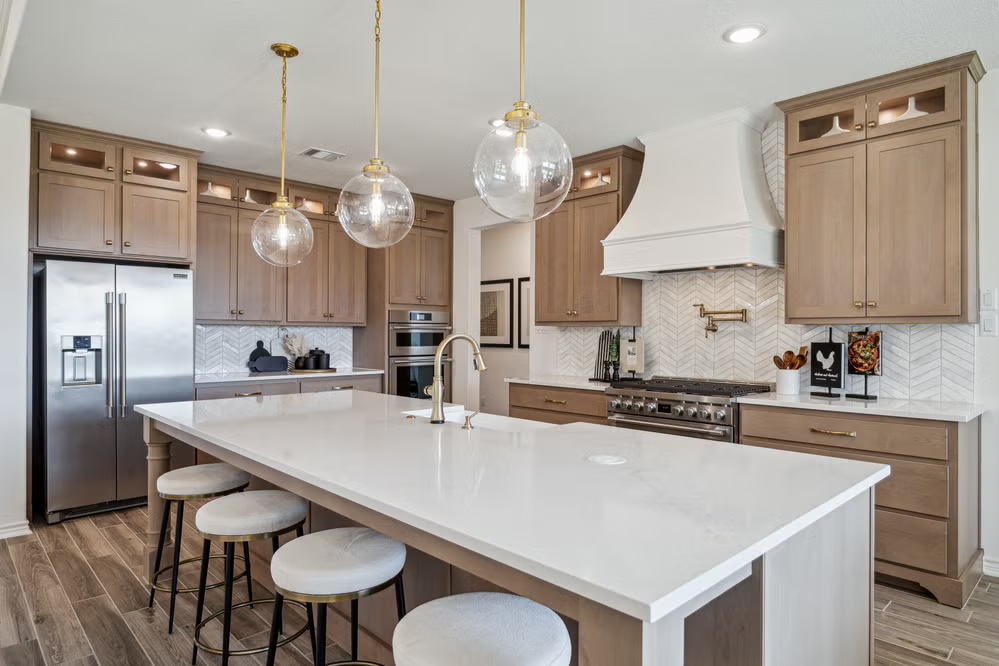
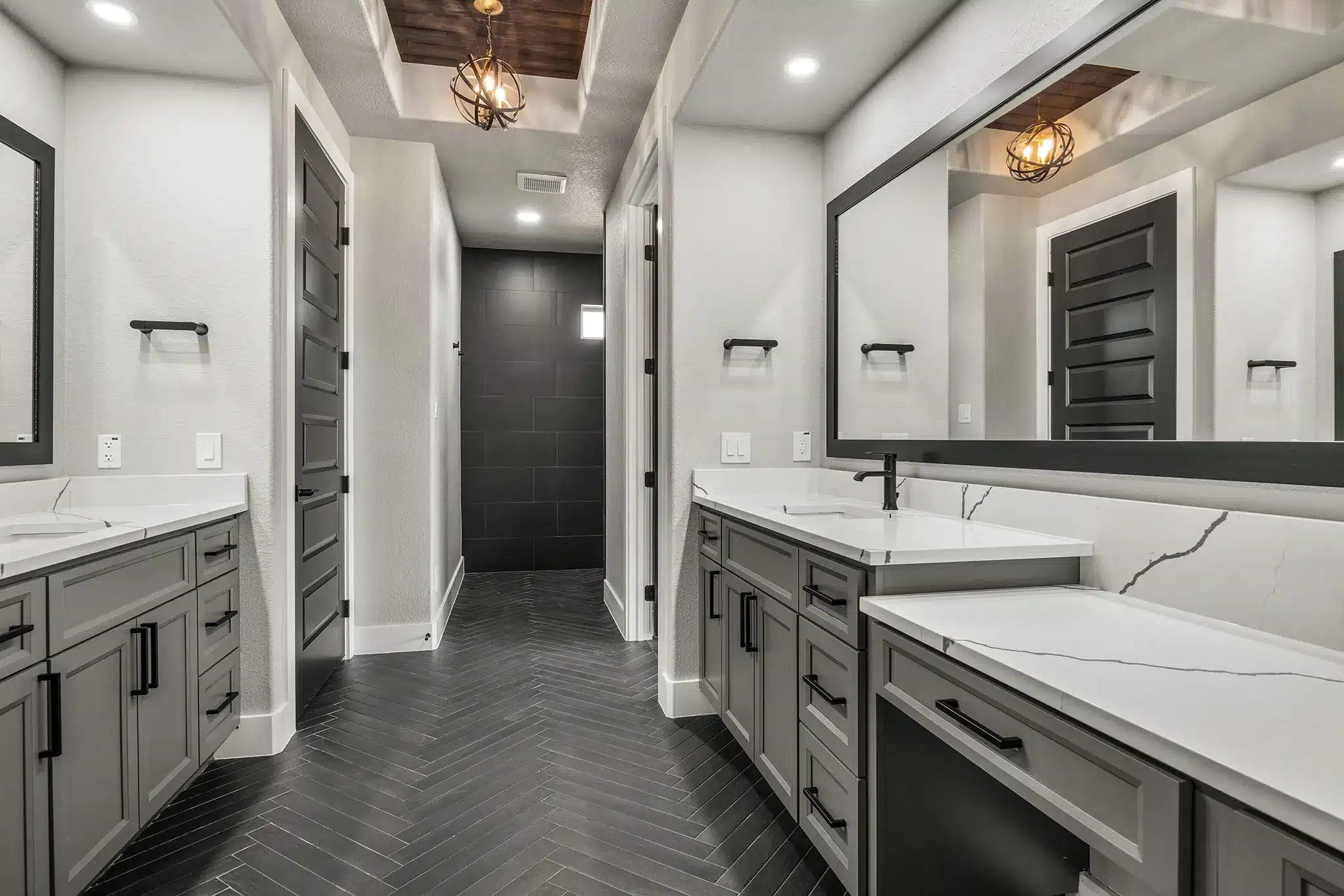
Finishes are where budgets separate most clearly. Flooring, cabinets, countertops, tile, trim, paint, lighting, and appliance allowances can swing by tens of thousands of dollars. A practical rule is that your finish package should be selected before you finalize the budget, not after, because material choice is one of the fastest ways to overspend.
If you are comparing scope levels, it can help to look at the Broken Bow home building service page again while you review allowances and timeline. The goal is not to obsess over one line item; it is to understand how the whole budget behaves when the site, design, and finish level all pull in the same direction.

How Site Conditions Change the Budget
Two houses with the same floor plan can cost very different amounts in Broken Bow if the lots are different. Site conditions often matter more than interior finishes in the earliest estimating phase.
A wooded lot may require more tree work, stump removal, and grading than a cleared parcel. A sloped lot can increase foundation and drainage costs, especially if the home needs cut-and-fill balancing or retaining work. Long utility runs can add material and labor for water, power, and sewer or septic-related coordination. And if the parcel is remote, equipment mobilization and delivery charges can show up earlier in the estimate.
A good planning approach is to separate house cost from site cost. That simple move can reveal whether a project is really a $350,000 build or a $450,000 all-in project once the land is ready to support the structure.
A second separation that helps is “fixed scope” versus “variable scope.” Fixed scope includes the items you know you need: number of bedrooms, baths, garage bays, and primary finishes. Variable scope includes the pieces most likely to change if the site reveals a surprise, such as retaining, deeper footings, utility extensions, or drainage corrections. Once you track those categories separately, the estimate becomes much easier to manage.

Permits, Floodplain, and Stormwater Considerations
Permitting in a rural Oklahoma market can still involve more than one layer of review. Oklahoma’s floodplain FAQ notes that you may need a floodplain development permit from the local jurisdiction if the property is in a floodplain, so lot screening matters before final plans are issued. That is especially relevant if a site has nearby drainage features or low ground that could affect the build pad.
For larger construction jobs, Oklahoma DEQ also requires stormwater planning in specific cases. Construction sites may need an OKR10 permit and a Stormwater Pollution Prevention Plan, which adds administrative steps and sometimes consultant costs. Those requirements are not always large line items, but they do affect scheduling and preconstruction workload.
The practical takeaway is simple: budget time for approvals, not just materials. A permit delay can be cheaper than a rushed redesign, but it still affects your carry costs and contractor scheduling. When you are comparing builders, ask how they handle permit coordination and early site feasibility before the first shovel hits the ground.

House Size Examples for Broken Bow
It helps to translate square-foot pricing into real project sizes so the range feels more concrete.
1,500 square feet
A smaller custom home at $170 to $280+ per square foot usually lands around $255,000 to $420,000 for construction. If the site is straightforward and the finish level is moderate, this can be a manageable entry point for a second home, downsized primary residence, or guest-focused build.
2,000 square feet
A mid-size home in the same range often budgets around $340,000 to $560,000. This is the kind of project where a better kitchen package, a more durable exterior, or a larger primary suite can move the number noticeably. Even a 5% change in scope adds $17,000 to $28,000 on a build this size. Add a covered porch, upgraded windows, and a more complex HVAC layout, and the total can climb another $20,000 to $45,000 very quickly.
To keep those upgrades under control, it helps to decide which of them are structural, which are comfort-focused, and which are purely aesthetic. Structural upgrades, like drainage improvements or a better foundation package, usually deserve priority. Comfort-focused items, like insulation or a better HVAC system, can be value-adds too. Purely aesthetic upgrades should generally be the last place you search for extra dollars if the budget is already tight.
A helpful planning exercise is to ask what actually changes the way you use the house. If a larger pantry, a dedicated mudroom, or a better laundry layout improves daily function, those upgrades can be worth more than cosmetic enhancements that mostly affect first impressions. That tradeoff matters in Broken Bow because rural lots often reward thoughtful footprint planning more than expensive ornament.
2,500 square feet
At 2,500 square feet, a custom build can move from about $425,000 to $700,000+ depending on site work and specification level. Larger homes amplify soft costs, HVAC sizing, roofing complexity, and finish allowances, so the budget spread widens quickly.
For comparison, the Broken Bow home building service page can help frame scope decisions before you settle on a final square footage target.
Custom vs Semi-Custom vs Budget Build Choices
Your design path is one of the biggest cost drivers because it controls both complexity and allowances.
A budget-minded build usually keeps the shape simple, the roof straightforward, and the finish package restrained. That can lower framing, roofing, and labor time. A semi-custom build adds more design freedom without going fully bespoke, which often means a better balance between cost and personalization. A fully custom build gives you the most control, but it also introduces more design coordination, more specialty materials, and a greater chance of change orders.
A good rule is to decide where customization actually improves the home. Spending more on a better foundation, more durable exterior, or improved HVAC system often makes more sense than overspending on a complicated roofline or premium finish upgrades that do not add real value to your life.
The strongest custom-build budgets are the ones with a clear “must-have” list and a separate “nice-to-have” list. That split keeps the estimate from turning into a moving target. It also helps a builder give you a cleaner bid because the scope is less ambiguous.
For example, a simple 2,200 square foot house with three bedrooms, two and a half baths, and a standard two-car garage might stay relatively efficient if the roofline is simple and the finishes are mid-grade. Add a vaulted living room, a larger outdoor living area, upgraded tile packages, and custom built-ins, and the budget can expand by a meaningful margin without adding many square feet.
In many custom homes, the biggest hidden expense is not the obvious luxury upgrade. It is the collection of small adjustments: moving an opening, widening a hall, changing a window package, adding a cabinet run, or upgrading a trim detail. One change might cost only a few hundred dollars, but a dozen small changes can stack into a meaningful budget swing.
Timeline for Building a House in Broken Bow
Most custom homes take about 6 to 12 months from serious preconstruction work through completion, but the schedule can be longer if the lot is complex or approvals take time. The early phase usually includes site assessment, estimating, design, and permit coordination. After that comes foundation work, framing, rough-ins, inspections, insulation, drywall, finishes, and final walkthroughs.
A realistic sequence often looks like this:
- 2 to 6 weeks for lot review, concept planning, and early estimating
- 2 to 8 weeks for design development and selection of major materials
- 2 to 8 weeks for permit and preconstruction coordination, depending on the site
- 4 to 8 weeks for foundation and shell work on a straightforward home
- 6 to 12 weeks for rough-ins, insulation, and drywall
- 4 to 10 weeks for interior finishes, trim, fixtures, and punch-list work
If weather is wet or access is limited, those windows can stretch. In rural settings, one delayed inspection or one backordered fixture set can shift the delivery date by several weeks. Another source of delay is late decision-making. If cabinets, tile, or exterior finishes are not selected on time, the project can move from smooth to stop-and-start very quickly. A disciplined selection schedule is often worth as much as a discount on materials.
It also helps to know that financing can interact with schedule. If you are carrying land or a construction loan, every extra month may have a cost attached. That makes planning and preconstruction coordination part of the money conversation, not just the calendar conversation.
Weather can affect rural projects more than many owners expect. Heavy rain can slow site work, and material lead times can stretch if you are choosing custom windows, specialty tile, or higher-end cabinetry. It is usually better to allow extra time in the budget and keep your move-in date flexible than to force an unrealistically tight schedule.
If you want to compare timing expectations with a broader market picture, the DFW home building cost guide is useful for understanding how schedule and cost assumptions shift across regions.
A second planning timeline question is financing. If you are carrying land, paying construction interest, or coordinating a sale of another property, even a one-month delay can create extra carrying costs. That is another reason a detailed preconstruction phase is not wasted time; it is often cheaper than rushing into changes later.
A final budget habit is to compare the builder’s allowance sheet against your real preferences before work starts. If you know you want a quartz kitchen, tile showers, and upgraded windows, it is better to price those choices now than to pretend they will stay within a basic allowance later. The more honest the allowance conversation is up front, the fewer surprises you will see in the middle of the project.
If you want a simple rule of thumb, plan as though the schedule will move by at least two weeks somewhere along the way. A little flexibility is normal. A lot of panic usually comes from expecting a perfect sequence in a job that depends on weather, trades, inspections, and materials all lining up at once.

Ways to Control Cost Without Cutting the Wrong Corners
The best savings usually come from simplifying the design before construction starts. A cleaner roofline, fewer corners, and a more efficient footprint often reduce both labor and material waste. Standardizing window sizes can also help.
It is also smart to keep wet-area layouts economical. Moving kitchens, laundry rooms, or bathrooms far apart can add pipe length, extra labor, and more opportunities for coordination problems. If you can keep plumbing grouped in a way that still feels comfortable, you may save several thousand dollars before finishes even enter the discussion.
Another cost-control habit is to treat energy upgrades like a return-on-investment decision rather than an emotional one. Better insulation, tighter air sealing, and a properly sized HVAC system may cost more up front, but they can reduce operating costs and improve comfort over the life of the home.
Another smart move is to lock in allowances early. Cabinets, countertops, flooring, and fixtures should be selected at a level that matches your target budget, not upgraded piecemeal after the estimate is approved. Even modest upgrades across multiple categories can add 8% to 12% to a project.
Finally, keep a contingency reserve and use it intentionally. If the site reveals a drainage issue, that is exactly what the reserve is for. If it does not, you can decide later whether to upgrade a finish package or leave the savings in the bank.

When to Talk with a Builder in Broken Bow
The best time to talk with a builder is before you buy the lot if possible, or at least before you finalize the floor plan. That is when a builder can help you spot site risks, utility questions, and budget traps that are easy to miss on paper.
A good early conversation should cover lot conditions, target square footage, preferred finish level, financing expectations, and timeline. It should also clarify whether you are trying to stay near a hard cap or whether you have flexibility if the site requires extra work. Those details shape the estimate far more than the “dream home” concept alone.
If you want help turning a raw idea into a realistic budget, start with the local service page and then compare it against the broader home building cost guide so your expectations are anchored to both the project and the market.
Another practical step is to get a site walk before you finalize your plan set. A short walk on the property can reveal access problems, drainage patterns, tree preservation issues, and grading surprises that never show up on a sketch. If the lot is uneven or heavily wooded, that walk can be worth more than another round of floor-plan revisions because it tells you what the ground will actually allow.
You should also ask how the builder handles contingency draws and owner-requested changes. If the project has a clear procedure for approvals, the budget is easier to protect. If change orders are informal, the final number can drift faster than anyone expected.
That final comparison matters because the local context changes the real answer. A house in Broken Bow is not just a scaled-up version of a suburban build; it is a project shaped by land, logistics, and the amount of oversight needed before the first trade crew arrives. In that way, the site often behaves like a second project inside the home project, with its own risks, timing, and budget pressure.
The safest assumption is that the lot will ask for something you did not fully expect. It might be extra clearing, a longer driveway, a stronger foundation package, or a different drainage approach. None of that is unusual. What matters is whether the estimate already makes room for it.
Fin Home can help you define that scope early, which is often the difference between a build that feels controlled and one that keeps drifting upward because key assumptions were never nailed down.
A well-run early scoping process usually does four things. It confirms what the site can support. It aligns the floor plan with the budget. It sets realistic finish allowances. And it creates a schedule that the owner, lender, and contractor can all live with. When those four things happen together, the rest of the build tends to move with a lot less friction.
Final thoughts on building in Broken Bow
Broken Bow can be a great place for a custom home, but the real cost depends on the lot as much as the floor plan. Rural access, clearing, drainage, and permit checks can all change the final budget, so it pays to estimate conservatively and build in contingency.
If you want a cleaner path from concept to construction, talk with a builder who can help you sort site work, allowances, and schedule before you commit to the wrong number. Fin Home’s Broken Bow custom home builder page is a good place to start that conversation, especially if you already have land or a floor plan in mind.
Before you meet with anyone, it helps to bring three things: a target square footage range, an honest budget cap, and any lot information you already have. Even partial site details can sharpen the estimate and reduce surprises.
The most useful early builder feedback usually comes in four categories: site risk, scope clarity, allowance realism, and schedule feasibility. When those four pieces are aligned, the rest of the project tends to move much more smoothly.
A strong first meeting should also cover how change orders are handled, who makes product selections, and when pricing is considered locked. Those process questions sound small, but they can have a major effect on the final result. Clear process usually saves more money than one-time discount hunting.
It also helps to ask for a sample budget breakout that separates land work, vertical construction, and contingency. If you can see those pieces separately, you can tell whether the project is really priced for the way the property will behave.

A practical budget checklist before you build
Before a Broken Bow project moves from idea to contract, it helps to run a simple checklist. First, confirm the lot boundaries and any access easements. A lot that looks simple from the road can still have easement, utility, or drainage issues that matter later. Second, confirm whether the site needs clearing, cut-and-fill grading, or a long driveway. Those items are easy to underestimate if you only think about the house itself. Third, ask whether the project needs special engineering, including foundation recommendations or drainage details.
This is also the moment to think about financing. If the home is being funded with a construction loan, the lender may want a clear budget, a draw schedule, and a realistic completion window. Small budget mistakes can become lender questions later. A cleaner estimate usually means a smoother loan process.
It is also worth setting a decision calendar. If cabinets, flooring, plumbing fixtures, and exterior materials all get decided on time, the project is easier to manage and usually costs less to coordinate. If those decisions drag, the contractor may have to hold pricing longer or resequence work, both of which can add friction.
For a project of this kind, a good target is not just “what can we build?” but “what can we build cleanly, on time, and with enough reserve to handle the lot.” That mindset tends to produce better results than chasing the absolute lowest headline price.

What to expect from a good custom-home estimate
A solid custom-home estimate should be more than a single bottom-line number. It should explain the scope, note key allowances, identify exclusions, and clarify assumptions about site work. If the estimate only says “house price,” the gap between expectation and reality can become very large very quickly.
Look for separate lines for foundation, framing, roofing, windows, MEP, insulation, drywall, interior finishes, and site work. If a contractor is willing to show the range behind each category, you can judge where the estimate is firm and where it is still flexible. That clarity matters because it tells you where the final number is most likely to move.
The estimate should also show what happens if the lot changes. What if grading is more expensive? What if the drainage pattern requires a different pad height? What if the utility runs are longer than expected? Those are not edge cases in a rural project; they are normal questions.
If you are shopping builders, compare the scope documents as carefully as the price. A lower number is not always a better number if it leaves out the things the project actually needs.

Bottom line on Broken Bow build costs
The cost to build a house in Broken Bow is driven by both the home and the land under it. On the home side, square footage, roof complexity, finishes, and mechanical systems shape the budget. On the land side, clearing, grading, utility runs, drainage, and permitting can shift the number more than many owners expect.
That is why the safest approach is to budget with realistic allowances, use a contingency reserve, and make sure the site is understood before you sign on a price. A careful early plan can save a lot of money compared with fixing assumptions later.
If you are ready to compare your lot, your floor plan, and your budget in one conversation, Fin Home can help. Start with the Broken Bow custom home builder page, then use the broader DFW home building cost guide as your market reference point.
Before you commit to a build in Broken Bow, it is worth doing one final planning pass. Confirm the lot price, verify the utility situation, and make sure you understand how much sitework is already included in the estimate. If the parcel is wooded, sloped, or remotely located, ask for a line-by-line explanation of what the builder assumed about clearing, access, and grading. Those assumptions can make a large difference in the final number.
It also helps to separate costs into three buckets: land-related costs, construction costs, and owner-selected upgrades. That makes it much easier to compare one builder’s proposal against another. For example, a builder who includes a stronger contingency or more realistic allowances may look higher at first glance but end up being the safer value if the lot creates surprises.
A written scope summary can help here too. If the estimate says what is included, what is excluded, and what assumptions were made about the site, you can compare proposals without guessing. That is especially important when one builder is pricing only the home shell and another is pricing more of the site work. Apples-to-apples comparison is the only way the number really means anything.
If you want a broader context for what the vertical build itself should look like, the DFW home building cost guide is useful as a planning benchmark. If you want a local starting point for scope and process, the Broken Bow custom home builder page is the right place to begin.
The best projects usually share the same pattern: the owner understands the budget before the contract is signed, the site is reviewed before the design is finalized, and the allowances match the finish level from day one. That simple discipline can save time, reduce stress, and keep the project from drifting far beyond the original target.
The cleaner the process, the more likely the final house will feel intentional instead of improvised. That matters in a market like Broken Bow, where the lot can add complexity that does not show up in the renderings. When the front-end work is done well, the rest of the build feels calmer and more predictable.