How Much Does It Cost to Build a House in Palo Pinto County?
Palo Pinto County is the kind of place where the land itself often shapes the budget before the floor plan does. If you are building a custom home here, the final number depends on more than square footage, finishes, or the builder you choose. Lot access, utility availability, drainage, septic planning, foundation strategy, and the amount of prep required to make the site build-ready all matter.
That is why it is smart to treat Palo Pinto County as a full-project budgeting exercise instead of a simple house-price estimate. A house on an easy lot can be straightforward to price, while a home on rural acreage or a parcel with longer utility runs can require a much bigger early planning effort. This guide walks through the likely cost ranges, the biggest budget drivers, and the local details that matter most when you start comparing options.
If you want a broader regional reference first, you can compare this guide to our DFW home building cost guide as you think through your next steps.

Why Building in Palo Pinto County Is Different
Palo Pinto County does not behave like a dense suburban infill market. It has a smaller, more rural profile, and that changes the build equation in ways buyers sometimes underestimate. In a county with more acreage, more spread-out development, and more variable site conditions, the lot can carry as much financial importance as the home plan.
One major difference is utility distance. If a parcel is not already close to the services you need, the budget may need room for longer runs, additional coordination, or alternative systems. Another difference is access. Rural builds can need more driveway work, more staging awareness, and more planning for how crews, materials, and equipment will reach the site.
Palo Pinto County also rewards early diligence. The county publishes public and legal notices, which is a reminder that local conditions, property records, and parcel-specific issues should be checked before a final budget is locked in. If you want a custom home here, the best results usually come from matching the design to the land rather than trying to force a standard plan onto a complicated site.
Typical Cost to Build a House in Palo Pinto County
A sensible planning range for a custom home in Palo Pinto County depends on the size of the home, the level of finish, and how much sitework the parcel needs. A clean lot with ordinary utility assumptions can stay relatively efficient. A rural or more complex parcel can require a much higher all-in number.
| Home type | Approx. size | Typical build range | Notes |
|---|---|---|---|
| Entry custom home | 1,800-2,200 sq. ft. | $255,000-$410,000+ | Simpler plan, standard finishes, easier lot conditions |
| Mid-range custom home | 2,200-3,000 sq. ft. | $410,000-$735,000+ | Better finishes, more detail, moderate site complexity |
| High-end custom home | 3,000+ sq. ft. | $735,000-$1,500,000+ | Premium finishes, custom design, more complex systems |
Those ranges are wide on purpose. Palo Pinto County lot conditions can produce substantial differences in site costs even when two homes look similar on paper. A buyer who only thinks in terms of square footage can easily miss the cost of clearing, grading, driveway work, septic, or longer service runs.
A better question is: what will it cost to turn this land into a buildable home site, and then to construct the home that fits it? That question produces a more accurate budget and a better final decision.
If you are comparing this county to a larger DFW reference point, the Palo Pinto County builder page is the best place to connect those numbers to an actual project.
What Drives the Price Most
The biggest cost drivers in Palo Pinto County are usually site preparation, utilities, foundation work, home complexity, finish level, and project coordination. Each one can move the budget meaningfully, and they often interact with one another.
1) Site preparation
A parcel may need clearing, grading, compaction, erosion control, or other prep work before the foundation can even be set. The more natural the land looks, the easier it is to assume that the site is ready. That assumption can be wrong. In rural counties, site work often reveals the real cost of the lot.
2) Utilities and services
Utility availability is one of the most important budget items in a rural or semi-rural market. If the parcel already has straightforward access, the project is easier to forecast. If you need to extend service farther, or if the lot requires a different approach to water or waste handling, the budget can climb quickly.
3) Septic planning
Septic often matters more in areas where municipal service is not available or not practical. That means soil suitability, system design, and permit-related work may all become part of the budget. Septic is not just a utility line item; it is part of the site strategy.
4) Foundation and soil considerations
The foundation has to respond to the lot, not just the floor plan. Soil conditions, drainage, and lot elevation all affect how the foundation is designed and how much preparation is needed. A well-designed foundation protects the home and reduces future headaches, but it can add cost up front.
5) Home size and complexity
A larger house is usually more expensive, but complexity can matter just as much as size. Multiple roof lines, custom exterior features, large spans, and specialty spaces all create more labor and more coordination. A simpler plan tends to be more efficient even if it is not tiny.
6) Finish selection
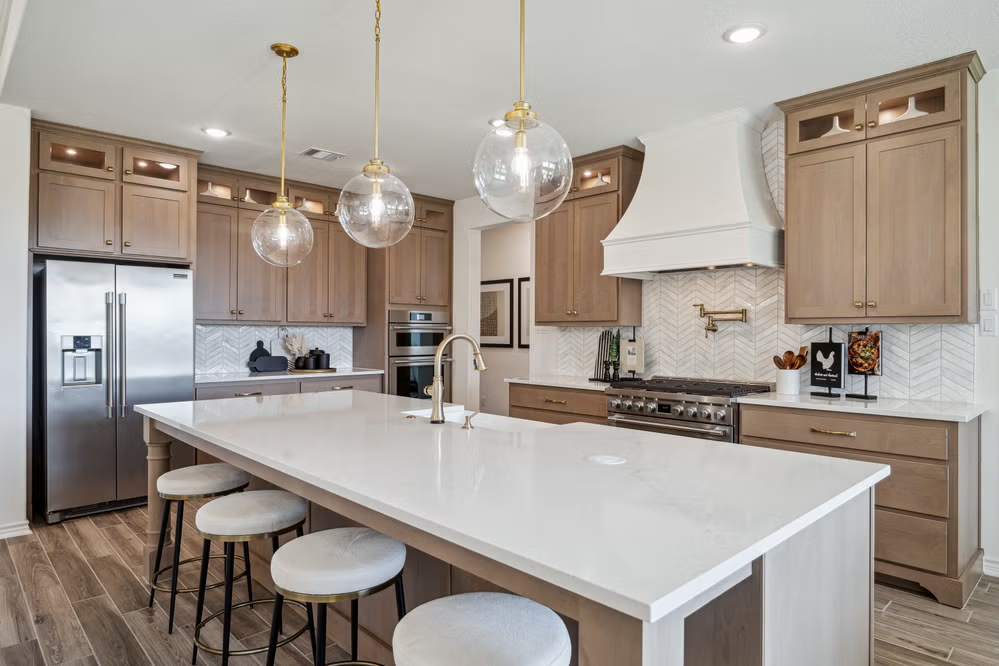
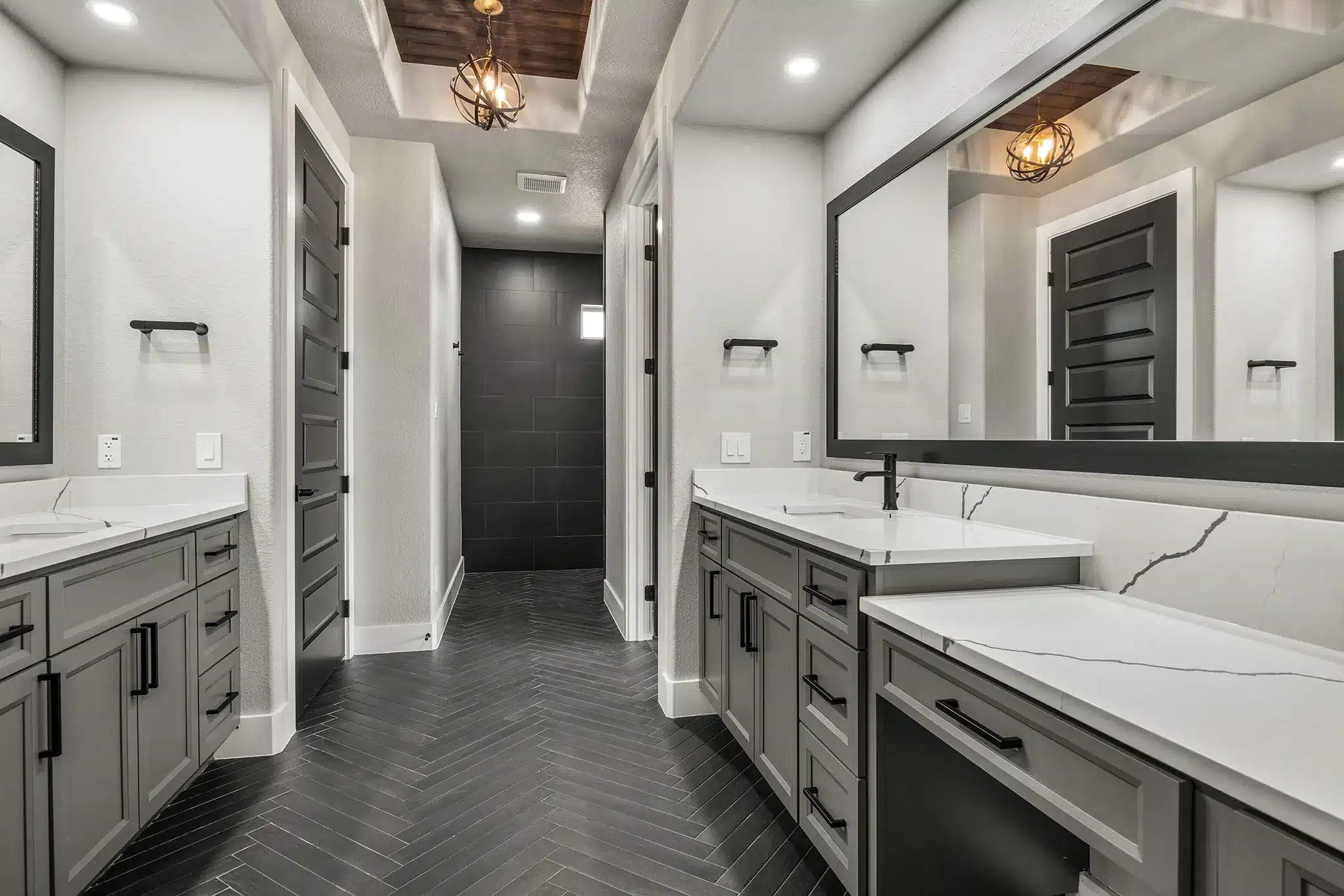
Cabinets, countertops, flooring, tile, trim, paint, windows, and fixtures can change the cost dramatically. Finish level is one of the most flexible parts of the budget, but it also needs discipline. A good build is one where the finishes fit the home and the lot rather than stretching the budget in random places.
7) Builder management and change control
Change orders usually cost more than early decisions. If a homeowner keeps adjusting the plan during construction, labor coordination and material sequencing can become more expensive. The more settled the plan is before construction begins, the more predictable the cost.
The main lesson is simple: the lot is a cost variable, not just a location. Palo Pinto County makes that especially clear because the land and infrastructure context can change the total more than buyers expect.

A Budget Breakdown You Can Actually Use
The easiest way to understand a custom build budget is to split it into categories. That way, you can see where the money goes and where a decision has the most leverage.
| Cost category | Common share of total | What it covers |
|---|---|---|
| Clearing and grading | 5% – 15% | Brush clearing, pad prep, drainage shaping, compaction |
| Utilities and site connections | 5% – 20% | Electric, water, septic, well, trenching, tie-ins |
| Foundation | 8% – 15% | Slab, footings, engineering, related site work |
| Framing and shell | 15% – 25% | Lumber, framing labor, roofing, exterior envelope |
| Mechanical systems | 10% – 18% | HVAC, plumbing, electrical, ventilation |
| Interior finishes | 20% – 35% | Cabinets, flooring, tile, paint, trim, fixtures |
| Appliances and specialty items | 3% – 10% | Kitchen package, upgrades, built-ins, specialty selections |
| General conditions and overhead | 8% – 15% | Supervision, insurance, coordination, admin, closeout |
The ranges above are not formulas. They are planning tools. The exact mix depends on whether the lot is clean or complex, whether the home is compact or expansive, and whether the finish package is modest or upscale.
A smaller, efficient floor plan on a prepared lot may keep the site categories lower. A custom home on acreage can shift more budget into clearing, drainage, and utility work before the finish selections even matter. That is why site review is so important before you get attached to a final estimate.
A builder who understands both the home and the land can help you see these tradeoffs early. That is often the difference between a budget that feels controlled and one that keeps changing.

Site Conditions, Access, and Local Planning Factors
Palo Pinto County builds often require more front-end thinking because the site conditions can vary significantly from parcel to parcel. A home may be straightforward to design, but the land can still introduce extra complexity.
Rural lots and acreage
Rural lots can offer great flexibility, but they often come with more development responsibility. If you are building on acreage, you may need to think through the driveway, the pad location, equipment access, utility routing, and where runoff will go during and after construction. Each of those decisions can affect cost.
Access and equipment movement
A site that is easy for crews and material deliveries to reach is usually easier to build efficiently. If the driveway is long, narrow, soft, or poorly aligned with the home site, the project may need more planning and possibly more temporary work to keep the schedule moving.
Drainage and slope
Drainage should never be an afterthought. Water movement affects the foundation, the driveway, the yard, and the long-term performance of the home. If a parcel has slope, low spots, or runoff issues, it can require grading and design changes that affect the budget.
Public notices and parcel diligence
The Palo Pinto County public notices page is a useful reminder that local conditions can change and that property-level diligence matters. Buyers should confirm what is happening around their parcel rather than assuming every lot behaves the same. In a smaller county, nearby projects and local land use can matter a lot.
Stormwater considerations on larger projects
The Texas Commission on Environmental Quality says construction projects that disturb 5 acres or more must follow stormwater permitting steps and prepare the required plan and notices. That threshold will not apply to every custom home, but it becomes relevant on larger tracts or broader development plans. If your project is larger or more complex, it is worth checking that early.
All of this adds up to a simple point: in Palo Pinto County, the site is part of the design. The right build approach begins with understanding the ground you are building on, not just the house you want to place there.

How the Timeline Affects Total Cost
Construction time matters because time carries cost. The longer the build takes, the more you may spend on labor coordination, financing, temporary site management, and potential material changes. A project that runs smoothly through planning and early site work is usually easier to keep on budget.
A typical custom home timeline includes the following stages:
- Preconstruction and budgeting
- lot review
- budget alignment
- early site and utility checks
- initial plan fit analysis
- Design development
- floor plan refinement
- elevation and exterior choices
- structural and foundation planning
- finish level decisions
- Site preparation
- clearing and grading
- pad development
- driveway planning
- utility rough-ins or extensions
- Foundation and shell
- foundation placement
- framing
- roofing and exterior enclosure
- window and weatherproofing work
- Mechanical and interior work
- plumbing, electrical, HVAC
- drywall and insulation
- cabinets, flooring, tile, paint, trim
- fixtures and appliances
- Final completion
- inspections
- punch list work
- corrections
- walkthrough and closeout
A simple build on a clean lot can move through this sequence efficiently. A more complex site can add time at the front end, which often means more budget pressure later. That is one reason a careful preconstruction phase is so valuable.
If you are trying to control the overall cost, the goal is not to rush. It is to make the early decisions well enough that the rest of the project can proceed without avoidable changes.

Ways to Save Money Without Damaging the Project
There is a right way to save money on a custom home. It usually starts with design efficiency, not with cutting important systems or removing necessary site work.
Use a simpler footprint
Compact layouts are usually easier to build than sprawling footprints with lots of jogs and corners. A simple footprint can save labor and reduce material waste while still giving you a highly functional home.
Keep the roofline efficient
Roof complexity increases framing and roofing coordination. A simpler roofline often reduces cost and makes the structure easier to build. That does not mean the home has to look plain. It means the design should justify any extra complexity.
Choose consistent finishes
A coherent finish package usually works better than a few expensive choices scattered across the home. It is better to decide on a consistent quality level and apply it evenly than to overspend in only one or two areas.
Spend early on site clarity
It can feel counterintuitive, but money spent on better site understanding often saves more money later than budget cuts in the visible parts of the home. If you know what the lot needs, you can plan around it rather than reacting to it.
Lock in selections sooner
Late changes tend to be expensive. If you can finalize core selections before construction starts, you give the builder a better chance to hold the schedule and the budget.
Build for the parcel you actually own
The easiest way to overspend is to design a home that fights the land. If the lot naturally wants a certain orientation, access pattern, or foundation strategy, it is usually smarter to work with that reality.
The biggest savings often come from clarity, not austerity. A clear plan is cheaper to build than a confused one.

Comparing Palo Pinto County to Nearby Markets
Palo Pinto County is not the same as a dense suburban DFW market, and that matters when you compare budgets. In a suburban area, the lot may already be better prepared and utility access may be more predictable. In Palo Pinto County, the project may have more moving parts before the house itself becomes the main expense.
That does not mean Palo Pinto County is automatically more expensive. It means the budget may shift toward site development and away from the house shell if the parcel needs more prep. In some cases, the land itself can give you more freedom and better long-term value. In other cases, it can require more upfront work to become truly buildable.
A fair comparison between counties should use the same assumptions:
- same square footage
- same finish level
- same foundation type
- same utility expectations
- same sitework assumptions
Without that consistency, cost comparisons become misleading. Two homes may have the same square footage and still land in very different budget territory because the land is not the same.
For nearby county context, our Johnson County home building cost guide and our Ellis County home building cost guide can help you see how site conditions and county context shape the total.
What a Good Palo Pinto County Build Process Looks Like
A good custom build process starts with the lot and works toward the home, not the other way around. That sequence matters because the land determines how the home should be placed, serviced, and supported.
Start with site review
Before you finalize the design, inspect the lot for access, grading, drainage, and utility assumptions. This gives you a realistic budget foundation.
Match the plan to the budget
A home plan should support your target budget, not fight it. If a design is too complicated for the budget, it is better to refine it early than to discover the mismatch after construction starts.
Verify utility assumptions early
Water, power, septic, and access can alter the budget more than a decorative finish choice. Those need to be understood before the estimate is finalized.
Decide on finish level before pricing becomes final
It is much easier to price a home accurately when the finish direction is settled. If the selection process is still vague, the estimate will be less dependable.
Reserve a contingency
Custom building always includes some uncertainty. A contingency gives you room to absorb the surprises that show up on a parcel with variable conditions.
Expect site-specific coordination
On a rural or semi-rural lot, the builder may need to coordinate more carefully with access, staging, and utility placement. That is normal. The important thing is to plan for it rather than ignore it.
A project feels smoother when the early decisions are made in the right order. That is especially true in a county where the land can be the most important part of the cost equation.

Frequently Asked Cost Questions
Is building on acreage cheaper in Palo Pinto County?
Not automatically. Acreage can give you flexibility and privacy, but it can also add costs for access, clearing, grading, septic, and longer utility runs. The land may be attractive, but the development work may be more involved.
What is the most cost-efficient type of home?
Usually a moderately sized home with a simple footprint, efficient roofline, and balanced finish package. Very small homes can still carry high fixed costs, and very large homes tend to increase structural and finish costs.
Do I need to budget for septic?
If the parcel is not served by a municipal sewer system, septic planning may be necessary. That should be checked early because it affects both cost and design.
Why do two homes of the same size cost differently?
Because the total cost is not only about square footage. Site prep, utility work, foundation design, finish quality, and schedule all change the budget. The same home can cost very different amounts on two different parcels.
How early should I start planning?
Earlier than most homeowners think. The best time to review site conditions and budget assumptions is before the floor plan is locked in. That gives you the most room to make smart adjustments.

Building the Right Home in Palo Pinto County
Palo Pinto County can be a great place to build a custom home, but the project works best when the plan fits the land. That means taking the lot seriously, checking utility and access assumptions, and allowing room for sitework that may not show up in a first-pass estimate.
If you remember one thing, make it this: the cheapest-looking lot is not always the cheapest project. A parcel that needs more clearing, drainage work, utility extension, or septic planning can easily end up costing more than a better-prepared site with a higher asking price.
The most successful homeowners are the ones who budget for the full project, not just the visible home. They compare the land, the structure, and the infrastructure together. That approach reduces surprises and gives the builder a better chance to deliver a clean result.
For broader regional context, review the DFW home building cost guide. If you are ready to talk through a build in this county, the Palo Pinto County builder page is the place to start.
Site Evaluation Checklist Before You Buy Land
Before you commit to a parcel in Palo Pinto County, it helps to walk the site with a checklist in mind. Land can look simple from the road and still need significant work once you start measuring elevations, checking utility availability, and mapping out where the home will actually sit. A buyer who understands that difference is much less likely to get surprised later.
Here are the main questions worth asking:
- Is there clear road access for construction equipment and material deliveries?
- Does the lot already have nearby utility service, or will service need to be extended?
- Are there obvious drainage patterns that will affect foundation or driveway placement?
- Is the soil likely to support the intended foundation without major correction?
- Will septic be required, and if so, where can it reasonably go?
- Is the shape of the parcel compatible with the size of the home you want?
- Are there nearby conditions, easements, or notice items that deserve review before closing?
Why this checklist matters
A land purchase is not just a real-estate decision. It is a construction decision. If the parcel creates problems for access, drainage, utility routing, or building placement, those problems tend to show up in the budget. Some are manageable. Some require design changes. All of them are easier to deal with before you own the land than after the project is underway.
How to use the checklist in real life
The checklist works best when it is used during site visits and preliminary conversations, not after the home design is finished. Walk the parcel, note the obvious constraints, and compare the land to the type of home you want to build. If the site and the house do not fit naturally, the project may still work, but it should be priced with the right amount of caution.

Comparing House Size and Budget Strategy
Square footage matters, but it does not tell the whole story. In custom construction, the way the square footage is arranged can have a major effect on the final cost. Two homes with the same size can feel very different to build if one uses a compact, efficient layout and the other uses a more complicated plan.
Smaller homes
Smaller homes often reduce overall material use, but they do not eliminate the fixed costs that come with site work, utility work, and administrative coordination. That means a small custom home can still carry meaningful cost per square foot. The good news is that small homes can be very efficient if the layout is disciplined and the finish package is balanced.
Mid-size homes
A mid-size home often offers the best balance between cost and livability. It is large enough to support multiple rooms, storage, and flexible day-to-day use, but it can still be designed with efficiency in mind. Many homeowners find that this range gives them the best value if they want a house that feels complete without becoming too expensive to operate or maintain.
Larger homes
Larger homes bring more opportunities for customization, but they also bring more cost exposure. Additional bathrooms, larger kitchens, extended hallways, more roof area, and more complex mechanical planning all add up. If the lot is also more challenging, the project can become expensive quickly.
A useful rule of thumb
A better floor plan is usually worth more than a bigger floor plan. If a smaller or mid-size design gives you better flow, better light, and better use of rooms, it may be the smarter economic choice. Cost efficiency is not just about shrinking the house. It is about making the house work well for the land and the budget.

Foundation Choices and Structural Planning
Foundation planning deserves more attention than many owners give it at first. In Palo Pinto County, the foundation is not just a slab or a technical detail. It is one of the pieces that ties the house to the site and affects long-term performance.
Why the foundation matters so much
The foundation carries the structure, but it also responds to drainage, soil conditions, and elevation changes. If the lot is not level or if the runoff patterns are not ideal, the foundation design may need to reflect that. That can affect cost and schedule.
Why soil and drainage are linked
Soil and drainage work together. A lot with drainage issues can create stress around the foundation, while soil conditions can affect how the slab or footings are designed. When the site is not fully understood in advance, foundation work can become more expensive than expected.
Why some plans are easier to support than others
Simpler house plans usually make foundation coordination easier. More complex footprints, unusual additions, and heavy load transitions can require more careful planning. A builder who sees the home and the site together can often suggest adjustments that improve both performance and efficiency.
What homeowners should ask
Before finalizing a design, ask how the foundation strategy matches the lot. Is the home being placed to take advantage of the natural slope? Is the site being graded to support the structure correctly? Are there any known conditions that could increase the foundation budget? These questions are worth asking early because the foundation is much harder to change after the fact.

Utility Planning in More Depth
Utility planning is often the hidden part of the budget. It is easy to focus on visible items like cabinets and flooring, but utilities may be the difference between a comfortable build budget and a stressful one.
Electric service
Power service needs to be close enough and sized correctly for the home. If the site needs more extensive service work, trenching or coordination can add expense. The power plan should be thought through during preconstruction so the rest of the project can move forward cleanly.
Water supply
Water service can be straightforward on some lots and more complex on others. If the site is not near a convenient service point, the costs can increase. In addition, water access affects both construction and long-term occupancy, so it should be checked before the budget is finalized.
Waste handling
If the home cannot connect to a sewer system, septic planning becomes part of the project. That means the soil, the system location, and the design all matter. Septic costs can also influence where the home should sit on the lot, which makes the utility question a design question as well.
Why this is worth solving early
Utility uncertainty can stall a project or force late changes. Early utility verification gives the owner and builder a clearer sense of what the site really needs. That is one of the easiest ways to reduce the risk of budget surprises.
A More Detailed View of Permitting and Compliance
Not every custom home will face major permitting complexity, but larger or more involved projects should not ignore compliance questions. The Texas Commission on Environmental Quality explains that construction disturbing 5 acres or more must follow its stormwater steps, including permit coverage and a Stormwater Pollution Prevention Plan. That guidance matters most on larger sites or projects that involve broader development work.
What homeowners should take from that guidance
The practical takeaway is that larger disturbances can introduce more administrative and environmental planning. Even if your own house project does not cross that threshold, similar compliance logic may still shape the way the site is prepared and managed.
Why the issue matters beyond paperwork
Compliance affects schedule, sequencing, and site management. If a project needs additional environmental coordination, the builder may have to handle the site in a more structured way. That can affect not only cost but also timing.
How to keep the process manageable
Ask early whether your parcel size, site disturbance, or development pattern suggests additional compliance work. If the answer is no, that still helps because it confirms the project is simpler. If the answer is yes, you can budget accordingly instead of reacting later.
How Financing and Carrying Costs Affect the Real Budget
The construction budget is not the only budget. Homeowners also have to think about financing and the cost of time while the home is under construction. That is especially important if the owner is still paying rent, carrying a current mortgage, or financing the lot separately.
The hidden cost of time
Every extra month in the build schedule can matter. A project that takes longer than expected may create extra interest expense or overlap with another housing payment. Even if the construction contract itself stays close to plan, the financing side can still change the overall economics.
Why this should be part of the estimate
A realistic budget considers the complete picture. It is not just the price to build the house. It is the price to get from raw land to a finished home while carrying the financial obligations that come with the process.
How to reduce pressure
The best way to reduce carry cost is to make the project more predictable. Clear site conditions, complete decisions, and an organized preconstruction phase all help the schedule move more smoothly. That is another reason the early planning stage deserves so much attention.
Material Choices and Local Value Decisions
Material choices often feel like style choices, but they also influence cost, durability, and maintenance. In a county where the site can already demand attention, it is smart to select materials that support the home rather than distract from it.
Exterior materials
Exterior materials affect both appearance and maintenance. A durable exterior package can save money over time, especially if the site is exposed to sun, wind, or more variable weather conditions. The right exterior also supports curb appeal without creating unnecessary complexity.
Interior surfaces
Floors, countertops, tile, and trim all affect the cost. It is often best to choose materials that balance appearance and durability. That way the home feels finished without pushing the project into a higher budget band simply because one or two selections were overspecified.
Mechanical equipment
Homeowners sometimes treat systems as invisible, but HVAC, plumbing, and electrical quality have a huge effect on comfort and performance. Spending wisely on these categories often produces better long-term value than spending more on a single decorative feature.
How to think about value
Value is not the same as price. A good material choice is one that fits the site, the climate, the house plan, and the owner’s priorities. If a material does those things well, it is probably worth more than a flashy option that does not support the project overall.
Why Preconstruction Planning Saves Money
Preconstruction is where a lot of cost control happens. The more accurately the builder and owner define the project up front, the fewer expensive surprises they have later.
What preconstruction should answer
By the end of preconstruction, you should know:
- what the lot needs
- what the house includes
- what the finish level is
- what the big unknowns are
- what the likely schedule looks like
- what items are allowances versus fixed
Why this step is so important in Palo Pinto County
Because lot conditions can vary so much, preconstruction reduces the chance that a site issue will derail the project. If the builder understands the land before the final budget is locked, the project has a better shot at staying organized.
What happens if you skip it
Skipping preconstruction often leads to vague pricing and later changes. That usually means more stress and less confidence in the final number. For custom work, that is a bad trade.
A Smarter Way to Evaluate Bids
A cheap bid is only useful if it includes the same scope as the other bids. That is why comparison shopping in custom construction needs more than a total number.
Ask for scope clarity
Before comparing proposals, confirm what each one includes for sitework, foundation work, utilities, finishes, and general coordination. If the assumptions are not aligned, the numbers are not truly comparable.
Watch for allowance gaps
Allowances are normal, but they can hide uncertainty. If one proposal uses very low allowances and another uses more realistic figures, the lower bid may not be the better deal. It may simply leave more cost unresolved.
Look for site assumptions
A proposal should reflect whether the lot is build-ready or needs extra work. If the site assumptions are weak, the budget may not be useful.
Focus on predictability
The best proposal is not always the cheapest one on day one. It is often the one that gives you the clearest path to completion without a stack of surprises.
Where Homeowners Can Save and Where They Should Not
Some cost reductions are smart. Others create long-term problems. The difference is important.
Good places to save
- simplifying the footprint
- reducing unnecessary roof complexity
- keeping the finish package consistent
- choosing durable standard materials where high-end options do not add much value
- planning the site carefully to avoid avoidable rework
Places not to save too aggressively
- drainage planning
- foundation strategy
- utility coordination
- moisture protection
- essential mechanical systems
Why this matters
A home that is cheaper to build but more expensive to maintain is not really a savings. The smartest budget choices protect performance first and then make style decisions inside that framework.
Final Home-Building Questions to Ask Before You Start
Before you move from planning to construction, ask yourself these questions:
- Does this lot support the kind of home I want?
- Have I accounted for site prep, utility work, and access?
- Is my finish level realistic for my budget?
- Do I understand the biggest unknowns in the project?
- Have I allowed for contingency?
- Have I compared my lot and plan to another nearby parcel?
- Do I know who is helping me manage the details before construction starts?
If those questions are answered clearly, you are in a much better position to build with confidence. If they are not, the next step should be to get clarity before any major commitments are made.
Building the Right Home in Palo Pinto County
Palo Pinto County can be a strong place to build a custom home, but the project works best when the plan fits the land. That means taking the lot seriously, checking utility and access assumptions, and allowing room for sitework that may not show up in a first-pass estimate.
If you remember one thing, make it this: the cheapest-looking lot is not always the cheapest project. A parcel that needs more clearing, drainage work, utility extension, or septic planning can easily end up costing more than a better-prepared site with a higher asking price.
The most successful homeowners are the ones who budget for the full project, not just the visible home. They compare the land, the structure, and the infrastructure together. That approach reduces surprises and gives the builder a better chance to deliver a clean result.
If you are ready to compare your lot, your plan, and your budget in one conversation, the Palo Pinto County builder page is the place to start.
When the home fits the site and the budget fits the plan, the whole build becomes easier to manage from day one.