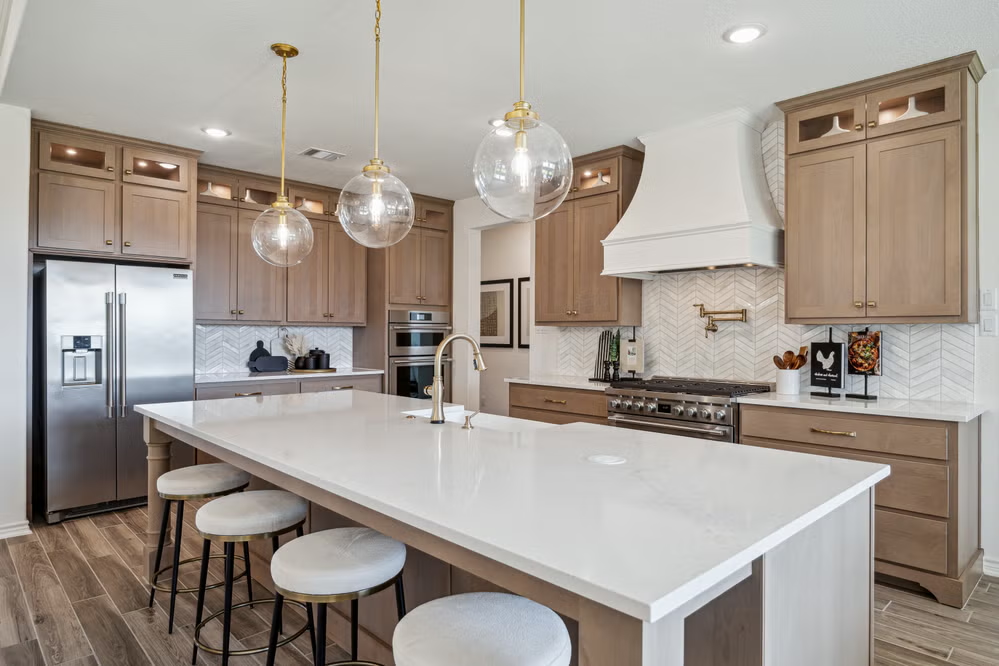
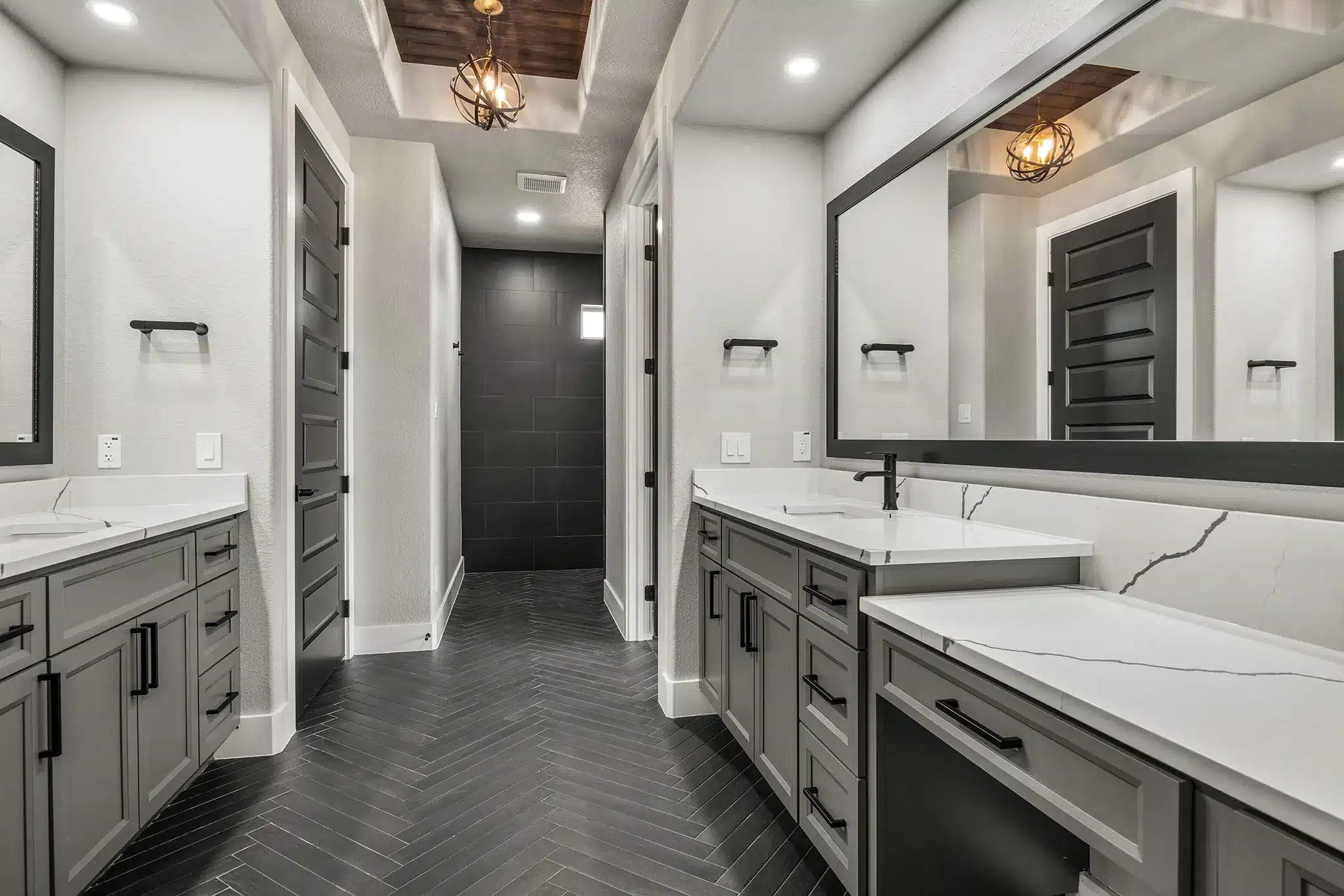
Lewisville sits in one of the busiest corners of the Dallas-Fort Worth market, and that matters when you are planning a new home. Labor, lot conditions, utility coordination, design expectations, and schedule pressure can all shift the final number in meaningful ways. If you are comparing options across nearby cities, start with the DFW home building cost guide for a regional baseline, then use this Lewisville guide to narrow the budget to a local plan that actually fits your lot and your goals.
The short version: a custom home in Lewisville can land in a wide price band depending on square footage, structural complexity, finish level, and site work. A smaller, straightforward build with practical finishes will sit far below a larger home with premium selections, custom millwork, specialty glazing, or challenging grading. The difference is not just cosmetic; it is often driven by things that happen before the first wall is framed.
For most owners, the right estimate starts with three questions: how large the home needs to be, how much customization the plan requires, and how much unknown site work the lot may still hide. Those questions are more useful than any generic national average because they point directly to the parts of the project that can move the budget up or down.

Lewisville custom home building costs at a glance
A clean way to think about Lewisville home building costs is to separate the project into shell cost, finish cost, site cost, and soft cost. That keeps the budget from being distorted by one headline number that hides all the moving parts.
| Cost bucket | Typical share of total | What it usually covers |
|---|---|---|
| Site and prep | 8% to 18% | Clearing, grading, utility ties, drainage, and access |
| Structure and shell | 28% to 38% | Foundation, framing, roof, windows, exterior envelope |
| Mechanical systems | 10% to 16% | HVAC, plumbing, electrical, insulation, and ventilation |
| Interior finishes | 22% to 35% | Flooring, cabinets, counters, tile, paint, trim, fixtures |
| Soft costs | 6% to 12% | Design, engineering, permits, surveys, and administration |
For many Lewisville projects, a practical all-in range for a custom home starts in the low-to-mid six figures for modest square footage and can climb quickly once you add larger footprints, higher finish levels, or more demanding site conditions. The most useful planning move is not to ask for a single price per square foot. It is to decide what kind of home you want, what level of finish you expect, and how much uncertainty your lot introduces.
That is where the Lewisville custom home builder page becomes useful. It gives you the local service context, while this article gives you the budgeting framework. If you are also comparing adjacent markets, the cost patterns in Richardson and Carrollton are close enough to make side-by-side planning worthwhile.
A few practical budget checkpoints help keep the project grounded:
- Smaller homes usually carry a higher cost per square foot because fixed costs are spread over less area.
- Longer utility runs, site grading, or drainage corrections can add meaningful cost before framing begins.
- Higher-end kitchen and bath selections can move the total more than many owners expect.
- Energy upgrades, better windows, and improved envelope details raise upfront cost but may improve comfort and operating cost.
In Lewisville, the best estimate is usually a range, not a point number. If your budget is already set, the real task is to test that budget against the project scope before design decisions get too far along.

Why Building in Lewisville Is Different
Lewisville is not a blank-slate suburban market. It has a mix of older lots, established neighborhoods, infill opportunities, and newer development patterns, and that combination changes how a project gets priced. Even when two homes are the same size, the cost profile can differ because access, utility tie-ins, drainage, and lot geometry are not identical.
Another difference is schedule pressure. In a strong DFW growth corridor, trades and suppliers are often working on overlapping timelines, so a build that looks straightforward on paper can still feel tight in execution. That does not mean the project is risky. It means the preconstruction phase matters more than usual.
Local permitting and inspection flow also deserves attention. The City of Lewisville development guidance helps show how review and coordination fit into the broader development picture. When permits, inspections, and utility coordination are handled early, the project is easier to sequence and less likely to absorb avoidable delay cost.
For homeowners, the practical takeaway is simple: Lewisville rewards clear planning. If the lot is tight, if there is slope, or if utility work is not straightforward, the project should be priced conservatively from the start rather than corrected later through change orders.

What Usually Drives the Biggest Cost Differences
The biggest swings in a Lewisville custom home budget usually come from five places: size, complexity, finishes, foundation or site work, and mechanical scope. If you can control those five, you can usually control the budget.
1) Size and layout efficiency
A 2,000-square-foot plan and a 3,200-square-foot plan are not just different in total area. The larger home typically needs more roof, more foundation, more framing, more insulation, more trim, and more fixtures. Even if the larger plan is efficient, the absolute spend rises quickly.
2) Architectural complexity
Simple roof lines, stacked floor plans, standard spans, and repetitive window patterns are friendlier to cost control. Multiple roof breaks, tall great rooms, large glass walls, and custom stair details add labor and material pressure.
3) Finish level
This is where many owners underestimate the spread. Builder-grade selections, semi-custom upgrades, and high-end custom finishes can all change the price by a lot. Cabinets, counters, tile, plumbing fixtures, and flooring deserve special attention because the decision set is broad and the upgrade temptation is real.
4) Foundation and structural needs
Soil conditions, grading, and engineering requirements can influence foundation design. If the lot needs more work to achieve the right pad elevation or drainage strategy, the site budget rises before the interior budget even starts.
5) Mechanical and energy package
A more robust HVAC system, better air sealing, upgraded insulation, or higher-performance windows can increase upfront cost. For many Lewisville homeowners, those costs are easier to justify when the goal is a more comfortable and durable home.
A useful rule of thumb is to treat the first budget as a framework, not a promise. Most cost overruns are not caused by one huge surprise. They are caused by a series of small scope expansions that compound over time.
| Decision area | Lower-cost choice | Higher-cost choice |
|---|---|---|
| Roof form | Simple gable roof | Multiple valleys and pitches |
| Cabinet package | Standard shaker or slab | Custom inset or specialty woodwork |
| Countertops | Entry quartz or solid surface | Premium quartzite or designer stone |
| Windows | Standard performance package | Larger openings and upgraded glazing |
| Floors | LVP or midrange tile | Wide-plank hardwood and large-format tile |
If you are trying to keep a Lewisville home affordable without stripping it down too far, the smartest tradeoffs are usually in decorative complexity rather than in core building performance.

Site Prep, Permits, and Utility Coordination
Site prep is where many budgets quietly separate from the original estimate. Lewisville lots can require clearing, earthwork, drainage shaping, utility planning, or access coordination depending on what is already in place. A buildable lot is not always a ready-to-build lot.
The permit side matters too. Texas does not use one single universal process for every residential project, so local jurisdiction rules and inspections still play a major role. The Texas Department of Licensing and Regulation is a helpful starting point for understanding state-level construction and licensing context, but local permit and inspection obligations still need to be handled with the city or issuing authority.
That is why preconstruction is not a formality. It is a cost-control stage.
Common preconstruction cost items
- boundary survey and site verification
- soil or geotechnical review when needed
- civil or structural engineering
- tree or clearing work
- grading and drainage corrections
- temporary utilities and access planning
- permit and inspection coordination
In many cases, these items are the difference between a smooth schedule and a project that keeps pausing for clarification. They can also create budget creep if they are not captured early.
Lewisville homeowners should also think about utility connections in practical terms. If the lot is in an established neighborhood, there may already be patterns for tie-ins and service access. If the lot is newer or more unusual, the coordination can be more involved. Either way, it is wise to treat utility work as a real budget line, not a placeholder.
A second reason this stage matters is that it affects the rest of the job. If the lot pad is wrong, the drainage is weak, or the permit sequence slips, framing and finish trades may have to wait. Idle time is expensive.
The simplest way to protect the budget is to ask for a preconstruction plan that identifies what is assumed, what is excluded, and what could change if the site conditions differ from the early estimate. That level of clarity is especially useful in Lewisville because the area includes both older in-town opportunities and newer growth-area lots.

Budget Ranges by Home Type and Finish Level
The most realistic way to estimate a Lewisville build is by home type and finish level. A compact plan with practical finishes may look very different from a larger custom residence with premium upgrades.
Example budget ranges
| Home type | Approximate size | Budget posture |
|---|---|---|
| Compact custom home | 1,800 to 2,200 sq ft | Efficient footprint, fewer premium extras |
| Mid-size custom home | 2,300 to 3,000 sq ft | Balanced design with selected upgrades |
| Large custom home | 3,100+ sq ft | More architectural complexity and higher finish budget |
A compact custom home in Lewisville often works best when the plan is efficient and the selections are disciplined. That might include a straightforward roofline, limited structural spans, and midrange finishes that still feel current and durable.
A mid-size custom home gives you more room to express style, but that usually means more cabinet scope, more trim work, a bigger mechanical load, and more labor to coordinate. This is the range where many owners decide whether they want “good enough” or “worth it,” and that choice can move the total materially.
Large homes are where complexity tends to stack. If the plan includes multiple living spaces, high ceilings, expansive glazing, or specialty rooms, the budget should include contingency for both material upgrades and coordination time.
Finish-level impact
| Finish level | What it usually means | Budget effect |
|---|---|---|
| Practical | Standard materials, fewer custom details | Lowest cost per square foot |
| Balanced | Select upgrades in kitchens, baths, and exterior accents | Moderate increase |
| Premium | Custom details, elevated materials, and larger feature packages | Highest cost growth |
The key is that finish level is not just about style. It can affect labor, lead times, and sequencing. A designer tile package may look like a small upgrade, but if it also requires more detailed substrate work or specialty installation, the labor cost can rise as well.
If you want to compare a Lewisville build to neighboring North Dallas suburbs, you will usually find that lot conditions and finish expectations are at least as important as raw square footage. That is why a thorough local estimate beats a broad national average every time.
It also helps to think in terms of allowances. A realistic allowance structure for cabinets, flooring, tile, and fixtures gives you a cleaner decision-making process and makes it easier to compare one builder proposal against another. Without those allowances, two estimates can look close on paper while hiding very different finish levels.
Timeline, Sequencing, and Change Orders
A custom home timeline in Lewisville is driven by more than construction labor. Design approvals, permitting, procurement, site readiness, and trade sequencing all affect how long the project takes and how much it costs along the way.
A simple build can move through the process faster than a more complex one, but speed is not free. Rush decisions, late selections, and compressed trade schedules usually increase the odds of mistakes or premium pricing.
Typical sequence
- concept and budget alignment
- survey, engineering, and preconstruction planning
- permit submission and approval workflow
- site prep and foundation work
- framing and dried-in shell
- mechanical rough-ins
- insulation and drywall
- interior finishes and exterior completion
- final inspections and turnover
Change orders are one of the most common causes of cost escalation. They can come from owner upgrades, plan revisions, field conditions, or product substitutions. None of those are inherently bad. The problem is when they arrive after labor and material commitments have already been made.
This is where a disciplined selection schedule becomes a budget tool. If cabinets, tile, fixtures, and doors are selected early, the builder can price and order them with less risk. If selections are delayed, the budget often absorbs the uncertainty.
Lewisville’s market dynamics also make procurement timing meaningful. When many projects are running at the same time, lead times can stretch and substitution decisions can become more expensive than expected. Keeping the selection calendar ahead of the construction calendar is one of the easiest ways to limit surprises.
One more practical point: if your budget has a contingency, keep it untouched unless the change is real. It is tempting to use contingency money for upgrades early in the process, but the more responsible move is to reserve it for actual unknowns, especially in the site and permit stages.

How to Keep a Lewisville Build on Budget
The easiest way to keep a Lewisville custom home on budget is to make the early decisions that matter most and avoid letting small upgrades compound. That sounds obvious, but it is where many projects slip.
Budget-control tactics that work
- Lock the plan size early. Every extra square foot affects multiple cost categories.
- Simplify the roofline and structural layout where possible.
- Decide which finishes are truly priority items and which are “nice to have.”
- Put a real allowance on cabinets, counters, flooring, and fixtures.
- Request a detailed site plan before assuming the lot is easy.
- Keep a written change-order policy so scope changes are clear.
- Hold contingency for real unknowns, not for last-minute upgrades.
A disciplined builder-client relationship matters here too. The best projects are usually the ones where everyone understands what the budget is trying to accomplish. If the goal is a durable family home, the budget should prioritize structure, envelope, mechanical systems, and the rooms that get used every day. If the goal is a showcase property, the budget should reflect that from the start.
Good communication also helps with vendor lead times. When selections are made early and approved in writing, it becomes easier to order the right products once and avoid the cost of rework, expedited shipping, or last-minute substitutions.
You can also reduce risk by comparing the local market to nearby service areas. A discussion with a builder who works in Lewisville, along with context from nearby posts like Richardson and Carrollton, can reveal whether your assumptions are realistic or too aggressive.
At the end of the day, budget discipline is less about cutting every cost and more about spending in the right order. Foundation, structure, enclosure, systems, and high-use spaces should lead. Decorative additions should follow only after the core plan is protected.
Final Takeaway for Lewisville Homeowners
A Lewisville custom home budget should start with the lot, the plan, and the finish level, not with a single square-foot number. Those three variables shape the rest of the estimate. Once they are defined, you can make the budget more precise and far more realistic.
The biggest lesson is that Lewisville projects are shaped by local context. In a growing part of DFW, permit timing, utility coordination, site conditions, and trade availability can all affect the final cost. That is why a careful local estimate is better than a generic range copied from a national calculator.
If you are still in the planning phase, use a broad regional benchmark from the DFW home building cost guide and then refine it with Lewisville-specific assumptions. If you already know you want to build locally, the next step is to align your scope with the right service team and the right budget structure. The Lewisville custom home builder page is the natural starting point for that conversation.
A careful budget should leave room for the real world: material substitutions, minor field adjustments, and the occasional scope clarification that shows up once the work starts. That kind of reserve is not wasted money. It is what keeps the project moving when something small becomes unexpectedly important.
A well-planned Lewisville home build should feel controlled, not chaotic. When the scope is clear, the selections are disciplined, and the site work is understood early, the project has a much better chance of staying on budget and finishing on schedule.
If you are comparing bids, make sure each proposal includes the same assumptions for site work, insulation, windows, cabinets, fixtures, and contingencies. That makes the numbers far more comparable and reveals whether a lower bid is truly leaner or simply less complete.
If you want a practical next step, gather your lot information, square footage target, must-have finishes, and any known site constraints. Those four items are enough to turn a broad estimate into a much more useful local plan.