Richardson house-building cost overview
Building a house in Richardson usually starts with a wide cost range because every project is shaped by the lot, the floor plan, the finish level, and the site conditions. For a custom home, it is normal for the total budget to move significantly once you account for land preparation, utility work, foundation engineering, permits, and interior selections. A simple starter home and a larger custom build can differ by hundreds of thousands of dollars, even before upgrades enter the conversation.
If you are comparing numbers across the metroplex, Richardson often sits in a more mature, tightly built part of the market than outlying growth areas. That can affect demolition, tree removal, lot access, utility coordination, and the way the foundation and drainage plan are handled. For a broader regional benchmark, the DFW Home Building Cost Guide 2026 is a helpful starting point, especially when you are trying to separate city-specific costs from general construction pricing.
A local budget also benefits from one more layer of detail: the size of the home. A 1,800-square-foot build and a 3,200-square-foot build do not scale perfectly linearly. Bigger homes usually create more absolute cost, but they can also shift the labor mix, increase systems complexity, and push finish selections into a higher bracket. That is why price-per-square-foot is a useful shortcut only at the very beginning. Once you know the house shape, the roofline, the foundation requirements, and the finish level, the total budget becomes much more reliable.
In practical terms, homeowners should think about the following before comparing estimates:
- How much of the budget is tied to land and site preparation?
- Are there any demolition or utility coordination issues?
- Does the floor plan require long roof spans, large openings, or a more complex framing layout?
- Are the finish expectations closer to mid-range or high-end?
- Is there enough contingency for soil, drainage, or plan changes?
These questions do not replace a builder estimate, but they make the estimate easier to understand.
A practical early-budget framework for many Richardson custom builds looks like this:
| Budget category | Typical share of total build budget | What it covers |
|---|---|---|
| Site and lot prep | 5% to 15% | Clearing, grading, utilities, demolition, drainage |
| Foundation and structure | 15% to 25% | Slab or other foundation system, framing, roof structure |
| Exterior shell | 10% to 18% | Roofing, windows, doors, siding, masonry |
| Mechanical, electrical, plumbing | 15% to 20% | HVAC, wiring, plumbing lines, fixtures rough-in |
| Interior finishes | 20% to 35% | Drywall, flooring, cabinets, counters, trim, paint |
| Soft costs and contingency | 8% to 15% | Design, engineering, permits, plan changes, surprises |
These percentages are only planning ranges, not a quote. But they are useful because they show where budgets tend to expand fastest. In a place like Richardson, the “invisible” parts of the job can be just as important as the visible finishes. If your lot needs extra grading or the home design requires a more customized foundation solution, the total cost can climb faster than many homeowners expect.
For homeowners who want a local contractor to help translate those ranges into a build plan, a Richardson custom home builder can help you compare lot conditions, square footage targets, and finish levels before you commit to a full budget.
It also helps to think in terms of decision points rather than only line items. For example, choosing a simpler roofline can reduce framing and roofing complexity, while selecting higher-end windows can improve efficiency but raise the upfront shell cost. Picking a standard cabinet layout may save money, but a custom kitchen plan might better support the way your family actually uses the house. These are the kinds of tradeoffs that shape a build budget long before the last finish item is installed.
Why Building in Richardson Is Different

Richardson is not a blank-slate suburban build market. Many lots sit in established neighborhoods or mature corridors where access, staging, and utility coordination can matter as much as the design itself. That means the project can require more planning before construction even begins, especially if you are working around existing homes, tree protection, drainage patterns, or limited truck access.
The other major difference is subsurface and site planning. North Texas builders often have to think carefully about foundation performance, moisture movement, and how water will leave the property after heavy rain. Those decisions do not always sound dramatic on paper, but they can change the design of the slab, the cost of preparation, and the amount of upfront engineering needed. In practical terms, a good Richardson budget should always leave room for site-specific work rather than assuming a standard build package will fit every lot.
There is also the permitting and inspection sequence. Even when the process is straightforward, schedule friction can affect labor timing, subcontractor coordination, and carrying costs. If you are trying to time a sale, a move, or a financing milestone, that matters. This is one reason many homeowners use the DFW Home Building Cost Guide 2026 alongside a local build conversation: it helps separate regional averages from the realities of one specific city lot.
Richardson projects also benefit from early coordination between the builder, designer, and trades. When framing, mechanical routing, and finish plans are all discussed together, you are more likely to catch conflicts before they become expensive changes in the field. That kind of coordination can be especially valuable if the home includes a large island kitchen, multiple bathrooms, a dedicated office, or a flexible bonus space.
Finally, Richardson buyers often want a balanced home rather than a flashy one. They may prioritize functional layouts, durable materials, energy efficiency, and resale value over oversized luxury features. That does not always lower the total price, but it often shifts the budget toward smarter decisions that hold up better over time.
Land, lot prep, and foundation costs

Site work is one of the biggest reasons home-building budgets diverge. In Richardson, the land itself may already be improved, but that does not mean it is ready for a new house without additional work. If a lot needs demolition, tree removal, old slab removal, utility relocation, retaining work, or regrading, the pre-construction phase can become expensive quickly.
A rough planning view of site-related costs is shown below:
| Site item | Common cost influence | Why it matters |
|---|---|---|
| Lot clearing | Low to high | Trees, debris, brush, or old structures can all add labor |
| Demolition | Moderate to high | Existing improvements must be removed safely and legally |
| Grading | Moderate | A level building pad reduces risk and supports drainage |
| Utility tap / tie-in | Moderate to high | Water, sewer, electric, gas, and telecom all require coordination |
| Drainage work | Moderate to high | Protects the lot and foundation from standing water |
| Foundation engineering | Moderate | Soil conditions and house design drive the required system |
A foundation budget is especially important because it is not just concrete. It is a structural response to the site. The actual cost depends on whether the home can use a more standard slab design, needs additional engineering, or requires special drainage and moisture control details. Homes with larger footprints, more complex rooflines, heavier masonry packages, or unusual elevations often need more robust foundation planning as well.
This is also where lot width and house placement start to matter. A narrow or awkward lot can force a more compact construction sequence, which may increase labor inefficiency. If trucks and equipment have a hard time entering or staging materials, the project can cost more even if the square footage stays the same. Those are exactly the kinds of details that make Richardson different from newer, more open subdivisions.
Before you finalize a budget, it is worth comparing your lot conditions against the broader pricing assumptions in the DFW Home Building Cost Guide 2026. Then layer in local realities. If you are also comparing whether a custom build or a major remodel is the better use of capital, the Richardson home remodeling cost guide can help you weigh those options from another angle.
Construction budget breakdown by major trade

A good way to understand the cost to build a house in Richardson is to look at the job by trade. That makes it easier to see where money goes and where choices have the biggest financial impact. Square footage is important, but the finish level and complexity of the trade work often matter just as much.
Pre-construction, design, and soft costs
These are the costs that happen before the home is fully underway or that support the project in the background. They may include site surveying, architectural work, structural engineering, geotechnical input, plan revisions, permit applications, and project coordination. Depending on the project, these expenses can be modest or surprisingly significant. A more custom home generally needs more up-front planning, and every round of revisions adds time.
Framing and structure
Framing is the skeleton of the home. It includes walls, floor systems, roof structure, and the labor that makes the building shape real. Open-concept plans, multi-level designs, high ceilings, and complex rooflines tend to raise the framing budget. So do changes that add long spans or architectural details.
Roofing, exterior, and envelope
The home’s shell protects everything inside. Roofing, windows, doors, housewrap, exterior finishes, flashing, and waterproofing all influence both cost and performance. In Texas, energy performance matters, so higher-quality windows or better insulation packages can affect the budget while also helping long-term comfort. That tradeoff is often worth discussing early with your builder.
Mechanical, electrical, and plumbing
MEP work is one of the most technical parts of the build. HVAC sizing, duct routing, electrical service, lighting layout, plumbing runs, and fixture rough-ins all affect price. If the home includes extra baths, a large kitchen, a utility room, specialty ventilation, or a bonus zone, the MEP budget can move up fast.
Interior finish work
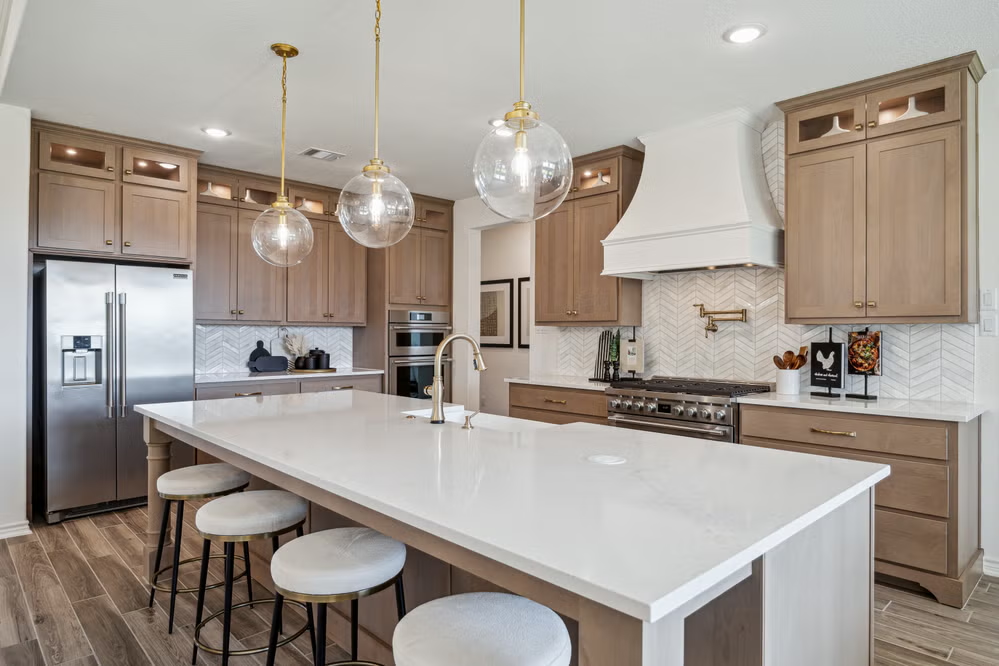
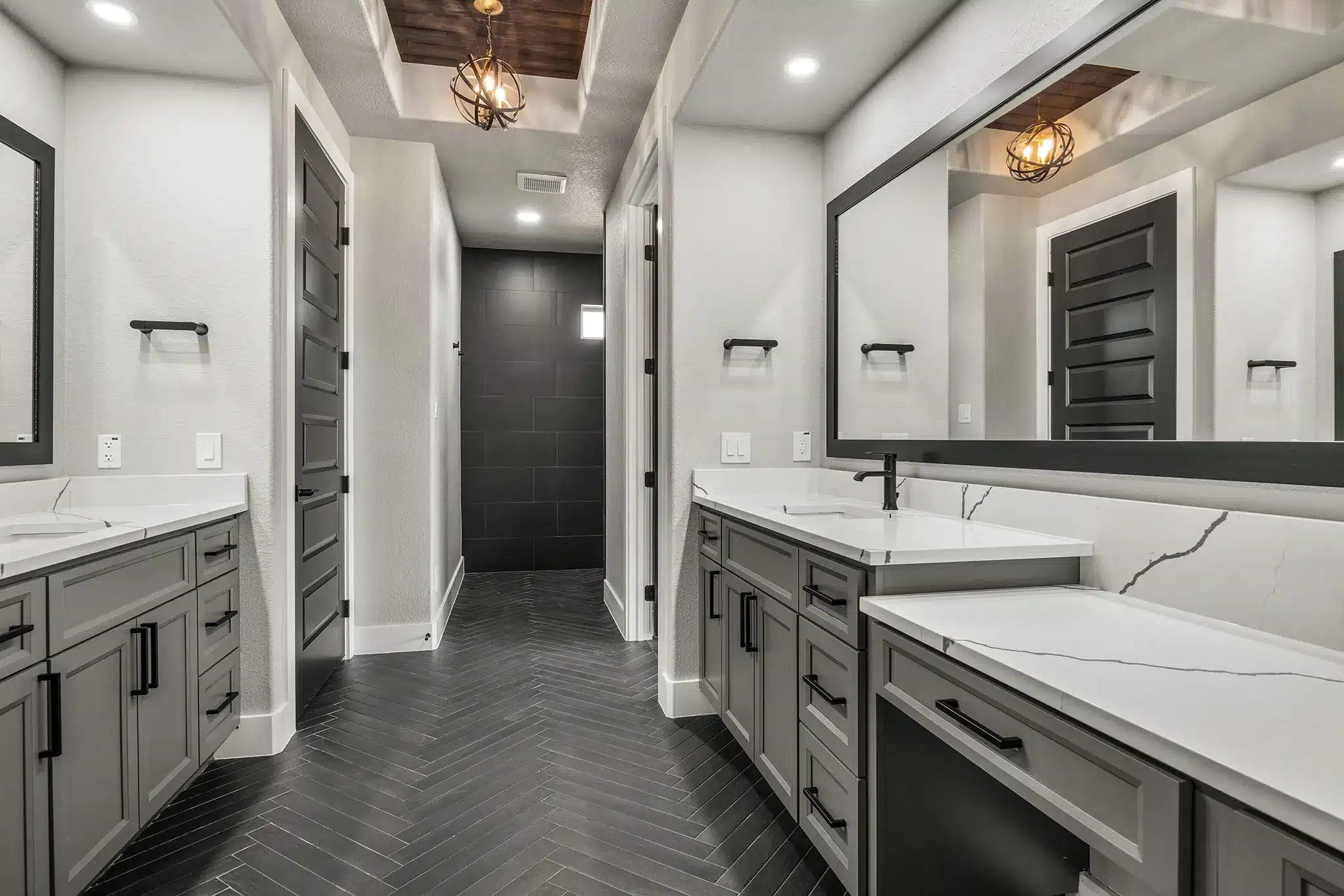
This is where homeowners often feel the biggest budget pressure because finish selections are easy to upgrade. Cabinets, counters, flooring, tile, trim, paint, appliances, and hardware can create large swings in the final number. A home can be structurally similar to another one but cost much more simply because of better materials or more labor-intensive detailing.
A simple finish-level comparison
| Finish level | What it usually means | Budget impact |
|---|---|---|
| Basic | Fewer custom details, standard selections | Lower total cost |
| Mid-range | Better finishes, more customization | Moderate cost increase |
| High-end | Premium materials, specialty details, custom features | Highest cost increase |
If you are comparing a custom build with a renovation, the local Richardson home remodeling cost guide can help you evaluate whether your budget should go toward new construction or a major update. For homeowners ready to start a build conversation, a Richardson custom home builder can also help translate trade-level costs into a realistic scope.
One useful approach is to separate what is fixed from what is flexible. Land constraints, structural requirements, and permits are usually less flexible. Finish materials, appliance packages, and some interior details are usually more flexible. That distinction matters because it keeps homeowners from overreacting to the wrong part of the estimate. A more efficient budget is not always the cheapest one; it is the one that spends the most money where the money actually matters.
Timeline, permits, and planning considerations

Budget and schedule are tied together. In most custom home projects, the more complicated the site or design, the longer the timeline tends to be. Richardson homes often require a more thoughtful early phase because the lot, neighborhood context, and utility details need to be clarified before the build can move efficiently.
A simplified project timeline can look like this:
| Phase | Approximate duration | Notes |
|---|---|---|
| Feasibility and budgeting | 2 to 6 weeks | Site review, scope definition, early pricing |
| Design and engineering | 4 to 12 weeks | Plans, revisions, structural work, selections |
| Permitting and approvals | 2 to 8+ weeks | Varies by scope and project complexity |
| Site prep and foundation | 2 to 6 weeks | Clearing, grading, utilities, slab or foundation |
| Framing and enclosure | 6 to 12 weeks | Structure, roof, windows, exterior shell |
| Mechanical and interior work | 8 to 16 weeks | Trades, finishes, cabinets, trim, flooring |
| Final inspections and closeout | 2 to 4 weeks | Punch list, corrections, handoff |
That is only a planning template, but it shows why schedule risk should be built into the budget. If a project stretches longer than expected, labor pricing, material availability, and financing carrying costs can all creep upward. It is also one reason the permit and inspection stage deserves attention early rather than late.
For local process context, the City of Richardson’s official building and permitting pages are the right place to confirm current requirements, submittal expectations, and inspection steps. Always verify the latest rules directly with the city before you lock in assumptions. From a budgeting standpoint, the main point is simple: a more orderly approval process can keep a build on track, while rushed decisions often show up later as change orders or delays.
You can also compare a custom build against neighboring market conditions by reviewing the DFW Home Building Cost Guide 2026 and then looking at nearby cities such as Allen and Lewisville. Those sibling guides are useful when you want to see whether Richardson is running hot, holding steady, or trending slightly above nearby areas for a similar scope.
A final planning point is contingency. Many homeowners think of contingency as a leftover bucket, but it works best as a real part of the budget from the start. A standard reserve can help absorb small plan changes, unexpected utility issues, minor site surprises, or market fluctuations in a few materials. In a market like Richardson, that reserve is not pessimism. It is a practical tool that keeps the project moving when the real-world job is slightly more complicated than the spreadsheet.
How to budget smartly and next steps with Fin Home
The smartest Richardson budgets do not start with the fanciest finishes. They start with a realistic site review, a clean scope, and a contingency reserve. If you know your lot conditions, your desired square footage, and your finish target, you can make much better decisions before construction begins. That helps reduce surprises and keeps the project aligned with your actual goals instead of just a rough guess.
A practical budgeting checklist looks like this:
- Confirm lot status and any demolition requirements.
- Get the site reviewed for grading, drainage, and utility access.
- Establish a target square footage range.
- Decide which features are must-haves and which are optional upgrades.
- Set aside a contingency reserve for site surprises and plan changes.
- Verify permit and inspection timing before construction starts.
A contingency reserve is especially important in a mature city like Richardson. Even well-planned lots can reveal issues once work starts. Unexpected soil conditions, utility conflicts, drainage adjustments, or material substitutions can all change the final number. A reserve does not mean something will go wrong; it just means you are prepared if the real conditions differ from the estimate.
If you are still deciding what type of project makes sense, it can help to compare this guide with the Richardson home remodeling cost guide. Some homeowners find that a targeted remodel meets their goals more efficiently than a full ground-up build. Others realize that starting fresh is the better long-term play because the existing home has too many limitations.
Another reason the build-vs-remodel question matters is timeline. A remodel can sometimes be faster, but it can also reveal hidden issues once walls are opened up. A new build takes longer upfront, yet it can provide a cleaner path to a fully coordinated home. The right answer depends on your lot, your existing house, your budget tolerance, and how quickly you need the finished space.
A strong budget decision should also account for resale. Even if you plan to live in the house for years, the market will eventually evaluate the home on layout, lot fit, condition, and finish quality. That is why it often pays to think beyond today’s sticker price and ask whether the investment will still make sense if your plans change later.
For a build-ready next step, Fin Home can help you think through lot conditions, design goals, and project scope so the numbers make sense before you move forward. If your plan is a custom home in Richardson, the Richardson custom home builder page is the right place to start the conversation.
If you are still comparing a new build with renovation options, it may also be worth revisiting the Richardson custom home builder page after you review the remodeling guide. That gives you a clean side-by-side way to think about whether your property is better served by replacing, expanding, or reworking what you already have.
When homeowners ask where savings usually come from, the answer is often not one dramatic cut. It is the accumulation of many small decisions: simplifying the roofline, avoiding unnecessary structural changes, choosing durable but not overbuilt finishes, and planning the site well so the field crew is not fighting the lot every day. Those choices do not make a project boring; they make it predictable.
A custom house is one of the biggest investments most families make, so the goal is not simply to spend less. The goal is to spend well. When you understand the site, the structure, the finishes, the timeline, and the local process, your budget becomes much more usable. That is the real advantage of planning carefully in Richardson: you can build something that fits the property, the neighborhood, and the way you actually want to live.