
Kitchen cabinets quietly dictate the financial gravity of a remodel. In most Dallas-Fort Worth kitchens, cabinetry alone accounts for 30% to 40% of the total project cost, making it the single largest line item in the entire renovation. That reality reshapes how budgets behave. Change the cabinets, and you change everything else that follows – countertops, layout, labor complexity, and even perceived home value.
Across DFW in 2026, cabinet pricing spans a wide spectrum. A modest kitchen using stock cabinetry may land between $4,000 and $8,000 installed, while semi-custom kitchens commonly range from $10,000 to $18,000. Fully custom cabinetry pushes far beyond that, often reaching $25,000 to $50,000+, especially in larger homes or open-concept layouts where cabinetry extends beyond the kitchen into islands, pantries, and built-ins.
This spread exists because cabinets are not a single product. They are a system made up of materials, manufacturing processes, design decisions, and labor. A homeowner choosing cabinets is effectively choosing:
- How the kitchen will function day-to-day
- How long the materials will last under heat, moisture, and use
- How the space will be perceived by future buyers
According to industry cost research from the HomeAdvisor kitchen remodel cost guide, cabinetry consistently ranks as the largest contributor to kitchen budgets nationwide, largely because it combines both material cost and specialized installation labor. Unlike appliances or fixtures, cabinets must be measured precisely, built to fit, and installed with structural accuracy.
“Cabinets are where budget meets permanence. You interact with them every day, and replacing them later is one of the most expensive decisions you can make in a kitchen.”
In North Texas specifically, cabinet costs are also shaped by broader market conditions. Rapid population growth, increased demand for remodeling, and rising labor costs have pushed pricing upward across the board. As highlighted by housing and construction data from the National Association of Home Builders, labor shortages and material cost fluctuations continue to influence remodeling budgets, especially in high-growth metro areas like DFW.
What makes cabinets uniquely important is how early they lock in decisions. Cabinet layout determines appliance placement. Cabinet depth affects countertop overhang. Cabinet height influences storage and visual scale. By the time countertops, lighting, and finishes are selected, the cabinet framework has already defined the boundaries of the entire kitchen.
That is why understanding cabinet costs at a granular level is critical. This guide breaks down pricing by type, linear foot, installation, materials, and real-world examples so you can see exactly where the money goes – and how to control it.
Stock vs Semi-Custom vs Custom Pricing
The type of cabinets you choose sets the baseline for your entire kitchen budget. In DFW, most projects fall into three categories: stock, semi-custom, and custom. Each represents a different level of manufacturing, flexibility, and cost, with pricing differences that can shift a remodel by tens of thousands of dollars.
At a high level, the progression follows a simple pattern: as flexibility and craftsmanship increase, so do material costs, labor time, and overall investment.
What Defines Each Cabinet Type
Stock cabinets are mass-produced in standard sizes and finishes. They are manufactured in large quantities and shipped ready for installation, which keeps costs lower and timelines shorter.
Semi-custom cabinets offer a middle ground. They are still factory-built, but allow adjustments in dimensions, finishes, and storage features. This added flexibility makes them the most common choice for mid-range kitchen remodels.
Custom cabinets are built from scratch for a specific kitchen. Every dimension, material, and detail is tailored, which allows for complete design control and maximum space efficiency.
According to design standards outlined by the National Kitchen & Bath Association, cabinet selection plays a central role in both kitchen functionality and long-term usability, since layout, storage, and workflow are directly tied to cabinet design decisions.
Price Ranges in DFW (2026)
Cabinet pricing is typically discussed in two ways: total project cost and cost per linear foot. The table below shows realistic ranges for a typical DFW kitchen with 20 to 30 linear feet of cabinetry.
| Cabinet Type | Cost Per Linear Foot | Typical Kitchen Cost | Key Characteristics |
|---|---|---|---|
| Stock | $150 – $350 | $4,000 – $8,000 | Pre-made sizes, limited finishes |
| Semi-Custom | $350 – $650 | $10,000 – $18,000 | Adjustable sizing, more design options |
| Custom | $700 – $1,200+ | $25,000 – $50,000+ | Fully tailored, premium materials |
These ranges align with national remodeling cost benchmarks from sources like the Remodeling Cost vs Value Report, which consistently show cabinetry as one of the most variable and impactful components in kitchen pricing.
What Drives Price Differences
Several factors explain why cabinet pricing spreads so widely across these categories.
Manufacturing method plays a major role. Stock cabinets benefit from economies of scale, while custom cabinets require individual fabrication, which increases labor and production time.
Material quality also shifts pricing. Entry-level cabinets often use engineered wood products like MDF, while higher-end options incorporate plywood boxes and solid hardwood doors for increased durability.
Customization level adds cost quickly. Features such as pull-out storage, integrated organizers, specialty finishes, and unique dimensions all require additional design and fabrication work.
Lead time and labor further widen the gap. Stock cabinets can be installed quickly, while custom cabinetry often involves longer production timelines and more complex installation.
“The more decisions you control in a cabinet system, the more time, labor, and cost are introduced into the process.”
Industry Perspective on Budget Impact
Cabinet tier selection does more than change the cabinet line item. It reshapes the entire kitchen budget.
Industry research from the National Association of Home Builders shows that higher-end materials and custom features increase both direct material costs and indirect labor costs, since specialized installation and coordination are required.
In practical terms:
- Stock cabinets support lower-budget remodels with faster timelines
- Semi-custom cabinets balance cost, flexibility, and durability
- Custom cabinets anchor high-end kitchens where design precision matters most
Because cabinetry often represents the largest share of the budget, this single decision determines how far the remaining budget can stretch across countertops, appliances, and finishes.
For most homeowners in DFW, the choice comes down to how much control they want over the final space, and how much they are willing to invest to achieve it.

Cost Per Linear Foot
Cabinet pricing in DFW is almost always discussed in terms of linear feet, a measurement that captures the total length of cabinetry along the walls of a kitchen. This method creates a consistent way to estimate costs across kitchens of different sizes and layouts, making it the standard used by contractors, designers, and manufacturers.
A “linear foot” represents 12 inches of cabinet space, including both upper and lower cabinets. Because most kitchens contain 20 to 30 linear feet of cabinetry, even small changes in price per foot can shift the total budget by thousands of dollars.
Why Linear Foot Pricing Matters
Linear foot pricing simplifies early planning. Instead of pricing every cabinet individually, it allows homeowners to estimate costs quickly based on kitchen size.
It also reflects how cabinets are actually built and installed. Cabinet systems are designed as continuous runs, where spacing, alignment, and proportions matter more than individual units. This is why pricing scales with total length rather than just quantity.
According to kitchen planning guidelines from the National Kitchen & Bath Association, proper cabinet spacing and layout are critical for workflow efficiency, which reinforces why linear measurement is the foundation of kitchen design.
Typical Cost Per Linear Foot in DFW
Cabinet pricing per linear foot varies widely depending on cabinet type, materials, and level of customization. The table below shows realistic installed price ranges in the Dallas-Fort Worth market.
| Cabinet Type | Cost Per Linear Foot (Installed) | Typical 20 Ft Kitchen | Typical 30 Ft Kitchen |
|---|---|---|---|
| Stock | $150 – $350 | $3,000 – $7,000 | $4,500 – $10,500 |
| Semi-Custom | $350 – $650 | $7,000 – $13,000 | $10,500 – $19,500 |
| Custom | $700 – $1,200+ | $14,000 – $24,000+ | $21,000 – $36,000+ |
These ranges align with national remodeling data from sources like the HomeAdvisor cabinet cost guide, which shows how cabinet pricing scales directly with kitchen size and material quality.
Hidden Variables That Affect Linear Foot Pricing
Linear foot pricing provides a useful baseline, though several factors can shift the actual cost significantly.
Cabinet height and configuration
Standard kitchens use a mix of base and upper cabinets, though taller ceilings may require stacked cabinets or full-height designs, increasing both material and labor costs.
Depth and specialty units
Deep drawers, pantry cabinets, and corner solutions require more material and specialized hardware, which raises the price per foot.
Finish quality
Painted finishes, stains, and protective coatings vary in durability and cost. Multi-step finishes and custom colors add both labor and material expense.
Hardware and internal features
Soft-close hinges, drawer slides, pull-out trays, and integrated storage systems increase functionality and cost at the same time.
“Linear foot pricing gives you a starting point, while configuration and features determine where the final number lands.”
Comparing Linear Foot Pricing to Total Budget
To see how linear pricing translates into real budgets, consider three simplified scenarios based on kitchen size.
| Kitchen Size | Cabinet Type | Cost Per Linear Foot | Estimated Total |
|---|---|---|---|
| 10 ft | Stock | $200 | $2,000 |
| 20 ft | Semi-Custom | $500 | $10,000 |
| 30 ft | Custom | $1,000 | $30,000 |
As kitchen size increases, cabinet costs scale proportionally, though larger kitchens often include islands, pantry walls, and additional storage that push totals even higher.
Industry analysis from the Remodeling Cost vs Value Report shows that cabinetry remains one of the most scalable cost components in a kitchen remodel, meaning it grows directly with both size and design complexity.
How to Use Linear Foot Pricing Effectively
Linear foot pricing works best as a planning tool early in the process. It allows homeowners to:
- Set a realistic budget range before selecting materials
- Compare cabinet tiers quickly
- Understand how kitchen size impacts total cost
Once design details are finalized, contractors typically move from linear estimates to detailed proposals that account for every cabinet, feature, and installation requirement.
Understanding cost per linear foot gives you control at the earliest stage of planning, where decisions have the greatest financial impact.
Installation Costs
Cabinet pricing rarely ends with the cabinets themselves. Installation introduces a second layer of cost that depends on precision, labor skill, and the condition of the existing kitchen. In many DFW projects, installation alone can range from a few thousand dollars to well over $10,000, especially when structural adjustments or custom work are involved.
Because cabinets must be perfectly level, securely fastened, and aligned with countertops and appliances, installation is one of the most detail-sensitive phases of a kitchen remodel.
Cabinet Installation Labor Breakdown
Professional cabinet installation in DFW typically falls within these ranges:
| Installation Type | Typical Cost Range |
|---|---|
| Basic installation | $2,000 – $5,000 |
| Mid-range installation | $5,000 – $8,000 |
| Complex/custom install | $8,000 – $15,000+ |
These costs reflect labor only and exclude the cabinets themselves.
According to cost data from the HomeAdvisor cabinet installation guide, labor typically accounts for a significant portion of cabinet expenses due to the level of precision required during installation.
Core Installation Cost Components
Cabinet installation is made up of several distinct steps, each contributing to the total cost.
Removal of existing cabinets
Old cabinets must be carefully removed without damaging walls, plumbing, or electrical systems. This phase typically costs $300 to $1,500, depending on complexity.
Wall preparation and repairs
After removal, walls may require patching, leveling, or reinforcement. Uneven walls or damaged drywall can increase labor time and cost.
Cabinet placement and leveling
Installers must ensure every cabinet is level and aligned across the entire kitchen. Even minor deviations can affect countertops and appliance fit.
Securing and anchoring
Cabinets are fastened to wall studs and sometimes to each other, creating a rigid and stable system that supports countertops and daily use.
Trim, molding, and finishing
Crown molding, filler panels, and toe kicks are added to create a finished appearance. These details often require additional carpentry work.
“Installation is where cabinets become a system. Every measurement and adjustment compounds across the entire kitchen.”
Installation Cost Breakdown by Complexity
| Installation Scenario | Description | Estimated Cost |
|---|---|---|
| Straight replacement | Same layout, minimal adjustments | $2,000 – $4,000 |
| Moderate remodel | Minor layout changes, added features | $4,000 – $7,000 |
| Full custom installation | New layout, custom cabinets, detailed finishes | $8,000 – $15,000+ |
Projects that maintain the existing kitchen layout tend to stay on the lower end, while full redesigns with islands, tall cabinets, and custom features increase both time and labor cost.
Why Installation Costs Vary
Several factors determine where a project falls within these ranges.
Kitchen layout complexity
L-shaped and galley kitchens are simpler to install than large open-concept kitchens with islands and multiple cabinet runs.
Wall and floor conditions
Older homes often have uneven surfaces, which require additional adjustments during installation.
Cabinet type
Custom cabinets often demand more precise installation due to tighter tolerances and unique dimensions.
Integration with other trades
Cabinet installation must align with plumbing, electrical, and appliance placement. Coordination between trades increases labor time.
Industry data from the National Association of Home Builders highlights that skilled labor shortages and increased construction demand have contributed to rising installation costs across the United States, particularly in fast-growing regions like North Texas.
The Role of General Contractors
Many homeowners hire a general contractor to oversee cabinet installation and coordinate other trades. Contractors typically charge 10% to 20% of the total project cost, which includes scheduling, supervision, and quality control.
This added cost often improves efficiency and reduces the risk of installation errors, especially in complex remodels.
Why Installation Matters More Than Expected
Cabinet installation directly affects the performance and lifespan of the entire kitchen. Poor installation can lead to:
- Misaligned countertops
- Gaps between cabinets and walls
- Uneven doors and drawers
- Long-term structural issues
Because cabinets support heavy materials like stone countertops and are used daily, installation quality determines how well the kitchen holds up over time.
One detail stands out: cabinets are built in a factory, though their final quality is defined on-site.

Cabinet Materials and Quality Differences
Cabinet pricing is heavily influenced by what lies beneath the surface. Two kitchens can appear similar at a glance, though their durability, lifespan, and long-term value can differ dramatically based on materials and construction methods.
Understanding these differences allows you to evaluate cabinets beyond appearance and focus on how they perform under daily use, humidity, and time.
Core Cabinet Materials
Most cabinets are built using a combination of engineered wood and natural materials. Each option carries its own cost, durability profile, and maintenance requirements.
| Material | Description | Typical Use Case | Relative Cost |
|---|---|---|---|
| MDF (Medium Density Fiberboard) | Engineered wood made from compressed fibers | Painted cabinet doors and boxes | Low |
| Particleboard | Compressed wood particles with resin | Budget cabinet boxes | Low |
| Plywood | Layered wood sheets bonded together | Mid-range cabinet boxes | Medium |
| Solid Hardwood | Natural wood (oak, maple, cherry, etc.) | Doors, frames, custom cabinets | High |
MDF is widely used for painted finishes because it provides a smooth surface that resists visible grain patterns. Plywood is favored in higher-quality cabinets due to its strength and resistance to moisture-related warping.
Research from the U.S. Forest Products Laboratory highlights that plywood’s layered construction improves structural stability, making it more resistant to expansion and contraction compared to lower-cost engineered materials.
Construction Methods That Affect Quality
Material choice is only part of the equation. How cabinets are assembled has a direct impact on strength and longevity.
Framed vs frameless construction
Framed cabinets include a front face frame that adds rigidity and provides mounting support for doors. Frameless cabinets, often called European-style, remove this frame to create a cleaner, more modern look and slightly more interior storage space.
Joinery techniques
Higher-end cabinets use dovetail joints in drawers, which interlock wood pieces for added strength. Lower-cost cabinets often rely on staples or glue, which can weaken over time with repeated use.
Back panel thickness
Thicker back panels improve structural support, especially for wall-mounted cabinets that must hold significant weight.
According to cabinet construction standards discussed by the Kitchen Cabinet Manufacturers Association, durability is closely tied to joinery methods and structural reinforcement, which is why higher-quality cabinets perform better over extended use.
“Cabinet quality is determined less by what you see on the outside and more by how the structure holds together over years of use.”
Finish and Hardware Impact
Finishes and hardware influence both appearance and performance.
Painted finishes provide a smooth, modern look, though they may show wear more easily in high-traffic areas.
Stained finishes highlight natural wood grain and tend to hide minor wear better over time.
Laminate and thermofoil finishes offer cost-effective alternatives with consistent color and lower maintenance.
Hardware choices also play a major role.
- Soft-close hinges reduce impact and extend cabinet life
- Full-extension drawer slides improve usability
- Metal hardware typically outperforms plastic components over time
These features increase upfront cost, though they improve daily function and reduce long-term wear.
Material Comparison by Performance
| Material Type | Durability | Moisture Resistance | Lifespan | Typical Use |
|---|---|---|---|---|
| Particleboard | Low | Low | 5-10 years | Budget kitchens |
| MDF | Medium | Medium | 10-15 years | Painted cabinets |
| Plywood | High | High | 15-25+ years | Mid-range kitchens |
| Solid Wood | Very High | Medium | 20-40+ years | Custom cabinetry |
Higher-end materials tend to maintain structural integrity longer, especially in environments like kitchens where humidity and temperature fluctuate regularly.
Long-Term Value Considerations
Material selection affects more than durability. It also influences resale perception and maintenance over time.
Cabinets built with plywood boxes and hardwood components are often viewed as higher quality by buyers, which can contribute to stronger resale appeal. Industry studies from sources like the Remodeling Cost vs Value Report show that kitchens with durable, high-quality materials tend to retain value more effectively.
At the same time, maintenance requirements vary. Solid wood may require refinishing over time, while engineered materials offer more consistency with less upkeep.
One idea consistently holds true: cabinet materials define how the kitchen ages. The initial cost reflects the materials used, while the long-term value reflects how well those materials endure daily life.

Real Pricing Examples
Understanding cabinet costs becomes much clearer when you see how numbers play out in real kitchens. The ranges discussed earlier translate into very different total budgets depending on cabinet type, kitchen size, and level of detail.
The examples below reflect realistic DFW scenarios based on typical kitchen sizes and current 2026 pricing trends.
Example 1: Budget Kitchen with Stock Cabinets
This scenario represents a smaller or rental-focused kitchen where cost control is the priority.
Kitchen size: 18 linear feet
Cabinet type: Stock
Finish level: Basic white or shaker-style
Hardware: Standard hinges and drawer slides
| Cost Component | Estimated Cost |
|---|---|
| Cabinets (18 ft x $200) | $3,600 |
| Installation | $2,500 |
| Basic hardware | $300 – $600 |
| Total | $6,400 – $6,700 |
This type of kitchen is common in entry-level remodels and investment properties. According to cost benchmarks from the HomeAdvisor kitchen cabinet cost guide, stock cabinetry keeps upfront costs lower due to standardized manufacturing and faster installation timelines.
“Stock cabinets deliver the lowest entry cost, though they also limit design flexibility and long-term customization.”
Example 2: Mid-Range Kitchen with Semi-Custom Cabinets
This is the most common cabinet tier in DFW remodels, balancing cost, durability, and design flexibility.
Kitchen size: 25 linear feet
Cabinet type: Semi-custom
Finish level: Painted cabinets with upgraded storage features
Hardware: Soft-close hinges and full-extension drawers
| Cost Component | Estimated Cost |
|---|---|
| Cabinets (25 ft x $500) | $12,500 |
| Installation | $5,500 |
| Upgrades (pull-outs, hardware) | $1,500 – $3,000 |
| Total | $19,500 – $21,000 |
This level of cabinetry allows homeowners to customize layout details while maintaining predictable costs. Industry data from the National Kitchen & Bath Association shows that mid-range kitchens often allocate the largest share of their budget to cabinets because of their impact on both function and appearance.
Example 3: High-End Kitchen with Custom Cabinets
This scenario reflects a large kitchen or open-concept space where cabinetry is a central design feature.
Kitchen size: 30 linear feet + island cabinetry
Cabinet type: Custom
Finish level: Hardwood construction with custom stain or paint
Hardware: Premium soft-close systems, built-in storage
| Cost Component | Estimated Cost |
|---|---|
| Cabinets (30 ft x $900) | $27,000 |
| Island cabinetry | $8,000 – $15,000 |
| Installation | $8,000 – $12,000 |
| Premium upgrades | $3,000 – $7,000 |
| Total | $46,000 – $61,000+ |
Custom cabinetry is often used in higher-end homes where maximizing storage, symmetry, and design detail is a priority. Reports like the Remodeling Cost vs Value Report consistently show that upscale kitchens invest heavily in cabinetry because it defines both layout and perceived quality.
Side-by-Side Cost Comparison
| Kitchen Type | Linear Feet | Cabinet Type | Total Cabinet + Install Cost |
|---|---|---|---|
| Budget | 18 ft | Stock | $6,000 – $7,000 |
| Mid-Range | 25 ft | Semi-Custom | $19,000 – $21,000 |
| High-End | 30 ft+ | Custom | $45,000 – $60,000+ |
What These Examples Show
A clear pattern emerges when comparing these scenarios. Cabinet selection creates a multiplier effect across the entire kitchen.
- Moving from stock to semi-custom can triple cabinet costs
- Adding custom features introduces both material and labor increases
- Larger kitchens amplify every pricing decision
Even within the same kitchen size, the difference between cabinet tiers can exceed $30,000.
One key takeaway stands out:
“Cabinet decisions define the financial ceiling of a kitchen. Once that choice is made, every other upgrade must fit around it.”
Because cabinets occupy the most visual space and require the most precise installation, they influence both daily experience and long-term value. That is why they consistently remain the largest and most important investment in kitchen remodeling.
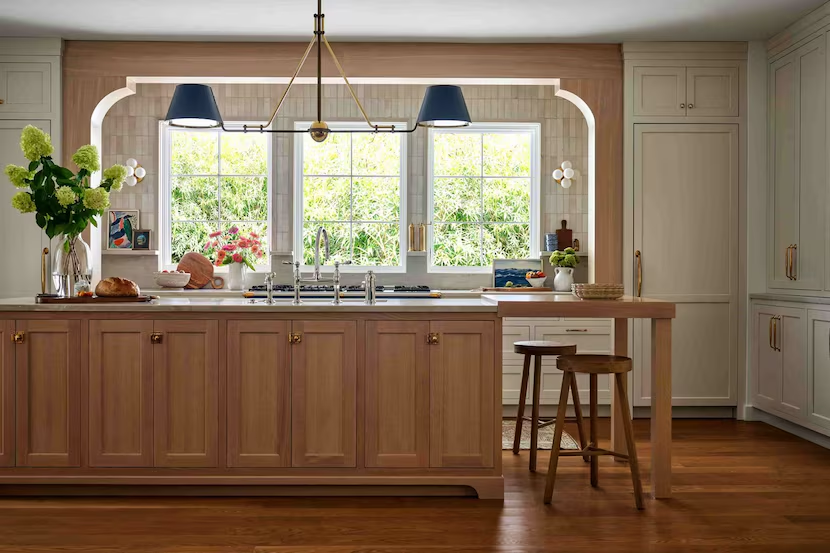
See the Full Kitchen Remodel Cost Guide (DFW 2026)
Cabinet costs only tell part of the story. To understand what a kitchen truly costs in DFW, you have to zoom out and see how cabinets interact with every other component in the remodel.
In most projects, cabinets anchor the budget, while everything else adjusts around them. Countertops, appliances, labor, and layout decisions all scale based on the cabinet tier you choose.
How Cabinets Fit Into the Total Remodel Budget
Industry data consistently shows that cabinets represent the largest share of kitchen spending. According to research from the National Kitchen & Bath Association, cabinetry typically accounts for 30% to 40% of total kitchen remodel costs, followed by labor, countertops, and appliances.
A simplified breakdown looks like this:
| Category | Typical % of Budget |
|---|---|
| Cabinets | 30% – 40% |
| Labor & contractor | 20% – 30% |
| Countertops | 10% – 15% |
| Appliances | 10% – 15% |
| Flooring, lighting, plumbing | 10% – 20% |
This distribution highlights a key dynamic: when cabinet costs increase, they compress the remaining budget unless the total project size expands.
“Cabinets act as the foundation of the budget. Once they are set, every other decision becomes a tradeoff.”
When to Invest More vs Control Costs
Cabinet spending should align with how the kitchen is used and how long the homeowner plans to stay in the home.
Situations where higher investment often makes sense:
- Long-term ownership where durability matters
- Large kitchens where cabinetry defines the space
- Open-concept homes where the kitchen is highly visible
Situations where cost control is more practical:
- Short-term ownership or resale-focused remodels
- Smaller kitchens where cabinet impact is limited
- Rental or investment properties
Research from the Remodeling Cost vs Value Report shows that kitchen remodel ROI depends heavily on keeping upgrades aligned with neighborhood expectations, which reinforces the importance of balancing cabinet quality with overall home value.
How Cabinets Influence Total Kitchen Pricing
Cabinet choices directly shape total remodel costs across all tiers.
| Kitchen Level | Typical Total Remodel Cost | Cabinet Tier Impact |
|---|---|---|
| Budget | $15,000 – $30,000 | Stock cabinets dominate |
| Mid-Range | $30,000 – $65,000 | Semi-custom cabinets are standard |
| High-End | $65,000 – $120,000+ | Custom cabinetry defines the project |
Higher-end cabinets often trigger additional upgrades. Premium cabinetry is usually paired with quartz or natural stone countertops, upgraded appliances, and more detailed finishes. This cascading effect increases total project cost beyond the cabinets themselves.
Data from the U.S. Census Bureau construction statistics shows that rising material and labor costs across residential construction have amplified this effect in recent years, especially in fast-growing regions like North Texas.
The Bigger Picture
A kitchen remodel is a system where each component depends on the others. Cabinets define the structure, layout, and visual identity of the space, while other elements fill in around that framework.
One pattern shows up consistently across projects:
- Cabinets determine layout
- Layout determines labor complexity
- Labor complexity affects total cost
This chain reaction explains why cabinet decisions carry so much weight early in the process.
Final Insight
Cabinets are more than a line item. They set the direction for the entire remodel.
“If you want to control your kitchen budget, start with cabinets. Every dollar flows outward from that decision.”
For a complete breakdown of how cabinets connect to countertops, labor, timelines, and full project costs, exploring a full kitchen remodel cost guide provides the broader context needed to plan with confidence.