
Average High-End Kitchen Remodel Cost in DFW ($40K-$150K+)
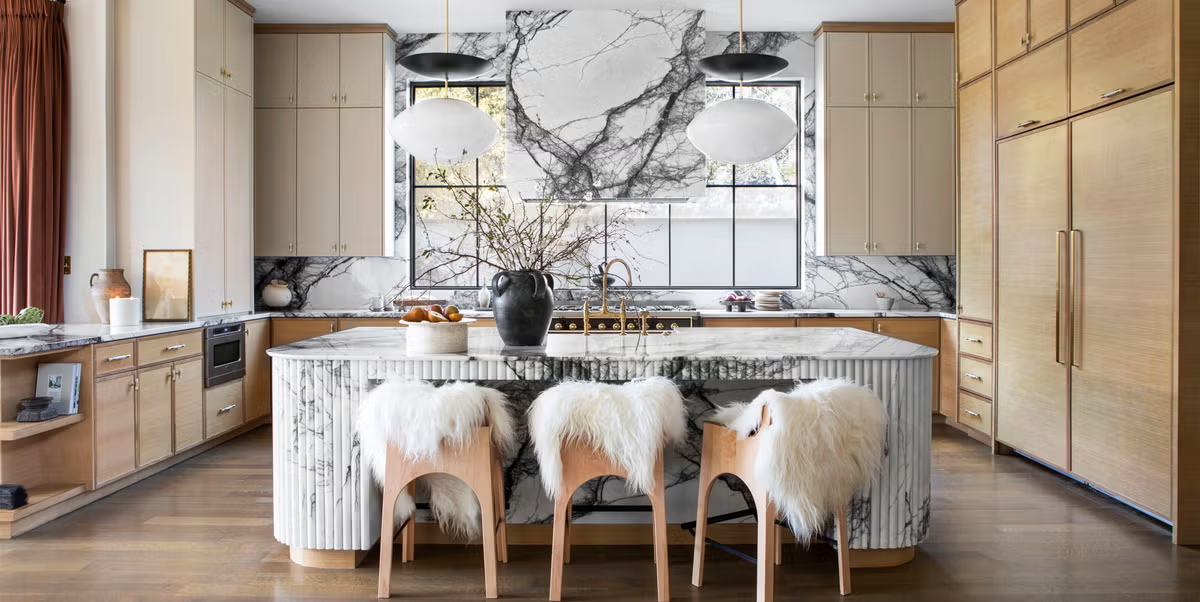
Luxury kitchen remodels in the Dallas-Fort Worth area operate in a completely different pricing tier than standard renovations. While many homeowners are familiar with mid-range remodels in the $30,000 to $60,000 range, high-end kitchens begin where those projects end and scale upward based on design complexity, materials, and customization.
In most DFW homes, a true high-end kitchen remodel typically falls between $40,000 and $150,000+, with ultra-luxury projects exceeding that range when structural changes and premium materials are involved.
According to national remodeling benchmarks from the National Kitchen & Bath Association and the Remodeling Magazine Cost vs Value Report, kitchens consistently rank as one of the most expensive interior renovations due to the number of trades, materials, and systems involved.
What “High-End” Actually Means in DFW
A kitchen crosses into high-end territory when it moves beyond surface-level upgrades and into full design transformation. This typically includes:
- Custom or semi-custom cabinetry
- Stone countertops (quartz, quartzite, or marble)
- Professional-grade appliances
- Layout changes or structural modifications
- Premium lighting, flooring, and finishes
A high-end kitchen is defined less by a single feature and more by how every element works together as a cohesive system – cabinetry, appliances, materials, and layout all operating at a higher tier.
Typical Cost Ranges for Luxury Kitchens
The table below breaks down how kitchen remodel costs scale in DFW as projects move into higher-end categories.
| Remodel Tier | Cost Range | Typical Scope |
|---|---|---|
| Entry Luxury | $40,000 – $70,000 | Semi-custom cabinets, quartz countertops, upgraded appliances, minimal layout changes |
| Mid Luxury | $70,000 – $110,000 | Custom cabinetry, premium appliances, stone countertops, island upgrades |
| High-End Luxury | $110,000 – $150,000+ | Fully custom design, structural changes, luxury appliances, high-end stone |
| Ultra-Luxury | $150,000 – $250,000+ | Designer kitchens, imported materials, integrated appliances, major reconfiguration |
These ranges align with broader Texas remodeling trends, where high-end kitchens commonly exceed $100,000 once cabinetry, appliances, and layout changes are combined .
Cost Per Square Foot in Luxury Kitchens
Another way to understand high-end pricing is through cost per square foot. While basic remodels may fall near $150 to $300 per square foot, luxury kitchens often reach significantly higher levels.
| Kitchen Type | Cost Per Sq Ft |
|---|---|
| Mid-Range Remodel | $150 – $300 |
| High-End Remodel | $300 – $600 |
| Ultra-Luxury Kitchen | $600 – $800+ |
This increase happens because luxury kitchens include more than just finishes. They often involve:
- Larger kitchen footprints
- Oversized islands
- Additional cabinetry and storage
- Integrated appliances
- Complex installation and fabrication work
Where the Money Actually Goes
High-end kitchen budgets are heavily concentrated in a few key categories. Industry data from NKBA consistently shows that cabinetry, labor, and appliances dominate total costs.
| Category | Typical % of Budget | Example Cost ($100K Kitchen) |
|---|---|---|
| Cabinets | 30% – 40% | $30K – $40K |
| Labor & Contractor | 20% – 30% | $20K – $30K |
| Appliances | 10% – 20% | $10K – $20K |
| Countertops | 10% – 15% | $10K – $15K |
| Flooring, Lighting, Plumbing | 10% – 20% | $10K – $20K |
This distribution reflects a core reality: luxury kitchens are driven by customization and labor complexity just as much as materials.
What Pushes a Kitchen Above $100K
Not every remodel crosses into six figures. The jump typically happens when multiple high-cost decisions stack together within the same project.
Common cost drivers in DFW luxury kitchens include:
- Custom cabinetry throughout the entire kitchen
- Professional appliance packages (often $15K-$30K+)
- Natural stone countertops with large slab layouts
- Structural changes like removing walls or expanding the kitchen
- Oversized islands with waterfall edges
- Electrical and plumbing relocations
Even a single structural change can significantly increase cost. As outlined by the U.S. Department of Housing and Urban Development, modifications involving plumbing, electrical systems, or structural elements require additional permitting, labor, and inspections, all of which add to the final budget.
Why DFW Luxury Kitchens Are Getting More Expensive
Several regional factors are pushing high-end kitchen costs upward across North Texas:
- Population growth increasing demand for contractors and skilled labor
- Larger home sizes requiring more materials and longer build times
- Higher homeowner expectations for finishes, appliances, and layout
- Supply chain fluctuations affecting material pricing
The Dallas-Fort Worth market continues to reward updated kitchens, especially in higher-end neighborhoods where buyer expectations are already elevated.
In many DFW homes, the kitchen is the emotional and financial center of the house. When homeowners invest heavily anywhere, it is usually here.
Understanding these cost ranges sets the foundation for every decision that follows. The next major factor that shapes luxury kitchen pricing is cabinetry, which often determines whether a project lands at $60,000 or climbs well past $120,000.
Custom Cabinets vs Semi-Custom in Luxury Kitchens
Cabinetry is the single most influential cost driver in a high-end kitchen remodel. In many DFW projects, it accounts for 30% to 40% of the total budget, shaping both the visual identity of the space and the way it functions day to day. The decision between custom and semi-custom cabinetry often determines whether a kitchen lands closer to $60,000 or pushes well into six figures.
According to design and budgeting guidance from the National Kitchen & Bath Association, cabinetry remains the largest line item in kitchen renovations because it combines materials, fabrication, design, and installation into a single category.
Why Cabinetry Dominates Luxury Kitchen Costs
Cabinets are one of the few elements that touch nearly every part of the kitchen:
- They define layout and storage capacity
- They anchor the overall design style
- They influence appliance integration and countertop layout
- They require precise installation and skilled labor
In high-end kitchens, cabinets are architecture, storage system, and design statement all at once.
Because of this, small upgrades in cabinet quality or customization can scale costs quickly.
Custom vs Semi-Custom Cabinet Cost Comparison
The table below shows how pricing typically compares in DFW luxury remodels.
| Cabinet Type | Cost Range | Cost Per Linear Foot | Typical High-End Kitchen Cost |
|---|---|---|---|
| Semi-Custom Cabinets | $10,000 – $25,000 | $350 – $650 | $15K – $30K |
| Custom Cabinets | $25,000 – $60,000+ | $700 – $1,200+ | $30K – $70K+ |
These ranges assume a kitchen with roughly 25 to 35 linear feet of cabinetry, which is common in larger Texas homes.
Semi-Custom Cabinets in High-End Kitchens
Semi-custom cabinets are often used in entry-level luxury kitchens or projects where homeowners want flexibility without the full cost of custom fabrication.
They offer:
- Adjustable sizing within manufacturer limits
- A wide range of door styles and finishes
- Upgrade options like pull-outs, soft-close hardware, and built-ins
- Faster production timelines
Because they are manufactured in controlled environments, semi-custom cabinets benefit from consistent quality and shorter lead times.
For many homeowners, this category represents the “sweet spot” between cost and customization, especially when paired with premium countertops and appliances.
Custom Cabinets and Fully Tailored Design
Custom cabinetry is built specifically for the kitchen, with every dimension, material, and finish selected from scratch. This level of control allows for a completely tailored layout and design.
Key characteristics include:
- Exact-fit construction with no filler panels
- Premium materials such as solid hardwood and furniture-grade plywood
- Integrated storage solutions designed around how the homeowner uses the kitchen
- Unique finishes, detailing, and architectural elements
Custom cabinets are common in larger DFW homes where kitchens include oversized islands, ceiling-height cabinetry, or unusual layouts that require precision.
Custom cabinetry transforms a kitchen from a collection of components into a cohesive, built-in environment.
Construction Quality and Material Differences
Beyond design flexibility, the materials used in cabinetry play a major role in durability and cost.
| Material | Typical Use | Quality Level |
|---|---|---|
| MDF (Medium-Density Fiberboard) | Painted cabinet doors | Entry to mid-range |
| Plywood | Cabinet boxes and structure | Mid to high-end |
| Solid Hardwood | Doors, frames, custom builds | Premium |
Higher-end cabinets typically use plywood box construction combined with solid wood doors, improving long-term durability and resistance to moisture.
Guidelines from the U.S. Forest Products Laboratory highlight how engineered wood products like plywood offer greater structural stability compared to lower-cost alternatives, which is one reason they are widely used in premium cabinetry.
Design Flexibility and Layout Impact
One of the biggest differences between semi-custom and custom cabinetry shows up in layout flexibility.
Custom cabinets allow for:
- Full-height cabinets that reach the ceiling
- Integrated appliance panels (hidden refrigerators, dishwashers)
- Oversized islands with storage on multiple sides
- Built-in features like spice racks, drawer organizers, and appliance garages
Semi-custom cabinets can achieve many of these features, though they are often limited by pre-set sizing increments.
In larger kitchens, these limitations can create small gaps or require filler pieces, which slightly reduces the seamless look that defines luxury design.
Timeline and Production Considerations
Cabinet selection also affects project timeline.
| Cabinet Type | Typical Lead Time |
|---|---|
| Semi-Custom | 4 – 8 weeks |
| Custom | 8 – 16+ weeks |
Custom cabinetry involves design approval, fabrication, finishing, and delivery, which naturally extends timelines. In high-end remodels where multiple custom elements are involved, cabinetry often becomes the pacing item for the entire project.
When Homeowners Choose Custom Over Semi-Custom
In DFW luxury kitchens, homeowners typically choose custom cabinetry when:
- The kitchen layout is large or complex
- The home is in a high-value neighborhood where finishes must match the property level
- They want a fully integrated, built-in appearance
- Storage needs are highly specific
- Design uniqueness is a priority
Semi-custom cabinetry remains common in projects where homeowners want strong visual impact and functionality while keeping costs within a defined range.
Cabinet choice is one of the earliest decisions in a kitchen remodel, and it influences nearly every other component that follows. Once cabinetry is defined, appliance selection, countertop layout, and overall design direction become much clearer.

Premium Appliances (Sub-Zero, Wolf, Thermador)
Appliances are one of the clearest signals that a kitchen has entered the luxury tier. In high-end DFW remodels, appliance packages typically range from $15,000 to $40,000+, depending on brand selection, configuration, and level of integration.
These costs reflect more than performance. They represent design continuity, durability, and the expectation that every component of the kitchen operates at the same elevated standard.
Industry data from the U.S. Department of Energy shows that modern appliances are increasingly engineered for both performance and efficiency, which helps explain why premium models command higher prices.
What Defines a Luxury Appliance Package
A standard appliance set may include a refrigerator, range, dishwasher, and microwave. In a high-end kitchen, that same category expands significantly:
- Built-in refrigeration systems
- Professional-grade ranges or cooktops
- Double ovens or wall oven combinations
- Panel-ready dishwashers
- Wine refrigerators or beverage centers
- Ventilation systems designed for high-output cooking
Luxury kitchens treat appliances as integrated systems, where performance, layout, and design all align.
These additions increase both cost and installation complexity, especially when cabinetry and appliances are designed together.
Typical Appliance Cost Breakdown
The table below shows how appliance costs scale in DFW luxury kitchens.
| Appliance Category | Mid-Range Cost | High-End Cost |
|---|---|---|
| Refrigerator | $2,000 – $5,000 | $8,000 – $15,000+ |
| Range / Cooktop | $2,500 – $6,000 | $7,000 – $15,000+ |
| Wall Ovens | $2,000 – $5,000 | $5,000 – $10,000+ |
| Dishwasher | $800 – $1,500 | $1,500 – $3,500 |
| Vent Hood | $500 – $2,000 | $2,000 – $6,000 |
| Wine Fridge / Beverage Center | $1,000 – $3,000 | $3,000 – $8,000 |
A full premium appliance package often lands in the $20K-$35K range, with ultra-luxury kitchens exceeding that when multiple specialty appliances are included.
Leading Luxury Appliance Brands
Certain brands consistently appear in high-end kitchens due to their performance, design, and reputation.
- Sub-Zero – Known for built-in refrigeration systems with dual compressors and long lifespan
- Wolf – Professional-grade cooking appliances with precise heat control
- Thermador – High-end appliance packages with integrated features and promotions
- Miele – Premium European brand focused on precision engineering and longevity
- Bosch Benchmark – High-end line with strong performance and quieter operation
These brands are widely recognized in the remodeling industry and are frequently recommended in kitchen planning resources from organizations like the National Association of Home Builders.
Appliance Package Tiers
The difference between a mid-range and luxury kitchen often comes down to the appliance package.
| Tier | Total Appliance Budget | What’s Included |
|---|---|---|
| Mid-Range | $8K – $15K | Standard stainless appliances, basic features |
| Entry Luxury | $15K – $25K | Partial premium brands, built-in refrigerator, upgraded range |
| High-End | $25K – $40K | Full premium package, double ovens, integrated appliances |
| Ultra-Luxury | $40K+ | Multiple specialty appliances, full panel-ready integration |
As kitchens move into higher tiers, appliances shift from standalone units to fully integrated components within cabinetry.
Built-In vs Freestanding Appliances
One of the biggest cost differences in luxury kitchens comes from the decision between built-in and freestanding appliances.
Freestanding appliances:
- Lower cost
- Easier installation
- Standard sizes
Built-in appliances:
- Higher cost due to customization
- Flush installation with cabinetry
- More cohesive, seamless appearance
Panel-ready refrigerators and dishwashers, where cabinet panels cover the appliance fronts, are especially common in high-end kitchens.
The visual impact of integrated appliances is immediate. The kitchen reads as a unified design rather than a collection of separate units.
Features That Drive Appliance Costs Higher
Several features consistently push appliance budgets upward in luxury remodels:
- Panel-ready designs that require custom cabinet integration
- Dual fuel ranges combining gas cooktops with electric ovens
- Steam ovens and speed ovens for advanced cooking methods
- Smart technology integration with app control and automation
- High-performance ventilation systems required for professional ranges
Guidelines from the Environmental Protection Agency’s ENERGY STAR program highlight that many premium appliances also incorporate advanced efficiency features, which can reduce long-term energy consumption even as upfront costs increase.
Why Appliances Scale with Kitchen Value
Appliance selection tends to rise alongside the overall home value. In higher-end DFW neighborhoods, buyer expectations shift toward:
- Larger refrigerators
- More cooking capacity
- Seamless integration with cabinetry
- Recognizable premium brands
In these homes, appliances function as both practical tools and status indicators within the space.
A kitchen with $40,000 cabinetry paired with a $5,000 appliance package creates a mismatch in both performance and perception. As a result, appliance budgets typically scale in proportion to the rest of the remodel.
This alignment is what allows luxury kitchens to feel cohesive, where every component reflects the same level of investment and intention.

High-End Materials (Quartzite, Marble, Premium Finishes)
Materials are where luxury kitchens become visually distinct. While layout and cabinetry define structure, materials define perception. In high-end DFW remodels, countertops, backsplashes, flooring, and finishes are selected to create depth, texture, and cohesion across the entire space.
For many homeowners, material selection is the moment where a kitchen shifts from functional to architectural.
According to research from the Natural Stone Institute, natural stone remains one of the most sought-after materials in high-end kitchens due to its durability, uniqueness, and long-term value.
Countertops: The Centerpiece of Luxury Kitchens
Countertops are often the most visually dominant surface in the kitchen, which is why premium materials command such a large portion of the budget.
| Material | Cost Per Sq Ft Installed | Typical Luxury Kitchen Cost |
|---|---|---|
| Quartz | $70 – $140 | $4,000 – $8,000 |
| Granite | $80 – $160 | $5,000 – $10,000 |
| Quartzite | $120 – $250+ | $8,000 – $15,000+ |
| Marble | $150 – $300+ | $10,000 – $20,000+ |
Quartzite and marble are especially common in luxury kitchens because they offer dramatic veining and natural variation that cannot be replicated with lower-tier materials.
Each slab of natural stone is unique, which means no two kitchens will ever look exactly the same when these materials are used.
Quartz remains popular for its durability and low maintenance, while quartzite and marble are chosen for their visual impact and premium feel.
Quartzite vs Marble: Key Differences
Although both are considered high-end materials, quartzite and marble perform differently in everyday use.
| Feature | Quartzite | Marble |
|---|---|---|
| Durability | Very high | Moderate |
| Maintenance | Low to moderate | Higher maintenance |
| Appearance | Subtle, granite-like veining | Bold, dramatic veining |
| Resistance to staining | Strong | More porous |
The U.S. Geological Survey classifies marble as a softer metamorphic stone, which explains why it can etch or stain more easily compared to quartzite. This characteristic influences how homeowners use each material within the kitchen.
Many designers incorporate marble selectively, such as on islands or baking surfaces, while using more durable materials elsewhere.
Premium Design Features That Increase Material Costs
Luxury kitchens often go beyond standard countertop installation and incorporate advanced design elements that elevate both cost and visual impact.
Common high-end upgrades include:
- Waterfall islands where the countertop extends vertically down the sides
- Full-height slab backsplashes using the same material as the countertops
- Bookmatched stone slabs creating mirrored vein patterns
- Thicker slabs (3 cm or laminated edges) for a more substantial appearance
| Feature | Typical Added Cost |
|---|---|
| Waterfall island edge | $1,000 – $3,000+ |
| Full slab backsplash | $2,000 – $8,000+ |
| Bookmatched slabs | Premium material cost increase |
| Thickened edges | $500 – $2,000 |
These upgrades require more material, more fabrication time, and more precise installation, all of which contribute to higher costs.
Flooring and Surface Finishes
While countertops often receive the most attention, flooring and finishes play a critical role in how the kitchen feels as a complete environment.
High-end kitchens in DFW commonly use:
- Engineered hardwood or solid hardwood flooring
- Large-format porcelain tile
- Natural stone flooring in select areas
| Flooring Type | Cost Per Sq Ft Installed | Luxury Use Case |
|---|---|---|
| Hardwood | $10 – $25 | Warm, cohesive look across open floor plans |
| Porcelain tile | $8 – $20 | Durable, modern aesthetic |
| Natural stone tile | $15 – $40+ | Premium or custom-designed kitchens |
Guidance from the National Association of Home Builders highlights that durability and maintenance are key considerations in kitchen flooring, especially in high-traffic areas.
Backsplashes and Wall Treatments
Backsplashes have evolved from simple protective surfaces into major design features.
Luxury kitchens frequently include:
- Full-height slab backsplashes
- Handmade or designer tile
- Metal or textured accent walls
- Integrated lighting within backsplash areas
These elements add depth and visual layering, especially when coordinated with cabinetry and countertops.
In high-end kitchens, surfaces are designed to work together, creating continuity rather than isolated focal points.
Why Materials Drive Perceived Value
Material selection directly influences how a kitchen is perceived by both homeowners and buyers. High-end finishes create a sense of permanence and craftsmanship that aligns with the rest of the home.
Several factors contribute to this effect:
- Natural variation in stone creates visual uniqueness
- Heavier, thicker materials signal durability
- Seamless transitions between surfaces improve cohesion
- Premium finishes age more gracefully over time
Data from the Remodeling Magazine Cost vs Value Report consistently shows that kitchens with high-quality materials perform better in resale scenarios, especially in higher-end markets.
In DFW, where many homes feature open-concept layouts, these materials extend beyond the kitchen itself. They influence how the entire main living space feels, making them one of the most impactful investments in a luxury remodel.

Real Example Luxury Kitchen Builds in DFW
Understanding cost ranges becomes much clearer when you see how real budgets translate into finished kitchens. In Dallas-Fort Worth, luxury remodels vary widely depending on layout changes, material selections, and appliance packages, even when kitchens are similar in size.
These examples reflect realistic project scopes based on industry pricing benchmarks from sources like the Remodeling Magazine Cost vs Value Report and design guidance from the National Kitchen & Bath Association, adapted to typical DFW construction conditions.
Example 1: $50,000 Entry-Level Luxury Kitchen
This level represents the entry point into high-end remodeling. The kitchen receives a full visual upgrade with improved materials and finishes, while keeping the existing layout intact.
Typical scope:
- Semi-custom cabinetry
- Quartz countertops
- Standard stainless appliance package
- Tile backsplash
- Updated lighting and fixtures
- Flooring replacement
| Category | Estimated Cost |
|---|---|
| Cabinets | $15,000 |
| Countertops | $5,000 |
| Appliances | $8,000 |
| Labor & Installation | $15,000 |
| Lighting, Flooring, Misc. | $7,000 |
| Total | $50,000 |
This type of remodel is common in established DFW neighborhoods where homeowners want a clean, modern kitchen without altering the footprint.
At this level, the kitchen feels completely new while relying on the existing structure to control cost.
Example 2: $90,000 Mid-Luxury Kitchen Remodel
At this tier, the project begins to include customization and layout refinement. The kitchen becomes more tailored to how the homeowner uses the space.
Typical scope:
- Custom or upgraded semi-custom cabinetry
- Quartzite or premium quartz countertops
- Partial appliance upgrade (built-in refrigerator or pro range)
- Enlarged island with added storage
- Minor layout adjustments (moving appliances or plumbing slightly)
- Higher-end lighting and finish package
| Category | Estimated Cost |
|---|---|
| Cabinets | $30,000 |
| Countertops | $10,000 |
| Appliances | $15,000 |
| Labor & Contractor | $25,000 |
| Finishes & Upgrades | $10,000 |
| Total | $90,000 |
At this level, kitchens often begin to incorporate design features that elevate the space beyond a standard remodel.
Example 3: $150,000+ High-End Luxury Kitchen
This is where kitchens become fully customized environments. Projects at this level often involve structural changes, premium materials, and integrated systems throughout.
Typical scope:
- Fully custom cabinetry with ceiling-height installation
- Marble or quartzite countertops with waterfall island
- Full premium appliance package (Sub-Zero, Wolf, or equivalent)
- Structural modifications (removing walls, expanding layout)
- Full slab backsplash or wall treatments
- Custom lighting design and electrical upgrades
| Category | Estimated Cost |
|---|---|
| Cabinets | $50,000+ |
| Countertops & Stone Work | $20,000+ |
| Appliances | $30,000+ |
| Labor & Structural Work | $35,000+ |
| Finishes, Lighting, Misc. | $15,000+ |
| Total | $150,000+ |
These kitchens are typically found in higher-end DFW homes where the kitchen serves as the centerpiece of an open-concept living space.
At this level, the kitchen becomes a built environment rather than a renovation, with every component designed to work together.
Side-by-Side Comparison of Luxury Kitchen Tiers
| Feature | $50K Kitchen | $90K Kitchen | $150K+ Kitchen |
|---|---|---|---|
| Cabinet Type | Semi-custom | Semi-custom / partial custom | Fully custom |
| Countertops | Quartz | Quartzite / premium quartz | Marble / quartzite |
| Appliances | Standard | Partial premium | Full premium package |
| Layout Changes | None | Minor | Major structural |
| Design Features | Basic upgrades | Island expansion, custom elements | Waterfall island, slab backsplash |
| Overall Feel | Updated | Customized | Architecturally designed |
What Drives the Jump Between Price Tiers
The difference between these price points is rarely caused by a single upgrade. Costs increase when multiple high-impact decisions stack within the same project.
Key cost drivers include:
- Cabinet complexity and customization level
- Appliance package upgrades
- Natural stone selection and fabrication complexity
- Structural changes and layout reconfiguration
- Labor intensity and project duration
Guidance from the U.S. Department of Housing and Urban Development highlights that structural modifications and system upgrades significantly increase project costs due to permitting, engineering, and inspection requirements.
Why Real Examples Matter
Budget ranges can feel abstract until they are tied to actual outcomes. These scenarios show how decisions translate into tangible differences in the finished kitchen.
A $50,000 kitchen delivers a strong visual transformation.
A $90,000 kitchen introduces customization and improved functionality.
A $150,000+ kitchen creates a fully integrated, high-performance space aligned with luxury home standards.
The progression reflects a shift in how the kitchen is used, experienced, and valued within the home.
How This Fits Into Your Full Home Investment Strategy
A high-end kitchen remodel sits at the intersection of lifestyle and financial strategy. In DFW, where home values vary dramatically by neighborhood, the decision to invest $80,000, $120,000, or $150,000+ into a kitchen is closely tied to how that investment aligns with the broader value of the home.
Kitchens consistently rank among the most influential spaces in real estate. Data from the Remodeling Magazine Cost vs Value Report shows that kitchen remodels often recover a significant portion of their cost at resale, especially when they align with buyer expectations in the surrounding market.
The Role of the Kitchen in Home Value
In most homes, the kitchen functions as both a daily-use space and a primary selling feature. Buyers tend to evaluate kitchens quickly and form strong impressions based on layout, finishes, and overall condition.
A well-designed kitchen reduces perceived future work for buyers, which directly influences how they price the home in their mind.
This is particularly important in DFW’s competitive housing market, where updated kitchens often separate comparable listings.
Guidance from the National Association of Realtors indicates that kitchens and bathrooms are the most closely scrutinized areas during home tours, reinforcing their importance in resale performance.
Matching Remodel Level to Home Value
One of the most important strategic decisions is aligning the remodel budget with the value of the home and neighborhood.
| Home Value Range | Recommended Kitchen Investment | Typical Strategy |
|---|---|---|
| $300K – $500K | $30K – $70K | Mid-range remodel, focus on functionality |
| $500K – $800K | $50K – $100K | Entry to mid luxury finishes |
| $800K – $1.5M | $80K – $150K | High-end materials and appliances |
| $1.5M+ | $120K – $250K+ | Fully custom, architect-level design |
Homes at higher price points tend to require more refined finishes to meet buyer expectations. In these cases, a lower-tier kitchen can create a disconnect between the kitchen and the rest of the property.
ROI vs Lifestyle Value
Kitchen remodels deliver both financial and lifestyle returns, though the balance shifts depending on how long the homeowner plans to stay.
- Short-term ownership: Focus on market-aligned upgrades that improve resale appeal
- Long-term ownership: Prioritize functionality, durability, and personal preferences
According to the Joint Center for Housing Studies of Harvard University, homeowners increasingly remodel to improve livability rather than purely for resale, especially in markets where moving costs and interest rates are higher.
The most effective remodels are the ones that improve daily life while still aligning with what future buyers expect.
Avoiding Over-Improvement
One of the most common strategic mistakes is investing beyond what the neighborhood supports.
Real estate valuation is heavily influenced by comparable sales. If surrounding homes do not feature high-end kitchens, it becomes harder to fully recover the cost of a luxury remodel.
The Federal Housing Finance Agency emphasizes that home values are tied to local market conditions, which means even high-quality upgrades must align with neighborhood standards to maximize return.
Where Luxury Kitchens Make the Most Sense
High-end kitchen remodels tend to perform best in:
- Established luxury neighborhoods
- Homes with open-concept layouts where the kitchen is highly visible
- Properties already featuring premium finishes in other areas
- Long-term residences where lifestyle improvements matter
In these scenarios, the kitchen becomes a natural extension of the home’s overall quality.
Strategic Takeaways
A luxury kitchen remodel is most effective when it fits into a larger plan for the home.
- It should align with the home’s value and location
- It should match the quality of other finishes in the house
- It should reflect how the homeowner actually uses the space
- It should consider both resale potential and long-term enjoyment
The kitchen is often the single most expensive interior upgrade in a home, which is why approaching it with a clear strategy matters.
For a deeper breakdown of how remodeling costs compare across projects and what drives pricing in DFW, see our full cost guide on kitchen remodeling fundamentals.
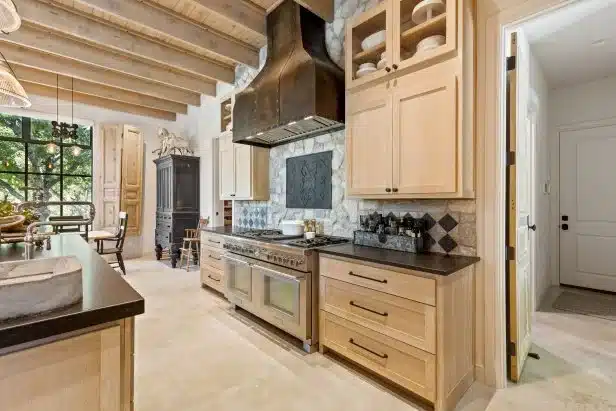
See the Full Kitchen Remodel Cost Guide (DFW 2026)
A high-end kitchen remodel provides a clear picture of what luxury looks like. To plan accurately, it helps to understand how those costs compare across all kitchen types, from basic updates to full custom builds.
A complete cost guide expands the perspective beyond luxury projects and shows how pricing changes based on scope, materials, and layout decisions. Industry benchmarks from the Remodeling Magazine Cost vs Value Report and planning standards from the National Kitchen & Bath Association emphasize that kitchens vary widely in cost depending on how deeply the space is reworked.
How Kitchen Remodel Costs Scale
Kitchen remodels fall into distinct tiers, each defined by scope, materials, and labor intensity.
| Remodel Level | Cost Range (DFW) | Typical Scope |
|---|---|---|
| Cosmetic Update | $10K – $25K | Paint, hardware, minor upgrades |
| Mid-Range Remodel | $25K – $60K | New cabinets, countertops, appliances |
| High-End Remodel | $40K – $150K+ | Custom cabinetry, premium materials, layout changes |
This progression reflects a shift from surface-level improvements to full system upgrades involving plumbing, electrical, cabinetry, and structural elements.
The difference between price tiers is driven by how many systems are being replaced and how customized each component becomes.
What a Full Cost Guide Helps You Understand
A detailed kitchen cost guide answers the questions that determine real budgets:
- How much cabinets, appliances, and labor typically cost
- What upgrades create the biggest visual impact
- How layout changes affect pricing
- Where budgets tend to exceed initial expectations
- What level of remodel aligns with different home values
Guidance from the U.S. Department of Housing and Urban Development highlights that projects involving structural changes or system upgrades require additional permitting, inspections, and coordination, all of which influence total cost.
Why Cost Transparency Matters in DFW
Dallas-Fort Worth has one of the most active remodeling markets in the country, with strong demand for both renovations and new construction. According to housing data from the U.S. Census Bureau, growth in major metro areas continues to drive increased construction activity and higher labor demand.
This creates wide variation in pricing depending on:
- Contractor availability
- Project complexity
- Material selection
- Neighborhood expectations
A full cost guide provides clarity by showing how these variables interact across different types of kitchen projects.
Using a Cost Guide to Plan Smarter
Homeowners who review detailed cost breakdowns before starting a remodel tend to make more confident decisions. A structured guide allows you to:
- Set a realistic budget range early
- Compare multiple design scenarios
- Prioritize upgrades based on impact
- Avoid underestimating labor and installation costs
The Consumer Financial Protection Bureau recommends building a financial plan before starting major renovations, including setting aside contingency funds for unexpected expenses.
The most successful remodels begin with clear expectations, where every major cost category is understood before construction begins.
How This Section Connects to Your Next Step
This luxury breakdown shows what is possible at the top end of the market. A full kitchen remodel cost guide fills in the rest of the picture, helping you evaluate where your project fits and how to plan it with precision.
If you are evaluating your own remodel, the next step is understanding the full cost spectrum so you can match your design goals with a realistic budget.