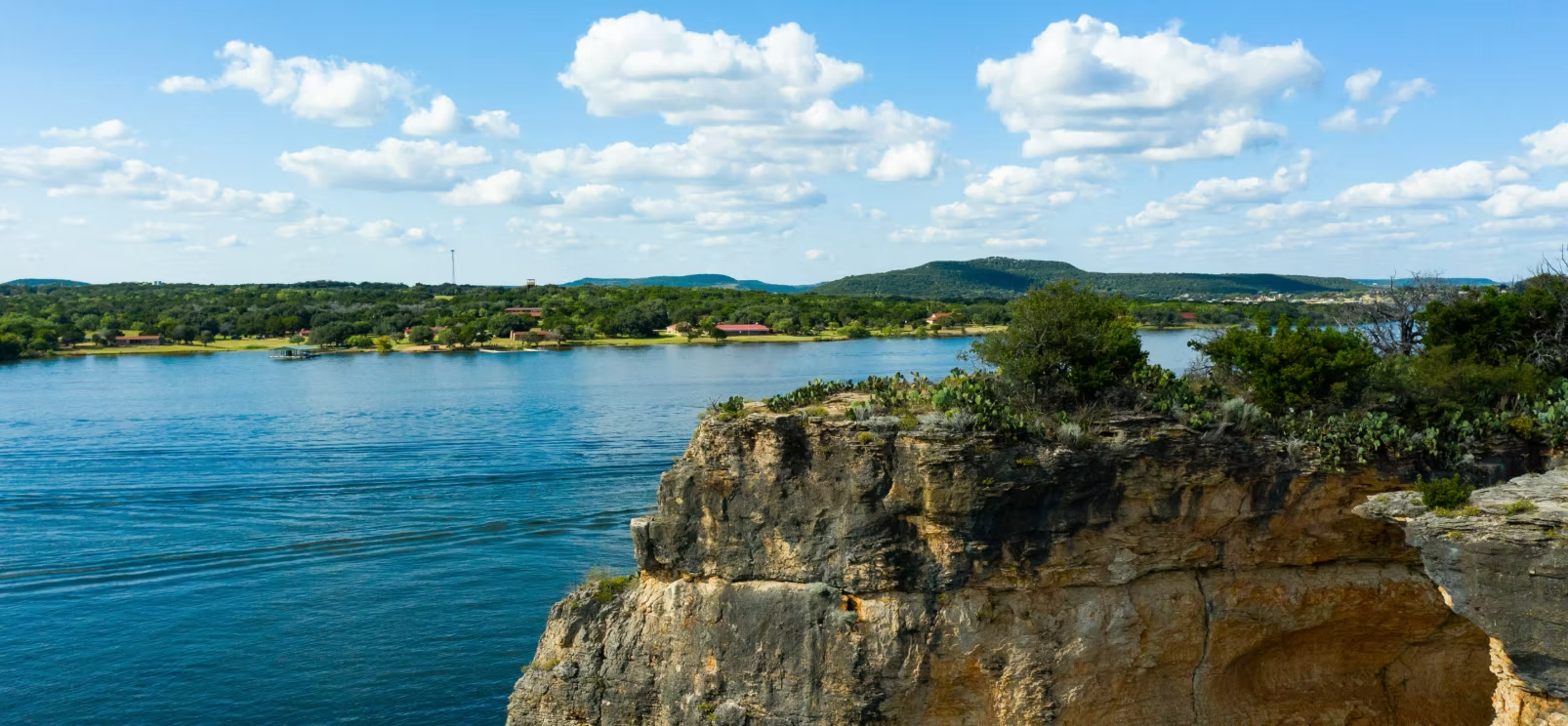


Possum Kingdom Lake is not a blank slate that homeowners arrive to organize and manage. It is an established ecosystem where wildlife has long-established patterns of movement, feeding, and behavior that continue regardless of new development. As Adam Mann, a wildlife biologist with Texas Parks and Wildlife, explained, the healthiest starting mindset is recognizing that “you’re living with the wildlife, not amongst them.”
This distinction matters because many of the problems homeowners encounter begin with misplaced expectations. When people assume wildlife should adapt to human routines, small actions start to add up. Understanding that PK is shared territory helps frame every decision that follows, from landscaping to recreation to safety.
Landscaping, Chemicals, and Non-Native Species
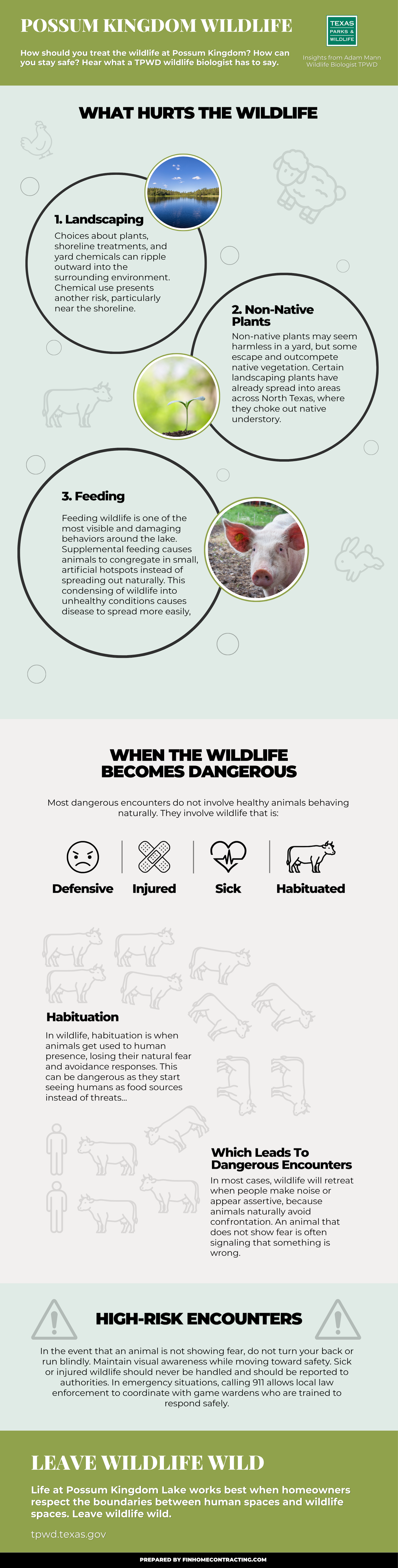
One way homeowners impact wildlife is through landscaping and property maintenance. Choices about plants, shoreline treatments, and yard chemicals can ripple outward into the surrounding environment. Non-native plants may seem harmless in a yard, but some can escape and outcompete native vegetation, reducing food and shelter for local species. Mann noted that certain popular landscaping plants have already spread into natural areas across North Texas, where they choke out native understory.
Chemical use presents another risk, particularly near the shoreline. Herbicides and other treatments can affect fish and aquatic life if they are applied improperly or too close to water. Mann emphasized that following label instructions is critical, not only for legality but for protecting the ecosystem. Native plants, which are adapted to local soil and climate, often require less maintenance and support wildlife more naturally.
How Human Behavior Disrupts Wildlife
Beyond landscaping, everyday habits shape how wildlife moves through neighborhoods. Animals learn quickly where food is available and where humans are predictable. Leaving pet food outside, failing to secure trash, or allowing spilled seed to accumulate all create attractants that pull wildlife closer to homes.
These behaviors are rarely intentional, but wildlife responds to patterns rather than intent. Mann pointed out that even indirect attractants can habituate animals over time, changing their natural behavior and increasing pressure on nearby green spaces. What begins as convenience or oversight gradually alters how wildlife uses the landscape.
Feeding Wildlife and the Spread of Disease
Feeding wildlife is one of the most visible and damaging behaviors around Possum Kingdom Lake. Supplemental feeding causes animals to congregate in small, artificial hotspots instead of spreading out naturally. This condensing of wildlife into unhealthy conditions causes disease to spread more easily, and the habitat to suffer from overuse.
Many common feeds, particularly corn, are appealing but nutritionally unbalanced. Too much of any single food can disrupt digestion in animals like deer, sometimes causing serious internal issues. Poorly stored feed can also develop toxins, further harming wildlife health. What feels like helping often functions more like offering treats, creating long-term ecological harm.
Habituation: When Wildlife Loses Its Fear of Humans
As feeding and attractants continue, wildlife begins to associate humans with food. This process, known as habituation, marks a turning point where harm to wildlife and risk to people begin to overlap. According to Mann, “habituated animals lose their natural fear responses, making their behavior less predictable.”
Animals that approach homes, campsites, or people without hesitation are often already in trouble. Habituation can also increase the likelihood of disease transmission and aggressive encounters. Wildlife may appear calm or friendly at first, but they remain wild animals capable of sudden reactions.
When Wildlife Becomes a Risk to People
Most dangerous encounters do not involve healthy animals behaving naturally. They involve wildlife that is sick, injured, defensive, or accustomed to human presence. Mann noted that animals acting strangely or allowing close approach are red flags that should not be ignored.
Certain species pose higher risks in specific situations. Feral pigs, for example, are highly unpredictable, especially when young are present. Even white-tailed deer, often viewed as harmless, can become aggressive during breeding season if they are habituated to people. As Mann put it, danger almost always traces back to habituation or compromised health.
High-Risk Encounters and How to Respond
In most cases, wildlife will retreat when people make noise or appear assertive, because animals naturally avoid confrontation. Mann explained that an animal that does not show fear is often signaling that something is wrong. In those moments, distance is the priority.
People should avoid turning their backs or running blindly, instead keeping visual awareness while moving toward safety. Sick or injured wildlife should never be handled and should be reported to authorities. In emergency situations, calling 911 allows local law enforcement to coordinate with game wardens who are trained to respond safely.
Living Safely by Letting Wildlife Stay Wild
Life at Possum Kingdom Lake works best when homeowners respect the boundaries between human spaces and wildlife spaces. Most environmental damage and safety risks stem from well-meaning but misguided attempts to interact, feed, or manage animals. Mann summarized the core principle simply: “Leave wildlife wild.”
“Leave wildlife wild.”
By choosing native landscaping, eliminating attractants, avoiding feeding, and maintaining distance, homeowners protect both the ecosystem and themselves. Living alongside wildlife is not about control or closeness, but about coexistence built on respect. When wildlife remains wild, Possum Kingdom Lake remains safer and healthier for everyone.