Cost to Remodel Your Home in Richardson (2026 Guide)
If you are planning a whole-home remodel in Richardson, the most useful budget is one that reflects both the visible finish work and the hidden systems behind the walls. A whole-home remodel can be a light refresh, a midrange update, or a major reconfiguration, so the price depends much more on scope than on the address alone.
Homeowners in Richardson usually want a remodel that improves day-to-day comfort, keeps the house aligned with neighborhood expectations, and avoids surprises once demolition begins. That means planning for room-by-room decisions, permit timing, and contingency reserves before the first trade starts.
For a wider benchmark, the DFW home remodeling cost guide is a useful place to compare broad pricing before narrowing the numbers to Richardson.

Home Remodeling Cost Snapshot for Richardson
| Remodel scope | Typical budget range | What it usually includes | Typical timeline |
|---|---|---|---|
| Light whole-home refresh | $35,000 to $90,000 | Paint, flooring, fixtures, trim, minor drywall repairs | 2 to 6 weeks |
| Midrange whole-home remodel | $90,000 to $190,000 | Kitchen and bath updates, flooring, lighting, interior paint | 6 to 12 weeks |
| Extensive whole-home remodel | $190,000 to $360,000+ | Major reconfiguration, higher-end finishes, system upgrades | 3 to 6+ months |
| Partial-gut interior remodel | $140,000 to $260,000 | Selective demolition, layout changes, rebuilt core spaces | 10 to 20 weeks |
| Whole-home gut remodel | $250,000 to $500,000+ | Full demolition, extensive MEP work, full finish replacement | 4 to 9+ months |
A contingency reserve of 5 to 15 percent is smart for most Richardson remodels, especially when older wiring, plumbing, or prior patchwork repairs may be present. On a project with major layout work, a reserve on the higher end of that range is usually more realistic than a minimal allowance.
A table like this is only a starting point. The reason is that whole-home remodeling is really a bundle of smaller budgets. You may spend a certain amount on demolition and haul-off, another amount on framing or layout changes, another amount on cabinets and counters, and another amount on paint, flooring, and trim. If a homeowner only looks at one category, the full project can seem cheaper than it really is. When all categories are included, the numbers become more useful and more honest.
For a typical Richardson home, the best way to use the range is to anchor the estimate by scope. If the project is mostly cosmetic, the lower band may be close. If the project affects walls, plumbing, electrical, or multiple wet areas, the budget usually moves into the middle or upper bands quickly. The same is true for finish grade. A house can stay in the same basic scope and still swing tens of thousands of dollars based on cabinetry, countertops, tile, fixture quality, and custom carpentry.

Why Building in Richardson Is Different
Richardson has a mix of established homes and updated infill, so two houses with the same square footage can need very different scopes. That is why preconstruction inspection matters so much.
Another factor is access. In a busy suburban market, deliveries, dumpster placement, and subcontractor timing can all be affected by traffic and staging. On a remodel, that can add friction even when the actual construction work is straightforward.
A third factor is resale fit. Buyers in Richardson tend to respond well to durable, clean, practical finishes that look intentional without becoming overly custom. That makes finish selection a real part of budget planning, not just design taste.
For older houses near core parts of the city, the biggest unknown is often not the design itself but what the demolition will reveal. A wall may hide older wiring, an undersized return, a patched drain line, or framing that was changed during a previous renovation. Once a project begins, those conditions can influence both cost and timeline. The most practical response is not to overbuild the initial estimate; it is to plan enough contingency and allow time for a thorough walkthrough before construction starts.
Another local consideration is lot and staging convenience. In neighborhoods where driveways, side yards, or street parking are tight, material delivery and debris handling can take more planning. That does not always add a huge dollar amount, but it can add time and coordination. On a remodel, schedule friction often shows up first as a small delay and later as a larger soft cost if trades have to be remobilized. Homeowners who plan for those logistics early usually get a smoother project.

What a Whole-Home Remodel Costs by Scope
Light refresh
A light refresh keeps the layout intact and focuses on visible improvements. It can include new paint, trim work, fixture swaps, and selective flooring replacement. These projects can often stay in the $35,000 to $90,000 range if there are no major system issues.
The value of this scope is that it changes how the house feels without forcing a long disruption cycle. A few thousand dollars may go to paint and prep, several thousand to lighting and fixture updates, and another portion to flooring in the most visible rooms.
A light refresh is usually the right fit when the home is functionally sound but dated. If cabinets are solid, the floor plan works, and the mechanical systems are in decent shape, the project can focus on the most visible wear points. Many homeowners choose this route when they want a cleaner, brighter home before listing, refinancing, or simply settling in for another several years.
A helpful way to think about a light refresh is in percentages of total budget. In a smaller scope, paint and finish repairs may represent a larger share of the work than they would in a bigger remodel, because the job is less likely to require major structural or utility changes. That is why a homeowner can often get strong visual improvement without paying for the full cost of moving walls or rebuilding systems.
Midrange remodel
A midrange remodel usually touches the kitchen, at least one bathroom, flooring, and lighting. Once multiple trades are involved, total cost often rises to $90,000 to $190,000.
This is the most common whole-home category because it offers a noticeable transformation without the complexity of a full gut job. In practical terms, it is also where one late selection can affect cabinets, backsplash, plumbing trim, and final paint.
A midrange project often includes a combination of new cabinets or cabinet refacing, quartz or other stone countertops, upgraded sinks and fixtures, recessed lighting, new flooring through shared spaces, and updated wall finishes. If the homeowner wants a modernized kitchen and one or two improved baths, the budget can move quickly once finish selections and labor are fully priced.
This range is also where homeowners need to be especially disciplined about allowances. Cabinets can be priced by linear foot, by quality tier, or by custom detail. Tile can be modest or highly decorative. Lighting can be standardized or highly layered. Each of those choices is valid, but the budget should reflect the actual level of design being requested. A clear allowance structure helps keep the estimate comparable from one proposal to another.
Extensive remodel
An extensive remodel may include removing walls, moving plumbing, upgrading electrical, and replacing more of the finish package. That is where budgets often move past $190,000 and into much higher territory.
At this level, the project behaves more like a coordinated construction program than a simple update. The sequence matters, and one delay can ripple into several trades.
This scope usually makes sense when the house needs both style and function changes. For example, an older plan may have a small kitchen, closed-off dining space, and isolated living room. Opening those areas can dramatically improve daily life, but it also adds engineering, structural framing, drywall repair, flooring replacement, and finish matching. Those are not optional extras; they are built into the cost of getting the space to perform the way the owner expects.
A common mistake is to think of wall removal as a separate add-on rather than part of the whole design. In reality, once the wall changes, nearly every nearby finish can be affected. Door casing, flooring transitions, lighting layout, and paint lines all need to be coordinated. Even if the final aesthetic is clean and simple, the construction path to get there is rarely simple.
Partial-gut interior remodel
A partial-gut remodel sits between a cosmetic update and a total tear-out. Some finishes stay, but substantial portions of the interior are removed and rebuilt. Costs often fall in the $140,000 to $260,000 range, depending on how much of the structure, systems, and finishes are touched.
This category is common when the house has a strong shell but a poor interior layout. The goal may be to preserve the exterior and foundation while completely renewing the spaces people use every day. In that case, the work can include new kitchen and bath layouts, repaired subfloors, upgraded electrical service, new insulation in opened cavities, and all new paint, trim, and flooring.
Partial-gut remodels often deliver the best balance of change and restraint. They can solve layout problems without requiring a full tear-down of the home. For many Richardson properties, that is enough to create a dramatic improvement while preserving the parts of the house that are still in good shape. The challenge is making sure the scope is defined tightly enough that the project does not slowly migrate into a much larger rebuild.
Whole-home gut remodel
Some homes cross into gut-remodel territory. That usually means major demolition, several new utility runs, and a near-total replacement of interior finishes. These projects can move above $250,000 or $300,000+ depending on house size and finish level.
That does not mean every older home needs a gut remodel. It means homeowners should be honest about what the structure needs versus what they want visually.
A gut remodel can be the best answer when there is a combination of outdated layout, aging systems, and poor prior work. In that case, the question is not whether the project is expensive; it is whether smaller fixes would only delay the same problems. Once that is clear, the homeowner can make a more confident decision on scope, finish level, and timing.
Gut remodels also demand more patience from the homeowner because the house is effectively becoming a construction site for a longer period. Temporary storage, alternate living arrangements, and phased decision-making may all come into play. That makes planning more important than on a lighter remodel. A good estimate should include both the direct construction cost and the practical cost of living through the work.
Biggest Cost Drivers in Richardson
Square footage, layout changes, finish level, hidden conditions, labor availability, and permit timing drive most of the budget.
Square footage and room count
A 1,600-square-foot home and a 2,900-square-foot home may both need the same type of work, but the larger house usually requires more material, more labor, and more prep time.
The reason is simple: every square foot has a chain of costs attached to it. More flooring means more waste and installation time. More wall area means more paint, trim, and patching. More rooms means more switches, more door casings, more transitions, and more coordination between trades. Even if the design remains simple, the total surface area increases the budget.
Square footage also affects site management. Bigger houses often have more work zones, more material staging, and more sequence dependencies. That can add overhead even when the design itself is not especially complex. The homeowner may not see that line item directly, but it affects how the project is priced.
Layout changes and structural work
Moving walls, plumbing, or gas lines almost always costs more than keeping them where they are. In kitchens and baths, even one relocation can trigger framing, drywall, electrical rerouting, and inspection work.
A wall removal might look like a single decision in a floor plan, but the real work extends beyond demolition. It may require temporary support, beam sizing, reframing, patching nearby finishes, and reworking floor transitions. If the wall carries HVAC runs, plumbing, or electrical circuits, the budget grows further. That is why the simplest-looking change is often one of the most expensive.
Structural changes also introduce coordination risk. The framing cannot be finalized until the structural plan is clear. The drywall cannot be closed until the framing, rough mechanical work, and inspections are complete. The flooring often cannot be finished until several other steps are done. That is why a thoughtful sequence matters so much.
Finish level and material selection
A durable midrange finish package can often save 15 to 30 percent versus a premium package. Premium cabinetry, stone surfaces, and custom millwork all push the budget upward.
That difference shows up most clearly in kitchens and primary bathrooms, where materials are highly visible and highly touched. A homeowner can spend carefully on cabinet hardware, faucets, lighting, and counters and still end up with an attractive result. But premium choices across every surface at once can push the project into a much higher bracket. The key is deciding where the eye naturally lands first.
Material selection is one of the few areas where budget can be adjusted without changing the footprint of the project. If the structure and layout are already set, the homeowner can often move from premium to midrange selections and still end up with a polished result. That makes finish planning one of the most efficient ways to control cost without compromising the overall design.
Hidden conditions
Opening walls often reveals old wiring, plumbing issues, moisture damage, or subfloor problems. That is why many remodel budgets carry a 5 to 15 percent contingency.
In a city like Richardson, hidden conditions can be especially important in houses that have seen multiple partial updates over time. A room may have newer paint but older wiring behind it. A bath may look refreshed while the drain system remains outdated. Once those conditions are exposed, the budget needs room to respond.
The practical lesson is to treat the first phase of demolition as information gathering as much as construction. Once the hidden conditions are known, the team can make better decisions about repair versus replacement. That keeps the project from being driven by assumptions that no longer apply once the walls are open.
Labor and sequence
Skilled trades are priced by demand and complexity. If the project needs several trades in sequence, one delay can idle the next trade.
That is one reason remodeling schedules rarely behave like a straight line. A cabinet delay can hold back counters, plumbing trim, backsplash, and final electrical. A flooring change can affect casing height, appliance installs, and paint touch-up. In practice, good sequencing is a cost-control tool. The fewer times a crew has to wait on another decision, the less waste the project accumulates.
Labor pricing also reflects the degree of coordination required. A simple swap of fixtures or finishes may be priced relatively efficiently. A remodel that requires carpentry, plumbing, electrical, drywall, tile, painting, and final detail work across multiple rooms needs more supervision and more back-and-forth. That coordination is real work, and it belongs in the budget.
Permit timing and inspection windows
Permit timing can affect not just schedule but cost. When inspections are delayed, crews may have to return later, re-stage materials, or repeat work that could have been completed in the same sequence. Even a small delay can become expensive if it disrupts several downstream tasks.
In many remodels, permit timing is not the largest cost factor, but it is one of the easiest to overlook. If the project is tightly scheduled, the homeowner should expect a little flexibility rather than assuming every step will happen on the earliest possible date. That flexibility can protect the budget from avoidable idle time.

Room-by-Room Budget Breakdown
Kitchen
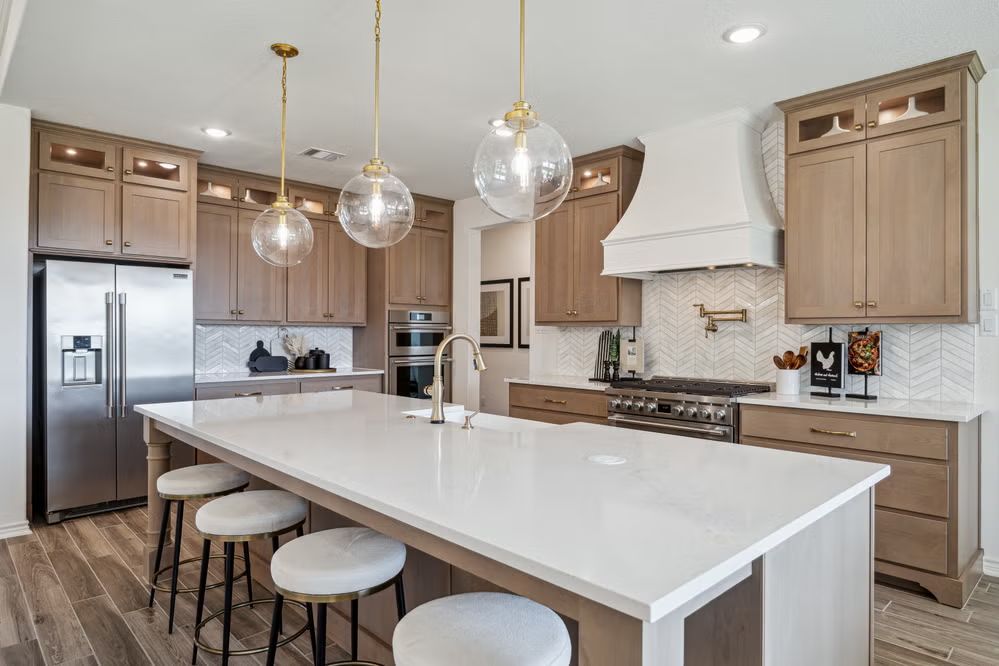
Kitchens often lead the budget because they combine cabinetry, counters, plumbing, electrical, lighting, and appliances. A modest kitchen refresh may start around $20,000 to $35,000, while a full replacement can run $40,000 to $90,000+.
A larger or more customized kitchen can go above that range very quickly. Cabinetry usually takes the biggest share of the cost because it affects layout, storage, and visual style all at once. Countertop pricing depends on slab material, edge profile, cutouts, and how much of the kitchen is being reconfigured. Electrical updates matter too, especially when under-cabinet lighting, dedicated appliance circuits, or added outlets are part of the plan.
For many Richardson homes, the kitchen sets the tone for the rest of the remodel. If the kitchen is too conservative, the whole house can feel dated even if other rooms are improved. If it is too premium relative to the rest of the house, the budget may drift away from the neighborhood’s likely return. The best result usually lands in the middle: clean, durable, and proportionate.
Bathrooms
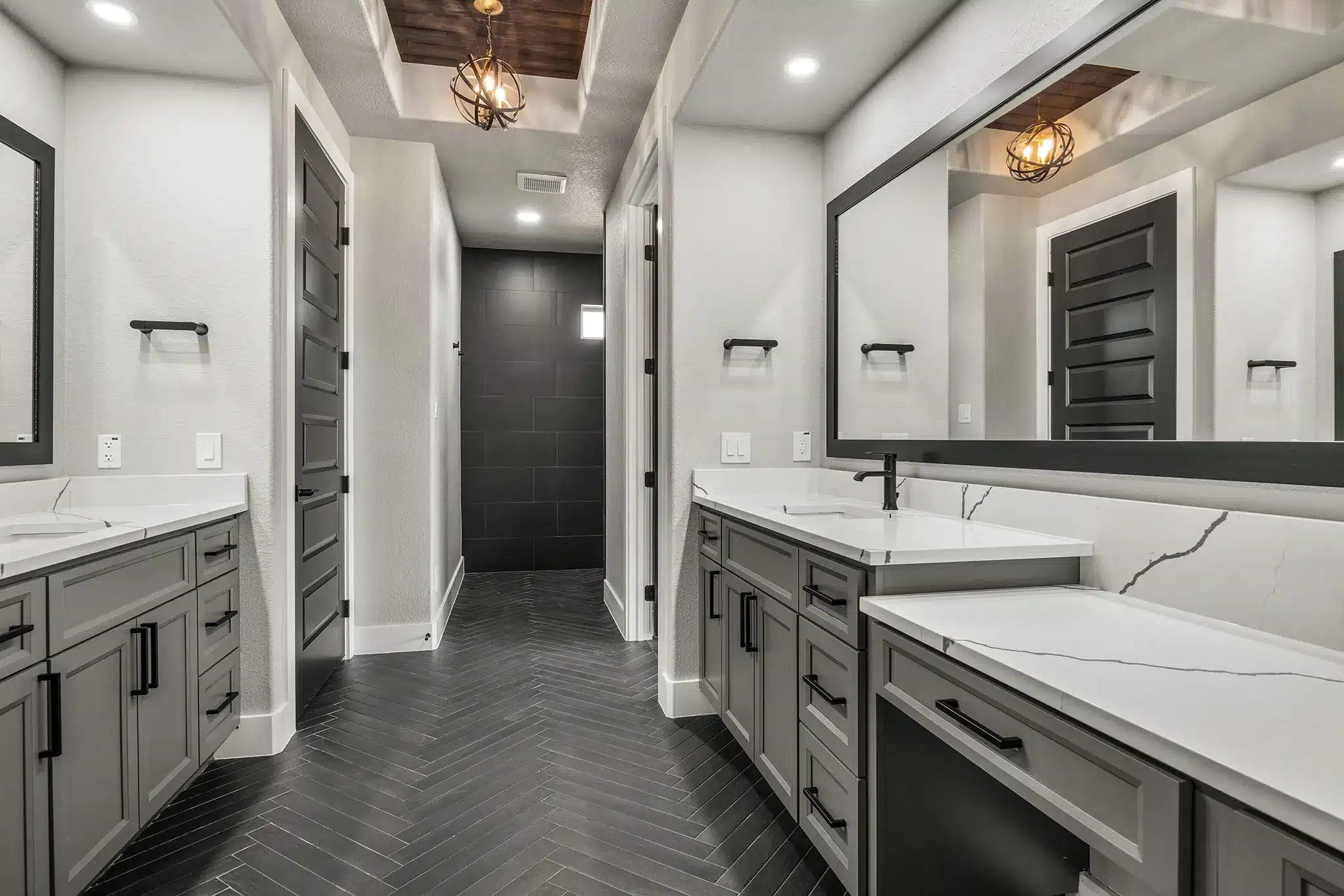
Bathrooms are smaller but labor-intensive. Hall baths may fall in the $12,000 to $25,000 range, while a primary bath can reach $25,000 to $50,000+ depending on tile, fixtures, and layout.
The reason bathroom pricing climbs so fast is that every square foot is highly coordinated. Waterproofing, tile prep, plumbing trims, lighting, ventilation, storage, and glass all need to fit together. If the bathroom layout changes, even slightly, the budget may increase because the plumbing fixture locations, wall blocking, and tile work need to be adjusted.
A primary bath with a curbless shower, double vanity, upgraded lighting, and custom tile can sit at the higher end of the range even without dramatic structural changes. A hall bath can be more modest, but the budget still needs enough room for good waterproofing and durable finishes.
Flooring, paint, lighting, and mechanicals
Flooring can run from $8,000 to $30,000+ depending on size and material. Interior paint and drywall are usually lower-cost upgrades with strong visual impact. HVAC, insulation, and electrical improvements often become more valuable when walls or ceilings are already open.
These categories matter because they often create the finish line for the whole project. Once the walls are painted and the flooring is in place, a house starts to feel complete. That is why homeowners sometimes underestimate them during planning. Paint can be one of the most visible updates in the project, but it still requires prep, patching, and schedule coordination. Flooring is similar: a simple material choice can still require significant labor and careful sequencing around cabinets, doors, and trim.
Exterior and transitional areas
Although most whole-home remodel budgets focus on the interior, transitional spaces can matter as well. Entry areas, mudrooms, laundry rooms, and hallways are often the connective tissue of the home. If those areas are ignored while the main rooms are upgraded, the house can feel uneven. A smaller allocation for these spaces can improve the overall result and help the remodel feel intentional rather than piecemeal.
What to expect in allowances
It is useful to think of allowances as placeholders, not guarantees. A tile allowance covers a set amount of material value, but it does not automatically include every trim piece or design upgrade. A cabinet allowance may account for standard finish quality but not specialty features or deep customization. The more clearly the allowance is written, the easier it is to compare bids and understand where the project may move up or down.

Labor, Materials, and Lead Times
A practical budget split is often 35 to 55 percent labor, 30 to 50 percent materials and fixtures, 5 to 10 percent for permits and design, and 5 to 15 percent contingency.
Long-lead items like cabinets, specialty tile, and premium countertops should be selected early. A 2 to 6 week planning window can save time later by reducing schedule gaps once the build starts.
That split is not exact for every job, but it is a useful planning tool. Labor tends to rise when the project includes more demolition, more trade coordination, more custom work, or more time spent correcting hidden issues. Materials rise when homeowners choose higher-end surfaces, larger-format tile, custom cabinetry, or appliances with longer ordering windows. Design and permits stay smaller on many jobs, yet they still deserve attention because a rushed preconstruction phase often becomes a more expensive construction phase.
Lead times can be a bigger budget issue than people expect. A cabinet selection that takes too long can push installation back. A tile choice with a long backorder can slow a bath. A countertop measurement cannot happen until cabinets are set, and final plumbing trim may not be completed until the counters are finished. The more carefully these milestones are planned, the less likely the job is to stall.
The labor side also benefits from early decisions. If the project requires electricians, plumbers, carpenters, painters, and tile setters, each trade needs enough notice to fit the job into a reliable schedule. That is especially true in active remodeling markets where good crews are not sitting idle. Early planning helps protect both the schedule and the final price.

Permits, Codes, and Inspections
Cosmetic work like paint may not need permits, but structural changes, electrical modifications, plumbing relocation, and HVAC work often do. Texas code guidance varies by locality, so the exact Richardson process should be confirmed before demolition starts.
A clean permit path helps reduce rework and inspection delays, which is especially useful if the remodel is tied to a future sale or refinance.
Permits are not just a paperwork step. They are part of risk control. When an inspector reviews the work at the right stage, problems can be corrected before they are hidden behind finishes. That reduces the chance of opening finished areas later and paying twice for the same labor. It also helps the project close out cleanly, which matters if the homeowner wants a documented renovation for resale.
For many projects, the most efficient approach is to identify permit-sensitive items early. If the remodel includes wall removal, new lighting layouts, plumbing relocations, or HVAC changes, those choices should be reflected in the budget from the beginning instead of added later as a surprise. The budget is usually easier to manage when the permit path is explicit.
Inspection timing also influences how the job is sequenced. Rough inspections need enough lead time before insulation and drywall. Final inspections need the house to be substantially complete. If those milestones are missed, the project can sit idle waiting for re-inspection. That may not appear as a separate line item on the estimate, but it still affects total project cost.

Richardson-Specific Planning Tips
Older-home conditions are common in established neighborhoods, so it is smart to check electrical capacity, plumbing condition, subfloor stability, and attic insulation before final pricing.
For local comparisons, the Allen remodeling cost guide and the Lewisville remodeling cost guide show how similar projects can price differently across nearby markets.
Richardson homeowners often get the best results by treating remodel planning as a sequence of decisions instead of one giant estimate. First, decide whether the home needs a refresh, a partial-gut remodel, or a deeper rebuild. Then decide where the budget should concentrate: kitchen, baths, flooring, layout, or mechanical upgrades. Finally, decide where to hold the line. That can mean keeping plumbing in place, limiting custom cabinetry to the most visible room, or choosing a midrange finish package that gives the home a polished look without stretching the budget unnecessarily.
It also helps to compare the remodel against the age and quality of nearby homes. If neighboring houses have already been updated, a higher degree of finish consistency may be needed. If the neighborhood is more value-oriented, a cleaner and more durable scope may produce a better return than a luxury-heavy plan. Richardson has enough variety that the answer depends on the specific street and house type.
Another useful planning step is to list the spaces that create the daily pain points. If mornings are slow because the primary bath is cramped, the bath may deserve priority. If storage is the issue, cabinet and closet planning may matter more than a decorative finish upgrade. If the main complaint is visual wear, paint, lighting, and flooring may deliver the best value. The best remodeling budgets are built around how the home is actually used.

Typical Remodeling Timeline From Design to Closeout
Planning and estimating may take 2 to 6 weeks, permitting and procurement can add 2 to 8 weeks, and construction often runs 4 weeks to 6+ months depending on scope.
The most common phases are planning, design, permitting, demolition, rough-in, finish work, and punch list. Even smaller projects benefit from a clear sequence so one trade does not stall the next.
A simple refresh can move fairly quickly because the house stays mostly intact. Once the scope grows, the calendar grows too. A kitchen and bath remodel may need design time, material selection, ordering, demo, rough plumbing and electrical, inspections, wall repair, cabinetry, counters, tile, paint, fixtures, and final touch-up. Each step has dependencies. If one step slips, the rest are affected.
Homeowners should also plan for the living disruption. Even when the construction schedule is technically on track, a remodel still changes how the house functions during the work. Dust, noise, limited access to rooms, and temporary storage needs are all part of the project reality. Budgeting enough time for those disruptions is as important as budgeting enough money for the materials.
A sensible way to think about the timeline is by decision density. The more decisions the project requires, the more time it takes to set up correctly. That is why big remodels often spend a meaningful amount of time in preconstruction even before demolition begins. That front-loaded effort usually pays off later by reducing change orders and schedule surprises.
For homeowners trying to coordinate family schedules, school calendars, or travel, it helps to map the project against the parts of the year that are easiest to live through. A remodel does not always wait for a perfect season, but the household experience can improve a lot if the team plans around the most disruptive phases.

How to Keep Your Remodel on Budget
The best savings usually come from controlling scope, not chasing the cheapest finishes. Keep plumbing where it is when possible, set allowances early, avoid late changes, and hold a 5 to 15 percent contingency.
If your project includes kitchen or bath work, the Richardson kitchen remodeler page and the Richardson bathroom remodeler page are useful next steps for narrowing scope and getting a clearer budget picture.
It also helps to make the budget decisions in the right order. Decide on layout before finishes. Decide on structural changes before cosmetic upgrades. Decide on cabinet and appliance dimensions before tile and paint colors. That order keeps the project from changing around itself.
Allowance management is another strong budget tool. A reasonable allowance for tile, lighting, plumbing fixtures, or hardware keeps the estimate honest without forcing a selection before the homeowner is ready. If the allowance is too low, the project may feel underpriced at first and then overrun later. If it is too high, the estimate may look intimidating even though the final outcome is likely within range. The goal is realism.
Another practical control is to reserve the most expensive custom choices for the rooms that matter most. A highly customized primary suite can make sense if it is used every day. The same level of customization in a secondary space may not create enough value to justify the cost. This kind of prioritization is often what separates a well-managed remodel from a budget that keeps drifting upward.
A homeowner can also save money by deciding where not to spend. For example, if the trim package is already strong, it may not need to be replaced. If the layout works well, it may be better to keep it and invest in better cabinets or lighting. If a surface is durable and in decent shape, refinishing may be smarter than replacement. Good remodeling is not just about what gets upgraded; it is also about what gets preserved.
When a Remodel Is Worth the Spend
A remodel is worth the spend when it improves how the home functions, reduces ongoing maintenance headaches, and makes the overall house feel coherent again. In Richardson, that often means solving a combination of layout problems and finish wear rather than simply replacing one item at a time.
If the kitchen feels cramped, the baths are dated, and the flooring is worn throughout the main living spaces, a coordinated remodel can produce a much better outcome than piecemeal work over several years. The same is true when older mechanical systems are nearing the end of their practical life. Opening the house once and fixing the related components can sometimes be more efficient than touching the same areas repeatedly.
There is also a timing element. If you plan to stay in the home long term, the value is measured in comfort and daily use. If you may sell in the next few years, the value is partly financial and partly market positioning. A thoughtful remodel can help the house feel current without making it so specialized that future buyers see a mismatch.
A remodel is usually easiest to justify when it fixes multiple problems at once. One room can look good on its own, but if the rest of the house still feels tired, the impact may be limited. By contrast, a coordinated plan across the main rooms can make the whole property feel more intentional and easier to live in. That is where good planning creates real value beyond the line-item costs.
If you are deciding between a lighter refresh and a deeper overhaul, the decision often comes down to how much of the house is actually working. A home that only needs new finishes is a very different project from one that needs better circulation, better storage, and updated systems. Clear-eyed scope definition is usually the strongest predictor of a budget that stays under control.
A good Richardson remodel should improve the way the house works every day while still respecting the neighborhood and resale market. Fin Home can help you shape the right scope, timeline, and finish level for your home.

Why Building in Richardson Is Different
Richardson has a mix of established homes and updated infill, so two houses with the same square footage can need very different scopes. That is why preconstruction inspection matters so much.
Another factor is access. In a busy suburban market, deliveries, dumpster placement, and subcontractor timing can all be affected by traffic and staging. On a remodel, that can add friction even when the actual construction work is straightforward.
A third factor is resale fit. Buyers in Richardson tend to respond well to durable, clean, practical finishes that look intentional without becoming overly custom. That makes finish selection a real part of budget planning, not just design taste.
For older houses near core parts of the city, the biggest unknown is often not the design itself but what the demolition will reveal. A wall may hide older wiring, an undersized return, a patched drain line, or framing that was changed during a previous renovation. Once a project begins, those conditions can influence both cost and timeline. The most practical response is not to overbuild the initial estimate; it is to plan enough contingency and allow time for a thorough walkthrough before construction starts.

What a Whole-Home Remodel Costs by Scope
Light refresh
A light refresh keeps the layout intact and focuses on visible improvements. It can include new paint, trim work, fixture swaps, and selective flooring replacement. These projects can often stay in the $35,000 to $90,000 range if there are no major system issues.
The value of this scope is that it changes how the house feels without forcing a long disruption cycle. A few thousand dollars may go to paint and prep, several thousand to lighting and fixture updates, and another portion to flooring in the most visible rooms.
A light refresh is usually the right fit when the home is functionally sound but dated. If cabinets are solid, the floor plan works, and the mechanical systems are in decent shape, the project can focus on the most visible wear points. Many homeowners choose this route when they want a cleaner, brighter home before listing, refinancing, or simply settling in for another several years.
Midrange remodel
A midrange remodel usually touches the kitchen, at least one bathroom, flooring, and lighting. Once multiple trades are involved, total cost often rises to $90,000 to $190,000.
This is the most common whole-home category because it offers a noticeable transformation without the complexity of a full gut job. In practical terms, it is also where one late selection can affect cabinets, backsplash, plumbing trim, and final paint.
A midrange project often includes a combination of new cabinets or cabinet refacing, quartz or other stone countertops, upgraded sinks and fixtures, recessed lighting, new flooring through shared spaces, and updated wall finishes. If the homeowner wants a modernized kitchen and one or two improved baths, the budget can move quickly once finish selections and labor are fully priced.
Extensive remodel
An extensive remodel may include removing walls, moving plumbing, upgrading electrical, and replacing more of the finish package. That is where budgets often move past $190,000 and into much higher territory.
At this level, the project behaves more like a coordinated construction program than a simple update. The sequence matters, and one delay can ripple into several trades.
This scope usually makes sense when the house needs both style and function changes. For example, an older plan may have a small kitchen, closed-off dining space, and isolated living room. Opening those areas can dramatically improve daily life, but it also adds engineering, structural framing, drywall repair, flooring replacement, and finish matching. Those are not optional extras; they are built into the cost of getting the space to perform the way the owner expects.
Partial-gut interior remodel
A partial-gut remodel sits between a cosmetic update and a total tear-out. Some finishes stay, but substantial portions of the interior are removed and rebuilt. Costs often fall in the $140,000 to $260,000 range, depending on how much of the structure, systems, and finishes are touched.
This category is common when the house has a strong shell but a poor interior layout. The goal may be to preserve the exterior and foundation while completely renewing the spaces people use every day. In that case, the work can include new kitchen and bath layouts, repaired subfloors, upgraded electrical service, new insulation in opened cavities, and all new paint, trim, and flooring.
Whole-home gut remodel
Some homes cross into gut-remodel territory. That usually means major demolition, several new utility runs, and a near-total replacement of interior finishes. These projects can move above $250,000 or $300,000+ depending on house size and finish level.
That does not mean every older home needs a gut remodel. It means homeowners should be honest about what the structure needs versus what they want visually.
A gut remodel can be the best answer when there is a combination of outdated layout, aging systems, and poor prior work. In that case, the question is not whether the project is expensive; it is whether smaller fixes would only delay the same problems. Once that is clear, the homeowner can make a more confident decision on scope, finish level, and timing.

Biggest Cost Drivers in Richardson
Square footage, layout changes, finish level, hidden conditions, labor availability, and permit timing drive most of the budget.
Square footage and room count
A 1,600-square-foot home and a 2,900-square-foot home may both need the same type of work, but the larger house usually requires more material, more labor, and more prep time.
The reason is simple: every square foot has a chain of costs attached to it. More flooring means more waste and installation time. More wall area means more paint, trim, and patching. More rooms means more switches, more door casings, more transitions, and more coordination between trades. Even if the design remains simple, the total surface area increases the budget.
Layout changes and structural work
Moving walls, plumbing, or gas lines almost always costs more than keeping them where they are. In kitchens and baths, even one relocation can trigger framing, drywall, electrical rerouting, and inspection work.
A wall removal might look like a single decision in a floor plan, but the real work extends beyond demolition. It may require temporary support, beam sizing, reframing, patching nearby finishes, and reworking floor transitions. If the wall carries HVAC runs, plumbing, or electrical circuits, the budget grows further. That is why the simplest-looking change is often one of the most expensive.
Finish level and material selection
A durable midrange finish package can often save 15 to 30 percent versus a premium package. Premium cabinetry, stone surfaces, and custom millwork all push the budget upward.
That difference shows up most clearly in kitchens and primary bathrooms, where materials are highly visible and highly touched. A homeowner can spend carefully on cabinet hardware, faucets, lighting, and counters and still end up with an attractive result. But premium choices across every surface at once can push the project into a much higher bracket. The key is deciding where the eye naturally lands first.
Hidden conditions
Opening walls often reveals old wiring, plumbing issues, moisture damage, or subfloor problems. That is why many remodel budgets carry a 5 to 15 percent contingency.
In a city like Richardson, hidden conditions can be especially important in houses that have seen multiple partial updates over time. A room may have newer paint but older wiring behind it. A bath may look refreshed while the drain system remains outdated. Once those conditions are exposed, the budget needs room to respond.
Labor and sequence
Skilled trades are priced by demand and complexity. If the project needs several trades in sequence, one delay can idle the next trade.
That is one reason remodeling schedules rarely behave like a straight line. A cabinet delay can hold back counters, plumbing trim, backsplash, and final electrical. A flooring change can affect casing height, appliance installs, and paint touch-up. In practice, good sequencing is a cost-control tool. The fewer times a crew has to wait on another decision, the less waste the project accumulates.

Room-by-Room Budget Breakdown
Kitchen
Kitchens often lead the budget because they combine cabinetry, counters, plumbing, electrical, lighting, and appliances. A modest kitchen refresh may start around $20,000 to $35,000, while a full replacement can run $40,000 to $90,000+.
A larger or more customized kitchen can go above that range very quickly. Cabinetry usually takes the biggest share of the cost because it affects layout, storage, and visual style all at once. Countertop pricing depends on slab material, edge profile, cutouts, and how much of the kitchen is being reconfigured. Electrical updates matter too, especially when under-cabinet lighting, dedicated appliance circuits, or added outlets are part of the plan.
For many Richardson homes, the kitchen sets the tone for the rest of the remodel. If the kitchen is too conservative, the whole house can feel dated even if other rooms are improved. If it is too premium relative to the rest of the house, the budget may drift away from the neighborhood’s likely return. The best result usually lands in the middle: clean, durable, and proportionate.
Bathrooms
Bathrooms are smaller but labor-intensive. Hall baths may fall in the $12,000 to $25,000 range, while a primary bath can reach $25,000 to $50,000+ depending on tile, fixtures, and layout.
The reason bathroom pricing climbs so fast is that every square foot is highly coordinated. Waterproofing, tile prep, plumbing trims, lighting, ventilation, storage, and glass all need to fit together. If the bathroom layout changes, even slightly, the budget may increase because the plumbing fixture locations, wall blocking, and tile work need to be adjusted.
A primary bath with a curbless shower, double vanity, upgraded lighting, and custom tile can sit at the higher end of the range even without dramatic structural changes. A hall bath can be more modest, but the budget still needs enough room for good waterproofing and durable finishes.
Flooring, paint, lighting, and mechanicals
Flooring can run from $8,000 to $30,000+ depending on size and material. Interior paint and drywall are usually lower-cost upgrades with strong visual impact. HVAC, insulation, and electrical improvements often become more valuable when walls or ceilings are already open.
These categories matter because they often create the finish line for the whole project. Once the walls are painted and the flooring is in place, a house starts to feel complete. That is why homeowners sometimes underestimate them during planning. Paint can be one of the most visible updates in the project, but it still requires prep, patching, and schedule coordination. Flooring is similar: a simple material choice can still require significant labor and careful sequencing around cabinets, doors, and trim.
Exterior and transitional areas
Although most whole-home remodel budgets focus on the interior, transitional spaces can matter as well. Entry areas, mudrooms, laundry rooms, and hallways are often the connective tissue of the home. If those areas are ignored while the main rooms are upgraded, the house can feel uneven. A smaller allocation for these spaces can improve the overall result and help the remodel feel intentional rather than piecemeal.

Labor, Materials, and Lead Times
A practical budget split is often 35 to 55 percent labor, 30 to 50 percent materials and fixtures, 5 to 10 percent for permits and design, and 5 to 15 percent contingency.
Long-lead items like cabinets, specialty tile, and premium countertops should be selected early. A 2 to 6 week planning window can save time later by reducing schedule gaps once the build starts.
That split is not exact for every job, but it is a useful planning tool. Labor tends to rise when the project includes more demolition, more trade coordination, more custom work, or more time spent correcting hidden issues. Materials rise when homeowners choose higher-end surfaces, larger-format tile, custom cabinetry, or appliances with longer ordering windows. Design and permits stay smaller on many jobs, yet they still deserve attention because a rushed preconstruction phase often becomes a more expensive construction phase.
Lead times can be a bigger budget issue than people expect. A cabinet selection that takes too long can push installation back. A tile choice with a long backorder can slow a bath. A countertop measurement cannot happen until cabinets are set, and final plumbing trim may not be completed until the counters are finished. The more carefully these milestones are planned, the less likely the job is to stall.

Permits, Codes, and Inspections
Cosmetic work like paint may not need permits, but structural changes, electrical modifications, plumbing relocation, and HVAC work often do. Texas code guidance varies by locality, so the exact Richardson process should be confirmed before demolition starts.
A clean permit path helps reduce rework and inspection delays, which is especially useful if the remodel is tied to a future sale or refinance.
Permits are not just a paperwork step. They are part of risk control. When an inspector reviews the work at the right stage, problems can be corrected before they are hidden behind finishes. That reduces the chance of opening finished areas later and paying twice for the same labor. It also helps the project close out cleanly, which matters if the homeowner wants a documented renovation for resale.
For many projects, the most efficient approach is to identify permit-sensitive items early. If the remodel includes wall removal, new lighting layouts, plumbing relocations, or HVAC changes, those choices should be reflected in the budget from the beginning instead of added later as a surprise. The budget is usually easier to manage when the permit path is explicit.

Richardson-Specific Planning Tips
Older-home conditions are common in established neighborhoods, so it is smart to check electrical capacity, plumbing condition, subfloor stability, and attic insulation before final pricing.
For local comparisons, the Allen remodeling cost guide and the Lewisville remodeling cost guide show how similar projects can price differently across nearby markets.
Richardson homeowners often get the best results by treating remodel planning as a sequence of decisions instead of one giant estimate. First, decide whether the home needs a refresh, a partial-gut remodel, or a deeper rebuild. Then decide where the budget should concentrate: kitchen, baths, flooring, layout, or mechanical upgrades. Finally, decide where to hold the line. That can mean keeping plumbing in place, limiting custom cabinetry to the most visible room, or choosing a midrange finish package that gives the home a polished look without stretching the budget unnecessarily.
It also helps to compare the remodel against the age and quality of nearby homes. If neighboring houses have already been updated, a higher degree of finish consistency may be needed. If the neighborhood is more value-oriented, a cleaner and more durable scope may produce a better return than a luxury-heavy plan. Richardson has enough variety that the answer depends on the specific street and house type.

Typical Remodeling Timeline From Design to Closeout
Planning and estimating may take 2 to 6 weeks, permitting and procurement can add 2 to 8 weeks, and construction often runs 4 weeks to 6+ months depending on scope.
The most common phases are planning, design, permitting, demolition, rough-in, finish work, and punch list. Even smaller projects benefit from a clear sequence so one trade does not stall the next.
A simple refresh can move fairly quickly because the house stays mostly intact. Once the scope grows, the calendar grows too. A kitchen and bath remodel may need design time, material selection, ordering, demo, rough plumbing and electrical, inspections, wall repair, cabinetry, counters, tile, paint, fixtures, and final touch-up. Each step has dependencies. If one step slips, the rest are affected.
Homeowners should also plan for the living disruption. Even when the construction schedule is technically on track, a remodel still changes how the house functions during the work. Dust, noise, limited access to rooms, and temporary storage needs are all part of the project reality. Budgeting enough time for those disruptions is as important as budgeting enough money for the materials.
How to Keep Your Remodel on Budget
The best savings usually come from controlling scope, not chasing the cheapest finishes. Keep plumbing where it is when possible, set allowances early, avoid late changes, and hold a 5 to 15 percent contingency.
If your project includes kitchen or bath work, the Richardson kitchen remodeler page and the Richardson bathroom remodeler page are useful next steps for narrowing scope and getting a clearer budget picture.
It also helps to make the budget decisions in the right order. Decide on layout before finishes. Decide on structural changes before cosmetic upgrades. Decide on cabinet and appliance dimensions before tile and paint colors. That order keeps the project from changing around itself.
Allowance management is another strong budget tool. A reasonable allowance for tile, lighting, plumbing fixtures, or hardware keeps the estimate honest without forcing a selection before the homeowner is ready. If the allowance is too low, the project may feel underpriced at first and then overrun later. If it is too high, the estimate may look intimidating even though the final outcome is likely within range. The goal is realism.
Another practical control is to reserve the most expensive custom choices for the rooms that matter most. A highly customized primary suite can make sense if it is used every day. The same level of customization in a secondary space may not create enough value to justify the cost. This kind of prioritization is often what separates a well-managed remodel from a budget that keeps drifting upward.

When a Remodel Is Worth the Spend
A remodel is worth the spend when it improves how the home functions, reduces ongoing maintenance headaches, and makes the overall house feel coherent again. In Richardson, that often means solving a combination of layout problems and finish wear rather than simply replacing one item at a time.
If the kitchen feels cramped, the baths are dated, and the flooring is worn throughout the main living spaces, a coordinated remodel can produce a much better outcome than piecemeal work over several years. The same is true when older mechanical systems are nearing the end of their practical life. Opening the house once and fixing the related components can sometimes be more efficient than touching the same areas repeatedly.
There is also a timing element. If you plan to stay in the home long term, the value is measured in comfort and daily use. If you may sell in the next few years, the value is partly financial and partly market positioning. A thoughtful remodel can help the house feel current without making it so specialized that future buyers see a mismatch.
A good Richardson remodel should improve the way the house works every day while still respecting the neighborhood and resale market. Fin Home can help you shape the right scope, timeline, and finish level for your home.