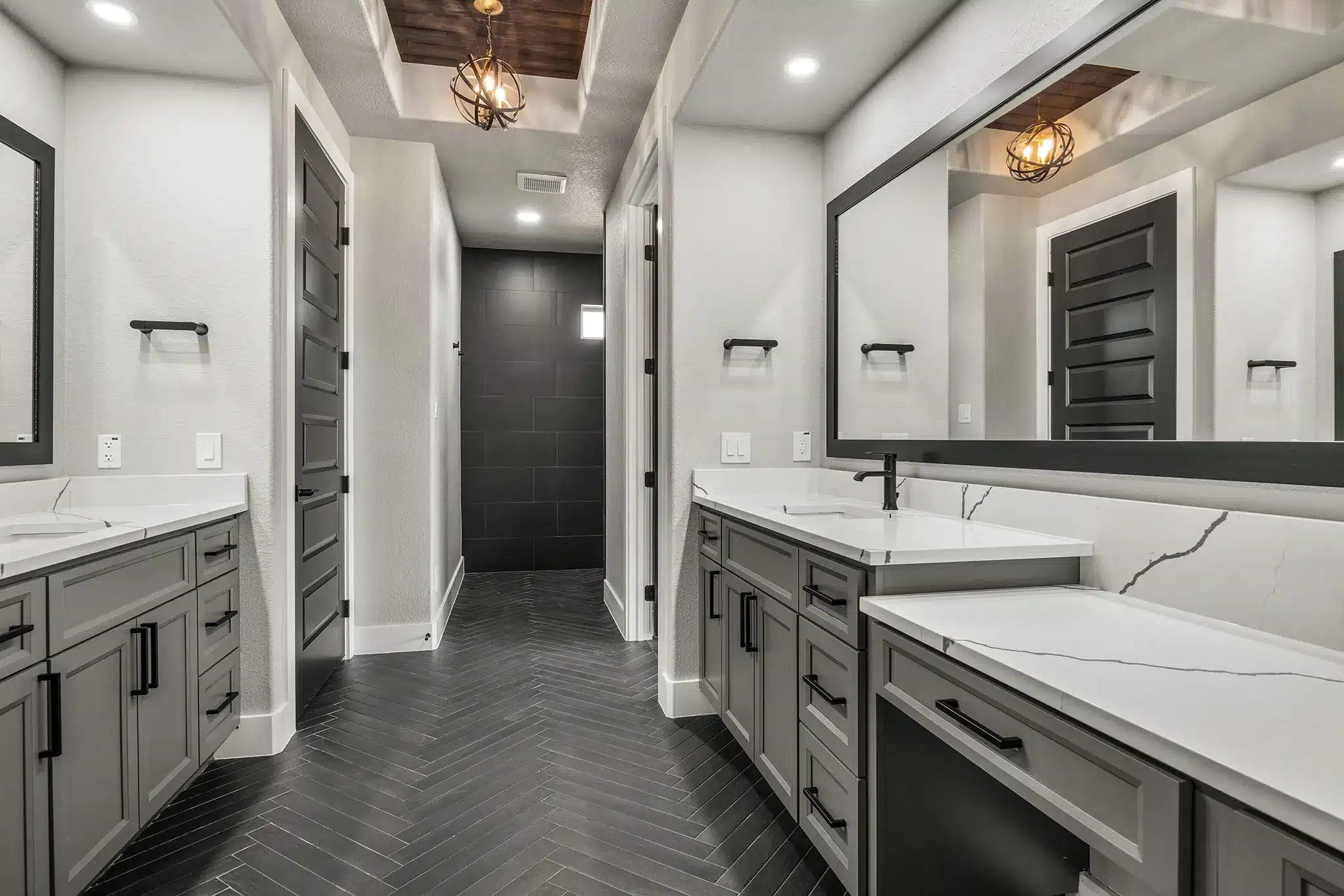
What Does Kitchen Remodeling Cost in Possum Kingdom Lake?
A kitchen remodel in Possum Kingdom Lake can cost as little as $15,000 to $35,000 for a focused refresh, $35,000 to $75,000 for a standard full remodel, and $100,000+ for an upscale project with layout changes, premium finishes, and custom details. Those are broad 2026 planning ranges, but they are useful because they reflect how most kitchen budgets break down before the project is fully defined.
A quick way to think about it is this:
| Project type | Typical 2026 cost range | What it usually includes |
|---|---|---|
| Cosmetic refresh | $15,000-$35,000 | Paint, hardware, light fixture updates, basic countertop or backsplash replacement, modest appliance swaps |
| Midrange full remodel | $35,000-$75,000 | New cabinets or refacing, new countertops, sink/faucet replacement, flooring, lighting, appliance allowance, minor layout adjustments |
| High-end remodel | $75,000-$100,000+ | Custom cabinetry, structural or layout changes, luxury appliances, stone surfaces, upgraded flooring, expanded electrical and plumbing scope |
| Luxury / whole-kitchen reconfiguration | $100,000-$150,000+ | Major redesign, premium finishes, wall removal, significant trade work, custom millwork, high-spec appliances |
The biggest reason ranges swing so widely is that kitchen remodeling combines visible finish choices with hidden trade work. A homeowner might see only cabinets and countertops, but the final bill also includes electrical, plumbing, drywall, trim, flooring, disposal, permits, and often a contingency for unknown conditions. In other words, a kitchen can look simple from the outside and still be expensive underneath.
If you want a broader regional benchmark to compare against, see our DFW kitchen remodel cost guide for how pricing typically compares across North Texas. If you already know you want a local contractor, our Possum Kingdom Lake kitchen remodeling service page is the best place to start.
For many lake-area homeowners, the practical budget target is not the lowest possible number. It is the number that gets you a kitchen that holds up to humidity, seasonal use, and real-life wear without becoming a maintenance headache.
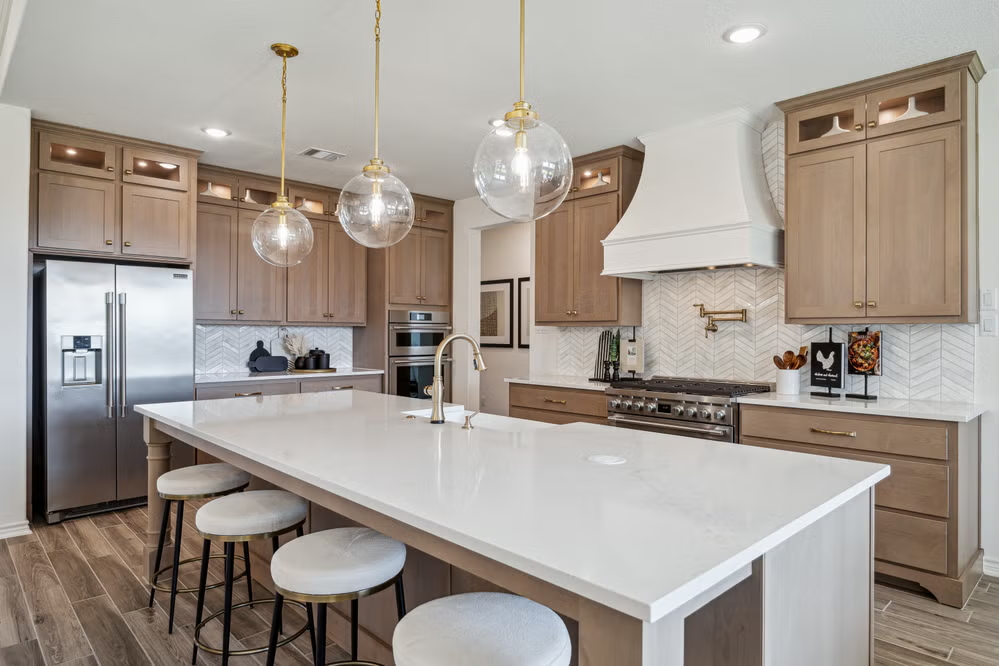
Why Building in Possum Kingdom Lake Is Different
Possum Kingdom Lake projects are not always harder than inland projects, but they are often different in ways that affect cost. Access can be tighter, staging space can be limited, and deliveries may take more planning than a typical suburban kitchen job. When materials have to be carried farther, parked off-site, or scheduled around narrow access windows, labor time can climb.
There is also the lake-home factor. Some homes are second homes or vacation properties, which changes how owners think about the remodel. Instead of chasing every decorative upgrade, many people prefer durable, low-maintenance finishes that can handle occasional vacancy, humidity, and heavy weekend use. That can shift budget away from purely decorative features and toward better cabinet construction, tougher flooring, improved ventilation, and appliance choices that are easy to maintain.
Moisture matters too. Waterfront or near-water properties often benefit from better exhaust, more careful cabinetry selection, and flooring materials that tolerate seasonal swings better than bargain-grade products. In older lake homes, hidden electrical, plumbing, and subfloor issues may not be obvious until demolition starts. That is one reason contingency planning matters more here than in a newer, highly standardized neighborhood.
If the property is near the shoreline or in a low-lying area, it is smart to check flood-related considerations early in the planning stage. County-level questions can affect how you sequence the project, and flood screening can be relevant before you finalize finishes or cabinetry choices. For planning context, the county’s official resources and FEMA flood mapping tools are worth a look: Palo Pinto County official site and FEMA Flood Map Service Center.

Typical Project Cost Ranges
The best way to budget a kitchen remodel is by scope, not by wish list. Most homeowners fall into one of three buckets.
1. Small refresh: $15,000-$35,000
This range is for projects that keep the kitchen layout mostly intact. Common items include:
- Paint or refinish work
- Cabinet hardware replacement
- New light fixtures
- One or two appliance replacements
- Basic backsplash tile
- A modest countertop upgrade
- Minor plumbing fixture updates
A refresh is often the right move when the existing cabinets are still structurally sound and the room functions well. If the goal is to make the kitchen look cleaner, brighter, and more current without moving walls, this is usually the most efficient budget range. It is also the range where homeowners can often see the biggest visual payoff per dollar.
2. Midrange full remodel: $35,000-$75,000
This is the most common range for a real kitchen transformation. It usually includes:
- New cabinetry or semi-custom cabinet packages
- New countertops
- Sink and faucet replacement
- Flooring replacement
- Updated lighting and outlets
- Backsplash tile
- Appliance allowance
- Minor layout tweaks
In this range, the kitchen typically gets rebuilt around a new set of finishes and a better function. Many homeowners also use this budget band to improve storage, increase prep space, or make the room feel more open without undertaking major structural work. If you keep the footprint mostly the same, this range can deliver a substantial upgrade without pushing into luxury territory.
3. High-end remodel: $75,000-$100,000+
Once you move into custom cabinetry, premium appliances, and larger design changes, the cost rises quickly. A high-end kitchen often includes:
- Custom cabinets
- Stone slab countertops
- Built-in or panel-ready appliances
- Lighting design beyond basic replacement
- Flooring that matches the rest of the home
- More complex electrical and plumbing work
- Possible wall removal or structural modification
This tier is where design decisions matter as much as construction decisions. A project can climb past $100,000 when homeowners choose custom details, larger islands, premium hardware, and high-spec appliances. If the project also involves moving plumbing or gas, the budget can jump by thousands per change point; even a single reroute may add roughly $1,000-$5,000+ depending on access and distance.
For comparison, homeowners in nearby markets may see similar broad tiers, but local site conditions can shift where a project lands. If you are comparing nearby lake-area budgets, it can help to look at both Broken Bow and Palo Pinto County to understand how scope and local conditions affect final pricing.
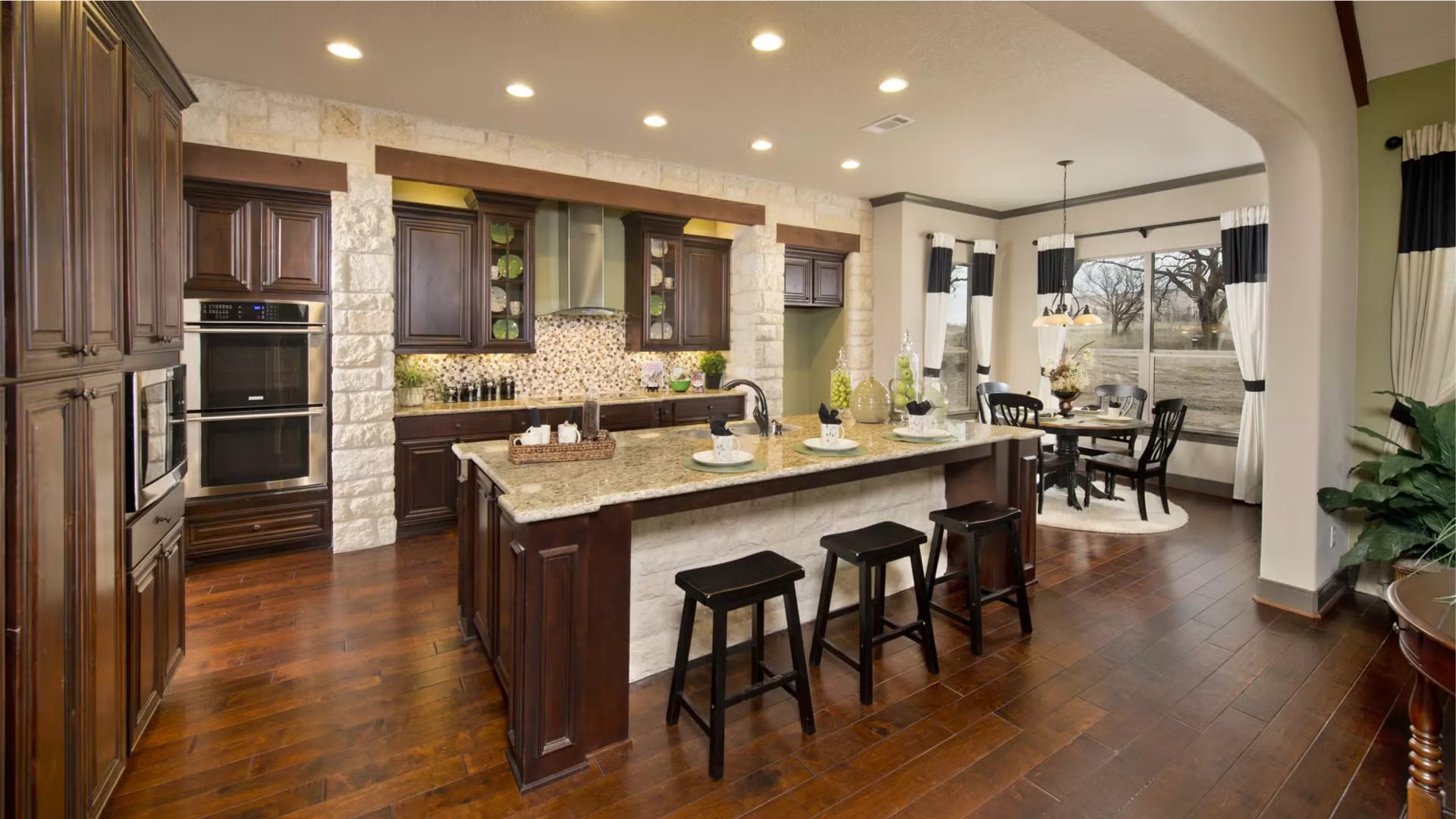
Cost Per Square Foot and What It Includes
Cost per square foot is a useful shortcut, but it is only a starting point. In Possum Kingdom Lake, kitchen remodel pricing often falls into approximate bands like these:
- Minor refresh: about $150-$300 per square foot
- Midrange remodel: about $300-$500 per square foot
- High-end remodel: about $500-$800+ per square foot
These are planning numbers, not quotes. They vary because kitchens are expensive in ways that are not evenly tied to square footage. A small kitchen with custom cabinets and slab stone can cost more per square foot than a larger kitchen with simpler finishes. That is why the room’s size matters, but the scope matters more.
A square-foot budget usually includes some mix of the following:
- Demolition and haul-off
- Framing or drywall repairs
- Cabinetry
- Countertops
- Plumbing fixtures
- Electrical updates
- Flooring
- Paint and trim
- Appliance allowance
- Installation labor
- Site protection and cleanup
What it may not include is equally important. Some square-foot estimates leave out permit fees, design drawings, hidden repairs, upgraded appliances, or contingency reserves. That is why a per-square-foot number should never replace a detailed scope review.
Cabinetry alone often takes a large share of the budget. In many full remodels, cabinets can account for roughly 25% to 40% of total cost. If the kitchen needs custom storage, specialty drawer systems, or finishes that hold up well in a lake environment, that percentage can climb. The same is true for countertops, especially if you choose thick stone slabs, waterfall edges, or more waste-heavy layouts.
If your kitchen is small, the per-square-foot number may look high because fixed costs do not shrink very much. Mobilization, design, permits, and trade visits still happen even in compact spaces. If your kitchen is large, the per-square-foot number may come down slightly, but premium finishes can push the total right back up.

Main Factors That Change Total Price
Several variables push a kitchen remodel up or down in Possum Kingdom Lake, and many of them are specific to the home itself.
Layout changes
Keeping the same layout is usually cheaper than moving walls, plumbing, or gas. Once you start relocating appliances, sinks, or islands, the project requires more design, more trade coordination, and more finish repairs. Moving a sink or dishwasher may seem small, but plumbing reroutes can trigger licensed labor, patching, and inspection steps.
Home age and hidden conditions
Older lake homes often reveal surprises after demolition. Common findings include outdated wiring, undersized electrical service, old plumbing lines, damaged subfloors, and walls that are out of square. These are the kinds of hidden conditions that justify a contingency budget. A remodel can look straightforward at the estimate stage and then change quickly once the walls are open.
Finish level
The difference between builder-grade, midrange, and custom finishes is enormous. Stock cabinets and laminate tops cost much less than custom cabinetry and slab stone. A modest backsplash costs far less than a full-height stone feature wall. Flooring, fixtures, and hardware can all swing the final number.
Appliances
Appliance packages can range from a few thousand dollars to well over $20,000 depending on the brand and configuration. A homeowner who wants standard stainless appliances has a very different budget than someone ordering built-in refrigeration, professional ranges, or panel-ready appliances.
Delivery and staging access
Possum Kingdom Lake properties may have tighter driveways, constrained parking, or limited staging space. That can add labor time, especially when materials need to be handled carefully or stored off-site. If deliveries are delayed or access is difficult, the project may lose efficiency and drive up labor costs.
Moisture and ventilation needs
Humidity and seasonal vacancy make ventilation more important than in a typical inland kitchen. Better exhaust, more durable cabinet materials, and more water-tolerant flooring choices can increase the upfront cost, but they can also reduce future repair headaches.
Permitting and jurisdiction checks
Some jobs require more planning than others. If plumbing moves, electrical changes, or floodplain concerns are involved, you may need to verify local requirements before construction begins. For plumbing-specific concerns, the Texas State Board of Plumbing Examiners is a useful authority for understanding why licensed plumbing work matters. For broader code and trade context, the Texas Department of Licensing and Regulation is a helpful reference point.

Labor, Materials, and Trade-Level Costs
Kitchen remodels are usually divided between labor and materials, but the split can vary a lot based on finish level. In a typical midrange project, the material side might include cabinets, countertops, tile, flooring, appliances, fixtures, paint, and trim. Labor then covers demolition, carpentry, electrical, plumbing, tile setting, installation, drywall, and finish work.
Labor cost drivers
Labor tends to rise when the project involves multiple trades or difficult site conditions. Examples include:
- Reworking plumbing for a new sink location
- Installing new circuits for lighting or appliances
- Adding outlets to meet a revised layout
- Repairing walls and ceilings after demolition
- Leveling floors before new finishes go in
- Coordinating appliance and cabinet installation sequences
Each trade visit adds time and scheduling complexity. In Texas, licensed work matters, especially when plumbing or appliance-related changes are involved. That is one reason the project should be planned around the people who are allowed to do the work, not just around the finished look.
Material cost drivers
Materials are where many budgets drift. Homeowners often start with one assumption and then upgrade a handful of items:
- Cabinet construction: stock, semi-custom, or custom
- Countertops: laminate, quartz, granite, or specialty stone
- Flooring: luxury vinyl plank, tile, engineered wood, or hardwood
- Backsplash: simple ceramic tile or more intricate tile layouts
- Fixtures: basic chrome or designer-level finishes
- Appliances: standard set or premium package
Because cabinetry often takes 25% to 40% of the budget, a cabinet upgrade can move the whole project into a different price class very quickly. Countertops and flooring are the next places where homeowners often overspend relative to the original budget.
Trade-level allowances to watch
It is smart to budget allowances for items that are hard to finalize before demolition:
- Electrical upgrades
- Plumbing corrections
- Subfloor repair
- Drywall and texture matching
- Paint touch-up after installation
- Trim replacement
- Appliance electrical and venting adjustments
If you are comparing a remodel versus a larger property investment, it can also help to look at related spending patterns in home remodeling in Possum Kingdom Lake or even building a house in Possum Kingdom Lake to see how kitchen budgets fit into the bigger picture.
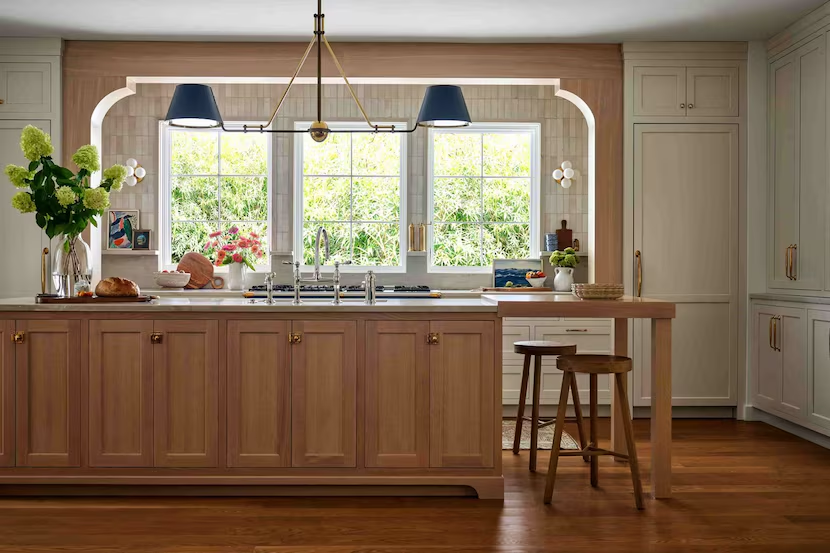
Permit, Design, and Planning Costs
The visible part of the kitchen remodel is only part of the budget. Preconstruction and soft costs can add a meaningful amount, especially when the project is more than a simple surface refresh.
Design and planning
Design costs may include:
- Measurement and site verification
- Floor plan revisions
- Cabinet layout planning
- Finish selection
- Material sourcing
- Coordination drawings for trades
For a smaller refresh, design costs can be modest. For a full remodel with layout changes, planning becomes more important and may require more time. The more complicated the layout, the more valuable it is to solve decisions before demolition starts. In practical terms, that can mean $500-$1,500 for a simple measured layout and finish selection package, or $2,000-$5,000+ when the project needs more detailed plans, cabinet drawings, and trade coordination.
Permit and inspection costs
Depending on the scope, you may need permits for electrical, plumbing, mechanical, or structural changes. The permitting process is often straightforward for like-for-like replacement, but it becomes more important once walls move or service lines change. In the Possum Kingdom Lake area, county or local jurisdiction checks may matter, especially when floodplain or site conditions are in play. It is wise to confirm requirements early with Palo Pinto County resources and to screen property risk where relevant using flood mapping tools. Budget roughly $250-$750 for simple permit needs, or $750-$2,500+ if the project involves multiple trade permits, inspections, or more complex scope review.
Hidden planning items
Planning should also account for:
- Temporary kitchen setup during construction
- Appliance lead times
- Cabinet ordering windows
- Countertop fabrication schedule
- Tile and finish material availability
- Waste disposal and dump fees
On a straightforward remodel, planning might feel secondary. On a more custom job, it can determine whether the project finishes smoothly or gets delayed by one missing item. A kitchen often depends on a chain of dependencies, and one late material can slow everything behind it.

Timeline and Process Expectations
A standard kitchen remodel commonly takes 6 to 12 weeks of construction after design and ordering, and longer if custom cabinets or specialty finishes are involved. That timeline can stretch if the home has hidden conditions or if the site is difficult to access.
Typical timeline phases
1. Design and preconstruction: 2-6 weeks
This phase includes measurement, planning, cabinet selection, finish decisions, and scheduling. If the project is custom or if multiple revisions are needed, this stage can last longer than expected.
2. Ordering and lead times: 2-10+ weeks
Some materials are available quickly, while others need fabrication or custom production. Cabinet lead times are often the biggest schedule variable. Specialty countertops and appliance backorders can also affect the start date.
3. Demolition: 1-3 days
Demo is usually quick, but it can uncover hidden problems. Once the walls are open, repairs can add time.
4. Rough trade work: 1-2 weeks
Plumbing, electrical, and any mechanical changes happen here. If the layout changes substantially, this stage may take longer.
5. Drywall, paint, and prep: 3-7 days
After trades are complete, the room has to be closed back up and prepared for finishes.
6. Cabinets, tops, and finishes: 1-3 weeks
Cabinet installation, countertop templating and fabrication, backsplash work, flooring, and trim all happen in sequence. The more coordination-sensitive the job is, the more likely the schedule is to move.
Schedule risk in lake-area homes
Possum Kingdom Lake projects can face more schedule variability than a standard suburban remodel because of staging, access, delivery timing, and site conditions. If a property is a second home, the owner may also be coordinating remotely, which can slow selections and approvals. The best way to protect the timeline is to lock the scope early and avoid late changes once ordering starts.

How to Budget the Project Realistically
A realistic kitchen budget is not just the target number for finishes. It is the all-in number that lets the project finish without panic.
Start with a base scope
First decide whether the project is a refresh, a midrange remodel, or a high-end redesign. That choice sets the budget ceiling. If the layout is staying the same, you will almost always spend less than if you are moving plumbing, gas, or walls.
Build in a contingency
A contingency allowance of 10% to 20% is common, especially in older homes or projects with unknown conditions. In a $50,000 remodel, that means setting aside roughly $5,000 to $10,000 for surprises. In a $90,000 project, contingency might be $9,000 to $18,000. That reserve is not there to encourage overspending; it is there to keep the project moving if hidden repairs show up.
Separate must-haves from nice-to-haves
A good budget distinguishes between:
- Necessary structural or mechanical work
- Essential function upgrades
- Preferred finish upgrades
- Optional luxury features
If the budget gets tight, it is easier to cut decorative extras than to remove required electrical or plumbing corrections.
Keep allowances realistic
Appliance allowances, countertop allowances, and cabinet allowances should match the quality level you actually want. If you underbudget these categories, you create disappointment later when selections are made. On the other hand, if you overbudget every finish, the project can become more expensive than the home or the market really justify.
Sequence the spending
A smart remodel budget often flows in this order:
- Scope and design
- Hidden-condition reserve
- Cabinets and appliances
- Countertops and tile
- Flooring, lighting, and fixtures
- Paint and trim
- Final contingency
This order helps keep the project grounded in function before style. If you want to compare how this type of planning fits into broader renovation decisions, it can be useful to review a bathroom project too, such as bathroom remodeling in Possum Kingdom Lake, because the budgeting logic is similar even when the rooms differ.
When to Choose a Kitchen Remodeling Project in Possum Kingdom Lake
A kitchen remodel makes the most sense when the current space is limiting how you live, cook, host, or maintain the home. In Possum Kingdom Lake, that decision often comes down to three questions.
1. Is the kitchen functionally outdated?
If the room lacks storage, has poor flow, or is hard to clean and maintain, a remodel can improve everyday use in a very meaningful way. An awkward kitchen can make a vacation property feel more stressful than relaxing.
2. Does the home need more durable finishes?
Lake-area homes often benefit from better moisture tolerance, stronger cabinet construction, and simpler maintenance. If the current kitchen is already showing wear from humidity, seasonal use, or older materials, a remodel can be both a comfort upgrade and a durability upgrade.
3. Is the home ready for a broader investment?
If you are already planning other improvements, a kitchen project may be the right time to align the whole interior. A kitchen and adjacent living area often work together visually, and a better kitchen can lift the feel of the whole home. That is one reason homeowners often compare their kitchen budget against broader home improvement planning, not just against a room-by-room wish list.
If you are trying to decide whether to update, rebuild, or hold off, a conversation about scope is more useful than a generic estimate. The same budget could support a modest facelift or a major transformation depending on where you spend it. For homeowners who want a local contractor to help sort through the choices, the best next step is usually to review the options on our Possum Kingdom Lake kitchen remodeling service page and compare them against the broader market context in the DFW kitchen remodel cost guide.

Final Thoughts on Kitchen Remodeling in Possum Kingdom Lake
A kitchen remodel in Possum Kingdom Lake is usually a blend of design goals, durability needs, and site-specific planning. The most affordable projects stay close to the existing layout and focus on visible updates. The more expensive ones involve custom cabinetry, premium surfaces, layout changes, and trade work that goes well beyond cosmetics.
As a planning rule, expect:
- $15,000-$35,000 for a modest refresh
- $35,000-$75,000 for a solid midrange remodel
- $100,000+ for a high-end or heavily customized kitchen
Those numbers are only the beginning. The real budget depends on site access, hidden conditions, moisture considerations, finish level, and how much of the existing kitchen you want to keep. In a lake-area home, durability and simplicity often matter as much as style. A well-planned remodel can make the kitchen easier to live in, easier to maintain, and better suited to the way the home is actually used.
If you are ready to turn a rough budget into a real plan, the next step is to define the scope, identify any unknowns, and get a detailed estimate from a contractor who understands lake-area remodeling.