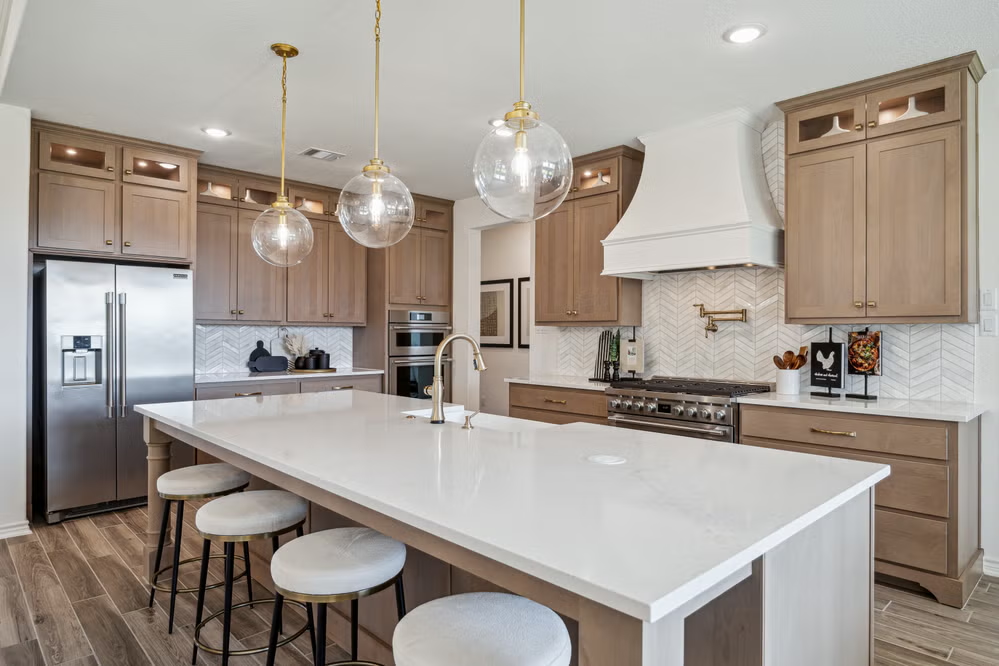
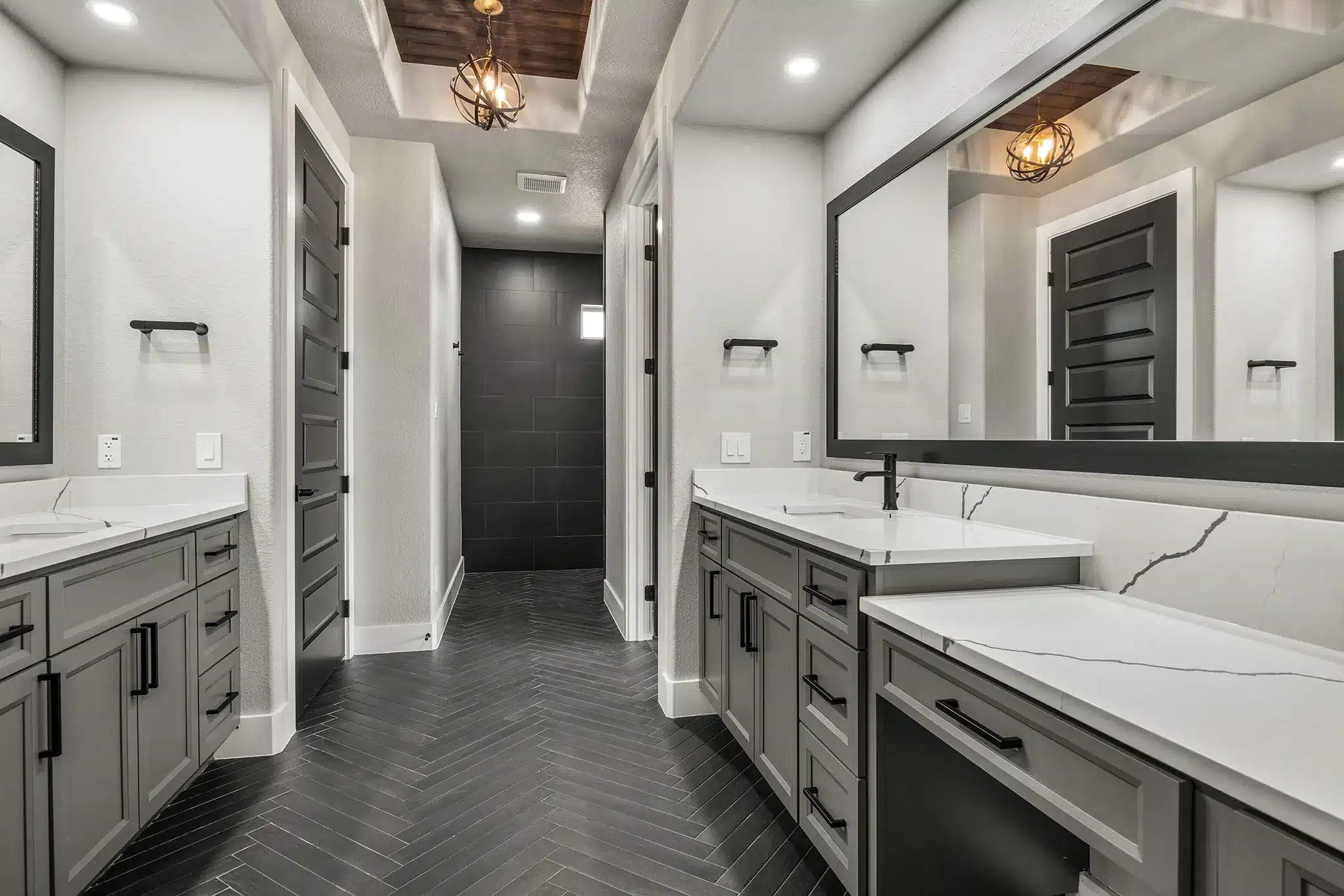
Home remodeling in Possum Kingdom Lake can be anything from a $20,000 cosmetic refresh to a $250,000+ whole-home transformation, depending on the size of the house, the age of the systems, and how much structural work is involved. For 2026 planning, a practical rule of thumb is to expect major remodel pricing in the range of about $125 to $300+ per square foot, with smaller projects coming in below that and full-gut renovations moving well above it.
| Project Type | Typical 2026 Cost Range | Common Scope |
|---|---|---|
| Cosmetic refresh | $15,000 to $40,000 | Paint, flooring, trim, lighting, minor fixture updates |
| Targeted kitchen or bath update | $40,000 to $100,000 | Cabinets, counters, tile, plumbing fixtures, layout tweaks |
| Midrange whole-home remodel | $100,000 to $200,000 | Multiple rooms, selective system upgrades, moderate finish changes |
| Major whole-home renovation | $150,000 to $300,000+ | Structural changes, full interior refresh, new mechanicals, premium finishes |
Those ranges are broad on purpose. In a lake area, remodel bids can swing quickly based on access, condition, and finish quality. A project that looks like a simple update on paper may uncover subfloor repair, outdated electrical, or moisture damage once walls and flooring come up. If you want a broader market context before you compare local estimates, start with Home Remodeling Cost in DFW. If you are already thinking in terms of execution, a local contractor like Possum Kingdom Home Remodeler can help translate a wish list into a buildable scope.

Why Building in Possum Kingdom Lake Is Different
Possum Kingdom Lake is not a typical suburban remodeling market. Many homes are older, seasonal, or custom-built over time, which means the existing conditions can vary a lot from property to property. That uncertainty affects pricing more than homeowners expect. A remodel in a 1,800-square-foot lake house may involve different electrical, framing, or plumbing realities than a similar-size house in a newer neighborhood.
Lake-adjacent homes can also face more exposure to humidity, wind, and weathering. That does not mean every finish needs to be premium, but it does mean material selection matters. Exterior doors, windows, trim, flooring, and even fasteners may need to be chosen with moisture resistance in mind. In practical terms, that can add a few thousand dollars on a smaller project or tens of thousands on a more extensive renovation.
There is also a logistical difference. Deliveries, subcontractor scheduling, and inspection timing can take longer in more remote or water-adjacent settings than in a dense metro area. If the house is occupied only part of the year, staging and sequencing also become more important. The remodel may need to be organized in longer phases so the crew can work efficiently without repeated mobilization costs.
Those realities do not make remodeling impossible; they just mean local planning matters more. The closer a project gets to the water, the more important it becomes to think about durability, access, and timing together rather than as separate issues.

Typical Project Cost Ranges
The easiest way to estimate a remodel is by scope. Whole-home remodeling can be broken into three useful planning buckets: smaller cosmetic work, midrange renovations, and major transformations.
A smaller remodel usually falls between about $15,000 and $50,000. That range often covers projects like repainting, replacing flooring in a few rooms, updating lights, swapping plumbing fixtures, and refreshing trim or doors. In a lake home, this is often the right scale when the structure is sound and the goal is to make the interior feel cleaner, brighter, and more durable without changing the layout.
Midrange projects usually land between about $50,000 and $150,000. This is where homeowners start tackling multiple major rooms at once. A kitchen-and-living-area update, a primary suite refresh, or a whole-home interior update with selective mechanical improvements often fits here. These projects may include new cabinetry, countertops, tile, upgraded appliances, improved insulation, and some electrical or plumbing work.
Major whole-home renovations often start around $150,000 and can exceed $300,000 when the home needs structural changes, major system upgrades, premium finishes, or a near full-gut rebuild inside the existing shell. In older lake homes, this is where hidden conditions can really move the budget. If the project involves moving walls, reworking bathrooms, replacing HVAC, or opening up the floor plan, it is very easy to add $40,000 to $100,000 beyond the first estimate.
A practical way to think about it:
- $15,000 to $40,000: cosmetic and maintenance-driven updates
- $40,000 to $100,000: targeted kitchen, bath, or two-room renovation
- $100,000 to $200,000: broader whole-home upgrade with selective system work
- $150,000 to $300,000+: major renovation or full-home reconfiguration
If your project includes both kitchen and bath work, it is often worth comparing the numbers to more focused estimates like kitchen remodel pricing in Possum Kingdom Lake and bathroom remodel pricing in Possum Kingdom Lake. The room-by-room math can make a whole-home budget easier to understand.

Cost Per Square Foot and What It Includes
Cost per square foot is useful for early planning, but it only works if you understand what it includes. In Possum Kingdom Lake, a broad 2026 remodeling range of about $125 to $300+ per square foot is a reasonable starting point for major remodels. That does not mean every square foot of the house costs the same. Kitchens, baths, laundry rooms, and areas with plumbing or custom millwork usually cost more than bedrooms or simple living spaces.
For example, a 1,600-square-foot home at $150 per square foot suggests a planning budget of about $240,000. At $225 per square foot, that same house moves to $360,000. That is why square-foot pricing is best treated as a rough budgeting tool, not a quote.
Here is a simple way to interpret unit cost:
- Lower end: $125 to $175 per square foot
- Usually lighter remodel scope
- More reuse of existing layout and systems
- Basic to mid-grade finishes
- Midrange: $175 to $250 per square foot
- More comprehensive room updates
- Better finishes, more trades, and some layout changes
- Higher end: $250 to $300+ per square foot
- Premium materials
- Structural modifications
- More mechanical, electrical, and plumbing work
- More complicated project coordination
What drives the number up is usually not just the visible finish. It is the work behind the walls: demo, framing, drywall repair, electrical rewiring, plumbing changes, HVAC modifications, and the cleanup and finishing that happens after all that. A house that looks simple from the outside may still need a high-cost remodel if the systems are old or the layout is inefficient.
Square-foot pricing also becomes less reliable in small homes. A 900-square-foot house can have a higher per-square-foot cost than a 2,500-square-foot home because kitchens, bathrooms, and utility spaces still require many of the same fixed-cost trades. That is another reason to get detailed numbers instead of relying only on averages.

Main Factors That Change Total Price
The biggest remodel price differences in Possum Kingdom Lake usually come from five things: condition, layout, finish level, access, and scope complexity.
Home age and hidden conditions
Older homes and former vacation properties can hide issues that are hard to see in a walk-through. Outdated wiring, undersized electrical service, old plumbing lines, uneven framing, and prior DIY repairs all create uncertainty. That uncertainty is why two seemingly similar homes can produce very different bids. Hidden-condition allowances of 10% to 20% are smart, especially when walls, floors, or ceilings will be opened.
Layout changes
Keeping the same floor plan is much cheaper than moving walls. Once you start relocating kitchens, bathrooms, or major circulation paths, you add framing, electrical, plumbing, HVAC, and finish work. A simple kitchen refresh might stay in the $40,000 to $70,000 range, while a kitchen relocation can jump past $100,000 quickly.
Finish selection
Finish level is one of the clearest cost multipliers. A basic package and a premium package can differ by tens of thousands on a whole-home project. Flooring, tile, cabinet construction, stone countertops, fixtures, and lighting all scale up quickly. Choosing a standard quartz top versus a high-end natural stone slab can change the cost by several thousand dollars in one room. Multiply that by a whole house and the difference becomes meaningful.
Access and logistics
If the home is difficult to reach, if deliveries need to be staged carefully, or if there is limited room for material storage, the contractor may spend more time coordinating the job. That can add labor cost, especially on projects requiring multiple deliveries or specialized equipment. This is one reason a remodel near the water can feel more expensive than a similar project elsewhere.
Permitting and complexity
Even when permits are straightforward, the time needed to prepare plans, coordinate inspections, and meet trade requirements affects total project cost. Complex jobs with structural changes or major system upgrades require more upfront design and more inspection coordination. The more moving pieces, the more likely the budget will need professional management.
For broader remodel budgeting in nearby markets, it can be helpful to compare with Palo Pinto County remodeling costs and see how site conditions and scope can shift the numbers from one property to the next.

Labor, Materials, and Trade-Level Costs
In almost every remodel, the final price is a combination of labor, materials, and trade coordination. In a kitchen or bathroom, multiple trades are active at once, which is why these rooms tend to cost more per square foot than living spaces.
Typical labor-heavy categories include:
- Demolition and disposal
- Framing and carpentry
- Electrical work
- Plumbing rough-in and finish
- HVAC modifications
- Drywall and painting
- Tile installation
- Cabinet installation
- Trim and finish carpentry
On a 2026 lake-area remodel, labor alone commonly accounts for about 35% to 50% of the total project cost. For a $100,000 remodel, that means roughly $35,000 to $50,000 may go to labor and trade coordination before materials are fully counted. A more complex $200,000 project can easily carry $70,000 to $100,000 in labor, especially if it involves multiple rooms, inspections, and custom finish work.
A simple cosmetic update might have labor in the $8,000 to $18,000 range if it is mostly paint, flooring, and fixture swaps. By contrast, a kitchen remodel with electrical, plumbing, cabinets, tile, and trim can bring in trade bids such as $6,000 to $12,000 for demolition and disposal, $8,000 to $20,000 for electrical, $7,500 to $18,000 for plumbing, and $10,000 to $25,000 for cabinetry installation and finish carpentry, depending on complexity.
Material costs also matter a lot. A basic flooring package may cost far less than premium engineered hardwood or large-format tile. Cabinet pricing varies widely depending on whether you use stock boxes, semi-custom cabinets, or fully custom millwork. Countertop material can vary by thousands across a typical kitchen. Fixtures, sinks, shower systems, and hardware are all small line items individually, but they can add up to a major cost difference overall.
There is also a durability premium in the Possum Kingdom Lake area. Lake-adjacent homes may justify moisture-resistant flooring, better sealants, upgraded windows, or more robust exterior finishes. Those choices can raise upfront cost, but they often reduce maintenance over time. In a humid or weather-exposed setting, paying more for longevity is often a smarter financial decision than choosing the cheapest available product.
If you want a bigger-picture discussion of remodel tradeoffs and budgeting philosophy, the full DFW remodeling cost guide is a helpful starting point, even though lake-area conditions may shift the final number.

Permit, Design, and Planning Costs
Soft costs can be easy to overlook because they do not always show up in the same way as cabinets or tile, but they are real budget items. Design, planning, permitting, and preconstruction work help prevent change orders later.
For planning, homeowners should think in phases:
Design and scope development
This stage often takes 2 to 6 weeks, depending on how clearly the project is defined. It includes concept decisions, measuring, layout ideas, and material selection. If the remodel involves multiple rooms or structural changes, design may take longer because more coordination is required.
Permit and preconstruction coordination
Permit prep and preconstruction can add another 2 to 8 weeks. The exact timeline depends on project complexity and the local review process. Even when permit handling is efficient, it still takes time to assemble drawings, product specs, trade details, and a clean scope of work. Contractors also need time to order long-lead items.
Budget allowances for soft costs
A realistic planning budget should include some combination of:
- Design or drafting fees
- Permit fees
- Engineering, if needed
- Measurement and planning time
- Preconstruction meetings
- Lead-time coordination for special-order materials
On a modest project, soft costs may be a few thousand dollars. On a larger renovation, they can easily be five figures if drawings, approvals, and coordination are extensive. That is especially true if the home needs structural review or if the remodel includes significant electrical or plumbing revisions.
In practical terms, the earlier you lock down the plan, the easier it is to keep the total project under control. Design decisions made late in the process tend to cost more than decisions made before demolition begins.
Timeline and Process Expectations
Most homeowners underestimate the time required for a remodel, especially in a lake area where access and scheduling can affect trade availability. A straightforward project might still take longer than expected because each phase depends on the one before it.
A realistic 2026 timeline often looks like this:
- Planning and design: 2 to 6 weeks
- Permitting and preconstruction: 2 to 8 weeks
- Ordering long-lead materials: 2 to 10+ weeks, depending on product
- Active construction:
- Cosmetic work: 1 to 4 weeks
- Midrange remodel: 4 to 10 weeks
- Major renovation: 8 to 16+ weeks
That means a total project can stretch from a few weeks to several months. A kitchen-and-bath renovation may be finished much faster than a whole-house remodel, but the schedule still depends on cabinet lead times, tile delivery, inspection timing, and how much demolition uncovers.
The biggest schedule risks in Possum Kingdom Lake tend to be:
- Material delays
- Trade availability
- Hidden conditions after demolition
- Weather-related timing for exterior work
- Limited access to the home if it is seasonally occupied
Seasonal occupancy matters more than many people think. If the house is only used part of the year, it can be harder to keep the job moving smoothly. Decisions, selections, and walkthroughs may be delayed if the homeowner is not available, and that can slow closeout. For that reason, the best remodel schedules are built with room for a few weeks of slack rather than assuming every phase will run exactly on time.

How to Budget the Project Realistically
A strong remodel budget is not just a single target number. It is a working plan that includes allowances, contingencies, and tradeoffs. In a market like Possum Kingdom Lake, that flexibility is especially important because hidden conditions are more common in older or lake-adjacent homes.
Start with a clear base scope. Decide which rooms are included, what will stay, what will be replaced, and whether the layout changes. Then build your budget around three layers:
1. Base construction cost
This is the core remodel estimate for labor and materials. It should reflect the chosen finish level, not the cheapest possible option. If you want midrange products, budget for midrange products.
2. Contingency
A contingency allowance of 10% to 20% is prudent. For example, a $120,000 project should carry about $12,000 to $24,000 in reserve. If the home is older or has known issues, lean toward the higher end. That money can absorb unexpected framing repair, electrical upgrades, subfloor work, or modest design changes without breaking the project.
3. Owner-selected upgrades
A lot of remodels exceed budget because homeowners fall in love with upgrades after the estimate is set. Higher-grade tile, built-in storage, specialty lighting, upgraded appliances, and premium fixtures can all push the price up. It is better to decide early which upgrades are essential and which are nice-to-have.
A few practical budgeting tips:
- Get line-item pricing where possible so you can compare apples to apples
- Keep the same layout when you want to save money
- Spend more where durability matters most, such as flooring and wet areas
- Save on surfaces that can be updated later
- Order long-lead items early to avoid schedule and price surprises
If you are planning a broader remodel across a larger property or multi-room layout, a contractor who understands local sequencing can make a major difference. That is where the local remodeling team becomes more valuable than a generic estimate.
For homeowners considering whether to remodel now or phase the work over time, a good rule is to complete any work that affects structure, plumbing, electrical, or waterproofing first. Finishes can often wait; fixing the building envelope and systems usually cannot.

When to Choose a Home Remodeling Project in Possum Kingdom Lake
A remodel makes the most sense when the structure is worth keeping but the function no longer fits your needs. That may mean the home has good bones, a usable lot, or a location you want to preserve, but the interior feels dated, inefficient, or worn out.
In Possum Kingdom Lake, remodeling is often the right choice when:
- You like the location but not the current interior layout
- The house needs durability upgrades for moisture or weather exposure
- The existing home is structurally sound but cosmetically tired
- You want to improve comfort without starting from scratch
- You are updating a seasonal or second home to make it easier to maintain
Remodeling may be less attractive when the house has major structural issues, severe hidden damage, or a layout that would require almost complete reconstruction to fix. In those cases, comparing remodel cost with new-build cost can be useful. If you are weighing whether to reinvest in an older property or start fresh, it can help to compare local renovation figures with new home construction costs in Possum Kingdom Lake.
Another consideration is how often the home is used. If it is a lake retreat, you may value lower maintenance more than maximum luxury. That can shift the budget toward durable flooring, simple finishes, and reliable systems instead of expensive decorative details. On the other hand, if this is a primary residence or a long-term retirement home, it may be worth investing more in comfort, accessibility, and performance.
The right remodel is not just the one with the lowest price. It is the one that matches the property, the schedule, and the way you actually live.

Final Thoughts on Home Remodeling in Possum Kingdom Lake
Home remodeling in Possum Kingdom Lake is usually a mix of opportunity and uncertainty. The opportunity is obvious: you can turn an older, less functional home into something far more comfortable, durable, and attractive. The uncertainty comes from the kind of houses many people own around the lake. Older systems, seasonal use, water-adjacent exposure, and remote logistics all make careful planning more important.
For 2026, a sensible starting point is to expect about $15,000 to $40,000 for a cosmetic refresh, $40,000 to $100,000 for a targeted kitchen or bath update, and $150,000 to $300,000+ for a major whole-home renovation. On a per-square-foot basis, most substantial remodels will land somewhere around $125 to $300+ per square foot depending on scope and finish quality. Once walls come open, the final number can move quickly, so a 10% to 20% contingency is not optional; it is part of a smart budget.
If you are serious about a remodel, the best next step is to define the scope clearly, choose materials with local conditions in mind, and get a detailed plan before demolition starts. A well-planned remodel can add years of usefulness and a lot of day-to-day comfort to a Possum Kingdom Lake home.
For nearby same-service comparisons, also review Cost to Remodel Your Home in Broken Bow (2026 Guide).