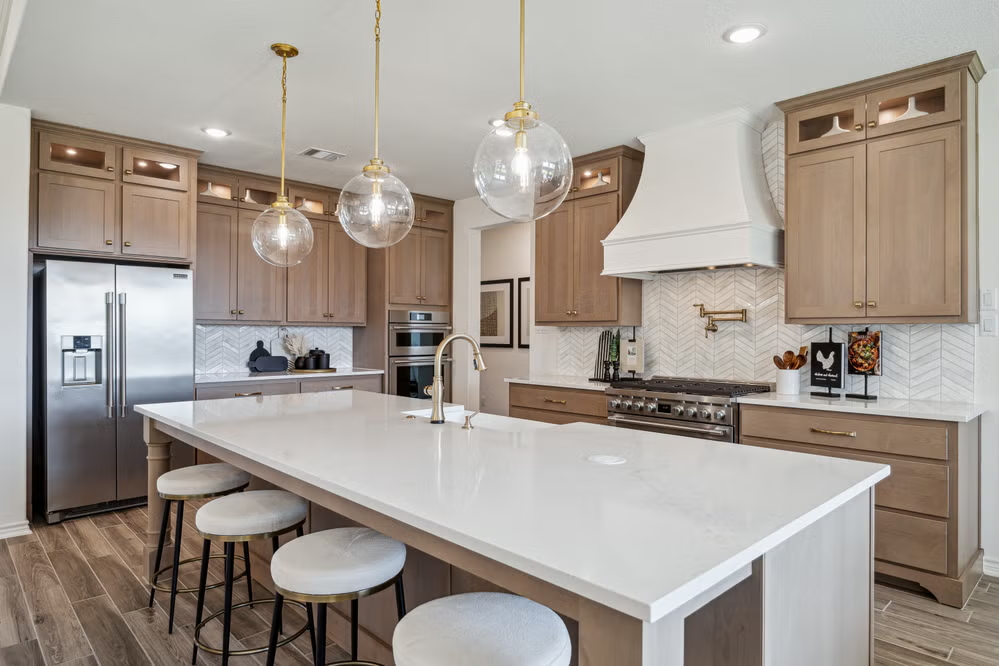
How Much Does a Kitchen Remodel Cost in Garland? (2026 Guide)
A kitchen remodel in Garland can cost a lot less than a full custom rebuild or a lot more than a simple refresh, depending on how much of the kitchen you change. For 2026, most homeowners should expect a practical range of about $25,000 to $150,000+, with many projects landing in the middle once cabinets, counters, flooring, and trade work are all included.
Here’s the fastest way to think about it:
| Project type | Typical Garland budget range | What it usually includes |
|---|---|---|
| Cosmetic refresh | $15,000–$35,000 | Paint, hardware, light fixtures, sink/faucet, minor surface updates |
| Midrange remodel | $35,000–$75,000 | New cabinets or refacing, countertops, backsplash, flooring, appliance updates, limited electrical/plumbing |
| Major or high-end remodel | $75,000–$150,000+ | Layout changes, custom cabinetry, premium finishes, upgraded lighting, plumbing moves, possible wall removal |
These ranges are not one-size-fits-all, but they are useful for planning. A kitchen that keeps the same footprint and sticks with stock or semi-custom selections will usually stay closer to the lower end. A kitchen that moves plumbing, expands the room, or uses custom finishes will climb quickly.
If you want a broader context for regional pricing, our DFW kitchen remodeling cost guide is a helpful companion. And if you are comparing contractor scope and execution in the area, our Garland kitchen remodeling service page explains how the project is typically managed.
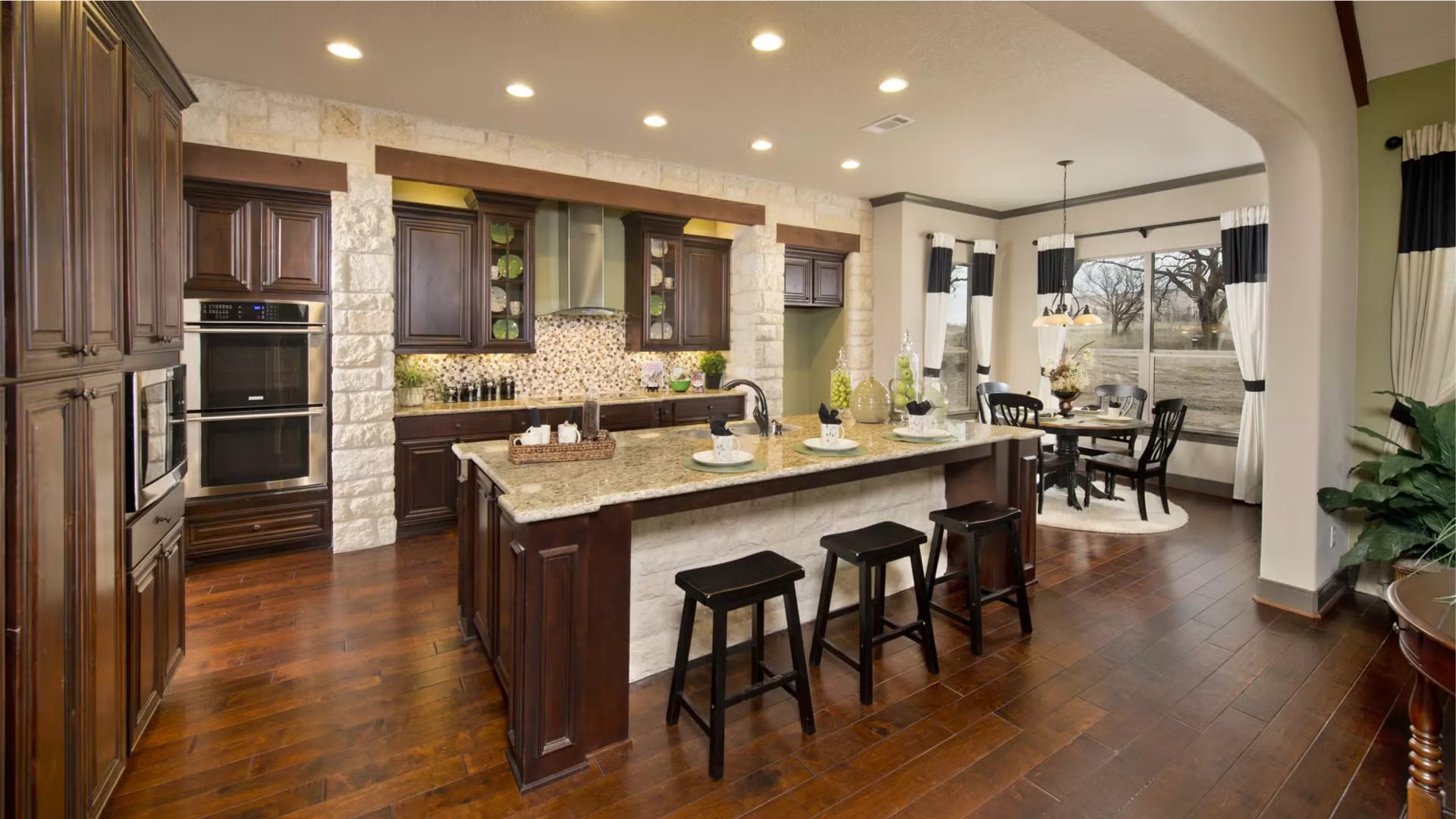
Why Building in Garland Is Different
Garland kitchen remodels often have to work around existing-home constraints instead of starting from a clean slate. That matters because older suburban floor plans can make wall removal, traffic-flow changes, and utility relocation more expensive than a surface-only update.
In practical terms, Garland projects often run into three local pricing realities:
- Existing layouts can be limiting. If the kitchen is closed off from the living area, opening it up may require framing, electrical changes, and sometimes structural review.
- Permits and inspections can affect timing. Electrical, plumbing, and structural work can trigger inspection steps that add both schedule complexity and holding costs.
- Moving utilities costs more than replacing finishes. Shifting a sink, gas line, dishwasher, or electrical service usually adds more labor than upgrading tile or paint.
That is why two kitchens with the same square footage can still land in very different budget brackets. In Garland, the biggest cost jump usually comes from how much of the existing house you disturb, not just how expensive the finishes are.

Typical Project Cost Ranges
A kitchen remodel budget is easier to manage when you break it into scope tiers rather than trying to guess one exact number.
1. Cosmetic kitchen refresh: $15,000–$35,000
This tier works best when the kitchen layout stays intact and most of the structure remains untouched. Common work includes:
- Paint or wall repair
- New cabinet hardware
- Updated faucet and sink
- Basic lighting replacement
- Countertop replacement in some cases
- Tile backsplash update
- Minor appliance swaps
This is the best fit for homeowners who want a cleaner, brighter kitchen without opening walls or relocating utilities. It is also the least disruptive option because the job can often avoid major permit-heavy changes.
2. Midrange full remodel: $35,000–$75,000
This is the most common planning range for many Garland homeowners. It usually includes a blend of visible upgrades and essential trade work:
- New or partially replaced cabinets
- Stone countertops
- New backsplash
- Flooring replacement
- New sink and faucet
- Appliance updates
- Electrical improvements for lighting or outlets
- Limited plumbing changes
- Paint, trim, and finish work
This tier usually delivers the biggest improvement in function and resale appeal without pushing into full custom territory. A project in this range may still keep the same footprint, but it often replaces almost every surface in the room.
3. Major or high-end remodel: $75,000–$150,000+
This category is for kitchens that become a true construction project. It may include:
- Custom cabinets
- Premium countertops
- High-end appliances
- Layout changes
- Wall removal or beam work
- Reworked lighting design
- Plumbing relocation
- Upgraded electrical service
- Flooring throughout connected spaces
- Designer-grade finishes and fixtures
Once you start changing the room’s footprint or bringing in specialty materials, the budget can rise quickly. In Garland, this is especially true when older homes need more extensive demo, framing adjustments, or utility rewiring than expected.
If you are comparing your plan with nearby markets, you may also want to review the Frisco version of this guide and the Irving version of this guide to see how scope and finish level can change pricing across North Texas.

Cost Per Square Foot and What It Includes
Some homeowners like to think in cost per square foot because it creates a quick starting estimate. For kitchen remodeling, though, this method works best as a rough planning tool rather than a final price formula.
A typical Garland kitchen remodel may land around:
- $150–$250 per square foot for a basic or midrange refresh
- $250–$400 per square foot for a more complete remodel with better finishes
- $400+ per square foot for custom work, major layout changes, or premium selections
These numbers can swing quite a bit because kitchens are packed with expensive items in a relatively small footprint. A 200-square-foot kitchen at $200 per square foot would suggest about $40,000, while a 200-square-foot kitchen at $350 per square foot would suggest about $70,000.
What does that square-foot price usually include?
- Demolition and haul-away
- Framing and drywall patching
- Cabinetry
- Countertops
- Flooring
- Plumbing and electrical work
- Fixtures and appliances
- Painting and trim
- Basic design coordination
What it usually does not explain well is the difference between cheap and expensive choices within each category. For example, a kitchen with stock cabinets and laminate counters will price very differently from one with custom cabinets and quartz or natural stone. A square-foot estimate is helpful, but it should never replace a line-item budget.
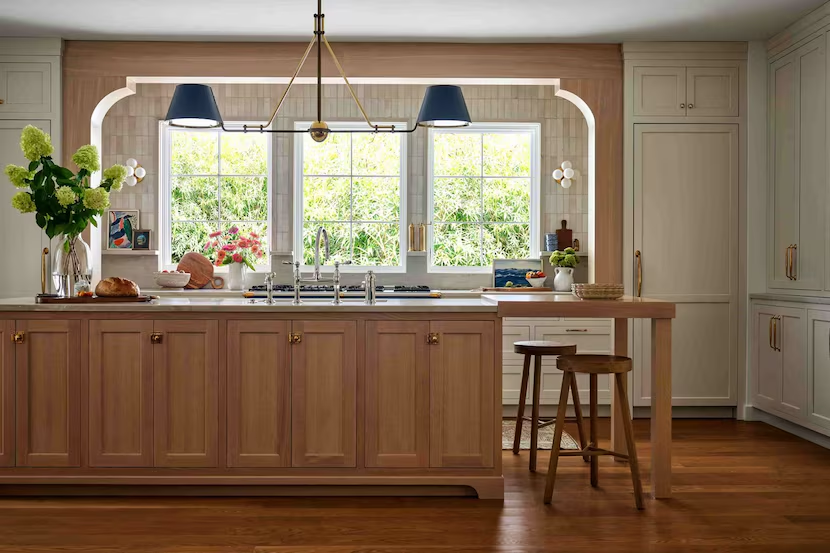
Main Factors That Change Total Price
The same basic kitchen can cost much more or much less depending on how many things you change. In Garland, these are the biggest budget drivers.
Layout changes
Changing the layout almost always raises the cost. If the kitchen keeps the same footprint, you can usually avoid some demolition, framing, and utility rerouting. If you move an island, shift a sink, or open the kitchen to another room, the price goes up because the project becomes more complex. A simple U-shaped kitchen that stays in place might cost $40,000–$55,000, while the same room with an opened wall and a relocated island can jump to $65,000–$95,000 or more.
Plumbing moves
Moving a sink, dishwasher, refrigerator water line, or gas connection can add labor and inspection steps. Even a simple plumbing shift may require opening walls or floors, then repairing them afterward. In many cases, relocating a sink run can add roughly $1,500–$4,000, while more involved gas or drain reroutes can push that closer to $5,000–$8,000 depending on access and distance.
Electrical upgrades
New appliances, under-cabinet lighting, pendant fixtures, and added outlets can require updated circuits or panel work. Electrical changes often become more expensive when the home has older wiring or when the new kitchen design needs more power than the old one provided. A few lighting and outlet updates may stay near $1,200–$3,500, but a broader rewire or panel-related upgrade can move into the $4,000–$10,000+ range.
Cabinet selection
Cabinets are one of the biggest line items in a kitchen remodel. Stock cabinets can keep costs down, semi-custom cabinets offer more flexibility, and custom cabinetry can become one of the most expensive parts of the job. For a typical Garland kitchen, cabinet costs might run from about $8,000–$15,000 for basic stock selections to $20,000–$35,000+ for semi-custom, with custom packages often going beyond $40,000 when the design is large or highly detailed.
Countertops and backsplash
Countertop material makes a major difference in price. Laminate is generally the least expensive, while quartz, granite, and specialty stone options cost more. Backsplash pricing also varies by tile size, layout complexity, and labor. For example, a modest laminate or entry-level surface package may stay around $2,000–$4,000, while quartz countertops with a more detailed backsplash can land in the $6,000–$12,000+ range.
Flooring and subfloor work
If the kitchen floor needs to be replaced, the budget should account for both finish flooring and any hidden subfloor repairs. That is especially important in older homes where previous patchwork repairs may not be obvious until demo starts. Replacing flooring alone may cost $3,000–$6,000 in many kitchens, but once subfloor repair is needed, it is common for the total to rise by another $1,000–$3,000 or more.
Finish level and design complexity
A simple, clean design with straightforward materials is usually less expensive than a kitchen with multiple cabinet heights, detailed trim, specialty lighting, and custom storage features. A basic finish package may keep the project in the low-to-mid range, while layered millwork, integrated appliances, and specialty hardware can add thousands of dollars without changing the room size at all.

Labor, Materials, and Trade-Level Costs
A realistic kitchen budget separates labor from materials, because that is where many homeowners underestimate the total.
Common material allowances
A reasonable planning model might include the following rough ranges:
- Cabinets: $8,000–$35,000+
- Countertops: $3,000–$12,000+
- Flooring: $3,000–$10,000+
- Backsplash: $1,500–$5,000+
- Sink and faucet: $500–$2,500+
- Lighting fixtures: $1,000–$5,000+
- Appliances: $5,000–$20,000+
- Paint and trim: $1,500–$5,000+
Trade labor costs
Trade labor often covers demolition, carpentry, electrical, plumbing, tile work, drywall, and final installation. These costs can rise when the project includes:
- Tight access
- Older home conditions
- Multiple inspections
- Reframing or wall removal
- Utility relocation
- Custom installation details
Labor can easily account for a large share of a kitchen remodel because so much of the work has to be coordinated in sequence. A cabinet installer, electrician, plumber, tile setter, and painter may all need to touch the project at different stages.
Why two kitchens can price very differently
A 180-square-foot kitchen with existing cabinets replaced in place may cost far less than a 180-square-foot kitchen that gets gutted, rewired, replumbed, and opened up to a nearby room. The material list may look similar on paper, but the trade hours and coordination are not.
When trades are involved, licensing and coordination matter too. For permitted electrical and plumbing scope, it is smart to rely on properly qualified contractors and check state trade requirements through Texas Department of Licensing and Regulation. For permit expectations and inspection steps, Garland’s own process is relevant through City of Garland Building Inspections and Permits.

Permit, Design, and Planning Costs
Soft costs may not be as exciting as countertops or cabinets, but they can meaningfully affect the total budget.
Design and planning
Depending on the scope, design work may include layout planning, cabinet selection, finish coordination, and construction documentation. For a straightforward remodel, design costs may stay modest. For a larger kitchen, especially one with layout changes, design can become a more meaningful line item.
Permits and inspections
Not every kitchen remodel needs the same level of permitting, but electrical, plumbing, and structural work often do. That means plan review, permit fees, and inspection timing should be part of the budget from the start. In Garland, the project timeline can stretch if inspections are delayed or if changes are required after the work has started.
Preconstruction site checks
Before construction begins, a contractor may need to verify wall conditions, utility locations, venting paths, and code-related details. That is especially useful in older homes where surprises behind the walls can change the scope after demo starts.
A practical planning allowance for design, permitting, and preconstruction items might be 5%–15% of the total project budget, depending on complexity. A cosmetic update may stay near the low end, while a custom kitchen with structural work may need more planning and documentation.
For homeowners who want a broader home-level budgeting context, our Garland whole-home remodeling guide can help show how kitchen work fits into a larger renovation strategy.
Timeline and Process Expectations
Kitchen remodel timing depends on how invasive the work is. The more you change, the longer the project usually takes.
Typical timeline ranges
- Cosmetic refresh: 2–4 weeks
- Midrange remodel: 4–8 weeks
- Major remodel: 8–16+ weeks
Typical phases
1. Design and selections
This phase may take 1–4 weeks or longer if you are making many finish decisions. Cabinets, appliances, counters, fixtures, and tile all need to be selected before construction starts in earnest.
2. Permitting and scheduling
If permits are required, add time for reviews and inspections. Depending on the project, this can be a few days or several weeks.
3. Demo and rough construction
Demolition is fast, but the repair work that follows is where the project begins to take shape. If framing, plumbing, or electrical changes are involved, this phase grows quickly.
4. Cabinet and finish installation
Cabinets, counters, backsplash, flooring, and fixtures are typically installed in sequence. Delays in one item can push back the rest of the schedule.
5. Final punch list
The last few days are usually spent on adjustments, touch-ups, and final inspections.
What creates delays
Schedule risk increases when a kitchen includes:
- Special-order cabinets
- Long-lead appliances
- Inspection dependencies
- Hidden damage after demo
- Structural changes
- Material backorders
That is why a “simple” kitchen remodel can still take longer than expected. A project may look straightforward until the walls open and hidden conditions appear.
If you are comparing adjacent market schedules and budgets, it can also help to read the related pricing guides for Frisco and Irving.

How to Budget the Project Realistically
The best kitchen budgets are not just estimates; they are decision tools. They tell you where to spend, where to save, and what to protect against.
Build in contingency
A good contingency reserve is usually 10%–20% of the total budget. If you are keeping the layout and dealing mostly with finishes, 10% may be enough. If your home is older or you plan to move plumbing or walls, 15%–20% is safer.
Use allowance categories
Instead of approving one lump sum, separate the budget into categories:
- Cabinets
- Countertops
- Appliances
- Flooring
- Lighting
- Plumbing
- Electrical
- Demo and disposal
- Drywall and paint
- Permit and design costs
That approach makes it easier to see where upgrades will add the most cost. For example, changing from semi-custom to custom cabinets may alter the budget far more than selecting a different backsplash tile.
Decide what matters most
A homeowner should usually identify the top two or three priorities before construction starts. Common priorities include:
- More storage
- Better workflow
- An open layout
- Higher-end finishes
- Improved lighting
- Better resale appeal
When the priorities are clear, it becomes easier to spend money where it actually improves the kitchen.
Keep a buffer for hidden issues
Older homes can hide problems behind the walls: uneven subfloors, outdated wiring, plumbing surprises, or prior repairs that no longer meet current standards. A budget without a hidden-condition buffer is more likely to run short.
Consider financing carefully
If the remodel is substantial, homeowners may use savings, a home equity product, or renovation financing. The best option depends on total project size, timing, and whether the work will be completed in one phase or split into stages.
A useful rule: if the project affects both structure and finishes, budget as if the hidden work will be more expensive than you first expect. That is often the difference between a smooth remodel and a stressful one.
When to Choose a Kitchen Remodeling Project in Garland
A kitchen remodel makes the most sense when the room is not working the way you need it to. In Garland, that often means one of three situations:
- The kitchen is functional but outdated.
- The layout makes the room feel closed off or inefficient.
- The finishes are worn, but the home is still worth investing in.
You may want to move forward now if:
- You plan to stay in the home for several more years.
- The kitchen has storage or traffic-flow problems.
- Appliances and finishes are nearing the end of their useful life.
- You want to improve the home before listing it for sale.
- The current kitchen feels disconnected from the rest of the house.
You may want to wait or reduce the scope if:
- The layout is still functional and only a few cosmetic updates are needed.
- You are unsure whether to keep the home long-term.
- The project would require major utility relocation that does not fit your budget.
- You want to phase the work into smaller steps.
For many Garland homeowners, the smartest path is a remodel that keeps the kitchen footprint where it is, then upgrades the cabinets, counters, lighting, and finishes. That approach often gives the strongest value-to-cost ratio. If the room truly needs a structural rework, though, it is better to budget for that from the start rather than force a cosmetic plan onto a space that needs more.
If you are still deciding between a kitchen project and a broader home update, the full DFW pricing guide and our Garland kitchen remodeling page can help frame the decision from both cost and scope perspectives.
Final Thoughts on Kitchen Remodeling in Garland
Kitchen remodeling in Garland is usually less about finding a magic price and more about matching scope to budget. A homeowner who keeps the layout, chooses sensible materials, and avoids major utility moves can often stay in a moderate range. A homeowner who opens walls, relocates plumbing, or chooses custom finishes should expect the budget to climb quickly.
The key is to plan around the items that drive real cost: cabinets, labor, counters, electrical, plumbing, and permit-related coordination. When those parts are clearly defined before construction begins, the project is easier to manage and much less likely to surprise you halfway through.
If you are ready to turn a rough idea into a real plan, start with a scope that fits your house, your timeline, and your long-term goals. A well-planned kitchen remodel can make a Garland home feel larger, more functional, and more valuable for years to come.
For added local reference, review City of Garland Residential Building Permit information for Support local permitting context and homeowner-facing process notes for remodels.