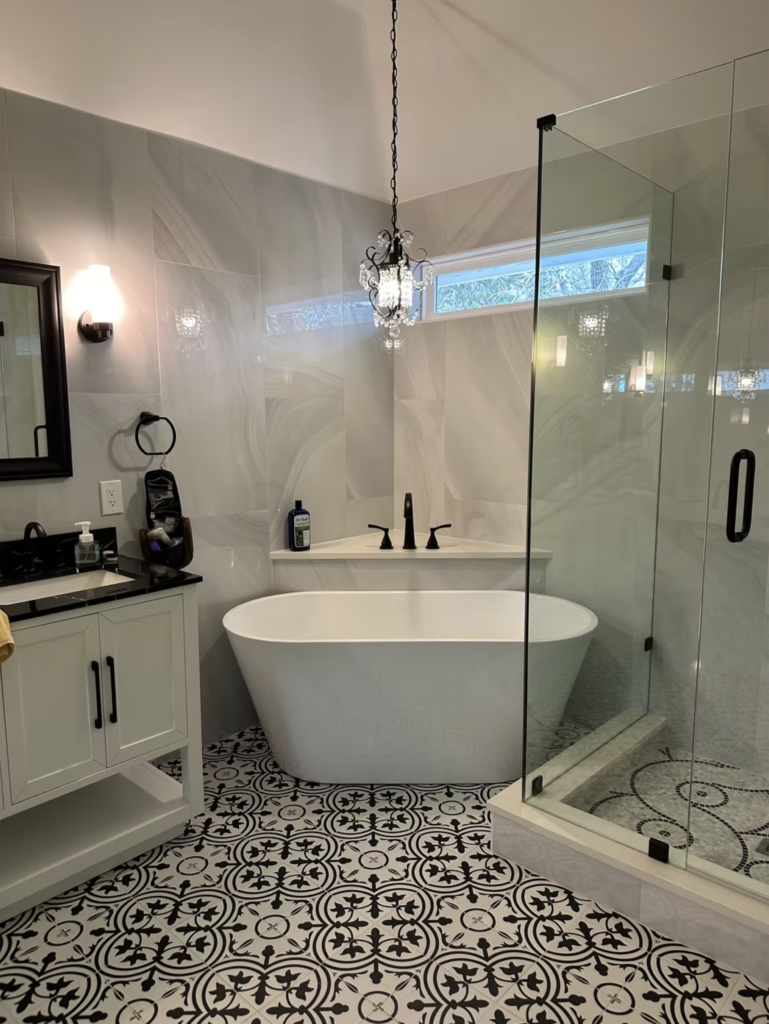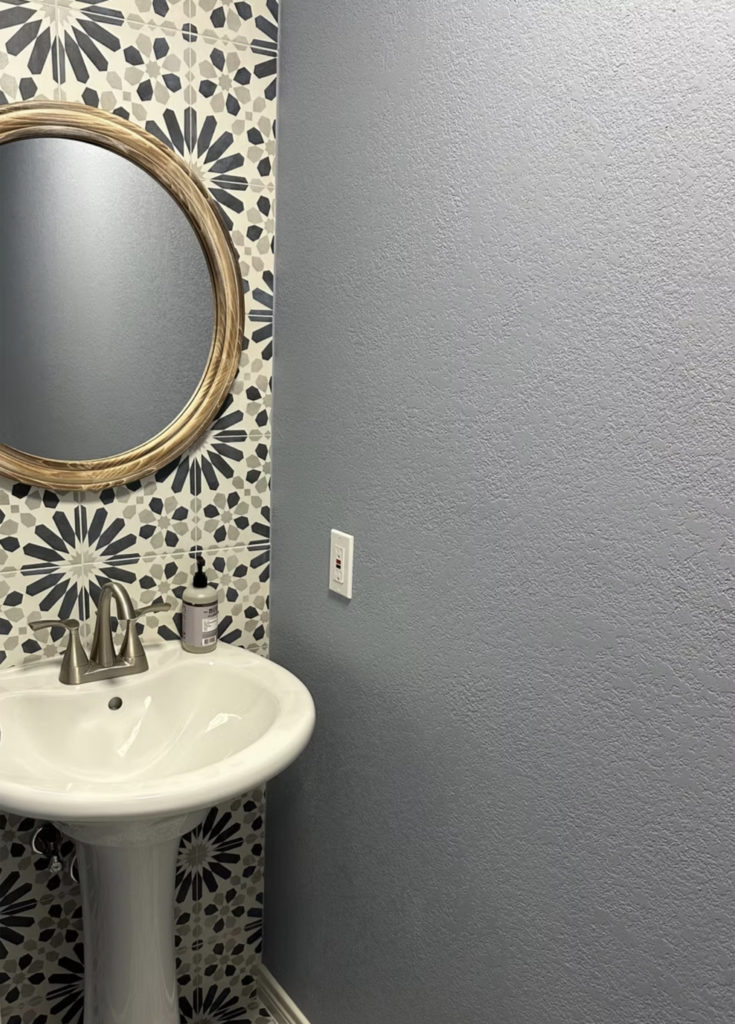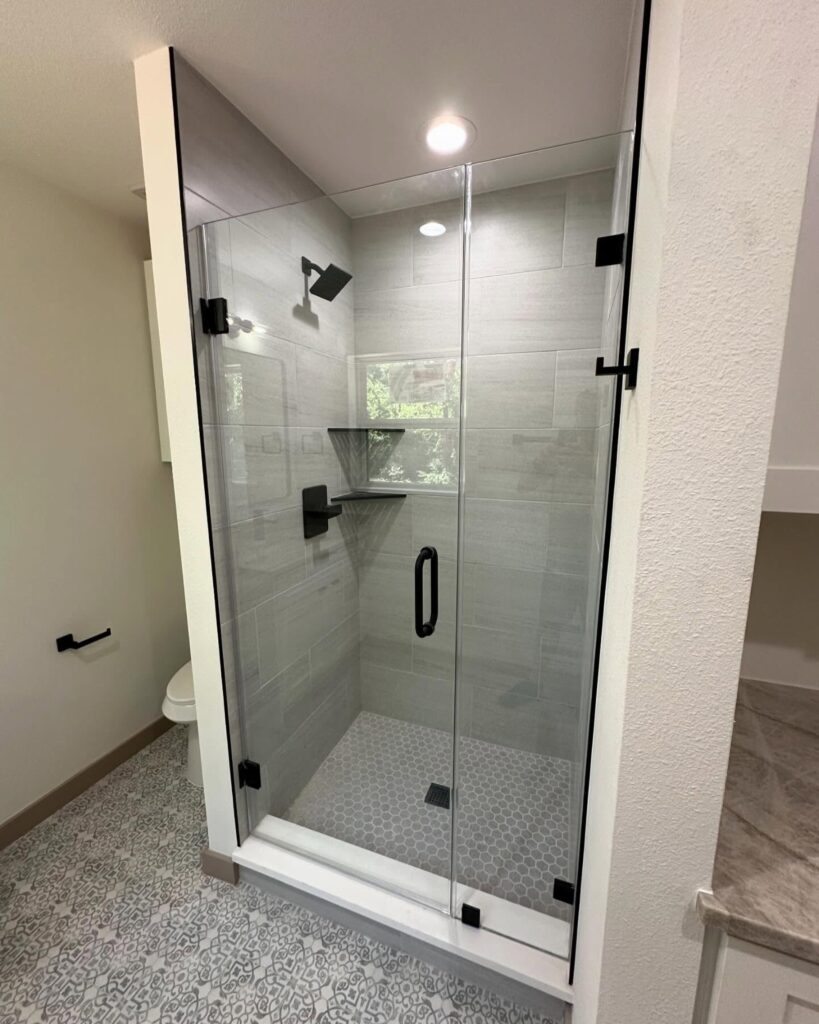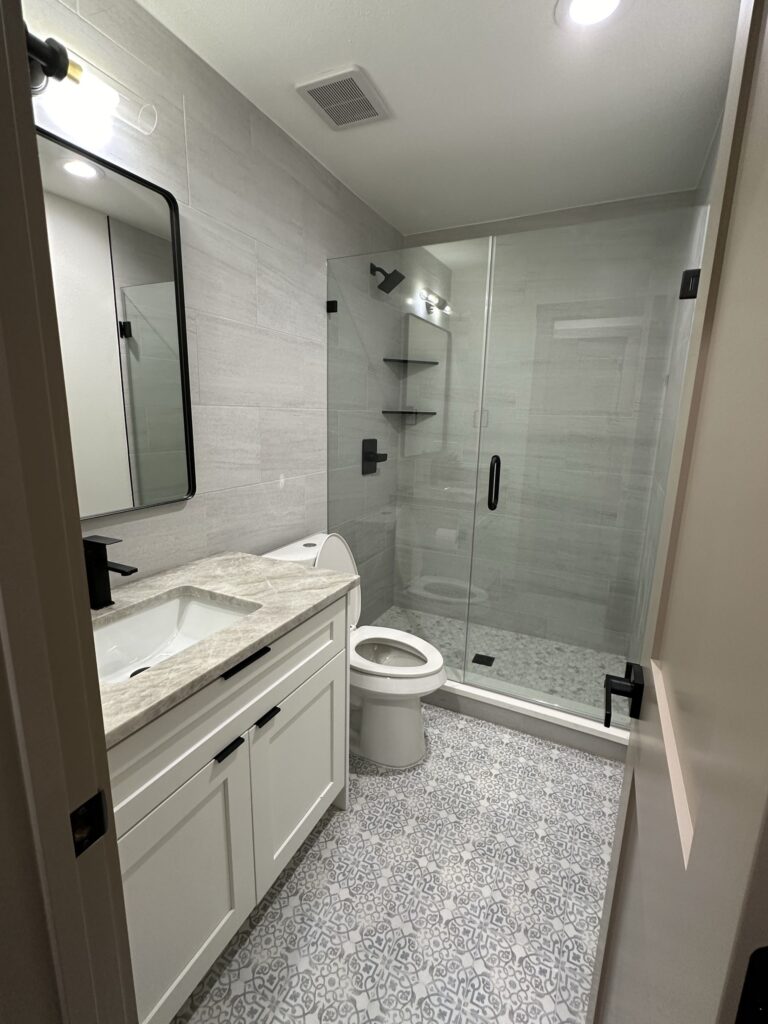
A bathroom remodel in Coppell usually lands in the same broad price bands seen across the Dallas–Fort Worth market, but the final number depends heavily on whether you are keeping the layout, replacing fixtures, or opening walls and moving plumbing. For 2026 planning, many Coppell homeowners should expect a small refresh to start around $8,000 to $15,000, a midrange remodel to fall roughly between $15,000 and $35,000, and a higher-end full remodel to move beyond $35,000 when the project includes layout changes, custom finishes, or upgraded mechanical work.
| Project type | Typical Coppell planning range | What it usually includes |
|---|---|---|
| Cosmetic refresh | $8,000–$15,000 | Paint, lighting, trim, vanity swap, fixtures, minor tile or surface updates |
| Midrange remodel | $15,000–$35,000 | New vanity, tile shower or tub-shower, flooring, lighting, plumbing fixture upgrades, moderate layout changes |
| High-end remodel | $35,000+ | Custom tile, larger shower, premium finishes, rerouted plumbing, upgraded ventilation, more complex design and carpentry |
| Primary bath with structural or system changes | $45,000–$75,000+ | Larger footprint, multiple trades, specialty finishes, significant electrical or plumbing revisions |
These are planning numbers, not bids. A bathroom that keeps the existing footprint and uses standard materials can stay near the lower end of the range, while any project that opens walls, adds a curbless shower, relocates the toilet, or requires more extensive tile work can climb quickly. For broader DFW pricing context, see the larger guide to bathroom remodel costs in DFW.

What Does Bathroom Remodeling Cost in Coppell?
The most practical answer is that a bathroom remodel in Coppell often costs somewhere between $15,000 and $35,000 for a typical midrange project, with smaller cosmetic updates below that and custom or structural renovations above it. That spread is wide because a bathroom can be a simple replacement project or a full reconstruction depending on the scope.
A few common scenarios help make the range more concrete:
- A guest bath refresh with a new vanity, toilet, faucet, paint, lighting, and vinyl or tile flooring may land around $8,000 to $12,000.
- A hall bath remodel with a new tub-shower surround, updated plumbing fixtures, improved ventilation, and midgrade tile often lands around $15,000 to $25,000.
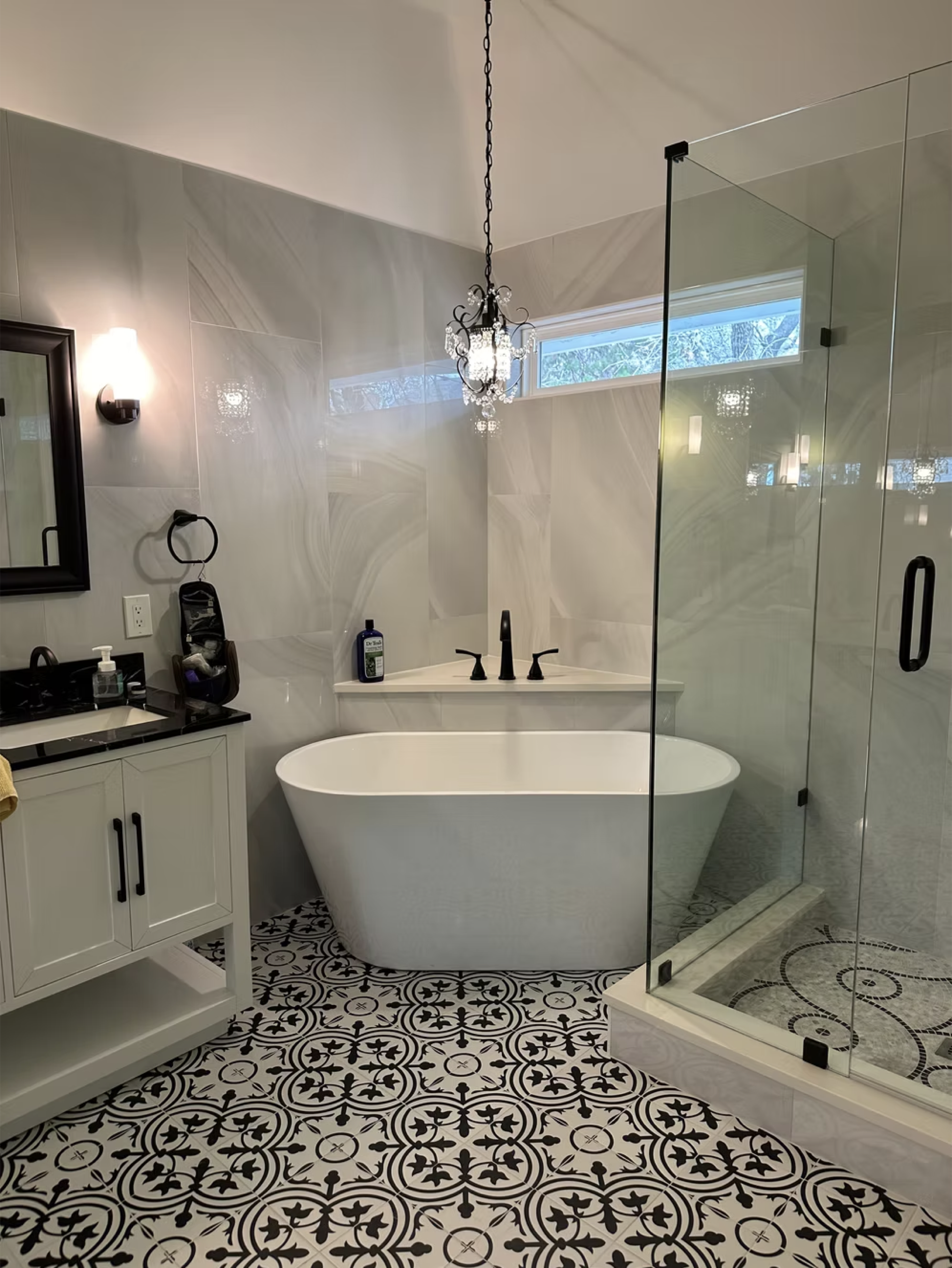
- A primary bathroom with a larger shower, double vanity, upgraded lighting, custom tile, and some layout changes can easily reach $30,000 to $50,000.
- A fully custom primary suite with premium stone, built-ins, frameless glass, heated flooring, and extensive plumbing or electrical changes may exceed $60,000.
The best way to think about bathroom pricing is in layers. The first layer is the basic finish level: economy, midrange, or premium. The second layer is scope: are you just swapping fixtures, or are you opening walls and changing the plan? The third layer is trade complexity: plumbing, electrical, tile, waterproofing, and ventilation all add cost when they need to be done at a higher standard.
A contractor will usually build the price from allowances and labor components rather than from one simple square-foot number. That is why two bathrooms of the same size can have very different totals. If you want a broader planning benchmark before narrowing the local scope, the DFW bathroom cost guide is a useful reference point.
For homeowners comparing service providers, it also helps to review a dedicated Coppell bathroom remodeling service page so you can match expectations to the kind of project you actually want to complete.
Why Building in Coppell Is Different
Coppell is not a rural market with cheap access and low coordination overhead. It sits inside Dallas County, within the Dallas–Fort Worth metro, so labor and materials tend to follow the broader DFW price environment. That matters because many trades in the area are busy, and busy trades usually price scheduling, coordination, and complexity into their work.
Most Coppell homes also fall into the suburban category where remodels are often done inside existing footprints. That means you may not need a major addition, but you do need careful coordination around the existing structure, tile transitions, plumbing stacks, and ventilation routes. In practice, the cost is often driven by how well the project fits within the current layout rather than by raw square footage alone.
Another local factor is permitting and inspections. When a remodel changes plumbing, electrical, or ventilation, plan for review through the City of Coppell and for inspections during the construction process. That does not mean every cosmetic bathroom update needs a permit, but it does mean that system work can affect your schedule. You can see the city’s general permitting and inspection resources at the City of Coppell website.
North Texas humidity also matters. In a bathroom, moisture management is not a luxury item. Better ventilation, mold-resistant backer, upgraded waterproofing, and proper shower detailing may add cost up front, but they can prevent expensive failures later. In other words, Coppell bathrooms often need to balance suburban floor-plan constraints with higher-end finish expectations and the practical realities of a warm, humid climate.
Typical Project Cost Ranges
Bathroom remodels are easiest to budget when you group them by scope. In Coppell, the total is usually more a function of scope than of size alone.
Cosmetic refresh: $8,000 to $15,000
This is the lightest version of a remodel and usually keeps the existing plumbing layout. Typical work may include:
- New toilet
- New vanity or vanity top
- New faucet and sink
- Paint and trim repair
- Lighting replacement
- Mirror and accessory updates
- Flooring replacement if needed
This type of project works best when the room is fundamentally functional but visually dated. Because it avoids major demolition and system relocation, it is usually the least expensive path to a better-looking bath.
Midrange remodel: $15,000 to $35,000
This is where many Coppell homeowners land. A midrange remodel often includes:
- New tub or shower system
- Tile surround or shower tile
- New vanity and countertop
- Updated flooring
- Fixture replacement
- Better lighting
- Improved ventilation
- Minor carpentry or drywall repair
Projects in this range may still use the existing layout, but they usually feel significantly more finished than a refresh. If you are replacing a tub-shower combo with a nicer version of the same footprint, this is often the cost band you are in.
High-end remodel: $35,000 and up
Higher-end projects usually involve more labor, more trades, or more premium finishes. Common features include:
- Custom tile work
- Large walk-in shower
- Frameless glass enclosure
- Relocated plumbing fixtures
- Double vanity
- Quartz, stone, or specialty surfaces
- Higher-end lighting and mirrors
- Enhanced waterproofing and ventilation
- Built-ins or niche storage
Once you start changing the footprint or expanding the shower zone, total cost rises fast. A larger shower alone can add several thousand dollars, and custom tile work can push the labor total higher because the install is slower and more detailed. For a point of comparison in nearby North Texas markets, you can also review the cost structure in Flower Mound and Allen.
Cost Per Square Foot and What It Includes
Square-foot pricing is useful as a rough shorthand, but bathrooms are unusual rooms. They are small, dense with trades, and packed with expensive components. That is why a bathroom can cost more per square foot than a bedroom or office.
For Coppell planning, a basic bathroom remodel may land around $200 to $350 per square foot, while a more complete midrange or high-end project can run $350 to $600 per square foot or more depending on finish level and complexity. A tiny powder room can show an even higher per-square-foot figure because fixed costs like labor setup, demo, and finish work do not drop proportionally just because the room is small.
What does that square-foot number actually include?
- Demolition and debris removal
- Carpentry and drywall repairs
- Plumbing fixture replacement
- Electrical adjustments
- Tile work and waterproofing
- Flooring
- Vanity, countertop, and storage items
- Paint and trim
- General contractor coordination
What it does not always include:
- Major layout changes
- Structural repairs hidden behind walls
- High-end custom cabinetry
- Special-order fixtures with long lead times
- Permit and design fees
- Contingency for unexpected damage
Because bathrooms are compact, even one expensive line item can distort the square-foot average. A $4,000 shower upgrade in a 45-square-foot bath looks very different from the same upgrade in a 120-square-foot primary suite, even though the actual work intensity is similar. That is why square-foot pricing is best used as a sanity check, not as the final budgeting method.
If your project is part of a larger home update, it can also help to compare with broader local renovation planning through home remodeling in Coppell or to see how bathroom scope differs from other interior projects like kitchen remodeling in Coppell.

Main Factors That Change Total Price
Several specific factors can move a Coppell bathroom remodel several thousand dollars in either direction. The more of these that apply, the more you should expect to budget near the high end of the range.
1. Layout changes
Keeping the sink, toilet, and shower in the same places is usually the most cost-effective approach. Once you move plumbing fixtures, the job gets more expensive because new drain, vent, and supply routing may be required. That is not just a materials issue; it is also a trade coordination issue. Plumbing work that shifts supply or drain lines should be handled by appropriately licensed professionals, which is part of why plumbing scope needs careful planning in Texas.
2. Finish level
There is a large price gap between builder-grade and premium finishes. Standard ceramic tile, stock vanities, and basic plumbing fixtures can keep a project accessible. Custom tile patterns, natural stone, frameless shower glass, floating vanities, and premium hardware can raise the total quickly.
3. Shower and tub selection
Swapping a standard tub-shower for a larger walk-in shower is one of the most common cost increases. It can affect framing, waterproofing, tile square footage, glass, drainage, and sometimes ventilation. A freestanding tub also adds cost if it requires plumbing or layout adjustments.
4. Condition of the existing bathroom
Hidden damage is one of the biggest wild cards. Old leaks, mold, rotted subfloor, failing drywall, or undersized electrical can all add unplanned cost after demo begins. If the bathroom has not been updated in 20 or 30 years, inspection surprises are more likely.
5. Plumbing and electrical complexity
If the project only swaps fixtures, the cost is lower. If it adds recessed lighting, new circuits, fan upgrades, relocated outlets, or new plumbing lines, the price rises. Electrical and plumbing trades each have their own labor and code requirements, so coordination becomes a meaningful cost factor.
6. Permit and inspection timing
A project that needs permit review and inspections may carry more admin cost and may take longer to start and finish. The City of Coppell process can influence schedule, especially when multiple trades are involved.
7. Access and sequencing
Bathrooms are small, but they are often occupied rooms in the middle of the home. If the crew has limited access or has to work around family schedules, staging and sequencing become more complicated. That does not always mean a direct line-item increase, but it can add labor inefficiency.
Labor, Materials, and Trade-Level Costs
Bathroom remodeling costs usually divide into two major buckets: labor and materials. In many Coppell projects, labor and trade coordination account for a very large share of the final number because bathrooms require multiple specialists working in a small space.
Labor costs
Typical labor components include:
- Demolition: about $500 to $1,500 for a standard bathroom
- Framing and carpentry: about $1,000 to $3,500
- Drywall and finishing: about $800 to $2,500
- Plumbing: about $1,500 to $5,000, or more if fixtures move
- Electrical: about $700 to $2,500
- Tile installation: about $1,800 to $6,000+
- Painting: about $400 to $1,200
- Trim and finish carpentry: about $500 to $2,000
- Glass installation: about $900 to $2,500
- General contractor management: often 10% to 20% of the project total
Tile and waterproofing labor can be especially significant because a shower has to be installed correctly the first time. If tile is custom, patterned, oversized, or installed in a complex shower layout, labor climbs. A simple tub surround is usually less expensive than a full-height shower with niches, benches, and detailed trim.
Material costs
Material buckets often include:
- Vanity and countertop: about $600 to $4,500
- Toilet and sink: about $250 to $1,500
- Shower valve and trim: about $250 to $1,200
- Tub or shower pan: about $400 to $2,500
- Tile and grout: about $800 to $5,000+
- Backer board and waterproofing membrane: about $300 to $1,200
- Flooring: about $600 to $3,500
- Lighting fixtures: about $200 to $1,500
- Fan and ventilation components: about $200 to $900
- Paint and trim materials: about $150 to $500
- Mirrors and accessories: about $200 to $1,500
Material prices vary widely. A stock vanity may cost a few hundred dollars, while a custom-built or furniture-style vanity can run into the thousands. Similarly, basic ceramic tile is far less expensive than handmade tile or specialty stone.
Trade-level cautions
If plumbing lines are being moved, using a licensed plumber is important. Texas licensing rules apply when the work goes beyond a simple fixture swap and into supply or drain line changes. That means the project should not be priced as if plumbing were just a minor accessory. It is a core system with its own labor, code, and inspection implications.
This is also why many projects benefit from a contractor who coordinates the full sequence rather than trying to line up each trade independently. A bathroom that needs plumbing, tile, electrical, and glass installation is not just a shopping list of products; it is a scheduling problem.
Permit, Design, and Planning Costs
Soft costs are easy to ignore, but they can meaningfully affect the final budget. In Coppell, you should plan for design, permitting, and preconstruction work whenever the project goes beyond simple cosmetic replacement.
Design and planning
Design help may be as simple as a measured layout and material selection support, or as involved as full plans and finish scheduling. Costs can vary widely, but planning fees are worth considering if the project includes:
- A reconfigured layout
- A larger shower
- Custom cabinetry
- High-end tile patterns
- Lighting changes
- Accessibility improvements
The more decisions you need to make up front, the more valuable a clear preconstruction process becomes. Good planning reduces the risk of expensive changes after demolition.
Permits and inspections
Not every bathroom update needs a permit. Paint, a vanity swap in the same location, or a direct fixture replacement may be handled differently from a project that changes plumbing, electrical, or ventilation. If your project affects those systems, expect permit and inspection steps through the City of Coppell.
That adds two types of cost:
- Direct administrative cost, if applicable
- Indirect cost from time and coordination
The main hidden expense is often schedule friction. If inspections fail or need rebooking, the project can sit idle while trades wait for approval. That is one reason the timeline on a bathroom remodel is rarely just a matter of how quickly the crew works.
Engineering or specialty approvals
Most bathroom projects do not require engineering, but certain structural or layout changes may call for additional documentation. This is more likely if you are removing walls, altering framing, or doing something unusual with drainage or ventilation. Those costs are not routine, but they can appear in more ambitious Coppell remodels.
Timeline and Process Expectations
A straightforward bathroom remodel often takes about 2 to 4 weeks of field time once work begins, but the full process from first estimate to final walkthrough is usually longer. Projects with layout changes, permit review, or special-order materials can extend well beyond that.
Typical process phases
1. Initial planning and estimate
This can take a few days to a couple of weeks depending on scope, availability, and how quickly selections are made.
2. Design and product selection
Choosing tile, vanity, fixtures, lighting, and glass can take 1 to 4 weeks, especially if you want coordinated finishes or made-to-order items.
3. Permitting and scheduling
If permits are needed, plan for additional time before demolition starts. This step can vary depending on the complexity of the work and the city review process.
4. Demolition
A small bathroom may be demoed in 1 to 3 days. Hidden damage discovered during this phase can change the schedule.
5. Rough-in work
Plumbing, electrical, framing corrections, and ventilation work may take several days depending on the scope.
6. Waterproofing, tile, and finish work
This is often the longest visible phase because tile installation and cure times take patience. Complex showers can extend this stage.
7. Final install and punch list
Fixtures, mirrors, glass, paint touch-ups, and accessories are usually completed near the end.
What causes delays?
- Permit timing
- Inspection scheduling
- Special-order materials
- Hidden rot or mold
- Trade coordination
- Mid-project design changes
Local schedule risk in Coppell is more likely to come from coordination and inspections than from site access or rural logistics. In other words, the job is usually not delayed because the house is hard to reach; it is delayed because the work touches multiple systems in a compact room.
For a similar planning lens in nearby areas, it can help to compare timelines with the bathroom cost guides for Flower Mound and Allen.
How to Budget the Project Realistically
The best bathroom budgets are built with allowances, not wishful thinking. A realistic plan accounts for the room’s baseline scope, the finish level you want, and the unexpected issues that often appear after demo.
Start with a scope baseline
Decide whether you are doing one of three things:
- Refreshing the room cosmetically
- Remodeling the room while keeping the layout
- Rebuilding the room with layout or system changes
That decision will do more to control the budget than almost anything else. A shower-to-shower swap is a different financial exercise than a new shower, new lighting, and a relocated vanity.
Include a contingency
A contingency allowance of about 10% to 20% is a reasonable planning buffer for hidden damage, subfloor issues, or changes discovered after demolition. In a $20,000 project, that means keeping roughly $2,000 to $4,000 available. On a $40,000 project, it means setting aside $4,000 to $8,000.
That buffer is especially useful in older bathrooms where past waterproofing may not meet current expectations. It is also helpful when you are trying to protect finish quality without stopping the project every time a small issue appears.
Separate must-haves from nice-to-haves
A practical budget breaks the project into:
- Non-negotiables: waterproofing, ventilation, safe electrical, code-compliant plumbing
- Functional upgrades: better storage, improved lighting, more durable finishes
- Style upgrades: designer tile, specialty mirrors, premium hardware
This makes it easier to trim the budget if needed without undermining the entire project.
Think about sequencing
If you plan to remodel more than one room eventually, it may be smarter to coordinate work in phases. For example, if you know the nearby primary bedroom, hallway, or kitchen will also be updated later, there may be ways to align selections and labor timing. Broad home planning resources like home remodeling in Coppell can help you think in phases rather than in isolated rooms.
Use financing carefully
Some homeowners pay cash, some use savings, and others finance part of the project. Whatever the method, make sure your payment plan leaves room for change orders and contingency. A bathroom remodel that is underfunded at the start tends to become more stressful halfway through.
When to Choose a Bathroom Remodeling Project in Coppell
A bathroom remodel makes the most sense when the room is functionally dated, visually tired, or no longer aligned with how your household uses it. In Coppell, many homes are in established suburban neighborhoods where a well-executed bathroom update can improve daily comfort without the need for a major addition.
Here are good reasons to move forward:
- The vanity, flooring, or tile is dated enough that it affects resale or everyday enjoyment
- The shower or tub is hard to clean or no longer comfortable
- Ventilation is poor and humidity is creating maintenance problems
- The layout works, but the finish quality does not
- You want to add value before selling
- You need more storage, better lighting, or improved accessibility
A remodel is usually less attractive if the current bathroom is still structurally sound and only needs one small cosmetic fix. In that case, a lighter update may be smarter. On the other hand, if the room has repeated moisture issues, leaking fixtures, or a layout that wastes space, a full remodel can be the more cost-effective long-term answer.
The Coppell context matters here because local homes often balance modest footprints with higher expectations for finish quality. That means many projects are less about expanding the room and more about making the existing space feel more polished, functional, and durable. If your renovation is part of a broader home plan, it can be helpful to compare it with other local scopes like home building in Coppell or kitchen work through kitchen remodeling in Coppell.
Final Thoughts on Bathroom Remodeling in Coppell
A bathroom remodel in Coppell is usually a smart investment when the project is planned around the room’s real scope, not just its size. For 2026, a small refresh often starts around $8,000 to $15,000, most midrange projects land between $15,000 and $35,000, and more customized or layout-changing remodels can rise well beyond that. The biggest cost drivers are plumbing changes, finish quality, shower complexity, hidden damage, and the amount of coordination required between trades.
The best results come from clear decisions early: keep or change the layout, choose your finish level, account for permits if the work affects systems, and set aside a contingency. In Coppell, that careful planning matters even more because the local market reflects DFW labor pricing, suburban home constraints, and the need to manage inspections and scheduling smoothly.
If you are comparing options and want a more precise plan for your home, the next step is to define the scope clearly and ask for estimates that separate labor, materials, and allowances. For a broader cost context, revisit the DFW bathroom remodel guide, and if you are ready to talk through a Coppell-specific project, the Coppell bathroom remodeling service page is the right place to start.