Cost to Remodel Your Home in Mesquite (2026 Guide)
If you are planning a whole-home remodel in Mesquite, the first question is usually the same: how much should you budget before demolition starts? The honest answer depends on the size of the house, the number of rooms involved, the amount of layout change, and the finish level you want, but most full-home projects fall into clearly different budget tiers.
For Mesquite homeowners, remodeling is often about balancing long-term value with practical updates. That usually means improving kitchens, bathrooms, flooring, lighting, paint, storage, and mechanical systems in a way that fits the age and condition of the home. It also means planning for permit steps, inspection timing, and the realities of working in an established eastern Dallas County neighborhood.
This guide breaks down realistic price ranges, the biggest cost drivers, and the local factors that can change your final number. If you want a broader regional benchmark first, the DFW home remodeling cost guide is a useful starting point before you compare Mesquite-specific pricing.

Home Remodeling Cost Snapshot for Mesquite
The table below gives a practical planning range for a whole-home remodel in Mesquite. These figures are meant for budgeting, not bidding, because exact scope and finish level can move a project up or down fast.
| Remodel scope | Typical budget range | What it usually includes | Typical timeline |
|---|---|---|---|
| Light whole-home refresh | $35,000 to $85,000 | Paint, trim, flooring in select rooms, fixture swaps, minor repairs, simple carpentry | 2 to 6 weeks |
| Midrange whole-home remodel | $85,000 to $180,000 | Kitchen and bath updates, new flooring, lighting, interior paint, partial layout changes, modest electrical/plumbing work | 6 to 12 weeks |
| Extensive whole-home remodel | $180,000 to $350,000+ | Major room reconfiguration, premium finishes, upgraded systems, structural changes, custom cabinetry, higher-end tile and surfaces | 3 to 6+ months |
Most Mesquite owners should also plan a contingency of 5 to 15 percent for hidden conditions, design adjustments, and material changes once walls or floors open up. Homes with older wiring, original plumbing, or prior DIY work often need a larger reserve.
If you are comparing contractor options, it helps to think in terms of scope bands rather than a single total price. A remodel that stays inside existing walls and uses stock materials may land near the lower end, while a project that changes room flow, upgrades systems, and uses custom finishes can climb quickly.

Why Building in Mesquite Is Different
Mesquite remodels often feel more straightforward than projects in some high-density urban areas, but the city still has a few practical factors that matter. First, Mesquite sits on the east side of the metro with portions in both Dallas County and Kaufman County, so logistics and jurisdictional questions can vary by property and scope.
Second, the city’s highway access is a real scheduling advantage and a real traffic variable. Material deliveries, subcontractor timing, and waste hauling can all be affected by peak travel windows around major routes. That may sound minor, but a half-day delay on one trade can ripple into several days when cabinets, tile, or specialty fixtures are on the calendar.
Third, many Mesquite homes are in established neighborhoods where the work has to fit the character of the block and the condition of older systems. That usually means a remodel team needs to spend more time checking electrical capacity, plumbing layout, attic access, and subfloor conditions before work begins. For local planning, the City of Mesquite is the best starting point for municipal reference, while Texas code guidance is explained well by the Texas State Law Library.

What a Whole-Home Remodel Costs by Scope
Whole-home remodel pricing becomes much easier to understand when you break it into project types. A cosmetic refresh and a structural rework are both called “remodels,” but they live in very different budget ranges.
Light refresh
A light refresh focuses on visible improvements rather than major layout changes. This can include repainting walls and trim, replacing dated light fixtures, installing new LVP or engineered wood in several rooms, swapping hardware, and making minor drywall repairs. In Mesquite, this kind of project often works best when the home already has a functional kitchen and bath plan, and the owner mainly wants a cleaner, more updated look.
Midrange remodel
A midrange remodel usually includes at least one major room upgrade, commonly the kitchen, plus one or more bathroom updates. It may also include new flooring throughout the house, a lighting refresh, interior paint, and selective electrical or plumbing changes. A project in this category often lands in the $85,000 to $180,000 range because the trades start to overlap and the material selections matter more.
Extensive remodel
An extensive remodel tends to touch nearly every major part of the house. That can mean reworking a kitchen footprint, enlarging bathrooms, opening up living areas, replacing cabinets, upgrading HVAC distribution, moving plumbing, and addressing structural changes. Once you start combining these items, labor coordination becomes a major cost. It is also where allowance management matters most, because finish choices can add tens of thousands of dollars even when the layout stays mostly the same.
Whole-home gut remodel
A gut-level remodel is the most expensive category because it often requires major demolition, new utility routing, and a near-complete rebuild of interior finishes. These projects can easily move above $250,000 and sometimes much higher, especially if the homeowner wants custom millwork, premium counters, high-end tile, and upgraded systems throughout.
If you are trying to estimate where your project fits, a simple rule helps: the more walls, systems, and rooms you touch, the more the budget shifts from finish cost to labor coordination cost.

Biggest Cost Drivers in a Mesquite Remodel
Several variables drive the final budget more than almost anything else.
1. Square footage
Bigger houses cost more to remodel because there is simply more surface area, more rooms, and more material. Even if the per-square-foot cost drops slightly on a larger project, the absolute total goes up. A 1,500-square-foot house and a 2,800-square-foot house can both be “midrange” remodels, but the bigger home may need 30 to 60 percent more labor and material overall.
2. Layout changes
Keeping plumbing, gas, and major electrical points where they already are usually saves money. Once you move a sink, remove a wall, or relocate an appliance run, the project starts to require more framing, patching, trade labor, and inspection coordination. Kitchen and bath layout changes are especially expensive because they involve multiple systems at once.
3. Finish level
Cabinets, counters, flooring, tile, and fixtures can swing a project dramatically. For example, stock cabinets may cost a fraction of semi-custom or fully custom cabinetry, and that difference can be repeated in every room. A homeowner who chooses durable midrange finishes can often save 15 to 30 percent compared with a premium package that looks similar from a distance but uses better materials and more custom fabrication.
4. Hidden conditions
Opening walls often reveals issues that were impossible to price accurately at the estimate stage. Common examples include damaged framing, old wiring, undersized circuits, leaking plumbing, prior repairs, moisture problems, or subfloor damage. That is why many remodel budgets carry a 5 to 15 percent contingency, and why older homes may need even more.
5. Labor availability
The remodel market is labor-driven. Skilled carpenters, electricians, plumbers, tile setters, and painters all price work based on demand, schedule, and project complexity. If you need several trades in sequence, the schedule has to be managed carefully so one delay does not idle the next trade.
6. Permits and inspections
Not every cosmetic upgrade needs a permit, but once a remodel touches structure, electrical, plumbing, or HVAC in meaningful ways, permit steps usually become part of the budget and timeline. Even where direct permit fees are not huge, the time cost of plan review and inspection can affect the project schedule.
Room-by-Room Budget Breakdown
A whole-home remodel is really a collection of room-level budgets. Looking at each area separately makes it easier to prioritize money where it matters most.
Kitchen
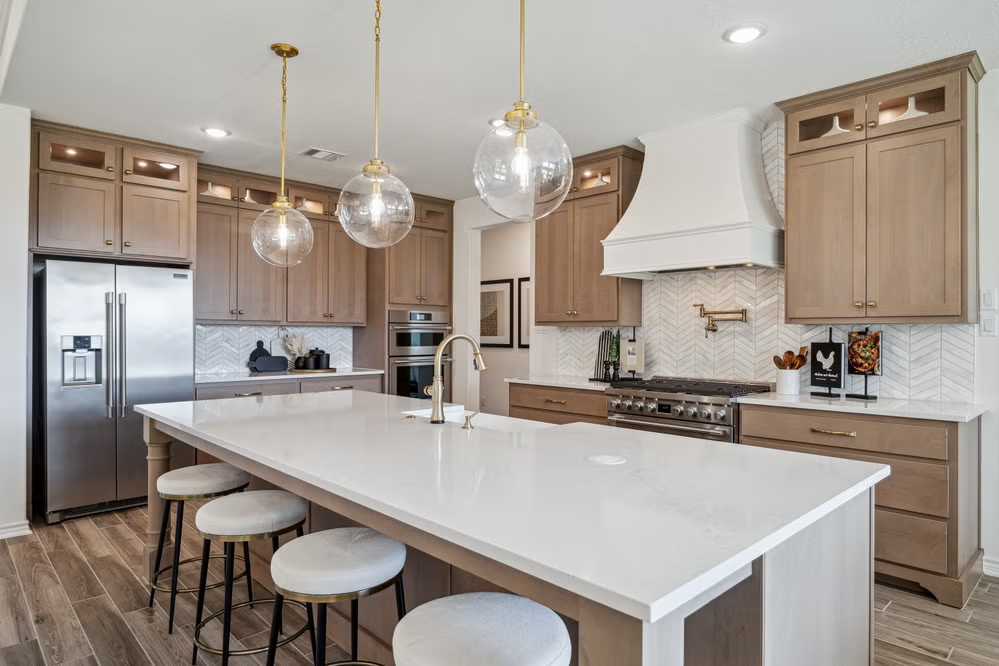
Kitchens usually carry the biggest share of the budget because they combine cabinetry, counters, plumbing, electrical, lighting, appliances, tile, and often layout work. In a Mesquite home, a modest kitchen refresh may start around $20,000 to $35,000, while a midrange kitchen replacement often lands in the $40,000 to $80,000 range. Higher-end kitchens with custom cabinets, stone tops, upgraded appliances, and layout changes can run well above $100,000.
Bathrooms
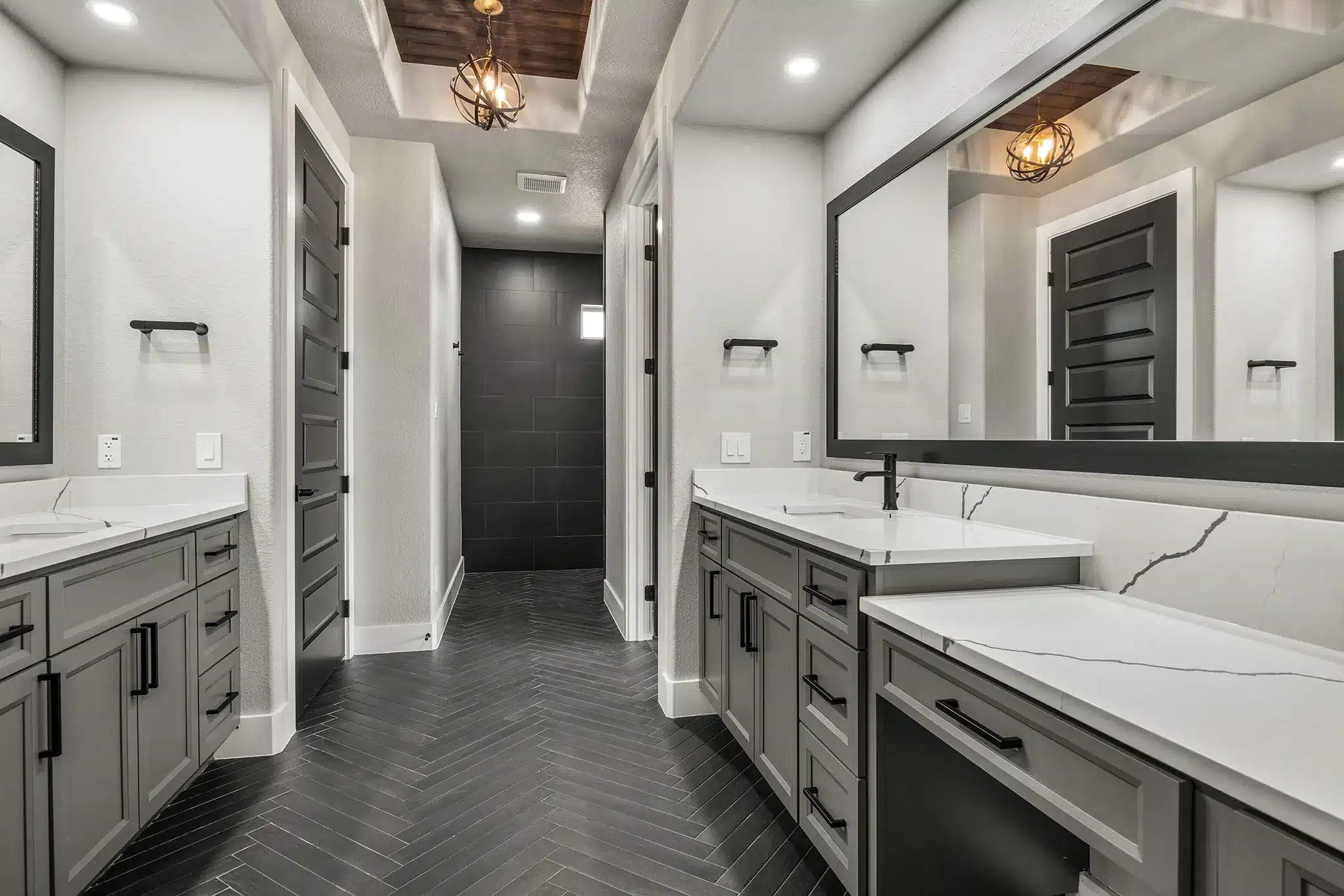
Bathrooms are smaller, but they are dense with labor. A hall bath remodel might start around $12,000 to $25,000 if the layout stays intact and finishes are moderate. A primary bath remodel can easily move into the $25,000 to $50,000+ range once you add custom tile, better fixtures, upgraded lighting, and plumbing adjustments. If you are comparing local specialists, the Mesquite bathroom remodeler page is the best place to connect bathroom scope to a broader home plan.
Flooring
Flooring costs vary a lot by material and demolition complexity. Basic LVP may be one of the most affordable durable options, while hardwood, large-format tile, or patterned materials raise both material and labor costs. Whole-house flooring in a typical Mesquite home can run from $8,000 to $30,000+, depending on square footage and product tier.
Paint and drywall
Interior painting is one of the best-value upgrades in a remodel because it delivers a visible transformation for a relatively modest cost. Simple repainting may be a few thousand dollars in a smaller home, while a full interior repaint with drywall patching, trim work, and prep can climb significantly if walls need repair.
Lighting and electrical
Lighting updates are often underestimated. A project may need recessed lighting, updated fixtures, new switches, outlet upgrades, or panel capacity review. Once electrical work expands beyond simple fixture swapping, costs rise quickly because the labor is specialized and inspection-sensitive.
HVAC and insulation
Mechanical upgrades are not glamorous, but they can be some of the most important dollars in the house. If you are opening ceilings or walls, it may be smart to address ductwork, insulation gaps, or system balancing at the same time. Energy efficiency improvements can also reduce operating costs. The U.S. Department of Energy’s Energy Saver resources are useful if your remodel includes efficiency upgrades.
Windows and exterior touchpoints
A whole-home remodel sometimes includes selective window replacement, siding repairs, porch updates, or door upgrades. These items are not always part of the core interior scope, but they can become logical add-ons when the house already has exterior aging or poor air sealing.

Labor, Materials, and Lead Times
In most remodeling projects, the budget is split between labor and materials, but the exact ratio changes by scope. A basic refresh may lean more heavily toward labor, while a premium kitchen or custom bathroom can become material-heavy because cabinetry, stone, and tile account for a larger share of the total.
A practical planning split looks like this:
- Labor: often 35 to 55 percent of the total on many remodeling jobs
- Materials and fixtures: often 30 to 50 percent
- Permits, design, and admin: often 5 to 10 percent
- Contingency reserve: usually 5 to 15 percent
Lead times matter just as much as cost. Stock materials may arrive in days or weeks, but specialty cabinets, custom tile, premium countertops, and certain appliances can take several weeks or longer. A remodel that looks cheap on paper can still become expensive if the schedule is pushed by backordered items.
A smart approach is to lock long-lead selections early. If cabinets are delayed by 6 weeks, the entire project may sit in a holding pattern because countertops, backsplash, plumbing trim, and final paint all depend on them. That is one reason local remodelers often recommend a 2 to 6 week planning and procurement window before construction begins.
The best projects also include a realistic escalation buffer. Even when the estimate is solid, a 3 to 8 percent pricing swing on certain materials can happen over the life of a long project. Ordering the most important items earlier reduces that risk.

Permits, Codes, and Inspections in Mesquite
Permits are not the part of remodeling most homeowners enjoy, but they matter because they protect the project and keep the work aligned with local requirements. Texas building code guidance explains that local rules can differ by city and county, so the right question is not “Does Texas have one universal remodeling rule?” but “What does Mesquite require for this exact scope?”
A few practical rules of thumb help:
- Cosmetic work like paint and basic flooring often does not need a permit.
- Electrical changes, plumbing relocation, structural changes, and HVAC modifications often do.
- If you are opening walls in an older home, plan for at least one inspection checkpoint.
- If your project includes a kitchen or bath layout change, expect permit questions to come up early.
The Texas State Law Library building codes guide is useful background because it explains how code adoption works in Texas and why local authorities may apply different rules. For a Mesquite project, your contractor should confirm the current permit path before demolition begins, not after.
You can think of permit planning as a time-saver rather than a nuisance. A properly sequenced remodel is less likely to stall, less likely to need rework, and less likely to create a closing or insurance issue later. That is especially important if you plan to sell the home within a few years.
If your remodel includes a broader home update rather than a single room, it can help to compare the home-remodeling decision against other service-specific pages, such as the Mesquite home remodeler page and the broader DFW home remodeling cost guide.

Mesquite-Specific Planning Tips for Older Homes and Neighborhood Fit
Mesquite has a lot of established housing, which is good news for buyers and long-term owners, but it also means remodelers should expect a range of system ages and previous updates. One home may have already had major plumbing or electrical work done, while the one next door may still be carrying original components from decades ago.
That makes preconstruction evaluation important. Before you commit to a final budget, it is smart to check:
- electrical panel capacity and wiring condition
- plumbing material and fixture age
- subfloor and framing condition near wet areas
- attic insulation and ventilation
- window fit, air leakage, and door sealing
- signs of previous water intrusion or patchwork repairs
Mesquite homeowners also tend to care about neighborhood fit. In practical terms, that means remodel decisions should support resale and durability, not just visual flash. A highly customized layout may be perfect for one household but less useful if the home is likely to change hands later. In many cases, durable finishes, efficient circulation, better lighting, and a clean kitchen-bath-floors package provide stronger long-term value than a few luxury items in isolation.
For a local comparison point on neighborhood-oriented remodeling, it can also help to look at nearby service-area planning. The Carrollton remodeling cost guide and the Denton remodeling cost guide show how pricing discipline and scope control matter across different DFW suburbs.
Mesquite’s highway access is another planning factor. If your house is in a busier part of town or near a more traveled route, it may make sense to plan deliveries, dumpster placement, and noisy demolition windows with more care than usual. Small scheduling choices can reduce disruption for both the crew and the neighbors.

Typical Remodeling Timeline From Design to Final Punch List
A whole-home remodel almost never happens in one straight shot. The work is usually organized into stages, and each stage has its own time requirement.
1. Initial planning and scope definition
This phase is where you decide what matters most. It can take 1 to 3 weeks for a simple project or longer if you are still comparing layout ideas, finish options, or whether to remodel one zone at a time. A better plan at the start usually prevents change orders later.
2. Design and estimating
For a midrange or extensive remodel, design and estimating often take 2 to 6 weeks. That may include measurements, selection meetings, pricing revisions, and permit preparation. If you want a kitchen, bath, and flooring package tied together, this stage is where decisions need to be locked in.
3. Permitting and procurement
Depending on scope, permits and materials can add 2 to 8 weeks before heavy construction gets moving. Longer lead-time items like cabinetry or specialty tile can stretch that out.
4. Demolition and rough-in
Once work begins, demolition and rough-in may take 1 to 4 weeks on smaller jobs or longer on major remodels. This is usually the messiest phase, and it is also where surprises often appear.
5. Finish work
Finish carpentry, cabinetry, tile, paint, trim, and final fixture installation can take several more weeks. This stage is very sequence-dependent. One missing item can slow down the next trade.
6. Punch list and closeout
A final 1 to 2 week window is common for punch list work, adjustments, and final walkthrough items. Good contractors try to keep this list short, but no remodel should be considered complete until the details are checked carefully.
As a rule, a light refresh may finish in under a month, a midrange remodel often needs 2 to 3 months, and an extensive whole-home project can run 4 to 6 months or more. If the project includes custom fabrication or major structural work, add time rather than hoping it disappears.

How to Keep Your Remodel on Budget
The best way to save money is not always to choose the cheapest finishes. More often, it is to control scope and make choices in the right order.
Here are the most effective budget tactics for a Mesquite remodel:
- Keep plumbing and major mechanicals where they are unless moving them has a clear payoff.
- Choose durable midrange finishes in high-use spaces and save splurges for one or two focal areas.
- Set allowances early for cabinets, counters, tile, fixtures, and flooring.
- Hold a 5 to 15 percent contingency for hidden issues.
- Avoid late design changes after demolition starts.
- Prioritize the rooms that change daily life first, usually the kitchen, main bath, and primary living areas.
- Use one coordinated contractor plan instead of piecing together trades without a master schedule.
One useful budgeting mindset is to decide what must be perfect and what merely needs to be durable and clean. A homeowner might choose a premium shower and standard bedroom flooring, or a custom island and simpler secondary finishes. That sort of tradeoff usually stretches the budget farther than trying to upgrade everything at once.
For a remodel that includes both kitchen and bath work, it may also help to compare this guide with the Mesquite kitchen remodeler page and the Mesquite bathroom remodeler page so you can see how room-by-room scope affects the total.
A final note: if you are trying to align a home remodel with a future sale, keep the design practical. Buyers usually respond better to a home that feels updated, efficient, and well finished than to one that is over-customized and expensive to maintain.

Getting the Right Remodel Plan for Your Mesquite Home
A good remodel starts with a clear scope, a realistic budget, and a contractor who can manage the sequence from design through finish work. For Mesquite homeowners, the right plan usually balances local logistics, permit requirements, and the age of the home with the level of finish you actually want.
If your project is a simple refresh, the numbers can stay relatively manageable. If it is a full-home transformation, the budget needs to account for labor coordination, long-lead materials, and a contingency reserve from the start. Either way, the most reliable way to control cost is to define the project clearly before the first wall comes down.
If you are ready to move from budgeting to next steps, Fin Home can help you shape a Mesquite remodel around your goals, your timeline, and the way you use the house every day. Start with the Mesquite home remodeler service page or review the broader DFW home remodeling cost guide to compare scope and pricing before you request a plan.
A well-planned remodel also gives you room to compare trade-offs before money is committed. That may mean deciding whether a larger share of the budget should go to a kitchen, a primary bath, or the living areas that will affect daily comfort the most. Once those priorities are clear, the rest of the project gets easier to sequence and easier to price.
For another local comparison point, you can also look at the Carrollton remodeling cost guide and the Denton remodeling cost guide to see how neighboring DFW markets handle similar scope decisions.