Cost to Remodel Your Home in Dallas County (2026 Guide)
Home remodeling in Dallas County can be as simple as a cosmetic refresh or as involved as a whole-home transformation with layout changes, new systems, and high-end finishes. In 2026, a practical planning range is about $80 to $250+ per square foot for a full-home remodel, with smaller updates starting in the $15,000 to $40,000 range and larger projects moving into the six figures once kitchens, baths, and structural changes are included.
If you want the short answer: most Dallas County homeowners should budget based on scope, not just square footage. A 1,500-square-foot house with modest updates can cost far less than a smaller home with a complete kitchen redesign, two bathroom rebuilds, and mechanical upgrades. For a broader DFW pricing framework, you can also review our full home remodeling cost guide for DFW.
| Project type | Typical 2026 budget range | What it usually includes |
|---|---|---|
| Cosmetic remodel | $25,000–$60,000 | Paint, flooring, lighting, minor layout adjustments, trim, fixture swaps |
| Midrange whole-home remodel | $80,000–$200,000 | Kitchen and bath updates, flooring, drywall, selective plumbing and electrical, interior finishes |
| Major / high-end remodel | $200,000+ | Layout changes, premium finishes, multiple baths, systems updates, custom carpentry, possible structural work |
| Small interior refresh | $15,000–$40,000 | Rooms with limited scope, surface-level improvements, targeted repairs |
A good Dallas County remodeling budget usually includes three layers: the visible finishes, the hidden trade work behind the walls, and a contingency for surprises. That last item matters especially when the home is older, has been modified over time, or needs code-related corrections before the pretty work can begin.

Why Building in Dallas County Is Different
Dallas County is not one uniform remodeling market. It includes older central-city homes, mid-century houses, and newer suburban neighborhoods, and each type brings a different cost profile. Older homes may need more electrical, plumbing, framing, or insulation correction, while newer homes often allow more predictable renovation planning but can still require permit coordination and finish upgrades.
Local logistics matter too. In denser neighborhoods, crews may spend more time on parking, material staging, and access, which adds labor cost even when the project looks straightforward on paper. In hot weather, attic work, HVAC loads, and insulation improvements can become part of the remodel scope because comfort and energy performance are harder to ignore in North Texas conditions.
Another key difference is jurisdiction. Dallas County is a county-level area, but permits and inspections are handled by individual cities, so the timing and soft costs can vary from one municipality to another. That means a remodel in one part of the county may move faster, or require different coordination, than a nearly identical job elsewhere. For local execution, homeowners often lean on a builder who already understands the city-by-city process through Dallas County remodeling support.

Typical Project Cost Ranges
The easiest way to think about remodeling cost in Dallas County is by scope tier.
Small-scale remodels: $15,000 to $40,000
This range usually covers one or two spaces with limited structural changes. Examples include repainting several rooms, replacing flooring in key areas, updating light fixtures, swapping a vanity, or refreshing trim and doors. You might also fit in minor plumbing or electrical updates, but these budgets do not usually support major layout work.
A project in this category is often about improving livability and appearance without touching the home’s core systems. If you keep the existing kitchen layout and avoid moving plumbing walls, costs stay much more manageable.
Cosmetic-to-midrange remodels: $25,000 to $60,000
This range often includes more noticeable changes, such as new flooring throughout several rooms, a refreshed kitchen surface package, a bathroom update, upgraded lighting, and interior painting. It is a common budget band for homeowners who want the home to feel updated without fully gutting the interior.
At this level, the budget can still move quickly if you choose better cabinetry, stone countertops, custom tile, or upgraded fixtures. One bathroom and part of a kitchen can absorb a large share of the budget faster than homeowners expect.
Midrange whole-home remodels: $80,000 to $200,000
This is where a lot of Dallas County projects land when the goal is to modernize the house in a meaningful way. A midrange whole-home remodel may include a kitchen update, one or more bathroom renovations, flooring replacement, paint, trim, selective drywall work, lighting improvements, and some plumbing or electrical modifications.
If the home is older, hidden-condition corrections may be necessary. That can include replacing outdated wiring, correcting undersized plumbing lines, or addressing framing and insulation issues uncovered during demolition. This is also the budget tier where regional comparisons can be helpful, because neighboring counties often show similar but not identical pricing pressure.
High-end or major remodels: $200,000+
Once the project includes open-concept changes, custom cabinetry, premium surfaces, multiple bathrooms, mechanical upgrades, or structural work, the budget often rises above $200,000. Luxury remodels can go much higher depending on square footage, finish grade, and whether the home needs significant reconfiguration.
Homeowners in this range often care about design continuity, resale value, and long-term performance. A project can easily involve custom millwork, upgraded HVAC distribution, higher-end windows or doors, and detailed finish carpentry that makes the space feel fully reimagined.

Cost Per Square Foot and What It Includes
Square-foot pricing is useful in Dallas County, but it should be treated as a planning tool, not a quote. The commonly used planning range of $80 to $250+ per square foot gives homeowners a way to estimate the size of the project before every design detail is finalized.
Here is a simple way to read that range:
- $80 to $120 per square foot: more basic remodeling with limited layout changes and mid-grade materials
- $120 to $180 per square foot: stronger midrange remodels with a more complete finish package
- $180 to $250+ per square foot: higher-end projects, more labor-intensive work, custom details, or substantial reconfiguration
For example, a 1,800-square-foot home remodeled at $100 per square foot would imply about $180,000 in project cost. At $180 per square foot, that same home could reach $324,000. The difference comes from what is actually included: cabinetry, flooring, countertops, tile, lighting, mechanical adjustments, wall changes, and labor intensity.
Square-foot price often includes the basics of demolition, rebuilding, and finish installation, but it does not always capture every allowance. That is why a complete estimate should itemize cabinetry, fixtures, flooring, appliances, tile, and specialty trades. It is also why many homeowners request a line-item proposal from a Dallas County remodeler before they make final decisions on material selection.
A practical drafting rule is to keep 5% to 15% of the contract separate for finish allowances. That gives you breathing room for cabinet upgrades, flooring selections, plumbing fixtures, and appliance changes without forcing the entire budget off track.

Main Factors That Change Total Price
Several variables have an outsized effect on the final cost of a Dallas County remodel. Two homes with the same square footage can land in very different budget bands if one requires more correction work or a more ambitious design.
1. Age and condition of the home
Older homes often carry hidden costs. Outdated wiring, aging cast-iron or galvanized plumbing, uneven floors, prior patchwork repairs, and older insulation can all add labor and material expense once walls open up. Even when the visible finishes are simple, fixing the underlying home can raise the total by thousands of dollars.
2. Layout changes
Moving walls, widening openings, relocating plumbing, or reworking HVAC paths can push a remodel from a cosmetic update into a major construction project. Every time you change the layout, the price can rise because the builder must coordinate multiple trades and handle more inspection points.
3. Finish level
A standard tile backsplash and stock cabinetry are one thing; custom cabinets, full-slab quartz, designer fixtures, and detailed trim packages are another. Finish level is one of the most reliable cost multipliers in a remodel, especially in kitchens and bathrooms.
4. Access and staging
Dallas County neighborhoods with tight lots, street parking limitations, or limited side-yard access can increase labor time. If materials need to be carried farther, if dumpsters need special placement, or if crews cannot stage easily, productivity drops and costs go up.
5. Permitting and inspection timing
Because cities handle permits and inspections differently, the schedule can affect labor efficiency and soft costs. A few extra days of waiting between milestones may not sound expensive, but when a project has multiple trades queued up, delays can create real budget pressure. For local context on municipal timing, see City of Dallas permits and inspections.
6. Scope creep
The most common budget problem is not the original estimate; it is the added request made after work begins. A homeowner may decide to upgrade a vanity, move a wall, add lighting, or replace a door package once construction is underway. Each change can affect labor, materials, and the sequence of trades.
Labor, Materials, and Trade-Level Costs
In Dallas County, the biggest remodeling expenses are usually not one giant item but a combination of trade labor and material choices. Kitchens and bathrooms are especially trade-heavy because they require cabinetry, tile, plumbing, electrical, drywall, painting, and finish carpentry to work together.
Labor cost drivers
Skilled labor can consume a large share of the budget in a quality remodel. Framing, carpentry, electrical, plumbing, drywall, tile setting, painting, and trim work all require different specialists. In Dallas County, common labor planning figures often land around $65 to $110 per hour for skilled trades, with specialty work such as tile, custom carpentry, or licensed mechanical work sometimes running $100 to $160+ per hour depending on complexity and schedule.
When a project involves multiple trades, labor coordination becomes a cost category all by itself. A bathroom remodel can feel small, but the work density is high. A modest bathroom rebuild can still require $8,000 to $20,000 in labor alone once demolition, rough-ins, waterproofing, tile, and finish installation are counted. For a focused example, compare it with bathroom remodeling costs in Dallas County.
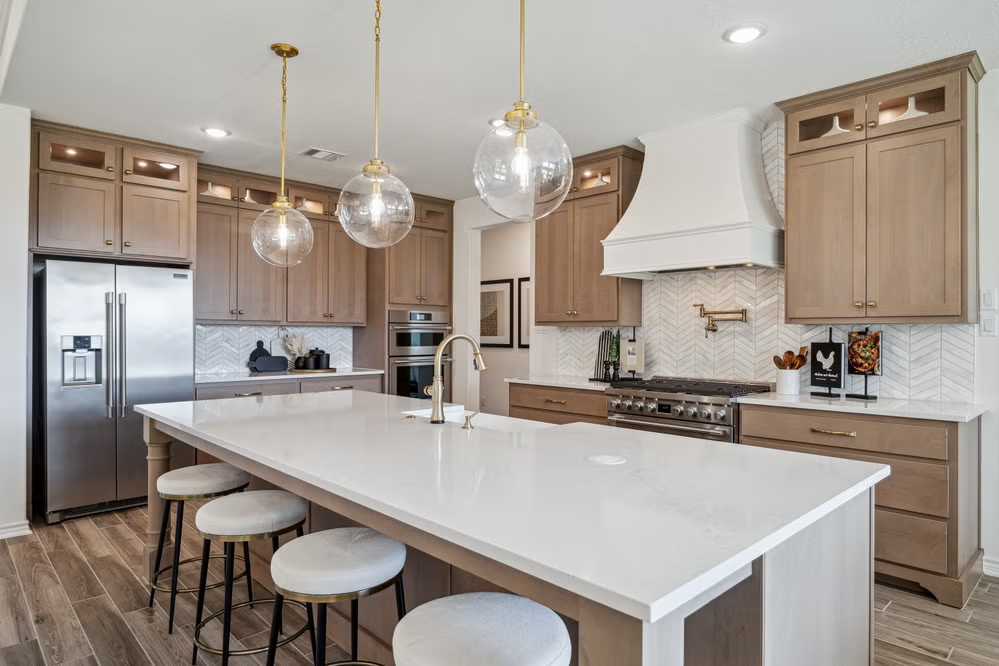
Kitchen projects are similar. Cabinet installation, appliance integration, countertops, backsplash work, and utility coordination stack up quickly. A standard-to-midrange kitchen in Dallas County may carry $20,000 to $50,000+ in labor and trade coordination, and larger kitchens with custom details can exceed that. A kitchen can also become the most expensive room per square foot because the finish density is so high. If you are planning a kitchen-focused project, it helps to review Dallas County kitchen remodeling costs alongside the broader home budget.
Material categories that move price
Common material categories that affect the total include:
- Flooring: laminate, engineered wood, hardwood, porcelain tile, or luxury vinyl
- Cabinetry: stock, semi-custom, or custom
- Countertops: laminate, solid surface, quartz, granite, or specialty stone
- Tile: basic field tile versus designer patterns or large-format slab work
- Fixtures: builder-grade versus premium plumbing and lighting selections
- Doors and trim: simple replacements versus upgraded millwork packages
Material budgets can vary widely even within a single room. For example, a basic flooring package might run $3 to $8 per square foot installed for some products, while premium hardwood, tile, or specialty finishes can move into the $12 to $25+ per square foot installed range. Cabinetry can range from roughly $8,000 to $20,000 for simpler packages to $25,000 to $60,000+ for larger semi-custom or custom kitchens.
When homeowners choose higher-end materials in just one or two categories, the budget can change noticeably. A modest layout with premium finishes can cost more than a larger layout with standard finishes.
Trade-heavy rooms and hidden work
Some costs are less visible but still important. Drywall patches, subfloor repair, insulation upgrades, and electrical panel work can appear once demolition starts. In hot North Texas conditions, HVAC-related improvements may also be recommended to improve comfort and reduce strain on the system. These items do not always look glamorous, but they are often what makes the remodel feel complete and durable.

Permit, Design, and Planning Costs
Soft costs matter in Dallas County, especially when a project moves beyond surface updates. Design and planning help prevent expensive mistakes, and permits keep the work aligned with local requirements.
Design and preconstruction
A remodel that includes layout changes or significant finish decisions should include design time. Depending on the complexity, that can involve measurements, basic conceptual drawings, finish selections, trade coordination, and estimating revisions. For planning purposes, design and preconstruction may account for about 3% to 10% of the total project budget, and on a $100,000 remodel that can mean roughly $3,000 to $10,000 before construction starts.
Permits and inspections
Permit cost and timing vary by city, not by county as a whole. That means homeowners should not assume one flat schedule or one uniform fee structure for Dallas County. Even when permit fees themselves are moderate, the inspection timeline can influence the schedule enough to affect labor cost and project duration. A remodel that waits on approvals may extend field time, and extended field time can increase overhead. For many projects, permit fees may land in the low hundreds to low thousands of dollars, depending on scope and municipality.
Engineering and specialty reports
Some projects need engineering input, especially if walls move, openings widen, or structural loads change. Other projects may need moisture remediation, energy-related upgrades, or specialized trade coordination. These costs are easy to overlook during the excitement phase, but they are often essential for a smooth build. Engineering or specialty reports can add roughly $500 to $3,000+, and structural calculations or stamped drawings can cost more on complex projects.
Planning allowance
A reasonable planning mindset is to reserve part of the budget before demolition begins. The earlier you decide on cabinetry, tile, fixtures, and appliances, the better your estimate will be. The more late changes you make, the more likely you are to pay rush fees, restocking charges, or change-order premiums.

Timeline and Process Expectations
A Dallas County remodel does not just cost money; it takes time, and time affects cost. The process usually moves through planning, design, permitting, demolition, construction, and final punch list work.
Typical timeline ranges
- Design-to-start planning: 2 to 8 weeks
- Midrange construction phase: 8 to 16 weeks
- Major remodels: often longer, especially if structural work or city review adds time
These are planning ranges, not guarantees. A simpler cosmetic project can move faster, while a full-home remodel with multiple trades and approvals can take significantly longer.
What affects the schedule
Several factors can extend the timeline:
- Permit or inspection delays
- Material lead times for cabinets, tile, or specialty fixtures
- Hidden conditions found after demolition
- Change orders that add scope after work begins
- Limited site access or weather-related interruptions
In practical terms, the most efficient jobs are the ones where design decisions are made early and the material package is fully selected before construction starts. If the builder can sequence trades without waiting on last-minute choices, the project stays more predictable.
Why schedule matters to budget
Time is money on a remodel. If the project stalls, the crew still has to manage coordination, temporary protection, and overhead. Longer projects can also increase disruption for the homeowner, which often leads to added temporary living costs or extra convenience expenses. Good planning reduces both financial and emotional strain.

How to Budget the Project Realistically
The smartest Dallas County remodeling budgets are built around real-world uncertainty. Even a carefully planned project should include room for hidden conditions and material choices that shift during design.
Start with a base scope
Write down the non-negotiables first: which rooms are being remodeled, whether any walls move, which systems are being replaced, and what finish level you want. A clear scope keeps the estimate from drifting upward before the work starts.
Add contingency
For Dallas County homes, especially older ones, a 10% to 20% contingency is a practical target. That reserve can absorb surprises such as outdated wiring, minor structural repairs, or subfloor issues. If the home is newer and the scope is mostly cosmetic, you may be able to stay nearer the lower end. If the home is older or the design is complex, the higher end is safer.
Keep allowances separate
Budget lines for cabinets, counters, tile, flooring, plumbing fixtures, appliances, and lighting should be separate when possible. This makes it easier to see where a choice is premium versus where it is standard. It also prevents one upgrade from quietly eating the money meant for another category.
Sequence the project intelligently
If the budget is limited, prioritize the work that has the biggest functional impact first:
- Structural or safety corrections
- Plumbing and electrical corrections
- Core surfaces like flooring and drywall
- Kitchen and bath finishes
- Decorative upgrades
That order helps ensure that money goes toward the parts of the home that matter most before it is spent on extras.
Think about financing and phasing
Some homeowners try to do the whole project at once; others phase it. Phasing can make sense if you need to spread out payments, but it may also increase total cost if the contractor has to mobilize twice or return to the same house later. A single coordinated project is often more efficient if the budget allows it.
Compare apples to apples
When you review bids, check whether each one includes the same things: demolition, debris removal, permits, design time, fixtures, finishes, allowances, and contingencies. A lower bid can look attractive until you realize it excludes half the work you need.

When to Choose a Home Remodeling Project in Dallas County
A remodeling project makes the most sense when the home already has good bones but no longer fits your lifestyle, your taste, or your maintenance tolerance. In Dallas County, that often means updating an older home so it performs more like a newer one while preserving the location and structure you already have.
Home remodeling is usually a strong choice if:
- You want to stay in your neighborhood rather than move
- The floor plan is functional but dated
- The kitchen or baths are the main source of frustration
- The home needs practical updates to electrical, plumbing, or comfort systems
- You want to improve resale appeal over time
It may be smarter to scale back the project if the home has major foundation, moisture, or system issues that would consume too much of the budget before you get to the visible improvements. In those cases, a phased plan may be better than a full remodel. If you are comparing local construction paths, it can also help to look at the cost of new construction through Dallas County home building costs to see whether remodeling or rebuilding makes more financial sense.
For homeowners trying to compare counties, our local market comparisons for Tarrant County and Rockwall County can also show how pricing changes with housing stock, access, and project complexity.

Final Thoughts on Home Remodeling in Dallas County
The cost to remodel a home in Dallas County in 2026 depends on scope, home age, finish level, and how much correction work is needed behind the walls. Cosmetic updates may stay in the tens of thousands, while full-home remodels often reach the six-figure range once kitchens, bathrooms, and system work are included.
The most reliable way to plan is to start with a realistic scope, budget for hidden conditions, and treat allowances as real money, not placeholders. The more clearly you define your finish choices and the more early decisions you make, the easier it is to keep the project under control.
If you are preparing a remodel in Dallas County and want a contractor who understands the local market, permits, and practical sequencing, start with our Dallas County home remodeling page and build from there. For a bigger-picture framework on budgeting and project types, revisit the full DFW home remodeling cost guide before you finalize your plan.
For added local reference, review Dallas County Tax Office for County jurisdiction context and property-related background for local framing.
For added local reference, review U.S. Census Bureau QuickFacts: Dallas County, Texas for Broad local context for housing stock, population, and market demand framing.