If you are planning a kitchen remodel in Tarrant County, the first question is usually the simplest one: what will it actually cost? In 2026, the answer depends on scope, layout changes, cabinet quality, finish level, and whether your home has hidden plumbing, electrical, or ventilation issues once demolition starts. A modest refresh can stay in the lower five figures, while a full gut-and-replace project often lands in the mid five figures or higher.
The broad pricing picture below is a practical starting point for homeowners budgeting in Fort Worth, Arlington, Southlake, Mansfield, Grapevine, Keller, and other county cities.
| Project type | Typical budget range | What it usually includes |
|---|---|---|
| Cosmetic refresh | $15,000–$35,000 | Paint, hardware, lighting updates, minor countertop or sink changes, limited cabinet work |
| Midrange remodel | $35,000–$75,000 | New cabinets, countertops, flooring, sink and faucet, appliance updates, modest layout adjustments |
| Major remodel | $75,000–$140,000+ | Larger layout changes, premium cabinets, higher-end tops, electrical/plumbing revisions, custom details |
That table is not a quote; it is a budgeting framework. The real number depends on whether you are keeping the current footprint, how much is being moved, and how much of the existing structure has to be corrected or brought up to current expectations. A remodel that stays within the existing walls and utility locations is usually far less expensive than one that changes the room’s flow or opens the kitchen to adjacent spaces.
If you want a broader regional benchmark first, our DFW kitchen remodel cost guide gives a metro-level view before you compare it to Tarrant County conditions. If you are ready to talk about your own scope, our Tarrant County kitchen remodeling services page is the best place to start.
Why Building in Tarrant County Is Different
Tarrant County is not one uniform housing market. Some neighborhoods have older homes with original kitchens, smaller footprints, and legacy mechanical systems. Others have newer suburban houses with open plans and higher resale expectations. That mix changes both the cost and the risk profile of a remodel.
In older parts of Fort Worth and in many established neighborhoods across the county, homeowners often discover outdated wiring, undersized circuits, aging drain lines, ventilation problems, or framing surprises after cabinets and drywall come out. Those hidden conditions can add several thousand dollars quickly, especially if the remodel includes relocating the sink, range, or refrigerator. Local valuation data and neighborhood composition from Tarrant County Appraisal District help explain why nearby homes can differ so much in age, quality, and renovation history.
Permitting is also more variable than many people expect. Requirements can differ city by city within Tarrant County, so a project in Fort Worth may move on a different schedule than one in another jurisdiction. Fort Worth’s development services department is a useful local reference for permit and inspection expectations in the county’s largest city: City of Fort Worth Development Services. Across the board, code-related details can affect electrical, plumbing, and ventilation scope; the general residential standards in the International Code Council are a good reminder that kitchen work often involves more than cabinets and countertops.
There is also a finish-level difference in many move-up neighborhoods. In higher-value areas, buyers tend to expect better cabinet construction, stronger countertop materials, more considered lighting, and appliances that look like they belong in a finished home rather than a basic replacement. That expectation can move a “nice but practical” kitchen into a much higher budget bracket.

Typical Project Cost Ranges
A kitchen remodel in Tarrant County usually falls into one of three spending bands. The right one depends on whether you are refreshing finishes, replacing most major components, or rebuilding the kitchen as a new space.
Small kitchen refresh: $15,000 to $35,000
This is the range for cosmetic improvement without major structural changes. Typical work might include:
- Repainting walls and ceilings
- Replacing hardware
- Updating light fixtures
- Swapping a sink and faucet
- Installing a modest countertop
- Refreshing partial cabinetry with paint, refacing, or a few new boxes
- Adding a backsplash
This budget is realistic when the kitchen footprint remains the same and the appliances can stay mostly where they are. It is also the easiest scope to control if your goal is to improve appearance without opening up the walls.
Midrange remodel: $35,000 to $75,000
This is the most common planning range for homeowners who want a noticeable transformation. It often includes:
- New semi-custom or stock cabinets
- New countertops
- New sink, faucet, and disposal
- New flooring
- Lighting updates
- Appliance replacement or allowance
- Some electrical or plumbing work
- Limited layout changes, if any
A midrange remodel is where budget discipline matters most. Cabinetry alone can represent roughly 25% to 40% of the total budget, so a cabinet upgrade can reshape the whole project number quickly. The cost vs. value context at the 2024 Cost vs. Value Report is helpful here because it shows why homeowners often keep midrange kitchens balanced rather than overbuilding them.
Major remodel: $75,000 to $140,000+
A major kitchen project may involve:
- Full demolition
- Wall removals or opening the kitchen to adjacent living areas
- Custom or high-end cabinets
- Premium stone countertops
- New electrical circuits and upgraded lighting design
- Plumbing relocations
- New ventilation solutions
- High-end appliances and panel-ready details
- Specialty finishes, built-ins, or a larger island
Once the project starts changing the architecture of the room, the cost rises fast. In many Tarrant County homes, especially older ones, the true total can climb because hidden repairs are discovered only after demolition begins.
If you are comparing neighboring counties, our Dallas County kitchen remodel cost guide and Parker County kitchen remodel cost guide show how suburban stock, lot size, and neighborhood expectations can shift a project budget in different directions.

Cost Per Square Foot and What It Includes
Some homeowners like to think in square feet because it feels simpler. In kitchen remodeling, that can be useful as a rough planning tool, but it should never replace a detailed scope. In Tarrant County, a typical kitchen remodel may land anywhere from about $150 to $500+ per square foot depending on the finish level and how much of the room changes.
Here is a practical way to think about it:
- Basic refreshes often sit toward the lower end because they preserve most of the existing layout.
- Midrange projects may cluster around $250 to $400 per square foot once cabinetry, tops, flooring, and labor are included.
- High-end remodels can move above $400 per square foot when custom millwork, premium appliances, and layout changes are involved.
What does that square-foot number usually include?
- Demolition and haul-off
- Framing adjustments
- Cabinetry
- Countertops
- Flooring
- Tile or backsplash
- Plumbing and electrical work
- Painting and trim
- General contractor coordination and overhead
What it often does not fully capture:
- Appliance allowances
- Major structural work
- Permit fees
- Unforeseen code corrections
- High-end design services
- Temporary kitchen setup costs during construction
For example, a 150-square-foot kitchen at $300 per square foot suggests about $45,000, but that same kitchen could jump to $70,000 or more if it needs a large island, custom cabinets, and utility relocation. The square-foot method is best used as a quick screening tool before you price the project item by item.

Main Factors That Change Total Price
Several variables can swing a kitchen budget in Tarrant County by tens of thousands of dollars. The biggest one is the scope of change. Keeping the current layout is much cheaper than moving walls, plumbing, or electrical service.
1. Cabinet choice
Cabinetry is usually the single biggest line item. Stock cabinets can help keep a project in range, while semi-custom or custom cabinets can significantly increase the total. A modest cabinet package may start in the low five figures, but a more refined solution with storage accessories, taller uppers, specialty finishes, or custom sizing can push much higher.
2. Layout changes
If the sink stays where it is and the range stays on the same wall, costs are easier to manage. If the plan includes moving plumbing, adding a larger island, widening a doorway, or removing a wall, budget more for framing, electrical, drywall, and finishes.
3. Age and condition of the home
Older homes often have surprise costs. Once cabinetry or walls are removed, it is common to find outdated wiring, insufficient insulation, old venting, or plumbing that needs replacement. That is why a contingency of 10% to 20% is often a smart planning move for a midrange kitchen remodel, especially in older housing stock.
4. Finish level
A simple laminate countertop and standard fixture package cost much less than quartz, premium tile, custom lighting, and designer hardware. In resale-sensitive neighborhoods, homeowners often move up one finish tier to match neighboring homes and future buyer expectations.
5. Permits and inspection timing
Permit and inspection requirements can vary by municipality within Tarrant County, and that affects both time and money. If your project needs multiple inspections or additional revisions, schedule risk increases. The permit process is not always expensive by itself, but it can create delays that push labor schedules and material deliveries.
6. Appliance selection
Appliances can be a surprisingly large swing factor. A basic appliance allowance may work for a standard remodel, but panel-ready or professional-grade packages can add several thousand dollars, sometimes much more. It is common to reserve some flexibility here because homeowners often upgrade after seeing the rest of the kitchen come together.
Labor, Materials, and Trade-Level Costs
A kitchen remodel is a coordination project as much as a materials project. Labor and trade work can be a major part of the budget, particularly when the kitchen needs correction or modernization behind the finished surfaces.
Trade-level work that often affects cost
- Electrical: New lighting, dedicated appliance circuits, island outlets, under-cabinet lighting, and panel work can add several thousand dollars.
- Plumbing: Moving a sink, adding a pot filler, replacing shutoff lines, or changing water/disposal connections adds labor and material cost.
- HVAC or ventilation: Range hood installation, ducting, and make-up air considerations can become important in more involved remodels.
- Drywall and paint: Even small layout changes can create patching, texture, and paint work beyond what homeowners expect.
- Tile and flooring: Subfloor repairs, underlayment, and transitions can add cost if the existing floor is uneven or damaged.
Because the IRC-based requirements referenced by the International Code Council can affect what is considered acceptable for electrical, plumbing, and ventilation, you should assume that a kitchen remodel is not just “finish work.” Once walls are opened, trades often uncover things that need to be corrected before the final finishes go in.
Material allowances to plan for
A realistic remodel budget usually breaks out allowances for:
- Cabinets
- Countertops
- Appliances
- Sink and faucet
- Backsplash tile
- Flooring
- Lighting fixtures
- Hardware
A practical planning rule is to reserve 5% to 15% of the project budget for final selection upgrades, especially if you have not finalized every product before construction starts. That buffer helps when a homeowner falls in love with a better countertop, a more expensive appliance package, or upgraded lighting after the project is already underway.
Why labor can be more expensive than it looks
Homeowners sometimes compare visible materials only, but professional kitchen work includes demo, protection, disposal, coordination, scheduling, and the craftsmanship required to make the finished room look seamless. In a complex remodel, labor may not be the majority line item, but it can easily represent a substantial share of the total once multiple trades are involved.

Permit, Design, and Planning Costs
The first phase of a kitchen remodel is often underappreciated because it happens before anything dramatic is visible. Planning, design, selection, and permits can take real time and can affect the budget in direct and indirect ways.
Common soft costs
- Initial design consultation or layout development
- Measurements and field verification
- Cabinet design or drafting
- Permit fees
- Engineering or structural review if walls change
- Product specification and ordering
- Site protection and preconstruction scheduling
In Fort Worth, development-services guidance can be especially useful for understanding how local permit steps and inspections fit into the construction timeline: City of Fort Worth Development Services. Other Tarrant County cities may have different procedures, so the process should be checked case by case.
What these costs look like in practice
For a straightforward kitchen remodel, soft costs may be modest. But if you are changing the layout, relocating utilities, or opening up structural walls, preconstruction can become a meaningful budget item. It is not unusual for planning and permit-related expenses to land in the low thousands, with additional engineering or design work on top if the project is complex.
Why planning matters financially
A well-planned project saves money in two ways:
- It reduces change orders during construction.
- It helps you order products early enough to avoid delays and rush decisions.
In a county with mixed housing ages, like Tarrant County, planning is especially valuable because older homes can hide infrastructure issues until the work begins. Better preconstruction planning helps you create a more accurate budget before demolition starts.
Timeline and Process Expectations
A kitchen remodel is usually a multi-stage process. The exact schedule depends on scope, but a realistic timeline in Tarrant County often looks like this:
1. Design and selections: 2 to 6 weeks
This phase includes measurements, design revisions, cabinet decisions, countertop selection, tile choices, lighting, and appliance planning. If the homeowner is indecisive or the project is highly customized, this phase can last longer.
2. Permitting and approvals: 1 to 4+ weeks
Simple projects may move relatively quickly, but city-specific permit timing can vary. More complex projects, especially those involving walls or utility changes, may require longer review.
3. Cabinet ordering and lead time: 2 to 10+ weeks
Cabinet availability can become a major schedule driver. Stock options may arrive sooner, while semi-custom and custom cabinets can take longer. In many remodels, cabinet lead time is the factor that determines when demolition can begin.
4. Construction: 3 to 10 weeks
A smaller refresh may be completed relatively quickly. A full gut remodel with multiple trades, inspections, and finish details can take much longer. If structural work or major utility changes are involved, the construction phase can stretch further.
5. Punch list and closeout: 1 to 2 weeks
Even after the main work is done, there is usually a final period for touch-ups, adjustments, and any missing items.
Schedule risk to plan for
The biggest schedule risks in Tarrant County kitchen remodels are:
- Hidden conditions in older homes
- Permit timing differences by municipality
- Product backorders
- Trade coordination delays
- Scope changes after demolition
If you are trying to live through the remodel without major disruption, add a realistic buffer. A project that seems like six weeks on paper can stretch longer once real-world issues are added in.

How to Budget the Project Realistically
The most successful kitchen budgets are built around allowances and contingencies rather than wishful thinking. In Tarrant County, that matters because homes vary widely by age, location, and condition.
Start with the scope you can afford
Decide first whether you need:
- A refresh
- A midrange remodel
- A full redesign
That one decision has more budget impact than almost anything else. If you can keep the footprint, avoid relocating utilities, and choose durable but not overbuilt finishes, the project becomes much easier to control.
Add contingency for surprises
A midrange kitchen remodel is often budgeted with a 10% to 20% contingency. That is especially sensible when you are working in an older home where the walls may reveal outdated electrical, plumbing, or venting conditions. Even newer homes can produce surprises, but older stock deserves a larger buffer.
Build allowances into the budget
Allowances help you avoid false precision before products are chosen. A practical allowance structure might include:
- Cabinet allowance
- Countertop allowance
- Appliance allowance
- Lighting allowance
- Hardware allowance
- Tile allowance
If you know your taste runs higher-end, budget for it early instead of treating upgrades as minor add-ons. A few “small” changes can easily add several thousand dollars.
Sequence the spending
Think in layers:
- Structure and systems
- Cabinets and tops
- Flooring and tile
- Lighting and fixtures
- Paint and final finishes
This sequence helps you protect the budget for the items that are hardest to change later. Cabinets and utility corrections should take priority over decorative upgrades if money gets tight.
Consider financing carefully
Some homeowners pay cash, while others use financing to keep the project aligned with long-term home value and monthly cash flow. If you plan to finance, get clear on the monthly payment before you choose higher-end finishes. A beautiful kitchen is only useful if it remains financially comfortable after completion.
Compare value to neighborhood expectations
In some Tarrant County areas, especially where resale values support stronger finishes, a better kitchen can make sense even at a higher budget. In lower-value or transitional neighborhoods, you may want to be more conservative and focus on function, durability, and a clean finished look rather than premium customization.

When to Choose a Kitchen Remodeling Project in Tarrant County
A kitchen remodel is usually worth pursuing when the current layout no longer fits how you live, when the finishes are visibly dated, or when the existing room is holding back the rest of the home. In Tarrant County, that decision often comes down to the age of the house, the neighborhood standard, and how much hidden repair you are willing to absorb.
Choose a remodel now if:
- The layout is inefficient or cramped
- Cabinets are failing or storage is inadequate
- The kitchen feels disconnected from the home’s value level
- Appliances and finishes are too dated to support resale
- You are already planning electrical, plumbing, or flooring work elsewhere
- You want to improve daily function for cooking and entertaining
You may want to delay or scale down if:
- The house is likely to need major hidden repairs first
- Your budget does not include contingency
- You want upscale finishes but the rest of the home does not support them
- The permit or inspection process will affect your timeline more than you can tolerate
If you are comparing it with other home improvements, it can also help to look at broader renovation priorities through our Tarrant County home remodeling cost guide or more focused bath work in our Tarrant County bathroom remodel cost guide. And if you are still deciding whether to improve this home or start over with a new build, our Tarrant County home building cost guide can give you a useful comparison point.
For homeowners who want the local conversation to start with a contractor rather than just a spreadsheet, a quick review of the scope with our Tarrant County kitchen remodeling team can help you see where the major cost drivers are likely to be.
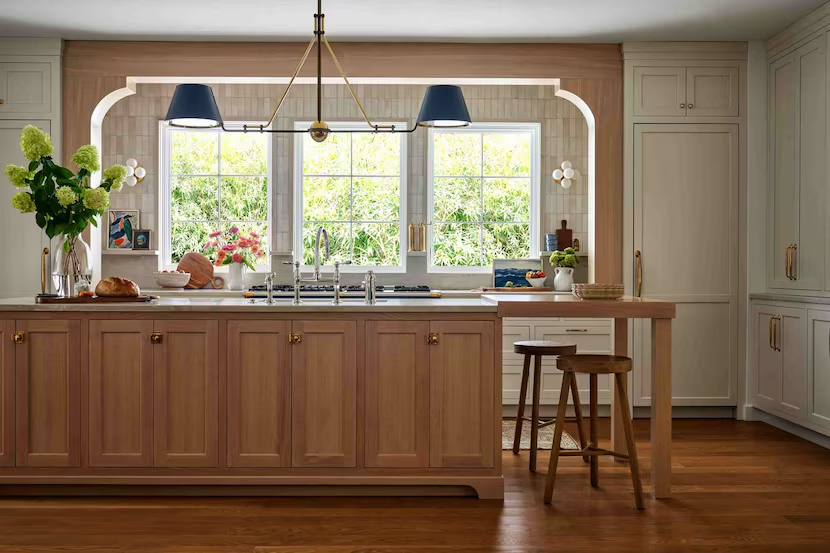
Final Thoughts on Kitchen Remodeling in Tarrant County
A kitchen remodel in Tarrant County can range from a careful five-figure refresh to a much larger, fully customized renovation. The biggest factors are not just the visible finishes, but the underlying realities of local housing stock, permit timing, and hidden conditions inside older homes. That is why two kitchens that look similar at the start can end up at very different price points by the end.
If you keep the layout simple, choose materials intentionally, and plan for contingency, you can control cost without sacrificing quality. If you are in a neighborhood where higher-end expectations matter, it may make sense to spend more on cabinets, countertops, lighting, and appliances so the finished room feels right for the home.
The best next step is usually a clear scope and a realistic budget range before you commit to products. If you want help figuring out where your kitchen fits, start with the countywide price context in the DFW kitchen remodel cost guide and then narrow it down to your actual home, your city, and your priorities. When you are ready, a local remodel consultation can turn that range into a specific plan.