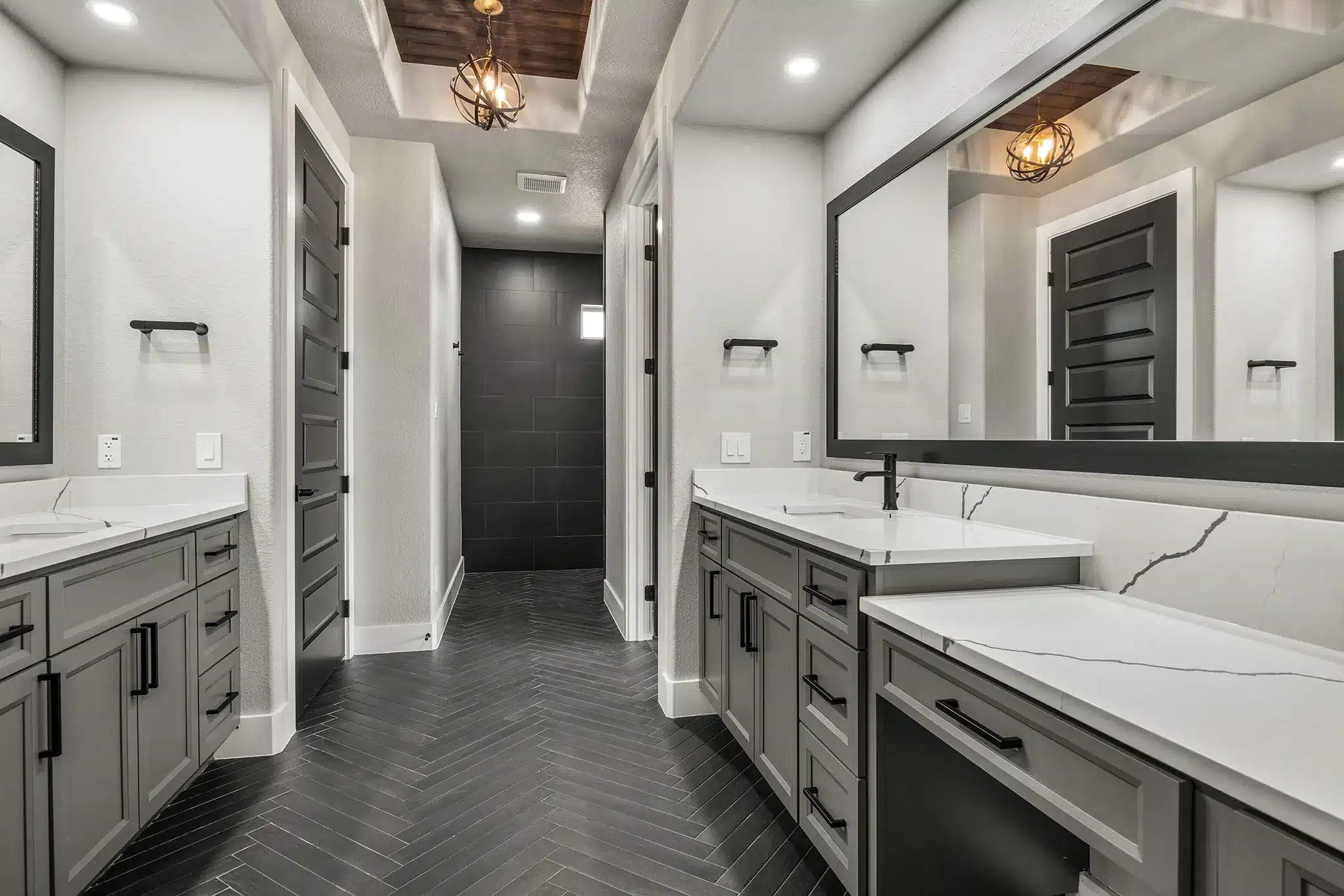
How Much Does a Kitchen Remodel Cost in Graham? (2026 Guide)
A kitchen remodel in Graham can be a smart way to improve daily function, update an older floor plan, and add long-term value to your home. In 2026, many Graham homeowners should expect a kitchen project to land somewhere between $25,000 and $120,000+, depending on how much of the room is being rebuilt, what materials are selected, and whether plumbing, electrical, or wall changes are included.
Here’s the simplest way to think about it:
- Cosmetic refresh: about $25,000 to $45,000
- Midrange remodel: about $45,000 to $80,000
- High-end or full-gut remodel: about $80,000 to $120,000+
| Project scope | Typical Graham budget | What it usually includes |
|---|---|---|
| Cosmetic update | $25,000–$45,000 | Paint, hardware, lighting, counters, sink/faucet, modest cabinet updates, limited trade work |
| Midrange remodel | $45,000–$80,000 | Semi-custom cabinets, better tops, new flooring, appliance upgrades, some layout adjustments |
| High-end remodel | $80,000–$120,000+ | Full layout redesign, custom cabinetry, premium finishes, trade relocation, possible structural work |
If you want a broader Dallas-Fort Worth pricing benchmark, you can compare these ranges to our DFW kitchen remodel cost guide. For a Graham-specific project conversation, it also helps to start with a local contractor who understands trade availability and site conditions; our Graham kitchen remodeling service page is the best place to begin.
The short version: in Graham, the biggest price swings usually come from layout changes, hidden prep work, and trade coordination, not just from choosing nicer finishes. A kitchen that keeps the same footprint can stay much closer to the lower end of the range, while projects that move plumbing, electrical, or walls can climb quickly.
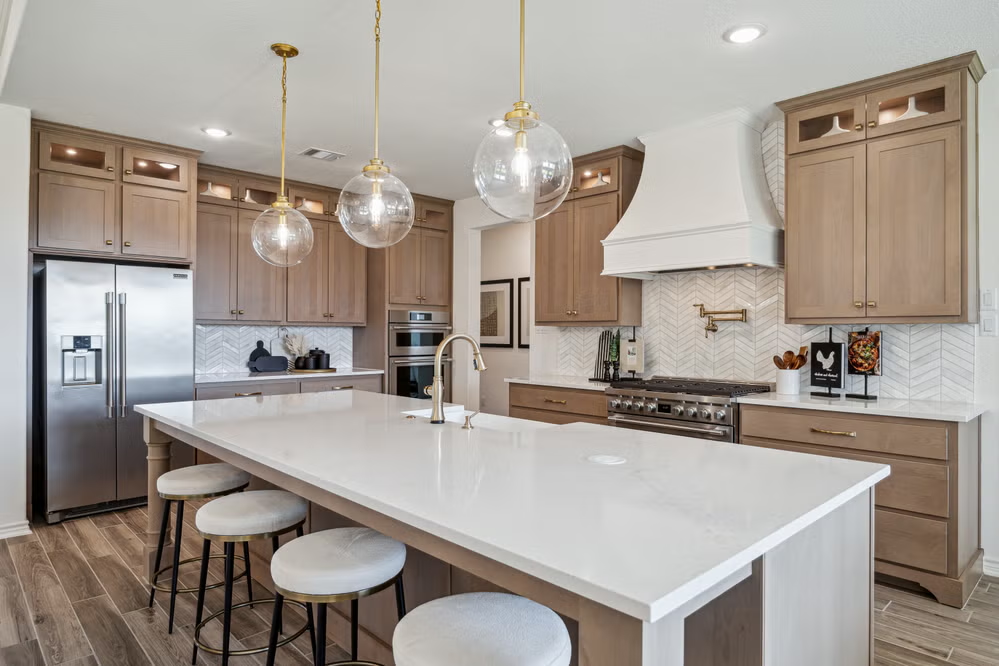
Why Building in Graham Is Different
Graham is a smaller North Texas market, and that affects kitchen remodeling in a few practical ways. The work itself is the same basic craft you would see anywhere, but pricing and scheduling can shift because subcontractor availability, mobilization, and material lead times are often less predictable than in a larger metro.
That matters for three reasons:
- Trade availability can affect start dates and pricing. If a plumber, electrician, or drywall crew is booked out, the project may take longer to mobilize.
- Older local homes may need more prep work. In and around Graham, many kitchens sit in homes with older wiring, outdated plumbing, or framing that is not as square as today’s standards.
- Delivery and staging can be a little less convenient. Appliance delivery, dumpster placement, and material drop-offs can take more planning when a property is outside dense utility corridors.
This is why a Graham kitchen remodel is rarely just about selecting cabinets and countertops. The local market tends to reward projects that are well planned and realistic about trade sequencing. That is also why many homeowners find it useful to think about the remodel as a blend of visible finish work and invisible trade work, rather than as a purely design-driven purchase. For a broader look at how kitchen costs scale in other Texas markets, see the Brazos River kitchen cost guide and the Mineral Wells kitchen cost guide.

Typical Project Cost Ranges
The best way to budget a kitchen remodel is to match your expectations to the scope of work. In Graham, the same room can vary dramatically in cost based on whether the project is a surface refresh, a partial reconfiguration, or a full teardown and rebuild.
1. Small cosmetic kitchen update: $25,000 to $45,000
This range is usually for homeowners who want the kitchen to look and feel better without changing the room’s bones.
Common items in this scope:
- Cabinet painting or limited cabinet replacement
- New hardware and fixtures
- New backsplash
- Engineered stone or entry-level quartz counters
- Sink and faucet upgrades
- Lighting replacement
- Paint and minor trim work
- Minor flooring patching or replacement
This type of remodel is often the best fit if the kitchen layout already works and the cabinets are structurally sound. It is also the most likely budget tier to stay closer to plan if the homeowner makes decisions early and avoids design changes midstream.
2. Midrange remodel: $45,000 to $80,000
This is the most common “substantial update” range. It usually includes more durable finishes, improved storage, and at least some degree of layout improvement.
Common items in this scope:
- Semi-custom or better-grade stock cabinets
- Quartz or upgraded stone tops
- New sink, faucet, and disposal
- New flooring throughout the kitchen
- Recessed lighting or updated fixture plan
- Appliance package upgrades
- Partial wall changes or opening the kitchen to adjacent space
- Electrical updates to support modern appliances and lighting
In Graham, this range is often where hidden work begins to matter. Once the project includes opening walls, changing appliance locations, or updating old systems, costs can rise faster than expected.
3. High-end or full-gut remodel: $80,000 to $120,000+
This tier is for full transformations. The kitchen may be stripped to studs, reconfigured, or rebuilt with custom millwork and premium finishes.
Common items in this scope:
- Custom cabinetry
- Premium quartzite, natural stone, or high-end quartz
- Major appliance package
- Larger island or expanded seating area
- Dedicated lighting design
- Plumbing relocation
- Electrical panel or circuit upgrades as needed
- Structural modifications or beam work
- Full flooring replacement
- High-detail trim, tile, and finish carpentry
These are the projects most likely to trigger permit review, inspection coordination, and more complex scheduling. If you are considering a major layout change, it is worth comparing it to the cost of a broader home update and deciding whether the kitchen should be part of a larger remodel strategy, such as a whole-home remodel in Graham.
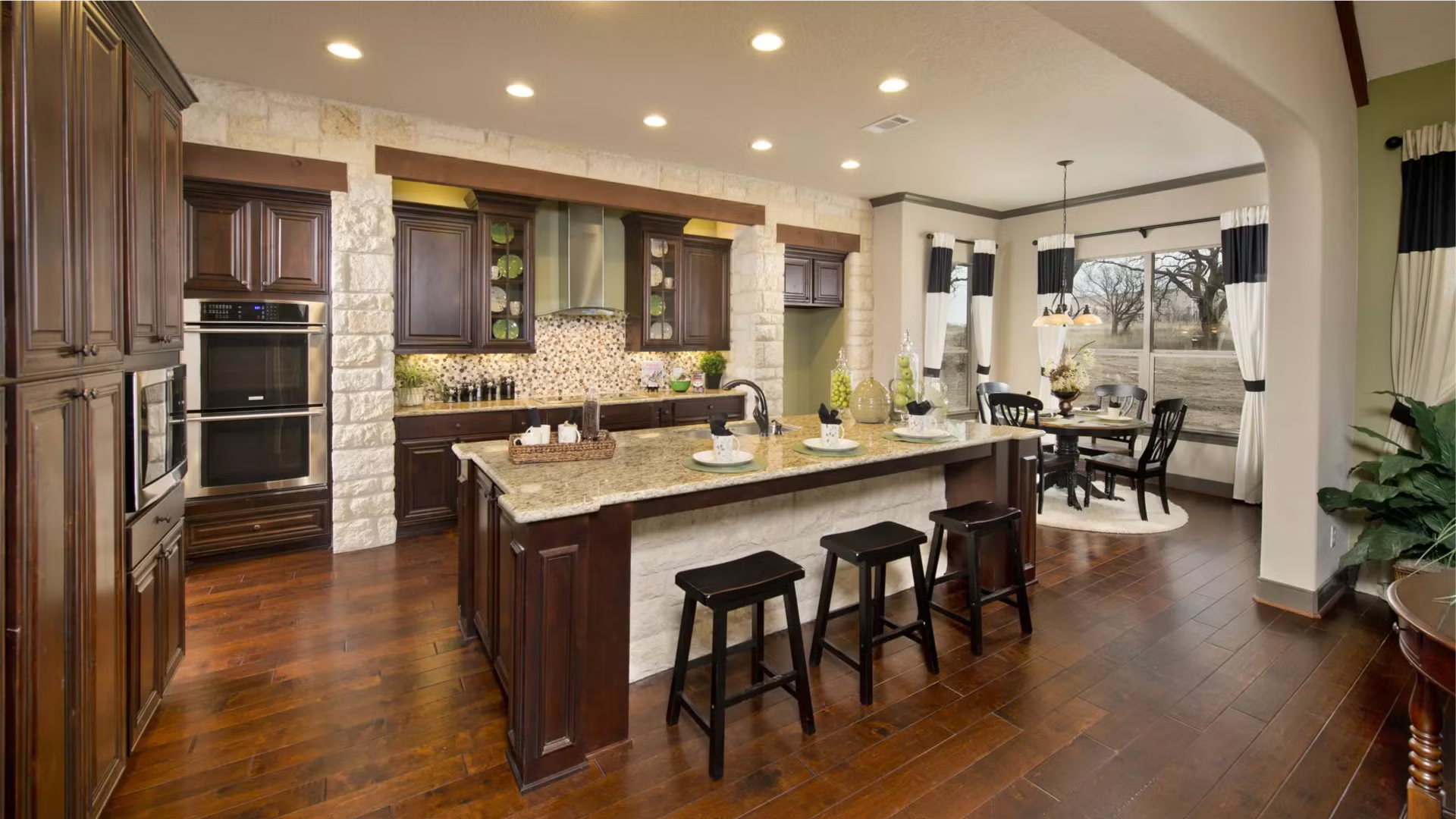
Cost Per Square Foot and What It Includes
Many homeowners ask about kitchen remodel cost per square foot, but that number only works if you understand what is included. For Graham projects in 2026, a rough planning range is often around $175 to $375 per square foot for many standard remodels, with higher-end work moving beyond that when custom details or structural changes are involved.
Here is how that usually breaks down:
- Lower end, about $175 to $225 per square foot: mostly cosmetic work, limited layout changes, straightforward installation
- Midrange, about $225 to $325 per square foot: new cabinets, upgraded counters, flooring, lighting, and some trade work
- Higher end, about $325 to $450+ per square foot: custom cabinetry, premium finishes, significant relocation of plumbing/electrical, and more complex install conditions
Per-square-foot budgeting is useful for early planning, but it is not a substitute for a scope-based estimate. A small kitchen with expensive finishes can cost more than a larger kitchen with basic products. Likewise, a modest-sized room can become expensive if the job includes moving a sink, adding a peninsula, or updating old electrical service.
A practical way to use square-foot pricing is as a sanity check:
- If your kitchen is about 150 square feet, a midrange project might land around $33,750 to $48,750 at $225 to $325 per square foot.
- If your kitchen is about 200 square feet, that same midrange logic suggests about $45,000 to $65,000.
- If you add custom cabinets, luxury tops, and major trade relocation, the same room can easily move above $70,000.
The important point is that square-foot pricing is only useful when paired with actual project scope. Cabinets, countertops, and labor are usually the largest cost buckets, and layout changes tend to amplify all three. That pattern is consistent with general budgeting guidance from the National Kitchen & Bath Association NKBA budgeting guidance.

Main Factors That Change Total Price
Several variables can push a Graham kitchen remodel up or down by thousands of dollars. The more of these factors your project includes, the more likely it is to move from a basic refresh into a major renovation.
Layout changes
Keeping the sink, range, refrigerator, and major appliances where they are is usually the most budget-friendly option. Once you move those items, you are often paying for:
- New plumbing lines
- New electrical circuits
- Possible gas line work
- Cabinet reconfiguration
- Drywall repair and paint
- Flooring patching or replacement
Moving plumbing or electrical is especially important because it creates extra trade visits and more coordination. Licensed trade work and compliance matter here, which is why homeowners should expect to follow applicable guidance for electrical and plumbing work Texas trade licensing guidance.
Age of the home
Older homes often look simple on the surface and complicated once walls are opened. Hidden costs can include:
- Uneven framing
- Old subflooring
- Improper venting
- Outdated wiring
- Corroded supply or drain lines
- Insulation or wall cavity surprises
In Graham, older farmhouse-style properties or homes with previous additions may require more labor just to make the space ready for finish materials. That hidden prep work can add several thousand dollars before the visible upgrades even begin.
Finish level
Finish level is one of the biggest cost drivers because it affects nearly every line item. For example:
- Stock cabinets may keep cabinet cost lower, while custom cabinets can add $10,000 to $30,000+
- Entry-level quartz or solid-surface tops may be several thousand dollars less than premium stone
- Basic lighting can stay manageable, while layered lighting with under-cabinet circuits and statement fixtures raises the total
- Standard tile backsplash work is cheaper than large-format or custom tile detailing
The key is to decide early where the money should go. Many homeowners find it easier to spend on cabinets and counters than on decorative upgrades that do not improve function.
Permitting and code compliance
If the project includes structural, plumbing, or electrical changes, permit review and inspection timing can affect both cost and schedule. In Graham, homeowners should confirm whether the proposed scope needs approval through the local building process City of Graham permitting guidance.
Material availability
Material lead times may be longer in smaller markets. Custom cabinets, specialty countertops, and appliance backorders can all extend the schedule. Extended timelines can create indirect cost pressure if temporary housing, eating out, or repeated schedule changes are part of the project.

Labor, Materials, and Trade-Level Costs
A kitchen remodel budget is usually divided between visible materials and the labor needed to install them correctly. In Graham, the exact mix depends on the scope, but the same general rule holds: the more complex the project, the larger the labor share becomes.
Typical budget allocation
A practical way to think about a midrange kitchen remodel is this:
- Cabinets: roughly 25% to 35%
- Labor: roughly 20% to 35%
- Countertops: roughly 10% to 15%
- Flooring, tile, lighting, paint, trim, and fixtures: roughly 15% to 25%
- Appliances and specialty items: roughly 10% to 20%
- Contingency: 10% to 20%
Those percentages are not fixed, but they help homeowners see where the money goes. According to general kitchen budgeting guidance, cabinets, countertops, and labor are usually the biggest buckets, especially when layout changes are involved NKBA budgeting guidance.
Labor items that can raise the bill
Labor is not just “installation.” It often includes:
- Demo and haul-away
- Framing adjustments
- Drywall repair
- Electrical rough-in and trim-out
- Plumbing rough-in and finish plumbing
- Flooring installation
- Tile work
- Cabinet installation and scribing
- Finish carpentry
- Paint and touch-up work
If the kitchen stays in the same footprint, labor is more predictable. If the project opens walls or shifts appliance locations, each trade has more coordination, and the cost rises accordingly.
Material allowances that matter most
Some allowances deserve special attention because they can move the estimate quickly:
- Cabinets: door style, finish, and storage accessories
- Countertops: material choice, edge profile, slab availability, and cut complexity
- Appliances: panel-ready and professional-style units can add a large premium
- Fixtures: sinks, faucets, pot fillers, and disposal units
- Flooring: tile and hardwood finishes usually cost more than basic LVP
- Lighting: recessed cans, pendants, dimmers, and under-cabinet lighting
If you are comparing bids, make sure each contractor is pricing the same quality level. A bid that looks cheaper may simply be assuming lower-grade cabinetry or fewer finish details.
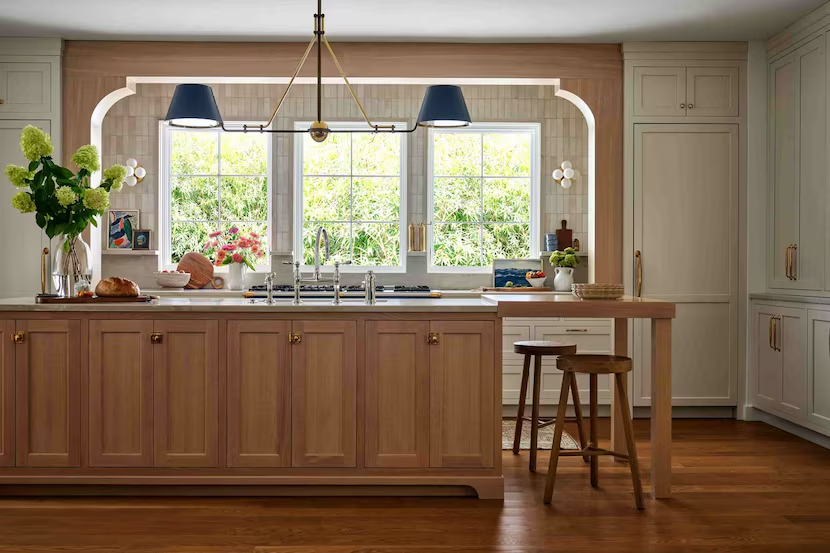
Permit, Design, and Planning Costs
Not every kitchen remodel needs a big permit budget, but many projects require more planning than homeowners expect. In Graham, the soft costs are often a small percentage of the total project, but they still matter because they shape the final scope and the schedule.
Common soft-cost categories
Here are the most common preconstruction expenses:
- Initial design or layout planning
- Measurements and site review
- Permits and inspection-related fees, if applicable
- Engineering or structural review, if walls are removed
- Selections and specification management
- Allowance revisions after pricing is finalized
For a basic cosmetic kitchen, soft costs may be minimal. For a major remodel, design and planning can account for several thousand dollars, particularly if there are multiple revisions or custom details. A typical planning budget in Graham might look like this:
- Basic cosmetic project: about $500 to $1,500 for measurements, simple design help, and limited planning
- Midrange remodel: about $1,500 to $4,000 for layout work, specification selections, and coordination
- Major remodel with structural changes: about $4,000 to $8,000+ if architectural drawings, engineering input, or repeated revisions are needed
When permits are more likely
Permits are more likely if the project includes:
- Wall removal or structural changes
- New electrical circuits
- Reworked plumbing
- Gas appliance changes
- Venting modifications
- Major mechanical changes
If your remodel crosses into those categories, it is wise to confirm local requirements before construction begins City of Graham permitting guidance. That step can prevent delays and help the project stay aligned with code expectations.
Why trade compliance affects price
Licensed electricians and plumbers do more than install fixtures. They also ensure the work is safe, up to code, and ready for inspection. That adds value, but it also adds cost. In a smaller market, coordination with those trades can be a bigger factor than homeowners expect, which is one reason a kitchen quote should always be evaluated as both a design estimate and a trade coordination estimate Texas trade licensing guidance.

Timeline and Process Expectations
A kitchen remodel in Graham is often a multi-phase project. Even when the active construction window is only a few weeks, the full process from planning to completion can stretch much longer.
Typical timeline by scope
- Cosmetic remodel: about 3 to 6 weeks of construction
- Midrange remodel: about 6 to 10 weeks of construction
- High-end or full-gut remodel: about 10 to 16+ weeks of construction
That does not include the planning phase. Design, pricing, selections, permits, and material ordering can easily add 2 to 8 weeks before demolition begins, and sometimes longer if custom cabinets or special-order materials are involved.
Common project phases
1. Design and estimating
This phase may take 1 to 3 weeks, depending on how quickly measurements, selections, and budget decisions are finalized.
2. Ordering and scheduling
This can take 2 to 8 weeks or more if cabinets, appliances, or specialty materials have lead times.
3. Demolition and rough-in
Once construction starts, demolition and rough-in work may take 1 to 2 weeks for a straightforward project, or longer if the kitchen needs hidden repairs.
4. Inspections and corrections
If permits are involved, inspection timing can add days or weeks depending on local scheduling and the order of trade work City of Graham permitting guidance.
5. Finish work and punch list
Cabinet installation, tops, tile, trim, and paint commonly take 1 to 3 weeks to complete after rough-in work is finished.
Schedule risk in a smaller market
Graham homeowners should plan for some flexibility. Trade availability, material delivery, and surprise repair items can all create pauses. That does not mean the project is going to run late; it just means the schedule should be built with a buffer rather than assumed to be perfectly linear.
If your kitchen is part of a larger renovation sequence, the kitchen is usually one of the most sensitive rooms to timing because it affects daily living. This is why many homeowners consider the kitchen alongside other household remodeling needs, such as a bathroom remodel in Graham.

How to Budget the Project Realistically
The best kitchen budgets in Graham are built with a realistic allowance for unknowns. Even a well-planned project can reveal hidden issues once walls are opened, especially in older homes.
Use a contingency fund
A strong rule of thumb is to reserve 10% to 20% of the total kitchen budget for contingency. That is especially important when the remodel includes:
- Old wiring
- Plumbing relocation
- Wall removal
- Subfloor repairs
- Venting changes
- Appliance changes that require new circuits or gas work
A $60,000 kitchen budget, for example, should probably include $6,000 to $12,000 in contingency. If the project goes smoothly, that money stays available for upgrades. If hidden issues appear, it keeps the remodel from stalling.
Separate must-haves from nice-to-haves
Before construction starts, it helps to list the project in three categories:
- Must-haves: functional storage, safe wiring, working plumbing, durable surfaces
- Should-haves: better lighting, improved layout, upgraded appliances
- Nice-to-haves: decorative features, premium finishes, specialty accessories
This makes it easier to make tradeoffs if the estimate comes in high.
Be careful with allowance gaps
Some bids are lower because they include modest allowances for cabinets, tops, appliances, or fixtures. If your selections exceed those allowances, the final price can rise quickly. Ask what the allowance covers, what grade is assumed, and what happens if you choose a more expensive product.
Think about financing in stages
For larger projects, some homeowners prefer to fund the job in phases:
- Core construction and structural needs
- Cabinets, tops, and major systems
- Decorative upgrades and optional features
That approach can help prioritize what matters most if the budget becomes tight. It also helps avoid overcommitting to finishes before the practical work is fully understood.
Use local comparisons wisely
If you are comparing kitchen budgets across nearby Texas markets, remember that each area has its own labor mix, availability, and site conditions. Graham may price differently than larger metro neighborhoods, and even neighboring communities can vary. That is why it can be helpful to compare your project with other local guides, like the Brazos River kitchen guide and the Mineral Wells kitchen guide, while still treating your own home as the final pricing authority.

When to Choose a Kitchen Remodeling Project in Graham
A kitchen remodel makes sense when the current room is no longer doing its job. In Graham, that often means one of three things:
- The kitchen is functional but dated.
- The layout creates daily frustration.
- The home needs visible upgrades before a sale, refinance, or long-term stay.
Good reasons to remodel now
You may be ready to move forward if:
- Cabinet storage is inefficient
- Counters are worn or stained
- Appliances no longer fit the household
- The room feels dark or cramped
- You want to open the kitchen to the living space
- Older systems need attention anyway
When to keep the scope smaller
A smaller scope may be smarter if:
- The current layout works well
- The cabinets are structurally solid
- The home has other bigger priorities
- You want to avoid moving plumbing or electrical
- You are preparing the house for resale and need a cleaner, more neutral update
When a larger remodel is justified
A full remodel is usually worth considering if the kitchen has multiple pain points and the home is likely to be kept long term. If you are already dealing with older systems or planning broader home changes, it may be better to do the kitchen once, do it right, and coordinate it with other improvements. In some cases, homeowners compare this decision with broader property planning, including new construction economics such as the cost to build a house in Graham.
If you are still deciding between a kitchen-only project and a broader home update, a consultation with a local remodeler can clarify where the money will actually go. That is where a contractor can help translate your design goals into a realistic scope, timeline, and budget.

Final Thoughts on Kitchen Remodeling in Graham
A kitchen remodel in Graham can be one of the most rewarding improvements you make to your home, but the final price depends heavily on scope, not just style. For 2026, most homeowners should plan for a kitchen budget in the $25,000 to $120,000+ range, with the biggest swings coming from layout changes, trade work, hidden prep, and finish level.
If you keep the footprint the same and focus on cosmetic upgrades, you can often stay near the lower end of the range. If you want a more open, highly customized kitchen with new systems and premium finishes, the budget should reflect that complexity from the start.
The most important thing is to plan early, keep a contingency, and compare the estimate against the real scope of work. That way, your kitchen investment is driven by function, durability, and long-term value instead of surprise costs.
If you are ready to start planning your project, the best next step is to talk through your layout, materials, and budget with a local kitchen remodeling professional who understands Graham homes and the realities of smaller-market scheduling.
For broader DFW pricing context, see the full DFW cost guide.
For service details specific to Fin Home, review our Graham Kitchen Remodeling page.
For added local reference, review U.S. Census Bureau QuickFacts: Graham city, Texas for Support local context such as small-market size and housing characteristics when explaining why costs can differ from larger metros.