How Much Does a Kitchen Remodel Cost in Brazos River? (2026 Guide)
Kitchen remodeling in Brazos River usually falls into a broad range because every home, lot, and finish level is different. For many homeowners, a realistic 2026 budget starts around $25,000 for a smaller cosmetic update, lands between $25,000 and $60,000 for a solid midrange renovation, and can climb to $80,000+ for a full-gut or high-end project with custom cabinetry, upgraded appliances, layout changes, and structural work.
The biggest mistake homeowners make is treating a kitchen remodel as one fixed price. In reality, the total depends on how much of the room is being changed, what hidden conditions are found once the walls open, and how long materials and trades take to arrive. If you want a broader Texas pricing benchmark, you can compare this guide with our DFW kitchen remodel cost guide and then narrow it down to the realities of your property in Brazos River.
| Project type | Typical 2026 cost range | What it usually includes |
|---|---|---|
| Cosmetic refresh | $12,000-$25,000 | Paint, lighting updates, hardware, sink/faucet swap, minor repairs, budget surfaces |
| Midrange remodel | $25,000-$60,000 | Semi-custom cabinets, new counters, flooring, appliance upgrades, layout refinements |
| High-end remodel | $60,000-$120,000+ | Custom cabinetry, premium finishes, significant electrical/plumbing changes, possible structural work |
| Luxury / structural scope | $100,000+ | Large-scale reconfiguration, high-end appliances, specialty materials, major coordination |
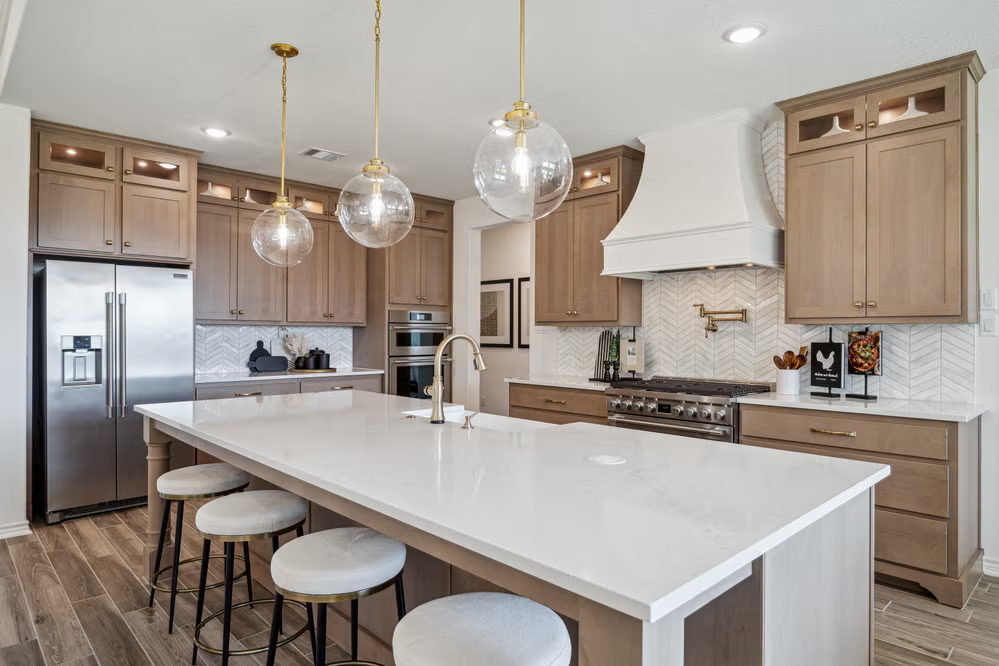
In practical terms, a small kitchen with no layout changes may stay near the low end if the cabinets can be refinished or partially replaced. A larger kitchen with new cabinets, quartz counters, recessed lighting, and new flooring often lands in the middle. Once you start moving plumbing lines, opening walls, or reworking the footprint, costs rise quickly. If you are actively planning a project, the best next step is usually to talk with a local pro through our Brazos River kitchen remodeling service.
Why Building in Brazos River Is Different
Brazos River is not a standalone city, so kitchen remodeling here is usually governed by the nearby municipality or county that actually handles permits, inspections, and code compliance. That matters because the permit office, inspection schedule, and utility requirements can affect how quickly a remodel moves and how much coordination is needed.
River-adjacent and more rural properties can also create extra planning steps. If the parcel sits in or near a mapped flood hazard area, you may need to confirm floodplain details before making decisions about flooring, subflooring, cabinetry elevations, or any drainage-related work. You can verify a specific property using the FEMA Flood Map Service Center.
Even when floodplain issues are not present, Brazos River homes may take a little more coordination than a dense suburban remodel. Materials may need longer delivery windows, trades may have more travel time, and older homes often have been modified in phases. Those details can increase both the timeline and the chance that hidden conditions show up after demolition.

Typical Project Cost Ranges
The easiest way to think about kitchen remodeling cost is by scope. Here is what different project levels commonly look like in Brazos River in 2026.
Small or cosmetic kitchen remodel: $12,000 to $25,000
This tier is best for a kitchen that has a good layout but looks dated. Typical work might include:
- Painting walls and cabinets
- Replacing hardware and fixtures
- Swapping a sink and faucet
- Updating lighting
- Repairing drywall or trim
- Installing affordable counters or a limited backsplash update
This type of project often stays on the lower end because the plumbing and electrical stay mostly where they are. If cabinets are structurally sound, refinishing or refacing can save a large amount versus full replacement. Still, even a modest remodel can jump if the home needs subfloor repairs, electrical updates, or code corrections behind the walls.
Midrange kitchen remodel: $25,000 to $60,000
This is the most common budget band for homeowners who want a noticeably new kitchen without moving into luxury territory. A typical midrange project may include:
- New semi-custom cabinets
- Quartz or stone counters
- New sink and faucet
- New flooring
- Better lighting and electrical updates
- New backsplash
- Appliance replacement
- Minor layout adjustments
A midrange kitchen is where homeowners usually start seeing the biggest value return in everyday use. The budget can still vary widely, though. For example, a 160-square-foot kitchen with standard cabinet sizes and minimal wall changes might sit near $35,000, while a similar room with upgraded finishes and relocated appliances can approach $55,000 or more.
High-end or structural kitchen remodel: $60,000 to $120,000+
This category covers kitchens that go beyond surface upgrades. Common features include:
- Custom cabinetry
- Premium countertops and tile
- Large island additions
- Appliance package upgrades
- Structural changes to open the kitchen
- New windows, door openings, or ceiling modifications
- Major plumbing and electrical relocation
Costs rise quickly in this range because labor coordination becomes more complex. Once walls, utilities, or framing are involved, the project may require additional design time, permit review, and inspection steps. Some homeowners also choose high-end appliance packages that can add several thousand dollars by themselves.
If you want to see how pricing can shift by area and scope, compare this guide with the neighboring market in Kaufman County or a different Texas market like Graham.

Cost Per Square Foot and What It Includes
Kitchen remodeling is often discussed in dollars per square foot, but that number only helps if you know what is included. In 2026, a reasonable planning range for Brazos River is often around $150 to $400+ per square foot, depending on whether the project is basic, midrange, or high-end.
A smaller project may appear more expensive on a per-square-foot basis because fixed costs do not shrink much. Design, permitting, mobilization, demolition, and trades all cost money regardless of whether the kitchen is 120 square feet or 240 square feet. By contrast, a larger kitchen can sometimes spread those costs out better, but the total budget still rises when cabinetry, counters, and finish quality increase.
What square-foot pricing usually includes
Per-square-foot pricing may cover:
- Demolition and haul-off
- Rough carpentry
- Electrical and plumbing modifications
- Cabinets and hardware
- Countertops
- Flooring
- Tile or backsplash
- Painting and finishing
- General contractor coordination
It may not fully include:
- Specialty appliances
- Custom millwork
- Major structural engineering
- Extensive drywall repair from hidden damage
- Unusual permit or inspection-related delays
- Floodplain or drainage correction work
For a straightforward midrange kitchen, you might see something like 180 square feet at roughly $200 to $275 per square foot, which would put the project near $36,000 to $49,500. A more premium kitchen with custom finishes can easily run much higher, especially if the layout changes.

Main Factors That Change Total Price
Several cost drivers matter in every kitchen remodel, but they can have an even larger effect in Brazos River when homes are older, rural, or built near river-adjacent conditions.
1. Cabinet level and cabinet size
Cabinetry is usually the largest single budget item and often takes about 25% to 35% of total kitchen remodel cost. Stock cabinets may keep costs under control, while semi-custom and custom cabinets can add thousands or tens of thousands of dollars depending on size, finish, and accessories.
A kitchen with 25 linear feet of cabinetry might need a very different budget than one with 40 linear feet and a large island. Tall pantry cabinets, appliance panels, and custom storage solutions add convenience, but they also add cost.
2. Layout changes
Keeping the sink, range, and refrigerator close to their original locations is usually cheaper. Once you move plumbing, ventilation, gas lines, or the electrical service for appliances, costs go up because more trades have to coordinate.
A simple cabinet swap with no layout change may be manageable in the $25,000 to $40,000 range. A layout reconfiguration that requires moving the sink or opening a load-bearing wall can add several thousand dollars more.
3. Home age and hidden conditions
Older homes often hide surprises behind the walls. Once demolition starts, contractors may uncover:
- Outdated wiring
- Plumbing that no longer fits current needs
- Rotten subflooring
- Uneven framing
- Water damage
- Improper previous repairs
In a home that has been remodeled in phases over time, those hidden-condition risks are even higher. It is common to budget an extra 10% to 20% contingency for this reason.
4. Finish level
The difference between builder-grade and premium finishes is huge. For example:
- Laminate counters cost much less than quartz or stone
- Stock cabinets cost less than custom cabinetry
- Basic tile backsplash work costs less than full-height specialty tile
- Standard fixtures cost less than designer-grade hardware and lighting
A homeowner who upgrades just three or four finish categories can easily add $8,000 to $20,000 to the budget.
5. Site access and location
Because Brazos River properties may be more rural or semi-rural than dense neighborhood remodels, delivery and trade scheduling can take longer. That does not always mean a higher material price, but it can increase labor coordination costs and extend the project schedule. If the site is farther from a supplier hub, small delays may create a bigger domino effect than they would in a city neighborhood.

Labor, Materials, and Trade-Level Costs
Kitchen remodeling cost is not just about the visible finishes. A large share of the budget goes to labor and the coordinated work of multiple trades.
Cabinetry and installation
Cabinets can be one of the highest-cost items in the entire project. Depending on the scope, cabinet and installation costs may run from $8,000 to $35,000+. Stock cabinets on a small kitchen may stay relatively modest, but custom cabinetry with detailed trim, specialty storage, and an island can rise sharply.
Countertops
Countertop costs depend on material and square footage. A smaller kitchen may need only $2,000 to $4,000 in counters, while a larger or premium layout can run $5,000 to $10,000+. Quartz is common because it balances durability and appearance, but thicker slabs, waterfall edges, and specialty stone increase the price.
Electrical work
If the project includes new lighting, additional outlets, appliance changes, or code updates, electrical work may add $2,000 to $8,000+ depending on complexity. Kitchens often need dedicated circuits, upgraded lighting plans, and careful coordination around GFCI protection and appliance loads. For code-adjacent context, the International Code Council is a useful reference point.
Plumbing
A basic sink-and-dishwasher connection may not be expensive, but relocating plumbing lines can raise the budget quickly. A kitchen with plumbing that stays in place may need only a modest allowance. A kitchen that shifts the sink or adds a pot filler, bar sink, or island plumbing can add several thousand dollars.
Flooring, drywall, paint, and finish carpentry
These “finish” trades often look small individually, but together they matter a lot. Flooring may range from a few thousand dollars for a smaller space to much more for premium materials. Drywall repairs, trim replacement, and painting can add another $3,000 to $10,000+ depending on how much of the room is opened up.
Labor mix and project management
A realistic budget also has to include coordination. Even when the materials are selected well, labor sequencing matters. A homeowner is not just paying for carpentry or tile setting; they are paying to have all the trades lined up in the right order so the kitchen is completed without unnecessary delays.
Permit, Design, and Planning Costs
The “soft costs” of a remodel are easy to overlook, but they can affect the final total just as much as a countertop upgrade.
Permits and inspections
Because Brazos River itself is not the permitting authority, your permit cost and process will depend on the city or county jurisdiction serving the home site. A straightforward kitchen remodel may only need basic permit review if electrical or plumbing work is included. More extensive projects may require additional inspections.
A reasonable allowance for permit-related costs is often a few hundred dollars to a few thousand dollars, depending on jurisdiction and scope. If the project involves significant structural or utility work, budget for more time and coordination.
Design and layout planning
Design help can range from simple cabinet layout assistance to full kitchen design services. Homeowners may spend $1,000 to $5,000+ on design and planning support, more if architectural drawings or structural engineering are needed.
Design becomes more valuable when the kitchen has an awkward footprint, a load-bearing wall needs evaluation, or the homeowner wants to maximize storage within a fixed space. It also helps reduce expensive change orders later.
Floodplain, drainage, and site diligence
If the property is close to the river or in a lower-lying area, it may be worth confirming whether drainage or floodplain constraints affect the remodel plan. Checking FEMA mapping before ordering materials is a smart step when the site conditions are uncertain. Even if the kitchen itself is indoors, water management around the property can influence how safely and durably flooring and lower-cabinet assemblies perform over time.
Timeline and Process Expectations
A kitchen remodel is usually a weeks-long project, not a weekend upgrade. The full process includes design, ordering, demolition, rough-in work, inspections, installation, and finish work.
Typical timeline
A standard kitchen remodel often takes about 6 to 12 weeks of construction once materials are ordered and design decisions are locked in. The total project timeline can be longer if the cabinets are custom, the lead times are extended, or inspection schedules are delayed.
Here is a typical breakdown:
- Planning and design: 1 to 4 weeks
- Ordering and lead times: 2 to 10+ weeks
- Demolition: 2 to 5 days
- Rough electrical/plumbing/carpentry: 1 to 3 weeks
- Drywall, paint, tile, flooring: 1 to 3 weeks
- Cabinet install, counters, finish work: 1 to 3 weeks
Factors that extend the schedule
Several issues can push the timeline longer:
- Custom cabinets with long lead times
- Backordered appliances
- Hidden damage behind walls
- Permit review delays
- Trade availability in a rural or semi-rural area
- Changes made after construction starts
In Brazos River, delivery timing can matter more than in a dense suburban area. If a countertop needs a second measurement or an appliance arrives late, the whole sequence may shift. That is why a good contractor will build in enough buffer time rather than promising an unrealistically fast finish.
Why the sequence matters
Kitchen remodeling has a very specific order. Cabinets and counters should not be installed before rough plumbing and electrical are complete. Flooring decisions can affect cabinet height. Backsplash installation usually comes after counters are set. A well-managed sequence avoids redo work, which saves both time and money.
For broader context on remodeling timing and budget planning, you can also compare the expectations in this guide with our DFW kitchen remodel cost guide.

How to Budget the Project Realistically
A realistic kitchen budget includes more than the “nice visible stuff.” It also accounts for unknowns, change tolerance, and the fact that every home has some amount of hidden-condition risk.
Start with a working base budget
A practical way to begin is to choose a target based on scope:
- Cosmetic update: $15,000 to $25,000
- Midrange remodel: $30,000 to $60,000
- High-end remodel: $70,000 to $120,000+
Then add specific allowances for the items you care about most: cabinets, countertops, appliances, and lighting. That helps you decide where to spend and where to simplify.
Keep a contingency reserve
A contingency of 10% to 20% is a smart allowance for hidden conditions, price changes, and design adjustments. For example:
- $30,000 budget → set aside $3,000 to $6,000 contingency
- $50,000 budget → set aside $5,000 to $10,000 contingency
- $80,000 budget → set aside $8,000 to $16,000 contingency
This is especially important in older homes or properties that may have had past repairs done in stages.
Use allowances intentionally
If you are not finalizing every choice upfront, set allowances for:
- Cabinets
- Countertops
- Appliances
- Lighting
- Flooring
- Plumbing fixtures
- Tile
That keeps the project from drifting upward without warning. For example, if you budget $6,000 for appliances but choose a package that costs $10,000, the difference has to come from somewhere else. Clear allowances prevent surprises.
Finance carefully if needed
Some homeowners finance a remodel through savings, home equity, or renovation financing. Regardless of the method, it is wise to avoid committing the full amount of your budget to the lowest possible bid. A more complete proposal that includes contingency planning and realistic trade costs is often safer than a very low estimate that later grows.
Plan the scope in the right order
If the budget is tight, decide what matters most before beginning. You may want to prioritize:
- Function and layout
- Cabinets and storage
- Durable counters
- Lighting
- Flooring and backsplash
- Decorative upgrades
That sequencing helps you spend money on the parts of the kitchen you will use every day. If you are comparing a kitchen update to other home projects, it can also help to look at our home remodeling cost guide or the related bathroom remodeling cost guide.

When to Choose a Kitchen Remodeling Project in Brazos River
A kitchen remodel makes the most sense when the room no longer works for the way you live. In Brazos River, that often means a kitchen that feels outdated, lacks storage, has poor lighting, or has been patched together over time in a way that no longer functions well.
You may be ready to remodel if:
- Cabinets are worn out or badly sized for the space
- The layout creates traffic problems
- Lighting is too dim for safe cooking and prep
- Counters are damaged, undersized, or hard to clean
- Appliance placement is awkward
- Plumbing or electrical issues keep coming back
- The home needs updates before resale
- You want a more efficient kitchen for daily life
A remodel also makes sense if you are already dealing with other renovation work on the property and want the kitchen to match the rest of the home. If you are considering larger whole-home work, compare the kitchen project with our home building cost guide to understand how scope changes affect total investment.
For homeowners in Brazos River, timing can matter as much as budget. If the house is near a flood-prone area, if the current kitchen has moisture damage, or if the layout has long-standing functional issues, addressing the space sooner can prevent additional wear and costly temporary fixes. Just make sure the home’s jurisdictional permit path is clear before you start, and confirm any special site conditions that may affect your choices.

Final Thoughts on Kitchen Remodeling in Brazos River
A kitchen remodel in Brazos River can range from a modest refresh to a major transformation, but the numbers are usually driven by the same core variables: cabinets, layout changes, hidden conditions, and finish quality. In 2026, many homeowners should expect $25,000 to $60,000 for a solid midrange project, with smaller cosmetic updates below that and larger custom renovations well above it.
The local differences matter too. Because Brazos River is tied to the actual nearby city or county for permits and inspections, and because some properties may face rural access or drainage-related planning issues, the best budgets include both time and money for coordination. That is especially true if the home is older or if there is any chance of floodplain-related review.
If you are ready to talk through a project, the safest next step is to get a detailed scope, line-item allowances, and a realistic timeline. For help planning a kitchen remodel in this area, start with our Brazos River kitchen remodeling service and compare it with the broader market guidance in our DFW kitchen remodel cost guide.
For added local reference, review Texas Department of Licensing and Regulation (TDLR) – Residential Building Contractors / code-related guidance for Support Texas contractor/licensing and general regulatory context for remodeling work.