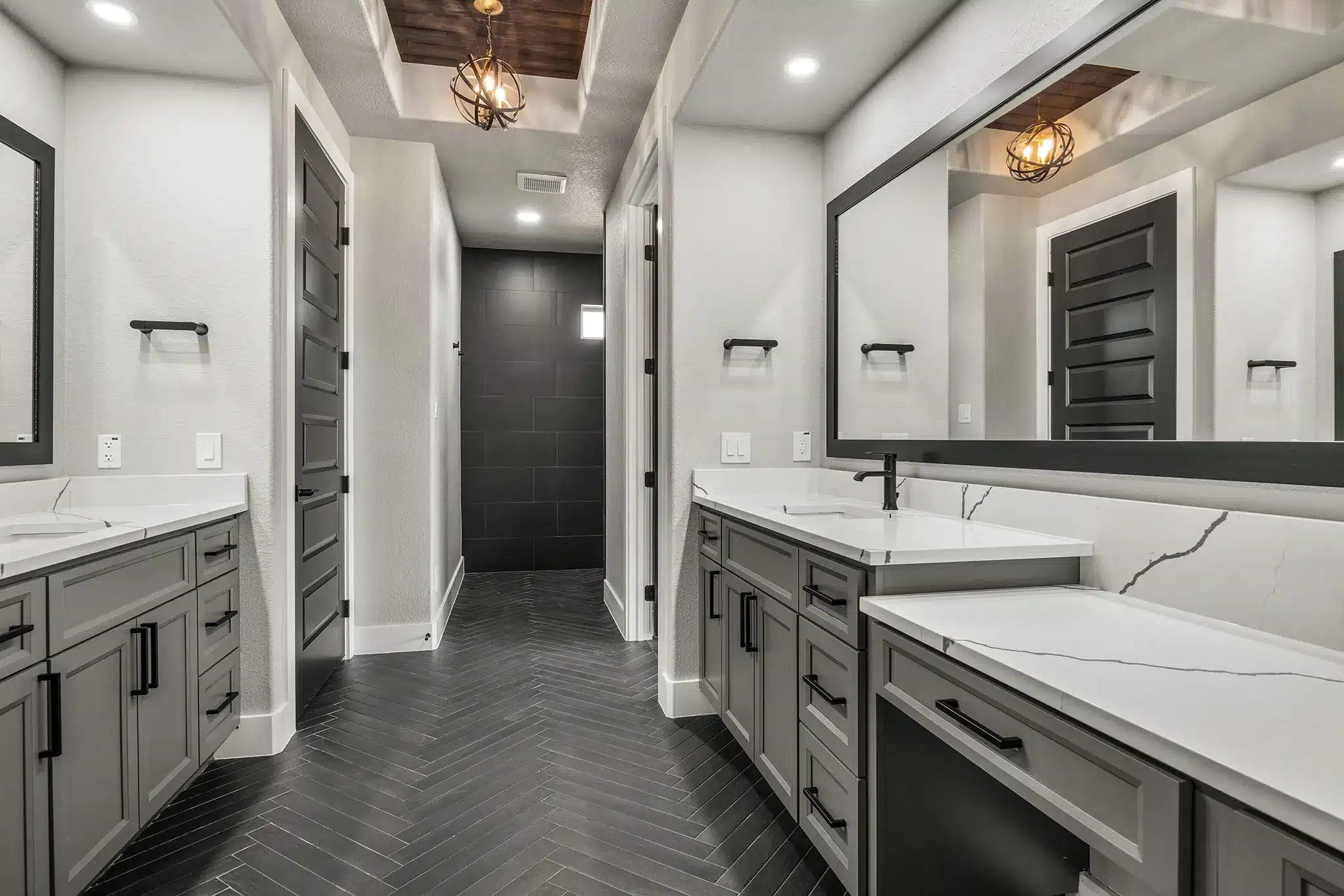
A bathroom remodel in Tarrant County can cost anywhere from a modest five-figure refresh to a full luxury renovation with custom tile, layout changes, and plumbing upgrades. In 2026, many homeowners should plan for a starting range of roughly $15,000 to $25,000 for a basic update, $25,000 to $45,000 for a midrange remodel, and $45,000 to $75,000+ for a high-end project. If the project involves moving plumbing, repairing subfloors, fixing moisture damage, or upgrading electrical systems, the final total can move higher very quickly.
For homeowners comparing options across the metro, this guide is a local companion to our broader DFW pricing overview at How Much Does a Bathroom Remodel Cost in DFW?. If you want a local contractor conversation after reading, the best next step is to review our Tarrant County Bathroom Remodeling services and then compare bids using the same scope.
| Project scope | Typical cost range | What it usually includes |
|---|---|---|
| Basic bathroom refresh | $15,000–$25,000 | Paint, trim, new toilet and vanity, standard fixtures, limited tile work, no layout change |
| Midrange full remodel | $25,000–$45,000 | New tub or shower, upgraded tile, vanity, lighting, flooring, plumbing fixture replacements |
| High-end custom remodel | $45,000–$75,000+ | Custom shower, premium tile, heated or specialty features, layout changes, higher-end finishes |
| Primary bath with structural or plumbing changes | $55,000–$90,000+ | Relocation of fixtures, waterproofing, electrical upgrades, possible repair of hidden damage |
These numbers are planning ranges, not fixed quotes. In Tarrant County, the same bathroom can land in very different price bands depending on whether the work is cosmetic or whether the contractor opens up walls and finds old plumbing, damaged framing, or a compromised subfloor.

Why Building in Tarrant County Is Different
Tarrant County is not one uniform housing market. You have older homes in central Fort Worth, established neighborhoods with hidden wear-and-tear, and newer suburban homes where finish expectations are often higher because resale presentation matters. That mix changes bathroom remodel pricing more than many homeowners expect.
Older homes can hide slab issues, drain problems, water damage, or outdated wiring, all of which can force a remodel beyond cosmetic work. Newer homes may not have those surprises, but they often call for upgraded materials, larger showers, or higher-end details that increase the budget on purpose. Countywide, the biggest difference is not just the bathroom style; it is how much of the existing structure has to be corrected before the new finishes can go in.
Permitting can also vary inside the county. A project in Fort Worth may have different review and inspection expectations than one in Arlington or another municipality. That matters most when plumbing, electrical, or structural changes are involved. For that reason, it helps to budget with some flexibility and to treat the early estimate as a range rather than a promise.

Typical Project Cost Ranges
The easiest way to budget a bathroom remodel is to match the scope to a realistic price band. The more the project stays in the existing footprint, the more likely it is to stay on the lower end. The more it changes layout, plumbing, and finish level, the more it climbs.
Basic refresh: $15,000 to $25,000
This range usually fits a hall bath or smaller guest bath where the homeowner wants a cleaner look without changing the room’s footprint. Common items include:
- New paint and trim
- New vanity and countertop
- Updated toilet and fixtures
- Basic flooring replacement
- Limited tile work or tub surround updates
- Standard lighting and mirrors
A basic refresh makes sense when the room is functional but dated. It is not the right budget if you need water-damage repair, extensive electrical work, or a full shower replacement with waterproofing upgrades.
Midrange remodel: $25,000 to $45,000
This is the most common full-remodel planning band for many homes in Tarrant County. It often includes a new shower or tub, better tile, upgraded plumbing fixtures, improved lighting, and new flooring. Homeowners usually choose this range when they want a noticeable style upgrade and a better long-term finish, but do not need a luxury custom build.
This is also where small scope changes can affect the final price. A standard shower replacement may fit comfortably within the range, but once you add a frameless glass enclosure, niche details, upgraded waterproofing, or fixture relocation, the budget can rise faster than expected.
High-end custom remodel: $45,000 to $75,000+
High-end projects are where design details and construction complexity begin to dominate the budget. This may include:
- Custom walk-in shower
- Premium tile selections
- Better cabinetry or built-ins
- Heated flooring
- More complex lighting plans
- Expanded shower footprint
- Relocation of plumbing or electrical components
In Tarrant County, these projects are common in resale-conscious neighborhoods where owners want the bathroom to look elevated and market-ready. They are also common in primary suites where the bathroom is being treated as a daily-use upgrade rather than a simple repair.
Special-case projects: $75,000 and up
When a bathroom remodel crosses into structural correction, major layout changes, or extensive hidden repair work, the ceiling can move well above $75,000. That does not mean every luxury bath reaches that number, but it does mean the total can spike if the project includes wall removal, extensive plumbing rerouting, new HVAC considerations, or major repair work uncovered during demolition. If you are planning this kind of remodel, it is smart to compare your budget to a broader home project strategy and, in some cases, to whole-home remodeling costs in Tarrant County as well.

Cost Per Square Foot and What It Includes
Bathroom remodeling is often discussed in both total project cost and cost per square foot. That said, bathroom square footage can be misleading because a small room may still have expensive plumbing and finish requirements. Still, the per-square-foot approach is helpful for rough planning.
In Tarrant County, a bathroom remodel may land around:
- $250 to $450 per square foot for basic to midrange work
- $450 to $700+ per square foot for high-end or custom work
Those numbers are broad because bathrooms have high labor density. A 60-square-foot hall bath can still cost more per square foot than a larger room if the contractor has to replace a shower, move the toilet, or upgrade wiring.
What the square-foot figure usually includes
A remodeling estimate often blends multiple trades into the total:
- Demo and haul-away
- Framing or repair work
- Plumbing labor and materials
- Electrical labor and materials
- Drywall or backer board
- Waterproofing
- Tile installation
- Paint and finish work
- Fixtures, mirrors, cabinetry, and accessories
What it may not fully capture
Some bids look cheaper because they do not fully account for:
- Moisture or rot repairs
- Subfloor replacement
- Slab or drain corrections
- Permit fees
- Design revisions
- Upgraded fixtures or custom glass
- Unexpected electrical changes
That is why a square-foot number should only be used as a first-pass benchmark. If your bathroom has an older layout or signs of past leaks, it is better to compare full-scope bids than to rely on a neat cost-per-foot calculation.
For homeowners who want to compare this local pricing to nearby markets, it can also be useful to review the differences in Dallas County bathroom remodel pricing and Parker County bathroom remodel pricing.

Main Factors That Change Total Price
Bathroom remodel pricing moves for a few clear reasons, and most of them are tied to scope rather than style alone. Homeowners often expect the tile selection to be the main cost driver, but in practice, layout and hidden conditions are usually more important.
1. Layout changes
Moving a toilet, shower, vanity, or tub usually costs more than replacing the same items in the same location. Plumbing changes add labor, materials, and more inspection risk. Even a small layout change can add several thousand dollars to the job, especially if drain lines need to move or the floor has to be opened up.
2. Age of the home
Older Tarrant County homes may have outdated plumbing, older electrical systems, or subfloor conditions that do not show up until demolition starts. A remodel in a mid-century home can cost more than a similar design in a newer suburban house because the contractor may need to correct issues before finishing the room. Local housing-age variation is one reason pricing can be inconsistent across neighborhoods based on local residential property data.
3. Finish level
Tile choice, plumbing fixtures, vanities, and lighting fixtures can move a project by thousands of dollars. A basic ceramic tile shower is far less expensive than a large-format tile shower with custom niches, upgraded glass, and premium hardware. A stock vanity is cheaper than a custom cabinet with stone countertops and integrated storage.
4. Hidden damage
Water damage, mold, old caulk failures, rotted framing, damaged drywall, and compromised subfloors can all push the price up. These conditions are especially common in bathrooms that have had a small leak for years. Because bathrooms are wet spaces, hidden damage can appear even in otherwise well-kept homes.
5. Permit and inspection complexity
If your project includes plumbing, electrical, or structural changes, permitting can add time and cost. In Tarrant County, those requirements may differ by city, so a contractor should confirm the rules with the local authority before work begins. For example, Fort Worth and Arlington each publish their own development or permit guidance Fort Worth permit information Arlington permit information.
6. Occupied-home logistics
Working in a live-in home can add staging, protection, cleanup, and scheduling constraints. If the bathroom is the only full bath in the home, the construction sequence may need to be more carefully planned, which can affect labor efficiency and duration.

Labor, Materials, and Trade-Level Costs
Bathroom remodels look simple from the outside, but they depend on several specialized trades. The total price is really a bundle of smaller costs.
Typical labor and trade allowances
For planning purposes, a remodel budget may need distinct allowances for:
- Plumbing: $2,500 to $8,000+
- Electrical: $1,500 to $5,000+
- Tile installation: $4,000 to $12,000+
- Drywall and repair work: $1,500 to $5,000+
- Painting and trim: $800 to $2,500+
- Waterproofing: $1,500 to $4,000+
- Fixture installation: $2,000 to $6,000+
These are not universal prices, but they are useful planning numbers because they show how fast the job becomes a layered labor project rather than a simple material swap.
Materials that influence the budget
Common material categories include:
- Vanity and countertop
- Toilet
- Tub or shower base
- Shower tile and wall tile
- Faucets and shower trim
- Flooring
- Glass enclosure
- Mirrors, lighting, and accessories
Material selection matters, but labor can still dominate the final number. A high-quality tile can be expensive, yet the more expensive surprise is often the labor required to install it properly and waterproof the room.
Why plumbing changes cost so much
Moving plumbing usually requires opening walls or floors, rerouting lines, and sometimes adjusting framing or subfloors. If the project includes a new shower footprint or relocated toilet, expect the labor cost to jump. That is one reason a bathroom remodel can feel disproportionately expensive compared with its square footage. The room is small, but the work is specialized.

Permit, Design, and Planning Costs
Soft costs are easy to overlook, but they matter in a realistic budget. They are the difference between a rough guess and a usable project plan.
Permit costs
Permit fees vary by municipality and by scope. A simple cosmetic refresh may not require the same level of review as a project that changes plumbing or electrical systems, while larger projects may need multiple inspections. It is safest to assume that permit-related costs may be modest in dollar terms but meaningful in schedule terms.
For projects in Fort Worth, municipal development services provide permit guidance and inspection resources permit and inspection details. For projects in Arlington, local development services have separate permit resources city permit information. That is why homeowners should not assume the same process applies across all of Tarrant County.
Design and planning costs
If you are hiring for more than a simple swap, design time may be part of the budget. This can include:
- Site measurements
- Scope definition
- Fixture selection
- Tile layout planning
- Material ordering
- Coordination of trades
Some contractors bundle this into the project price, while others charge separately or include a design allowance. For a midrange bathroom, design and planning may be a small portion of the budget. For a high-end remodel, it can be a much larger part of the preconstruction phase.
Preconstruction contingency
It is wise to reserve extra funds before demolition starts. A practical benchmark is a contingency of 10% to 20%. For a $30,000 remodel, that means setting aside about $3,000 to $6,000. For a $60,000 remodel, that means $6,000 to $12,000. This reserve can cover hidden water damage, changed fixture selections, or small design revisions without stalling the job.

Timeline and Process Expectations
Bathroom remodels are usually faster than kitchen or whole-home remodels, but they still involve several distinct phases. A simple job may move quickly, while a project with permitting, inspections, or hidden damage can stretch out.
Typical timeline by project type
- Basic refresh: about 2 to 4 weeks
- Midrange full remodel: about 4 to 7 weeks
- High-end or complex remodel: about 6 to 10+ weeks
These ranges assume that materials are available and that the project does not uncover major repairs. Once demolition begins, the schedule can change based on what is found.
Common project phases
- Planning and selection: 1 to 3 weeks
- Permit and preconstruction work: several days to a few weeks
- Demolition: 1 to 3 days
- Rough plumbing and electrical: 2 to 7 days
- Framing, repair, and waterproofing: 3 to 10 days
- Tile and finish work: 1 to 3 weeks
- Cabinetry, fixtures, and final detailing: 2 to 5 days
- Punch list and final inspection: a few days to a week
What causes schedule risk
- Waiting on permit approval
- Material backorders
- Hidden damage behind walls or under the floor
- Multiple change orders
- Coordinating different trades in a small space
Homeowners often underestimate the time lost to decision-making. A bathroom can sit idle if tile, vanity, or plumbing selections are not ready when the crew needs them. Clear planning at the start helps keep the schedule tight.

How to Budget the Project Realistically
The best bathroom budget is the one that includes enough room for the job to succeed without forcing compromises halfway through. A realistic plan starts with scope clarity and ends with a proper contingency.
Build the budget around the project type
If the room only needs cosmetic updates, do not overbudget for full structural work. If the bathroom has moisture damage, do not budget as if it is a simple swap. Match the budget to the likely scope, not the most optimistic version of the project.
Separate wants from necessities
It helps to sort items into three buckets:
- Must-haves: repairs, waterproofing, necessary fixture replacements
- Nice-to-haves: upgraded mirrors, premium lighting, extra storage
- Luxury upgrades: heated floors, custom glass, specialty tile, designer hardware
That structure makes it easier to adjust the budget without losing the core project.
Keep a contingency reserve
As noted earlier, 10% to 20% is a practical reserve for a bathroom remodel. In occupied homes and older homes, this reserve is especially important. If the project goes smoothly, the contingency can stay unused. If the team finds a hidden problem, the budget is already prepared.
Compare bids on the same scope
One of the most common budgeting mistakes is comparing a complete bid to an incomplete one. Make sure every estimate includes the same assumptions for:
- Demolition
- Waterproofing
- Fixtures
- Tile
- Electrical work
- Plumbing changes
- Cleanup
- Permit handling
That way, the cheapest number is not just the least detailed number.
Consider sequencing with other projects
If you also plan a kitchen or whole-home update, sequencing can matter. Some homeowners choose to prioritize the bathroom first because it affects daily livability. Others combine projects to reduce repeat disruption. If you are weighing options, it may help to compare bathroom costs with kitchen remodeling in Tarrant County or broader home remodeling budgets in Tarrant County.

When to Choose a Bathroom Remodeling Project in Tarrant County
A bathroom remodel makes the most sense when the room is either underperforming functionally or falling behind the home’s overall condition. In Tarrant County, that often means one of three situations: the bathroom is dated enough to hurt resale appeal, the room has hidden wear from age or moisture, or the homeowner wants to bring the space up to the expectations of a newer neighborhood.
Choose a remodel when:
- The shower or tub is failing
- The vanity and storage no longer fit your needs
- The room has recurring moisture issues
- The finishes are outdated enough to affect resale
- The layout feels cramped or inefficient
- You are already planning other major home improvements
A bathroom remodel is also a smart move when it prevents a larger repair later. Replacing a failed shower system, repairing a subfloor, or correcting a leak can save money compared with waiting until the damage spreads. In an older Tarrant County home, that kind of proactive work often makes more sense than trying to patch the room indefinitely.
If you are still comparing whether to remodel now or wait, a local estimate from our Tarrant County bathroom remodeling team can help you decide whether the project fits your timeline and budget. You can also compare similar local conditions in nearby counties, such as Dallas County and Parker County, to see how scope and finish expectations shift across the region.

Final Thoughts on Bathroom Remodeling in Tarrant County
Bathroom remodeling in Tarrant County is all about balancing scope, finish level, and hidden-condition risk. A simple refresh may stay in the $15,000 to $25,000 range, while a full midrange remodel often lands between $25,000 and $45,000. Higher-end and more complex bathrooms can move well above that once plumbing changes, custom tile, or structural repairs enter the picture.
The biggest lesson for local homeowners is to budget for the room you think you have, but plan for the room you may discover after demolition. That means accounting for permits, labor, waterproofing, and a contingency reserve of 10% to 20%. It also means comparing bids carefully and making sure every contractor is pricing the same scope.
If you are ready to turn a dated bathroom into a better one, start with a clear budget, a clear scope, and a local contractor who understands Tarrant County homes.
For broader DFW pricing context, see the full DFW cost guide.