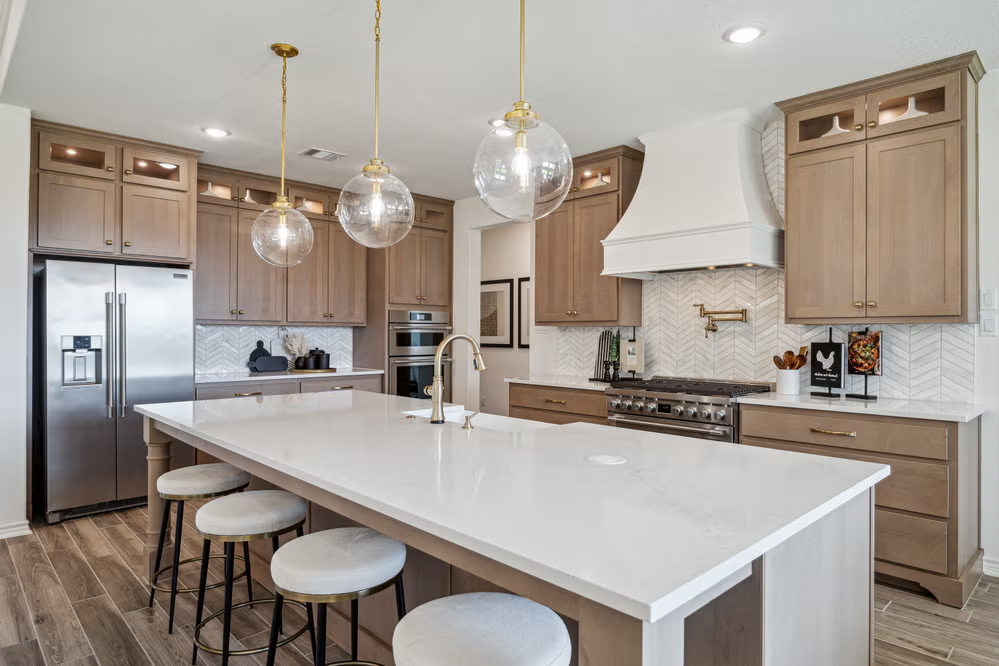
A bathroom remodel in Grand Prairie usually falls into one of three pricing bands in 2026: a cosmetic refresh, a midrange remodel, or a full gut renovation. For many homeowners, the real answer is not a single number but a range tied to square footage, the age of the home, plumbing changes, waterproofing, and finish quality. In Grand Prairie, a practical working budget is often somewhere between $12,000 and $65,000+ for a typical full bathroom, with high-end primary suites going above that when layout changes or luxury materials are involved.
Here’s a quick pricing snapshot to orient your budget.
| Project type | Typical scope | Grand Prairie price range |
|---|---|---|
| Cosmetic refresh | Paint, vanity, top, toilet, mirror, minor tile or fixture updates | $12,000–$20,000 |
| Midrange remodel | New tile, vanity, lighting, fixtures, shower/tub updates, some plumbing and electrical | $20,000–$40,000 |
| Full gut remodel | Demolition, new layout or major plumbing changes, waterproofing, premium finishes | $40,000–$65,000+ |
These ranges are best used as planning numbers, not promises. A compact hall bath with simple selections may land near the low end, while a primary bathroom with a curbless shower, custom cabinetry, heated floors, and new drainage could quickly move into the upper tier. If you want a broader DFW pricing context first, start with our bathroom remodel cost guide for DFW and then narrow it down to Grand Prairie-specific conditions.
For homeowners comparing service options, the right plan usually starts with an accurate scope and a realistic contingency. If you are already ready to talk through the details, you can also review our Grand Prairie bathroom remodeling services.

Why Building in Grand Prairie Is Different
Grand Prairie sits in the middle of the Dallas-Fort Worth metro, and that matters for cost. Contractor demand, trade availability, and material delivery schedules are all shaped by the wider DFW market. In practical terms, Grand Prairie homeowners are often competing for the same plumbers, tile setters, electricians, and framers serving Dallas, Arlington, Irving, and Fort Worth.
The city also has a mix of older suburban housing and newer infill development. In older homes, a bathroom remodel may uncover cast-iron drain issues, undersized venting, outdated wiring, or subfloor damage that has to be corrected before finishes can go in. In newer homes, the layout may be simpler, but work often has to be scheduled around occupied households, HOA expectations, and inspection timing.
Grand Prairie’s local permitting and inspection process can also affect timing. Even when the project is straightforward, the sequence of demo, rough-in inspections, waterproofing checks, and final sign-off can influence labor scheduling and the total cost of the job. State-level licensing and trade requirements also matter, which is why it is smart to confirm that your contractor and key trades are properly credentialed through the Texas Department of Licensing and Regulation.
In short: Grand Prairie is not a “one price fits all” market. The city’s central location and housing mix make project planning just as important as finish selection.

Typical Project Cost Ranges
Bathroom remodel costs are easiest to understand by scope. The more you change the room’s structure, plumbing, or waterproofing system, the more likely you are to move up in price.
Cosmetic refresh: $12,000 to $20,000
This is the simplest remodel band. It usually keeps the existing layout and most of the existing plumbing in place. Common work includes:
- Painting walls and ceiling
- Replacing the vanity and countertop
- Installing a new toilet
- Updating faucets, mirror, and lighting
- Swapping out a shower head, trim kit, or tub faucet
- Regrouting or replacing small areas of tile
- Minor drywall repair
A cosmetic refresh is often the right choice if the room functions well and you mainly want a cleaner, more modern look. The budget is more predictable because the project avoids major demolition and avoids moving fixtures. In many homes, this kind of remodel is enough to create a noticeable value and comfort upgrade without the cost of rebuilding the room.
Midrange remodel: $20,000 to $40,000
This is where many Grand Prairie homeowners land. A midrange remodel often includes a combination of surface upgrades and moderate trade work. That might mean:
- Replacing shower or tub surrounds
- Installing new tile flooring
- Upgrading the vanity and countertop
- Adding better lighting or a new ventilation fan
- Replacing plumbing fixtures
- Moving or adding one fixture slightly
- New paint, trim, and accessories
Midrange projects often have the best balance of cost and impact. They may still keep the same room footprint, but they tend to involve enough demolition and rebuild to make the bathroom feel genuinely new. If you are comparing options against a kitchen project or a larger home refresh, this is often the budget range where homeowners start looking at whole-home improvements in Grand Prairie to decide what should happen first.
Full gut remodel: $40,000 to $65,000+
A full gut remodel goes much deeper. This usually means taking the bathroom back to studs or near-studs, rebuilding the room from the framing outward, and making substantial improvements to plumbing and waterproofing. Common elements include:
- Full demolition
- New shower construction
- New waterproofing system
- New tile throughout
- Relocating sinks, toilets, or shower plumbing
- Upgraded electrical, lighting, and ventilation
- Custom vanities or storage
- Higher-end materials, glass, and fixtures
This tier is where hidden conditions start to matter more. Once walls are open, it is not uncommon to find framing corrections, rot, venting issues, or old plumbing lines that need to be replaced. That is one reason contingencies matter so much on older Grand Prairie homes.

Cost Per Square Foot and What It Includes
Bathroom remodeling is sometimes priced by square foot, but that number should be used carefully. Bathrooms are small, and small rooms tend to look expensive on a per-square-foot basis because the same fixed costs—demo, disposal, labor setup, waterproofing, inspections, and fixture installation—are spread over fewer square feet.
In Grand Prairie, a rough planning range for bathroom remodeling is often about $250 to $700+ per square foot, depending on whether you are doing a light refresh or a full custom rebuild. A small hall bath may look expensive on a per-foot basis simply because the project still needs demolition, trade labor, plumbing reconnection, tile work, and finish carpentry.
What the square-foot number usually includes
A square-foot cost estimate often bundles some combination of:
- Demolition and haul-away
- Framing or minor carpentry
- Plumbing rough-in and finish work
- Electrical updates
- Drywall and paint
- Waterproofing
- Tile install
- Fixtures and trim
- General contractor coordination and overhead
What it may not include
Square-foot estimates can exclude or understate:
- Major layout changes
- Structural repairs
- Permit fees
- High-end fixtures
- Custom glass
- Built-ins
- Specialty waterproofing systems
- Unexpected subfloor or joist repairs
That is why square-foot pricing is most useful for early planning, not final bidding. For a simple guest bath, the per-square-foot cost may look high because the room is compact. For a large primary suite with a spacious shower and dual vanity, the number may look more reasonable even though the total check is much larger.
If you are comparing cities, you may also notice differences in the neighboring market. A similar bathroom project in Denton or McKinney can land differently because of local labor availability, home age, and project complexity.

Main Factors That Change Total Price
The final cost of a bathroom remodel in Grand Prairie depends on a handful of core variables. These are the factors that most reliably push a project up or down.
1. Age and condition of the home
Older homes often hide costs behind the walls and under the floor. If the bathroom has original plumbing lines, dated venting, damaged subflooring, or moisture-related framing issues, the budget can rise fast. A hidden repair that adds only one day of labor on paper can become a multi-thousand-dollar change once material and trade coordination are included.
2. Layout changes
Keeping fixtures in the same location is usually the cheapest path. Moving a toilet, expanding a shower, or relocating a vanity can require new plumbing runs, patching, and more inspection steps. Even small layout changes can add $1,500 to $7,500 or more depending on the room and access.
3. Finish level
A basic porcelain tile and stock vanity will cost much less than a custom wood cabinet, quartz slab, large-format tile, or frameless glass enclosure. The room can look dramatically different with material choices that change the budget by 10% to 30% or more.
4. Waterproofing and shower design
The shower is often the most expensive part of the bathroom. A standard tub-and-shower combo is usually less costly than a fully tiled walk-in shower with a niche, bench, custom pan, and premium waterproofing system. In many projects, the shower alone can account for a large share of the total budget.
5. Permit and inspection complexity
Some remodels are simple enough to move through permitting quickly, while others need more review because of plumbing, electrical, or ventilation changes. Inspection timing can also add schedule pressure, especially when the homeowner is living in the house and the bathroom is part of the daily routine.
6. Labor availability
Because Grand Prairie sits in the middle of the DFW labor market, contractor availability can shift quickly. During busy periods, scheduling can influence pricing and lead times. If your project needs multiple trades lined up in a tight sequence, the general contractor’s coordination effort becomes part of the value you are paying for.
7. Hidden repairs discovered during demo
This is one of the biggest wild cards. Once tile and drywall come out, you may find moisture damage, old electrical issues, or framing that is not square enough for modern finishes. A contingency of 10% to 20% is often appropriate, especially in older homes.

Labor, Materials, and Trade-Level Costs
Bathroom remodels are usually driven by labor more than homeowners expect. The tile, vanity, and fixtures matter, but the skilled work to remove old materials, build a waterproof shell, and reconnect everything correctly is often the largest part of the price.
Common labor categories
Demolition and haul-away
Demo may seem simple, but bathrooms are dense spaces with plumbing, tile, drywall, and heavy fixtures. Depending on scope, demo and debris removal might run from $1,000 to $4,000.
Plumbing
Plumbing work can include fixture replacements, drain changes, supply line updates, venting, and rough-in adjustments. A moderate plumbing allowance might be $2,000 to $8,000, while more extensive relocation can go higher.
Electrical
Lighting, exhaust fans, outlets, switches, and potential code updates may land in the $800 to $4,000 range, depending on how much needs to be changed.
Tile and waterproofing
Tile installation is highly skilled and time-intensive. Waterproofing, shower pans, niches, and wall preparation all affect cost. Tiling a shower and floor often creates a labor line item that can reach $4,000 to $15,000+ in a full remodel.
Drywall, paint, and finish carpentry
These items may seem minor, but once you include repairs, texture matching, trim, caulk, and paint, they become a meaningful part of the budget. Expect roughly $1,000 to $4,000 depending on room size and finish level.
Material allowances
Material selection can swing the total by thousands of dollars:
- Stock vanity: roughly $300 to $1,500
- Semi-custom or custom vanity: roughly $2,000 to $8,000+
- Basic toilet: roughly $250 to $600
- Premium toilet: roughly $700 to $2,000+
- Standard tile package: roughly $6 to $15 per square foot
- Premium tile package: roughly $20 to $50+ per square foot
- Standard shower glass: roughly $900 to $2,500
- Frameless custom glass: roughly $2,500 to $6,000+
These are planning allowances, not fixed quotes, but they show why two bathrooms that look similar at first glance can have very different totals once finishes are chosen.
When you are comparing bids, it helps to ask whether the estimate includes labor, materials, disposal, cleanup, and warranty work. A low quote can become more expensive if those items are not clearly defined up front.
For homeowners who are also thinking about upgrading the kitchen at the same time, it may help to compare the bathroom scope with kitchen remodeling costs in Grand Prairie so you can decide where to stage the work.

Permit, Design, and Planning Costs
Soft costs are easy to overlook, but they shape the project before the first tile comes out.
Design and planning
Some bathroom projects only need a basic scope and material selections. Others benefit from detailed design help, especially when the layout is changing or the room is being rebuilt from scratch. Depending on the level of detail, design and planning may run from $500 to $5,000+. That could include:
- Site visit and measure
- Concept layout
- Finish selection
- Fixture planning
- Construction drawings for a more complex project
Permits and inspections
Permit costs vary by scope, but homeowners should budget for them whenever plumbing, electrical, or structural changes are involved. In many remodels, the permit fee itself is not the biggest expense; the real value is in the time, documentation, and inspection sequence it adds to the project. A reasonable planning allowance might be $150 to $1,000+, with more complex projects potentially higher.
The City of Grand Prairie’s permit and inspection process is part of the normal project timeline, especially if the remodel touches plumbing or electrical systems. If your bathroom is being reconfigured, inspections may need to occur at rough-in and final stages before the job can be closed up.
Preconstruction allowances
Preconstruction planning often includes:
- Measuring and verifying field conditions
- Ordering long-lead materials
- Confirming fixture availability
- Scheduling trades
- Planning temporary bathroom use
- Setting dust protection and staging
These items do not always appear as separate line items, but they are real project costs in the sense that they affect labor time and scheduling efficiency. A well-planned project can save money by avoiding idle labor and last-minute substitutions.
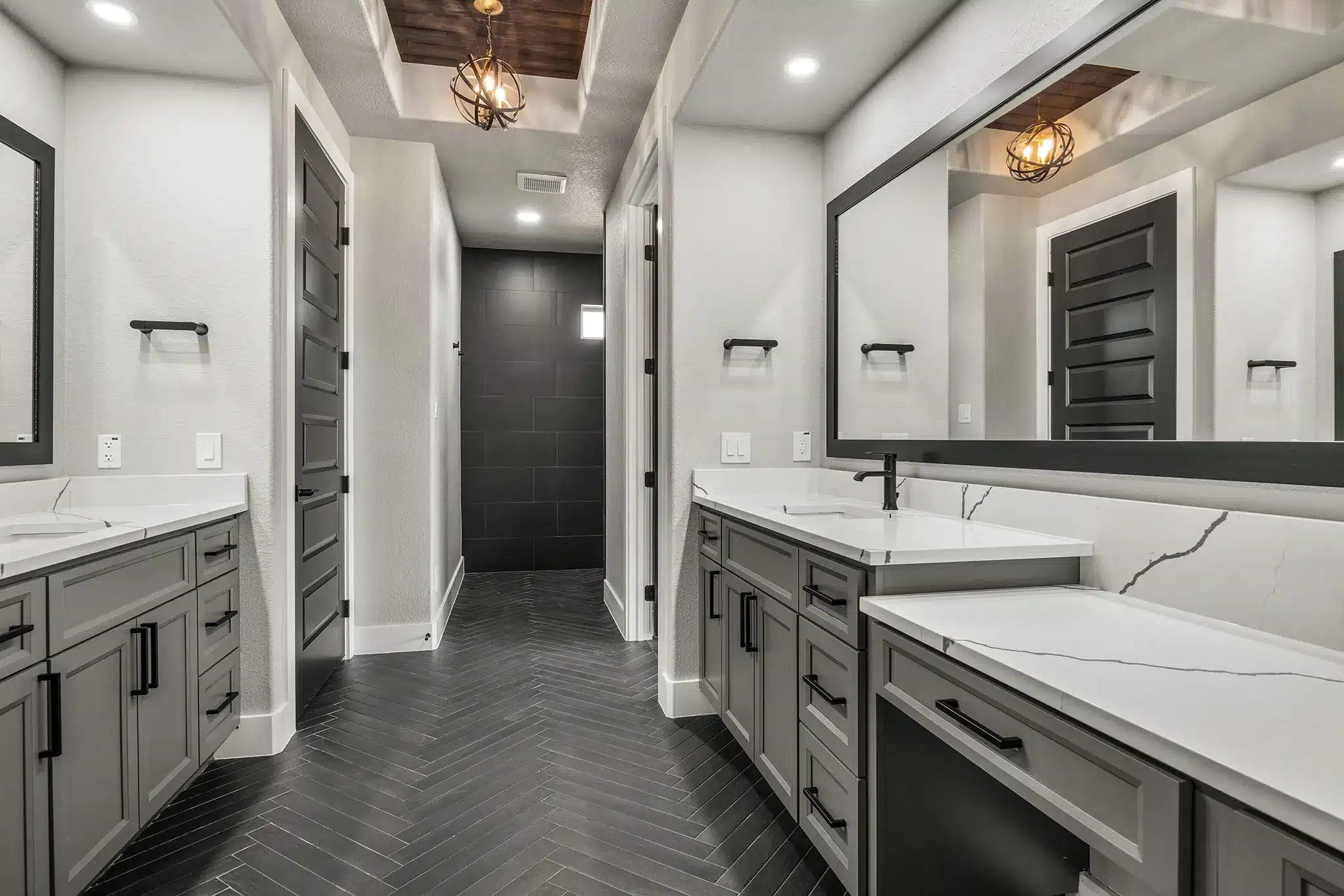
Timeline and Process Expectations
Most bathroom remodels in Grand Prairie take longer than homeowners initially expect. Even a compact hall bath can involve multiple trades, material lead times, inspections, and drying periods.
Typical timelines by scope
- Cosmetic refresh: about 1 to 3 weeks
- Midrange remodel: about 3 to 6 weeks
- Full gut remodel: about 6 to 10+ weeks
Those ranges assume the materials are available and the work proceeds without major hidden repairs. If you are waiting on custom glass, special-order tile, or a backordered vanity, the schedule can stretch.
Typical project phases
1. Planning and selection
This can take 1 to 3 weeks or longer if the homeowner is comparing finishes. Fixture decisions made early help prevent delays later.
2. Demo and rough-in
Demolition often takes only a few days, but rough plumbing and electrical work may take another several days depending on complexity.
3. Inspections
Inspection timing can add waiting periods between major steps. If a permit is required, the project may pause until a rough-in approval is complete.
4. Waterproofing and tile
This is usually one of the most time-sensitive phases. Waterproofing must cure properly before tile work moves ahead.
5. Finishes and punch list
Once the big pieces are in place, the final days are spent installing trim, mirrors, glass, accessories, and making adjustments.
Schedule risks
Bathrooms are especially sensitive to delays because they are small rooms with many trades crossing paths. If one step slips, the whole chain can move. Hidden water damage, late materials, or inspection rescheduling can all affect the timeline.
For occupied homes in Grand Prairie, the logistics matter as much as the trade sequence. Homeowners often need a temporary plan for bathing, family routines, and storage while the bathroom is offline.

How to Budget the Project Realistically
The best bathroom budgets include room for the unexpected. In Grand Prairie, that is especially true in older homes where hidden plumbing or structural issues are more likely to surface once demo begins.
Use a base budget plus contingency
A good rule of thumb is to set a project base and then add 10% to 20% as contingency. For example:
- $18,000 base budget → $1,800 to $3,600 contingency
- $32,000 base budget → $3,200 to $6,400 contingency
- $55,000 base budget → $5,500 to $11,000 contingency
That money can cover surprise repairs, upgrade decisions, or change orders without forcing the project to stop.
Separate “must-haves” from “nice-to-haves”
Before construction starts, identify the items you absolutely want included:
- Shower waterproofing
- Ventilation upgrade
- New toilet
- Improved lighting
- Storage
Then list optional items:
- Heated floors
- Custom cabinetry
- Designer tile
- Upgraded mirrors
- Specialty glass
This makes it easier to control spending if the job uncovers hidden repairs.
Avoid under-allowing for finishes
One common budgeting mistake is choosing a modest labor estimate and then selecting premium finishes without adjusting the total. A shower niche here, a custom vanity there, and upgraded lighting can push a midrange project into a higher tier quickly.
Consider sequencing with other work
If your home needs multiple upgrades, think carefully about order. Sometimes it makes sense to remodel the bathroom first if it is failing or unusable. Other times, homeowners stage the work with a larger remodel plan. In broader planning terms, comparing your bathroom to the DFW bathroom cost guide and to a wider home remodel can help you decide whether to do one room now or bundle work later.
If your project is part of a larger property plan, it may also help to compare it with new home construction costs in Grand Prairie or a phased renovation strategy.
Financing considerations
Many homeowners use savings, home equity, or a dedicated renovation loan to manage a bathroom project. Financing can make sense if it lets you complete needed repairs now rather than waiting and risking further water damage or wear. The key is to finance a scope you can comfortably support, not just the maximum amount a lender may approve.

When to Choose a Bathroom Remodeling Project in Grand Prairie
A bathroom remodel is the right move when the room is no longer matching the way you live. In Grand Prairie, that often means a bathroom that is outdated, hard to clean, inefficient, or showing signs of moisture wear.
You may want to move forward if:
- The shower leaks or feels unsafe
- The vanity has no useful storage
- The tile is cracked, stained, or hard to maintain
- Ventilation is inadequate
- Plumbing fixtures are failing
- The room layout is cramped
- You are preparing the home for resale
- The bathroom is the weakest room in an otherwise updated house
If your home is older, a remodel can also be a smart preventive investment. Replacing aging plumbing fixtures, fixing ventilation, and correcting waterproofing can help avoid bigger repairs later. If the rest of the house is being improved too, it may make sense to compare bathroom priorities against a full home update through whole-home remodeling in Grand Prairie.
The local market also matters. In a central DFW suburb like Grand Prairie, a polished, well-finished bathroom can add a lot of perceived value because buyers and appraisers notice clean execution, functional layout, and modern systems. That does not mean every dollar returns directly, but it does mean quality work is often easier to justify here than in a purely cosmetic patch job.
If you are still deciding whether to remodel now or later, it can help to look at comparable bathroom projects in nearby markets like Denton and McKinney to see how scope and finish level influence budget in different parts of the metro.

Final Thoughts on Bathroom Remodeling in Grand Prairie
Bathroom remodeling in Grand Prairie is shaped by the same factors that affect most DFW projects—labor demand, material quality, plumbing complexity, and permitting—but local housing conditions make careful planning especially important. Older homes may need more hidden repairs. Occupied suburban neighborhoods may require tighter scheduling. And central metro location can affect both pricing and lead times.
If you are planning a 2026 remodel, the smartest path is to start with scope, not finishes. Decide whether you are doing a refresh, a midrange update, or a full rebuild. Then add realistic allowances for plumbing, electrical, waterproofing, and contingency. That approach will give you a much better estimate than trying to pick a single number from a broad online average.
For most homeowners, a well-planned bathroom remodel is one of the best upgrades they can make. It improves daily comfort, addresses aging systems, and can meaningfully improve the feel of the entire home. If you are ready to move from research to planning, our Grand Prairie bathroom remodeling team can help you build a scope that fits your home and your budget, and you can also revisit the broader bathroom remodel cost guide for a metro-level pricing benchmark before you decide on your next step.