Cost to Remodel Your Home in Kaufman County (2026 Guide)
Home remodeling costs in Kaufman County vary widely, but most homeowners can expect a light cosmetic refresh to start around $15,000 to $35,000, a midrange kitchen or bathroom remodel to land around $35,000 to $90,000, and a full-home renovation to begin around $100,000 and climb well past $250,000 depending on the size of the home and the amount of trade work involved.
Here is a quick pricing snapshot to orient your budget before you get into the details.
| Project type | Typical 2026 cost range in Kaufman County | What it usually includes |
|---|---|---|
| Small cosmetic refresh | $15,000–$35,000 | Paint, flooring, fixture swaps, trim, and limited surface updates |
| Midrange kitchen or bathroom remodel | $35,000–$90,000 | Cabinets, counters, tile, plumbing updates, lighting, and moderate layout changes |
| Whole-home remodel | $100,000–$250,000+ | Multiple rooms, structural adjustments, electrical/plumbing updates, and full finish replacement |
| High-end whole-home renovation | $250,000–$500,000+ | Custom cabinetry, premium finishes, expanded layouts, and extensive systems work |
Those ranges are broad on purpose. Remodeling costs in Kaufman County are affected by the same things that influence costs across the broader DFW market: material selection, labor availability, project size, design complexity, and the amount of hidden work that appears once walls and floors are opened. The county’s fast-growing eastern DFW setting adds one more factor: contractor demand can be tighter than in some farther-out markets, especially when crews are already booked in nearby suburbs.
If you want the bigger DFW context behind these numbers, the county-level budget ranges fit within the broader patterns discussed in the DFW home remodeling cost guide. And if you already know you want to start planning a project, a local contractor can help you compare priorities and sequencing through a Kaufman County home remodeling consultation.

Why Building in Kaufman County Is Different
Kaufman County is not a single, uniform remodeling market. It includes newer subdivisions, older homes, and rural edges that can all affect scope and pricing in different ways. A house in a newer neighborhood may be easier to remodel from a logistics standpoint, while an older home may need more work behind the walls before the visible finishes can even begin.
That mix matters because remodeling budgets are not driven only by the final design. They are also shaped by access, utility conditions, and how much of the home needs to be brought up to current expectations. In parts of the county where lot sizes are larger or homes are farther from dense commercial centers, delivery and scheduling can take longer. In more rural areas, septic, well, or utility coordination can add another layer of planning.
Kaufman County also sits on the eastern fringe of the Dallas-Fort Worth growth pattern. That can tighten labor schedules and push lead times out a little compared with more central projects. It does not mean remodeling is more expensive in every case, but it does mean you should budget with some flexibility and build in time for trades, inspections, and material deliveries. Those realities are exactly why local pricing should be treated as a range rather than a single number.

Typical Project Cost Ranges
The easiest way to understand remodeling costs is by project scope. A homeowner who is repainting, replacing flooring, and updating fixtures will spend far less than a homeowner who is moving walls, replacing cabinets, upgrading electrical, and reworking plumbing.
Small cosmetic remodel: $15,000 to $35,000
A small cosmetic project typically focuses on visible improvements rather than structural or systems changes. Examples include:
- Interior painting
- New LVP, tile, laminate, or carpet
- Light fixture replacement
- New hardware, trim, and baseboards
- Updated sinks or faucets
- Cabinet refinishing instead of full replacement
This is the range most homeowners fall into when they want the house to feel cleaner, newer, and more cohesive without changing the layout. If the house is in decent condition and the systems are already functional, this budget can go a long way. It is especially useful when a home has good bones but simply looks dated.
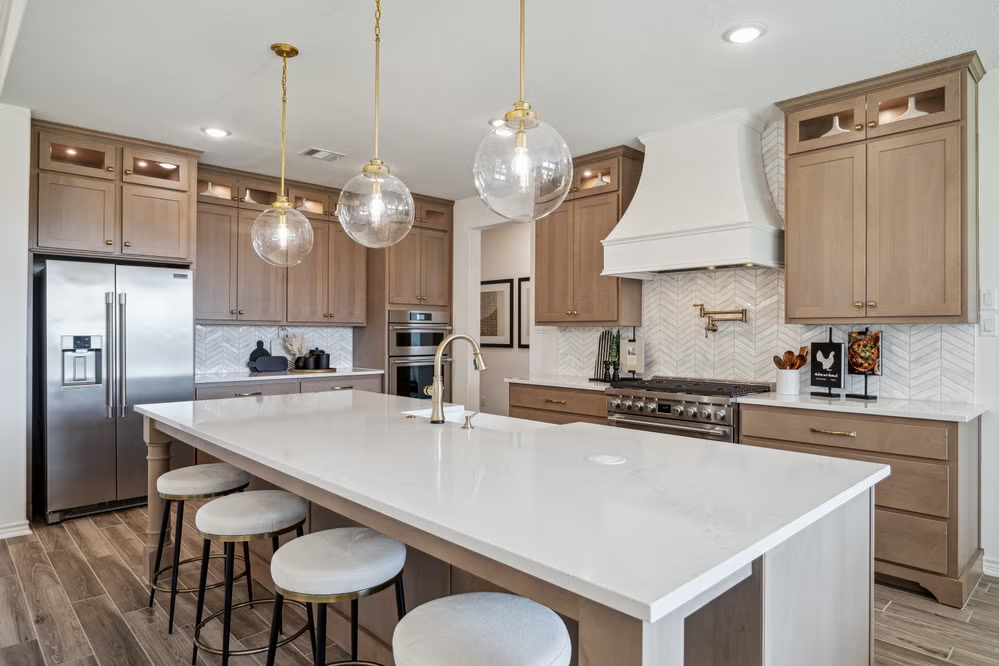
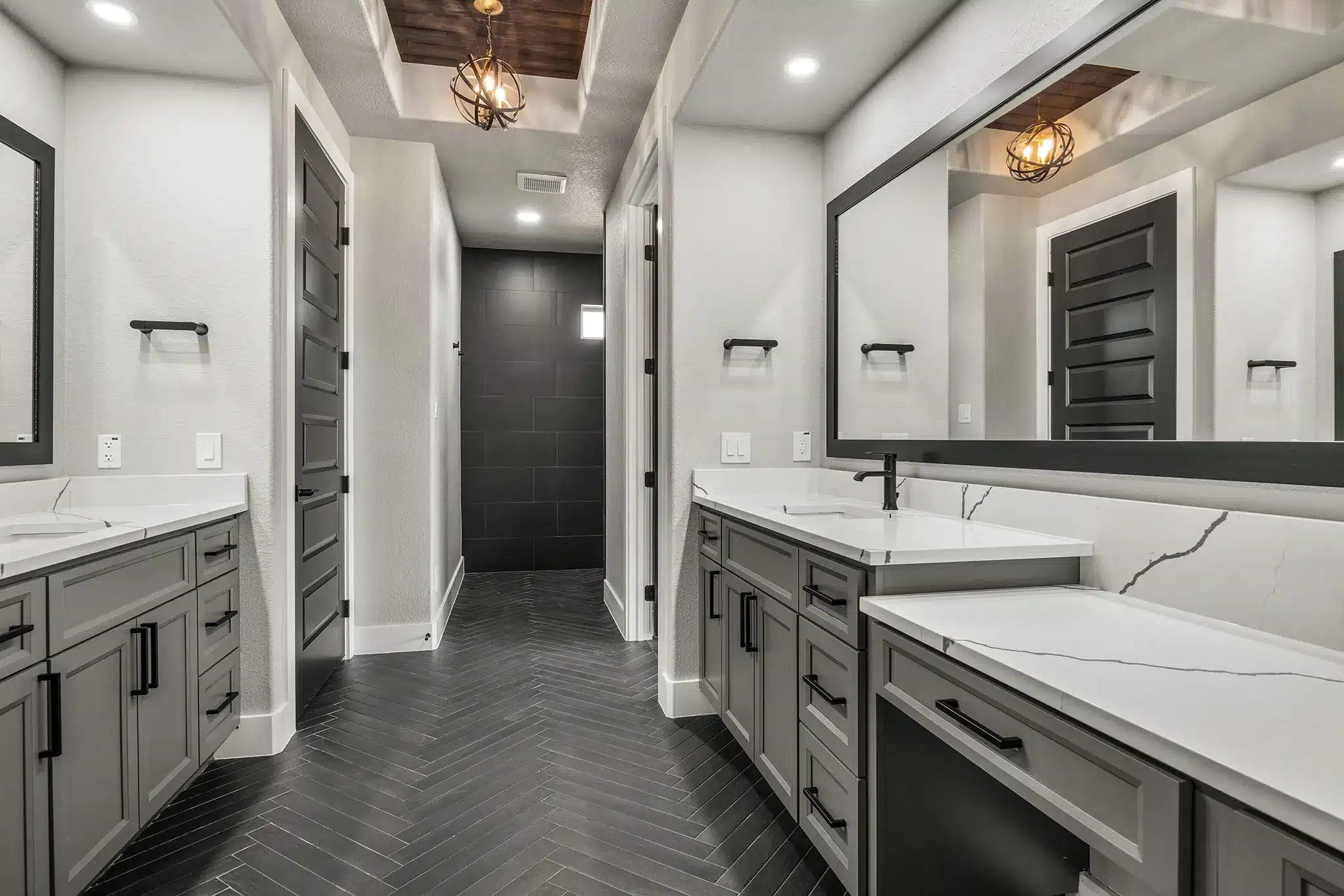
Midrange kitchen or bathroom remodel: $35,000 to $90,000
Once you move into a kitchen or bathroom remodel with new cabinets, counters, tile, and fixture replacements, costs rise quickly. Kitchens and bathrooms are expensive because they concentrate several trades in one space: carpentry, plumbing, electrical, drywall, tile, and finish work.
A midrange remodel in Kaufman County may include:
- Semi-custom cabinets
- Quartz or granite counters
- Tile backsplash or shower surround
- New plumbing fixtures
- Updated lighting
- Minor layout adjustments
- New appliances in a kitchen project
- New vanity, mirror, and storage features in a bathroom project
If you are considering a bathroom-specific project, it helps to compare it against the local benchmarks in the Kaufman County bathroom remodeling cost guide. For kitchens, the local cost structure is often similar but usually a bit higher because of cabinet and appliance pricing, which is why the Kaufman County kitchen remodeling cost guide is a useful companion reference.
Whole-home remodel: $100,000 to $250,000+
A whole-home remodel starts to make sense when multiple rooms need to be updated at once or when the house requires more than cosmetic work. In many cases, this includes:
- Multiple room renovations
- Flooring replacement throughout the home
- Electrical upgrades
- Plumbing reroutes or replacements
- HVAC-related adjustments
- Drywall repair or replacement
- New doors, trim, and finish carpentry
- Kitchen and bath updates as part of a larger scope
Whole-home projects frequently cross into six figures because labor is multiplied across several rooms and because the hidden conditions inside the house become more important. If the home is older, if the floor plan is being changed, or if the owner wants a higher-end finish level, the total can rise quickly.
High-end renovation: $250,000 to $500,000+
At the top end, a renovation may involve premium cabinetry, custom built-ins, stone surfaces, luxury fixtures, expanded living areas, or major structural changes. These projects are often driven by lifestyle goals rather than by simple replacement. They can also include permitting, engineering, and coordination with multiple specialized trades.
Homeowners sometimes choose this route when they are effectively transforming an older property into something that functions like a custom home. In that case, the comparison is no longer “How much does this room cost?” but “How much of the house is being rebuilt or reconfigured?”

Cost Per Square Foot and What It Includes
Cost per square foot can be helpful, but only when used carefully. Remodeling is not the same as new construction, and square footage alone does not tell you how much trade work, finish quality, or hidden repair is involved. Still, it is a useful budgeting shorthand when you need a first-pass estimate.
For Kaufman County homeowners, a rough remodel cost range might look like this:
- Light refreshes: about $25 to $60 per square foot of the spaces being updated
- Midrange remodels: about $60 to $120 per square foot
- Extensive whole-home renovations: about $120 to $250+ per square foot
Those numbers are not fixed quotes. They simply reflect the way labor, materials, and scope stack up when the project gets larger or more complicated. A 1,500-square-foot home with mostly cosmetic changes will not cost the same per square foot as a 3,000-square-foot home with wall removal and system upgrades.
Square-foot pricing also tends to include different things depending on the contractor’s estimate structure. It may or may not include:
- Demo and disposal
- Framing or drywall repair
- Electrical and plumbing labor
- Cabinets and countertops
- Paint and trim
- Flooring and underlayment
- Fixtures and hardware
- Permits and inspections
- Design or drafting services
When a budget seems too low, it is often because one of those categories is missing. For example, a quote that covers only visible finishes will look cheaper than one that includes electrical corrections, plumbing reroutes, or a contingency for hidden damage.
A good rule of thumb is to think of square-foot pricing as a planning tool, not a contract price. In remodeling, the final number is determined by how much of the home needs to be touched, what the hidden conditions look like, and how premium the finish package is.

Main Factors That Change Total Price
Several variables have an outsized impact on remodeling cost in Kaufman County. Some are local, and some are universal. Together, they explain why two homes of similar size can end up with very different budgets.
1. Age and condition of the home
Older homes almost always carry more uncertainty. They may have outdated wiring, older plumbing, uneven floors, previous patchwork repairs, or materials that are not ideal for a modern remodel. If the project exposes problems behind the walls, the budget can increase quickly.
By contrast, a newer home in a subdivision may be easier to work on if the structure is sound and the existing layout already fits the owner’s needs. Even then, cosmetic finishes can still be expensive if the homeowner chooses premium materials.
2. Layout changes
If the remodel keeps the existing floor plan, the price is generally lower. Once you start removing walls, relocating plumbing, or changing the kitchen or bathroom footprint, the project gets more expensive. Layout changes often require:
- Framing modifications
- Electrical relocation
- HVAC adjustments
- Plumbing rerouting
- Drywall patching
- Additional design and inspection time
Even a modest shift can add several thousand dollars to the total. That is why many homeowners are surprised when a project that started as a “simple update” becomes a more expensive renovation after the plan is finalized.
3. Finish level
Finish level is one of the clearest price drivers. A standard tile, stock cabinet, and basic fixture package will cost far less than custom cabinetry, stone surfaces, designer lighting, and specialty tile work. This is especially true in kitchens and primary bathrooms, where material choices make a big difference.
A homeowner might save money by choosing:
- Stock or semi-custom cabinets instead of full custom
- Durable but midrange counters instead of premium stone
- Standard tile patterns instead of intricate layouts
- Good-quality fixtures instead of boutique fixtures
4. Utility constraints and rural conditions
Some parts of Kaufman County can involve septic, well, or longer utility runs. Not every home has these conditions, but when they are present, the remodeling process may need more coordination. A project might need plumbing verification, access planning, or extra time for trade scheduling because the site is less straightforward than a dense urban neighborhood.
This does not automatically make the remodel more expensive. It simply means the contractor may need more time and planning to complete the job correctly.
5. Permitting and inspection scope
Some projects can proceed with relatively straightforward permit and inspection requirements, while others need more preconstruction coordination. Structural changes, electrical updates, and major plumbing changes often require more oversight. The more complex the scope, the more likely soft costs and preconstruction time will rise.
For local standards and contractor credentialing context, homeowners often benefit from checking the Texas Department of Licensing and Regulation along with the local permitting process in the city where the work will occur. In places like Forney, permit and inspection expectations can shape the timeline before construction begins.
6. Contractor demand and scheduling
Kaufman County’s growth means contractor availability can tighten, especially during peak building seasons. If the best crews are already booked several weeks out, the project may cost more or take longer simply because of scheduling pressure. Material lead times can also stretch, especially for specialty finishes or custom items.
The more customized the project, the more likely schedule delays can affect pricing.

Labor, Materials, and Trade-Level Costs
A remodel budget is usually divided between labor and materials, but that split can vary depending on the scope. In many projects, labor and subcontracted trades take up a very large portion of the total, which is why schedule and availability are such important pricing factors.
Labor costs
Labor often covers:
- Demo and hauling
- Carpentry
- Drywall installation and finishing
- Painting
- Plumbing
- Electrical
- Tile setting
- Flooring installation
- Cabinet installation
- Trim and finish work
In a home remodeling project, labor can become especially expensive when a job requires multiple trades to work in sequence. For example, a kitchen remodel may need demo first, then electrical and plumbing rough-ins, then drywall, then cabinets, then counters, then tile, then paint and fixtures. Every handoff creates scheduling time and cost.
Trade-level cost examples
While every project is different, homeowners should expect the following kinds of spending pressure:
- Electrical upgrades commonly run $2,500 to $8,000 for new circuits, relocated outlets, or a panel-related correction, and they can exceed $10,000 if service upgrades are needed.
- Plumbing changes often land around $1,500 to $7,500 for fixture moves, with higher totals when lines are old, inaccessible, or need replacement through several rooms.
- Drywall repairs may be $800 to $3,500 in a modest cosmetic project, but $5,000 to $12,000+ when walls and ceilings are opened for layout changes.
- Tile labor can range from $12 to $25 per square foot for standard work and $25 to $45+ per square foot for complex patterns, niches, or detailed shower builds.
- Carpentry work frequently adds $75 to $120 per hour for finish-grade labor, or it may be quoted as a package for trim, built-ins, and framing corrections.
Material costs
Material pricing depends heavily on the finish package. Some examples:
- Paint and drywall materials are usually relatively affordable, but labor still matters.
- Flooring ranges from economical LVP at about $3 to $6 per square foot installed to hardwood or high-end tile at $10 to $20+ per square foot installed.
- Cabinets can be one of the biggest line items in any kitchen or bathroom, with stock systems sometimes starting near $8,000 to $15,000 and semi-custom or custom packages climbing past $25,000 to $50,000+.
- Countertops vary widely by material, from laminate at a few hundred dollars to quartz or natural stone at $3,000 to $10,000+ depending on size and edge detail.
- Plumbing fixtures can be modest or premium depending on style and brand, ranging from roughly $150 to $500 for many standard items to $1,000+ for designer fixtures.
- Lighting packages can stay simple at $1,000 to $3,000 or become a notable budget item if the design is layered and decorative.
In real-world remodeling, homeowners often underestimate how much of the total budget is tied up in finish selection. The project may be “the same size” as another project, but the cost can vary by tens of thousands of dollars depending on the products selected.
Where local market conditions matter
Because Kaufman County is connected to a fast-growing part of the eastern DFW area, labor markets can be competitive. Crews may be traveling between multiple job sites, and that can affect start dates, delivery timing, and how quickly change orders are handled. In other words, the best price is not always the most important variable; responsiveness and consistency matter too.
If you want a local starting point for coordinating labor and scope, the county-specific remodeling service page can help you map the work through a Kaufman County home remodeling project plan.

Permit, Design, and Planning Costs
The visible part of a remodel gets the attention, but the soft costs often shape whether the project succeeds. These are the costs associated with planning, design, documentation, and approvals before the actual construction effort begins.
Design and planning
Some homeowners enter a remodel with a clear plan. Others need a design phase to figure out how the space should function. Design work may include:
- Measuring and documenting existing conditions
- Drafting layouts
- Selecting materials and finishes
- Coordinating cabinet or fixture specifications
- Reviewing budget options
- Reworking the floor plan before construction
Design fees can range from $500 to $1,500 for light planning support to $3,000 to $12,000+ for a more complete design package. A straightforward cosmetic project may only need a few hours of guidance, while a major kitchen or whole-home remodel can justify more detailed drawings and finish selection support.
Permits and inspections
Permits are not always the largest cost in a remodel, but they can be a critical part of the schedule. Projects that involve electrical, plumbing, structural, or major mechanical changes may need permits and inspections. Direct permit fees may be only a few hundred dollars on some jobs, but they can rise to $1,000 to $3,000+ when multiple permits or plan reviews are required.
For general state-level contractor and licensing context, homeowners can review the Texas Department of Licensing and Regulation. For local permit expectations, city departments such as Forney’s development services illustrate the kind of review and inspection steps that may be relevant in the county.
Engineering and specialty drawings
Some remodels require structural or technical input. Examples include:
- Removing a wall that may be load-bearing
- Adding or enlarging openings
- Reconfiguring stair openings
- Changing roof or framing conditions
- Planning a major addition or expansion
When engineering is required, the cost usually rises, but it also reduces risk. Structural engineering for a remodel may run $500 to $2,500 for limited review or $3,000 to $7,500+ for more complex structural changes. It is better to spend a few hundred or a few thousand dollars on correct planning than to discover mid-project that a design is not buildable as drawn.
Preconstruction allowances
Budgeting should also account for early selections such as:
- Cabinets
- Tile
- Plumbing fixtures
- Lighting
- Flooring
- Appliance packages
- Countertops
The sooner these items are selected, the more accurate the estimate will be. Late decisions often cause change orders, rush shipping, or substitutions that can affect both schedule and price. A kitchen allowance that is too low by $5,000 to $15,000 can distort the whole budget, while a bathroom allowance that is too low by even $1,500 to $5,000 can create downstream revisions.
Timeline and Process Expectations
Remodeling is not only about money. It is also about time. The more work a project requires, the more likely it is to affect daily routines, especially if the kitchen or bathrooms are out of service for a period.
Preconstruction: several weeks
Before construction begins, homeowners should expect a planning phase that can take several weeks. This may include:
- Site visits
- Measurements
- Scope development
- Estimate revisions
- Material selection
- Permit submission
- Scheduling subcontractors
For a simple cosmetic project, this phase may move relatively quickly. For a larger renovation, it can stretch longer because more decisions need to be finalized before crews mobilize.
Construction: a few weeks to several months
A small remodel may take 2 to 6 weeks once construction begins. A midrange kitchen or bathroom remodel may take 6 to 12 weeks. A larger whole-home remodel can run 3 to 6 months or more, especially if walls are moved, systems are updated, or materials have long lead times.
Common phase timing looks like this:
- Demo and disposal: several days to 1 week
- Rough electrical/plumbing/framing: 1 to 3 weeks
- Drywall and patching: several days to 2 weeks
- Cabinet and trim installation: 1 to 2 weeks
- Countertop fabrication and install: often 1 to 3 weeks including measuring and lead time
- Tile, flooring, and paint: 1 to 3 weeks
- Punch list and closeout: several days to 2 weeks
Schedule risks in Kaufman County
Because the county sits in a growth area, trades may be juggling multiple projects across the region. That means delivery delays, weather interruptions, and subcontractor availability can all affect the schedule. Rural or semi-rural sites can also create extra travel time, which can make quick same-day adjustments harder than in a denser neighborhood.
Why timeline planning matters
Longer projects can affect:
- Temporary housing decisions
- Meal planning if the kitchen is offline
- Bathroom access in a family home
- Childcare or work-from-home routines
- Dust and staging concerns
The best remodel plan is one that balances your desired finish level with your tolerance for disruption. If a project will be disruptive, you may want to phase the work instead of doing everything at once.

How to Budget the Project Realistically
A realistic remodeling budget is built around more than the base estimate. It should reflect hidden conditions, allowances, and the possibility of changes once work begins.
Start with a base scope
The first budgeting step is deciding what is actually included. Is the project a cosmetic update, a layout change, or a full renovation? Are cabinets being replaced or painted? Are fixtures being swapped or moved? Are walls staying in place?
The clearer the scope, the more accurate the estimate.
Add a contingency
A contingency of 10% to 20% is a common planning buffer for remodeling because hidden issues are often discovered once work begins. That might include:
- Old wiring
- Plumbing issues
- Water damage
- Uneven framing
- Subfloor problems
- Mold or rot
- Code-related corrections
For a $60,000 project, a reasonable contingency might be $6,000 to $12,000. For a $150,000 project, the buffer could be $15,000 to $30,000. This is not money you expect to spend automatically, but it is money you should be prepared to use if the project uncovers problems.
Use allowances carefully
Allowances are budget placeholders for items not yet selected, such as tile, cabinets, fixtures, or lighting. A low allowance may make the proposal look cheaper than it really is. A high-quality allowance should be realistic for the finish level you expect.
If you know you want a midrange quartz countertop and semi-custom cabinets, do not budget as if you were selecting the least expensive materials available. That mismatch is one of the most common reasons remodel budgets grow.
Consider sequencing if the full project is too large
Not every homeowner needs to do everything at once. In some cases, it makes more sense to remodel in phases:
- Phase 1: kitchen
- Phase 2: primary bath
- Phase 3: flooring and paint throughout
- Phase 4: secondary bath or laundry
Phasing can help manage cash flow and reduce disruption. It may also allow you to make better decisions after living with the first phase of work.
Plan for financing if needed
Some homeowners pay cash, while others use home equity or other financing options. The right choice depends on the size of the project, interest rates, and the homeowner’s long-term plans. If the remodel is improving a home you plan to keep for years, a larger project may make sense if the monthly payment fits the budget and the finished house better supports your needs.
For many homeowners, the most important question is not “Can I spend this much?” but “Can I complete the project without creating financial stress?”

When to Choose a Home Remodeling Project in Kaufman County
A home remodeling project makes the most sense when the house is structurally sound but no longer matches how you live. In Kaufman County, that often means a homeowner wants to improve a newer suburban home with better finishes, or update an older home that still has good location value but needs functional upgrades.
Choose remodeling when:
- The home is in a location you want to keep long term
- The layout works reasonably well, but the finishes feel dated
- The kitchen or bathrooms are holding the home back
- You want to modernize without paying for a full rebuild
- The existing structure is worth improving rather than replacing
Consider a larger scope when:
- The home has repeated system problems
- The floor plan is too restrictive
- The electrical or plumbing systems are outdated
- You are already opening multiple rooms
- The project needs to solve several problems at once
Why local context matters
Kaufman County’s mix of suburban growth and older rural edges means that remodeling decisions are often tied to practicality. Some homeowners want to upgrade before resale. Others want to stay in place and make the home fit a growing family. Others are comparing the cost of remodeling with the cost of rebuilding or moving entirely.
In that comparison, it helps to understand both the remodeling side and the new construction side. If you are weighing whether to improve an existing home or start over with a new one, the local building cost picture in Kaufman County house construction can help frame the decision.
A simple rule of thumb
If the home’s structure, lot, and location are all good, remodeling is often the better value. If the house needs major systems replacement, extensive layout changes, and significant structural work, the cost can start to approach new construction territory. At that point, comparing your options carefully is the smartest move.
For some homeowners, the right next step is not to commit immediately, but to request a local consultation through the Kaufman County remodeling team and compare the practical scope options side by side.

How to Compare Estimates and Avoid Budget Surprises
Once you start collecting bids, the cheapest estimate is not always the best one. A good comparison looks at scope, assumptions, exclusions, and the quality of the contractor’s planning.
Compare apples to apples
Make sure each estimate includes the same basic work. One bid may include demo, permits, disposal, and finish carpentry, while another may only cover labor for visible items. That creates an artificial price difference.
Check whether each estimate spells out:
- Scope boundaries
- Material allowances
- Permit responsibility
- Demolition and haul-off
- Site protection and cleanup
- Warranty coverage
- Change-order procedures
Watch for missing line items
Some of the most common budget surprises come from missing items such as:
- Electrical panel updates
- Plumbing relocation
- Drywall repair behind walls
- Countertop templating
- Appliance hookups
- Trim transitions
- Disposal fees
- Final cleaning
If those items are not clearly included, assume they may appear later as additional charges.
Ask about lead times and substitutions
If a contractor proposes a material that has a long lead time, ask what happens if that item is delayed or unavailable. Ask whether equivalent substitutions would change the price. In a fast-moving market, scheduling flexibility can be just as important as the estimate itself.
Use a written change-order process
Change orders are normal in remodeling, but they should be documented. If you add scope after work begins, the added cost should be written down before the crew proceeds. That helps avoid misunderstandings and keeps the final total under control.
Balance price with communication
The right contractor is responsive, clear, and realistic. If one estimate is slightly higher but includes better planning, more complete scope, and faster communication, it may be the better value in the long run. Remodeling is a service as much as it is a product, and the process matters.

Final Thoughts on Home Remodeling in Kaufman County
Home remodeling in Kaufman County is highly variable, but the budgeting pattern is clear: small refreshes often begin in the $15,000 to $35,000 range, midrange kitchen or bath projects often fall between $35,000 and $90,000, and full-home renovations commonly start around $100,000 and can rise well beyond $250,000.
The biggest price drivers are the same ones that matter throughout the DFW area: layout changes, hidden conditions, finish level, and labor coordination. But Kaufman County also brings its own practical considerations, including growth-related demand, the mix of newer and older homes, and the possibility of rural-site logistics that may influence scheduling and planning.
If you are budgeting for a remodel, the best approach is to define your scope early, include a 10% to 20% contingency, and make material decisions before construction begins whenever possible. That is how you reduce surprises and keep the project aligned with your goals.
If you want to go deeper on the regional cost picture, revisit the DFW remodeling cost guide for broader context, then compare it with the local service details on the Kaufman County home remodeling page. A well-planned remodel can improve comfort, function, and long-term value, especially when it is designed around the realities of your home and your part of the county.
When you are ready to turn a rough budget into a real plan, start with the scope, compare a few finish levels, and build from there.
For nearby same-service comparisons, also review Cost to Remodel Your Home in Wise County (2026 Guide) and Cost to Remodel Your Home in Brazos River (2026 Guide).