How Much Does a Kitchen Remodel Cost in McKinney? (2026 Guide)
If you are planning a kitchen remodel in McKinney, the most useful answer is a range: many projects land around $25,000 to $75,000+, while cosmetic refreshes can come in below that and full gut renovations can move well above it. The final number depends on whether you are keeping the layout, replacing cabinets, moving plumbing or electrical, and choosing builder-grade or custom finishes. For a broader regional breakdown, see our DFW kitchen remodel cost guide.
A practical way to think about the budget is to separate the work into scope tiers:
| Project scope | Typical McKinney budget range | What is usually included |
|---|---|---|
| Cosmetic refresh | $12,000–$25,000 | Paint, hardware, lighting updates, minor backsplash work, selective countertop replacement |
| Midrange remodel | $25,000–$60,000 | Cabinet refacing or replacement, new counters, sink/faucet, backsplash, flooring, appliance swaps |
| Major remodel | $60,000–$100,000+ | New cabinetry, premium surfaces, layout changes, upgraded electrical/plumbing, possible wall adjustments |
| High-end / custom renovation | $100,000–$150,000+ | Full redesign, custom cabinetry, structural work, luxury appliances, premium finishes, extensive trade coordination |
Those numbers line up with national kitchen remodel planning guidance and with the reality that labor, materials, and scope changes can swing the total quickly. In McKinney, a kitchen is often one of the most visible value-adding projects in the house, which is why homeowners usually want a realistic range before they start selecting finishes or calling for bids. You can also compare a local project with our dedicated McKinney kitchen remodeling service page if you want help turning that range into a working budget.
Why Building in McKinney Is Different
McKinney is a fast-growing Collin County city, and that growth can affect both pricing and scheduling. Contractors, cabinet suppliers, and trade partners often have more demand to absorb than they would in a slower market, which can make lead times tighter. The city also has a mix of older homes near the historic core and newer subdivision homes, and those two housing types create very different kitchen remodel conditions.
In older homes, remodels can uncover outdated wiring, aging plumbing, uneven framing, or awkward layouts that were acceptable when the house was built but are not ideal today. In newer homes, the challenge is often less about hidden damage and more about working around HOA expectations, limited staging space, or design preferences that need to fit the neighborhood. Permits and inspections matter more when you move walls or shift mechanical, electrical, or plumbing locations, so the project needs careful coordination from the start. For local permit guidance, homeowners can review the City of McKinney Permits & Inspections page.
Typical Project Cost Ranges
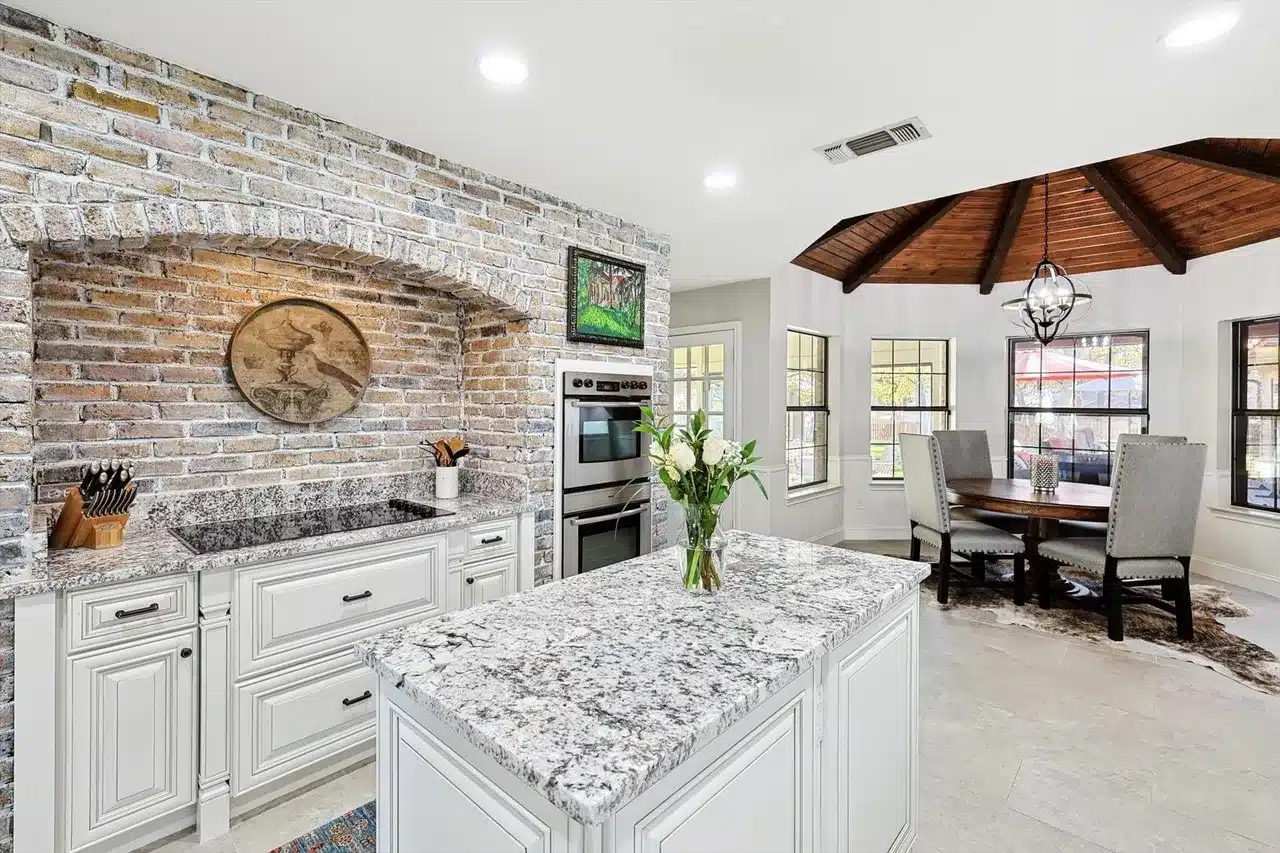
A kitchen remodel in McKinney usually falls into one of three budget bands, and the differences are mostly about how much of the room is being touched.
1. Cosmetic refresh: $12,000–$25,000
This tier is about making the kitchen look cleaner, brighter, and more current without changing the bones of the room. Common examples include:
- repainting walls and trim
- replacing cabinet hardware
- updating light fixtures
- refinishing or repainting cabinets
- swapping in a modest backsplash
- replacing a faucet or sink
- making limited countertop repairs or replacements
This level is best when the kitchen layout already works, cabinets are structurally sound, and appliances do not need a full upgrade. It is the least disruptive option, and it can still make a major visual difference.
2. Midrange remodel: $25,000–$60,000
This is the most common bucket for McKinney homeowners. It often includes:
- new or refaced cabinetry
- quartz or granite counters
- new sink and faucet
- backsplash replacement
- new flooring
- lighting upgrades
- one or more appliance replacements
A midrange remodel is usually where homeowners start getting the biggest balance of value and transformation. It can modernize a dated kitchen without requiring major structural changes.
3. Major or high-end remodel: $60,000–$100,000+
Once the project includes layout changes, better cabinetry, upgraded appliances, and more trade coordination, the budget climbs quickly. A high-end remodel can include:
- custom cabinetry
- expanded island layouts
- premium stone countertops
- hidden storage and specialty inserts
- luxury appliances
- relocated plumbing or electrical
- wall removal or structural reinforcement
- custom lighting plans
At the top end, it is not unusual for projects to exceed $100,000, especially when the homeowner wants a fully reimagined kitchen rather than a surface-level update. A related comparison point is our Grand Prairie article on kitchen budget ranges: how kitchen remodel pricing compares in Grand Prairie. If you are comparing multiple North Texas cities, our Frisco guide is also useful: how kitchen remodel pricing compares in Frisco.

Cost Per Square Foot and What It Includes
Some homeowners want a square-foot estimate because it is easy to compare across houses. In McKinney, kitchen remodel cost per square foot is helpful as a planning tool, but it should never be the only way to budget. Kitchens are packed with expensive systems—cabinets, plumbing, electrical, ventilation, appliances, and finish materials—so the cost per square foot can vary widely based on what is inside the room.
A rough planning framework looks like this:
- Cosmetic refreshes: often feel like a lower square-foot investment because the project is mostly surface-level work
- Midrange remodels: commonly land in the middle because cabinetry and counters drive a big share of the cost
- Major remodels: can jump sharply because the project includes labor-intensive trade work and premium materials
For example, a 150-square-foot kitchen that receives only paint, lighting, and a few finish updates will not price like a 150-square-foot kitchen where all cabinets are replaced, the layout changes, and new circuits are added. The same square footage can have very different outcomes depending on what is being demolished and rebuilt.
In practical terms, square-foot pricing usually includes some combination of:
- demolition and disposal
- framing or drywall repairs
- cabinets and hardware
- countertops
- plumbing and electrical changes
- flooring
- backsplash and wall finishes
- appliances and trim
If a project in McKinney is mostly staying in place, the effective square-foot cost may feel reasonable. If the kitchen needs to be reworked from the studs outward, square-foot pricing can rise quickly because the room is no longer just a finish update.

Main Factors That Change Total Price
The biggest kitchen remodel cost drivers in McKinney are usually the same ones that affect projects across North Texas, but local housing conditions can make them more noticeable.
Layout changes and wall removal
Layout work is one of the fastest ways to raise the budget. If the project involves removing a wall, widening a doorway, shifting the island, or reworking the work triangle, the job may require structural review, framing changes, and extra inspections. That adds labor, time, and design coordination. For example, a non-structural layout tweak might add $1,500 to $4,000, while opening a wall that needs framing, drywall, electrical relocation, and finish work can add $5,000 to $15,000+. NKBA planning guidance emphasizes how important layout and function are to kitchen performance, which is why major changes should be evaluated before selections are finalized. See NKBA planning guidance.
Plumbing and electrical relocation
Moving a sink, dishwasher, refrigerator water line, disposal, outlet bank, or lighting circuit adds multiple trades. Each move can require rough-in work, finish connections, and permit or inspection coordination. Even small changes can stack up when the kitchen is older or when the existing systems are not conveniently placed. In McKinney, shifting a sink and dishwasher can add roughly $1,000 to $3,500, while relocating several electrical circuits and adding new lighting can add another $1,500 to $5,000.
Home age and hidden conditions
Older homes may have outdated plumbing, undersized electrical service, or framing inconsistencies that are not obvious until demolition begins. That is why a remodel in an older McKinney home can cost more than the same-sounding project in a newer house. A contingency of 10% to 20% is especially useful here because hidden-condition repairs can add $2,500 to $10,000+ depending on what is discovered behind the walls.
Finish level
A kitchen can be attractive at many price points, but material choices matter. Stock cabinets cost far less than custom cabinetry. Laminate or tile backsplashes usually cost less than full-height slab backsplash work. Quartz, marble, and high-grade granite all carry different budgets. Appliance package choices can add thousands of dollars, especially if the project includes pro-style equipment or built-in refrigeration. For example, a basic appliance package might stay around $3,000 to $7,000, while a higher-end package can easily run $12,000 to $30,000+.
Permits and inspection complexity
Not every kitchen remodel requires a permit, but once the work affects structure, plumbing, electrical, or mechanical systems, the process usually becomes more involved. In McKinney, permit and inspection timing can affect project sequence and overall duration. That does not mean the work is difficult; it simply means the schedule should account for review and approval steps. Typical permit-related soft costs may be a few hundred dollars, while more involved plan review or multiple trade inspections can push project administration higher. More context is available through the City of McKinney Permits & Inspections page.
Neighborhood and staging constraints
In some subdivisions, HOA expectations may influence where materials are delivered, how dumpsters are placed, or how exterior venting is handled. Those constraints do not always add a large dollar amount, but they can create scheduling friction that indirectly affects cost.

Labor, Materials, and Trade-Level Costs
A kitchen remodel budget is usually a mix of labor, materials, and specialty trade coordination. When homeowners hear one price range, they often assume the cost is mostly cabinets or countertops, but that is only part of the story.
Labor
Labor includes demolition, carpentry, cabinet installation, finish carpentry, tile work, drywall patching, painting, and project management. In a midrange McKinney remodel, labor can easily represent 30% to 40% of the total cost because kitchens require precise fit and finish. On a $45,000 project, that can mean roughly $13,500 to $18,000 in labor alone. Cabinets need to be level and scribed correctly, countertops must be measured and installed accurately, and backsplash tile needs careful layout for a professional result.
Materials
Materials can vary dramatically in price. Here are some common examples:
- Cabinets: stock cabinets may run $6,000 to $12,000, while semi-custom or custom runs can reach $15,000 to $40,000+
- Countertops: quartz or granite often lands around $3,000 to $8,000, depending on size and stone selection
- Flooring: luxury vinyl may be $3 to $7 per square foot installed, while tile or hardwood can be significantly more
- Fixtures: sinks, faucets, and hardware can total $500 to $2,500
- Lighting: recessed cans, pendants, under-cabinet lighting, and dimmers can add $1,000 to $4,000
- Appliances: standard replacement packages are often $3,000 to $8,000, while high-end sets can exceed $15,000 to $30,000
Plumbing and electrical trade work
When sink locations change, when islands receive outlets, or when lighting plans expand, licensed trade work becomes more important. That usually means coordinated rough-in and finish work, and in some cases permit and inspection steps. McKinney remodels that touch those systems should include this in the budget from the beginning, not after demolition starts. As a planning example, a simple plumbing trim-out might cost $500 to $1,500, while a broader electrical update with new circuits, outlets, and lighting can run $2,000 to $6,000+.
A realistic allowance approach
For budgeting purposes, it is often smart to think in allowances rather than fixed assumptions. For example, a homeowner may decide the cabinet allowance is one number, the countertop allowance another, and the appliance allowance another. That makes it easier to compare bids and spot where one proposal is underestimating a category.
A useful planning principle is to avoid spending all of the budget on visible surfaces alone. A beautiful kitchen that has undersized electrical, poor ventilation, or weak cabinet storage will not age well. Good remodeling balances style with performance.
Permit, Design, and Planning Costs
Soft costs are easy to overlook, but they matter. In a kitchen remodel, planning and preconstruction expenses can determine whether the project runs smoothly or becomes chaotic midway through.
Design and measurements
Even a fairly simple kitchen benefits from measured planning. This can include:
- field measurements
- concept drawings
- cabinet layout plans
- appliance sizing
- lighting layout
- finish selection coordination
If the project is a major renovation, design time increases because more decisions need to be resolved before work begins. A basic planning package may cost $500 to $1,500, while more detailed design and cabinet layout work can run $1,500 to $5,000+. Good planning reduces expensive change orders later.
Permit and inspection costs
Some McKinney kitchen remodels will need permits, especially if the project affects structure, plumbing, electrical, or mechanical systems. The City of McKinney Permits & Inspections resource is the right place to understand review and inspection expectations. Permit fees themselves are often modest compared with the rest of the job, but homeowners should still expect a few hundred dollars to more than $1,000 depending on scope, with additional time required for review and inspections.
Ordering and lead times
Cabinets, custom countertops, and specialty fixtures may need to be ordered well before the install date. In a growing market like McKinney, lead times can become a planning issue even when the product itself is straightforward. A good contractor will sequence demolition, rough-ins, cabinet delivery, template dates, and finish work so the kitchen is not sitting unusable for longer than necessary.
Preconstruction allowances
Homeowners should also budget for:
- temporary kitchen setup
- trash haul-off
- possible storage space for materials
- dust protection and site prep
- small design revisions after demo
- replacement of any discovered hidden damage
A remodel rarely unfolds exactly as drawn, especially in an older home. The more time spent on planning, the lower the chance of expensive surprises.

Timeline and Process Expectations
Kitchen remodel timelines depend on scope, but McKinney homeowners should think in phases rather than a single start-to-finish date. A typical project has several moving parts.
Phase 1: Design and selections, about 2 to 4 weeks
This is where the plan gets finalized. The team confirms layout, cabinet style, appliance sizes, countertop materials, lighting, and finish selections. Larger projects may take longer if structural changes are under review or if the homeowner is comparing multiple material options.
Phase 2: Permitting and ordering, often several weeks
If the project needs permits, those approvals must be completed before work begins or before certain phases are started. At the same time, cabinets, countertops, plumbing fixtures, and lighting need to be ordered. Lead times can vary, especially in a market with active demand.
Phase 3: Demolition and rough-ins, 1 to 2 weeks or more
This stage includes tearing out the existing kitchen and handling any structural, plumbing, or electrical changes. If hidden issues are discovered, this phase can take longer. Older homes are more likely to reveal problems behind the walls.
Phase 4: Cabinet installation and finish work, 2 to 4 weeks
Cabinets go in first, followed by countertops, backsplash, plumbing trim-out, electrical fixtures, paint touch-ups, and final detailing. Countertops may require a templating window between cabinet installation and final fabrication.
Phase 5: Final inspections and punch list
If inspections are required, they need to be scheduled and passed. Then the crew completes the punch list, which includes finishing touches, adjustments, and cleanup.
For a typical remodel, homeowners should plan for roughly 2 to 4 weeks for design and selections, followed by several additional weeks for permitting, ordering, and construction sequencing. Complex projects can run much longer. The best way to reduce schedule stress is to finalize decisions early and keep change orders to a minimum.
How to Budget the Project Realistically
A realistic budget is more than a target number. It is a plan that assumes normal surprises, not just best-case pricing.
Start with scope clarity
Before comparing bids, decide whether the kitchen is:
- a refresh
- a functional update
- a full redesign
- a high-end custom build
That one decision has a huge effect on cost. If you want to keep the layout and reuse some components, the project can stay closer to the lower end of the range. If you want to change the room’s footprint or move services, the budget should rise accordingly.
Add contingency
A 10% to 20% contingency is a smart choice for many McKinney remodels, especially in older homes where hidden conditions are more likely. That reserve can cover:
- concealed water damage
- outdated wiring
- minor framing repairs
- change orders
- product substitutions
- small design changes during construction
If nothing unexpected happens, the contingency remains unused. If something does, you will be glad it exists.
Build allowances for big-ticket items
Do not treat cabinets, appliances, countertops, and lighting as afterthoughts. Those categories often decide whether the project stays on budget. It helps to assign each one a realistic allowance early and then compare actual selections to that allowance before work begins.
Consider sequencing
If the full dream kitchen is not immediately affordable, sequence the remodel intelligently. For example, you may do the cabinetry, counters, and lighting first, then upgrade appliances later. Or you may keep the existing layout now and do a larger change in a future phase. That can be smarter than overextending the budget on one pass.
Compare the project against long-term value
To understand whether the investment feels reasonable, compare it not only to other homes in McKinney but also to the usefulness of the space you will gain. Local property context from the Collin County Appraisal District can help frame why well-executed remodeling matters in a market where homeowners care about function, condition, and resale appeal.
For homeowners who are also evaluating larger renovations, it can help to compare kitchen spending with other projects in the same house. A kitchen and a bathroom remodel do not behave the same way financially, which is why a broader planning view is often useful. You can review another local comparison here: McKinney bathroom remodel cost guide. If your entire house needs work, the broader home remodel guide may also help with budgeting priorities: McKinney whole-home remodeling costs.

When to Choose a Kitchen Remodeling Project in McKinney
A kitchen remodel makes the most sense when the room is no longer serving the way your household actually lives. If the layout feels cramped, the storage is poor, the finishes are worn out, or the appliances are failing, remodeling can improve daily use immediately.
McKinney homeowners often move forward for a few common reasons:
- the kitchen no longer matches the rest of the home
- the layout is inefficient for cooking or entertaining
- cabinets are dated or damaged
- the room lacks storage or prep space
- the home is being prepared for resale
- the household is growing and needs better function
In fast-growth neighborhoods, a kitchen upgrade can also help the home feel more aligned with market expectations. In older homes, remodeling may be the best way to keep the house practical without moving. That is especially true when the structure is solid but the kitchen no longer fits modern routines.
If the project is mostly cosmetic, a smaller budget may be enough. If the home needs utility upgrades or a better layout, it is usually worth planning for a deeper renovation rather than repeatedly patching the same issues. A kitchen should not just look new; it should work better every day.

Final Thoughts on Kitchen Remodeling in McKinney
Kitchen remodel costs in McKinney are shaped by the same fundamentals as anywhere else: scope, materials, labor, and complexity. But local conditions matter too. Fast growth in Collin County, a mix of older and newer homes, and the possibility of permit or inspection coordination all influence the final number.
For many homeowners, the most realistic budget band is $25,000 to $75,000+, with smaller refreshes below that and full custom renovations above it. The more you change the layout, plumbing, electrical, or structure, the more likely the project will move toward the upper end of the range. If you want a high-confidence budget, start with a clear scope, add contingency, and make selections early.
If you are ready to talk through your kitchen goals in McKinney, the next best step is to get a local plan built around your house, your timeline, and your finish level. A well-planned remodel can improve daily life, increase function, and deliver a kitchen that feels like it belongs in the rest of your home. For a regional pricing reference, revisit the DFW kitchen remodel cost guide, and if you want help on the ground in McKinney, review the McKinney kitchen remodeling service page for next steps.
For added local reference, review U.S. Census QuickFacts: McKinney city, Texas for Support local growth and household context for demand-driven scheduling and pricing pressure.