
A $3,500 shower repair and a $35,000 bathroom remodel are not two points on the same line. They are different jobs solving different problems, and the difference shows up in the estimate, the timeline, and what the room is doing five years later. The first decision a Dallas homeowner has to make is not which finishes to pick. It is which kind of project they are actually buying.
The Repair-vs-Remodel Question Costs More Than You Think
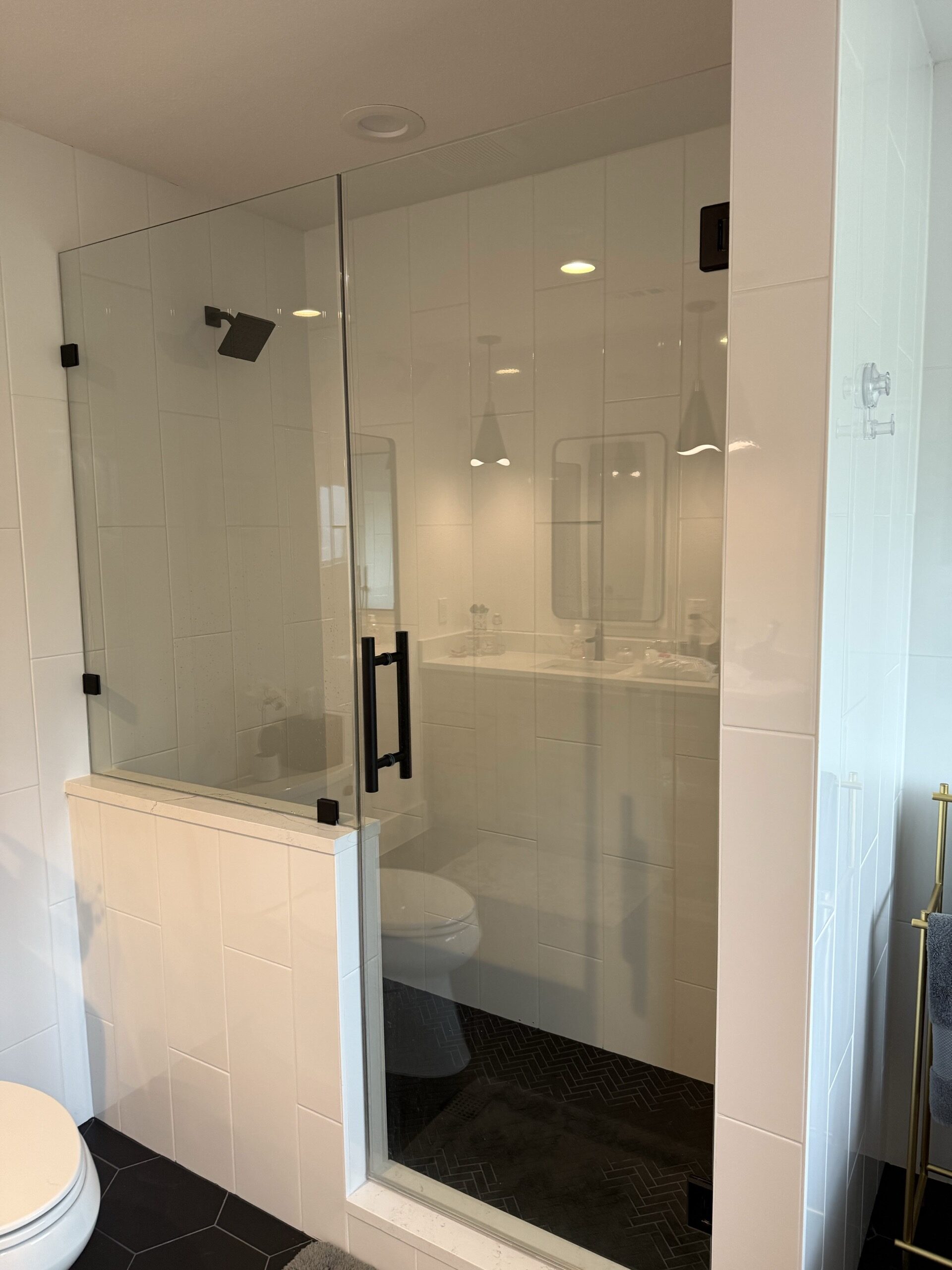
A recent Dallas shower repair we completed came in at $3,500. The scope was narrow: address the failing wet area, fix the cause, restore function. That number is not a “starter bathroom remodel.” It is a repair, and it solves a specific problem without rebuilding the room.
The remodel range starts higher and answers different questions. A meaningful Dallas bathroom refresh begins around $12,000 and a typical mid-range remodel lands between $22,000 and $35,000, with full primary-bath renovations running $38,000 to $58,000 and above. The gap between $3,500 and $22,000 is not finish quality. It is scope: a repair touches one system, a remodel rebuilds the room.
Homeowners run into trouble when they try to buy a remodel at repair pricing, or buy a repair when the room actually needs a remodel. The first produces a contractor who cuts corners on waterproofing, ventilation, and tile prep to hit the number, and those shortcuts surface within two years. The second leaves the homeowner with a beautiful new tile floor over a subfloor that was already failing. Knowing which project you are buying is the most important decision in the budget.
What Each Dallas Bathroom Budget Tier Actually Buys You
The three Dallas tiers are not arbitrary. Each one corresponds to a different decision about what gets touched.
At the $12,000 to $18,000 essential tier, the layout does not move. Plumbing rough-in stays where it is. The vanity is stock or entry-level semi-custom, the top is laminate or basic quartz, the shower or tub gets a surround update rather than a full rebuild, and the floor and lighting get refreshed. This tier exists for bathrooms with good underlying bones that simply look dated. If the room has hidden moisture damage or a failing pan, this budget cannot absorb the correction without sacrificing finishes.
The $22,000 to $35,000 mid-range tier is where most Dallas bathrooms land. The shower gets a custom tile build with a properly waterproofed pan, the vanity moves to semi-custom with soft-close drawers and a stone top, lighting and ventilation get upgraded together, and the fixtures are replaced as a set rather than piecemeal. Permit-required plumbing and electrical updates fit inside this tier as long as the layout does not change.
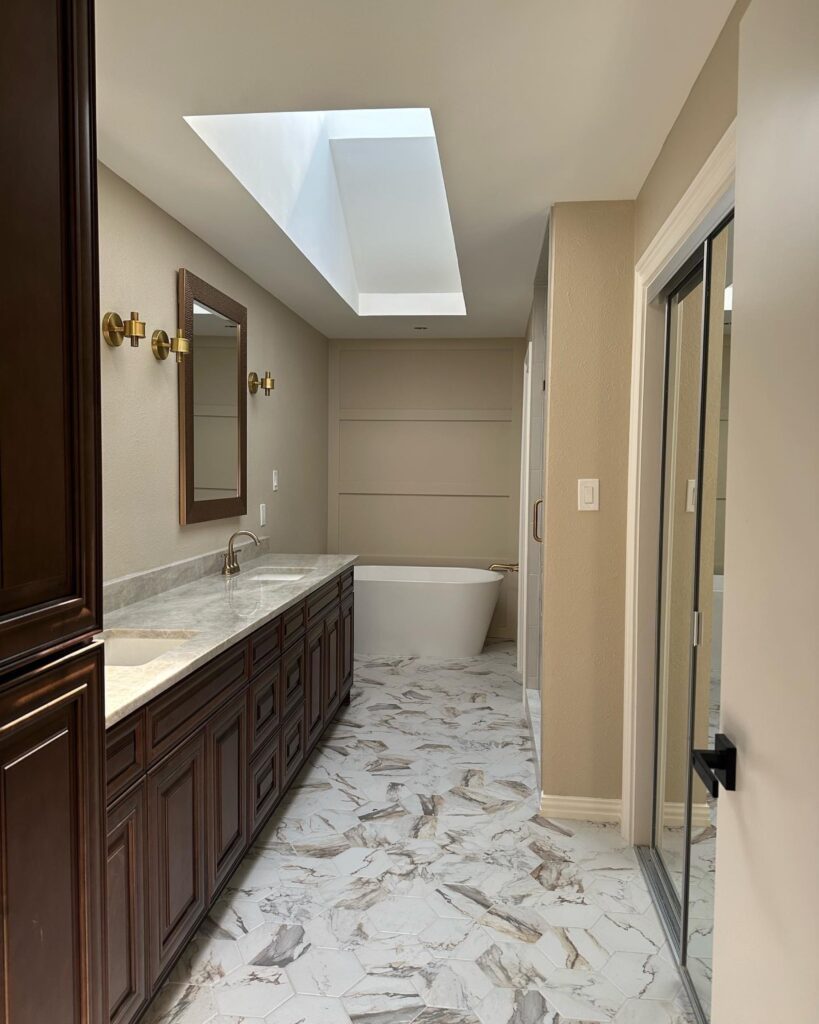
The $38,000 to $58,000 and above full-renovation tier is where the layout actually moves. The toilet shifts, the shower expands, the tub gets removed or relocated, a wall opens up, or the bath absorbs space from a closet or adjacent room. This tier carries custom cabinetry, premium tile and stone, frameless glass, and the kind of lighting design that requires a separate electrical plan. The cost is not driven by luxury finishes alone. It is driven by the structural and plumbing work that makes the new layout possible.
The Tub-to-Shower Conversion: A Specific Cost Swing
The most common scope change we see during Dallas bathroom estimates is the tub-to-shower conversion. It sounds like a finish decision. It is actually a $4,000 to $10,000 swing on the project.
Removing a standard alcove tub and replacing it with a tiled walk-in shower means rebuilding the drain location (the tub drain sits in a different spot than a shower drain), reframing the curb, sloping a new shower pan, expanding the waterproofing membrane up the walls, and adding a glass enclosure. The labor stack changes: more tile area, more waterproofing, more glass measurement and fabrication, and an extra plumbing trip to relocate the drain.
For a primary bathroom where the homeowner wants a larger walk-in shower and is willing to lose the tub, the conversion can transform the room. For a hall bath where the home only has one tub, removing it can hurt resale value, particularly for buyers with small children. The decision is part design, part real estate, and the cost difference deserves its own line on the estimate so the homeowner can see exactly what they are paying for.
Older Dallas Homes Spend Money You Cannot See
Bathroom remodels in older Dallas neighborhoods follow a different cost curve than remodels in newer construction. A 1930s Lakewood bungalow, a 1950s East Dallas ranch, and a 1990s North Dallas tract home present three different sets of conditions behind the tile.
In a pre-1960 home, the demolition phase commonly surfaces galvanized water lines that need replacing on the bath’s run, cast-iron drain stacks that have started to scale internally, knob-and-tube remnants in walls that have not been opened since the original build, and subfloor damage that is invisible until the toilet flange comes up. None of these are unusual. They are normal conditions in housing of that age. They also add $2,000 to $8,000 to the project once discovered, and a credible Dallas estimator should walk through these possibilities before the contract is signed, not after demo.
In a 1980s to 2000s home, the hidden costs are different. The plumbing is usually serviceable, but the original waterproofing under tile showers from that era was often thin and is now failing at the corners. A bathroom that looks fine can have soft drywall behind the tile near the shower curb, mildew behind the vanity wall, and a subfloor that is starting to delaminate at the toilet. These are smaller corrections individually, but they accumulate.
The implication for budgeting is straightforward: in a home built before 1970, hold back 10 to 15 percent of the bathroom budget for discovery work, and confirm with the contractor that the estimate explicitly notes what is included and what would trigger a change order. In a home built after 1990, hold back 5 to 8 percent. In either case, the contingency belongs in the budget conversation up front, not as a surprise mid-project.
The Four Line Items Dallas Homeowners Under-Budget
The total cost of a Dallas bathroom remodel rarely surprises homeowners by 50 percent. It usually surprises them by 10 to 20 percent, and almost always in the same four places.
Ventilation. The bath fan is the smallest visible component in the room and one of the most important. A cheap fan vented improperly will fog mirrors, peel paint, grow mildew at the ceiling, and shorten the life of every finish around it. A properly sized, quiet, humidity-sensing fan ducted to the exterior costs $400 to $900 installed. The bid that lists “vent fan” as a $150 line item is not buying the same product.
Shower glass. A standard framed glass enclosure runs $800 to $1,500. A semi-frameless setup runs $1,500 to $2,500. A true frameless enclosure with custom measurement, heavier glass, and minimal hardware runs $2,500 to $5,000, sometimes more if the opening is oversized or angled. Homeowners often see “glass” as one line and do not realize how wide that spread is.
Tile labor versus tile material. Material is what homeowners shop for. Labor is what they pay. Large-format porcelain, handmade tile with irregular edges, and slab-style shower walls all carry materially higher installation costs than standard ceramic subway tile. A $5 per square foot tile and a $15 per square foot tile can produce a $2,000 to $4,000 difference on the same shower because the labor scales with tile size, weight, and prep requirements.
Electrical work. Modern bathroom lighting plans (vanity sconces, recessed cans, a shower light, and adequate outlets at the right heights) frequently require a panel circuit beyond what the existing wiring supports. Adding a dedicated circuit and properly placed GFCI outlets runs $600 to $1,500 in most Dallas homes. Older homes with two-prong outlets or shared circuits land at the higher end.
How to Read a Bathroom Estimate Before You Sign
Most bathroom estimate disputes between homeowners and contractors are not about price. They are about what was included. A Dallas homeowner comparing two bids should look for the same handful of inclusions and exclusions on each one.
A complete bathroom estimate should separately show: demolition and disposal, plumbing rough-in (with any drain or supply line relocations called out as separate items), electrical work (with new circuits identified), waterproofing system specified by product, tile installation labor by area (shower walls, shower floor, bathroom floor, wainscot), vanity and counter as separate line items, plumbing fixtures (faucet, showerhead, valve, toilet, drain) with allowances or specified models, glass enclosure with measurement and installation noted, lighting fixtures with quantity and type, ventilation fan with CFM rating, paint, and a punchlist allowance.
What should be clearly excluded or flagged: any structural work that depends on what is found at demo, replacement of failed subfloor beyond a stated square footage, replacement of failed framing, mold remediation if discovered, and any work that requires opening walls outside the bathroom.
Two bids on the same Dallas project can differ by $8,000 while describing the same finished room. The difference is almost always in those exclusions: one bid quietly leaves out the waterproofing system upgrade, the new circuit, or the contingency for subfloor replacement, and the homeowner discovers the gap during construction as a change order. The cheaper bid is rarely the cheaper project.
The Repair-vs-Remodel Question Costs More Than You Think
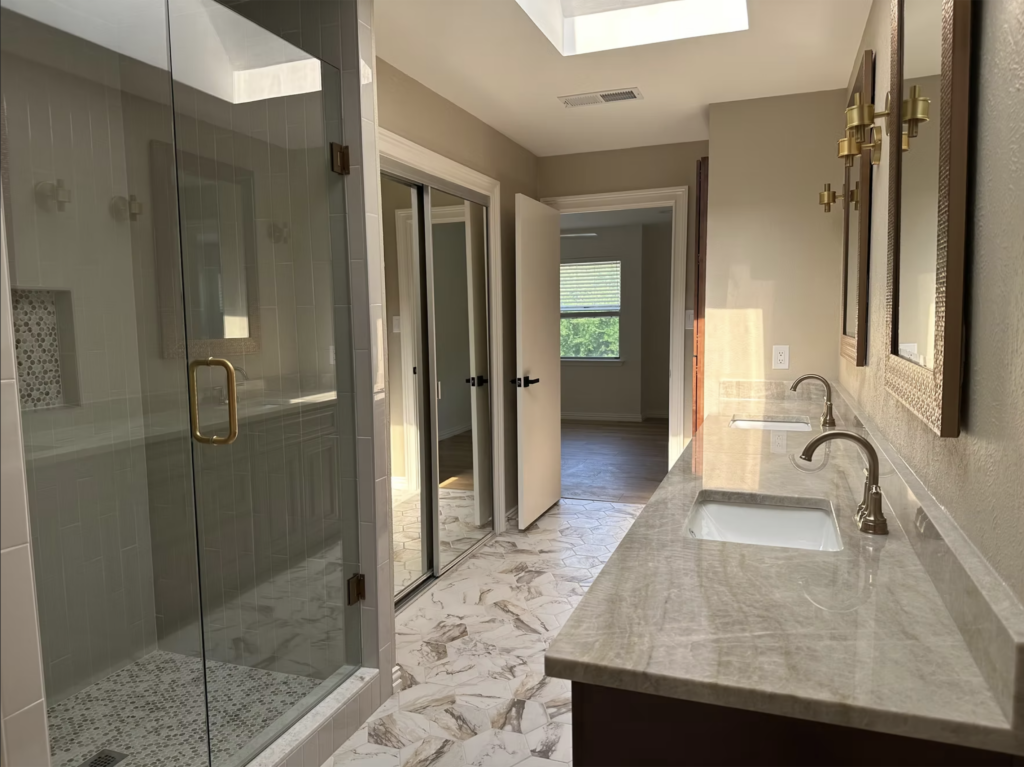
The bathrooms in Clay’s $104,000 Dallas home remodel were one part of a broader scope that touched multiple rooms. The number worked because the planning answered the hard questions before demolition. What was being rebuilt versus refreshed. Which fixtures were moving. What the contingency covered. Which finishes were locked before tile started. You can read the full project story on Clay Young’s Fin Home page.
That is the pattern across our Dallas bathroom work: the projects that finish on budget are the ones where the estimate was specific enough to argue with. The projects that drift are the ones where the bid was vague enough that everyone could read into it whatever they wanted. A Dallas bathroom remodel is a small room with a high number of decisions packed into it, and the room will tell the truth about every decision within six months of the final walkthrough.