How Much Does a Bathroom Remodel Cost in Dallas County? (2026 Guide)
Bathroom remodeling in Dallas County usually lands in the low five figures for a modest update and can rise well into the mid-to-high five figures for a primary suite with layout changes, custom tile, and upgraded plumbing fixtures. In 2026, a realistic planning range for many homeowners is about $12,000 to $30,000+, with smaller hall baths and powder rooms sometimes staying below that and more complex projects going above it.
Here is a simple pricing snapshot to help you frame the budget before you talk about finishes or fixtures.
| Project type | Typical 2026 budget range | What it usually includes |
|---|---|---|
| Small bathroom refresh | $6,700-$12,000 | Paint, vanity swap, toilet, basic lighting, limited tile, and minimal plumbing changes |
| Midrange full bath remodel | $12,000-$25,000 | New shower or tub surround, new tile, vanity, fixtures, flooring, and moderate plumbing updates |
| Primary bath / upscale remodel | $25,000-$30,000+ | Custom tile, premium fixtures, layout changes, waterproofing, and higher labor complexity |
For homeowners comparing local options, it helps to think in terms of scope first and finishes second. A bathroom that keeps the same layout, reuses most plumbing locations, and focuses on cosmetic upgrades will generally stay near the lower end. Once you move a shower, relocate a toilet, or open walls to address hidden issues, costs can climb quickly. For broader DFW pricing context, see the full Dallas-Fort Worth bathroom remodel cost guide.

Why Building in Dallas County Is Different
Dallas County remodel pricing is shaped by a few local realities that matter more than people expect. First, permits and inspections are often city-specific rather than countywide, so the process can vary depending on whether the home is in Dallas, Irving, Garland, Mesquite, Farmers Branch, or another municipality. That variation affects both schedule and soft costs.
Second, many older homes in Dallas County have legacy plumbing, aging electrical components, or venting that only becomes obvious after demolition. Once walls are opened, a “simple” bathroom project can turn into a repair-and-upgrade job. Third, access can affect labor productivity. Tight driveways, street parking limitations, and staging constraints in denser neighborhoods can slow deliveries and increase labor hours.
The climate matters too. High summer temperatures and humidity make ventilation, moisture control, and material selection especially important for long-term performance. Tile, grout, caulk, exhaust fans, and waterproofing details should be planned with Dallas County conditions in mind, not just looks. If you want a local contractor who understands those constraints, a Dallas County bathroom remodeling team can help you set realistic expectations before demolition begins.

Typical Project Cost Ranges
Most Dallas County bathroom remodels fall into one of three buckets: cosmetic refresh, midrange full remodel, or upscale primary bath renovation. The biggest price difference usually comes from how much of the room is being rebuilt rather than how much the finishes cost.
Small bathroom refresh: $6,700 to $12,000
A small hall bath or powder room update can stay relatively affordable if the layout remains unchanged. This kind of project often includes:
- New toilet and sink or vanity
- Fresh paint and trim
- Updated light fixtures
- New mirror and accessories
- Minor flooring replacement
- Small tile repairs or a simple backsplash
- Limited plumbing adjustments
At this level, homeowners are often trying to make the room clean, functional, and modern without opening the walls extensively. The project can move faster, and the risk of hidden-condition surprises is lower because fewer systems are disturbed.
Midrange full bath remodel: $12,000 to $25,000
This is the most common range for a full bathroom overhaul in Dallas County. It usually covers a room where the homeowner is replacing most visible finishes and at least some plumbing components. Typical items include:
- New vanity and countertop
- New sink and faucet set
- New toilet
- New flooring
- New shower tile or tub surround
- Waterproofing improvements
- Updated lighting and fan
- Moderate plumbing and electrical work
A midrange project often delivers the best balance of value and transformation. It can dramatically improve function and appearance without going into fully custom territory. Many homeowners choose this scope when the existing bathroom is dated, worn, or not well suited to the household’s needs.
Primary bath / upscale remodel: $25,000 to $30,000+
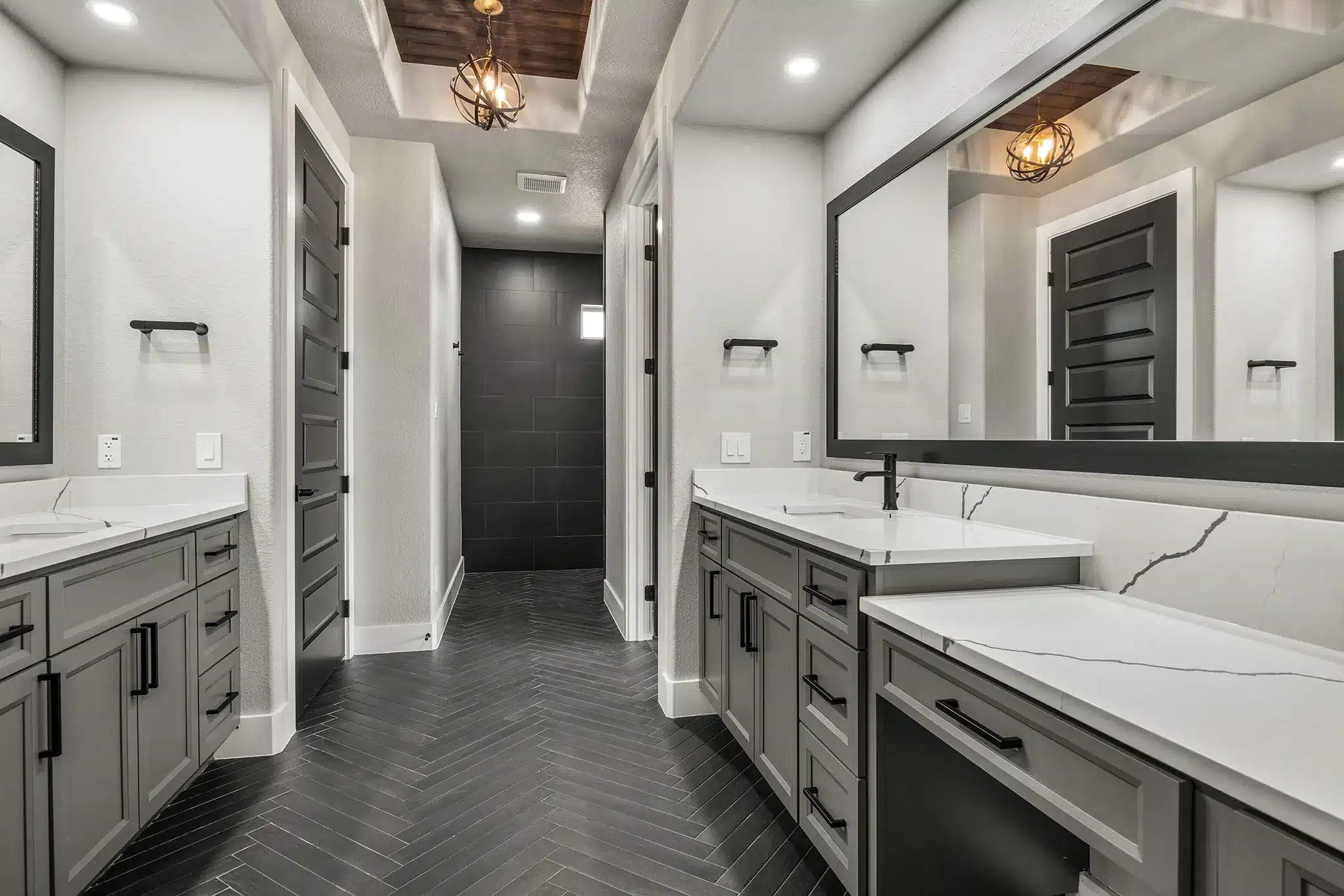
A primary suite remodel can cross into the $30,000+ range when it involves premium finishes, a custom shower, layout changes, and more complex labor. Common features include:
- Reconfigured shower and tub placement
- Large-format tile or specialty stone
- Custom vanity or double vanity
- Premium faucets and plumbing fixtures
- Built-in niches, benches, or storage
- High-end waterproofing and glass enclosures
- Electrical upgrades for lighting and comfort features
Projects in this category are often driven by comfort and design goals rather than pure replacement. The bigger the design ambition, the more likely the budget will include allowance for custom work, coordination, and contingency.
If you are comparing bathroom pricing with other projects in the home, it can be useful to look at a broader whole-house perspective too. A related home remodeling cost guide for Dallas County can help you understand how a bath remodel fits into total renovation planning. And if you are comparing bath scopes with kitchen scopes, the local kitchen remodeling cost guide can provide another benchmark.

Cost Per Square Foot and What It Includes
Bathroom remodel costs are often discussed in total project terms, but cost per square foot can still be helpful for comparing one Dallas County project to another. The challenge is that bathrooms are small, so the cost per square foot often looks high even when the total budget is reasonable.
For many bathroom remodels, a rough planning range can land around $250 to $600+ per square foot depending on the amount of demolition, plumbing relocation, tile work, and fixture quality. Smaller rooms can skew higher on a per-square-foot basis because fixed costs like labor mobilization, demolition, permit coordination, and inspection management are spread over fewer square feet.
What that square-foot number usually includes
A square-foot estimate is not just material cost. It typically blends several components:
- Demo and debris removal
- Framing or repair work
- Plumbing rough-in and final trim
- Electrical updates
- Wall board, cement board, or waterproofing substrate
- Tile labor and setting materials
- Fixtures, vanity, sink, faucet, toilet, and accessories
- Paint, trim, and finish carpentry
- Project management and scheduling
A bathroom with standard finishes but substantial labor can still cost more than a room with expensive materials but a simple layout. That is why a square-foot rate is best used as a directional tool, not a final bid. Two bathrooms of the same size may differ by thousands of dollars if one needs subfloor repair, concealed plumbing replacement, or a new shower configuration.
In Dallas County, square-foot pricing also needs to account for access and logistics. A second-floor bath, a tight hallway, or a home with limited staging space may require extra labor time that would not show up in a basic national average.

Main Factors That Change Total Price
Bathroom remodeling pricing is really a collection of smaller decisions. In Dallas County, the biggest cost drivers tend to be the same ones that influence remodels everywhere, but local conditions can amplify them.
1. Age and condition of the home
Older homes often reveal surprises after demolition. That may include deteriorated subflooring, outdated supply lines, old drain connections, venting issues, or electrical circuits that are not adequate for today’s fan-light-heater combinations. Even if those problems are not visible during planning, they can add several hundred to several thousand dollars once work starts.
2. Layout changes
Keeping fixtures in the same place is usually the most budget-friendly option. Moving a toilet, shower, or vanity can require new drain lines, additional framing, patching, and extra inspection coordination. A layout change can add $2,000 to $10,000+ depending on how much of the plumbing and electrical system needs to shift.
3. Finish level
Tile, countertops, cabinetry, plumbing fixtures, and glass all have wide price ranges. A basic ceramic tile and stock vanity can keep costs controlled, while porcelain slabs, natural stone, floating vanities, and custom glass can push the project upward quickly. Finish upgrades are often the easiest place for budgets to drift.
4. Waterproofing and moisture control
In Dallas County, moisture management matters because hot summers and bathroom steam can expose weak construction details. Better waterproofing under tile, quality backer board, properly detailed shower pans, and strong exhaust ventilation all add cost, but they also help protect the remodel over time. Spending more here is usually smarter than cutting corners.
5. Permitting and inspection complexity
Because permits and inspections are often handled by city rather than county, the schedule can vary by jurisdiction. Some remodels need straightforward review, while others require more detailed coordination. That complexity may add time for plan review, inspection scheduling, and correction cycles.
6. Access and staging
If workers cannot easily park, unload, or stage materials, labor productivity drops. In dense neighborhoods or homes with constrained driveways, a project can take longer than the same bathroom in a more open-access location. That does not always show up as a separate line item, but it can affect the final labor total.
These factors are also why comparing one quote to another requires looking beyond the bottom-line number. Two bids may both be “$18,000,” but one might include quality waterproofing, code-compliant upgrades, and a contingency allowance while the other excludes them.

Labor, Materials, and Trade-Level Costs
A bathroom remodel is built from several trade layers, and those trade costs often matter more than the decorative choices. In Dallas County, the balance between labor and materials will vary based on project scope, but labor-intensive work can quickly become the largest part of the budget.
Plumbing
Plumbing work often includes demolition-related corrections, rough-in changes, fixture setting, and final connections. If the project keeps the same layout, plumbing costs may stay in a more manageable range. If the layout changes or old pipes need replacement, costs increase. Licensed plumbing work is especially important when hidden defects are discovered after walls are opened, and regulated trade work should be handled by properly licensed professionals TDLR licensing and trade information. For a typical Dallas County bathroom, plumbing labor may run about $1,500 to $4,500, while a more complex reroute or full fixture move can push that portion to $5,000 to $8,000+.
Electrical
Bathroom electrical work may include new outlets, GFCI protection, vanity lighting, exhaust fan wiring, dedicated circuits, and controls for mirrors or comfort features. Older bathrooms sometimes need circuits brought up to current expectations. A simple fixture swap is not the same as a full electrical correction package, so bids should specify exactly what is included. In practical terms, electrical work often ranges from roughly $800 to $2,500 for a straightforward update, with more involved rewiring or added circuits reaching $3,000 to $5,000 or more.
Tile and waterproofing labor
Tile labor is one of the biggest variables in a bath remodel. Shower walls, shower pans, niches, flooring, and backsplashes all require careful prep. Large-format tile, intricate patterns, or custom cuts add labor hours. Waterproofing systems also add materials and time, but they are a critical part of protecting the room. A standard shower surround may account for about $2,500 to $6,000 in tile and waterproofing labor, while a custom shower with niches, benches, and specialty tile can easily reach $7,000 to $12,000+.
Cabinetry and vanity components
A stock vanity may be relatively affordable, but a custom or semi-custom vanity increases both material and installation cost. Double sinks, specialty storage, integrated lighting, and stone countertops can push the vanity portion of the budget upward. A basic vanity swap may be around $700 to $2,000 installed, while a custom or higher-end vanity package can land in the $3,000 to $7,000 range depending on size and countertop selection.
Materials and fixtures
Fixtures and finishes span a wide range:
- Basic toilet: lower hundreds
- Midrange toilet: several hundred dollars
- Premium toilet or smart feature set: well above that
- Standard faucet: modest cost
- Higher-end faucet or trim set: several hundred dollars
- Basic shower trim: lower hundreds
- Premium shower system: much more
The more custom the fixture selection, the more the project becomes a design-led remodel rather than a straightforward replacement. Because Dallas County homeowners often want a balance of durability and style, the best budgets are usually built around sensible midrange selections rather than the cheapest available products. As a rough planning guide, total materials for a small-to-midrange bath can run about $4,000 to $12,000, while upscale selections may exceed $15,000 before labor.
For homeowners comparing bath labor to other spaces, it can help to see how trade-heavy room projects stack up with broader remodel planning. The Dallas County bathroom remodeling service page is a useful starting point when you are ready to compare scope options directly with a contractor.

Permit, Design, and Planning Costs
The visible part of a bathroom remodel is only half the budget story. Soft costs are easy to overlook, but they can make a real difference in Dallas County, especially when the project involves more than a simple cosmetic update.
Permits and inspections
Permit costs vary by city and project scope, and in Dallas County the jurisdiction matters. A remodel in one city may have a different process than a comparable remodel elsewhere in the county. The City of Dallas, for example, provides its own building permit and inspection framework City of Dallas building permits and inspections, while county-level health and code context may also matter depending on the project and location Dallas County health and code information.
For planning purposes, homeowners should expect some combination of application fees, plan review fees, and inspection scheduling time. On many bathroom remodels, permit-related costs may land around $150 to $500 for a simpler job and $500 to $1,500+ for more involved work, depending on the city and scope. Even when the fees are not huge relative to the total budget, the administrative work can affect the project calendar.
Design and selection work
A bathroom remodel with custom finishes benefits from early design decisions. This may include:
- Measuring the existing room
- Confirming fixture locations
- Selecting tile, vanity, countertop, and plumbing finishes
- Identifying waterproofing details
- Creating a layout or rendering
- Coordinating lighting and electrical placement
If you make selections late, the project can slow down. If you make selections early, the contractor can order correctly and reduce change orders. Design time is not wasted time; it is how you prevent expensive mistakes later. Basic design assistance may be modest, but full planning and specification support can easily add $500 to $2,500+, and more detailed design packages or renderings may cost $2,500 to $5,000 or more.
Preconstruction and site investigation
It is often worth spending a little on preconstruction planning, especially in older homes. That may include opening a small area to inspect plumbing or electrical conditions, confirming venting, and determining whether the subfloor needs repair. These early checks can save money by reducing surprises after the bathroom is already torn apart. Small investigative work might cost a few hundred dollars, while more detailed preconstruction inspection and measurement support can total $300 to $1,000+.
Accessibility and code considerations
If the remodel involves accessibility goals, curbless shower details, grab bar backing, or wider clearances, those choices should be made during planning, not after demolition. Accessibility-related standards and regulated trade requirements should be reviewed before work begins TDLR licensing and trade information. Small planning mistakes in this phase can be expensive to fix later.

Timeline and Process Expectations
A bathroom remodel does not just have a cost; it has a schedule. In Dallas County, timing can be influenced by permit review, delivery windows, labor availability, and the discovery of hidden conditions.
Typical timeline
A straightforward bathroom remodel may take several weeks from demolition to final punch list. A simple refresh might finish faster, while a full bath with layout changes may take longer. If inspections are required at multiple stages or if material lead times stretch out, the schedule can extend further.
A practical sequencing model often looks like this:
- Planning and selection: 1 to 3 weeks
- Permitting and approval: 1 to 4+ weeks depending on jurisdiction
- Demolition: several days
- Rough framing, plumbing, and electrical: 1 to 2 weeks
- Waterproofing and inspection: several days to 1 week
- Tile and finish work: 1 to 2+ weeks
- Final trim, glass, and punch list: several days
That timeline can compress if everything is simple and materials are available, but it can also stretch if a shower pan fails inspection or concealed damage is discovered.
Why schedules slip
The most common schedule delays come from:
- Unapproved or late product selections
- Hidden plumbing or electrical issues
- Backordered tile, glass, or specialty fixtures
- Inspection rescheduling
- Change orders after demolition
- Access limitations that slow labor productivity
Homeowners often assume the construction phase is the only part that matters, but in reality the planning phase is what determines whether the project moves efficiently. Good scheduling is especially important in Dallas County because city-by-city permit handling can create different approval timelines.
What to expect during construction
Bathroom remodels are disruptive because the room is out of service for part or all of the project. Depending on the scope, you may lose access to the shower, sink, or toilet for days or weeks. If there is only one full bathroom in the home, temporary living arrangements or a phased construction plan may be necessary.
When you understand the process, the budget makes more sense. A project that includes inspection checkpoints, waterproofing, and proper curing time is usually safer than one that is rushed. That is true whether the remodel is in Dallas County, a nearby county, or a larger metro area like Tarrant County or Rockwall County.
How to Budget the Project Realistically
The best bathroom budgets are not built on optimism. They are built on allowances, contingency, and a clear decision about where to spend and where to save.
Start with a realistic base scope
The first step is to define whether the project is a refresh, a full remodel, or a primary bath renovation. Then identify what stays and what changes. Keep the existing layout if you want better cost control. Move plumbing only when the design benefit is worth the added expense.
Use a contingency allowance
A contingency of 10% to 20% is a practical baseline for bathroom remodeling, especially in older homes where hidden conditions are common. On a $15,000 remodel, that means keeping an additional $1,500 to $3,000 available. On a $25,000 remodel, it means $2,500 to $5,000. That money is not there to spend casually; it is there to protect the project from surprise conditions.
Build allowances for finish selections
Instead of saying “we want nice tile,” set a tile allowance. Instead of saying “we need a vanity,” set a vanity allowance. This helps prevent the budget from drifting as you shop. Common allowance categories include:
- Tile
- Vanity and countertop
- Plumbing fixtures
- Lighting
- Shower glass
- Mirrors and accessories
Decide what you will not compromise on
There are some areas where cutting cost can cause future problems. Waterproofing, fan performance, and plumbing quality are examples. In Dallas County’s hot, humid conditions, moisture control is not optional. If you save money by reducing waterproofing quality, you may pay more later in repairs.
Sequence upgrades if needed
If the full ideal remodel is too expensive right now, consider sequencing the project. For example, you might complete the bath in phases, address structural or plumbing needs first, and defer nonessential upgrades. That approach is not always the prettiest option, but it can make a bigger project achievable without overextending the budget.
Compare bids carefully
A lower bid is not automatically a better value. Look for whether each quote includes:
- Demolition
- Debris removal
- Waterproofing
- Permits
- Fixture installation
- Electrical and plumbing allowances
- Cleanup and punch list work
If one bid excludes items the others include, it may appear cheaper upfront but cost more in the end. Ask questions early so you can compare apples to apples.

When to Choose a Bathroom Remodeling Project in Dallas County
A bathroom remodel makes the most sense when the room is functionally outdated, visibly worn, or structurally inefficient. In Dallas County, it is especially worth considering when older plumbing, poor ventilation, or a cramped layout is hurting daily usability.
You may be ready for a remodel if:
- The shower leaks or has recurring moisture damage
- The vanity lacks storage or counter space
- The room feels dated and difficult to clean
- Fixtures are failing or difficult to maintain
- The layout no longer fits the household
- Mold, soft flooring, or water stains suggest hidden damage
- You want to improve resale appeal before listing the home
A remodel is also a smart move when you already need one expensive repair and can combine it with a broader upgrade. For example, if the shower pan must be rebuilt, it can be more efficient to update tile, ventilation, and fixtures at the same time instead of doing those projects separately.
If you are still deciding between a bath remodel and other improvements, compare the project with broader home priorities. A local whole-home remodeling guide can help you decide whether to tackle the bathroom now or fold it into a larger renovation plan. In some cases, the bathroom is the best place to begin because it has an outsized effect on comfort, function, and resale value.

Final Thoughts on Bathroom Remodeling in Dallas County
Bathroom remodeling in Dallas County is one of those projects where the final price depends less on the room’s size than on the scope hidden behind the walls. A simple cosmetic update may stay in the low five figures, while a full bath with tile work, plumbing changes, and premium finishes can move into the $25,000 to $30,000+ range.
The smartest way to plan is to start with layout, age of the home, and finish level. Then factor in local permitting, access, and moisture control. Dallas County’s city-by-city permit process, older housing stock, and hot-weather performance needs all affect both cost and schedule. That is why detailed planning matters just as much as design taste.
If you are ready to turn a dated bath into something better, use the numbers in this guide as a starting point and build from there. A well-planned remodel should give you a cleaner, more durable, and more comfortable bathroom without creating surprises you could have avoided. To get a local estimate tailored to your home, reach out to a qualified team that understands Dallas County bathrooms, permitting, and construction conditions, and start with a conversation around scope, budget, and timeline.
For broader DFW pricing context, see the full DFW cost guide.