Bathroom remodeling in Kaufman County usually costs more than a simple cosmetic refresh once you move beyond paint and fixtures, but it can still be more affordable than a major whole-home renovation. For 2026 planning, a useful starting point is:
| Project scope | Typical price range | Best fit |
|---|---|---|
| Hall bath cosmetic refresh | $10,000–$20,000 | Fixture swaps, paint, lighting, vanity replacement, limited tile work |
| Midrange full remodel | $20,000–$35,000 | New tile, vanity, toilet, shower/tub updates, moderate plumbing and electrical work |
| High-end primary bath | $35,000–$60,000+ | Layout changes, premium tile, custom cabinetry, upgraded finishes, and more labor-intensive scope |
Those ranges line up with common Dallas-area remodeling expectations and are a practical planning baseline for Kaufman County homeowners. A smaller powder room or hall bath can stay near the low end if the layout remains intact, while a primary bath with a custom shower, expanded storage, and plumbing relocation can move quickly into the higher range. If you want a broader regional benchmark, the DFW bathroom remodel cost guide is a good companion read, and if you’re comparing scope with another project type, our bathroom remodeling service page explains how we approach planning, selections, and build quality.

Why Building in Kaufman County Is Different
Kaufman County sits in the DFW orbit, but bathroom remodeling pricing is not identical to a central Dallas neighborhood. Labor demand still tracks the metro area, so you should expect suburban-market pricing rather than a deeply rural discount. At the same time, job logistics can vary more from one property to the next, especially on the county’s edge or in areas where contractor travel time, delivery timing, and subcontractor scheduling are less predictable.
Another important difference is permitting. Many bathroom remodels are not handled at the county level at all. Depending on where the home is located, permits may run through a city building department, an HOA review process, a utility district, or another local authority. A project in Forney may follow a different process than one in Terrell, Kaufman, or an unincorporated area. The official county site is useful for understanding the broader jurisdictional context, but the real permit path is often location-specific.
Older homes in the county can also create hidden costs once walls and floors are opened up. It is common to uncover old plumbing, inadequate venting, previous moisture damage, or substandard framing that must be corrected before the finish work can continue. That is one reason remodel estimates in Kaufman County can spread wider than expected, especially on homes that have not had a major bath update in 20 years or more.

Typical Project Cost Ranges
The easiest way to understand bathroom remodeling cost is to think in project bands rather than a single number. The size of the room matters, but the scope matters even more.
A hall bath refresh usually focuses on visible improvements and keeping the plumbing layout intact. That often means a new vanity, toilet, sink, faucet, mirror, lighting, paint, and possibly partial tile replacement. In Kaufman County, a project like that can often stay around $10,000 to $20,000 if the underlying structure is sound and the selections are mid-grade.
A midrange full remodel is where many homeowners land. This scope usually includes a new shower or tub/shower combination, updated tile, a new vanity, plumbing fixture replacement, and potentially some electrical upgrades. If the layout remains mostly the same, the budget may stay in the $20,000 to $35,000 range. If the homeowner wants better tile, upgraded plumbing fixtures, or more custom cabinetry, the total can climb within that band.
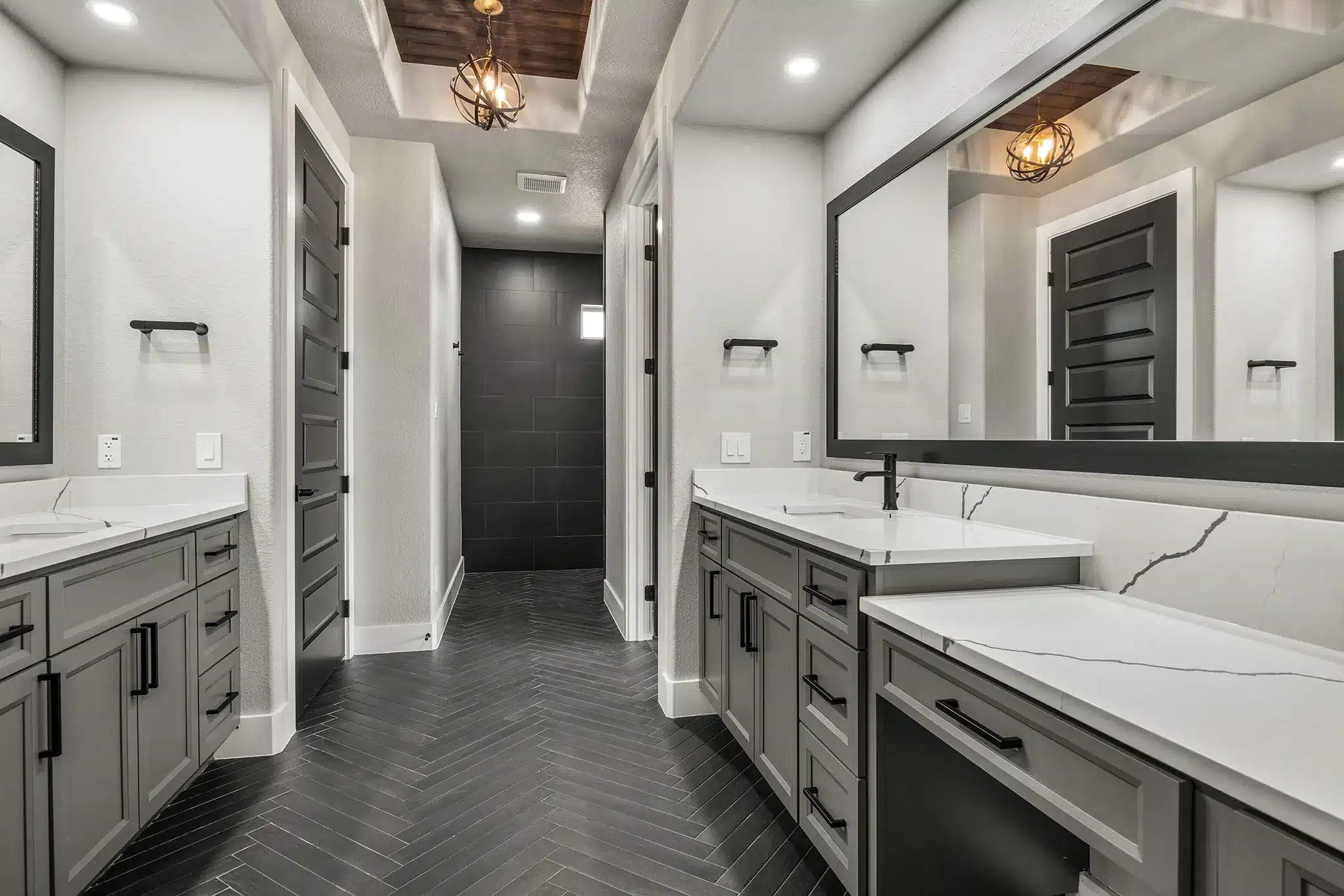
A high-end primary bath is the most expensive category because it combines more surface area, more labor, and more decision points. These projects often include custom showers with extensive tile work, double vanities, improved storage, upgraded lighting, and sometimes layout changes that shift walls or relocate plumbing. In the Kaufman County market, those remodels often land between $35,000 and $60,000+, and they can exceed that if the finishes are premium or the home requires significant corrections.
Here is a practical way to think about how scope affects cost:
- A powder room update may be inexpensive because there is little plumbing and minimal tile.
- A hall bath with the same footprint is usually more affordable than a primary bath because the fixture count is lower.
- A tub-to-shower conversion may cost more than a simple shower update because it changes waterproofing, framing, and tile scope.
- A full gut with layout changes is usually the most expensive because demolition, plumbing, electrical, tile, and inspections all increase together.
For homeowners comparing local projects, the cost patterns in neighboring areas are often similar enough to be useful context. You can also compare against bathroom remodeling costs in Wise County or bathroom remodeling costs in Brazos River if you are looking at how scope and geography affect pricing across different North Texas markets.

Cost Per Square Foot and What It Includes
Square-foot pricing is useful for quick planning, but bathroom remodels are not priced like simple flooring jobs. A tiny bathroom can have a very high per-square-foot cost because it still needs the same plumbing, waterproofing, ventilation, fixtures, and labor coordination as a larger room. That is why per-square-foot numbers should be treated as a rough guide, not a final quote.
For Kaufman County planning, a basic remodel may land around $250 to $400 per square foot when the work is mostly cosmetic and the footprint stays the same. A more complete midrange remodel can easily move into the $400 to $700 per square foot range because tile, labor, waterproofing, and finish quality start to dominate the budget. High-end baths with custom showers, premium materials, and layout changes can go well above that.
What does that square-foot number actually include?
- Demolition and haul-off
- Rough plumbing adjustments
- Electrical changes
- Framing corrections
- Backer board, waterproofing, and tile setting
- Vanity, sink, faucet, mirror, and lighting
- Painting and trim
- Finish plumbing and final punch list
It usually does not include every possible hidden repair. If the remodel exposes rotten subflooring, old cast-iron drain issues, or improper venting, those items become added scope. In other words, a square-foot estimate is most helpful when the bathroom is in decent condition and the design is already settled.
If your bathroom is small, the most important number is often not price per square foot but total project minimum. Even a compact room still has labor minimums for demolition, plumbing, tile work, and final trim. That is why a 40-square-foot hall bath may not cost half as much as an 80-square-foot bath.

Main Factors That Change Total Price
Several variables can move a bathroom remodel up or down by thousands of dollars, even if the room size stays the same.
1. Layout changes
Changing the layout is one of the biggest cost multipliers. Moving a toilet, relocating a vanity, or shifting a shower wall can add demolition, plumbing rerouting, framing, electrical changes, and more inspections. If you are not changing the footprint, costs stay much more predictable.
2. Shower and tub decisions
A standard tub/shower replacement is often cheaper than building a custom tile shower from scratch. A shower-tub conversion can become expensive if the drain needs to move or the waterproofing details become more complex. Glass doors, niche storage, bench seating, and curbless entries also increase cost.
3. Age of the home
Older bathrooms in Kaufman County may contain outdated plumbing materials, moisture damage, undersized venting, or weak subfloors. Once the walls are open, repair costs can rise quickly. This is why older homes often need a bigger contingency than newer subdivision properties.
4. Material grade
The difference between builder-grade and premium selections can be dramatic. A stock vanity and basic porcelain tile will cost far less than custom cabinetry, natural stone, designer fixtures, and large-format tile. Hardware, mirrors, and lighting also add up faster than many homeowners expect.
5. Permitting and inspection complexity
The more you change, the more likely permits and inspections become part of the process. That can add soft costs, coordination time, and design revision time. Because bathroom rules vary by city and jurisdiction, a remodel in one part of the county may follow a different process than a similar project elsewhere.
6. Site access and logistics
Rural and edge-of-metro properties can create extra cost through travel time, delivery timing, and subcontractor scheduling. If materials are delayed or the site is harder to access, the schedule can stretch and the labor budget can rise.
The takeaway is simple: two bathrooms with the same size can have very different prices depending on how much of the existing room is being reworked. For planning, the safest approach is to define the scope first and then price the project around that scope.
Labor, Materials, and Trade-Level Costs
Bathroom remodels are labor-intensive because several trades usually need to work in a coordinated sequence. That is one reason labor can represent a large share of the total budget, especially in a market like Kaufman County where DFW-area demand influences pricing.
Plumbing is one of the most important cost drivers. For a typical bathroom remodel, a straight fixture swap may run about $500 to $1,500, while a shower valve replacement or modest drain adjustment can land around $1,500 to $3,500. If the job includes a toilet move, new supply lines, or a full drain reroute, plumbing often rises to $3,000 to $7,500 or more. You should expect licensed trade work for these tasks. Texas plumbing compliance matters here, and the Texas State Board of Plumbing Examiners is the right authority for understanding why properly licensed plumbing work is not optional. Labor for these tasks is not just about installing fixtures; it also includes testing, code compliance, and coordination with the rest of the remodel.
Tile labor is another major category. A simple tub surround may cost about $1,500 to $3,000 in labor, while a fully tiled shower with custom niches, sloped shower pans, waterproof membranes, and detailed cuts can run $4,000 to $8,000+ in labor alone. Material cost can also vary widely. Ceramic tile may be budget-friendly, but porcelain, marble-look tile, or specialty mosaics can increase both material and installation labor.
Electrical work can add a meaningful amount when lighting is upgraded, outlets are moved, or a fan/vent combination is replaced. A basic lighting and fan update may be around $400 to $1,200, while a more involved bathroom electrical package with new circuits, multiple fixtures, or added GFCI outlets can reach $1,500 to $3,000. Bathroom ventilation is not just a comfort item; it is a moisture-control requirement that affects longevity and code compliance. Guidance from the International Code Council is useful here because ventilation and moisture management are central to successful bathroom remodels.
Material categories that often move the budget include:
- Vanity and countertop, often $800 to $4,000+ depending on size and custom features
- Shower door and glass, often $900 to $2,500+
- Tile and grout, often $2 to $20+ per square foot for materials depending on selection
- Waterproofing system, often $300 to $1,200+ in materials
- Faucet and plumbing trim, often $250 to $1,500+
- Toilet, often $250 to $900+
- Lighting fixtures, often $100 to $800+
- Exhaust fan, often $100 to $400+
- Paint, trim, and hardware, often $200 to $1,000+
Labor can also vary by finish level. A basic remodel with standard fixtures and a straightforward layout may be relatively efficient to build. A higher-end project with custom details, niche tile patterns, and multiple trade revisions may require more hours from each subcontractor. That is one reason the jump from midrange to premium often feels disproportionate.

Permit, Design, and Planning Costs
Soft costs are easy to overlook because they do not show up as a shiny visible part of the bathroom, but they matter a lot for budget accuracy.
Design work may be minimal on a straightforward refresh, but it becomes more valuable as the project gets more complex. A simple layout and finish plan may only require a few hours of measurement and selection time, while a full remodel with drawings, fixture coordination, and scope clarification can involve $500 to $2,500 in design-related effort. Even a modest remodel benefits from measuring, fixture selection, finish coordination, and a clear scope document. If you are changing the layout, the design phase should be treated as part of the real budget, not as an optional extra.
Permit costs vary by jurisdiction. In Kaufman County, the right authority may be a city office rather than the county itself. Permit fees for a bathroom remodel may be around $100 to $500 for a straightforward project, while a more complex scope with plumbing, electrical, or structural review can push fees to $500 to $1,500+ depending on the municipality and scope. Forney is a good example of how local process can matter, because city building departments can have their own forms, review timing, and inspection expectations. That means you should not assume one county-wide permit rule applies to every property.
Planning costs can include:
- Measuring and field verification, often $150 to $500
- Preliminary design or layout drawings, often $300 to $2,000
- Permit application fees, often $100 to $1,500+
- Engineering or structural review if needed, often $500 to $2,500+
- Fixture selection time
- Material ordering and lead-time planning
For a simple bathroom refresh, planning may be light and permit needs may be limited. For a full remodel with plumbing changes, venting changes, or framing work, those soft costs can become a meaningful part of the total. The more changes you make behind the walls, the more you should budget for preconstruction.
A good rule is to reserve enough time and money for decisions before demolition begins. That reduces the risk of delays, backorders, and costly mid-project changes. If you want to compare how bathroom planning fits within a larger whole-home budget, our DFW bathroom cost guide and our Kaufman County bathroom remodeling service page are helpful references for overall scope planning.

Timeline and Process Expectations
Bathroom remodels move faster than whole-house projects, but they still involve several phases that must happen in order. The more complicated the bathroom, the more the schedule depends on inspections, material availability, and trade coordination.
A straightforward remodel may take about 2 to 4 weeks of field time. That assumes the layout is staying the same, materials are on site, and no major hidden repairs appear after demolition. A full gut with custom finishes and inspections often stretches to 6 to 8+ weeks, especially when tile or glass lead times slow the final stages.
A typical sequence looks like this:
- Demolition and debris removal
- Framing and subfloor repair, if needed
- Rough plumbing and electrical
- Inspection, if required
- Waterproofing, backer board, and shower preparation
- Tile installation and finish carpentry
- Painting, vanity install, and trim
- Finish plumbing, lighting, and hardware
- Final punch list and cleanup
Each of those steps can pause the next one if a permit inspection is required or if a material is missing. In Kaufman County, schedule variability can be greater on rural or edge-of-metro jobs because contractor availability and delivery timing can be less predictable than in denser urban areas.
Homeowners should also account for lead times before construction starts. Custom vanities, specialty tile, shower glass, and some plumbing fixtures may take several weeks to arrive. A remodel that is properly planned often feels faster because it avoids waiting on decisions after the work begins.

How to Budget the Project Realistically
A realistic bathroom budget starts with scope clarity and a contingency cushion. The first question is not “How much does a bathroom cost?” but “What exactly is included?” A vanity swap with fresh paint is a very different budget than a full reconfiguration with a custom shower.
A 10% to 20% contingency is a practical allowance, especially in older Kaufman County homes where hidden water damage, outdated plumbing, or subfloor repair may not become visible until demo starts. If your budget is $25,000, that means a realistic planning range might be closer to $27,500 to $30,000 once you include contingency.
Here are a few ways to budget more accurately:
- Decide whether the layout stays the same.
- Separate must-haves from wish-list items.
- Get realistic about tile and fixture finish levels.
- Set aside money for waterproofing and ventilation upgrades.
- Plan for permit fees and inspection-related delays.
- Choose materials before demolition whenever possible.
It also helps to sequence the project around your household needs. If there is only one full bathroom, a longer remodel can be disruptive, so you may need to spend more on scheduling efficiency or temporary accommodations. If the bathroom is secondary, you may have more flexibility on timing and selections.
Financing should be part of the plan as well. Some homeowners pay cash from savings, while others use home equity or other financing methods. The right choice depends on the size of the project and how quickly you want to complete it. In either case, a defined budget and a contingency reserve reduce stress once work begins.
You can also think about budget allocation in percentages:
- 30% to 40% for labor
- 25% to 35% for materials and fixtures
- 10% to 20% for contingency
- Remaining share for design, permitting, and project management
Those percentages will vary by project type, but they give a helpful mental model for keeping the total from drifting upward without notice.
When to Choose a Bathroom Remodeling Project in Kaufman County
A bathroom remodel makes the most sense when the current room is either functionally outdated or failing to meet your daily needs. In Kaufman County, that often means one of four things: the bathroom is worn out, the layout is inefficient, the finishes are old enough to hurt resale value, or moisture issues are showing up in the room.
You should strongly consider remodeling if:
- The shower or tub is leaking or damaged.
- The room has poor ventilation and recurring moisture issues.
- The vanity and storage no longer work for your household.
- The tile, flooring, or fixtures are past their useful life.
- You want to improve accessibility, comfort, or resale appeal.
It is also worth thinking about the larger home context. If you are planning multiple upgrades, a bathroom remodel may fit naturally alongside other work. For example, if you are also considering broader interior improvements, home remodeling in Kaufman County can help you compare priorities. If the kitchen is on your list too, kitchen remodeling in Kaufman County is a useful point of comparison because kitchens and baths often compete for the same budget dollars.
For homeowners building a long-term plan, bathroom remodeling can be one of the best value-improvement projects because it combines daily livability with broad market appeal. A well-executed bath does not need to be oversized or luxurious to feel high quality. Good layout, solid ventilation, durable materials, and clean tile work make a big difference.

Final Thoughts on Bathroom Remodeling in Kaufman County
Bathroom remodel pricing in Kaufman County is shaped by the same core factors that drive costs across the DFW market: labor, material selection, layout complexity, and hidden repair risk. But local conditions matter too. City-by-city permit differences, older-home surprises, and edge-of-metro logistics can all affect the final number.
For most homeowners, the best planning mindset is to start with a realistic band: $10,000 to $20,000 for a cosmetic refresh, $20,000 to $35,000 for a midrange full remodel, and $35,000 to $60,000+ for a high-end primary bath. From there, refine the estimate based on whether the layout changes, whether plumbing moves, and whether the home has older conditions that need correction.
If you are ready to turn a rough budget into a real plan, a detailed walkthrough of your bathroom is the next step. The goal is to understand the room’s existing condition, confirm the scope, and build a cost structure that fits your home and your timeline. For a project in Kaufman County, that local planning step matters just as much as the materials you choose.