Cost to Remodel Your Home in McKinney (2026 Guide)
A McKinney remodel can be as simple as fresh paint, new fixtures, and flooring in a few rooms, or as involved as a full-house renovation that changes layout, updates systems, and reworks the way the home functions every day. The right number depends on scope, finish level, timing, hidden conditions, and whether the work affects plumbing, electrical, or structural details.
For homeowners trying to set a realistic budget, the biggest mistake is treating “remodel” like one generic price. A $25,000 refresh and a $250,000 reconstruction are both remodels, but they solve very different problems. In McKinney, that spread is especially important because some homes are newer and easy to update while others sit in older neighborhoods with more hidden work, more trade coordination, and more decision points.
This guide breaks those costs into practical planning ranges, then explains how labor, materials, permits, allowances, and schedule pressure shape the final number. If you want a city-to-city benchmark first, the broader Home Remodeling Cost in DFW guide is a helpful reference, and Fin Home’s McKinney home remodeling page is the best local starting point when you are ready to compare options.

McKinney home remodeling costs at a glance
The fastest way to think about a remodel is by scope bucket. Most projects fit into one of a few planning bands, even if the final estimate lands a little above or below the midpoint.
| Remodel scope | Typical McKinney budget range | What it usually includes | Typical timeline |
|---|---|---|---|
| Cosmetic whole-home refresh | $15,000 to $45,000 | Paint, lighting swaps, hardware, modest flooring updates, minor trim work | 2 to 6 weeks |
| Kitchen-focused remodel | $45,000 to $120,000 | Cabinets, countertops, backsplash, appliances, lighting, and possible layout changes | 6 to 12 weeks |
| Bathroom-focused remodel | $20,000 to $60,000 | Tile, vanity, plumbing fixtures, shower or tub replacement, ventilation, lighting | 3 to 8 weeks |
| Midrange whole-home remodel | $100,000 to $180,000 | Multiple rooms, flooring, paint, kitchen or bath updates, selective plumbing or electrical work | 2 to 4 months |
| Major structural remodel | $180,000 to $300,000+ | Wall removal, layout changes, system upgrades, possible additions or major reconfiguration | 3 to 6 months |
A broad national baseline for home remodeling often lands somewhere between about $25 and $250+ per square foot depending on scope, while many midrange whole-home projects sit around $100 to $150 per square foot. That range is useful for planning, but it only becomes truly meaningful once you know how much of the house is changing and how deeply the work reaches into the home’s systems.
For example, a 2,000-square-foot home that only gets cosmetic updates may cost much less than a smaller home that requires custom cabinetry, new plumbing runs, and structural changes. Remodeling is driven by scope density, not just square footage.

Why building in McKinney is different
McKinney is a market where the age and style of homes can vary a lot from one neighborhood to another. Some areas have newer houses that can be refreshed efficiently, while others contain older homes with more opportunities for hidden issues, older finishes, or outdated systems. That variation makes McKinney remodeling budgets less predictable than a one-size-fits-all estimate might suggest.
Another reason the city matters is pacing. In a growing North Texas suburb, contractors, suppliers, and inspectors can all have fuller calendars during active seasons. That can affect cabinet lead times, start dates, and how long it takes to get trade crews back on site after rough-in work. A good budget in McKinney should therefore include both a money cushion and a schedule cushion.
The permit side also deserves attention. For remodels that alter structure, add square footage, or touch plumbing, electrical, or mechanical systems, the plan-review stage is part of the cost picture even if it does not show up as a glamorous line item. When the work is straightforward and the application is complete, review can move quickly; when it is more complex, the process naturally takes longer.
This is why two McKinney projects that look similar on paper can feel very different in practice. One might be a mostly cosmetic interior refresh. Another might require rerouting plumbing, adjusting framing, and coordinating several inspections before the final finish work can even begin.

What a McKinney remodel costs by scope
Once you know the project type, the budget becomes easier to frame.
A cosmetic refresh is the least expensive way to remodel a home and usually runs from about $15,000 to $45,000. That range can cover interior paint, a few new light fixtures, updated hardware, and modest flooring replacement in selected rooms. It is often the right choice when the home still functions well but looks tired or dated.
A partial or room-heavy remodel tends to land between $50,000 and $120,000. This is where kitchen upgrades, bathroom work, and some flooring or trim changes begin to stack together. Once cabinetry, countertops, tile, and plumbing labor enter the picture, the budget rises much faster than many homeowners expect.
A midrange whole-home remodel generally falls around $100,000 to $180,000. That type of project may include multiple room updates, new flooring throughout, kitchen and bath refreshes, paint, lighting, and selective mechanical or electrical work. The final total depends on how many rooms are touched and whether the layout stays the same.
A major structural remodel begins around $180,000 and can move above $300,000 when walls, systems, or square footage are being changed. At that level, the project is no longer just cosmetic. It is closer to a rebuild of the home’s functionality, even if the shell remains in place.

Room-by-room cost breakdown
Room-by-room thinking is useful because each part of the home carries a different cost profile. Kitchens and bathrooms are usually the most expensive rooms relative to their size because they require more trades and more finish precision.
Kitchen remodel costs in McKinney
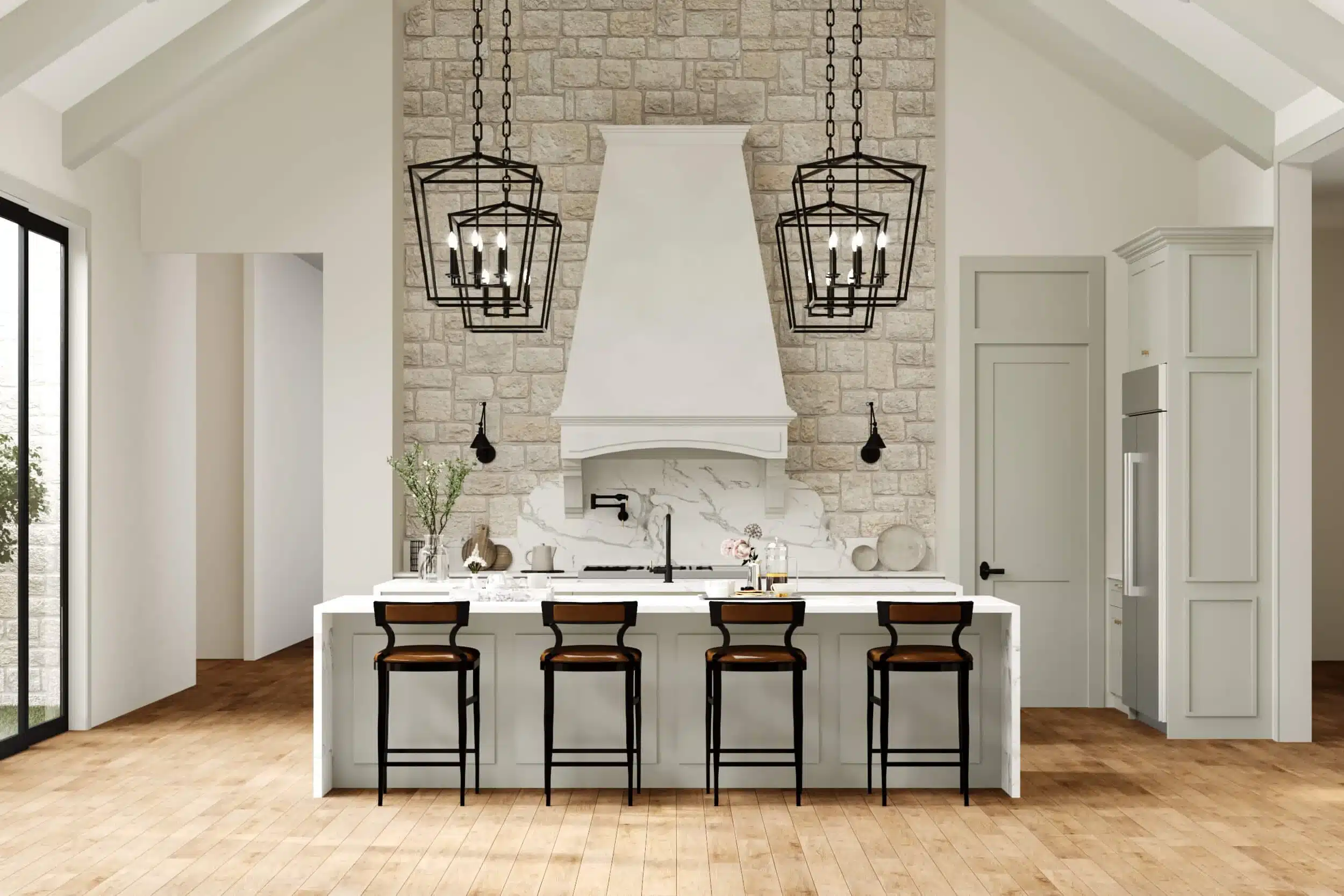
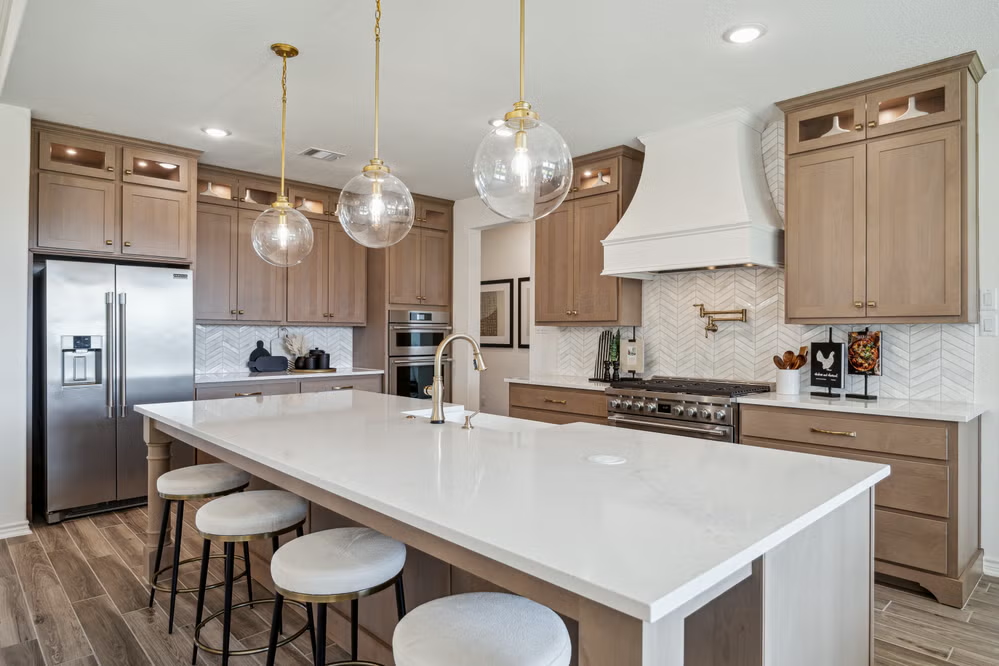
The kitchen is often the biggest single line item in a remodel because it combines cabinetry, counters, lighting, plumbing, electrical, appliances, and finish detail. A midrange McKinney kitchen remodel commonly falls around $45,000 to $85,000, while a larger or more custom build-out can easily reach $100,000 or more.
Cabinetry can take roughly 25% to 35% of a kitchen budget. On a $70,000 kitchen, that means $17,500 to $24,500 may go to cabinets alone. Countertops often add another several thousand dollars depending on material and square footage. Appliances can range from about $5,000 to $20,000+, depending on whether the homeowner chooses standard replacements or premium, panel-ready, or professional-grade equipment.
A kitchen is also where layout decisions can make or break the budget. If the sink, range, and refrigerator stay in roughly the same locations, the project is usually more efficient. If those elements move, plumbers and electricians have more work, inspections become more important, and the schedule usually gets longer.
Bathroom remodel costs in McKinney
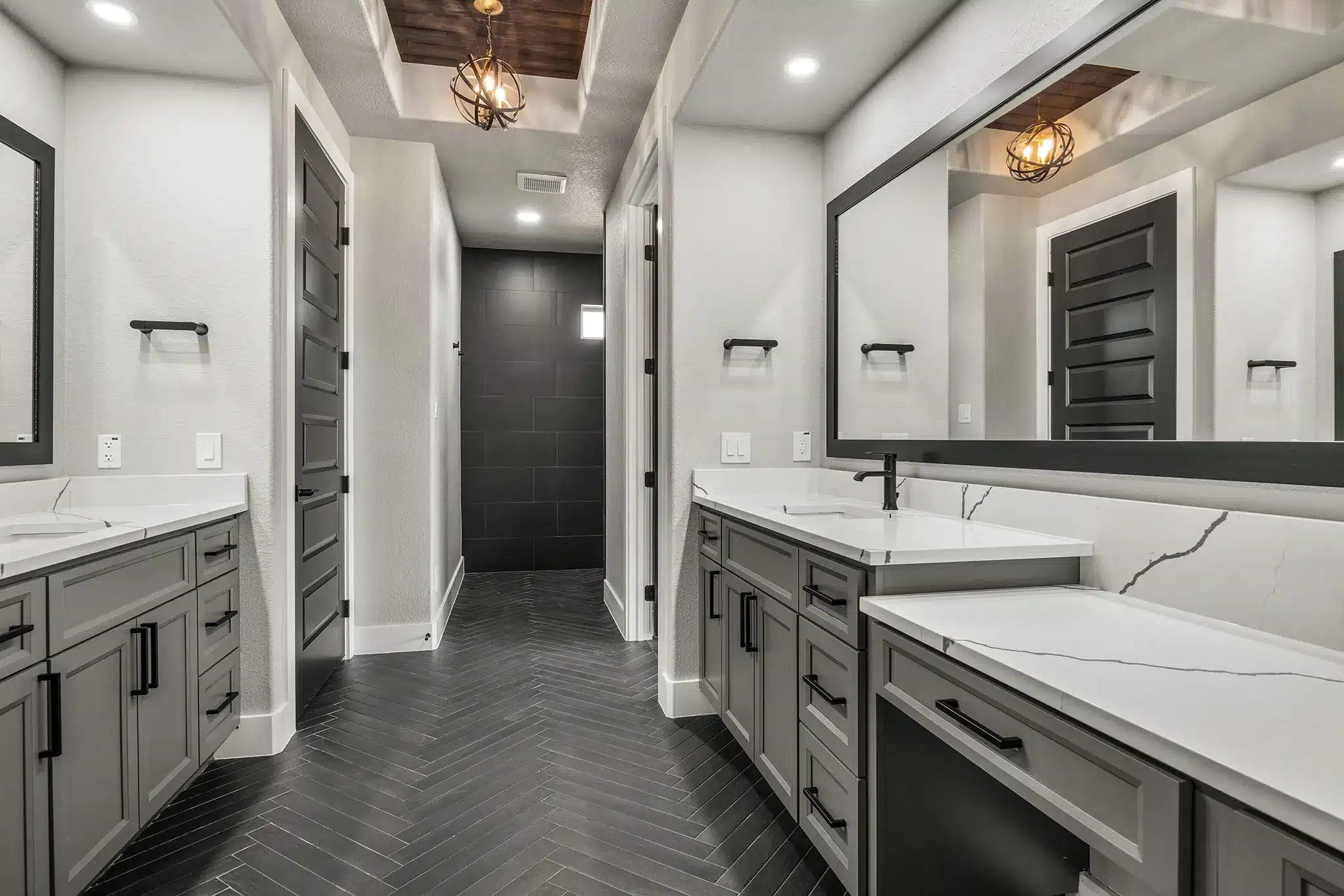
Bathrooms are smaller than kitchens, but they can be cost-dense because the work involves waterproofing, tile, plumbing, and ventilation in a tight footprint. A hall bath remodel in McKinney may fall around $20,000 to $40,000, while a primary bath can land in the $30,000 to $60,000+ range if the design includes upgraded tile, a larger shower, higher-end fixtures, or a custom vanity.
A fixture allowance of $1,500 to $8,000 per bathroom is a useful planning tool. That can cover toilets, faucets, shower valves, mirrors, accessories, and parts of the vanity package. Add custom glass, heated floors, or premium tile, and the number climbs.
Bathrooms also tend to require close coordination among framing, plumbing, tile, and finishing trades. If the project moves drain locations or changes the shower footprint, the work can quickly become more involved than a simple cosmetic swap.
Whole-home remodel costs in McKinney
A whole-home remodel is really a set of smaller projects running together under one schedule. For a midrange project, a useful planning range is about $100 to $150 per square foot. That can cover a significant refresh of multiple rooms without the project becoming a full structural overhaul.
For example, a 2,200-square-foot McKinney home that receives new flooring, paint, a kitchen update, and one or two bathroom improvements might land somewhere in the $220,000 to $330,000 zone depending on finish level and hidden conditions. The same house with only cosmetic updates would obviously cost less.
The lesson is simple: the square footage matters, but the density of the work matters more. A house with several heavily remodeled rooms will cost more than one with the same size but only one major upgrade area.
Exterior and mixed-scope remodels
Some homeowners plan an interior remodel and add an exterior refresh at the same time. That may include siding touch-ups, new windows, an updated front entry, or exterior paint. Mixed-scope work can be efficient because the contractor mobilizes once, but it also adds complexity and timing constraints.
A moderate exterior update can add $20,000 to $80,000 or more, depending on house size and product choice. If that work is paired with an interior renovation, the total can grow quickly because weather, protection of finished surfaces, and sequential scheduling all matter. The project becomes less about one room and more about coordinating multiple systems and scopes without causing rework.
Labor, materials, and trade sequencing
A remodel’s visible materials may grab attention, but the budget often lives in the labor behind them. Homeowners see the finished cabinets and tile; the contractor sees the framing, rough-ins, inspections, and sequencing required to make the result possible.
On a significant interior remodel, labor can represent roughly 40% to 60% of the budget. That share rises when the project includes custom work, occupied-home constraints, or multiple small scopes that each need specialized crews. Labor also becomes more expensive when schedules compress because the contractor must coordinate more tightly across trades.
Electricians and plumbers are especially important cost drivers when the design changes layout. Moving a dishwasher, adding island power, relocating a toilet, or shifting a shower valve all add work. So do any changes that require new circuits, panel upgrades, or more complex code compliance.
Materials also influence labor. Larger-format tile requires flatter substrate and more careful installation. Custom cabinets typically need longer lead times and more exact fit-up than stock products. Premium flooring may look better, but it can require more preparation and more precise finishing around trim and transitions.
The best way to think about sequencing is to view the project in three layers. First is demolition and protection. Second is rough-in work, including framing, plumbing, electrical, and any structural tasks. Third is finish work, such as cabinets, paint, tile, flooring, trim, and fixtures. If one layer slips, the others usually slip too, and that is why efficiency matters as much as the price tag.
If you want a local team to manage that sequence carefully, Fin Home’s McKinney home remodeling page is a useful starting point. And if you are comparing what this sort of project looks like in other North Texas markets, the Frisco home remodeling page can provide a helpful local comparison.
One more budgeting issue worth noting is project phasing. Some homeowners try to tackle the entire house at once, while others split the work into two or three stages to control cash flow. Staging can make sense when one part of the home needs to stay usable while another part is under construction. It can also reduce the strain of temporary living arrangements. But phasing may slightly increase total cost because crews mobilize more than once and some materials need to be ordered or protected for longer.
The more the project overlaps with your daily life, the more valuable clear sequencing becomes. For example, if the kitchen will be out of service, many families plan a temporary prep zone with a microwave, sink access, and a limited appliance setup. That temporary arrangement may not sound like a cost item at first, but it often affects how long the project feels and how smoothly the work can proceed.
These small logistical details do not change the scope on paper, yet they influence the real-world experience of remodeling. That is why a detailed estimate and a realistic construction schedule are both so important before work starts.

Permits, plan review, and inspections in McKinney
Permit timing is one of the easiest parts of a remodel to overlook and one of the easiest ways to create a delay if it is not handled early.
In McKinney, the most permit-sensitive remodels are the ones that alter structure, change square footage, or touch mechanical systems, plumbing, or electrical work. Cosmetic updates may be simpler, but once walls move or systems change, the project should be planned around approvals and inspections.
That matters for both cost and schedule. A well-run project accounts for the time it takes to submit drawings, review the plan, make any corrections, and receive the green light to proceed. Depending on the exact project type and completeness of the submission, permitting can be a matter of days or a few weeks.
A practical McKinney remodel budget should assume that any of the following can trigger more administrative work:
- wall removal or reconfiguration
- kitchen or bath plumbing relocation
- new lighting circuits
- HVAC or ventilation changes
- addition of square footage
- structural opening enlargement
When the remodel is only cosmetic, permit impact may be lighter. But once the project starts affecting the hidden systems of the home, the schedule gets more sensitive. That is why contractors often build a plan that separates design, permitting, rough-in, and finish work rather than trying to treat everything as one combined stage.

Cost drivers that push budgets up or down
Two remodels in the same neighborhood can have very different totals because the details are different. A few major cost drivers account for most of the spread.
1. Layout changes
Keeping the existing floor plan is usually the least expensive approach. Once walls, doors, appliances, or plumbing fixtures move, the project begins to require more trades and more labor. That can be worthwhile when the old layout is inefficient, but it should be treated as a major budget factor.
2. Finish selection
A project using standard finishes can stay near the middle of the pricing range. But once the homeowner upgrades to premium cabinets, stone counters, custom tile, or designer fixtures, the cost climbs quickly. A floor that costs $5 per square foot installed and a floor that costs $12 per square foot installed may look like a modest difference on paper, but across an entire house it becomes meaningful.
3. Hidden conditions
Open up a wall or floor and you may find old wiring, previous patchwork, plumbing issues, or structural repairs that were not visible at estimate time. That is why contingency allowances of 10% to 20% are standard on larger remodels. It is not pessimism; it is realistic planning.
4. Trade density
Rooms that need more trades cost more to build out. Bathrooms and kitchens are the best examples because they require plumbing, electrical, finish carpentry, tile, paint, and often drywall repair. The more trades that must coordinate in one space, the more expensive the project tends to become.
5. Schedule pressure
If the homeowner wants the project completed faster than usual, costs can rise. Premium scheduling, urgent material ordering, and overtime all affect the bottom line. In a growing market like McKinney, speed can be especially valuable during busy seasons when multiple projects are competing for the same crews.
6. Occupied-home constraints
A remodel in a home that is still occupied is more complicated than an empty-site project. Crews may need dust barriers, temporary kitchen setups, extra cleaning, protected pathways, and tighter working hours. Those constraints do not always appear as one obvious fee, but they influence labor efficiency.
If you want to control budget creep, the key question is not “How can I make this cheaper?” It is “What must change for the home to work better, and what can stay the same?” Once that answer is clear, the estimate becomes much more stable.

How to budget for selections, allowances, and contingency
Selection mistakes are one of the biggest reasons a remodel ends up more expensive than expected. Homeowners often focus on the contractor’s labor estimate and underestimate how much the final materials can move the total.
A sensible McKinney remodeling budget should include the following components:
- base construction cost
- design and drawings
- permits and plan review
- finish allowances
- contingency reserve
- temporary living or convenience costs if the home remains occupied
Design and drafting can consume about 8% to 15% of the project total on more complex remodels. That figure is often worth it because clearer drawings reduce confusion later and make it easier to compare contractor bids.
Contingency is also essential. A reserve of 10% to 20% is common on meaningful remodels because hidden conditions, ordering issues, and small scope changes almost always surface once work is underway. On a $150,000 project, that means roughly $15,000 to $30,000 in reserve.
Allowance planning matters at the room level too. Kitchen appliances might need a $5,000 to $20,000+ allowance. Bathroom fixtures might need a $1,500 to $8,000 allowance. If the project includes several rooms, these buckets stack quickly.
One helpful method is to divide selections into three groups:
- must-have items that define the project
- nice-to-have upgrades that improve quality but are not essential
- future-phase items that can wait if the budget tightens
That simple framework can prevent a project from stalling because one premium finish pushed the whole budget off track.

Timeline and project phases
A remodel is easier to manage when the schedule is broken into phases instead of treated like one vague block of time.
A smaller cosmetic remodel may take 2 to 6 weeks, especially if materials are already selected and the work stays within existing walls and systems. A bathroom-focused remodel often fits in a 3- to 8-week window. A kitchen project commonly takes 6 to 12 weeks because cabinets, counters, plumbing, electrical, and finish work all have to line up.
A larger whole-home remodel usually takes 3 to 6 months. That may sound long, but it reflects the reality of sequencing. Demolition has to finish before rough-ins can begin. Rough-ins need inspections before the finish layers can close things up. Cabinets, flooring, tile, paint, and trim all depend on the previous phase being completed correctly.
The early planning window is just as important. Selections and budgeting often take 2 to 6 weeks. That is where the homeowner and contractor decide what the project really includes, what finishes are acceptable, and what allowances should be set.
A realistic phase plan looks something like this:
- consultation and scope definition
- design and budget refinement
- selections and drawings
- permit submission and review
- demolition and rough-in work
- inspections and corrections
- drywall, insulation, tile, flooring, cabinets, and paint
- final fixtures, punch list, and closeout
If the remodel affects multiple rooms, each phase can echo into the next. That is why it helps to make decisions early and keep the scope stable once work starts.

ROI, resale, and when remodeling makes sense
A remodel is not only about cost. It is also about usefulness, comfort, and how the home performs if you ever decide to sell.
The Zonda Cost vs. Value report is a useful reminder that interior remodeling does not always produce the same resale return as exterior upgrades. Value depends on market fit, scope, and how well the project matches the neighborhood. A good remodel improves livability first and resale second.
For McKinney homeowners, remodeling tends to make the most sense when the project solves a real problem:
- the kitchen functions poorly
- bathrooms feel dated or cramped
- finishes are worn out or mismatched
- the floor plan no longer supports daily life
- deferred maintenance is starting to compound
- you plan to stay long enough to enjoy the result
That last point is important. If the goal is long-term living, comfort and function may matter more than perfect resale math. If the goal is near-term resale, then the project should likely stay closer to a market-appropriate midrange finish level.
A midrange remodel often provides the best balance because it improves the home without forcing the budget into premium territory. That can be a smart choice in a neighborhood where buyers care more about cleanliness, function, and updated styling than luxury-level finishes.
If you are deciding between remodeling and broader structural work, Fin Home’s McKinney custom home builder page can be helpful if the conversation shifts toward larger reconfiguration. For room-specific planning, the McKinney kitchen remodeler page and McKinney bathroom remodeler page can also help narrow the scope.
When to choose a local remodeling contractor
The right contractor is not simply the cheapest bid. It is the team that can hold the scope, communicate clearly, and manage trade sequencing without turning every decision into a delay.
A local McKinney remodeling contractor is especially useful when the project includes permits, multiple rooms, or a tight deadline. The estimate should make it obvious what is included, what is excluded, and what assumptions sit behind the number. If those pieces are vague, the budget is more likely to shift later.
Ask questions like these before signing:
- Which permits are needed?
- What cabinet allowance is included?
- Are appliances included or separate?
- How much drywall, paint, and trim are covered?
- What happens if hidden damage appears?
- Who schedules inspections?
- How will changes be approved?
You should also expect the contractor to explain cost distribution. If labor accounts for 40% to 60% of a serious interior remodel, that is not unusual. If the estimate is unusually low in labor but high in unspecified allowances, the quote may be incomplete rather than inexpensive.
Homeowners comparing nearby markets may also want to look at similar service areas such as Frisco or Grand Prairie to see how expectations differ across North Texas. That comparison can help you tell the difference between a genuinely competitive bid and a proposal that simply packages items differently.

Conclusion: budget your McKinney remodel with the right scope in mind
A McKinney home remodel can range from a smaller cosmetic refresh to a large, multi-month transformation. The right budget depends on how much of the home is changing, how many trades are involved, and whether the work touches hidden systems or structure.
If you are mostly updating finishes, you may stay in the $15,000 to $45,000 range. If you are combining kitchen, bathroom, flooring, and paint work, the project can move into the $100,000 to $180,000 zone. And if the plan includes structural changes, reconfiguration, or major system upgrades, the total can climb past $300,000.
The best way to stay in control is to define the scope first and the budget second. Once you know what must be changed, what can stay, and what can wait, the estimate becomes more predictable and the project becomes easier to manage.
If you are ready to compare options for a McKinney remodel, Fin Home can help you turn your ideas into a practical plan with realistic allowances and a clear sequence. Review the broader DFW home remodeling cost guide to see how your project fits the bigger picture.
When you are talking to contractors, ask for a line-by-line explanation of labor, materials, allowances, and contingency. Ask which items are fixed price and which are estimated. Ask how permit review and inspection timing will affect the schedule. Those questions make it easier to compare bids on substance instead of just comparing one bottom-line figure to another.
A strong McKinney remodeling plan usually begins with a realistic range, then narrows into a defined scope after selections are made. The clearer those choices are up front, the better the odds that the project will stay on budget, stay on schedule, and finish with fewer surprises.
If you want nearby pricing comparisons before planning a project in McKinney, review Cost to Remodel Your Home in Grand Prairie (2026 Guide) and Cost to Remodel Your Home in Frisco (2026 Guide).