Cost to Remodel Your Home in Garland (2026 Guide)
If you are planning a remodel in Garland, the first question is usually simple: how much should you budget without underestimating the real total? For 2026, most Garland homeowners should expect a wide range because the final number depends on the age of the home, whether walls or systems are being opened up, and how far the finish level goes. A small cosmetic refresh can stay surprisingly manageable, while a full-gut renovation with layout changes, new mechanicals, and upgraded finishes can move into six figures fast.
A good starting point is to think in tiers. Cosmetic projects often fall around $80 to $160 per square foot. More complete remodels with cabinet replacements, new flooring, tile, lighting, and several trades coordinating together can run about $160 to $260+ per square foot. Room-by-room projects can be easier to control, but whole-home jobs need more allowance for design, permitting, and surprises once demolition starts.
For a broader DFW benchmark, see our Home Remodeling Cost in DFW – 2026 Full Guide and compare Garland against the metro-wide baseline. If you are weighing the scope against a local team, you can also review our Garland home remodeling services for a project conversation that stays grounded in local conditions.

Pricing Snapshot for Garland Home Remodeling and Why It Differs Locally
The table below gives you a practical first-pass budgeting range. It is not a quote, but it does help you size the project before you request bids.
| Project type | Typical Garland budget range | Notes |
|---|---|---|
| Cosmetic whole-home refresh | $25,000-$75,000 | Paint, flooring, fixtures, trim, lighting, minor carpentry |
| Partial whole-home remodel | $75,000-$160,000 | Multiple rooms, some layout changes, new cabinets or surfaces |
| Full-home remodel | $160,000-$400,000+ | Structural work, new systems, broad finish upgrades |
| Kitchen refresh | $25,000-$60,000 | Cabinet refacing/replacement, counters, backsplash, fixtures |
| Midrange kitchen remodel | $60,000-$125,000 | New cabinets, appliances, lighting, flooring, layout updates |
| High-end kitchen remodel | $125,000-$220,000+ | Premium finishes, custom cabinetry, major scope |
| Hall bathroom remodel | $12,000-$28,000 | New tile, vanity, plumbing fixtures, paint, lighting |
| Primary bathroom remodel | $25,000-$55,000 | Larger footprint, custom shower, better tile, more labor |
| Exterior-facing upgrade | $15,000-$90,000+ | Windows, doors, siding, porch, exterior paint, select repairs |
Most clients are surprised that the range is so broad, but the spread is real. A remodel that only changes finishes may need little more than materials and labor. A remodel that exposes old wiring, damaged subflooring, plumbing leaks, or undersized HVAC often needs a larger contingency. In Garland, that matters because the housing stock includes many homes where prior updates were done in phases instead of all at once.
Garland is not a one-size-fits-all market. Some homes are relatively straightforward cosmetic updates, while others need more careful planning because they were built with older systems, older layouts, or a patchwork of previous renovations. That affects cost in three ways: hidden conditions, permit timing, and the level of finish that makes sense for the neighborhood.
First, hidden conditions are a budget issue. Once walls or floors are opened, it is common to discover electrical corrections, outdated plumbing connections, damaged framing, or flooring that was installed over uneven surfaces. Those items do not always show up in a first site walk, but they do affect the final price.
Second, permitting and inspections can add schedule pressure. The City of Garland’s building and inspection process is a real part of the project, especially when the scope includes structural changes, mechanical upgrades, or work that changes how the home functions. That means plan review, scheduling, and inspection sequencing should be part of the budget conversation from day one.
Third, Garland has a broad mix of home types and ages, so remodel budgets need to fit the house, not just a generic target. If the home is being updated for long-term living, it usually makes sense to spend more on durable systems and less on purely cosmetic upgrades. If the goal is resale, the best budget may be a more selective remodel with strong visual impact and fewer structural changes.
For context, the Census Bureau’s housing data resources are a useful neutral reference point for understanding how broad U.S. housing conditions can be, especially when you are thinking about the age and variety of housing stock in a metro like North Texas. The official data portal is Census housing data, which is helpful if you want to compare local remodeling decisions against bigger housing trends.
If you are planning a remodel in Garland specifically, the most cost-effective approach is usually to define the scope room by room, then decide where you need the money to go. That is true whether the project is a simple refresh or a more ambitious whole-home upgrade.

Whole-Home Remodel Costs in Garland
Garland is not a one-size-fits-all market. Some homes are relatively straightforward cosmetic updates, while others need more careful planning because they were built with older systems, older layouts, or a patchwork of previous renovations. That affects cost in three ways: hidden conditions, permit timing, and the level of finish that makes sense for the neighborhood.
First, hidden conditions are a budget issue. Once walls or floors are opened, it is common to discover electrical corrections, outdated plumbing connections, damaged framing, or flooring that was installed over uneven surfaces. Those items do not always show up in a first site walk, but they do affect the final price.
Second, permitting and inspections can add schedule pressure. The City of Garland’s building and inspection process is a real part of the project, especially when the scope includes structural changes, mechanical upgrades, or work that changes how the home functions. That means plan review, scheduling, and inspection sequencing should be part of the budget conversation from day one.
Third, Garland has a broad mix of home types and ages, so remodel budgets need to fit the house, not just a generic target. If the home is being updated for long-term living, it usually makes sense to spend more on durable systems and less on purely cosmetic upgrades. If the goal is resale, the best budget may be a more selective remodel with strong visual impact and fewer structural changes.
For context, the Census Bureau’s housing data resources are a useful neutral reference point for understanding how broad U.S. housing conditions can be, especially when you are thinking about the age and variety of housing stock in a metro like North Texas. The official data portal is Census housing data, which is helpful if you want to compare local remodeling decisions against bigger housing trends.
If you are planning a remodel in Garland specifically, the most cost-effective approach is usually to define the scope room by room, then decide where you need the money to go. That is true whether the project is a simple refresh or a more ambitious whole-home upgrade.

Whole-Home Remodel Costs in Garland
Whole-home remodels are usually where budgets get complicated, because the work touches several trades and several decision layers at once. The more the project changes the layout, the higher the chance of design time, demo time, and coordination time increasing at the same pace.
A simple whole-home cosmetic remodel in Garland may land around $80 to $160 per square foot. That typically includes interior paint, some flooring replacement, lighting updates, trim repair, and perhaps a few fixture swaps. At 1,800 square feet, that puts the project somewhere around $144,000 to $288,000 if you are doing more than basic touch-ups. A smaller refresh may come in lower if not every room is touched.
A more complete remodel can rise to $160 to $260+ per square foot once you are replacing cabinets, upgrading tile, reworking bathrooms, installing new appliances, and making layout changes. On a 2,000-square-foot home, that can translate to $320,000 to $520,000+ if the scope is broad. That is why contractors often recommend breaking the project into phases when the home does not need everything at once.
There are a few line items that tend to drive the spread:
- Demo and disposal: usually a few thousand dollars for light projects, and much more if multiple rooms are stripped.
- Framing and drywall repair: can be modest for cosmetic work but climbs when walls move or surfaces are uneven.
- Electrical upgrades: panel work, added circuits, recessed lighting, and code corrections all add cost.
- Plumbing changes: moving fixtures is more expensive than replacing them in place.
- HVAC adjustments: supply and return changes, duct revisions, or equipment replacement can make a big difference.
- Flooring: material choice alone can shift the budget by several dollars per square foot.
A practical rule is to reserve at least 10% to 20% contingency on top of the base bid. On a $150,000 remodel, that means keeping another $15,000 to $30,000 available for surprises. On older homes, that reserve is not pessimism; it is smart planning.
The best way to avoid budget creep is to define the “must-have” list before design starts. If you want a modern layout, better storage, and a more durable finish package, those goals should be priced separately. That makes it easier to compare bids and decide where to spend the money.

Kitchen Remodel Costs in Garland
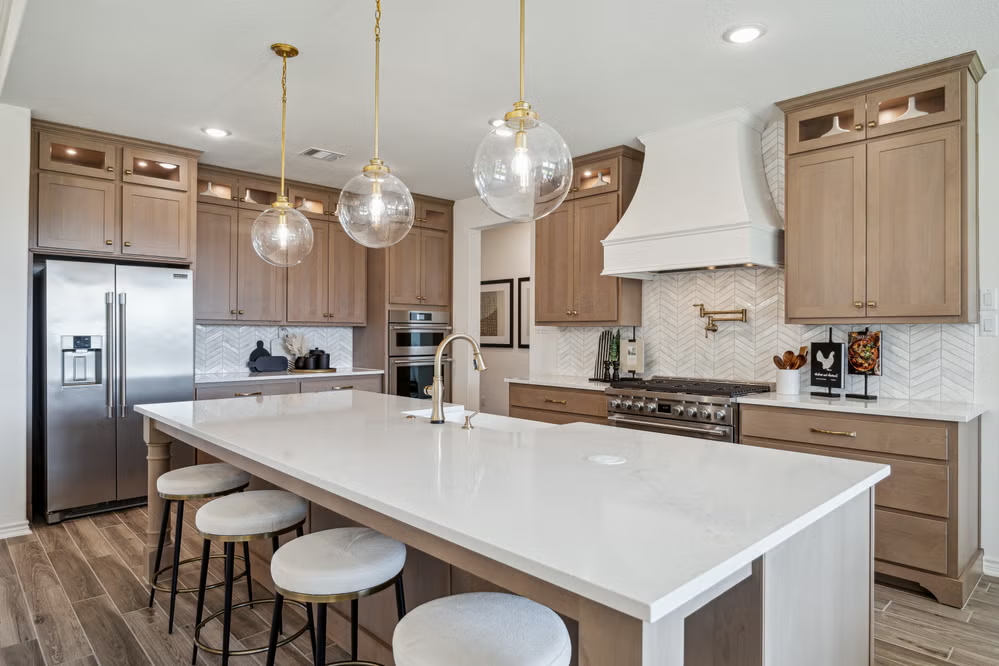
Kitchen remodeling is one of the most common reasons homeowners call a contractor, and it is also one of the fastest ways to see a budget change if the scope gets too open-ended. Kitchens are expensive because they combine cabinetry, countertops, plumbing, electrical, appliances, lighting, and often flooring in a single room.
A Garland kitchen refresh usually starts around $25,000 to $60,000. That range can cover cabinet refacing or replacement at a modest level, new countertops, a backsplash, updated fixtures, and some lighting. If the layout remains the same, the budget stays cleaner. If you move the sink, add an island, or rework appliance placement, costs begin to climb.
A midrange kitchen remodel usually falls between $60,000 and $125,000. This is where many Garland homeowners land when they want new cabinets, stone counters, upgraded appliances, a better lighting plan, and new flooring. The cost can move quickly if semi-custom cabinetry is selected or if the kitchen needs electrical and plumbing changes to support a better layout.
A high-end or full-gut kitchen remodel often lands at $125,000 to $220,000+. That level often includes custom cabinetry, premium stone or quartz, luxury appliances, specialty tile, and a more complex island or peninsula design. If walls are moved or the kitchen is opened to an adjacent living area, the project may need engineering, additional framing, and more finish labor.
A few useful kitchen budgeting numbers:
- Cabinetry often makes up 25% to 35% of the total kitchen budget.
- Countertops may account for 5% to 10% in a midrange project, or more with premium stone.
- Labor can easily represent 30% to 50% of the total once demolition, electrical, plumbing, carpentry, and install work are all counted.
- Appliances can range from a few thousand dollars to well over $20,000 depending on brand and package.
If you need a more focused local option, our Garland kitchen remodeling page is the right place to compare scope and finish level.
One practical Garland-specific tip: if the kitchen sits in a home that has not been heavily updated, price a contingency for electrical and plumbing corrections before you choose finishes. A beautiful cabinet package does not help much if the hidden work consumes the remaining budget.

Bathroom Remodel Costs in Garland
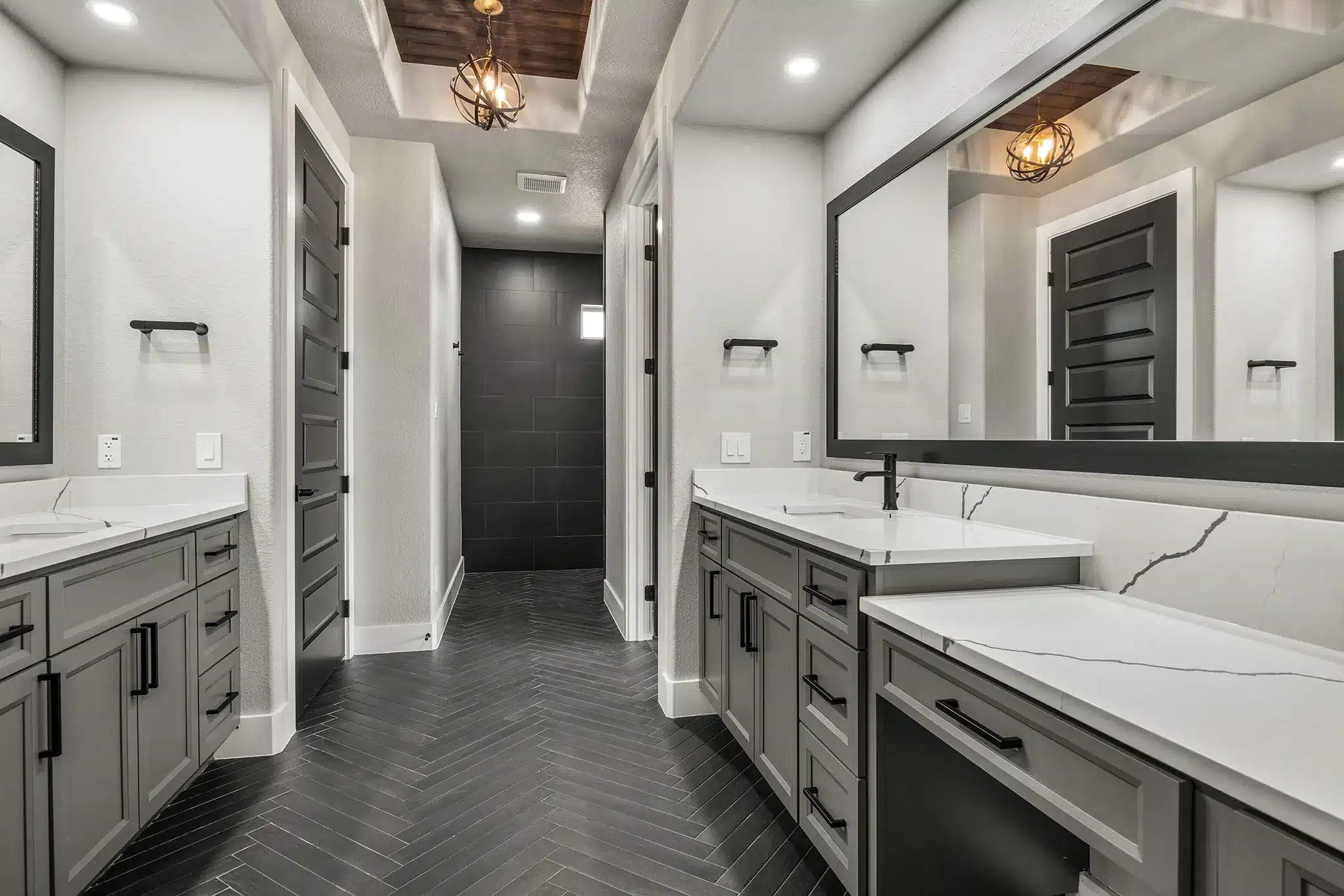
Bathrooms are usually smaller than kitchens, but they can still be expensive because tile, waterproofing, plumbing fixtures, lighting, and labor all stack up quickly in a tight footprint. They also tend to reveal hidden problems in older homes, especially when the existing shower, drain system, or subfloor has water damage.
A hall bathroom remodel in Garland often runs between $12,000 and $28,000. That range can cover new tile, a vanity, a toilet, fixtures, lighting, paint, and basic plumbing adjustments. If the shower or tub location stays the same, the project is usually easier to control.
A primary bathroom remodel commonly runs between $25,000 and $55,000. Larger showers, double vanities, better tile, upgraded lighting, and improved storage all push the price upward. If you add heated floors, custom glass, niche details, or major plumbing moves, the project can climb beyond that range.
In many projects, the most expensive parts are not the visible finishes. Waterproofing, shower pan work, tile labor, and rough plumbing revisions can consume a meaningful share of the budget. The tile itself may look like the headline item, but the labor beneath it often determines whether the bathroom is durable for years or trouble-prone after move-in.
For a nearby metro pricing check, Angi’s Dallas bathroom pricing overview reports a typical range of about $6,380 to $17,216 for bathroom remodels in Dallas, with an average around $11,582. That is a useful sanity check for lower- to midrange projects, though many Garland homeowners will spend more once they move beyond a simple cosmetic refresh. The article is here: Dallas bathroom remodel cost data.
When you compare your Garland bathroom project against a citywide number like that, the real question is whether your scope includes structural fixes, layout changes, or premium materials. If it does, the budget should shift accordingly. If it does not, the project may stay close to the metro baseline.

Exterior, Layout, Structural, Permit, and Value Factors
Not every remodel is about cabinets and tile. In Garland, many homeowners also look at items that change the way the home works day to day: windows, doors, roof-adjacent repairs, open-concept changes, structural updates, and the permit process that supports them.
Exterior-facing work often falls into one of a few buckets:
- Window replacement: often priced per opening and can range from several hundred dollars to over $1,500 per window depending on size and quality.
- Entry and patio doors: commonly range from about $1,500 to $8,000+ depending on configuration and material.
- Exterior paint and repair: may run from the low five figures upward on larger homes.
- Siding or trim work: can shift heavily depending on whether only a section or the full exterior is being updated.
If the remodel includes layout changes, the numbers climb faster. Removing a wall may seem straightforward, but the hidden cost can include engineering review, framing, electrical rerouting, ceiling repair, flooring patching, and paint blending. What looks like a single decision in the design meeting can become five or six coordinated tasks in the field.
That is why many contractors separate “nice-to-have” changes from “project-enabling” changes. A project-enabling change is one that makes the home work better for the long term, such as opening a cramped kitchen, adding better traffic flow, or fixing a poor bathroom layout. A nice-to-have change is cosmetic, such as a decorative finish or a premium hardware package. Both matter, but they should not be priced as though they have the same return.
For Garland homeowners, that distinction is useful because local remodel budgets can be spent in different ways depending on whether the goal is livability, resale, or long-term value. A carefully scoped structural change can improve function dramatically, but it should be priced with real-world allowances, not guessed from a photo.
A strong local budget also helps when homeowners are weighing a smaller update against a larger one. Sometimes the right answer is to put most of the money into one high-impact room and leave the rest for a later phase. That approach can be especially practical when the home still functions well, but the kitchen, primary bath, or main living area feels dated enough to drag down the whole house.
Another useful mindset is to treat the remodel as an investment in how the home will feel every day. Better sight lines, better lighting, and better storage do not just make the house prettier. They can also make it easier to clean, easier to maintain, and easier to live in for years.
A practical budgeting rule is to set aside about 1% to 4% of the total project for permits, plan review, and inspection-related costs. That range is not a hard cap, but it gives you a reliable planning frame for projects that need city review or multiple inspection points. If the home needs engineering or a more formal drawing package, the soft costs can rise further.
The final budget should also account for value. A remodel that improves function and durability may not be the cheapest option, but it can be the best option when it reduces future repairs or makes the home more usable for the next decade.

How Labor, Materials, and Allowances Shape the Total
Permits are not the most exciting part of a remodel, but they are part of the total cost. In Garland, permitting and inspections can affect both timing and soft costs, especially when the project includes structural work, system changes, or any work that needs official review before closing up walls.
A useful budgeting approach is to reserve about 1% to 4% of the project total for permits, plan review, and inspection-related costs. That does not mean every project will land there, but it is a reasonable planning range. A smaller cosmetic project may need less. A larger remodel with more moving parts may need more, especially if drawings or engineering are required.
Scheduling matters too. Even when the permit cost itself is manageable, the timeline can stretch if the project needs multiple inspections or if revisions are required before approval. That means the real cost is not just the fee; it is also the carrying cost of a longer schedule, the extra labor coordination, and the possibility of temporary disruption at home.
Here is the practical sequence many Garland remodels follow:
- Initial scope and site visit
- Design and estimate refinement
- Permit or plan submission if required
- Material ordering
- Demolition
- Rough work for framing, electrical, plumbing, and HVAC
- Inspection milestones
- Drywall, tile, flooring, cabinets, paint, and trim
- Final fixtures, punch list, and cleanup
A smaller cosmetic remodel may take 4 to 8 weeks once work starts. A room-by-room remodel with several trades may take 8 to 14 weeks. A full-home remodel usually falls somewhere between 3 and 6 months, and a heavily customized or structurally involved project can stretch to 6 to 10 months.
The main lesson is simple: if the project is likely to require permits, include that timing in the budget planning instead of treating it like a minor detail. That keeps the schedule realistic and helps avoid frustration later.

How Labor, Materials, and Allowances Shape the Total
Two remodels can look similar on paper and still cost very differently because of labor composition, material quality, and allowance structure. That is why the cheapest bid is not always the clearest bid.
Labor is usually the largest line item in a serious remodel. In many projects, it can make up 30% to 50% or more of the total cost, especially when carpentry, electrical, plumbing, tile work, drywall, paint, and finish install all stack together. Projects with complicated access or many custom details tend to have a higher labor share.
Materials are the other major lever. A few examples show how quickly the total changes:
- Flooring can range from roughly $3 to $15+ per square foot for materials alone depending on product type.
- Cabinet packages can move from budget-friendly stock cabinets to custom cabinetry that costs several times more.
- Countertops may range from about $40 to $150+ per square foot installed, depending on stone and fabrication details.
- Plumbing and lighting fixtures can be inexpensive or premium enough to add several thousand dollars to the final bill.
Allowances matter because they define what is included in the contract when the exact selection has not been made yet. A contractor might allow $8,000 for appliances, $12,000 for tile, or $20,000 for cabinetry. If the homeowner upgrades beyond the allowance, the difference is added to the price. This is normal, but it needs to be understood from the start.
A smart Garland budget includes:
- Base construction cost
- Design or preconstruction work, often 5% to 12% of project value
- Permit and inspection allowance, often 1% to 4%
- Contingency, usually 10% to 20%
- Temporary living or storage costs if the home becomes difficult to occupy
If you want a quote that feels accurate instead of optimistic, ask every contractor to show what is included, what is excluded, and where allowances sit. That one step can prevent a large number of unpleasant surprises.

Budget Planning Tips for Garland Homeowners
The best remodel budgets are the ones that reflect how people actually live in the home. A beautiful design is important, but if the budget is too thin, the project can stall or get downgraded halfway through.
A few budgeting habits help Garland homeowners stay in control:
1. Start with the core rooms
If the entire house does not need to be touched at once, begin with the rooms that carry the most daily impact. Kitchens and primary bathrooms often give the biggest combination of function and visible value.
2. Pick the finish level before demolition
The fastest way to blow a budget is to make upgrade decisions after the project is already underway. Choose the material tier early so the pricing stays stable.
3. Protect a real contingency
On older homes, 10% may be the floor, not the ceiling. If the project includes multiple trades or hidden systems, 15% to 20% is often healthier.
4. Compare apples to apples
Make sure all bids cover the same scope. A contractor who excludes design, demo disposal, or permit support may appear cheaper at first and more expensive later.
5. Use the right phase order
If the remodel depends on a structural change, start there. If the project is mainly cosmetic, do not pay for engineering you do not need.
For Garland homeowners trying to keep a project grounded, the most helpful question is often: what does the home actually need now, and what can wait? A phased approach can spread cost over time while still making steady progress.
If you are comparing local neighborhoods or neighboring cities, our Frisco remodeling cost guide and Irving remodeling cost guide can help you see how budget pressure changes from one market to another. For Garland homeowners, those comparisons are most useful when you are deciding whether to phase the work or bundle it into one larger contract.

When a Garland Remodel Needs a Bigger Budget
There are a few signals that the final price is likely to exceed the first estimate:
- The home has not been updated in 20+ years.
- The remodel changes the layout instead of just the finishes.
- The project touches multiple systems at once.
- The home has signs of water damage, foundation movement, or electrical issues.
- The homeowner wants premium or custom finishes.
None of those situations is a problem on its own. They just mean the project needs more detailed planning. In fact, some of the best remodels are the ones that spend more where it matters and less where it does not. A smarter budget may actually improve the project, because it prevents corners from being cut in the wrong places.
A more detailed way to think about the budget is to separate it into visible and invisible categories. Visible categories include tile, cabinets, counters, paint, flooring, hardware, and fixtures. Invisible categories include demolition protection, dumpster fees, project management, inspections, engineering, permits, delivery timing, and cleanup. Homeowners often compare only the visible items, but the invisible items can account for a meaningful share of the total.
For example, if a remodel includes custom cabinets and a new island, the cabinets themselves may feel like the major decision. In reality, the supporting costs might also include cabinet design time, extra electrical circuits for the island, countertop templating, backsplash transitions, flooring patching, and a longer punch-list cycle. Each one is small by itself, yet together they can shift the final bill by several thousand dollars.
Another reason budgets grow is sequencing. A kitchen or bathroom rarely comes together in a straight line. Demolition reveals conditions. Rough work changes finish dates. Finish work exposes small items that need adjustment. If a contractor is not pricing that reality up front, the homeowner can feel whiplash when the project starts to move from estimate to invoice.
Garland homeowners can reduce that risk by asking for a scope that spells out exact inclusions. If the bid says “new tile,” ask whether that includes waterproofing, backer board, thinset, grout, trim pieces, and shower niches. If the bid says “new lighting,” ask how many fixtures, whether the ceiling needs patching, and whether the switch layout changes. If the bid says “new cabinets,” ask whether installation, trim, filler pieces, and hardware are in the number.
That level of specificity is not overkill. It is the best way to make sure the remodel budget reflects the actual project instead of a rough idea of it.

A Practical Sample Budget for a Garland Home
To make the numbers more concrete, here is a sample scenario for a 1,900-square-foot Garland home that needs a partial remodel.
- Whole-home paint and trim repairs: $12,000
- New flooring in main living areas: $18,000
- Kitchen updates: $72,000
- Hall bath remodel: $18,000
- Primary bath remodel: $34,000
- Lighting and electrical upgrades: $14,000
- Miscellaneous carpentry, patching, and punch list: $8,000
- Design, permit, and inspection allowance: $10,000 to $18,000
- Contingency at 12%: about $22,000
That puts the likely total around $208,000 to $216,000 before final selections or surprises. The value of the exercise is not that every Garland home should cost that much. The value is that a realistic remodel should be priced as a system, not as a single item.
If the same house were done as a lighter refresh, the price could drop dramatically. Paint, flooring, lighting swaps, and a modest kitchen touch-up might reduce the total by more than half. That is why the scope conversation matters more than the city name. Garland sets the local context, but the actual design choices determine the final number.

How to Compare Contractor Bids in Garland
A lot of homeowners get stuck comparing line items that are not actually comparable. One bid may look lower because it leaves out things another bid includes. The best way to compare proposals is to create a simple checklist.
Look for these items in each bid:
- Demo and debris removal
- Protection of existing finishes
- Framing or structural repairs
- Electrical and plumbing allowances
- Drywall and insulation
- Cabinet installation and trim
- Countertop fabrication and install
- Tile labor and waterproofing
- Paint and finish carpentry
- Permits, inspections, and project management
If one contractor includes four of those items and another includes nine, the lower number is not necessarily better. It may just be missing work that will appear later as change orders. A better bid is usually the one that explains what is included, what is assumed, and what triggers an added cost.
That is also where experience in Garland matters. A contractor who regularly works in the area is more likely to understand the kinds of older-home conditions that can come up, the practical permit sequence, and the way local homeowners like to phase projects. Those are not abstract advantages. They can save time and reduce friction when the project gets moving.

Remodel Timeline by Project Size
Budgeting is only half the equation. The other half is time. A remodel that takes longer than expected can create extra stress, especially if the kitchen or primary bathroom is out of service for weeks.
Here is a realistic timeline framework:
Small cosmetic projects: 4 to 8 weeks
These are usually paint, flooring, fixture, and finish upgrades with minimal structural work. The project can move quickly if materials are available and the scope stays narrow.
Midrange room remodels: 8 to 14 weeks
This covers many kitchens and bathrooms where cabinets, tile, plumbing, and electrical work all need to happen in sequence. Delays often come from material lead times, inspection scheduling, or changes after the demo phase.
Full-home remodels: 3 to 6 months
A whole-house project takes longer because several rooms are being handled at once. Even when trades overlap efficiently, the project can slow down if the client is making selections as work progresses.
Highly customized or structural projects: 6 to 10 months
Once engineering, layout changes, custom cabinetry, or broad system upgrades enter the scope, the schedule gets longer. These jobs are still manageable, but they need more preconstruction discipline.
Garland homeowners should assume that schedule changes can affect budget. Longer labor windows, storage needs, temporary housing, and repeated site mobilization can all add soft costs. If the project will make the kitchen unusable, for example, it may also require a temporary eating setup or more takeout spending for a few weeks. Those are not construction costs in the strict sense, but they still belong in the planning conversation.
The best return is not always the highest spend. In many Garland homes, value comes from solving the biggest daily pain points first.
A kitchen remodel often provides the strongest combination of function and visual payoff. Better storage, better circulation, and better lighting can change how the whole home feels. A bathroom remodel can also pay off well because it improves daily routine and often addresses hidden maintenance issues at the same time.
Whole-home cosmetic work can be valuable when the house already functions well but feels dated. Fresh paint, consistent flooring, cleaner trim, and better lighting can make the home feel more expensive without requiring a full gut remodel. That is usually the most efficient path when the layout is already decent.
If the home has a structural or systems problem, though, those fixes should come first. Spending on finishes before correcting a damaged subfloor, an undersized panel, or poor plumbing is a false economy. The finished space may look good for a while, but it will not stay that way.
That is why a Garland remodel should always be planned in the correct order: structure, systems, surfaces, then style. When the order is right, the money goes farther.
Final Thoughts on Garland Remodeling Costs
A Garland remodel in 2026 can be as modest or as ambitious as the homeowner wants, but the budget should always be tied to scope. Cosmetic refreshes can stay within a tighter range, while whole-home, kitchen, and bathroom projects move upward quickly once layout changes, systems work, and premium materials enter the picture.
The most useful approach is to define the project in three layers: what must be done, what would be nice to add, and what can wait for a future phase. Then add a real contingency, confirm permit needs early, and make sure the bid includes all the allowances you expect. That process is what turns a rough idea into a workable plan.
If you are ready to talk through scope and budget, our Garland home remodeling services can help you plan the job around the actual home instead of a generic estimate. And if you want the broader pricing framework again, revisit the Home Remodeling Cost in DFW – 2026 Full Guide so you can compare your Garland project against the metro-wide baseline before moving ahead.
When you are ready to move from rough ideas to a real plan, the most helpful next step is a scoped conversation that identifies the rooms, the finish level, the likely surprises, and the budget band that makes sense for the home. That is how a remodel starts feeling manageable instead of vague.
For many homeowners, that comparison is the difference between a budget that feels guessed and a budget that feels ready.