Cost to Remodel Your Home in Fort Worth (2026 Guide)
Fort Worth homeowners usually ask one question first: what does a remodel really cost once the dust settles, the change orders are counted, and the finish selections are locked in? The honest answer depends on scope, but a useful 2026 estimate starts with three buckets: cosmetic refreshes, midrange renovations, and major whole-home projects. In Fort Worth, those buckets are shaped by older-house conditions, trade coordination, and the level of finish you want to see every day.
If you are comparing options, the broader Home Remodeling Cost in DFW – 2026 Full Guide is the right metro-level starting point, then you can narrow the math to your house, your block, and your scope.
This article breaks down realistic budget ranges, common line items, permit expectations, and the decisions that make a Fort Worth project swing by tens of thousands of dollars rather than hundreds.

Fort Worth Home Remodeling Pricing Table
| Remodel scope | Typical 2026 range | What is usually included | Common budget notes |
|---|---|---|---|
| Cosmetic refresh | $25,000-$60,000 | Paint, flooring in selected rooms, trim updates, lighting swaps, surface-level cabinet or fixture changes | Best for homes with good bones and no layout change |
| Midrange whole-home remodel | $60,000-$150,000 | Larger flooring scope, kitchen or bath updates, interior paint, doors, moderate electrical/plumbing work | Often the most common “move-in and stay” budget |
| Major remodel | $150,000-$300,000+ | Layout changes, multiple rooms, higher-end cabinetry, premium surfaces, more extensive trade work | Needs stronger contingency planning and design support |
| Luxury / custom finish level | $300,000+ | Full custom selections, structural changes, premium appliances, specialty lighting, high-detail millwork | Can climb quickly with imported or custom items |
| Contingency and permit allowance | 10%-20% of project value | Surprise repairs, permit fees, plan review, extra inspections, small scope changes | Especially important in older Fort Worth homes |
The ranges above are not a substitute for a site visit, but they are useful because they map to real budgeting behavior. A family planning a cosmetic refresh may spend most of the money on visible upgrades, while a family planning a major remodel usually spends a meaningful share on things that are easy to miss in the first estimate: hidden rot, subfloor repairs, electrical updates, plumbing fixes, drywall patching, and finish substitutions.
A simple way to think about it is this: if the project leaves the layout mostly intact, the budget tends to stay closer to the low and middle ranges. Once walls move, wet areas relocate, or systems are upgraded, the project behaves more like a construction job than a decorating job. That shift also changes the type of estimate you should expect. A light refresh may be quoted with simpler allowances, while a deeper remodel should come with more explicit assumptions about demo, disposal, framing repair, fixture counts, and finish grades. Those details matter because they tell you where the estimate has real certainty and where the contractor is making a justified assumption.
What the table means in practice
A $35,000 project in Fort Worth may handle paint, flooring in a few rooms, updated fixtures, and a small bath refresh. A $95,000 project can cover a larger mix of kitchen, bath, and living-area improvements, especially if the homeowner keeps plumbing locations stable and chooses midrange finishes. Once the budget moves past $175,000, the job usually starts to include more coordination, more trade sequencing, and more opportunities for hidden conditions to show up.
That is why early scope clarity matters. It is not just about how much you spend. It is about where the money goes and whether the project can be delivered without constant compromise.

Why Building in Fort Worth Is Different
Fort Worth is not a generic remodel market. It has a large base of older housing, a wide spread of home ages and lot conditions, and a market that still rewards practical upgrades with visible resale value. That mix matters because a remodel in Fort Worth often starts with uncertainty about what is behind the walls. The house may need selective electrical work, plumbing corrections, or framing adjustments before the visible finish work begins.
Fort Worth also has a city process that can add time if your remodel crosses into permit territory. Work that affects plumbing, electrical, mechanical, or structural systems may need review, inspections, or both. That does not make the project harder in a bad way, but it does make scheduling more real. You should budget for coordination, not just materials.
A third local factor is the market itself. Fort Worth has continued to grow, and that growth puts pressure on both labor and materials. In practical terms, that means good crews stay busy, pricing tends to reflect current demand, and homeowners benefit from choosing scope carefully rather than trying to renovate everything at once.
If you want the biggest payoff, Fort Worth projects usually do best when they solve function first and then refine finishes. That is especially true in homes where the original layout still works but the rooms feel dated or inefficient.

How Much a Fort Worth Remodel Costs by Scope
The fastest way to build a realistic budget is to tie cost to scope rather than to a vague “house remodel” label. A homeowner may use the word remodel to describe almost anything from new paint and floors to a full reconfiguration of the main level. Those are very different jobs.
Cosmetic remodels
A cosmetic remodel typically lands between $25,000 and $60,000 in Fort Worth. That range often covers a combination of interior paint, flooring replacement in selected rooms, new lighting, updated faucets and fixtures, trim repairs, and smaller cabinet or hardware updates. If the home has no major hidden damage and the layout stays the same, the project can stay in this band.
Cosmetic jobs are attractive because they let you improve the feel of the house without taking on the cost of moving plumbing or rebuilding rooms. They are also the easiest scope to overrun if the homeowner starts adding rooms one at a time. A few small upgrades can quietly turn into a larger project if every room gets a different floor, new baseboards, new doors, and new electrical trim. Even within a cosmetic budget, choices can move the final number by several thousand dollars. For example, a whole-house paint project with substantial prep may stay on the lower side, while a floor package that includes removal of old material, subfloor patching, and new baseboards can climb much faster. The best cosmetic budgets are built line by line so the homeowner knows what is essential and what is still optional.
Midrange remodels
A midrange remodel often lands between $60,000 and $150,000. This is where many Fort Worth projects live because the homeowner wants a noticeable transformation without a full structural overhaul. In this category, you may see a better kitchen, a refreshed primary bath, new flooring across much of the home, upgraded paint and trim, modest lighting changes, and some plumbing or electrical work.
A midrange budget is also where allowances matter. Cabinets may be budgeted by linear foot, countertops by square foot, tile by square foot, and fixtures by finish level. If the original allowance is too low, the final price rises even when the contractor is not adding profit or padding. The project simply moved into a more expensive material selection.
Major remodels
A major remodel usually starts around $150,000 and can reach $300,000 or more. These projects may involve wall removals, kitchen reconfiguration, multiple bathroom updates, flooring throughout, insulation or air-sealing work, window replacements, more substantial electrical upgrades, and high-end cabinetry or millwork. On older Fort Worth homes, major remodels can also uncover the need for additional framing repair or system corrections once demolition begins.
The big difference in this category is not only cost, but risk. The more systems you touch, the more moving parts you have. That means you need a stronger plan for selections, permits, lead times, and contingency money. It also means the estimate should spell out what happens when hidden conditions are discovered. A thorough contractor will not promise that surprises never happen; instead, they will tell you how surprises are handled, who approves extra work, and what documentation comes with the change order. That matters because major remodels usually run long enough for one or two scope adjustments to feel normal if they are not tracked carefully. The more the team documents selections, allowances, and exclusions, the less likely the budget is to drift.
Luxury remodels
Once a Fort Worth project gets into luxury territory, the budget can climb above $300,000 quickly. That usually happens when homeowners want custom cabinetry, premium stone, designer lighting, specialty appliances, built-in features, structural changes, and a high level of finish throughout. It can also happen if the house is large and the remodel spans several rooms at once.
Luxury projects are less about average market cost and more about the homeowner’s design standard. The cost is often driven by choices that have long lead times or require custom fabrication. If you want a one-of-a-kind result, that is perfectly reasonable, but the budget should reflect the planning and procurement required to get there.

Common Cost Drivers in Fort Worth
The same remodel can produce very different bids depending on what the contractor finds and what the homeowner wants. Fort Worth homeowners should expect the following drivers to matter the most.
Home age and hidden conditions
Older homes are often the biggest wildcard. Once walls, floors, or ceilings are opened, you may find patchwork repairs from previous owners, outdated wiring, undersized circuits, plumbing that no longer matches current needs, or water damage that was hidden by previous finishes. That is why a 10% to 20% contingency is not an exaggeration on many projects. It is a practical hedge against unknowns.
A home with clean access and no prior patchwork may stay closer to estimate. A home that has been heavily altered over several decades may need more corrections before the visible work can proceed.
Trade overlap
When a remodel involves multiple trades at once, costs tend to rise because coordination becomes more complex. Electricians may need to wait on framing. Plumbers may need rough-in access before tile starts. HVAC adjustments can delay drywall. Those delays do not always show up as direct costs, but they often show up in labor time and schedule impact.
A good contractor plans the sequence so that one trade does not destroy the work of another. That coordination has value, especially in a city where good trade partners are often booked.
Material quality and finish level
Materials are one of the easiest places for a budget to swing. Cabinets can move from stock to semi-custom to fully custom. Countertops can move from laminate to quartz to premium stone. Flooring can move from builder-grade LVP to hardwood or specialty tile. Fixtures can move from a practical midrange line to a designer collection with more expensive valves, trims, and accessories.
As a rule, a project that feels “just a little nicer” can still cost a lot more than expected because finish upgrades compound. A slightly better cabinet package, a slightly better countertop, and slightly better tile may together add many thousands of dollars.
Permits, design, and engineering
Permits are not the largest line item in most remodels, but they matter because they can affect timing and approved scope. Design work, plan sets, and engineering can add several thousand dollars on larger jobs, especially when walls move or systems change. If your project is simple, you may not need a heavy design package. If the layout changes, spending money early on planning usually saves money later in construction.
For Fort Worth homeowners, it is often smarter to budget for paperwork before demolition than to scramble for approvals once crews are waiting.

Room-by-Room Budget Breakdown
A full-house budget becomes easier to understand when you break it into rooms or trades. That does not mean every project needs every room updated. It means you should know what each area tends to cost so you can choose scope with your eyes open.
Kitchen remodeling inside a larger home remodel
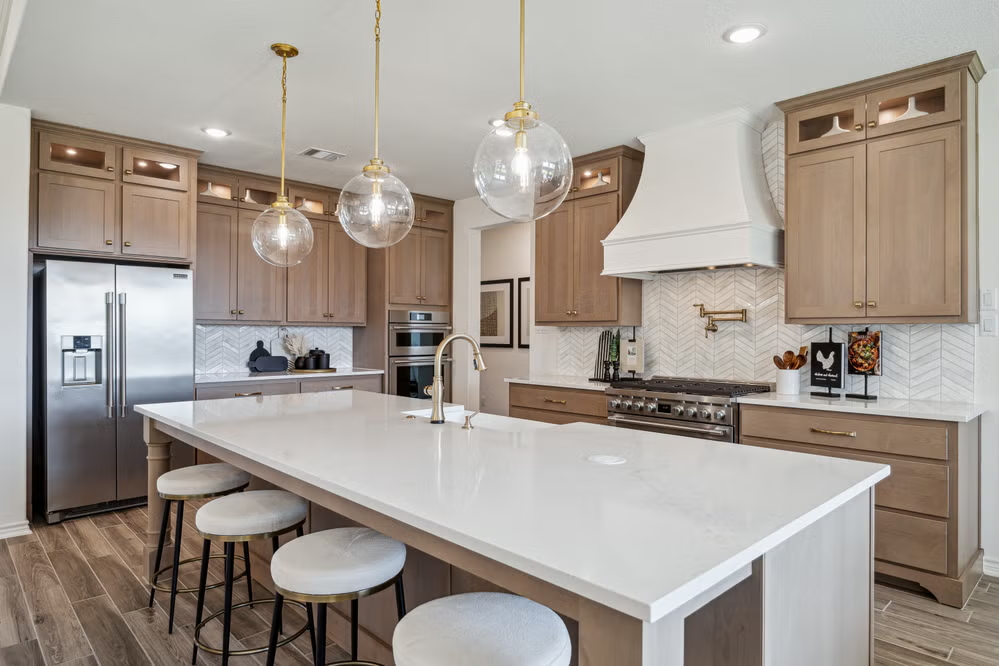
A kitchen often becomes the single biggest interior cost center. Even in a larger whole-home remodel, the kitchen can absorb a large share of the budget because it mixes cabinetry, counters, plumbing, electrical, ventilation, lighting, and finishes. In many Fort Worth homes, a moderate kitchen update can land in the $35,000 to $85,000 range, while more extensive kitchens can exceed $100,000 once custom cabinetry, premium stone, and layout changes are involved.
Cabinetry is one of the main budget drivers. Countertop pricing is often tied to square footage, and backsplash tile can vary depending on the tile body, pattern, edge detail, and installation complexity. If you want to control costs, the kitchen is one of the best places to simplify the number of materials and avoid too many transitions. Appliance selection can also create a meaningful spread. A modest package may keep the project grounded, while pro-style equipment, panel-ready appliances, and specialty ventilation can add many thousands of dollars. Even cabinet hardware, sink selection, faucet finish, and under-cabinet lighting can influence the final invoice when they are repeated across multiple rooms. That is why kitchen budgets are more stable when the homeowner chooses the product level before construction starts.
The right lesson is not “cheap out on the kitchen.” It is “make every kitchen choice count.”
Bathroom remodeling inside a larger home remodel
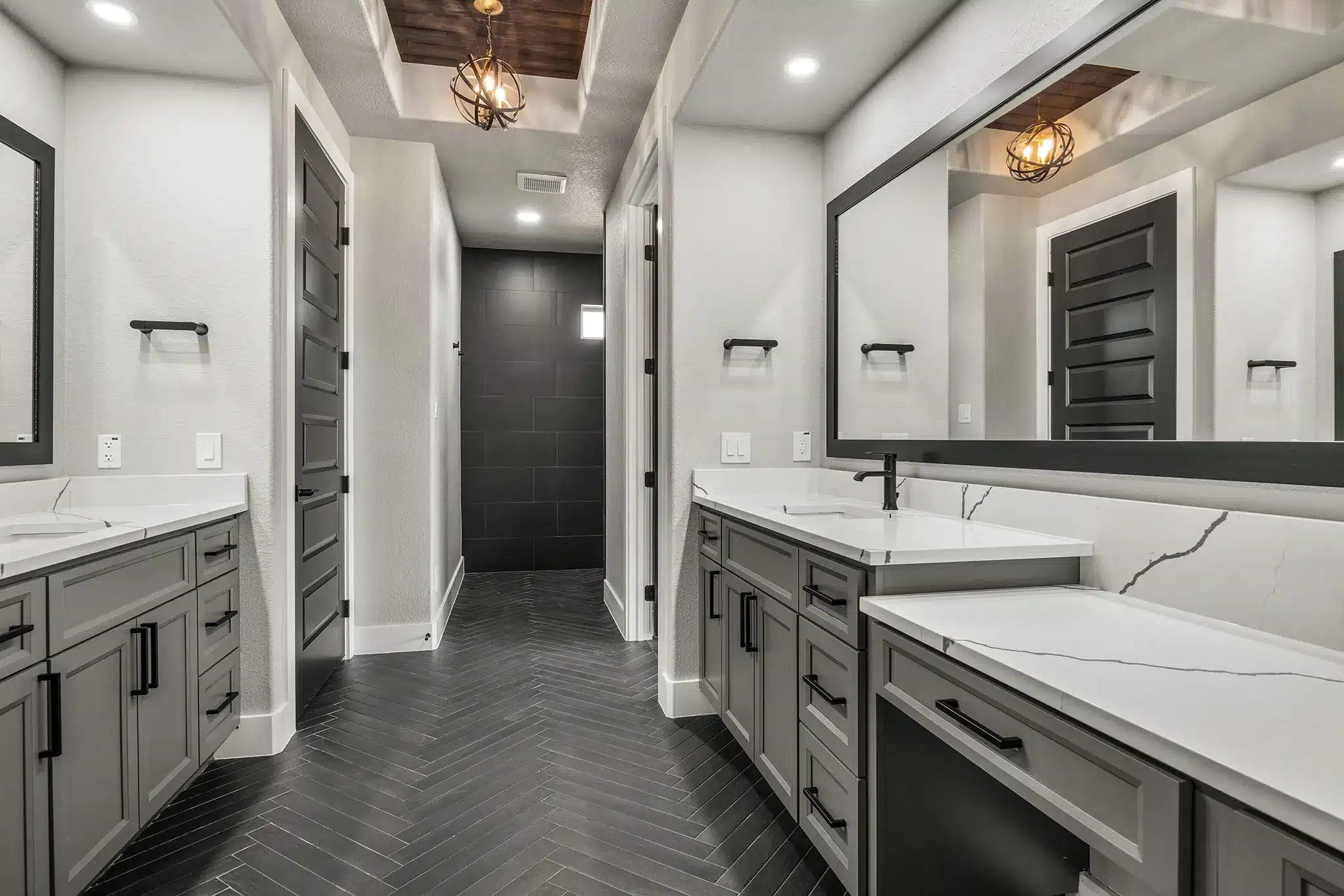
Bathrooms are usually smaller than kitchens, but they can still be expensive because the room is dense with labor. Tile work, waterproofing, plumbing fixtures, vanity cabinetry, mirror packages, ventilation, and lighting all stack together. A standard hall bath may cost far less than a full primary suite, but even a modest bathroom update can still run well into five figures.
If you are comparing this guide to a bathroom-specific scope, it can help to read the related Fort Worth bathroom remodel cost guide. That gives you a sharper view of how bath pricing behaves when the bath is the main project rather than one piece of a larger remodel.
Bathrooms often feel more expensive per square foot than other rooms because the work is more detailed. Waterproofing errors are costly to fix, so the contractor should plan the room carefully from the start. A primary bath may require a larger shower footprint, upgraded trim, extra lighting, a better ventilation fan, and more time for tile layout and grout detailing than the homeowner initially expects. Even a seemingly small change, like replacing a tub-shower combo with a walk-in shower, can alter plumbing, framing, waterproofing, and glass costs all at once. In real budgets, that means one bathroom can look simple on paper and still behave like a major line item in the final total.
Flooring, paint, and trim
These are the visual glue of a remodel. New flooring in a whole home may run from several dollars per square foot for simpler products to much more for higher-end materials and labor-intensive installation. Paint can be relatively modest on a per-room basis, but the total adds up across a full house, especially when prep work, drywall patching, and trim repairs are included.
Trim work is easy to underestimate. Baseboards, casing, crown detail, and door repairs can make an older home feel finished, but they take time. If you want the house to look cohesive after the remodel, these details should be in the budget from the beginning rather than added later as “small extras.”
Exterior and curb-appeal upgrades
Some homeowners combine interior work with exterior improvements such as siding repairs, front-door replacement, porch updates, paint, or selective window work. These items can improve the overall impression of the home and support resale. They can also make the house feel like a complete project rather than a series of disconnected updates.
If the home is in a strong resale corridor, exterior updates often help the biggest. They influence first impressions before the buyer or guest ever sees the interior.

Permits, Inspections, and Project Timing
Remodel timelines in Fort Worth depend on more than crew availability. They depend on design readiness, permit scope, product lead times, and whether the project changes the home’s systems or structure.
What typically needs a permit
A simple paint-and-flooring job may not trigger much permit activity, but once the project includes electrical changes, plumbing relocation, mechanical changes, or structural work, the permit conversation becomes more important. The City of Fort Worth’s Development Services resources are the right place to check when a project moves beyond straightforward cosmetic work. You can also ask your contractor to explain which portions of the work are permit-driven and which are not.
The key point is that permitting is part of responsible remodeling, not a nuisance to ignore. It protects the homeowner, keeps the project aligned with code, and reduces the risk of rework later.
Typical schedule ranges
A smaller remodel may spend 1 to 4 weeks in design and estimating, 2 to 8 weeks in permitting or preconstruction coordination, and 3 to 12 weeks in active construction. A larger whole-home project can take 3 to 6 months or more once design, lead times, and phased construction are included.
Lead times matter especially for cabinets, specialty tile, windows, and certain fixtures. If the order is delayed by even a few weeks, the construction schedule may shift behind it.
Why inspections can add value
Inspections are often viewed as delays, but they are really checkpoints. They help confirm that the work is built correctly before finishes close everything up. That matters in a city like Fort Worth, where hidden-condition risk can be meaningful. A good inspection process can catch problems before they become expensive finished-space repairs.
If you are planning a more involved project, read the city permitting requirements early and build them into the schedule from day one. That is usually cheaper than trying to force a rushed sequence later.
A Fort Worth homeowner who plans well also protects the design budget. The smartest move is to separate the project into decision layers: first the scope, then the layout, then the critical systems, and only after that the finish selections. That order keeps the remodel from becoming a moving target. It also helps the contractor compare apples to apples when cabinet quality, tile complexity, plumbing fixture packages, and paint prep are all being priced. In practical terms, a single room can swing by several thousand dollars just because the homeowner changed from a standard vanity to a furniture-style cabinet, or from a basic shower surround to a full tile shower with niche details and glass. Those upgrades are worth it when they matter, but they should be chosen intentionally rather than added one by one during construction.

How to Keep a Remodel on Budget Without Cutting the Wrong Corners
Fort Worth homeowners have more control over final cost than they may realize. The trick is to cut complexity, not quality.
Lock scope before selection shopping spirals
The fastest way to lose budget control is to keep adding “one more thing.” A kitchen becomes a kitchen plus pantry work, plus hall lighting, plus new flooring, plus upgraded doors. A bathroom becomes a bath plus linen cabinet, plus heated floor, plus custom mirror, plus niche lighting. Those add-ons are not bad ideas by themselves, but they should be selected intentionally.
Write the scope in plain language, then keep selections inside that scope. If something new is important, replace something else rather than layering it on top.
Use allowances intelligently
Allowances are not the enemy. They are a useful way to move the project forward before every exact product is selected. The problem happens when the allowance is wildly below reality. If you know you want a premium countertop or upgraded fixtures, say so at the start. That keeps the estimate useful.
A strong allowance plan can be the difference between a stable budget and a constant string of change orders. On a kitchen, a cabinet allowance might be set by linear foot, while countertops are often tied to square footage and backsplash tile is priced by area plus labor. On a bath, the vanity, shower tile, plumbing trim, and glass enclosure can each carry their own allowance. When those numbers are too optimistic, the final price does not feel like a surprise to the contractor; it feels like the natural result of selecting a higher product tier than the budget anticipated. That is why the most reliable estimates are the ones that explain what is included, what is assumed, and what happens if the homeowner upgrades from the standard package.
Protect the contingency
The contingency is not extra decorating money. It is the buffer that keeps the project moving when the house reveals a surprise. On a Fort Worth remodel, that could mean replacing damaged subfloor, correcting wiring, or addressing plumbing after demolition. If the contingency gets used for upgrades instead of surprises, the project becomes more fragile later.
A good rule is to keep the contingency separate until the work is complete or nearly complete. The best way to think about it is as risk insurance for the existing house, not as a cushion for impulse upgrades. If the homeowner wants to spend that money on a better faucet finish or a more dramatic tile pattern, that should be a conscious tradeoff after the real unknowns are handled. On older homes, a 10% contingency may be enough for a simpler scope, but 15% to 20% is often safer when the remodel crosses multiple trades or opens up walls and floors. That extra room in the budget is what keeps the project moving if something small becomes something structurally important.
Choose materials that balance durability and resale
Fort Worth buyers generally respond well to clean, durable, practical improvements. That does not mean everything has to be plain. It means the home should feel upgraded without chasing a trend so hard that the room looks dated again too quickly. Midrange finishes often give the best cost-to-value ratio, especially if they are timeless and easy to maintain.
If resale matters, spend where the homeowner sees and uses the improvement every day: kitchen function, bath durability, good lighting, good flooring, and quality paint prep.

When a Fort Worth Remodel Should Be Treated Like a Bigger Project
There are times when a remodel is no longer a “refresh” and should instead be managed like a proper construction project.
If the house has multiple previous remodel layers, significant settling, or a mix of old and new systems, the project should start with more investigation. If you plan to relocate plumbing, remove walls, or revise HVAC paths, then design and coordination matter more than bargain shopping. If the remodel spans most of the main floor, it also deserves a more formal schedule, selection list, and contingency plan.
That is especially true when the homeowner wants to compare the remodel with the cost of building new. For a Fort Worth homeowner weighing that decision, the related How Much Does It Cost to Build a House in Fort Worth? guide is useful because it frames remodel pricing against new-build expectations. In some cases, staying and remodeling is clearly the smarter value. In others, the scale of the wish list starts to look more like a new-construction budget.
The point is not to scare anyone away from remodeling. It is to make sure the project is sized correctly from the start.

Working With Fin Home on a Fort Worth Remodel
A good remodeling plan should do three things at once: make the home better to live in, keep the budget under control, and avoid unnecessary rework. That is the standard you should expect from any contractor conversation in Fort Worth.
If you already know the rooms you want to improve, the next step is to define the scope in writing. If you are still deciding, start by identifying the highest-value pain points: poor layout, worn surfaces, bad lighting, storage shortages, outdated fixtures, or finishes that no longer match how the home is used.
From there, the remodel can be estimated in a way that reflects real trade work instead of vague wish-list pricing. That is exactly where a local remodeling team helps: turning a concept into a phased plan, then into a realistic budget, then into a build sequence that actually works. It also helps to map the project into milestones: survey and scope, design and selection, trade pricing, preconstruction, demolition, rough-ins, inspections, finishes, and punch list. Even when a project looks straightforward, those stages reduce the chance that someone on the job has to make a hurried decision in the middle of the work. A structured process tends to produce cleaner outcomes because the homeowner knows when decisions are due and the contractor knows what has been approved.
A Fort Worth project also benefits from a realistic conversation about access and occupancy. Some homeowners stay in the house through the remodel, while others move out for the messiest phase. Living through a full kitchen or bath renovation can be manageable, but it adds friction when the crew has to protect daily-use areas, stage materials carefully, and keep pathways clear. If you are remodeling while occupying the home, that should be part of the planning conversation because it affects dust control, storage, protection, and schedule efficiency. Even the best-build team has to work around the reality that people still need to get to the refrigerator, shower, or laundry room during the project.
On a larger remodel, one of the most common hidden costs is schedule friction. If the cabinet order is late by three weeks, the countertop template slides, then the backsplash slips, then the final paint and trim move behind it. That kind of delay does not always show up on a bid sheet, but it absolutely shows up in the experience of living through the remodel. A disciplined contractor protects the sequence so the project stays organized even when products have lead times. That is one reason homeowners sometimes pay a little more for a team that plans well: the smoother schedule is part of the value.

What a Fort Worth Bid Should Include
A solid remodeling bid should do more than give you one lump sum. It should explain what is included, what is excluded, what the allowances are, and which parts of the scope are still subject to field verification. In Fort Worth, that level of clarity is especially valuable because older houses can hide repairs that do not show up until demo begins. A homeowner comparing bids should look for the same scope structure in each proposal, or the lowest number can become the least reliable one.
A good bid usually separates demolition, haul-off, framing repairs, rough carpentry, plumbing, electrical, drywall, insulation, tile, flooring, cabinetry, countertops, painting, trim, fixtures, and final cleanup. It may also call out permit fees, dumpster costs, and any engineering or design work that has been assumed. If one bid is far shorter than the others, it is not automatically wrong, but it may be missing more detail than the homeowner realizes. The best comparison happens when every contractor is pricing the same assumptions.
If you want a clearer benchmark for a broader Texas remodel budget, the DFW home remodeling cost guide provides that higher-level context. For direct local service context, the Fort Worth home remodeling page is the matching service page for this topic. Before a contractor quotes a number, it also helps to think about how the project will be lived through day to day: where materials will be staged, whether one bath will stay usable, and how much temporary inconvenience the family can tolerate. Those practical issues do not sound glamorous, but they often decide whether a remodel feels smooth or chaotic. The most successful Fort Worth projects usually combine clear planning with realistic expectations, which is why the best budget is the one that can absorb both known scope and ordinary surprises without forcing a redesign halfway through construction.
Final Takeaway on Fort Worth Remodeling Costs
Most Fort Worth remodeling budgets make sense once you stop thinking in generalities and start thinking in scope. A cosmetic update can stay in the tens of thousands. A midrange remodel often lands in the middle five figures or low six figures. A major whole-home project can rise well past that once layout changes, hidden conditions, and upgraded finishes enter the picture. For homeowners, the practical takeaway is simple: write the scope first, then price the scope, then leave enough room for the house to reveal what it has been hiding. That approach does not remove uncertainty, but it does keep uncertainty from controlling the project.
The best Fort Worth remodels are usually the ones that spend money where the house needs it most: structure, systems, layout, durability, and the rooms that shape daily life. If you need a second opinion on scope or budget, it helps to compare your plan to the broader DFW home remodeling cost guide and to the local Fort Worth home remodeling page. It can also help to remember that remodeling is rarely one isolated decision. Homeowners usually make a chain of tradeoffs between function, appearance, and budget. A better counter may mean a simpler floor. More storage may mean a slightly smaller pantry opening. A larger shower may mean giving up a linen cabinet. Those tradeoffs are normal, and planning them explicitly is one of the easiest ways to keep the final result both attractive and financially manageable.
Then compare that with the local reality of your home: its age, condition, finish level, and the amount of work needed to make it feel right. That is where the true cost lives, and that is where a good plan pays for itself.
If you want nearby pricing comparisons before planning a project in Fort Worth, review Cost to Remodel Your Home in Arlington (2026 Guide) and Cost to Remodel Your Home in Dallas (2026 Guide).