How Much Does It Cost to Build a House in Parker County?
Parker County sits in a sweet spot for many custom home buyers because it offers both acreage-style opportunities and growth around established communities like Weatherford. That combination gives buyers flexibility, but it also means cost depends heavily on the land. Two lots that look similar on paper can require very different site budgets once you account for access, grading, utilities, and finish level.
For early budgeting, a practical Parker County range is often about $180 to $300 per square foot for many custom homes, with higher-end projects rising well above that. A smaller and efficient build may stay in the low-to-mid six figures, while a larger or more customized home can exceed $800,000 once sitework and selections are included. If you want a broader baseline, the DFW Home Building Cost Guide is a useful reference point.
If you are already comparing builders, Fin Home’s Parker County custom home builder page is the right place to continue.
Typical price ranges
| Project type | Approx. cost per sq. ft. | Example total cost |
|---|---|---|
| Efficient custom home | $180–$230 | $360,000–$575,000 for 2,000–2,500 sq. ft. |
| Mid-range custom home | $230–$300 | $575,000–$840,000 for 2,500–2,800 sq. ft. |
| High-end custom build | $300–$425+ | $840,000+ for larger or highly customized homes |
Those ranges make the most sense when paired with the actual parcel, because Parker County can vary a lot between improved areas and raw acreage.

Why Building in Parker County Is Different
Parker County combines more rural building conditions with suburban growth pressure, and that creates a wide range of cost outcomes. In some locations, the lot is already improved and the build can proceed more like a standard neighborhood project. In others, the site may need more clearing, more drainage work, or more utility coordination before the foundation starts.
That is why the land matters so much here. A parcel with easy access and existing service connections is easier to budget than a raw tract that still needs development work. Texas Commission on Environmental Quality guidance explains that on-site sewage facilities require permits in applicable cases; the TCEQ OSSF permitting guidance is a useful reference for that part of the process.
Parker County also tends to reward careful site selection. Once you know whether the lot is improved, semi-improved, or raw, the budget becomes much easier to shape.
Local factors that move the budget
- acreage lots may need more driveway and grading work
- utility access can vary from parcel to parcel
- septic planning becomes more relevant on rural tracts
- drainage and pad preparation can differ widely by site
That variation is why the lot should be reviewed before the final estimate is locked in.

Sitework, Access, and Utility Costs
Sitework is one of the biggest sources of budget variation in Parker County. Clearing, grading, driveway installation, trenching, temporary power, and water setup can all move the final number. If the land is already improved, these costs may stay relatively contained. If the site is raw, sitework can become one of the largest line items in the project.
Longer utility runs are another key issue. A home that sits farther back on the lot or farther from available services may require more trenching and coordination than expected. The same is true for larger parcels, where equipment has to move farther across the site to prepare the build area.
Common sitework line items
| Line item | Typical impact |
|---|---|
| Clearing and brush removal | Prepares the lot for equipment and layout |
| Driveway installation | Longer runs increase base and labor cost |
| Utility trenching | Distance and access can raise the total quickly |
| Temporary power and water | Needed during the build process |
| Grading and drainage | Helps protect the pad and direct runoff |
| Pad preparation | Improves foundation performance |
If you are comparing lots, ask what it will take to make each one build-ready, not just what the parcel costs to buy.

Septic, Drainage, and Foundation Planning
Septic planning can be a major line item on parcels without sewer access. That is not unusual in the more rural parts of Parker County, and it is one reason early feasibility review matters. The TCEQ OSSF basics page is a helpful reference for understanding why septic decisions need to be handled before construction begins.
Foundation planning matters just as much. A slab can be efficient on a stable, well-prepared site, but soil conditions, slope, drainage, and fill requirements can all change what is practical. If the pad needs extra work or if the foundation needs engineering, the budget can rise faster than expected.
Foundation questions to ask early
- Does the lot need cut or fill work?
- Is the pad area stable enough for a standard slab?
- Will drainage need to be shaped around the home?
- Is septic field placement going to affect the plan?
- Are engineering documents required before permitting?
When those questions are answered early, the construction budget becomes much easier to trust.

Cost Drivers You Can Control
Not every cost change comes from the lot. A lot of the total cost comes from design and finish decisions. Simple footprints, efficient rooflines, and practical layouts usually cost less than highly customized plans with many corners, large spans, or specialty details.
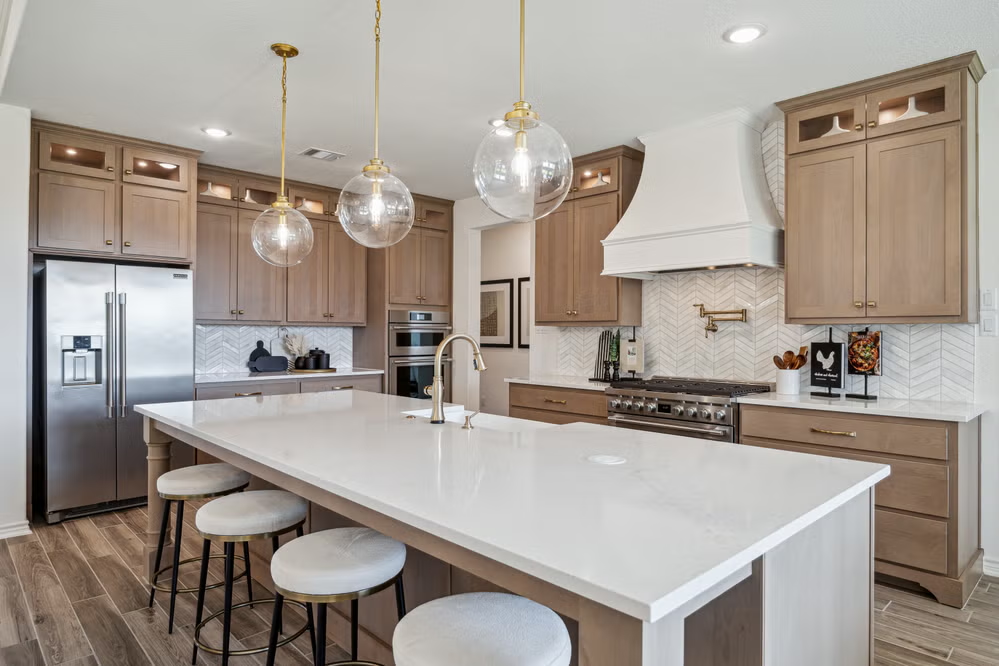
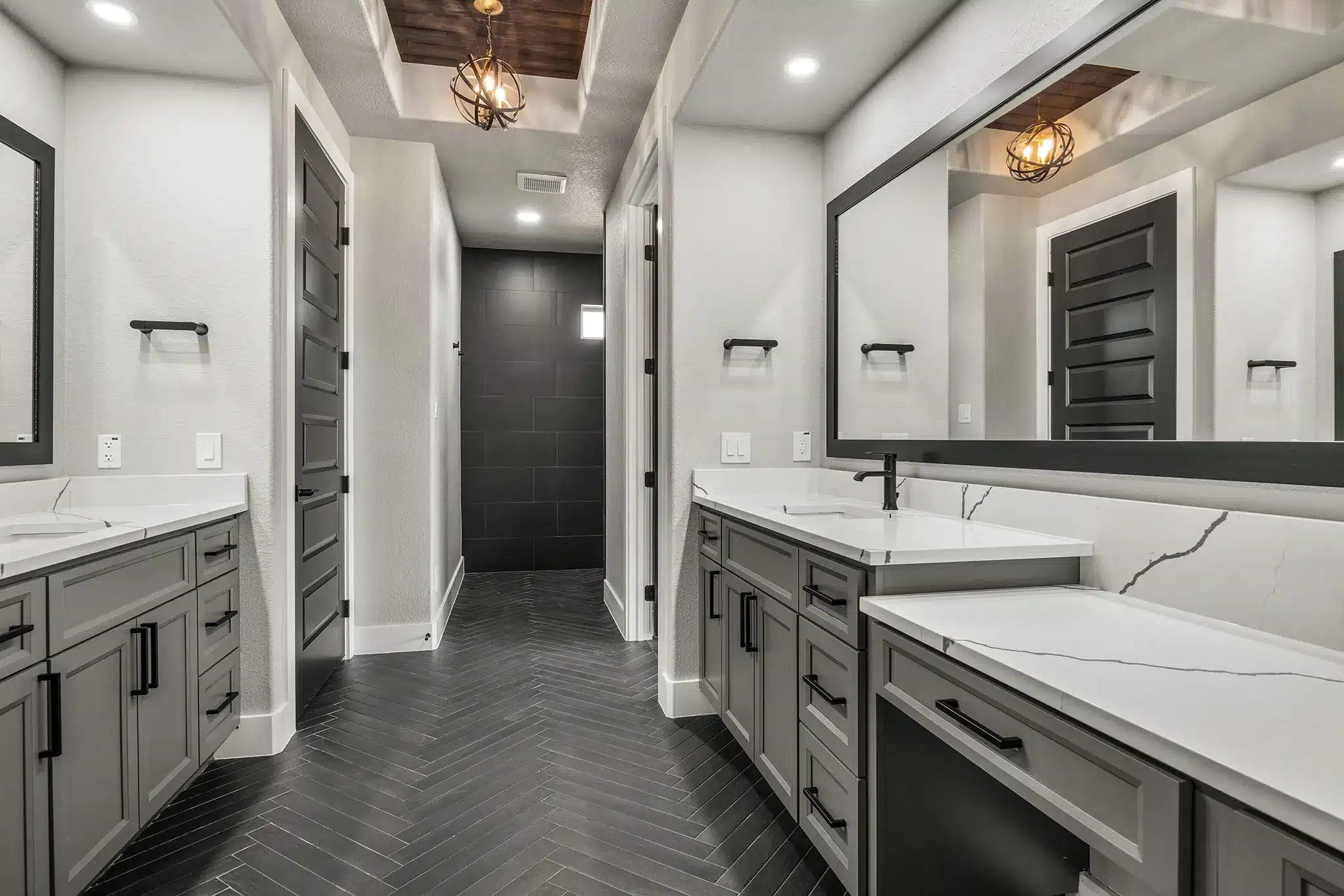
The same is true for finishes. Cabinets, counters, flooring, tile, fixtures, and lighting all move the price when upgraded. That does not mean you should avoid upgrades. It means upgrades should be intentional and priced clearly from the start.
If you are comparing nearby markets, it can help to look at Tarrant County as a neighboring comparison and Collin County for a different growth pattern.
Budget control tips
- Finalize the lot review before finalizing the home plan.
- Use realistic allowances for interior finishes.
- Keep the footprint efficient when possible.
- Carry contingency for site surprises.
- Ask for a line-item estimate instead of a lump sum.
- Separate base-scope items from optional upgrades.
Where budget creep usually starts
| Area | Common cause of increase |
|---|---|
| Kitchen | Cabinet, countertop, and appliance upgrades |
| Bath packages | Tile, shower, fixture, and vanity selections |
| Exterior shell | Roof complexity, windows, and trim details |
| Sitework | Grading, driveways, and utility extensions |
| Outdoor living | Covered patios and added hardscape |
The cleanest budgets are the ones that separate the core house from the optional extras.

Example Cost Scenarios
Example scenarios help show how Parker County can produce different budgets depending on the lot and the scope.
Scenario 1: Smaller efficient custom home
A 2,000-square-foot home on a reasonably prepared lot with practical finishes might land around $375,000 to $500,000 before major complications. The design is efficient, the roofline is straightforward, and the finish package is functional rather than luxury-heavy.
That type of project usually works best when the site is already fairly cooperative. The less the builder has to solve at the land-development stage, the more likely the budget is to stay close to the estimate.
Scenario 2: Family home with upgrades
A 2,600-square-foot home with upgraded cabinetry, better windows, and some added sitework could land around $600,000 to $825,000. If the site also needs drainage work or septic-related planning, the price can rise further.
This is the range where owners often start balancing “nice to have” features against the core budget. The home may still be efficient, but the finishes and site conditions begin to have a bigger influence on the total.
Scenario 3: Larger custom estate
A 3,200-square-foot or larger home with premium finishes, outdoor living areas, and more complex sitework can move above $900,000. At this level, design decisions and lead times matter a lot.
Premium projects also tend to have more moving parts. Larger windows, custom millwork, specialty tile, and outdoor features all require tighter coordination.
Scenario 4: Raw lot with heavier land development
A mid-size home on a raw parcel can cost much more than expected if the lot needs significant clearing, utility extension, driveway work, or fill. In that case, the site itself becomes a large part of the project budget.
That scenario is the clearest reminder that land-readiness can matter as much as house size.
How to read the examples
These examples show why it is smarter to estimate by lot, not just by square footage. The same home on a better-prepared parcel can be much easier to deliver than the same plan on a site that needs more development work.

Timeline and Construction Sequence
A custom build usually moves through a standard sequence: lot review, design, estimating, permitting, sitework, foundation, framing, systems, interior work, and closeout. The timeline can stretch if the lot is raw or if utility questions are unresolved early.
A Parker County custom home may take 8 to 14 months from preconstruction through completion, depending on weather, approvals, and complexity. Projects that need septic, more grading, or longer utility coordination can take longer.
Because some Parker County parcels need more up-front review than a typical subdivision lot, the preconstruction phase should be taken seriously. That early effort helps the rest of the schedule stay realistic.
Typical phase lengths
| Phase | Typical range |
|---|---|
| Planning and estimating | 2–8 weeks |
| Permitting and approvals | 4–12+ weeks |
| Sitework and foundation | 3–8 weeks |
| Framing and dry-in | 6–10 weeks |
| Interior build-out | 10–20 weeks |
| Final inspections and closeout | 2–6 weeks |
What can slow a project down
- Weather-related delays during excavation or foundation work
- Septic or utility approval timing
- Design changes after estimating is complete
- Long-lead finish items
- Site conditions that require rework
What can help the project move faster
- Clear plans before construction begins
- Early finish selections
- An improved lot with fewer surprises
- Realistic allowances and contingency
- Good communication between owner and builder

Final Thoughts on Parker County Home Building Costs
Parker County can be a great place to build if you understand how much the land affects the final budget. Sitework, driveway length, utility access, septic, drainage, and foundation strategy can all matter as much as square footage and finishes.
The best budget is the one that treats the lot as part of the house, not a separate item. A more expensive parcel with better access can be cheaper to build on than a lower-priced parcel that needs more development. That is the kind of comparison that keeps buyers from chasing false savings.
In Parker County, it also helps to compare the site in terms of development effort. A better-located lot can still be cheaper overall if it needs less clearing, less trenching, and less grading before construction starts.
A strong final estimate should show you where the hard costs end and where the site-specific allowances begin. If you cannot see that split, the estimate is not ready yet.
If you are still comparing broader market expectations, the DFW Home Building Cost Guide is a useful reference, and Fin Home’s Parker County custom home builder page can help turn the numbers into a plan.
For a local comparison, you can also review Tarrant County and Collin County to see how different parcels change the equation.