How Much Does It Cost to Build a House in Brazos River?
Building a custom home near the Brazos River is often more complex than building on a standard infill lot. The total budget depends on the lot itself, sitework, foundation decisions, utility access, and the finish level you want inside the home. For many Brazos River-area projects, a realistic custom build budget can start in the low-to-mid six figures for smaller, simpler homes and rise well above that as square footage, custom features, and site conditions increase.
The biggest lesson for this area is that the house and the land are only part of the story. River-adjacent conditions can change what it takes to prep the site, plan drainage, and choose a foundation system. That means the “same” house can cost very different amounts from one lot to the next. If you want a better sense of how that compares with a broader DFW market, the DFW Home Building Cost Guide is a helpful baseline.
A good Brazos River cost guide should separate the project into buckets: land prep, permits, structure, mechanical systems, finishes, and contingency. That makes it easier to see where the money is going and where a builder can help control it. If you are already comparing builders, Fin Home’s Brazos River custom home builder page is the right place to start.

What Usually Makes the Budget Move
Even when two Brazos River homes have the same square footage, the final cost can differ a lot. That is because the site, scope, and finish package each bring their own pricing pressure. A straightforward build on a prepared lot may stay closer to the lower end of the range, while a custom plan on a more demanding parcel can move well beyond the midpoint.
The biggest budget drivers are often not hidden; they are just easy to underestimate during the early planning stage. House size, ceiling height, roof complexity, window package, kitchen and bath finish level, and the amount of sitework all matter. So does whether the plan includes outdoor living areas, patios, a detached garage, or specialty storage.
Common upgrade categories
| Upgrade area | What it changes |
|---|---|
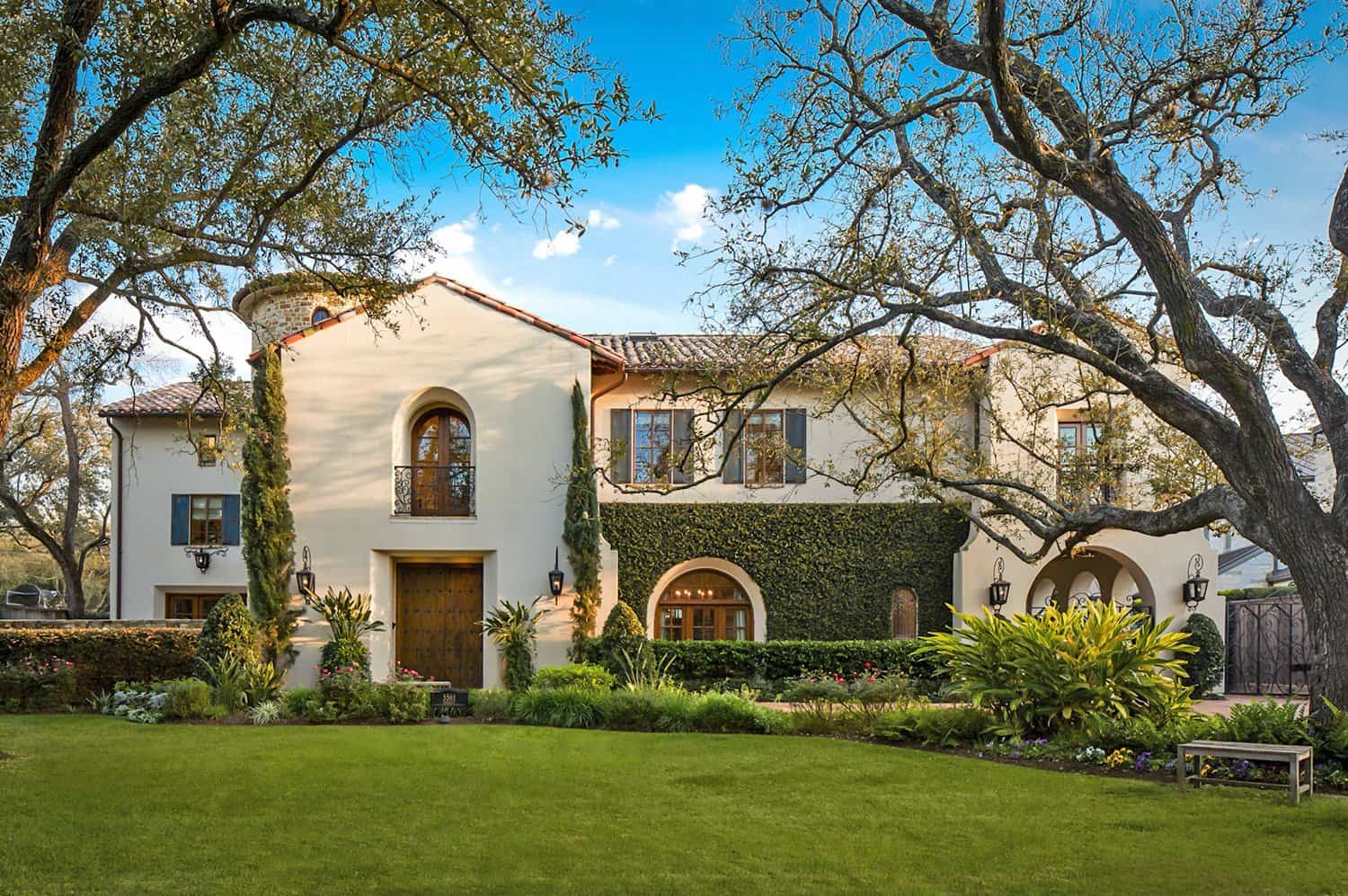
| Exterior finishes | Siding, stone, brick, roofing, and trim can shift both labor and material cost |
| Windows and doors | Larger openings and premium systems raise the price quickly |
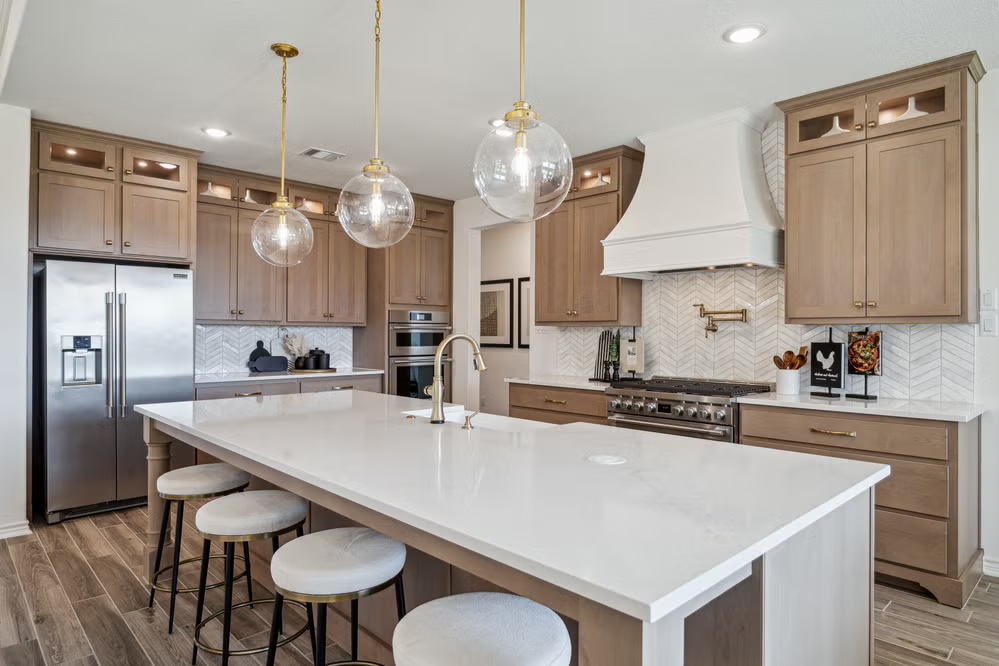
| Kitchen package | Cabinet quality, countertop material, and appliance allowance all affect total cost |
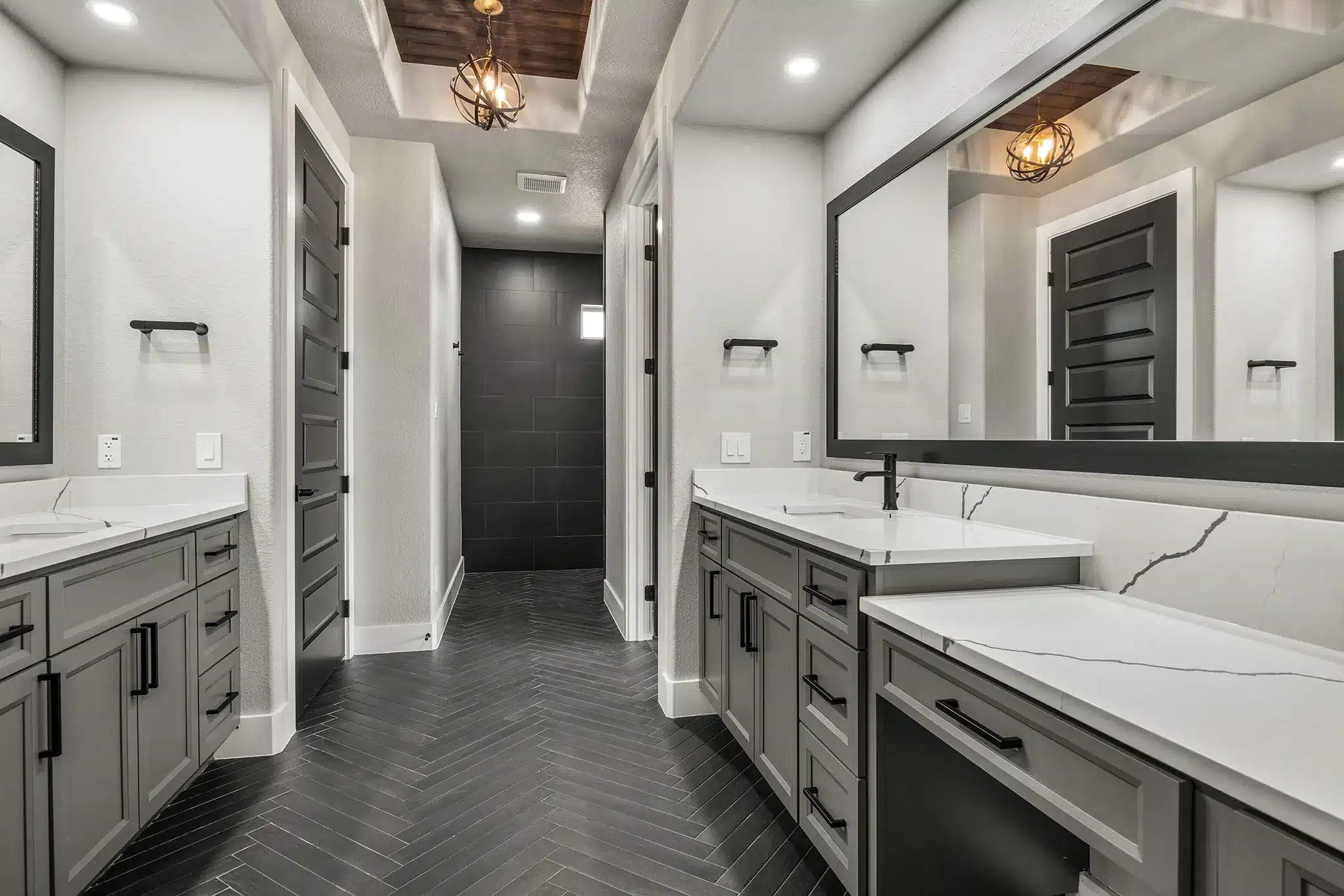
| Bathroom package | Tile, showers, tubs, fixtures, and custom vanities add up fast |
| Mechanical systems | Larger or more efficient systems can change the budget materially |
| Outdoor living | Covered patios, kitchens, and hardscape expand the construction scope |
A careful preconstruction conversation helps narrow these choices before they become change orders.
Finish level examples
A modest finish package might use durable but standard materials, a limited lighting upgrade, and a practical appliance allowance. A mid-range package often adds better cabinetry, upgraded countertops, stronger trim details, and more polished fixtures. A high-end package may include custom millwork, premium tile, designer lighting, and more elaborate interior detailing.
These choices do not just alter the headline budget. They can also affect lead times, because special-order selections may need more procurement time than builder-standard options.
Example Cost Scenarios
A few example scenarios can make the range easier to understand. These are not bids, but they show how the same market can produce very different results depending on the lot and the home plan.
Scenario 1: Smaller, efficient custom home
A 2,000-square-foot home on a reasonably prepared lot with standard custom finishes might land in the $375,000 to $520,000 range before major site complications. That could include a practical floor plan, a manageable roofline, and a finish package that balances function with style.
Scenario 2: Mid-size family home
A 2,600-square-foot home with upgraded kitchen and bath finishes, better window packages, and more sitework needs could run $650,000 to $850,000 or more. If the lot needs special drainage attention or longer utility runs, the total can climb further.
Scenario 3: Larger or higher-end home
A 3,000+ square-foot home with a premium exterior, custom interiors, a larger garage, and outdoor living features can move above $900,000 quickly. If the site is also more complex, the land-development portion may become a meaningful share of the total investment.
These examples show why custom home pricing should be treated as a range, not a single number.
Typical custom home cost ranges
Here is a practical planning range for Brazos River-area custom homes. These numbers are broad estimates, but they are useful for early budgeting.
| Project type | Approx. cost per sq. ft. | Example total cost |
|---|---|---|
| Simple custom build | $180–$240 | $360,000–$600,000 for 2,000–2,500 sq. ft. |
| Mid-range custom home | $240–$325 | $600,000–$910,000 for 2,500–2,800 sq. ft. |
| Higher-end custom build | $325–$450+ | $910,000+ for larger or more customized homes |
Those ranges can move quickly if the lot needs extensive grading, long utility trenching, a complicated foundation, or more finish upgrades. A site that looks inexpensive on paper can turn expensive once access, drainage, and utility work are fully known.

Why Building in Brazos River Is Different
Brazos River-area sites can be shaped as much by the land as by the house plan. Floodplain sensitivity, drainage patterns, and river-corridor topography can all affect how you design the lot and budget the build. The right approach is usually to think about site conditions before you finalize the house package, not after.
Another issue is utility availability. Some river-area and rural lots are not served the same way a subdivision lot is served, so you may need additional trenching, a septic/OSSF solution, or coordination with utility providers before vertical construction begins. Texas Commission on Environmental Quality guidance notes that permits are required for on-site sewage facilities, including septic systems, before construction in applicable cases. You can review that at the TCEQ OSSF permitting page.
A third factor is how the home sits on the land. In this part of the region, a smart layout can reduce long-term risk and preserve budget by minimizing unnecessary cut-and-fill, managing runoff, and choosing a foundation strategy that fits the lot rather than forcing the lot to fit the plan.
A sample budget breakdown
For a $650,000 custom home, a rough planning split might look like this:
| Category | Share of budget | Example amount |
|---|---|---|
| Land preparation and sitework | 10%–18% | $65,000–$117,000 |
| Foundation and shell | 25%–35% | $162,500–$227,500 |
| Mechanical, electrical, plumbing | 12%–18% | $78,000–$117,000 |
| Interior finishes | 20%–30% | $130,000–$195,000 |
| Permits, soft costs, contingency | 8%–15% | $52,000–$97,500 |
The sitework percentage can be even higher if the lot needs unusual access work or drainage solutions. That is why early evaluation matters so much in this market.

Land, Sitework, and Utility Costs
Sitework is one of the most important line items for Brazos River builds. It can include clearing, tree removal, rough grading, driveway work, utility trenching, temporary power, water tie-ins, and erosion-control measures. On easier sites, this portion might stay relatively modest. On tougher sites, it can become one of the most expensive parts of the build.
Utility runs are a major variable. If water, power, or other services are far from the build area, the cost of bringing them to the home pad can rise quickly. Larger lots also tend to need longer driveways and more grading, both of which add labor and material cost.
Another reason to budget carefully is that the lot may need work before the foundation can even be set. Clearing and shaping the site correctly helps the home perform better later, especially when runoff management matters. For that reason, a quote that seems high on the front end may actually be protecting the project from bigger surprises later.
Common sitework cost drivers
| Cost driver | Why it matters |
|---|---|
| Tree clearing and demolition | Removes obstacles before grading and foundation work |
| Driveway length | More linear feet means more base material and labor |
| Utility trenching | Longer runs increase excavation and coordination costs |
| Temporary utilities | Needed to keep the site active during construction |
| Soil and drainage correction | Can require added fill, compaction, or site redesign |
If you are comparing two lots, the cheaper lot is not always the cheaper build. A site with better access and simpler utility routing can save more money than a lot with a lower purchase price.
A useful way to think about this is to separate “land cost” from “land readiness.” Land cost is the purchase price. Land readiness is how much it will take to make the property suitable for construction. On a Brazos River-area project, a lot that looks affordable may still need more excavation, more fill, more driveway work, or more coordination before the actual home can start.
Land-readiness checklist
| Question | Why it matters |
|---|---|
| Is the pad area already cleared? | Clearing can add time and disposal cost |
| How far is the utility tie-in? | Long runs can drive up trenching and connection costs |
| Does the site need imported fill? | Extra fill means hauling, compaction, and testing |
| Is there an established driveway? | New access roads can be expensive |
| Is there enough room for staging? | Tight sites can make labor less efficient |
The earlier those questions are answered, the more accurate your budget will be.

Foundation, Drainage, and Floodplain Planning
Foundation design is where Brazos River projects often separate from standard suburban builds. The lot may require more evaluation of slope, soils, drainage, and elevation before a final system is chosen. A slab that works on one property might not be the best option on another. In some cases, engineering recommendations can change the shape of the budget significantly.
Floodplain awareness matters too. FEMA’s flood mapping tools are a standard starting point for understanding site risk and insurance-related questions, and you can explore them through the FEMA Flood Maps resource. Even when a lot is buildable, it may still call for a more careful elevation strategy, better drainage design, or a stronger contingency budget.
Drainage also influences landscaping and exterior hardscape planning. If the yard needs to move water away from the structure, that can shape grading, retaining walls, swales, and even where you place outdoor living areas.
Foundation choices that can affect price
- Slab-on-grade on a well-prepared site often keeps the budget simpler.
- Raised foundations can help on challenging lots but usually add cost.
- Engineered solutions may be needed when soils, elevation, or drainage call for a custom approach.
- More complicated plans can trigger added steel, structural details, or extra inspections.
A thoughtful builder will look at the lot before making promises about the foundation. That prevents surprises after excavation begins.
Permits, Septic, and Timeline Considerations
Permitting can be straightforward on some Brazos River-area parcels and more involved on others. The difference often comes down to whether the lot is served by municipal sewer or needs a septic/OSSF solution. If an OSSF is needed, the Texas Commission on Environmental Quality explains that a permit and approved plan are required before construction, installation, repair, extension, or alteration in applicable situations. That is another reason to start the process early, especially if the lot has unusual constraints. See the TCEQ OSSF basics page for the broader overview.
Timeline also changes when the lot is more remote. A standard custom home might move from planning to completion in roughly 8 to 14 months depending on complexity, weather, and approvals. River-adjacent projects can take longer if site conditions or utility coordination add review time. It is smart to budget time as carefully as money.
Timeline phases
| Phase | Typical range |
|---|---|
| Pre-construction planning | 2–8 weeks |
| Permitting and utility coordination | 4–12+ weeks |
| Sitework and foundation | 3–8 weeks |
| Framing and dry-in | 6–10 weeks |
| Interior build-out | 10–20 weeks |
| Final inspections and closeout | 2–6 weeks |
Those ranges vary by lot and finish level, but they help set realistic expectations. The earlier the lot is evaluated, the fewer surprises usually show up during construction.
A solid preconstruction calendar usually starts with land review, then concept planning, then engineering and permitting, and only then full build-out. If those steps get compressed, the risk of change orders rises. That is especially true when drainage, access, or utility conditions are still unclear.
What to review before you sign
- A site-specific budget estimate, not just a generic house price.
- A clear list of allowances for finishes and fixtures.
- A decision on septic, utilities, and water service.
- Any known drainage or grading concerns.
- A realistic buffer for weather, revisions, and inspections.
This kind of planning does not remove uncertainty, but it makes the uncertainty manageable.

Cost Drivers You Can Control
Not every budget issue is fixed by the land. Some expenses are choices, and that is where a good plan can protect your overall investment. The finish level you choose, the footprint size, the roof complexity, and the amount of custom millwork all influence final price.
A home with a simpler roofline and a more efficient layout usually costs less to build than one with many bumps, corners, and specialty details. Likewise, standard cabinet packages and fixture selections can keep pricing under control better than a long list of premium upgrades.
It also helps to think about where the home is spending money that will not always show up in the first floor-plan conversation. For example, a larger covered patio, more complex porch structure, or a deeper garage can increase both framing and roofing costs. Custom ceiling treatments, multiple tile transitions, and oversized pantry or mudroom spaces all add labor, even when they look small in the plan.
Design choices that often affect price
- More corners in the footprint usually mean more framing and roofing complexity.
- Higher ceilings can change wall finish, HVAC sizing, and structural needs.
- Bigger spans may require stronger structural members.
- More windows often increase installation time and material cost.
- Specialty interior details can raise finish labor beyond the basic allowance.
This is why a “simple” home is not just a smaller home. It is often a more efficient one.
If you want to compare how location and project scope affect pricing, it helps to cross-reference a nearby market like Kaufman County’s home building cost guide or even a different terrain profile such as Graham’s cost guide. Each area has its own land and sitework realities.
Ways to reduce surprises
- Finalize the lot study before locking in the floor plan.
- Carry a contingency for sitework and utility overruns.
- Use allowances for finishes that can be refined later.
- Keep the design efficient where possible.
- Ask for a line-item estimate rather than a single lump sum.
How Builders Estimate a Brazos River Home
A reliable estimate should separate hard costs from soft costs. Hard costs include the physical construction of the home. Soft costs include things like permits, engineering, testing, and other pre-construction expenses. If both are rolled together too early, the budget can look cleaner than it really is.
For Brazos River-area homes, the estimating process should also include site-specific questions. How long is the utility run? Does the lot need clearing? Is the driveway already in place? Is the drainage simple or complicated? Does the chosen foundation match the soils and elevation?
Questions a builder should answer early
- What is the likely sitework range for this lot?
- What foundation system fits the site best?
- Are septic/OSSF needs part of the plan?
- How much contingency should be carried for drainage or access?
- Which finish upgrades move the budget the fastest?
The more clearly those questions are answered before construction, the easier it is to avoid budget drift later in the project.
A builder should also explain which items are being carried as allowances and which are fully specified. Allowances are useful early on, but they need to be realistic. If a cabinet allowance is too low or the sitework allowance ignores a known complication, the budget can look better than it really is. Good estimating is transparent about both the comfortable numbers and the risky ones.
A Simple Way to Plan Your Contingency
A contingency is not just a cushion for bad luck. It is a planning tool for a custom home. For a Brazos River build, many owners carry a contingency tied to the amount of site uncertainty. On a simpler parcel, a smaller reserve may be enough. On a lot with drainage questions or uncertain utility work, a larger reserve is smarter.
As a rule of thumb, many custom builds benefit from a contingency in the 5% to 10% range of the hard-cost budget, with site-heavy projects sometimes needing more. That does not mean you will spend all of it. It means you are prepared if excavation, foundation, utility, or material decisions come in higher than expected.
Where contingency is most useful
- unexpected soil or drainage corrections
- utility relocation or extended service runs
- material price changes before ordering
- design revisions during preconstruction
- permit or inspection timing changes
A well-planned contingency protects both the schedule and the relationship between owner and builder.
Building the Right Plan for the Site
The best Brazos River project is usually the one that respects the land. That means the floor plan, site plan, and budget all work together. A home that is well matched to the lot can save money during construction and also make day-to-day living easier after move-in.
You do not need to overspend to get a strong result, but you do need to account for the realities of the site. That is why a local builder with custom home experience is valuable: they can help you decide where to spend, where to simplify, and where to reserve contingency.
If you are comparing options or still early in the planning stage, the best next step is to talk through the lot, the scope, and your budget goals with a builder who knows the area. The broader DFW Home Building Cost Guide can help you frame expectations before you choose a final plan, and a local conversation can help you turn those broad numbers into a site-specific budget.
Final Thoughts on Brazos River Home Building Costs
A Brazos River custom home can be a great fit if you understand how much the land influences the final budget. Sitework, drainage, foundation design, septic needs, and utility access can all move the numbers more than people expect at first. That is why the best cost estimates are built around the actual lot, not just a floor plan.
If you are comparing properties, try to compare them on total delivered cost, not just purchase price. A more expensive lot can still be the better value if it needs less site preparation and fewer infrastructure upgrades. For homeowners ready to move forward, a conversation with a local builder can help you turn the range in this guide into a realistic project budget.
For more planning context, you can also look at how this market compares with nearby areas like Kaufman County and Graham, then use Fin Home’s Brazos River custom home builder page to take the next step.