

When planning a kitchen remodel, most decisions come down to cabinets. They define the look, take the most wear, and quietly determine how long your kitchen actually lasts.
In a recent interview, Emmanuel Rodriguez from Best Cheers on the Cabinets answered real homeowner questions – the kind people actually search before spending tens of thousands on a remodel.
Here’s what matters.
Best Cabinet Materials for Humidity and Longevity
High humidity environments destroy cheap cabinets fast. Warping, swelling, and long-term structural damage show up earlier than most homeowners expect.
The strongest recommendation is simple: plywood construction.
Plywood acts as a stable barrier against moisture and holds up significantly better than MDF or particle board. Over time, that difference compounds. Cabinets stay aligned, doors close properly, and you avoid the slow degradation that leads to full replacement.
There’s also a secondary benefit most people overlook – pest resistance. Engineered materials like plywood are less attractive to termites than solid wood, which adds another layer of durability in certain regions.
For cabinet doors, a properly sealed thermofoil finish performs well in humid conditions. The key is the seal. Poorly finished surfaces fail quickly, while factory-sealed finishes hold up for years.
Are Shaker Cabinets Going Out of Style?
Short answer: no.
Shaker cabinets remain one of the most durable design decisions you can make. They are simple, adaptable, and consistently perform well in resale scenarios.
What is changing is the variation. Slimmer shaker profiles and flat panel designs are gaining traction, especially in more modern builds. That shift reflects evolving taste, not replacement.
If long-term value matters, white shaker cabinets still dominate. They fit traditional, transitional, and modern kitchens without forcing future redesigns.
How to Protect Painted Cabinets (Without Damaging Them)
A common instinct is to “add protection” with polyurethane or varnish.
That usually makes things worse.
Factory finishes are engineered for durability. Adding extra coatings can discolor the surface, create uneven texture, or trap imperfections that become more visible over time.
The highest-performing approach is restraint:
Leave the factory seal intact and focus on proper use and cleaning.
Cabinet Finishes That Hide Fingerprints and Wear
This is where small decisions create long-term frustration.
Glossy, dark finishes show everything – fingerprints, smudges, micro-scratches. They look sharp on day one and high-maintenance by month six.
Better options:
- Matte or satin finishes reduce visible fingerprints
- Natural wood grain textures hide both scratches and daily wear
These finishes age more gracefully because they absorb imperfections into the design instead of highlighting them.
What Actually Makes Cabinets Look “High-End”
Most people focus on door style – shaker vs flat panel.
That’s the wrong variable.
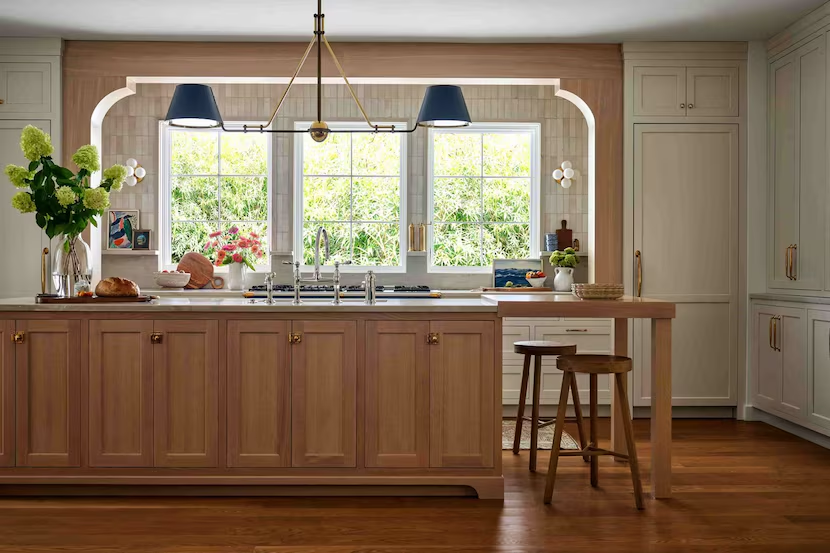
Perceived quality comes from cohesion. The combination of layout, color palette, hardware, lighting, and surrounding materials determines whether a kitchen feels high-end.
You can build a premium kitchen with shaker cabinets or flat panels. You can also make either look cheap.
The difference is how everything works together.
Do Cabinet Handles Need to Match Appliances?
No.
Trying to match everything usually flattens the design.
Instead, aim for coordination. Hardware should relate to key focal points, especially faucets, since those are visually prominent and frequently used.
Appliances, particularly stainless steel, act as neutral elements. They don’t need to dictate the design.
Will Non-White Cabinets Look Outdated Faster?
White is timeless. That part is true.
But it’s incomplete.
Other colors can age just as well if they’re chosen correctly. The key is staying within muted, natural tones:
- Warm grays
- Taupes
- Soft beiges
- Balanced blues with warm surroundings
Longevity comes from balance, not just color choice. When the overall design is cohesive, cabinets hold their value visually for years.
The Core Principle Behind All Cabinet Decisions
Every question in this interview points to the same underlying rule:
Longevity comes from material quality + cohesive design.
- Materials determine how cabinets physically age
- Design determines how they visually age
Ignore either one, and the kitchen degrades – either structurally or stylistically
Get both right, and the space holds up for a decade or more without needing major updates
If you’re building or remodeling, this is the filter:
Pick materials that survive real use
Then design a system where everything works together
That’s where durability and perceived value actually come from.