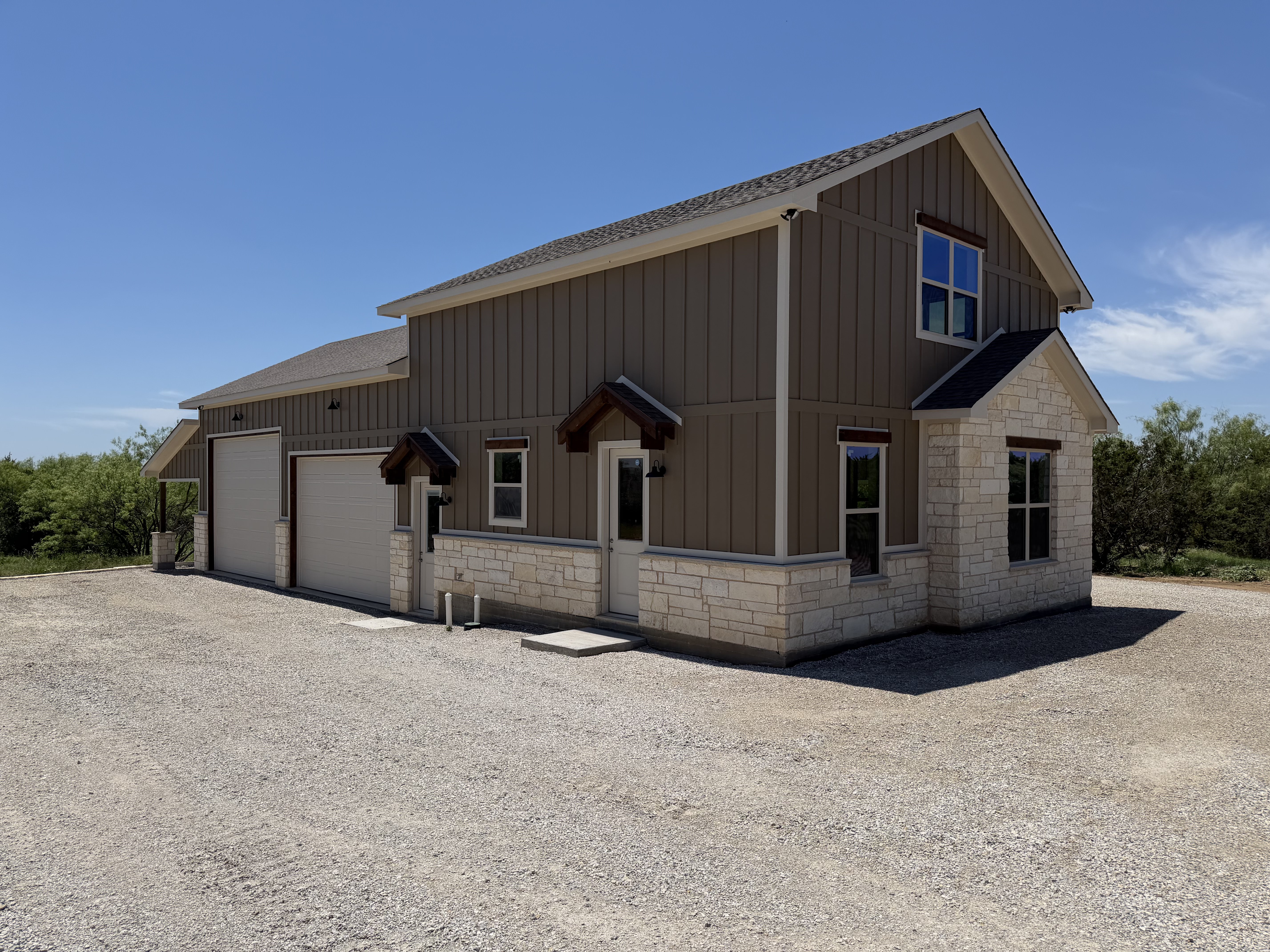
Remodeling in Texas heading into 2026 is being shaped by something stronger than style: Resale value.
For much of the last decade, homeowners remodeled because they wanted a new look. In 2026, Texans are remodeling because they want a better outcome – more comfort, more function, and most importantly, more value for every dollar spent.
That shift is happening for a few reasons that are especially intense in Texas:
- Moving costs more than it used to, and not just because of the house itself. In many cases, moving means a higher mortgage rate, higher monthly payment, closing costs, a new set of repairs, or potentially building a new home.
- Texas markets still reward homes that feel “updated,” but buyers are also more price-sensitive. That means visible upgrades matter, but over-customization can backfire.
- Texas homes take a beating. Heat, sun, humidity, dust, and heavy day-to-day use push homeowners toward durable, low-maintenance materials.
To understand what Texans are actually upgrading right now (not what trend blogs say people should be upgrading), we spoke with John Doe, a store manager at a major big-box home improvement retailer who’s chosen to be anonymous for this interview. His view is based on what homeowners and contractors are actively purchasing.
What follows is a detailed, Texas-focused breakdown of the remodeling trends that are showing up repeatedly across kitchens, floors, finishes, outdoor living, and smart home upgrades – plus the practical reasons these decisions make sense.
See how much a home renovation costs in North Texas in 2026 – courtesy of Irwin Construction.

Remodeling in Texas Is About Staying Put and Protecting Value
The new remodel mindset: “Optimize the house I already own”
A growing number of Texas homeowners are realizing that the cheapest “new home” is often the one they already live in – if they can fix the parts that annoy them.
That might mean:
- A kitchen that feels dated even if it works fine
- Floors that show wear, stain easily, or feel hard to keep clean
- A paint scheme that makes the whole home feel older than it is
- An entryway that looks tired, dark, or uninviting
Instead of doing one massive renovation, homeowners are choosing stackable upgrades: a series of improvements that each adds value and comfort, without requiring a full gut job.
ROI is the common language in 2026
John Doe put it plainly:
“A lot of what people are trying to do right now is improve home value. ROI is a big thing.”
In practice, ROI thinking changes what people upgrade first. Texans are prioritizing:
- Kitchens (because they are the emotional center of the home)
- Floors (because they are everywhere, and wear is obvious)
- Paint (because it makes a home feel fresh fast)
- Curb appeal (because first impressions still matter)
- Bathrooms (steady, consistent upgrades – less flashy but important)
The “buyer test” is replacing personal taste
A helpful way to understand 2026 Texas remodeling: homeowners are increasingly applying a “buyer test.”
They’re asking:
- If I spent $X on this upgrade, would a future buyer notice immediately?
- Would this make the home feel newer without raising objections?
- Is this an upgrade that most buyers see as “good,” rather than “weird”?
That’s why bold design is cooling down. Texas homeowners are moving toward neutral, durable, widely liked choices that feel safe.

Kitchens, Cabinets, and Countertops
Kitchens win because that’s where life happens
In Texas, kitchens matter even more because of how homes are used. When people have family over, host friends, or entertain, the kitchen is usually the hub.
John Doe described it simply: most social time starts in the kitchen and spills outward into the living space. That’s why the upgrades people pick are often the ones that make the kitchen feel:
- brighter
- cleaner
- more modern
- more open
Even in open-concept homes, the kitchen acts as the “anchor” that sets the tone for the rest of the interior.
Cabinet makeovers are booming because they feel like a new kitchen (without new kitchen cost)
One of the strongest 2026 trends is the rise of the cabinet makeover.
This isn’t a single thing – it’s a spectrum of upgrades that can range from “light refresh” to “almost a full remodel,” depending on budget.
Cabinet makeover options Texans are choosing:
- Replace cabinet doors + drawer fronts
- Replace hinges + hardware (pulls, knobs)
- Repaint cabinet boxes and doors
- Add soft-close hardware
- Add under-cabinet lighting (often now LED or smart-enabled)
- Add simple storage upgrades (pull-out trash, roll-out trays, drawer inserts)
John Doe explained why it’s taking off:
“People can either fully remodel or just redo the boxes, doors, and hardware. That flexibility is driving a lot of demand.”
What makes cabinet makeovers “ROI friendly”
They’re popular because they:
- Avoid demolition
- Avoid layout changes (which usually triggers more cost)
- Minimize downtime (you can often keep functioning during parts of it)
- Deliver a visible transformation buyers recognize
Cost logic (typical ranges):
- Hardware-only refresh: often a few hundred dollars to ~1,500 depending on size and quality
- Doors + hardware (keep boxes): often thousands less than full replacement
- Full cabinet replacement: higher cost, longer timeline, more disruption
Even without exact numbers, the directional truth is consistent: keeping boxes and changing fronts is often the best “visual impact per dollar” move.
Countertops are going light, warm, and “clean”
Countertops remain one of the most dramatic visual upgrades in a kitchen.
In 2026 Texas homes, John Doe is seeing people favor:
- white and off-white
- cream tones
- subtle veining accents (gray tones, warm brown tones)
- surfaces that make kitchens feel brighter
“They’re sticking more to white or cream with accents. It depends on their cabinets, but lighter countertops open up the room.”
Why light countertops are winning (especially in Texas)
Light countertops are trending for practical reasons:
- They reflect light and make spaces feel larger
- They pair well with warmer neutrals and natural woods
- They feel more “current” than dark granite looks
- They photograph better for listings (brighter, cleaner look)
Typical installed cost ranges in Texas:
- Entry-level quartz: roughly $60–$80 per sq ft installed
- Premium quartz/stone: roughly $90–$130 per sq ft installed
The cabinet-countertop pairing rule Texans are following
Homeowners are coordinating finishes more intentionally:
- Warm cabinets + cream countertop with warm accents
- White cabinets + white countertop with subtle gray accent
- Natural wood cabinets + light countertop that does not compete visually
The underlying goal: a kitchen that feels “light and cohesive,” not busy.
Appliances are being upgraded even when the old ones still work
Appliance upgrading is rising, and not only because appliances fail. Texans are upgrading appliances because it signals modernity and convenience.
John Doe noted:
- new models rolling out
- refrigerators getting more spacious
- luxury accents inside appliances (finishes, design touches)
- stainless steel continuing to dominate
- white appliances fading out (except laundry)
“We’re seeing bigger refrigerators and more luxury accents. Stainless is still what people want.”
The “digital control” trend: knobs are fading
Cooktops and ranges are shifting from knobs to more digital control surfaces. Some homeowners love it, others tolerate it, but it’s becoming a premium signal.
This is part of a broader pattern: many 2026 upgrades are as much about perceived modernity as functionality.

Appliances, Paint, and Interior Finishes
Paint is the most underrated “whole-house refresh”
Paint does not feel as exciting as countertops or flooring, but it transforms a home fast. John Doe mentioned a noticeable increase in paint sales tied to remodel projects.
Why paint surges in remodel cycles:
- cabinet makeovers often require repainting nearby areas to match
- new floors make old wall colors look worse by contrast
- homeowners want a “reset” after years of wear
Texas paint trends: moving away from gray toward warm neutrals
A major shift John Doe highlighted:
“Everybody wanted gray for the longest time. Now they’re going more neutral.”
What “neutral” tends to mean in 2026:
- warm off-whites
- soft beige and greige (warmer than the old gray trend)
- muted natural tones that don’t fight wood
This trend is also practical for resale. Neutral paint is safer because it:
- appeals to more buyers
- makes rooms feel larger
- looks clean in listing photos
- avoids the “I have to repaint everything” objection
Typical paint cost ranges (Texas)
- DIY interior repaint: roughly $1–$2 per sq ft (materials vary)
- Professional paint: roughly $3–$6 per sq ft
Paint remains one of the strongest “impact per dollar” decisions available.
The “cohesion trend”: finishes are being coordinated more intentionally
Another subtle 2026 trend: homeowners are trying to make the home feel like a unified design system.
That shows up in:
- matching hardware finishes across kitchen and bathrooms
- coordinating cabinet color with flooring undertones
- choosing countertop veining that aligns with wall tone
The result is not necessarily high-end design – it’s a home that feels “considered,” which buyers interpret as “well maintained.”

Flooring Favors Durability, Comfort, and Cost Control
Flooring is one of the clearest places where Texas practicality shows up. People want floors that can handle:
- pets
- kids
- mud
- heat
- high traffic
- everyday wear without constant maintenance
Vinyl click-lock flooring is dominating
John Doe described vinyl click-lock as the most common choice:
- waterproof
- scratch-resistant
- barrier/underlayment built in
- easier install than many alternatives
“A lot of people are going for vinyl click-lock because it comes with the barrier. It’s waterproof, scratch-proof, good for pets.”
Why vinyl wins in Texas
Texas households often value durability over luxury because:
- floors wear faster in high-traffic homes
- many homeowners want a strong “set it and forget it” material
- vinyl mimics wood looks well enough for most mid-range homes
Installed cost comparison (typical):
- Vinyl plank: roughly $4–$7 per sq ft installed
- Hardwood: roughly $9–$14 per sq ft installed
Carpet is not dead – it’s being used strategically
John Doe made an important point: carpet is still selling.
- stairs
- bedrooms
- rooms where comfort matters
- budget-conscious square footage
Homeowners may prefer hard floors visually, but carpet is:
- softer
- warmer
- often cheaper per square foot
And it solves a very real problem: stepping onto cold hard floors first thing in the morning feels worse than carpet.
Tile is consolidating into bathrooms
Tile is more concentrated in bathrooms where moisture resistance matters most.
John Doe is seeing tile primarily for:
- bathrooms
- full bath renovations
- wet areas
But less in common areas due to:
- cost and labor
- comfort
- preference for vinyl in living spaces
Flooring choices depend heavily on the home’s price point
John Doe pointed out a simple truth: materials should match the home’s value bracket.
- In higher-end homes, buyers expect wood and tile
- In average homes, vinyl is often the practical default
This matters because “wrong material for the price tier” can hurt resale more than it helps.

Doors, Entryways, and Smart Home Features
Doors are moving toward natural wood looks
Texas homeowners are choosing doors that feel more upscale without screaming “custom.”
John Doe noted:
- wood-look front doors
- stained finishes
- glass accents
- less demand for storm doors
- more patio doors
“Front doors are going more for that wood look – stained versus a solid color.”
This is a curb appeal upgrade that buyers notice immediately.
Smart glass and privacy tech are entering the mainstream conversation
John Doe described a door feature where glass can switch from transparent to clouded with a button – essentially privacy-on-demand.
Even if this remains niche, it signals where curb appeal tech is headed: convenience and privacy integrated into everyday materials.
Smart home is growing from small upgrades upward
The strongest smart trend is not full automation. It’s the gradual spread of basic smart features:
- smart bulbs
- smart plugs
- smart thermostats
- sometimes garage door openers
“Smart homes have definitely picked up.”
These upgrades are popular because they are:
- relatively cheap
- easy to install
- easy to understand
- increasingly expected in modern homes

Bathrooms, Flexible Rooms, and Interior Reconfiguration
Bathrooms remain steady because they are one of the highest-trust areas in a house. If a bathroom looks old, buyers worry about hidden problems.
Texas homeowners are upgrading bathrooms with:
- tile for moisture control
- refreshed fixtures
- simple modernization (not wild design)
At the same time, flexible room use is rising. John Doe mentioned multifunctional rooms:
- office + gym
- spare room combos
This trend is driven by:
- remote work
- lifestyle changes
- a desire to stay in the same house longer
Instead of moving walls, homeowners are remodeling surfaces and purpose.

Outdoor Living, Garages, and Secondary Spaces
Texas outdoor living culture is stronger than many regions because patios and grilling are a lifestyle. That keeps outdoor upgrades high demand:
- pergolas
- outdoor kitchens
- shaded structures
Pergolas stay popular because they feel like “an addition” without addition cost
Pergolas provide structure and shade, and make backyards feel intentional.
Typical ranges:
- kit pergolas: $3,000–$6,000
- custom pergolas: $8,000–$15,000+
Sheds are turning into lifestyle spaces
John Doe described a shift from barn-style sheds to shed-as-mini-house:
- windows
- modern rooflines
- upgraded finishes
People use them for:
- storage
- office space
- guest room style overflow
- hobby studio
Even if it doesn’t add official square footage, it adds lifestyle value.
Garages are being finished
Epoxy garage floors are emerging fast:
- cleaner look
- more durable
- high perceived value
- heavily influenced by social media
Typical installed cost:
- $3–$7 per sq ft
This is a classic 2026 upgrade: not essential, but it signals “updated” and “well cared for.”

Final Takeaway
Texas homeowners are not remodeling in 2026 to chase trends. They’re remodeling to achieve outcomes: better living and stronger resale positioning.
The most common upgrades share a few traits:
- visible impact
- durability
- neutral appeal
- reasonable cost relative to value gained
Kitchens lead because they are where life happens and where buyers judge homes. Floors follow because they are everywhere. Paint ties it all together, making the entire home feel refreshed. Smart features and garage upgrades offer modern signals without requiring major disruption. Outdoor upgrades reflect Texas lifestyle and create usable space buyers emotionally respond to.
The core theme is restraint. The winners are not the most dramatic remodels. The winners are the remodels that feel timeless, functional, and obvious – like the homeowner made smart decisions, not risky ones.
For Texans planning a remodel this year, the best strategy is simple: upgrade what people notice, upgrade what people use, and upgrade in a way that fits the home’s price point. Those choices deliver the best combination of comfort now and value later.
For a more in-depth look at remodeling costs in DFW, including real project ranges and detailed breakdowns, see our full home remodeling cost guide.